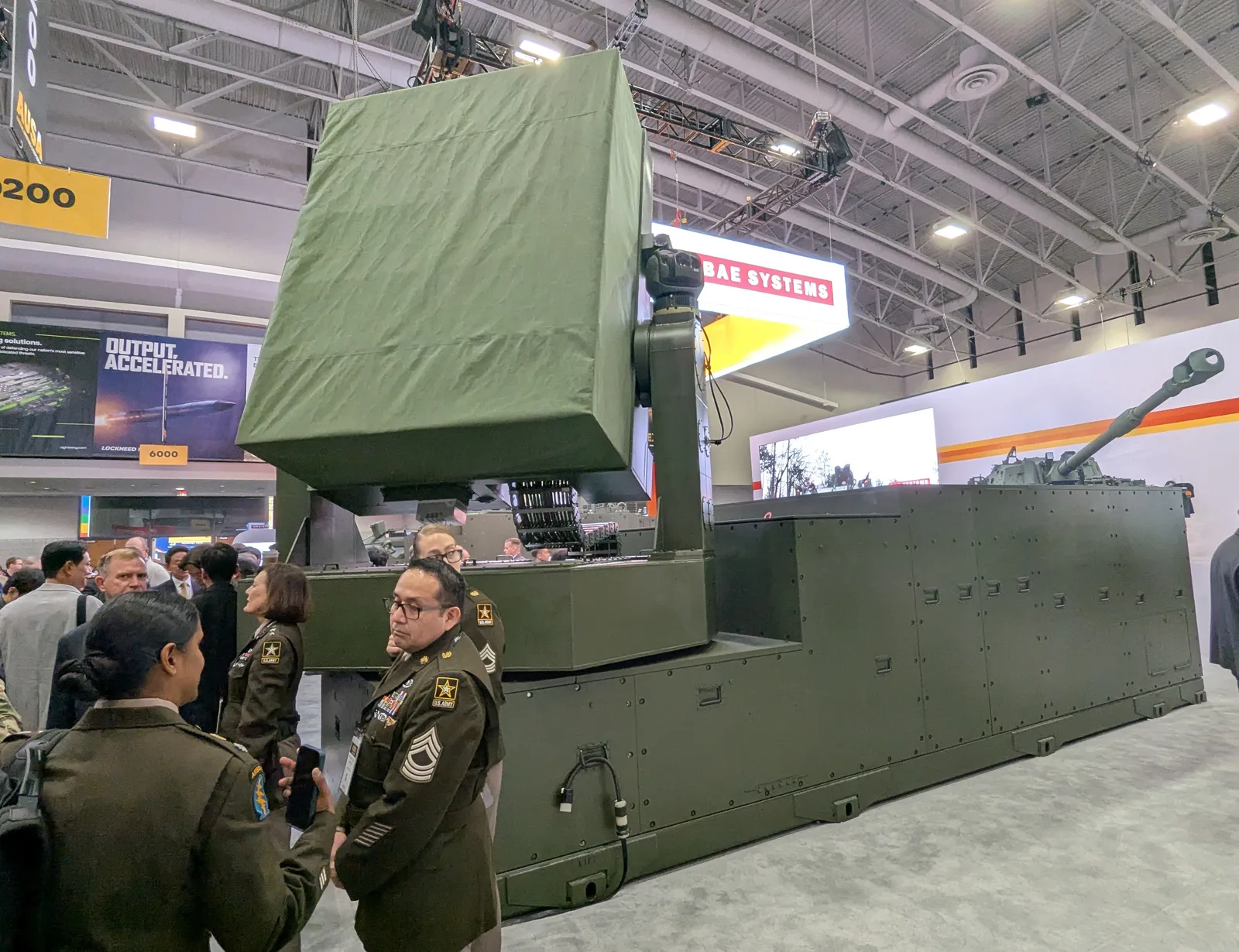
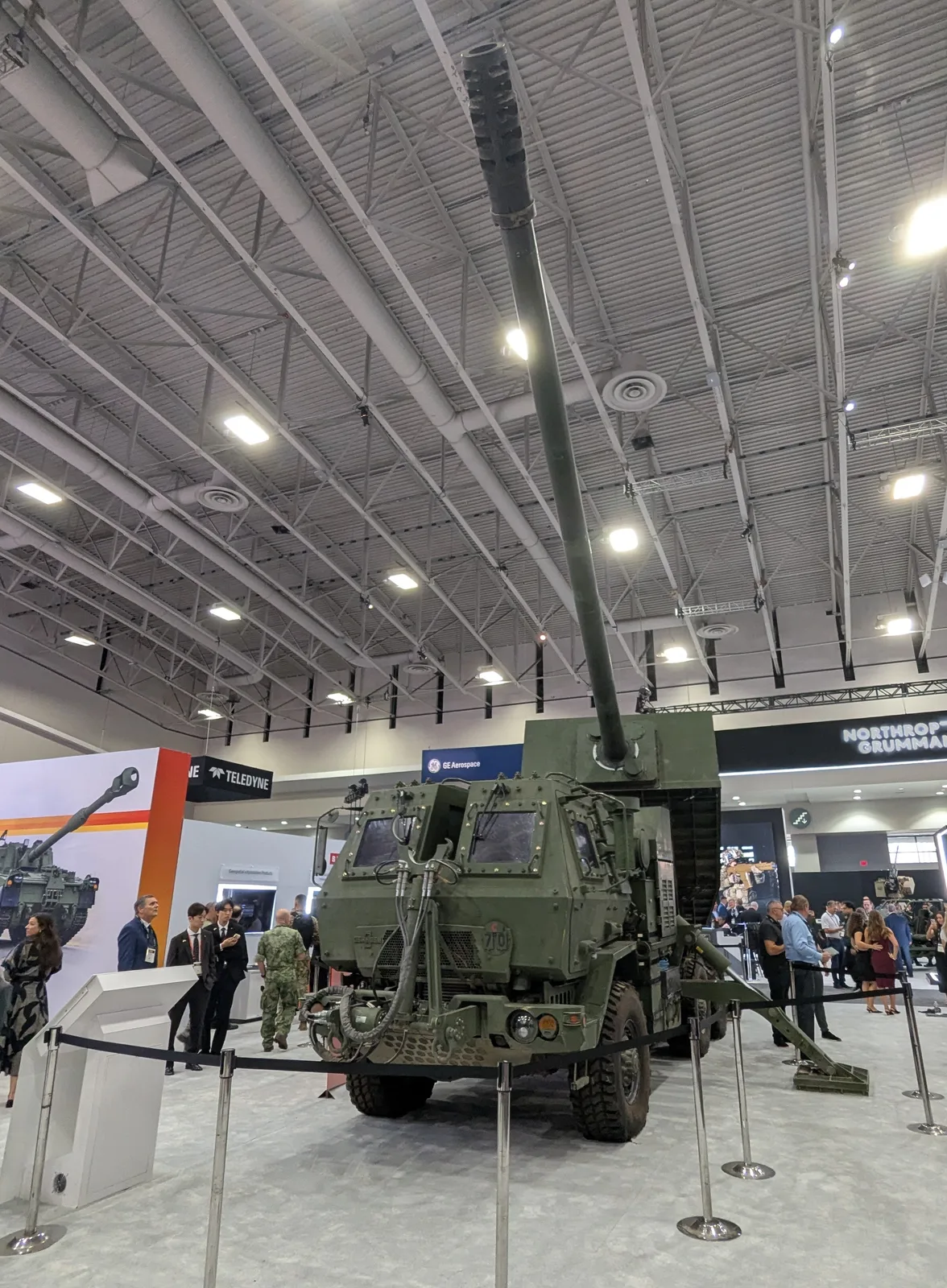
BAE Systems unveiled two new defence systems at the Association of the US Army (AUSA) exposition, held in Washington, DC, from 12 to 14 October: the Multi-Domain Artillery Cannon System (MDACS) and the High Power Microwave (HPM) system.
MDACS
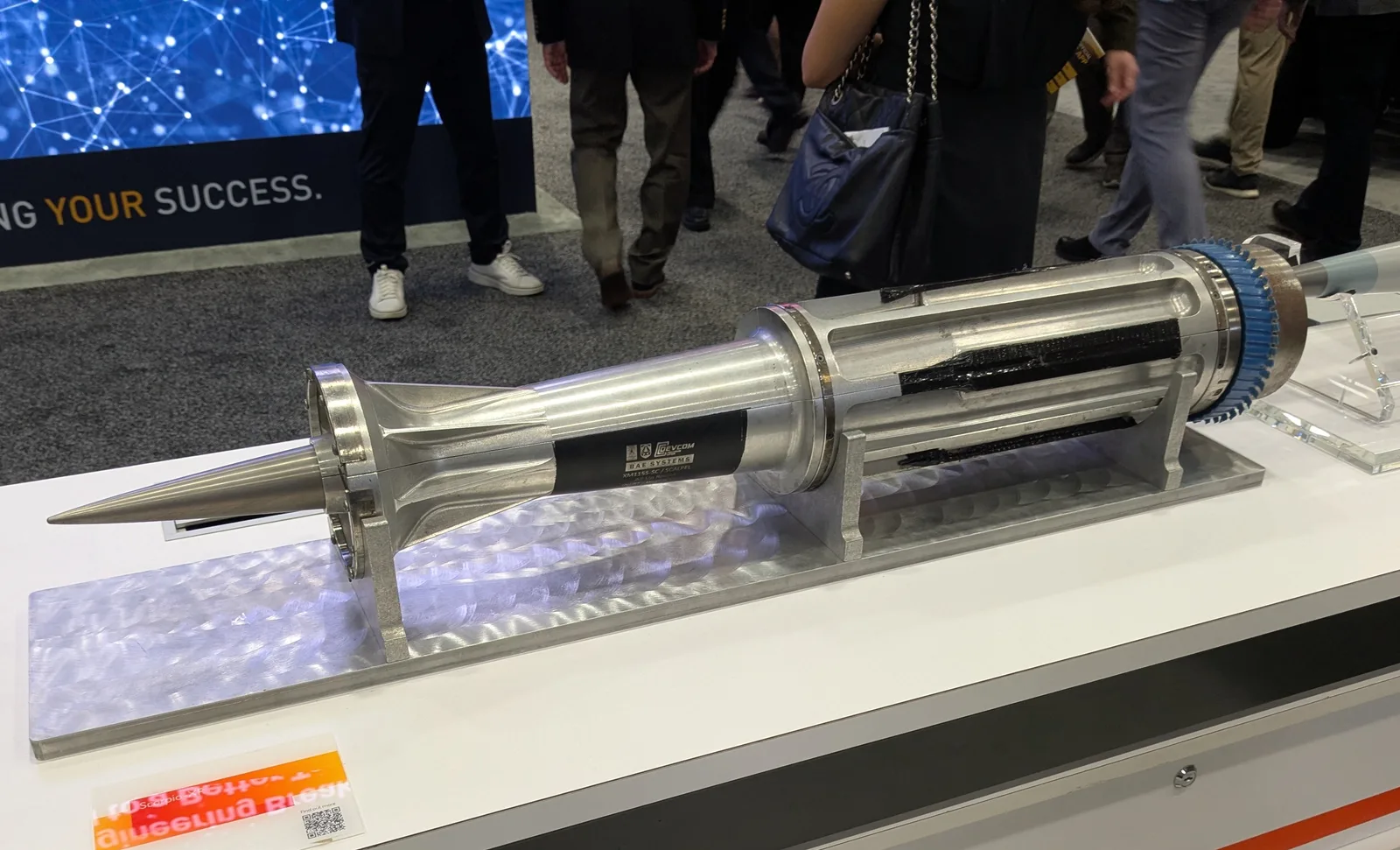
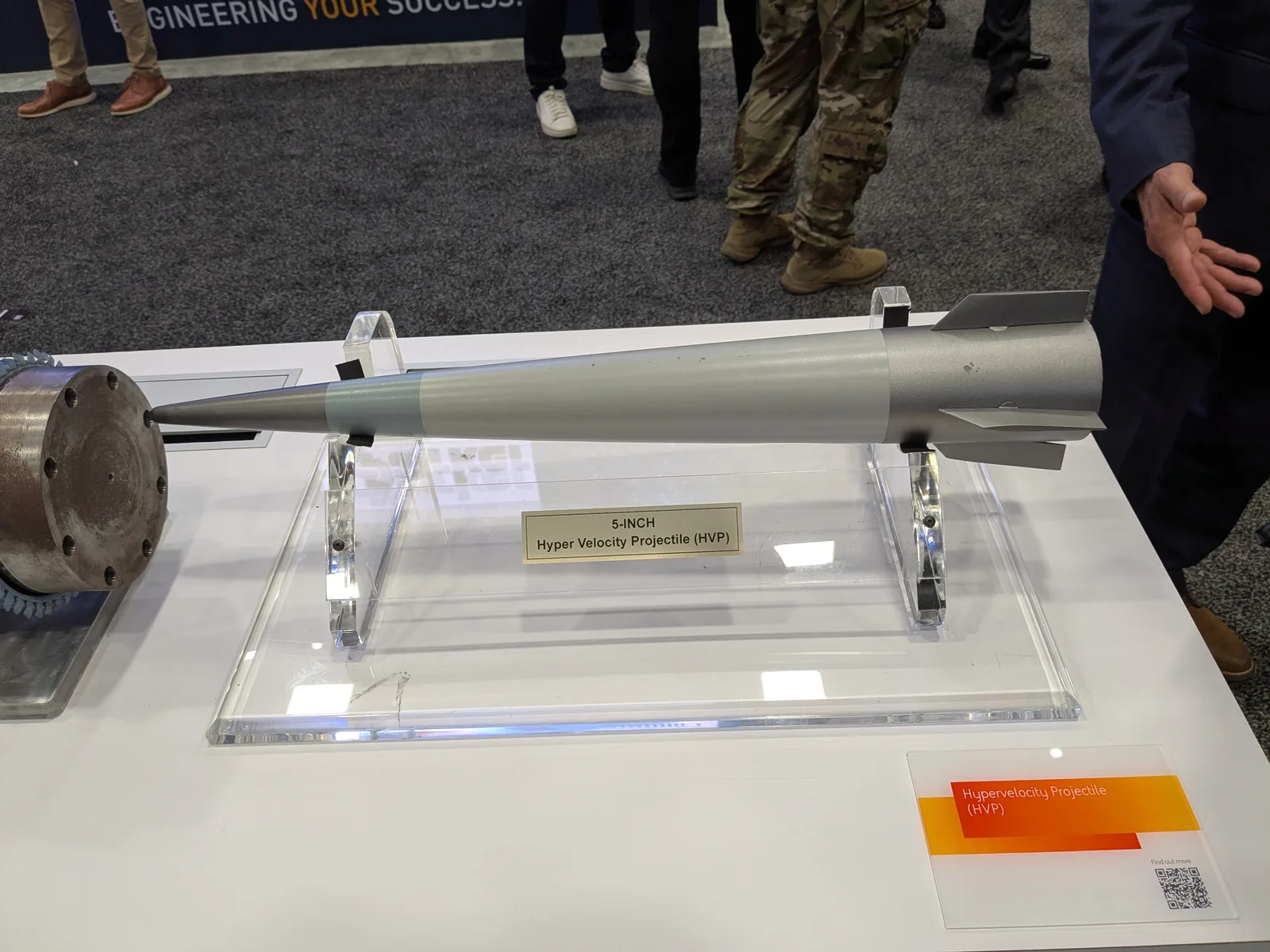
Mounting a 155 mm gun module on a Family of Medium Tactical Vehicles (FMTV) 6×6 truck chassis, the MDACS has the appearance of a wheeled self-propelled howitzer. However, while the system can strike fixed and moving ground targets using BAE Systems’ Scorpio-XR precision-guided munition, the MDACS can also address air as well as ground targets using the Hypervelocity Projectile (HVP): a next-generation, low-drag, guided projectile capable of being fired from a number of gun systems, such as naval 5-inch (127 mm) guns, 155 mm artillery systems and future electromagnetic (EM) railguns.
BAE Systems’ Scorpio-XR is an advanced, cannon-launched, low-drag projectile currently under development that can double the range of existing 155 mm cannon-launched projectiles.
The HVP, meanwhile, has been developed under the US Navy’s Major Caliber Anti-Drone Air Program (MADCAP), which is focused on fielding a low-cost, mid-range layered defence against unmanned aerial vehicles (UAVs) and cruise missiles that can use standard Mk-45 5-inch naval deck guns, offering surface combatants a significantly higher capacity and lower cost-per-shot alternative to traditional air defence missiles.
The HVP has a range of 130 km when fired from the BAE Systems 155 mm/62 Mark 51 Advanced Gun System, which is a fully automated naval artillery system built for the US Navy’s Zumwalt-class (DDG 1000) destroyers, but can achieve a range of 80 km when fired from 155 mm tube artillery (or even 185 km when fired from an EM railgun).
As Chris Laski, director of business development for weapon systems at BAE Systems’ Platforms & Services business segment, explained to Warsight at AUSA 2026 on 13 October, “The same projectile that we developed under the railgun programme is the same projectile we’re selling to the navy for their five-inch guns is the same projector we would use in this system.”
Fired from a 155 mm artillery system, the HVP is a sabot round featuring seekers and a kinetic warhead, although Laski declined to go into further details with regard to the seeker and warhead configuration.
Describing how MDACS would be employed, Laski said, “Like any air defence system, you have a radar, a battle command system, and you have a launcher. Subtract out the missile launcher; insert the MDACS. And we have tested against cruise missile targets and a number of threats.
“It is capable against a high number of threats,” Laski added, “so our performance is not limited by how well the projectile can go after the target; it is how good of a sensor can you give me. It used to be I could see further than I could shoot. We’re now at a time where I could shoot further than I could see.
“Other missiles are hundreds of pounds. You need a crane; you need a specialised truck,” Laski said. “This is an artillery projectile [that weighs] about 100 lb [45.4 kg] less. You can now move this without special mission handling,” Laski added. “In terms of resupply, think of that: how many artillery rounds can you fit on the back of a truck?”
Laski noted that BAE Systems has so far produced two MDACS prototypes: the FMTV-based version shown at AUSA 2026 and a lighter non-cabbed version that is deployable in a C-130 Hercules transport aircraft.
Regarding the status of MDACS development, Laski said, “Right now we’re in full test.” Asked by Warsight if BAE Systems is hitting live air targets with MDACS, Laski replied, “We’re taking things out. It is working.” Pointing to the MDACS on display at AUSA 2026, Laski said, “There’s the reason there’s dirt on it. Instead of giving you the idealised [system] in a trade show condition, what you’re seeing is an actual working asset that is going and doing the job.”
Laski additionally noted that the development of MDACS has been funded by both BAE Systems and the US Office of the Secretary of War and that BAE Systems is ready, financially and otherwise, to test and qualify the system.
HPM
The HPM system, meanwhile, is a mature, scalable directed-energy weapon designed to provide cost-effective, layered air and missile defence across land, sea contested environments. The system generates high-power microwave pulses to disrupt or destroy target electronics and systems at the speed of light, providing a continuous, low-cost-per-shot alternative to conventional missiles and kinetic ammunition.
A key feature of such directed-energy systems is that they effectively provide a ‘bottomless magazine’, eliminating the logistical burden and cost of traditional ammunition or missiles.
Currently at Technology Readiness Level (TRL) 6 (meaning it has been demonstrated in a relevant, non-laboratory environment), BAE Systems’ HPM employs 99% commercial off-the-shelf (COTS) components.
The HPM system shown at AUSA 2026 was presented as an ISO container-sized, self-contained system. As Laski described it, “If you were to just drop this in the middle of somewhere, add some diesel to it, play ball.”
While reticent to discuss the range of the HPM system, Laski asserted that it was superior to competitive systems.
BAE Systems’ HPM was developed over the last few years, with Laski noting, “We are actively testing the system. We’ve been testing it against representative ranges, representative targets. We have some additional testing to do.”
The HPM system is jointly funded by BAE Systems and the US government alongside the US Army’s Honey Badger high-powered microwave weapon initiative.