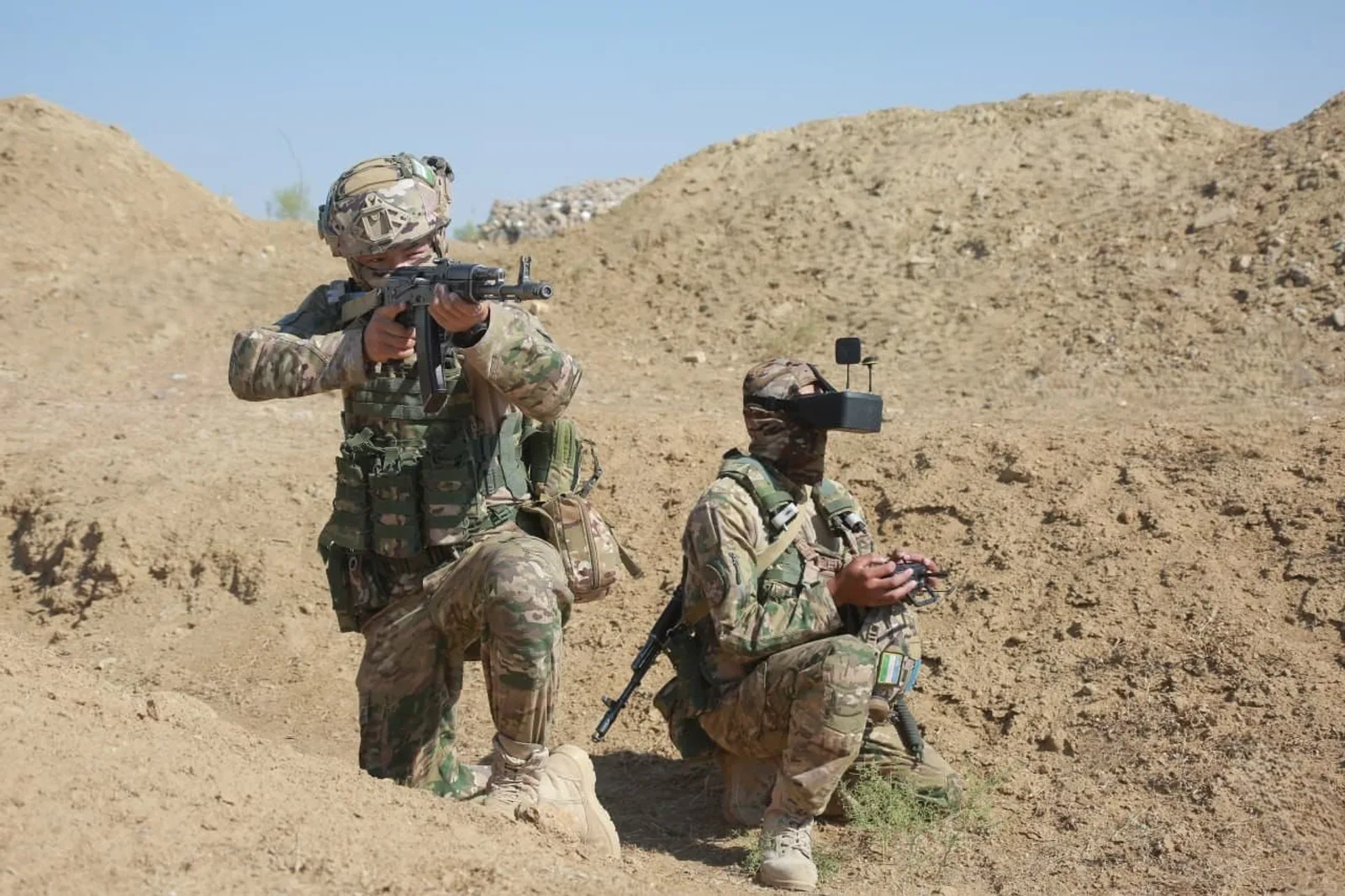
The ongoing US/Israeli military campaign against Iran, and Tehran’s response to it, are offering an insightful glimpse into the future of missile warfare.

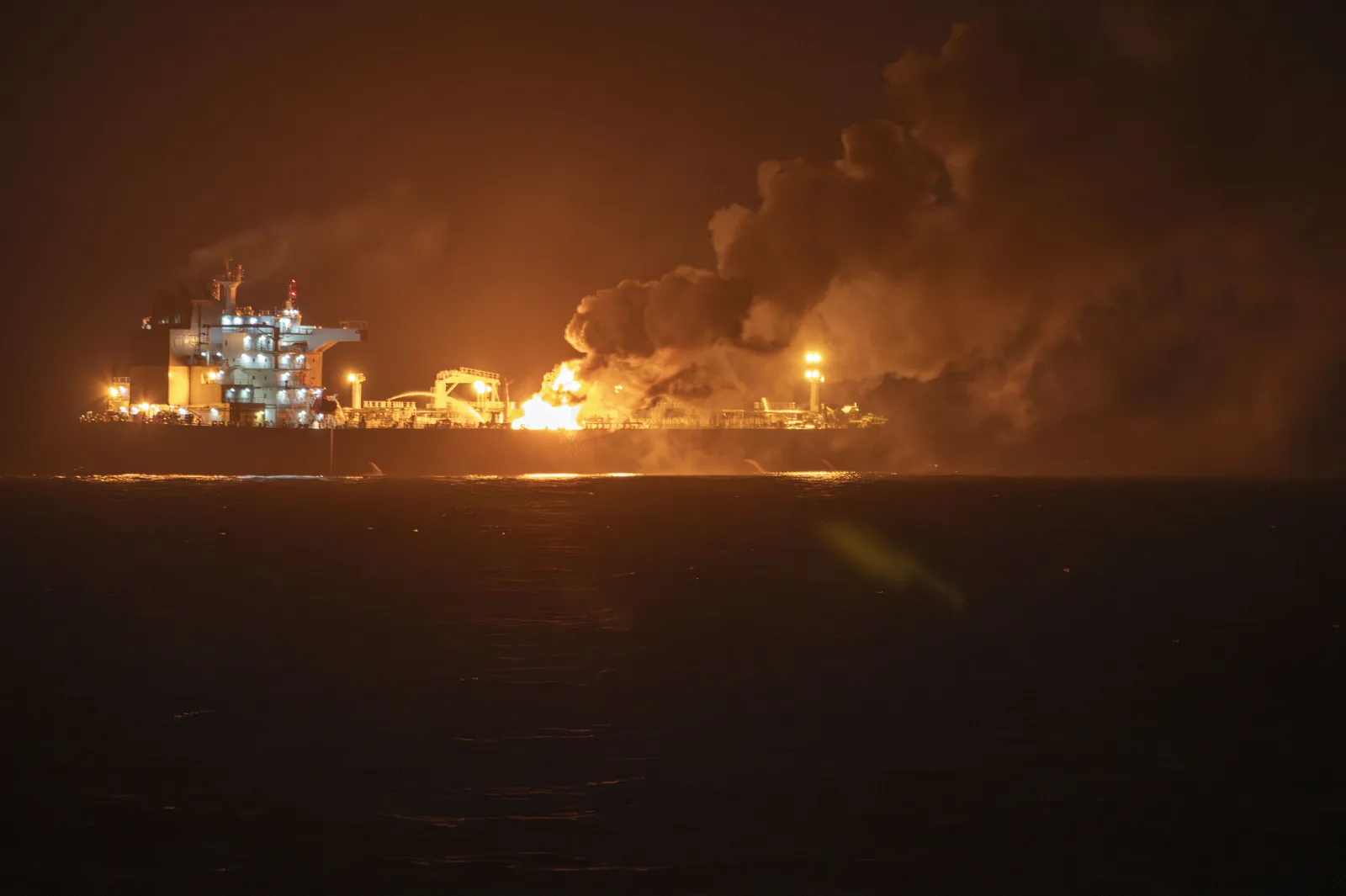

The ongoing US/Israeli military campaign against Iran, and Tehran’s response to it, are offering an insightful glimpse into the future of missile warfare.

Over the last 16 days the United States and Israel have engaged Iran in what has evolved into an increasingly asymmetrical campaign. US and Israeli air power conducted highly effective opening air strikes against Iran’s leadership and key military and industrial targets, including the missile bases of the Islamic Revolutionary Guard Corps (IRGC) and the defence-industrial ecosystem that underpins Iran’s ballistic missile arsenal, which represents the key strategic challenge from an Israeli standpoint.
Iran, for its part, appears to be pursuing what effectively amounts to a largely (though not entirely) counter-value campaign aimed at ensuring that the costs of the ongoing war are felt by taxpayers in Europe and the US as well as by neighbouring nations in the Gulf. The dynamics of this campaign, despite the many unknowns, carry important lessons at both the tactical-operational and strategic levels.
Iran’s medium-range ballistic missile (MRBM) arsenal has been used to a far lesser extent than had been the case during the Twelve-Day War between Iran and Israel in June 2025, with roughly half as many missiles being fired at Israel than had been employed in a comparable period in 2025. Furthermore, in both conflicts Iran did not achieve the weight of co-ordinated fire that it did during its two 2024 attacks on Israel, both of which involved over 200 ballistic missiles being launched in a single night. The reasons for this are relatively easily understood. Under constant US and Israeli air attack, and with a command-and-control (C2) architecture that has had to move towards reversionary decentralised control consistent with Iran’s ‘mosaic defence’, it is likely that the IRGC aerospace forces cannot co-ordinate the simultaneous launch of hundreds of missiles.
What is more noteworthy is the fact that, during both wars, preventing a larger number of very large-scale missile launches required the US and Israel to take near instant air control over Iran in a period that was impressive even by the standards of historically successful suppression of enemy air defence (SEAD) campaigns. For example, during the 1991 Gulf War the decisive phase of the SEAD campaign took roughly over a week. This raises the intriguing question of whether pre-emption was a choice or an operational necessity. Despite the more staggered rate of missile launches during the Twelve-Day War, the US was compelled to expend almost a decade’s worth of Terminal High Altitude Area Defense (THAAD) interceptor production in a relatively short period of time. More co-ordinated salvos would have restricted air defenders’ capacity to adopt a ‘shoot, shoot, look, shoot’ firing doctrine to conserve interceptors and exacerbated this problem. Furthermore, although initial Iranian strikes on Nevatim air base in April 2024 suggested that the missiles used had a poor circular error probable (CEP), the greater accuracy of missiles such as the Fattah-2 hypersonic glide vehicle (HGV), which was employed in greater numbers during the October 2024 attacks, appears to have inflicted some damage on targets such as hangars at Nevatim. Even with conservative assumptions about missile CEP, a larger number of co-ordinated salvos would have had an impact on the tempo of air activity and thus the duration of the SEAD campaign, in turn prolonging the time for which larger salvos could be co-ordinated. This raises the interesting question of whether in theatres such as the Pacific, where the US would face a much larger and more accurate missile arsenal as well as a much more robust integrated air defence system (IADS), the decision to escalate would have to be made even earlier in a crisis because absorbing an adversary’s first blows is unsustainable and one’s airpower is expected to become less usable as time wears on, given the risk to air bases. Moreover, if Chinese planners perceive a US incentive to pre-empt, this would shape their own assumptions.
Notably, despite the apparent current suppression of the Iranian MRBM arsenal, the US has seen fit to relocate parts of the US THAAD inventory – seemingly launchers – from South Korea to the Middle East, suggesting that the intensification of this threat is viewed as a possibility. The relocation of launchers would imply that this is not entirely linked to the Iranian destruction of an AN/TPY-2 radar with a drone on 5 March. The decision, which appears to be linked to adding launch capacity, can plausibly be linked to the fact that Iran’s more numerous short-range ballistic missile (SRBM) arsenal poses a more enduring threat to states in the Gulf. Adding greater capacity to a system such as THAAD would add a layer to the air defences in the Gulf, which are largely reliant on the shorter-ranged Patriot air defence system. Alternatively, the Iranian MRBM threat may be viewed as potentially likely to increase if Iran has kept a more significant portion of its launchers underground than initially anticipated in order to intensify attacks as the campaign wears on. Additional launchers being added to a regional system would appear to imply the anticipation of a higher tempo of activity in which interceptors need to be expended in rapid succession – something that could imply that at least some larger co-ordinated salvos are anticipated despite Iran’s difficulties. Alternatively, this might presage a higher tempo of smaller-scale salvos.
Either outcome is illustrative of the fact that, although the difficult task of co-ordinating large salvos becomes difficult under air attack, a strike complex can degrade gracefully. This can happen if the focus of the attacker shifts to a steady drumbeat of smaller-scale attacks: what US naval tactician Wayne Hughes described as sequential attacks. Because the most concentrated points of failure in a missile arsenal are the things that enable co-ordination – particularly because the activity associated with co-ordination makes targets such as C2 nodes at every level more visible through acts such as communication – this represents the logical fallback option for a state like Iran and has been built into its defence planning for a long time.
Sequential attacks cannot usually overwhelm complex air defences unless they present targets that, by their sheer complexity, can present a challenge to air defenders even if used in small numbers. The Iranian Fattah-2 HGV, which uses an apogee kick motor to power its re-entry vehicle and make it a more complex target, could be one example of such a capability. However, the number of these Iran fielded and still retains is unknown. More typically, however, sequential attacks depend on aggregate effects: either exhausting adversary interceptor capacity or the bandwidth of the air defence network. This, in turn, implies a shift towards counter-value targeting against less complex static targets as well as an effort to maximise civilian damage, which less-capable missiles can inflict – in turn making them impossible to ignore. Iran’s decision to use cluster munition warheads on older Shahab-3 ballistic missiles that lack the accuracy to target key sites is an example of this.
Another capability entirely consistent with a sequential approach focused on counter-value targeting is the use of bomb-laden unmanned aerial vehicles (UAVs) such as the HESA Shahed-136. Powered by engines comparable to the German Limbach L550E, Shahed-type drones can be produced under attack far more easily than ballistic missiles, which require complex components such as high tensile motor casings and rocket motors. This has been demonstrated in Yemen by the Houthi movement, which produced variants of Iranian UAVs over the course of a decade of war. The potential for the Shahed to compel the expenditure of interceptors more expensive than the drone has been understood from the war in Ukraine. Furthermore, although Iran has mostly used the Shahed against critical infrastructure, the UAV has also been used against high-value targets such as the AN/TPY-2 radar, illustrating how different parts of the air threat spectrum can hold at risk components of the defensive architecture that are not optimised to deal with them, unless air defences are multi-tiered.
While Ukraine has become increasingly effective at defending itself against Shaheds, it has several advantages that states in the Gulf do not. The first is strategic depth: a Shahed aimed at a target in Ukraine must cover a large area of mostly empty space in which the Ukrainians have layered a multi-modal sensor network that has, in turn, facilitated the use of cheaper weapons like mobile anti-aircraft artillery (AAA) enabled by information support from the wider system against the Shahed to good effect. Moreover, AAA fire in Ukraine is layered outside cities and other key nodes: something only partially viable in the defence of coastal targets. As such, even successful intercepts can result in debris and casualties. The ground-based solutions of Ukraine are thus only a partial palliative for states that lack geographical depth but which need to engage threats further out. Secondly, maritime clutter, which makes the discrimination of low-radar-cross-section objects more difficult, is less of a challenge in Ukraine than the Gulf. Some solutions, such as the use of helicopters in a defensive counter-air role, are fungible, but this involves both wearing down airframes and manoeuvring in ways that pose risks to crews: something that may have contributed to a recent accident involving an Emirati helicopter, although this cannot be confirmed.
The challenge is not that the technical means to intercept large salvos more cheaply in a theatre without depth do not exist. Fixed-wing aircraft proved highly effective against Shahed-type targets in April 2024 and new cheaper air-to-air interceptors such as rockets equipped with Advanced Precision Kill Weapon System (APKWS) II kits would allow engagements to be conducted without the use of more expensive air-to-air interceptors. However, the challenge becomes one of tempo, with the rate at which air threats must be intercepted posing an operational challenge even if interception is not tactically complex. Low-cost ground-based systems such as the Anglo-Ukrainian Octopus air defence drone can provide a partial solution, but they still need to be cued. The likely solutions might involve some form of persistent airborne intelligence, surveillance, target acquisition, and reconnaissance (ISTAR) capability that could be a variant of the aerostat-mounted Joint Land Attack Cruise Missile Defense Elevated Netted Sensor System (JLENS) or a medium-altitude long-endurance UAV.
The ongoing US/Israeli war with Iran offers tantalising clues regarding the future of missile warfare. In particular, the challenge of sustaining a defence and the specific challenges of maintaining operational tempo against even a degraded attacker stand out. Several geographical features of the Gulf as a theatre, including the relative absence of strategic depth, are also of interest with respect to examining future operations in the Indo-Pacific. While each conflict has unique characteristics, the ongoing war offers a glimpse into the future of missile warfare.