While UK defence procurement is currently in something of a stall, the need to initiate an advanced jet trainer programme to replace the Royal Air Force’s fleet of Hawks is becoming increasingly urgent.


While UK defence procurement is currently in something of a stall, the need to initiate an advanced jet trainer programme to replace the Royal Air Force’s fleet of Hawks is becoming increasingly urgent.

On 25 April 2026 the UK’s Daily Express tabloid newspaper published an article entitled ‘Save our Red Arrows! Ex-pilots urge Labour to halt scrapping of British planes’.
The article detailed how nine former pilots of the iconic Royal Air Force (RAF) Red Arrows aerobatic display team had started a petition with the intention of prompting a UK Parliamentary debate to prevent the UK Ministry of Defence (MoD) from selecting a foreign aircraft to replace the Red Arrows’ ageing Hawk T1 trainers. Such an outcome, argued former Red Arrows pilot Andy Wyatt, would negate the aerobatic team’s ability to symbolise British innovation and would “accelerate the erosion of sovereign capability”.
The next day an editorial on the online professional networking platform LinkedIn from Aerialis, the UK start-up that was bidding a British-designed solution for the RAF’s future advanced jet trainer (AJT) requirement, followed up on the reporting by the Express, arguing that, in offering the only British-designed AJT for the requirement, it had a “once in a generation opportunity to rebuild the UK’s soft power, protecting the nation’s ability to develop and operate military equipment when and where it is needed, creating high-value UK jobs and generating high value exports to deliver essential economic growth”.
On 15 May, however, less than three weeks after the Express story was published, Aeralis officially went into administration amid sustained cashflow pressure linked to continued delays to the UK government’s Defence Investment Plan (DIP) and after Barzan Holdings, the strategic investment and procurement arm of Qatar’s Ministry of Defence, pulled the plug on its investment in the company.
Robin Southwell, the chairman of Aeralis, stated, “The Board has taken this decision after careful consideration of the company’s position and the funding challenges it has faced over recent months. We will continue to support the joint administrators as they explore viable, sustainable options for the future of the business and engage with interested parties.”
And with that, the prospect of a British-designed successor to the RAF’s Hawk AJT was effectively dead.
According to the UK MoD’s published equipment holdings in 2025, the RAF had at that time 14 Hawk T1As in service – the aircraft used by the Red Arrows – from a remaining total fleet of 26 such aircraft as well as all 28 aircraft from the Hawk T2 fleet in service.
Of an original fleet of 175 Hawks T1s that entered service with the RAF from 1976, the Red Arrows, known in RAF circles as the Royal Air Force Aerobatic Team (RAFAT), operate the last of 89 Hawks converted to the T1A standard with the ability to carry weapons, (although once converted for RAFAT use these aircraft are redesignated as T1s).
The Hawk T2 fleet, meanwhile, entered service from 2012 and assumed all of the RAF’s advanced jet training duties from 2016, after which the T1/T1As were used for duties such as aggressor and surrogate training as well as being the aircraft used by the Red Arrows. While the Hawk T1s received a Rolls-Royce/Turbomeca Adour Mk 151 turbofan, the Hawks T2s have a more powerful Rolls-Royce/Turbomeca Adour Mk 951 powerplant with Full Authority Digital Engine Control (FADEC). The Hawk T2s also feature synthetic radar and electronic warfare training capabilities and a fully digital glass cockpit commensurate with training pilots to fly fourth/fourth-plus-generation fighters.
The out-of-service date for the Hawk T1s remaining with the Red Arrows is 2030, but these aircraft are already coming under pressure to achieve that. In May 2026 it was announced that the Red Arrows would complete their 2026 schedule of aerobatic shows with a formation of seven jets instead of their classic ‘Diamond Nine’ formation. The RAF stated that this was to “support the sustainable management of the Hawk T1 fleet and prepare the team for a transition to a future aircraft type”. The age of and parts availability for the Hawk T1s’ Adour Mk 151 turbofans has been cited as a particular issue; the ones that remain in good order reportedly having to be rotated across the fleet to keep enough Hawks safely airworthy to fulfil their training and show schedule. It has also been suggested that the RAF has manpower issues with the maintenance, repair and overhaul (MRO) operation that supports the RAFAT fleet and its operations.
The Hawk T2s also have maintenance problems, especially in relation to their Adour Mk 951 turbofans and their Safran-manufactured Module 1 low-pressure compressors. An engine failure on the runway at RAF Valley in January 2023, for example, triggered an immediate pause to all flight operations for the T2 fleet, although this was subsequently lifted by the end of that month.
The fact that, beyond BAE Systems as the overall OEM of the Hawk, the UK MoD has a separate contract with Rolls-Royce/Safran through its Defence Equipment & Support organisation to service the Hawks’ powerplants is also a complicating factor.
These issues have put significant pressure on RAF fast jet pilot training capabilities and in mid-2025 led to the Hawk T2 fleet’s original out-of-service date of 2040 being officially brought forward to 2033, effectively bringing together the two separate Hawks T1 and T2 replacement requirements into one.
The RAF’s overall Hawk replacement requirement is understood by Warsight to cover around 25 aircraft for Phase 4 training (advanced jet and lead-in fighter training (LIFT)), along with a fleet of 15 RAFAT aircraft.
If the RAF had been able to advance an AJT replacement programme some years ago, one solution could have been to retask the Hawk T2s, which have plenty of airframe life remaining, as RAFAT aircraft – thus retaining a UK platform for the Red Arrows – while procuring a new AJT platform for RAF Phase 4 training, but this is no longer possible given the RAF’s revised out-of-service timelines.

The UK Strategic Defence Review (SDR), published on 2 June 2025, stipulated in its recommendations that the RAF’s Hawk T1s and T2s “should be replaced with a cost-effective fast jet trainer”, adding that the “current flying training arrangements for fast jets must be urgently revised to optimise capacity, building in maximum use of contractors and provision for training overseas students”.
Speaking at the Royal Aeronautical Society in London on 18 February 2026, Air Chief Marshal Harv Smyth, Chief of the Air Staff, stated, “I really want to get going on a replacement programme for the Hawk. We need to get a competition going.”
That, however, cannot happen without a firm set of RAF requirements.
On paper, at least, the Aeralis proposal for the development of a future AJT was certainly an innovative one. The fact that it remained on paper – or, more accurately, as a digital design with an aeronautical CAD programme – is what ultimately consigned it to being a non-starter.
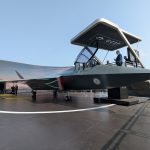
The Aeralis AJT concept was essentially modular and embraced an all-digital approach. Using a common core fuselage to which different wings, undercarriage, tails and powerplants could then be added, the company asserted that it could produce a multitude of potential future variants, including: basic and advanced jet trainers; aggressor aircraft; light strike platforms; intelligence, surveillance and reconnaissance (ISR) aircraft; and even unmanned combat air vehicles and aerial refuelling aircraft.
The modular concept even translated to overseas production potential with a view to developing exportable sovereign aerospace capability.
In December 2022 the UK MoD issued Aeralis a GBP 9 million digital engineering contract and there was further modest financial support from the RAF’s Rapid Capabilities Office. By April 2025 the company was able to announce its list of production partners, called ‘Aerteam’, at an industry day. These included maintenance, repair and overhaul (MRO) MRO specialist StandardAero and Hamble Aerostructures for the airframe, Héroux-Devtek for the undercarriage, Leonardo to supply the AJT’s large area display, Honeywell/ITEC as the supplier of the jet’s F124 turbofan and Martin-Baker as an obvious choice to supply the aircraft’s ejection seat.
As well as targeting the RAF’s AJT requirement, Aeralis also looked to gain interest from the French Air and Space Force (AAE) and its Patrouille de France aerobatic team, whose Dassault Alpha Jets are due to be retired in the 2032-33 timeframe, and set up a French subsidiary in early 2025. This French requirement was limited to the Patrouille de France, though, as the AAE’s Alpha Jets in the AJT role were retired in mid-2023 and replaced by turboprop-powered Pilatus PC-21s.
With Qatar’s Barzan Holdings holding a 24.9% stake in the company, Aeralis also marketed to the Qatar Emiri Air Force (QEAF), which operates a mix of Hawks and Leonardo M-346 AJTs that are probably not enough in number to match the QEAF’s future fast jet aspirations. Aeralis additionally proposed its AJT solution to Japan as a replacement for that country’s Kawasaki T-4 intermediate jet trainer fleet.
What new military aircraft programmes generally always need, however, is a solid launch customer, and Aeralis never found one. Ultimately, when Barzan Holdings saw the writing on the wall and withdrew its financial support in mid-May 2026, the Aeralis venture collapsed.
The essential truth is that, in never having the funding to build a flying prototype, the Aeralis AJT proposal always presented itself as a plan that invited a significant risk quotient. Even in the 21st Century world of artificial intelligence and machine-learning shortcuts, there will inevitably always be development challenges that arise. Beyond that, analysts have remarked that meeting the RAF’s 2030-2033 timelime for a future Hawk replacement could still be challenging for bidders that already have a solution in service, depending on how their orderbook commitments look, let alone an aircraft that doesn’t currently exist.

One reasonable question to ask is, given that the ultimate need for a replacement for the RAF’s Hawk fleets was clearly evident several years ago, why BAE Systems did not develop a successor platform. The short answer to that is that, to at least some extent, it did.
On 19 September 2011 BAE Systems announced it had formally teamed with US aerospace giant Northrop Grumman to bid a concept known as the Advanced Hawk for the US Air Force’s (USAF’s) T-X advanced pilot training programme. The Advanced Hawk featured a redesigned wing, defensive aids and a cockpit featuring a large area display and BAE Systems’ LiteHUD low-profile head-up display.
The T-X programme certainly presented a large pot of money to shoot for, as the contract was worth USD 9.2 billion, yet the Northrop Grumman/BAE Systems team ultimately withdrew from the contest in February 2017, asserting that the USAF’s apparent determination to seek a lowest-cost solution did not allow the team to adopt a viable business case to continue bidding.
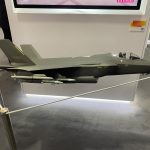
However, that same month, at the Aero India exhibition in Bengaluru, BAE Systems unveiled a non-flying representation of its Advanced Hawk concept in conjunction with Hindustan Aeronautics Ltd (HAL): its partner for licenced production of the Hawk for the Indian Air Force (HAL locally produced 99 Hawks for India’s air force and navy out of a total order for 123 aircraft).
A flying Advanced Hawk demonstrator (aircraft ZJ951) then made its maiden flight out of BAE Systems’ facility in Warton, Lancashire, on 7 June 2017. The Advanced Hawk was by this time aimed at addressing the Indian Air Force’s future AJT requirements in conjunction with HAL. However, amid a bribery scandal involving Rolls-Royce (provider of the Advanced Hawk’s Mk 951 turbofan) and India’s preference to an develop an indigenous AJT solution, the Advanced Hawk ultimately went nowhere in India. Meanwhile, with no demand signal for the Advanced Hawk from the UK MoD at the time, BAE Systems ultimately decided to put its financial investment eggs in other baskets.
Regarding current RAF requirements, further developing the Advanced Hawk almost a decade after its initial appearance as the kind of platform that could adequately prepare trainee fighter pilots to fly sixth-generation combat aircraft like the UK’s future Tempest (being developed under the UK/Italian/Japanese Global Combat Air Programme (GCAP)) would be insurmountably expensive.
Aircraft ZJ951, the sole flying Advanced Hawk, currently resides inactive at BAE Systems’ Warton facility, while the non-flying version (ZJ100) is located at BAE’s Brough site, where it is currently in storage but being looked at as a training aid for aerospace engineers.

In contrast to when the Hawk T1 first entered service in 1976, the current international AJT market has become much more saturated as various countries with substantial fast jet fleets have developed their own indigenous AJT solutions. This was no doubt an additional factor in BAE Systems opting in the end to shy away from the expense of developing a Hawk successor.
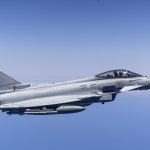
Regarding the Hawk replacement requirement, the most likely contenders are arguably the Leonardo M-346 Master, the Korea Aerospace Industries (KAI) T-50 Golden Eagle and the Boeing-Saab T-7 Red Hawk.
While KAI is teaming with Lockheed Martin UK for its Hawk replacement bid (the aircraft was originally developed in conjunction with Lockheed Martin), Leonardo has its UK arm to lead the bid in conjunction with Babcock International, while BAE Systems has officially hitched its wagon to the Boeing-Saab T-7.
It is worth noting that the M-346 is the only twin-engined solution of the three, compared to the single-engined Hawk, although Leonardo theoretically has the option of offering the single-engined M-345 HET (High Efficiency Trainer) as a complementary solution. However, while the M-345 HET would certainly offer lower operating costs, as it is specifically designed to provide jet handling and flight dynamics but with low life-cycle and maintenance costs approaching those of a high-end turboprop trainer, the M-345 would not be able the kind of Phase 4 training required of a Hawk successor.
Leonardo’s M-346 Master, meanwhile, originally emerged out of a 1992 co-operation agreement that what was then Italy’s Aermacchi signed with Russian aerospace company Yakovlev to provide financial and technical support for a new AJT Yakovlev had been developing as a competitor to the Mikoyan MiG-AT. The jointly developed aircraft was called the Yak/AEM-130, but in 2000 the Italian-Russian partnership unravelled amid differing priorities and the Russian side failing to commit enough financial backing for the project. An agreement was then arranged under which Yakovlev could continue with and market what was by then called the Yak-130 to non-Western countries, while Aermacchi was free to market its own, highly modified version of the aircraft, the M-346, to the West.
The first M-346 prototype made its maiden flight on 15 July 2004 and, spurred by international interest in the programme, the first LRIP M-346 was rolled out on 10 April 2008. Since then the aircraft has been further developed under Leonardo, which absorbed the activities of Alenia Aermacchi on 1 January 2016, including a light fighter variant, the M-346FA, that made its maiden flight on 13 July 2020.
After initially entering service in 2013 with the Italian Air Force (AM) and also the Republic of Singapore Air Force as the type’s first export customer, the M-346 is now in service with or on order for the air forces of nine countries, as well as operating with the International Flight Training School run by the AM and Leonardo out of Decimomannu Air Base in Sardinia. In May 2026 it was announced that the International Test Pilots School Canada (ITPS Canada) had ordered six M-346 T Block 20 aircraft, with options for an additional six, which are expected to enter service from 2029.
Powered by two Honeywell F124-GA-200 turbofans each developing 28 kN thrust, the M-346 has a maximum speed of 1,090 km/h (low altitude), a range of 1,980 km, a service ceiling of 45,000 ft (13,715 m) and a sustained load factor of 8 g.
The aircraft has an Embedded Tactical Training System (ETTS) able to generate a tactical scenario with computer-generated threats and targets, along with an integrated training system that includes simulators. This overall live, virtual and constructive (LVC) training system allows actual flight hours in a training syllabus to be reduced while still allowing pilots to train within a realistic environment.
A key feature of the M-346 is that it features a highly stepped tandem seat configuration (stadium seating) that offers the rear-seat pilot a clear line of sight over the front-seat pilot’s head, affording an instructor pilot with very good forward visibility to monitor a student pilot’s actions during training flights.
The advanced Block 20 upgrade of the M-346, launched in 2024, introduces a single, large-area touch display that allows the aircraft to replicate the cockpit environments of fifth- and sixth-generation fighters.
In September 2024 the AM announced the M-346 as the future aircraft of its Frecce Tricolori aerobatic display team, supplanting the M-345, which had previously been slated for this role. The M-346 will take over from the Frecce Tricolori’s Aermacchi MB-339s in the 2027-2028 timeframe.

Developed under an offset agreement tied to South Korea’s purchase of Lockheed Martin F-16C/Ds from 1981, the KAI T-50 Golden Eagle was originally envisaged as an indigenous AJT to replace the US-designed T-38 Talon and A-37 Dragonfly jet trainers of the Republic of Korea Air Force (ROKAF).
Since the first example made its maiden flight on 20 August 2002, however, TAI has developed a number of T-50-based aircraft, including the TA-50 light attack and FA-50 light fighter variants. The first two production T-50s were delivered to the ROKAF in December 2005, but since then the type in all its incarnations has entered service with the air forces of Indonesia, Iraq, the Philippines, Thailand and Poland and is on order for Malaysia.
Powered by a single General Electric F404-GE-102 afterburning turbofan developing 53.07 kN thrust dry and 78.7 kN with afterburner, the T-50 is the sole supersonic-capable contender in the mix. The T-50 has a maximum speed of Mach 1.5 (or 1,840 km/h at 9,150 m), a service ceiling of 14,630 m and g limits of -3/+8 g.
Alongside the T-50 is a Ground-Based Training System (GBTS) developed by Lockheed Martin and KAI that contains an array of technologies that allow LVC training and the offloading of certain training tasks into the simulation environment.
The T-50 variant being pitched by KAI and Lockheed Martin for the RAF’s Hawk replacement requirement is the TF-50A: a variant configured as an AJT and light attack fighter.

Selected by the US Air Force (USAF) as its future AJT solution in September 2018 in a programme that is expected to see the procurement of a 351-strong fleet, the Boeing-Saab T-7 Red Hawk had performed its maiden flight on 20 December 2016. The aircraft suffered a somewhat protracted development due to delays caused by issues such as the Covid-19 pandemic and the aircraft being the first platform stipulated by the USAF to receive the new Collins Aerospace-produced Advanced Concept Ejection Seat (ACES) 5.
Given that Boeing agreed a fixed-price contract with the USAF in winning the T-X programme, the issues with the T-7 have effectively turned it into loss-leading platform regarding sales to the USAF
On 21 September 2023, however, the first Red Hawk was shipped to Edwards Air Force base for testing and prime contractor Boeing was officially cleared to begin low-rate initial production (LRIP) of 14 production-standard T-7As after receiving Milestone C approval on 23 April 2026. The USAF’s delayed initial operational capability with the T-7A is now targeted for November 2027.
Powered by a General Electric F404- GE-103 afterburning turbofan developing 49 kN thrust dry and 77 kN with afterburner (almost three times the thrust of the legacy Northrop T-38 Talon twinjet AJTs it will replace), the T-7A has a maximum speed of Mach 0.975 (1,205 km/h, low altitude), a service ceiling of 50,000 ft (15,000 m) and a g-force limit of 8 g.
In designing the T-7 Boeing and Saab say they have placed a premium on reliability and ease of maintainability. The aircraft has been digitally designed with a maintenance-friendly architecture, meaning, for example, that no ladders or special tooling are required to access crucial panels and avionics bays.
Like the M-346, the T-7A features a stadium seating arrangement that gives both instructor and student pilot an unobscured view from the cockpit.
Along with the actual aircraft, the T-7 platform comes with high‑fidelity ground‑based systems and simulators to deliver integrated LVC training.

Beyond these AJT solutions the Turkish Aerospace Hürjet, which conducted its maiden flight on 25 April 2023 and is due to enter Turkish Air Force service in 2027, is another potential contender.
In the wake of delays to the DIP (which was promised for the autumn of 2025 but, amid much political wrangling, is now slated to emerge prior to the NATO 2026 summit set for 6/7 July in Ankara), and thus no firm requirements issued by the UK MoD for a Hawk replacement, the expected lead competitors for the contest are remaining cagey.
Asked by Warsight to outline the details of its Hawk replacement bid, including plans for UK participation in terms of workshare and building/assembling in the UK, a spokesperson for BAE Systems replied, “In November 2025, we signed a letter of intent with Boeing and Saab to collaborate on the Royal Air Force’s fast‑jet trainer programme, using the T‑7 as the core of the training system, built in the UK. Our joint approach brings together three leading global defence primes at the heart of UK combat air capability, offering the UK a next-generation, cost‑effective, capable and reliable solution that protects sovereign industrial skills, meets RAF requirements, and delivers economic and social benefits across the UK.”
BAE Systems added that it is “committed to establishing a final assembly hub in the UK and creating high value jobs as well as growing UK supply chain involvement”, noting that its solution for the Hawk replacement requirement “will leverage existing UK MoD and industry investment in UK combat air technologies and reduces the risk of a newly designed and built solution, which would require significant investment”.
Asked the same questions by Warsight, a spokesperson for Leonardo UK, while noting that an understanding of the relevant requirements and the emergence of the DIP were prerequisites, replied, “We will work with UK industrial partners to provide a compelling, UK low-risk solution to the RAF advanced jet training requirement based on our proven and highly successful International Flying Training System capabilities.”
A spokesperson for Lockheed Martin told Warsight, “We look forward to further discussion with the Royal Air Force on requirements and procurement timelines to provide a TF-50 solution, led by our platform partner Korea Aerospace Industries, to meet the RAF’s advanced jet training needs and requirements for other roles such as the Red Arrows demo team and ‘red air’ [aggressor] and surrogacy missions.”
In pure performance terms the T-50, as previously mentioned, is the only contender that is truly supersonic – if, indeed, that is what the RAF determines that it needs in a future AJT, although a supersonic capability would appear to be an advantage in more closely matching frontline fighters and conducting aggressor flight training.
Another key differentiator, however, is range, and this is where both the T-50 and M-346, which both feature wing tanks that are part of the aircraft’s internal fuel structure (‘wet wings’), have an advantage over the T-7A, which in its current form does not have this feature (instead featuring a high-efficiency, single-point ground refuelling receptacle).
Why this matters in AJT terms relates to where the RAF conducts its fast jet training: out of RAF Valley on the island of Anglesey in Wales. Sources associated with the Hawk replacement requirement have asserted to Warsight that, with its limited fuel capacity, a T-7A could not safely perform a 30-minute basic fighter manouevring (BFM) training sortie out of RAF Valley with adequate divert fuel unless RAF Mona – RAF Valley’s master diversion airfield, 10 km to the east – could be flown to using visual flight rules (VFR). Given that local weather in northwest Wales could easily degrade visibility and blank out both locations simultaneously, this could impose considerable limitations on flight training.
While there are, indeed, plans for the T-7A to receive a ‘wet wing’ under a Block 2 structure and system upgrade that would also add underwing hardpoints and wingtip rails, work on this configuration has not started and so far remains unfunded. This means that, if the RAF were to select the T-7A and require ‘wet wings’, it would have to pay for them to be developed and implemented.
The Warsight source also suggested that the RAF would not be keen on the T-7A’s Collins Aerospace ACES 5 ejection seat. This pilot escape system, which features a gimballed rocket motor, is described by Boeing “arguably the safest of any trainer”, yet the RAF is reportedly more likely to want to stick with the UK-produced Martin-Baker ejection seats it currently uses and trusts.
Regarding unit and through-life costs – which will clearly be a significant factor for an MoD currently dealing with a GBP 28 billion (EUR 32.4 billion) ‘black hole’ in its finances – arriving at a like-for-like comparison between platforms, even with reliable open-source data, is always problematic with so many variables at play. Regarding unit cost, however, information provided to Warsight suggests that the M-346 and TF-50 are broadly similar. Interestingly, Warsight has also been told that this unit cost is also similar to what the USAF is paying for the T-7A under Boeing’s ill-fated fixed-price contract. This calls into question whether the T-7A could ever be offered to the RAF at a similar price point.
In terms of UK workshare and local assembly potential, it appears clear that Leonardo UK could make use of its aerospace production site at Yeovil in Somerset, while BAE Systems would be likely to offer local assembly at its aerospace production facility at Warton in Lancashire (although capacity there would be dependent on the volume of work being conducted on other programmes). For the TF-50, UK assembly potential is less clear, as neither Lockheed Martin UK or KAI currently have any aerospace production facilities in the UK.
Looking at platform maturity, both the T-50 and M-346 (including their variants) have established, operational, global user bases and can be considered low-risk solutions, while the T-7A remains at the LRIP stage.
Lastly, one potential advantage enjoyed by both BAE Systems and Leonardo is that, as key companies in the GCAP programme, they should have good vision of how an AJT solution for the RAF should dovetail with its future Tempest sixth-generation combat platform.
It was said of the Folland Gnat – the Hawk’s predecessor, which served as the RAF’s jet trainer from 1962 until 1978 and with the Red Arrows from their inaugural display season in 1965 until replaced by the Hawk T1 in 1980 – that to open the fuselage was to be confronted by a maintenance nightmare with wire looms that resembled a ‘mad woman’s knitting’ – in other words, precisely not what is desired of the Hawk’s successor.
The RAF’s next AJT will need to have efficient operation and ease of maintenance at its core while at the same time being a sophisticated platform fully capable of ultimately preparing pilots to fly a sixth-generation combat aircraft like the Tempest.
For now, however, at least one thing can be said for sure of the RAF’s future AJT: it will not be a British design.