Avibras resumes AV-MTC 300 cruise missile testing as Brazilian Army revives plans for Block II variant

Brazil’s Avibras has resumed testing of the AV-MTC 300 cruise missile after a four-year hiatus, while the Brazilian Army has revived plans for a Block II variant, signalling a renewed effort to expand the country’s long-range precision strike capabilities.

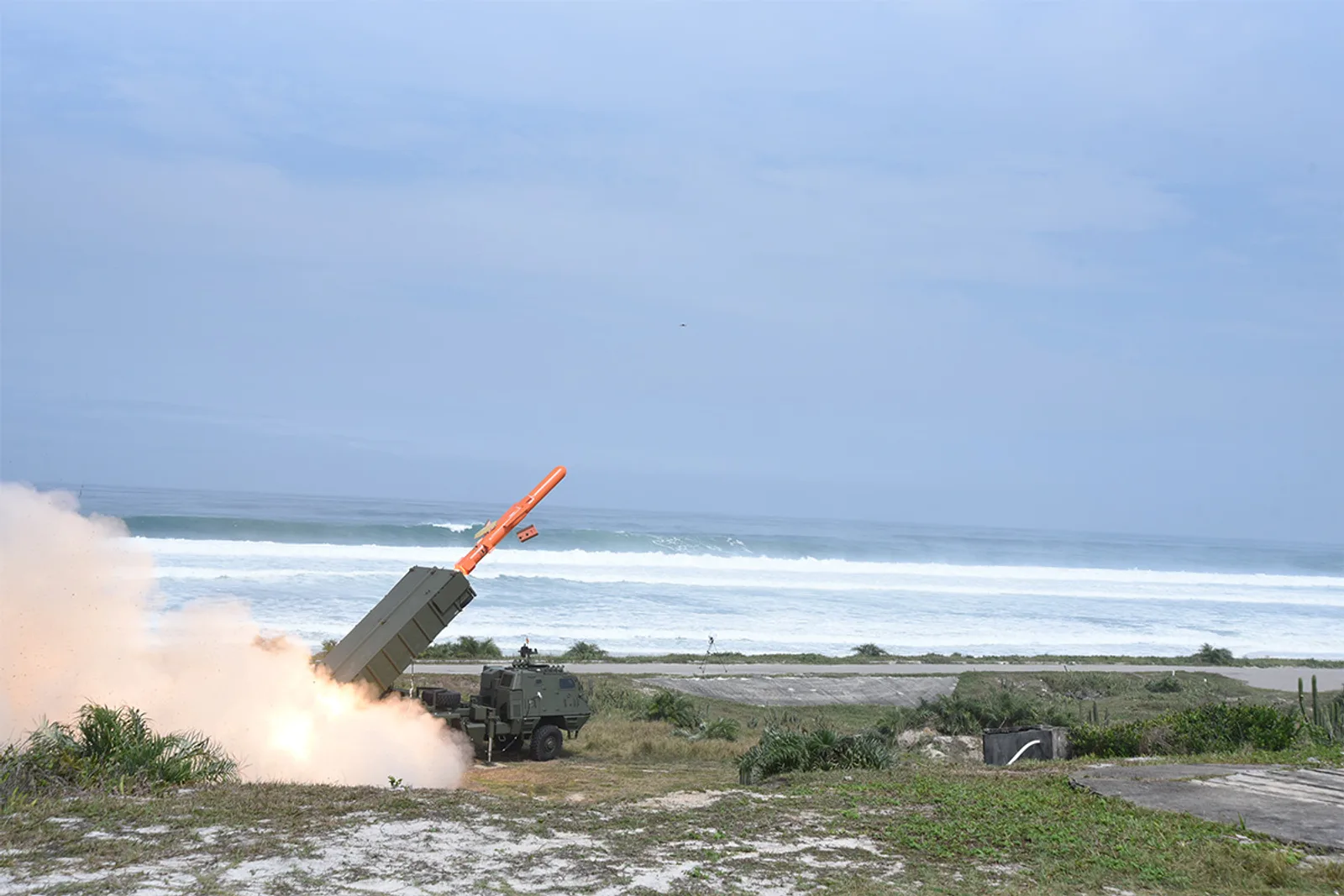
The Avibras Aeroco AV-MTC 300 during its 28 August 2026 launch.
On 28 August 2026, the AV-MTC 300 conducted its first launch in four years. (Avibras Aeroco)
Gabriel Ribas

On 28 August 2026, Avibras Aeroco (formerly Avibras) conducted the first test launch of the AV-MTC 300 cruise missile since the programme was suspended in 2022. The successful test launch took place at the Brazilian Army’s Evaluation Centre (CAEx) at Restinga da Marambaia, in Rio de Janeiro, using the ASTROS (Artillery SaTuration ROcket System).

The test was originally scheduled for the second half of 2022 before being postponed to 2023, and then faced further delays. It was intended to serve as the missile’s final flight-verification test ahead of the final test, which will involve a live warhead. This will be the last test required for the missile’s validation.

Avibras had remained largely paralysed since 2022 amid a severe financial crisis and debts estimated at approximately BRL 800 million (EUR 133 million). The situation led to prolonged labour disputes and a strike involving around 900 company employees, further disrupting the company’s operations and casting uncertainty over the future of its defence programmes.

The situation only began to change in May 2026, when an agreement was reached to settle outstanding labour debts, paving the way for the company’s restructuring and the resumption of activities as Avibras Aeroco.

Brazil’s first cruise missile

The AV-MTC 300, also known as the MTC-300, is a tactical cruise missile (MTC; Míssil Tático de Cruzeiro) with a range of 300 km, jointly developed by the Brazilian Army and Avibras under the ASTROS Strategic Programme, launched in 2012. One of the programme’s objectives was to equip the Astros LMU (Unidade Lançadora Múltipla Universal; ENG: Universal Multiple Launch Unit) with sufficient firepower to contribute to Brazil’s extra-regional deterrence capability, while also providing long-range, precise and lethal fire support. This requirement led to the development of the AV-MTC 300.

The missile has a diameter of 450 mm and a length of 5.4 metres. Each Astros LMU system currently in service with the Brazilian Army can carry two such missiles. According to the programme’s requirements, the warhead must have a minimum weight of 200 kg. Two warhead configurations have been envisaged: a high-explosive (HE) warhead and a cluster warhead configuration carrying 66 submunitions. The missile is designed to achieve a circular error probable (CEP) of 30 m or less, using a combination of global navigation satellite system (GNSS) and inertial navigation system (INS).

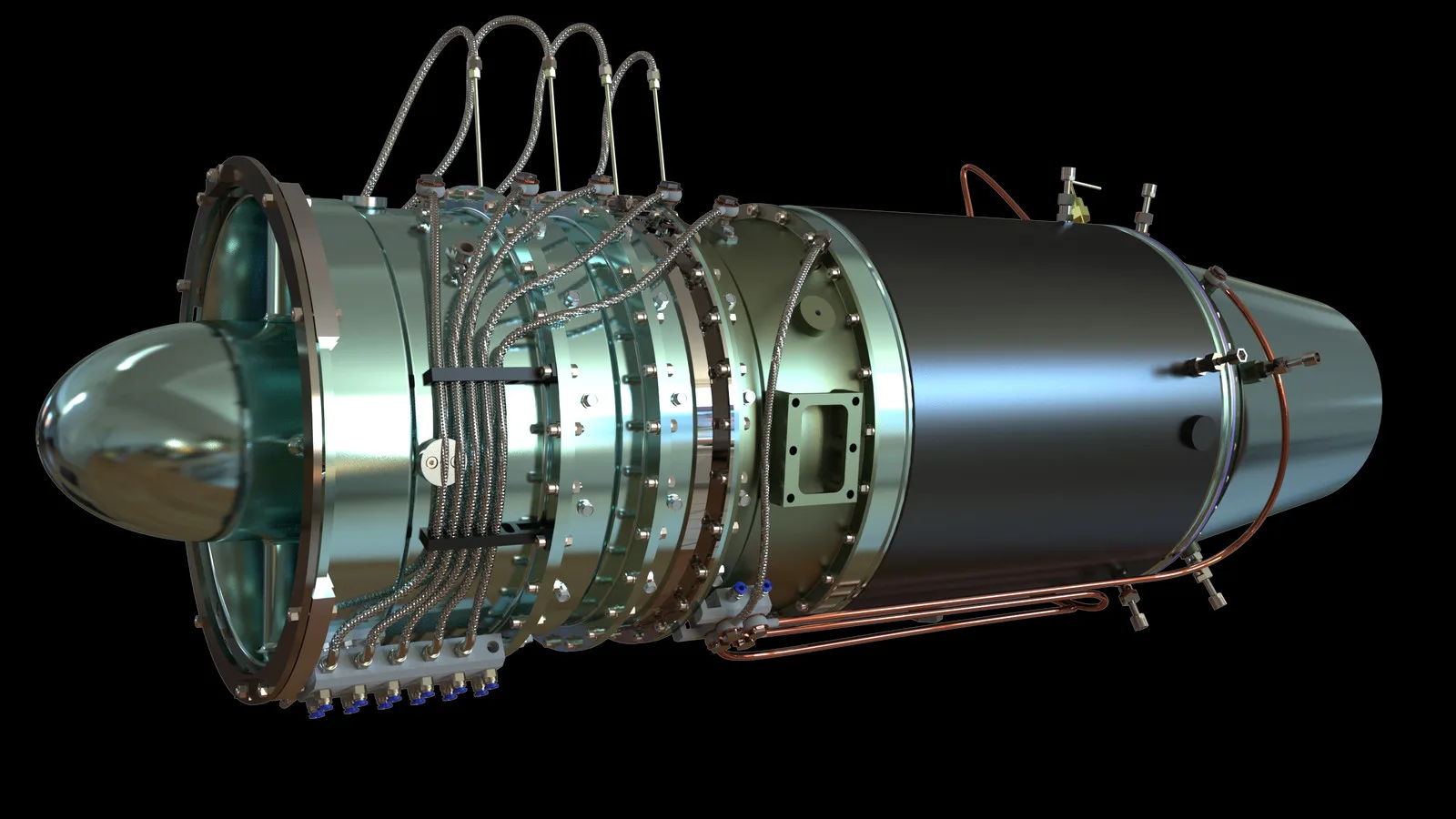
Propulsion is provided by the TJ-1000 turbojet engine developed by Brazilian company Turbomachine. It is a single-spool turbojet producing up to 499 kgf (1,100 lbf) of thrust, sufficient to propel the missile to high subsonic speeds of approximately 1,000 km/h. The missile is designed to cruise at altitudes ranging from 200 m to 800 m.

A CG render of the TJ-1000 engine.
A CG render of the TJ-1000 engine. (Turbomachine)

MTC Block II: The next step

On 17 August 2026, the Brazilian Army published the updated guidelines for the ASTROS-FOGOS Strategic Programme, a broad programme encompassing missiles, Astros systems, tube artillery, air defence and several sub-programmes.

One of the projects to attract wider public attention was MTC Block II, which outlines a technological upgrade programme for the MTC-300. Although the project gained greater visibility following the publication of the guidelines, it had already been publicly announced four years pior, in 2022, through the Strategic Defence Projects Portfolio 2020–2031, where it received considerably less attention.

The project calls for the MTC-300 to be equipped with an unspecified terminal guidance system, as well as an increased range and an upgraded warhead. According to the Brazilian Army, these modifications are considered necessary due to the evolution of doctrinal requirements and new capabilities envisaged for the employment of the Land Force in coastal defence and against moving targets.

This wording is particularly significant, as the reference to coastal defence and moving targets suggests that one of Block II’s intended capabilities is the engagement of naval targets.

Despite its operational significance, especially considering that the Brazilian Army currently lacks a reliable coastal defence capability, the programme is officially listed as ‘not started’.

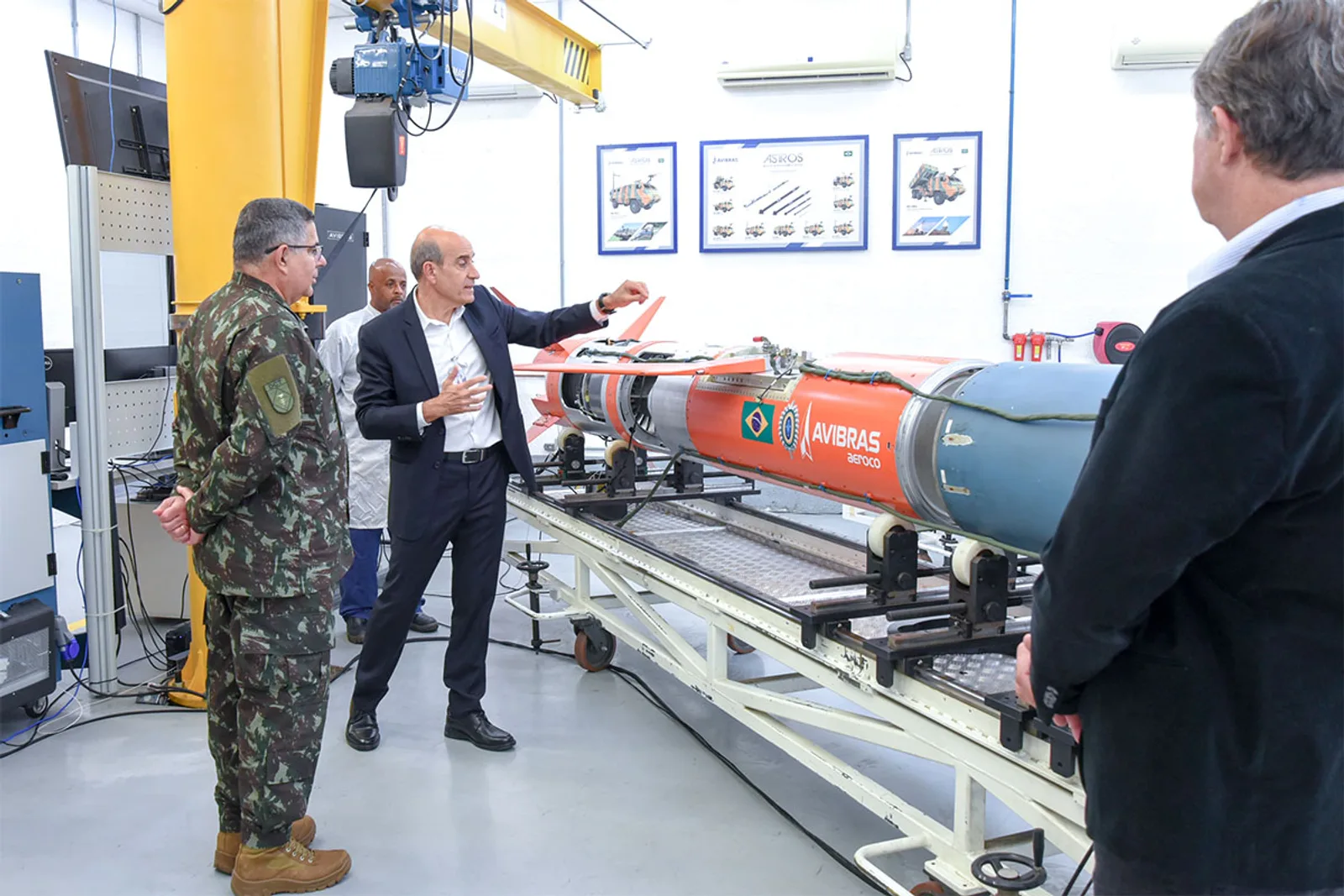
MTC-300 with cutaway sections.
MTC-300 with cutaway sections. (Avibras Aeroco)

Brazil’s missile industry is becoming more competitive

The MTC-300 began development at a time when Brazil’s defence industrial base was considerably less capable than it is today. For many years, it was not only the country’s first but effectively its only indigenous cruise missile programme.

Over the years, particularly during the period of uncertainty surrounding Avibras, Brazilian defence companies have increasingly pursued their own indigenous weapon systems. Examples include the AATD and MCX cruise missiles, both revealed by Plasma Hub.

The MCX is described as an International Traffic in Arms Regulations (ITAR)-free, medium-range cruise missile featuring advanced capabilities such as a satellite datalink. However, publicly available information about its development remains limited.

The AATD is particularly noteworthy because of its reported range of up to 2,000 km. Its propulsion system also appears to use the same TJ-1000 engine associated with the MTC-300, although publicly available information remains insufficient to establish the extent of commonality between the two systems.

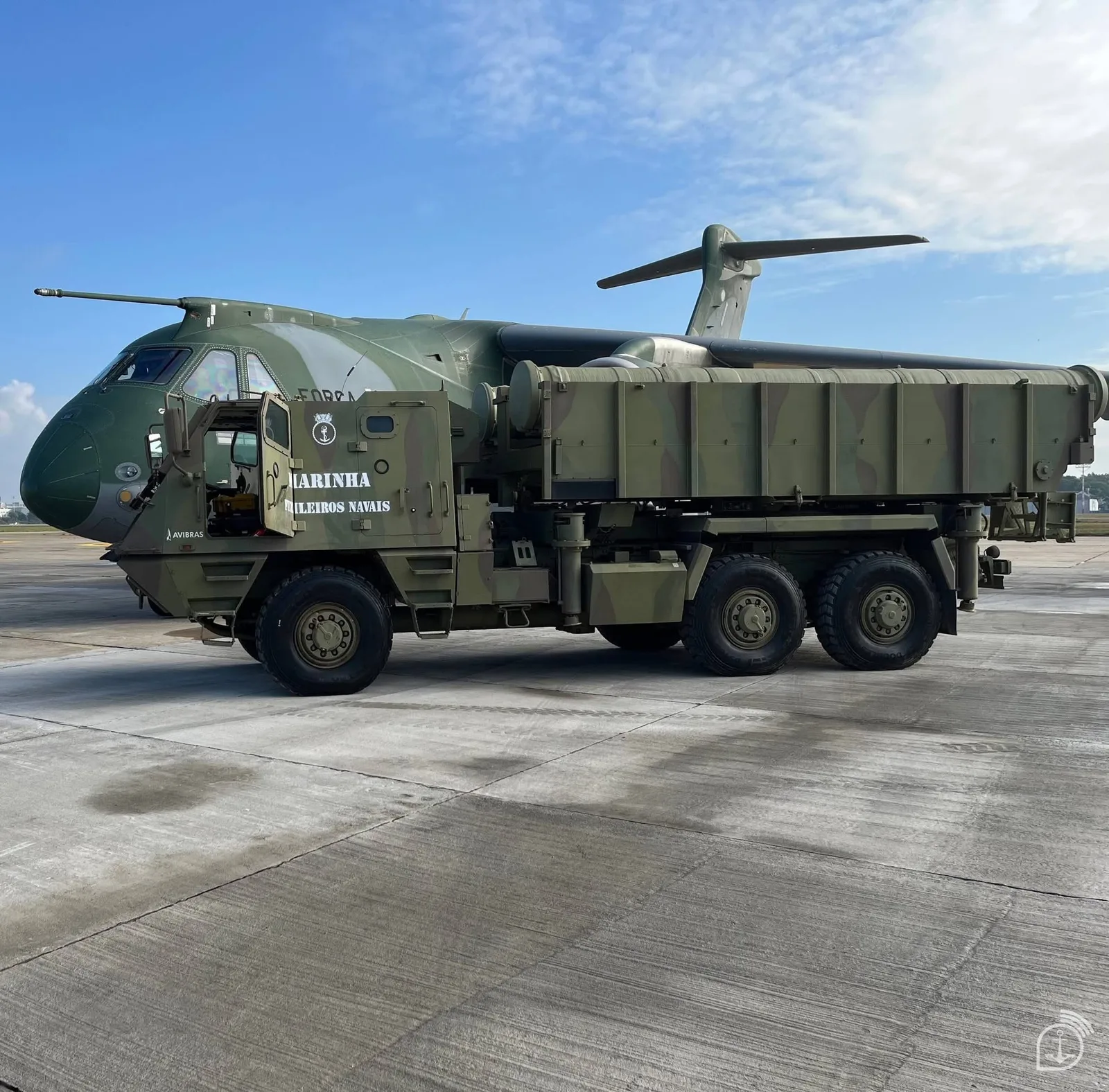
Another significant player is SIATT. While the company does not currently have its own cruise missile, it integrated the MANSUP anti-ship missile onto Astros LMU launchers operated by the Brazilian Marine Corps in 2025. The work involved modifications to the launcher platform and the integration of a Missile Launcher Console (CLM) and associated subsystems into the vehicle cabin. At least two Marine Corps Astros LMUs were reportedly modified to launch the MANSUP, despite legal action brought by Avibras at the time.

The modified ASTROS LMU equipped with MANSUP missile launchers operated by the Brazilian Marine Corps, alongside a Brazilian Air Force Embraer KC-390.
The modified ASTROS LMU equipped with MANSUP missile launchers operated by the Brazilian Marine Corps, alongside a Brazilian Air Force Embraer KC-390. (Brazilian Navy)

SIATT is also developing its own missile-launching system, known as the Sistema de Defesa de Costa e Litoral (SDCL; ENG: Coastal and Littoral Defence System). The system is based on 6×6 or 8×8 platforms intended to engage land and maritime targets at ranges of between 10 and 200 km.

Avibras, which maintained a degree of dominance in Brazil’s missile development and launcher sector as recently as four years ago, is therefore returning to an increasingly competitive market. The company now faces a defence industrial base that has become considerably more diversified, with other Brazilian companies developing increasingly sophisticated indigenous missile and launcher technologies.

Share post

You may be interested in

Categories

All NewsLand

Used tags

BrazilBrazilian Air ForceBrazilian ArmyBrazilian Marine CorpsBrazilian NavyCruise MissilesMissile testsProcurement

Similar posts