On 8 June 2026 the news emerged in the French and German press that the New Generation Fighter (NGF), and thus a key component of the Franco-German-Spanish Future Combat Air System/Système de Combat Aérien du Futur (FCAS/SCAF) programme, had been definitively cancelled. Ultimately, a mutually agreeable path forward for the programme could not be found between German industry on the one side and French aerospace giant Dassault on the other.
Official statements from the French and German governments confirming the news followed shortly thereafter.
“Ultimately, one has to separate the head from the heart,” German Defence Minister Boris Pistorius said on 9 June regarding the failed project. He added that, while it pained him greatly, “no agreement could be reached”.
With the news of FCAS/NGF’s demise dominating the opening day of the ILA Berlin Air Show on 10 June, German attention is already turning to the future: politicians, air force leaders and industry are working intensively to find a successor.
FCAS dominates ILA
“The failure of the NGF in its previously envisioned form is painful, but unavoidable,” Bastian Ernst, a CDU member of the German government’s Defence Committee, told Warsight’s sister title Defence Network. “The crucial thing now is to find ways, together with German industry and our European partners, to close the emerging capability gap.”
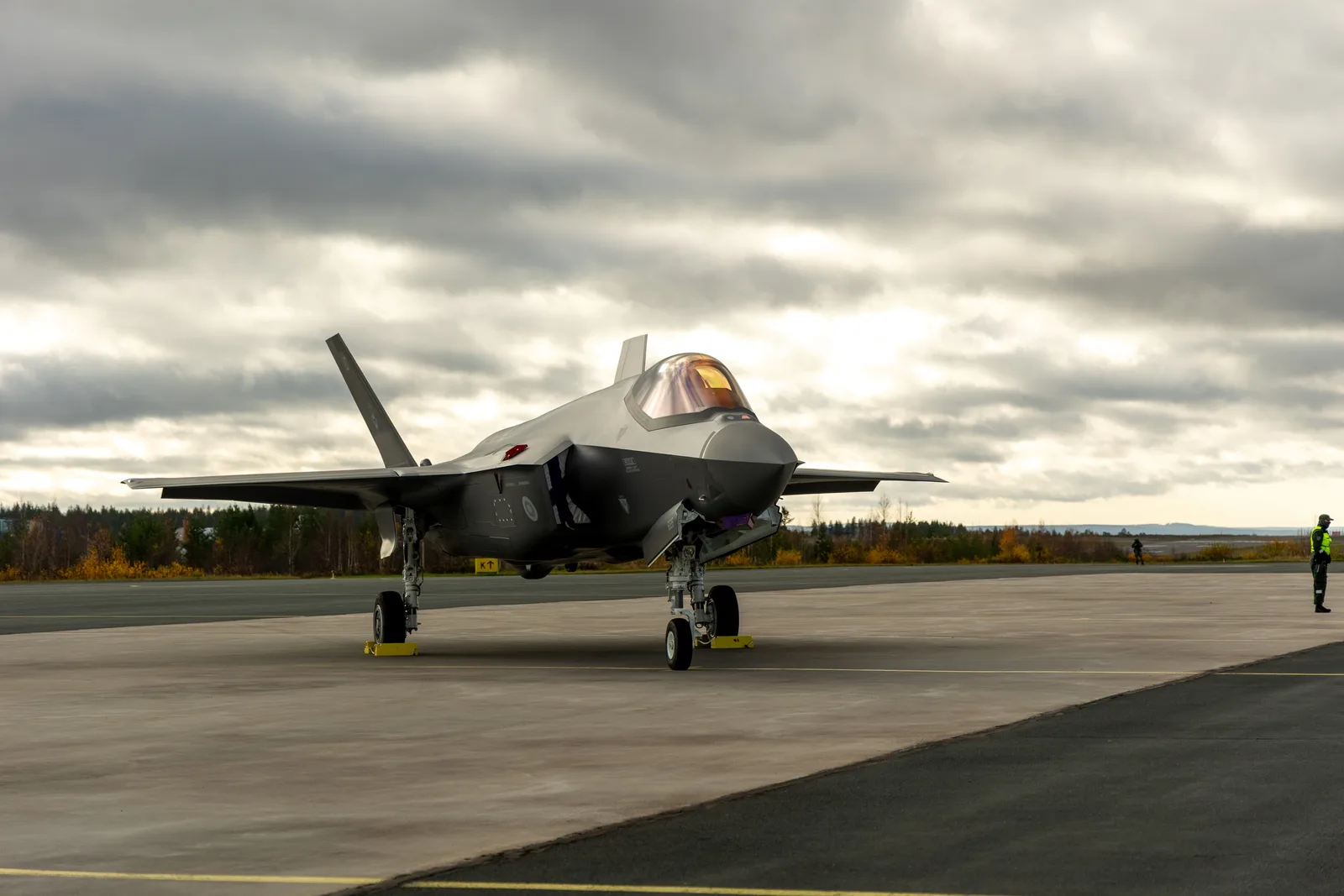
The Luftwaffe at least has some time. As well as ordering 35 Lockheed Martin F-35As in December 2022, the first of which entered final assembly in March 2026, Germany ordered 38 Tranche 4 Eurofighters under the Quadriga programme in November 2020 to replace difficult-to-upgrade Tranche 1 aircraft as well as 20 Tranche 5 Eurofighters in October 2025 to replace Panavia Tornadoes still in German service. The Luftwaffe’s Eurofighter fleet is thus expected to serve well into the 2060s.
That said, the NGF was originally scheduled to enter Luftwaffe service in 2040.
As the ILA Berlin Air Show opened the cancellation of the NGF programme was still being processed, with observers eager to see what political decisions would be made.
Close co-operation between the Luftwaffe and industry will be crucial. The Air Force Tech Summit, which aims to provide a platform for precisely this kind of exchange at the beginning of October 2026, should offer a particularly good opportunity for such co-operation. In Berlin on 9 June one Luftwaffe general pointed out that a new fighter “not only needs to be procured, but also operated”.
A new fighter – German industry is ready
“What options are available next still needs to be discussed,” Marie-Christine von Hahn, CEO of the German Aerospace Industries Association (BDLI), told Defence Network. She added that it was “definitely a good signal for German industry” that a decision had now been made.
That was clarity that Dr Harald Buschek, chief programme officer at Diehl Defence, also welcomed. “We know where we stand,” he said. Companies involved in FCAS like Diehl Defence believe they have a good chance of continuing to participate in future developments, chiefly because the NGF is not FCAS. Only the fighter has been cancelled, while the system itself is to continue operating. Other pillars of the programme include unmanned systems such as the Remote Carrier and the Loyal Wingman, as well as the Combat Cloud in which all system elements are networked.
“We have the remote carrier, we have the corresponding weaponry,” said Buschek, “so the things that will continue.”
Von Hahn is also generally optimistic. “Now we are looking ahead and are happy,” she said.
NGF 2.0
But what happens next? Various projects in which Germany could play a role have been under discussion for some time: participation in the British-Italian-Japanese Global Combat Air Programme (GCAP) is considered unlikely, while co-operation with Sweden has frequently been discussed. Saab, with its Gripen fighter, would constitute an experienced partner in the field.
According to Pistorius, discussions with various stakeholders have been ongoing for some time. This aligns with reports in the Financial Times that an industry consortium has already contacted the German government. However, Saab is not mentioned in connection with this potential NGF 2.0 project.
Airbus also plays a central role here. Eight industry partners have joined forces under the name ‘Team Gen 6’: in addition to Airbus, these include Autoflug, Diehl Defence, Hensoldt, Liebherr, MBDA, MTU Aero Engines, and Rohde & Schwarz. Details are expected to be finalised during ILA Berlin, with ‘Team Gen 6’ expected to announce further steps at the show.