Tactical nuclear option? Part II: The big or not-so-big bang

Recent reports have stated that the US Department of War under President Donald Trump is considering a shift in US nuclear use policy that would bring tactical nuclear weapon use onto the table in case of regional conflicts with peer opponents. This has been couched in the logic of giving the US President ‘more rational nuclear options’. But is this logic sound? The second of this four-part series examines the actual battlefield effects of tactical nuclear weapons.

A 1.7 kt tactical nuclear warhead, dubbed ‘Small Boy’ detonated on 14 July 1962.
A 1.7 kt nuclear warhead, dubbed ‘Small Boy’ was detonated as part of Operation Sunbeam, conducted at the Nevada Test Site, on 14 July 1962. (US Government)
Dan Kaszeta

This second section of a four-part series on tactical nuclear weapons (Part I is here) explores the characteristics of small nuclear explosions.

A tactical nuclear weapon needs to physically small in order to be reasonably deliverable by battlefield weapon systems and its explosive yield is generally less than 10,000 tons of TNT equivalent, i.e. 10 kilotons (kt). By means of comparison, the Hiroshima bomb ‘Little Boy’ was about 15 kt and the Nagasaki bomb ‘Fat Man’ was 21 kt. Both weighed over four tonnes and were physically quite large, and so could not really be considered tactical nuclear weapons. It should be noted that some conventional explosions (Halifax harbour [1917; circa 2.9 kt] and Beirut port [2020; circa 1.1 kt] both come to mind) are actually much larger in explosive yield than the smaller end of the spectrum of nuclear weapons.

The Hiroshima and Nagasaki bombs were the entry point into the nuclear weapons industry and exist as a baseline both from a technical perspective and in the popular consciousness. Serious science and engineering effort are required to make a nuclear device that is physically smaller and has a much smaller explosive force. Although really large yield devices exist (and larger ones existed in the past), it actually takes more technical sophistication to make a small nuclear warhead than a gigantic one. As far as the public understanding goes, very few people alive have actually seen a nuclear explosion or its effects, so Hiroshima and Nagasaki are the template in people’s minds.

All nuclear explosions provide a wide mix of physical effects. But the thing that most people do not recognise is that making a nuclear explosion larger or smaller than a Hiroshima/Nagasaki bomb is not a linear affair. A 1 kt nuclear artillery shell does not make 1/15th the effects of a Hiroshima bomb, nor does a 150 kt strategic bomb have exactly 10 times the effects. It is way more complicated than that.

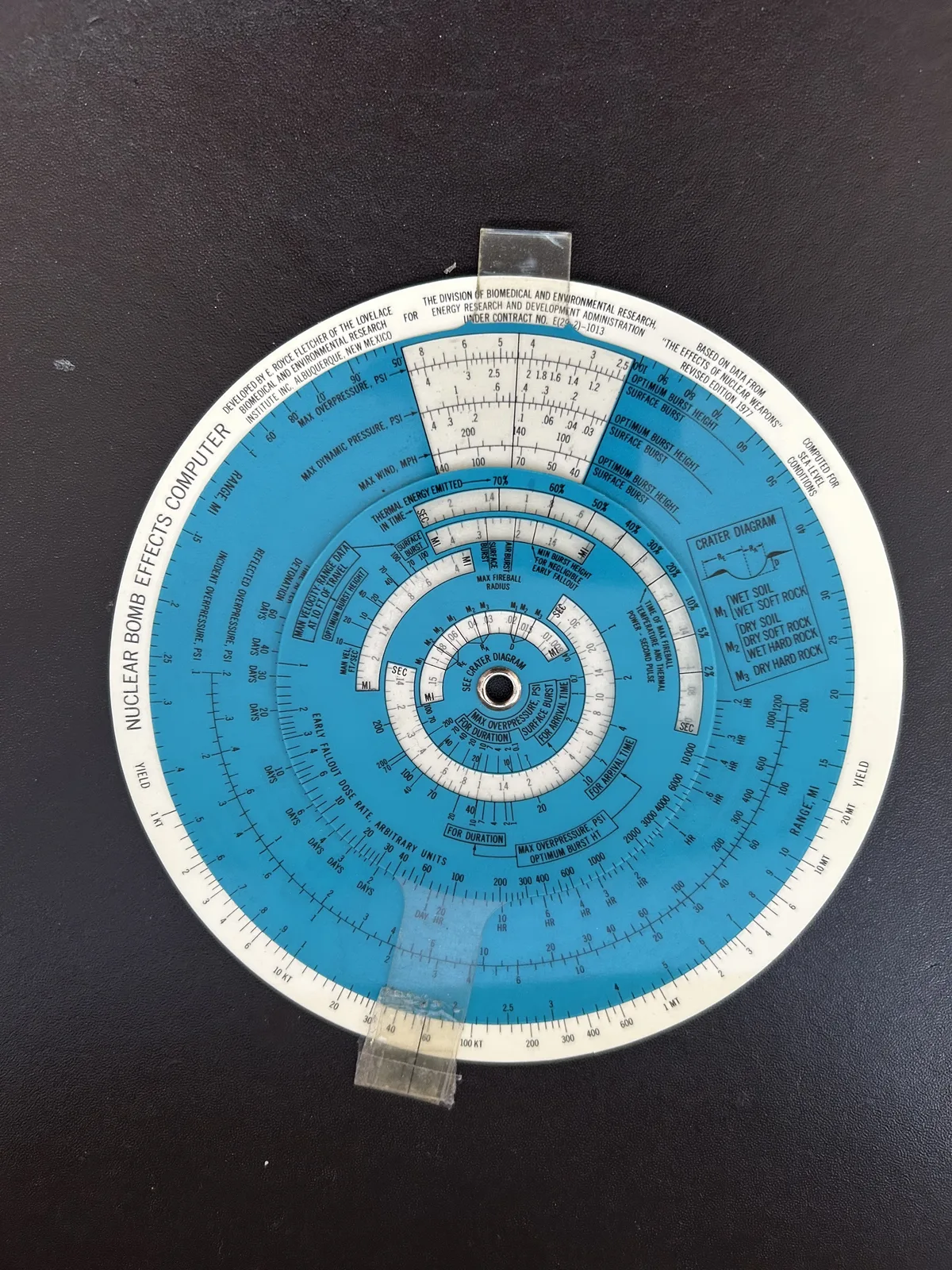
Quite early in the nuclear weapons business, there was a lot of effort to quantify the effects of nuclear weapons. Test data from nuclear weapons tests were used to develop equations and tools to help figure out what strength of explosion generates which effects at a certain distance. One of the tools is my venerable ‘nuclear bomb effects computer’ which I still have from my training days. (There is an online equivalent by expert Alex Wellerstein). The equations and theory behind them are well explained in a textbook now in the public domain.

The front side of the author’s 1977-vintage nuclear weapons effects calculator.
The front side of the author’s 1977-vintage nuclear weapons effects calculator. (Dan Kaszeta)

Understanding nuclear effects

In terms of actual lethal and destructive force, nuclear weapon explosions present several different types of energy:

  • A ‘fireball’ is what it says in the name: the luminous hot sphere of weapon residue and overheated air that forms in the millisecond after the explosion.
  • The ‘blast’ is movement of air that damages or destroys physical objects, often measured in ‘overpressure’, i.e. how much air pressure exists over ambient.
  • There is thermal energy. This is the actual flash of heat, which, in turn may set other things on fire.
  • There is ionising radiation, which presents two ways with nuclear weapons. ‘Prompt radiation’ is the initial blast of neutrons and gamma rays that can be lethal at high doses. ‘Delayed radiation’ is a second-order effect. It is the radioactive remnants of the nuclear device and all of the material made radioactive by the neutrons emitted.
  • There is the ‘electromagnetic pulse’ (EMP), which is the energy in the radio part of the electromagnetic spectrum. With tactical nuclear weapons, EMP is negligible beyond the radiation distance and popular literature is full of odd exaggerations.
  • There is visible light, which can be bright enough to blind.
  • If the actual explosion is in contact with the ground or water, there are the shockwaves passed through the ground or water.

When you get to the small end of the tactical nuclear weapons explosions, various laws of physics come into play. One of these is the inverse square law. An explosion is a 3D phenomenon, but linear distance is 2D. Doubling the explosive yield does not double the distance at which, say, 5 psi of blast overpressure is felt. Also, there are finite limits on other things. Neutrons can only go so far in air before they react with the air, for example. Radiation and heat travelling in every direction dissipate over distance.

With the smallest nuclear weapons, i.e. many of the ones in the ‘tactical’ category, the greatest radius of lethal effects is the prompt radiation. With weapons below about 3 kt in yield, the greatest radius of lethal effects is radiation, not blast or heat. We must also have a word about ‘fallout’, a much spoken but poorly understood phenomenon. Fallout is the material that the fireball vaporises, which condenses back into solid (or liquid, in the case of water) form. Much of this material will have been made radioactive by neutrons impacting upon it, making a mix of radioactive material. This matter, which had risen into the air (approximately the upper third of the stem and the bulb of the classic mushroom cloud) settles back to the ground. This is the fallout.

Here’s a key point: tactical nuclear weapons often make very little fallout. Fallout was not really considered a useful weapon, and because it would affect friendly as well as enemy troops, and contaminate terrain that one may hope to occupy, it was often a nuisance. Moreover, in order to maximise the destructive potential of these smaller weapons, they are far more effective when detonated above ground. With the small yield warheads that we are talking about, the ideal height of burst for maximising their direct blast, heat, and radiation effects is higher than the point at which a fireball contacts the surface. This means that for most applications, nuclear fallout is actually very small.

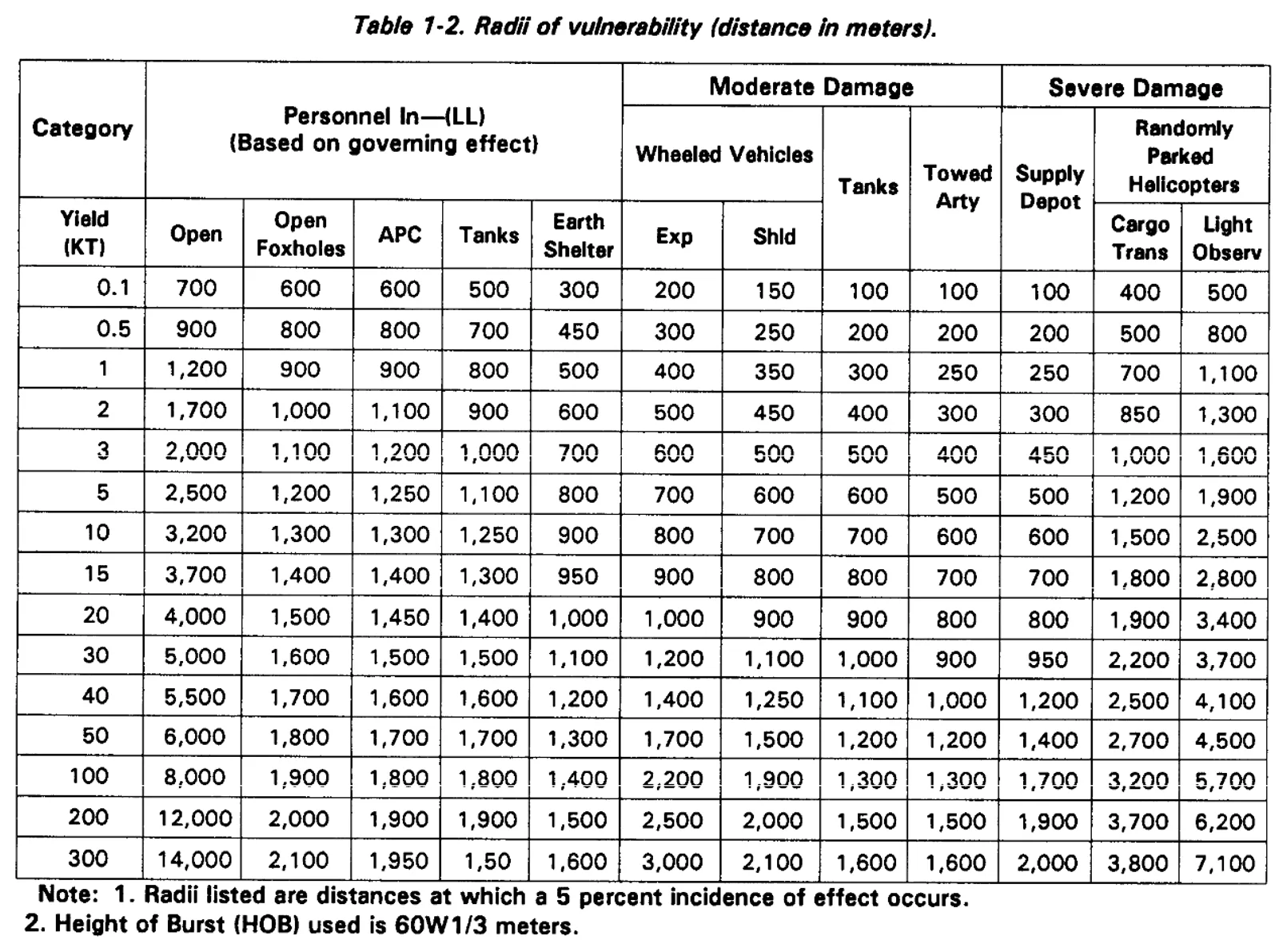
The easiest way to summarise this is to look at Table 1-2 below. This is extracted from the US Army’s Field Manual 3-3-1. These figures are approximate, as exact figures down to the metre were in a classified handbook. However, having been through this training in 1993, the figures are not far off from each other. For readers interested in fine detail, an archived version of a 1968 manual is archived online. It is also important to note that latent lethality is level of radiation exposure that is likely to kill a significant fraction of the exposed personnel, but not right away. Lethality will happen after a period of illness.

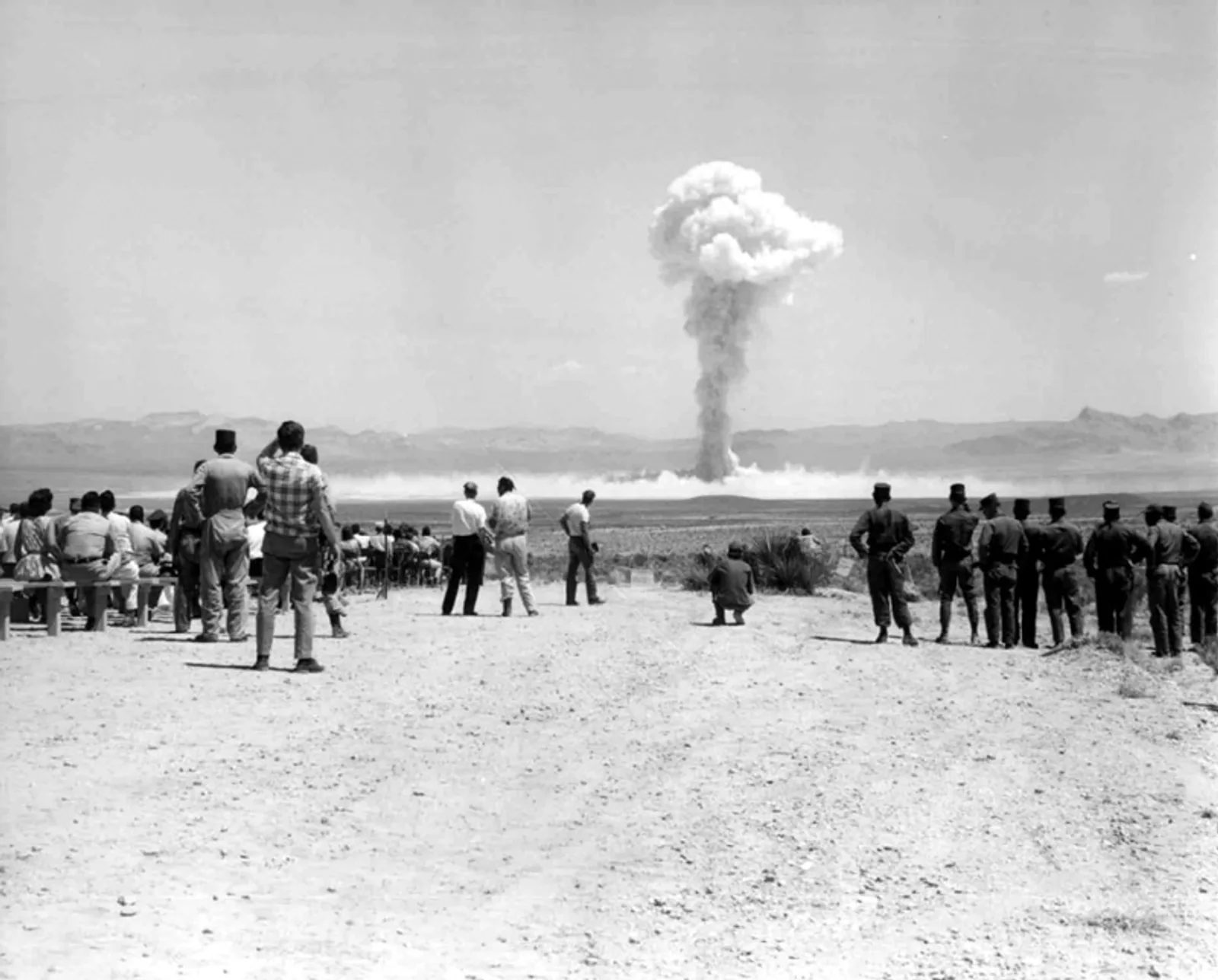
Table 1-2 shows the approximate radii of vulnerability for personnel and various types of vehicles or shelters.
Table 1-2 shows the approximate radii of vulnerability for personnel and various types of vehicles or shelters. (US Army)

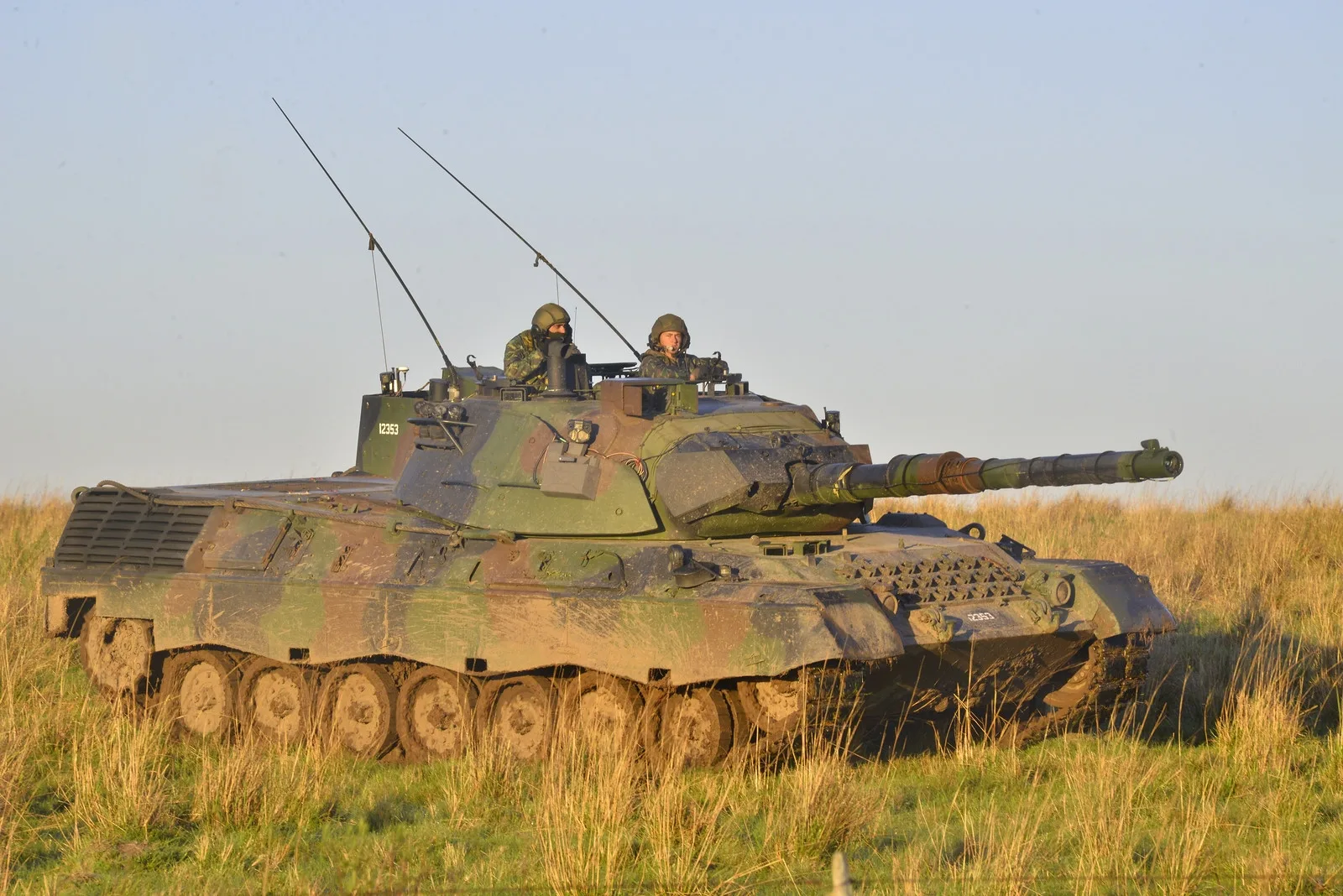
A few observations can be made here. Tanks and armoured personnel carriers (APCs) are rugged. It is easier to kill their occupants with radiation than by kinetically or thermally damaging the vehicles. This is well known in tank warfare. The most vulnerable part of a tank is its occupants. The other observations can be summarised in ‘oh my God, that’s not actually very much’ or similar statements. In the era of precision guided munitions, what is the actual point of using a small nuclear warhead to destroy 5 tanks when 5 or 7 cheap drones could do the same thing? Small nuclear weapons, which are basically unguided munitions, do not necessarily represent any improvement over precision guided conventional munitions.

Tactical nuclear weapons and modern tank survivability

A serious question, rarely raised, is whether or not modern combat systems on the battlefield are more survivable for their crews than their predecessors. Not every example is easily interrogated on this subject, but one certainly is. Are modern tanks more survivable on the nuclear battlefield than the old M60 that were the basis of many of the old charts and models? The answer is that they often really are more resistant to tactical nuclear weapons. The Chobham armour on the early M1 Abrams series and Challenger 1/2 allegedly contains boron carbide (a manufacture is here) or very similar substances that absorb neutrons. Some unclassified publication has made cryptic references to ‘radiation liners.” It is known that Polish tanks have incorporated neutron mitigation. So, take the Table 1-2 vulnerability distances for tanks with a grain of salt.

Looking ahead, Part III examines whether there are scenarios in which tactical nuclear weapons are useful, while Part IV explores some of the challenges the US would face if it were to attempt to reintroduce such weapons into its arsenal.

Share post

You may be interested in

Categories

All NewsAirCBRNPolitics

Used tags

Cold WarNuclear effectsNuclear policyNuclear WeaponsTactical nuclear weaponsTanksUKUSUS DoW

Similar posts