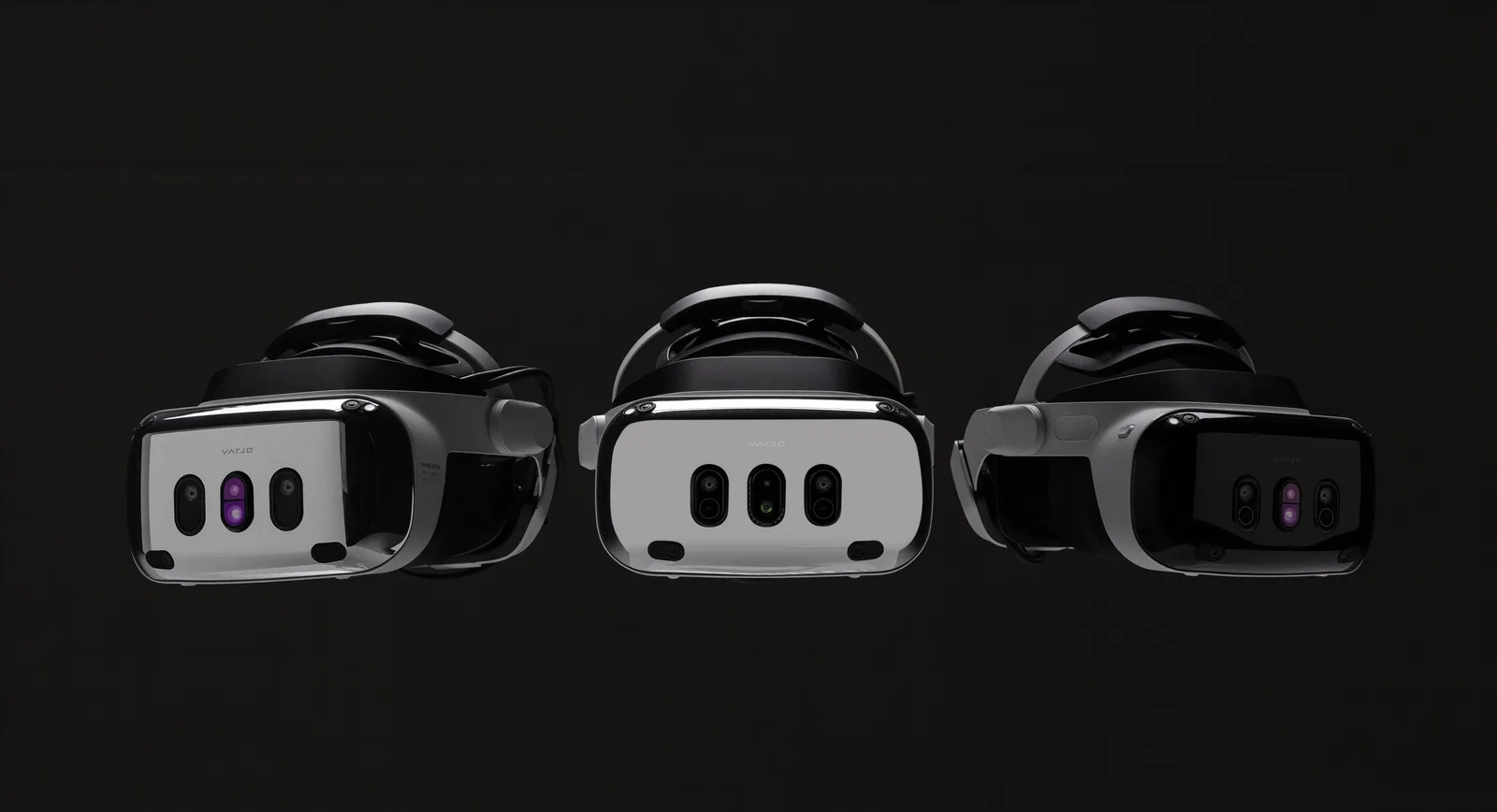
Out of necessity rather than design, the Ukrainian armed forces have embraced new ways of training, including an extensive use of extended-reality (XR) simulation solutions, that could ultimately deliver lessons for their NATO allies.
Ukraine war highlights need for highly distributed training, leveraging of XR solutions
Among the lessons from the war in Ukraine is that the traditional way of training armed forces in such an environment does not work, prompting the need to adopt a highly distributed training infrastructure that increasingly embraces virtual-, augmented- and mixed-reality solutions – collectively known extended-reality (XR) solutions – to be effective.
That was the outlook shared by three companies involved in delivering such training during an online round-table event on 27 August 2026: Finnish technology company Varjo, a world-leading provider of mission-ready XR solutions; Fynd Reality, a Norwegian XR technology company delivering immersive training and collaboration solutions through its Fynd CORE platform; and Australian company Applied Virtual Simulation (AVS), which designs, integrates, manufactures and supports simulation systems for individual, crew and collective training across multiple domains.
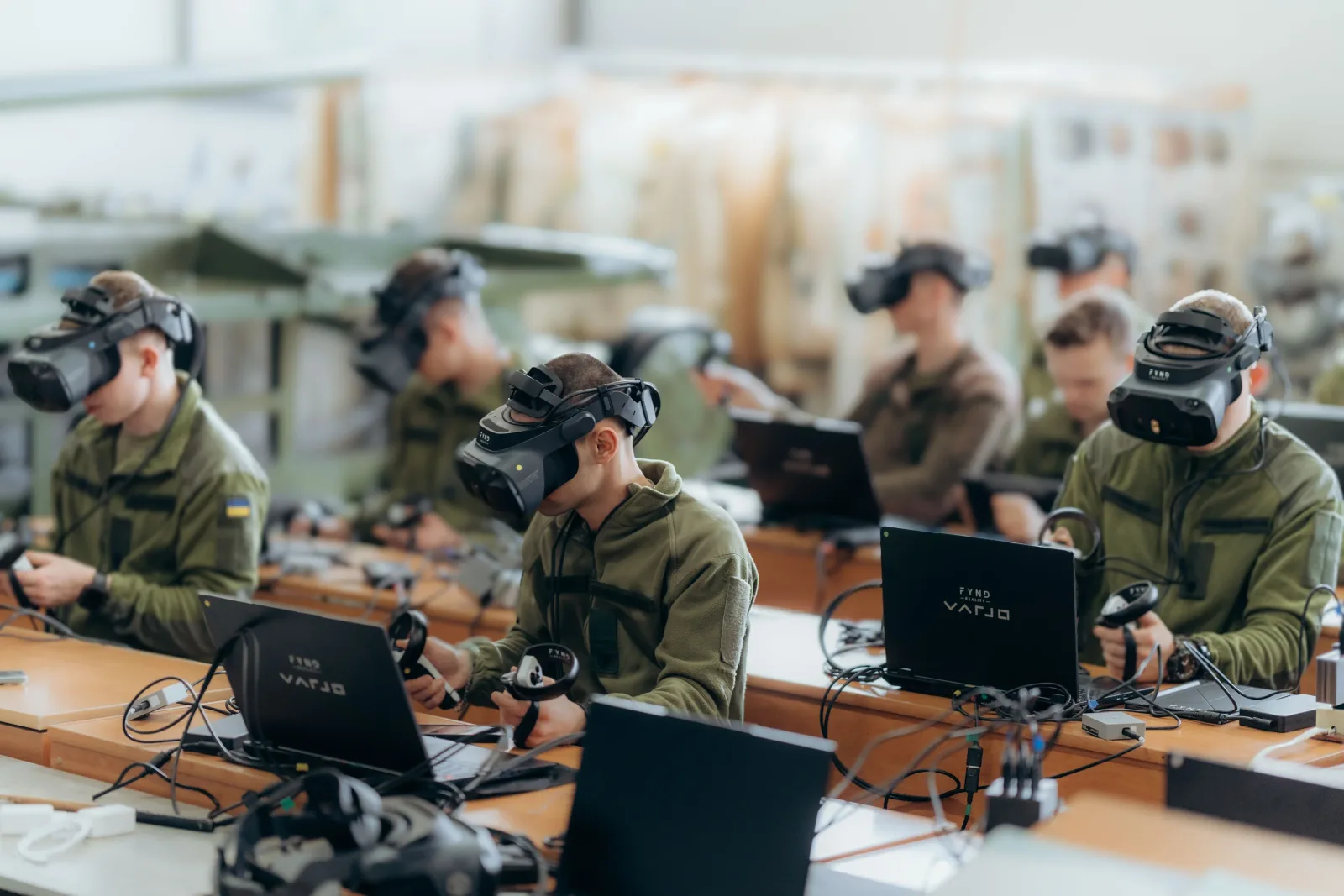
The three companies have been co-operating extensively to provide training solutions in Ukraine. Earlier in 2026 Varjo was selected as the XR technology provider for an immersive training programme delivered by Fynd Reality to the Ukrainian armed forces. This forms part of a Nordic defence technology collaboration covering familiarisation, procedural training and maintenance training across multiple military vehicles. The programme delivers training from zero knowledge up to simulator level/actual equipment in relation to the Leopard 2A4 and Leopard 1A5 main battle tanks (MBTs) as well as the M113 armoured personnel carrier.
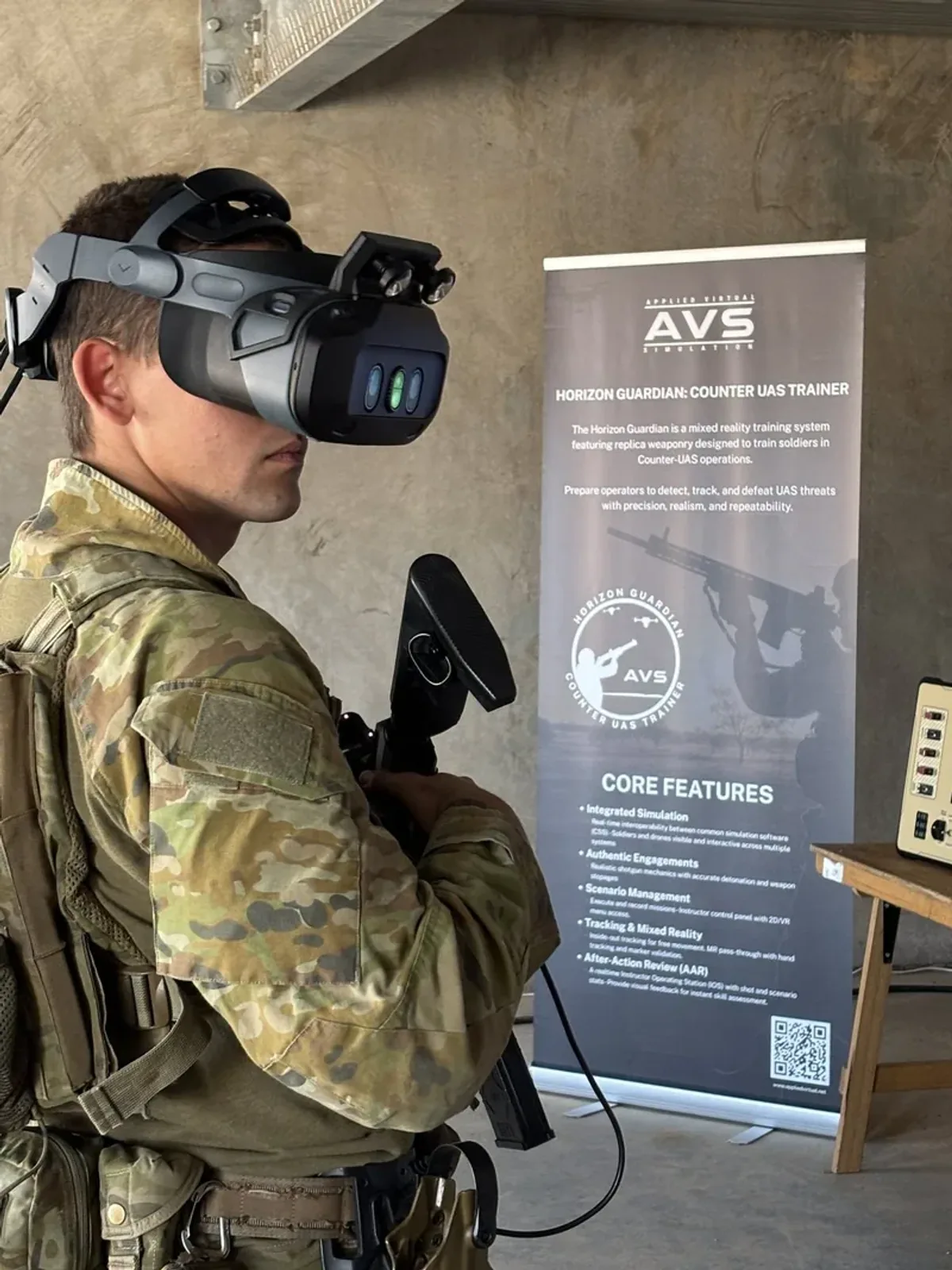
The Varjo XR-4 Series headset, meanwhile, is also integrated into AVS’ Horizon Guardian counter-unmanned aerial systems (C-UAS) simulator, which involves one trainee flying a first-person-view drone while another attempts to neutralise it with a firearm: a vital training requirement in Ukraine, where drones account for 70-80% of battlefield casualties. The case-portable Horizon Guardian system combines mixed-reality, low-latency tracking and purpose-built counter-UAS software without tying the training design to one weapon platform.
For fighter pilot training Varjo’s technology powers mixed-reality simulators built by Czech company Dogfight Boss. Multiple F-16 mixed-reality training cockpits powered by the Varjo XR-4 Series headset have been donated to Ukraine.

A training regime born of necessity
Mikko Luhtava, chief marking officer for Varjo, noted that – at least where Ukraine is concerned – the traditional way of training armed forces, where personnel have equipment to train on, fixed facilities to train in and a slowly evolving curriculum, has stopped working.
“I think there’s a very clear change in how training needs to happen nowadays, and Ukraine has taught us a lot there,” he said. “In practice, every operational vehicle is at the front. Soldiers don’t get to touch the platform before they need to be deployed on it. Fixed infrastructure is a target. There are training areas and ranges that have been struck in Ukraine, and obviously concentrating a lot of people and equipment in one place is a risk. Also, counter-drone tactics are changing all the time, and overall warfare is changing all the time, so courseware gets outdated very quickly.
“Those are all changes that obviously set new requirements for training,” Luhtava continued. “It needs to happen at the point of need. It needs to be distributed, not centralised. It needs to be small footprint. It can’t be dependent on the platform. … So you need the right tool for the right job, and there are more jobs now than ever before, and that’s what we’re learning there [in Ukraine].”
“The whole idea of distributing all these people so that they cannot become a single target is definitely one of the most important things,” added Kristine Kvam, chief technology officer at Fynd Reality. “And also the main idea of our platform is to distribute people, give them the opportunity to train as a tank crew, for example, with an instructor in Norway or in Finland or wherever the donated equipment comes from, so that they may keep their training up without actually having to gather or send their troops outside the country, as they did in the beginning.
“For now, we are doing different kinds of land equipment, but we are also working with air, with drones and with naval equipment,” said Kvam. “So for us, the most important thing is to have a good relationship with the Ukrainian companies that we are using to develop content for our platform, and for us to keep up with all the feedback that we get from them while they’re using the platform and the system so that we may fix it and work with them, and, of course, send feedback to Varjo as well on how their equipment is being used.”
Martin Carr, founder and director of AVS, explained how the company came to develop its Horizon Guardian counter-UAS trainer.
“Talking to some of the [Ukrainian] soldiers, particularly around some of the more intense areas of the front like Pokrovsk last summer, we identified that the soldiers were using their own money to buy shotguns to use in the counter-drone role,” said Carr. “And as a former army officer, any time a soldier is spending their own money to carry something heavy into battle, they are probably not doing so because it’s a waste of time. Talking to the soldiers and understanding that, ‘Hey, this is going to be a weapon and a technique that is viable’, [we identified that] there’s a significant training burden with that, as there is with any new equipment or any new tactics or style of warfare. So, talking to my buddies, we designed a counter-UAS shotgun trainer, primarily focused on defeating small UASs with a shotgun or similar weapon system.”
The Varjo XR-4 Series headset was used for that solution because, to simulate a very small target moving very fast across the sky, an extremely high-fidelity helmet-mounted display was required to offer imagery very close to human vision perception.

An XR-heavy ratio
When Warsight asked the presenters what the limitations are to substituting XR-based training to hands-on training with real equipment and what the ration is between those two, Kvam put that ratio at about 80:20 for the Ukrainians, “where they use 80% of their time preparing and then 20% on the actual equipment because they don’t really have it available”.
“I think that’s one of the things that we really have to work with: that mental shift of understanding how this technology will change how we train and how we do these things, because it does give you a very different level of understanding,” said Kvam. “So if you do [something in a simulated environment] 100 times, then it’s much easier to do it correctly one time on the actual equipment. So I think we’ll see a shift there going forward. But, of course, this is a mental shift very much rather than technological, so I’m looking forward to seeing how it plays out, but I can see that what they’re doing in Ukraine is definitely something that we will have to learn from in the Nordic countries.”
“Simulation is not a replacement for live training; it’s an enhancement to it,” added Carr. “There are things that you always have to do live; simulation will
by its nature be necessarily difficult [in being able] to fully simulate the real world.”
By way of example he noted that “It’s very hard to generate a 12-gauge recoil impulse in a replica weapon”, but added that, in the final analysis, “it comes down to effectiveness and efficiency”.
Referring to the use of Horizon Guardian to train soldiers how to engage a drone with a shotgun, Carr said, “If you take a soldier onto the range and give them three drones [to shoot] without any practical experience, they’re going to miss all three shots. They might get lucky and get a hit, but the learning outcomes there are going to be quite constrained because the first time they shoot live it’s going to be very, very basic. But by doing the old ‘sets and reps’ in the simulation, it will ensure that when your soldiers do go and do their confirmatory live fire, one, you may need to shoot less because your soldiers will come into it with a higher level of base competency, and second, you can enhance the degree of live training when you do it, so when you do those three live drones that they might get for their qualification, you can do more advanced engagements.
“And then finally, there are also things that you can’t do live that you can do in simulation,” Carr noted, such as “having the drone attack you in a way that it’s too unsafe to do in live training with live fire. … The Ukrainians have a different threshold for risk, but if you do it live you’re going to injure soldiers, so do those higher-risk engagement profiles inside the simulator.”
Kvam added the example of Fynd Reality’s experience in training Ukrainian personnel how to drive MBTs using VR headsets. “They did one full day of micro modules, so taking the headset on and off, doing different procedures in VR. After one day the instructor said, ‘Okay, you will go and drive the tank from A to B.’ They’d never seen a tank physically and never done anything else. This would never happen in Norway, of course, but in Ukraine they have to try; they have to learn by doing these things. The students were all able to drive the tank. It did not go perfectly, it wouldn’t have passed an exam, but they were able to do it. They were able to use the equipment the way that it was supposed to [be used], and it gave them the confidence to keep going.”
Conclusion
Out of wartime necessity the Ukrainian armed forces have learnt to adapt and transform their training regimes, embracing XR technology to deliver the best solutions in a highly constrained environment. While they have a significantly higher appetite for risk than other NATO militaries do when they train, the Ukrainian armed forces still have lessons that can be imparted to their NATO allies in terms of distributed training, how to optimise the use of the XR technology to hand and how to continuously adapt and reiterate that training to get the most out of what is available.
Share post