The UK Royal Navy has revealed its ships recently spent 72 hours tracking Russian naval and cargo vessels in and around UK waters. The activity reflects the response to a pattern of significantly increased Russian presence since 2024.


The UK Royal Navy has revealed its ships recently spent 72 hours tracking Russian naval and cargo vessels in and around UK waters. The activity reflects the response to a pattern of significantly increased Russian presence since 2024.
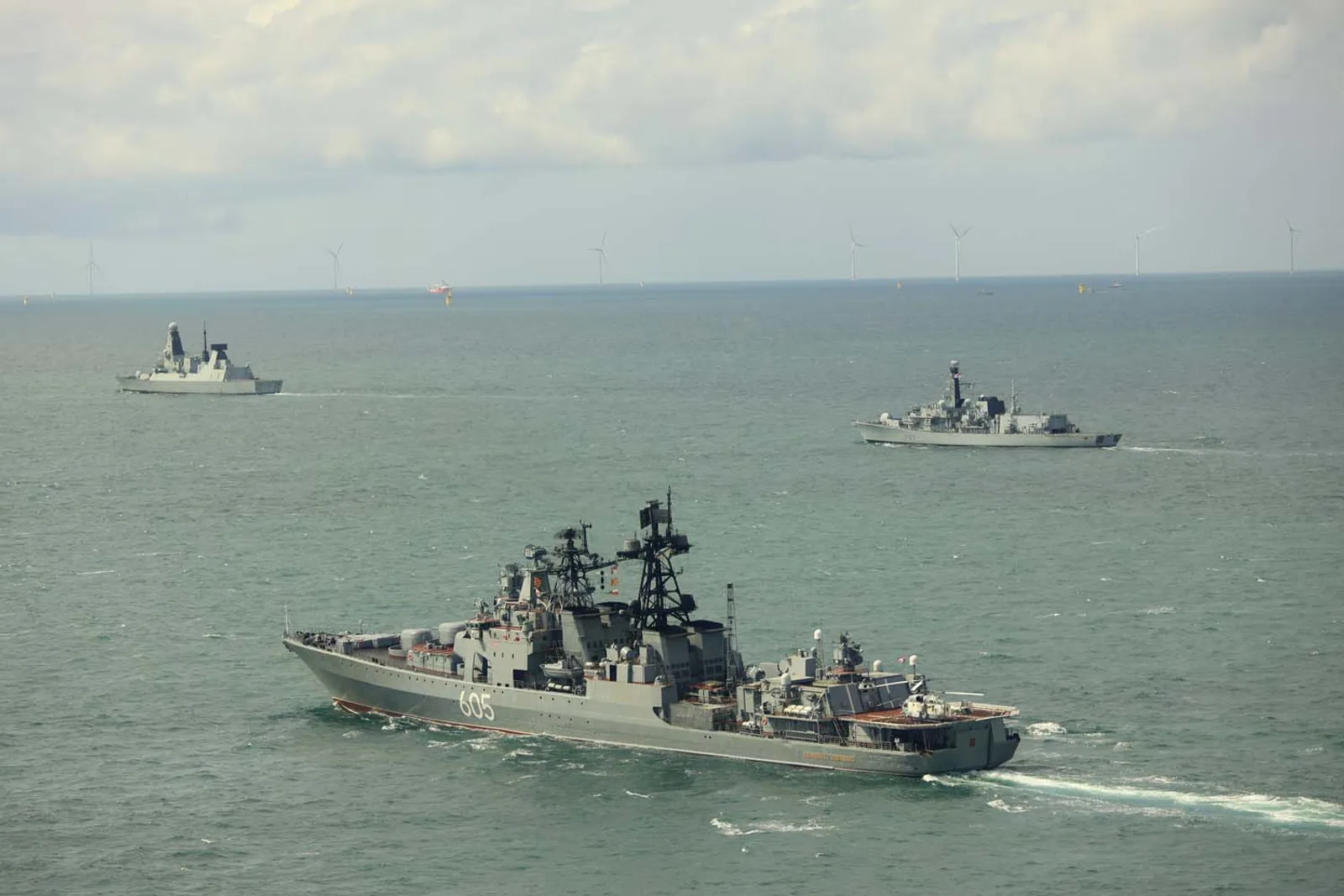
The UK Royal Navy (RN) has revealed that three of its ships recently spent three days shadowing four Russian ships through the North Sea and English Channel. The activity illustrates what the UK government has noted as a significant rise in Russian at-sea presence in the region and elsewhere around UK waters since 2024.
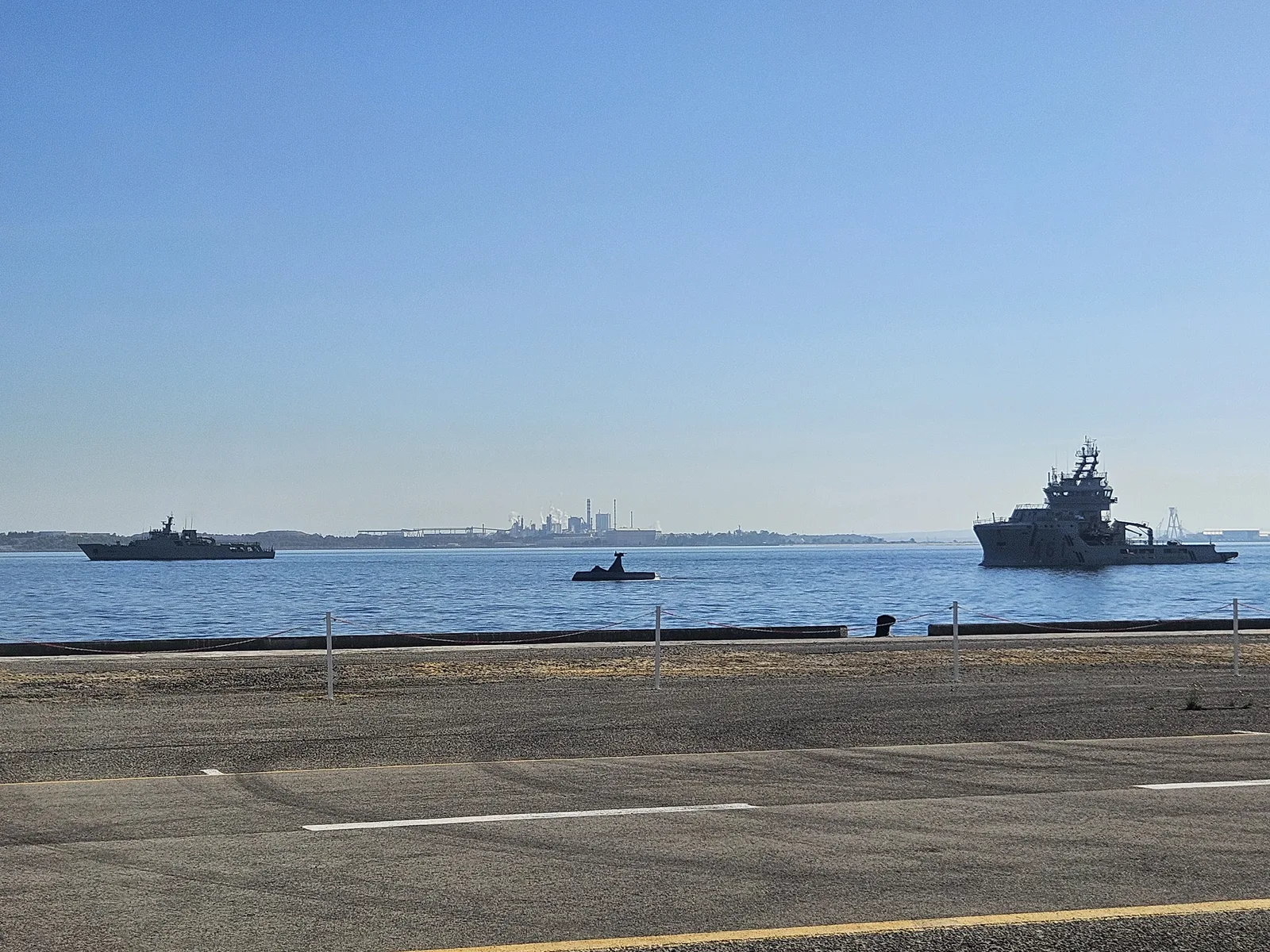
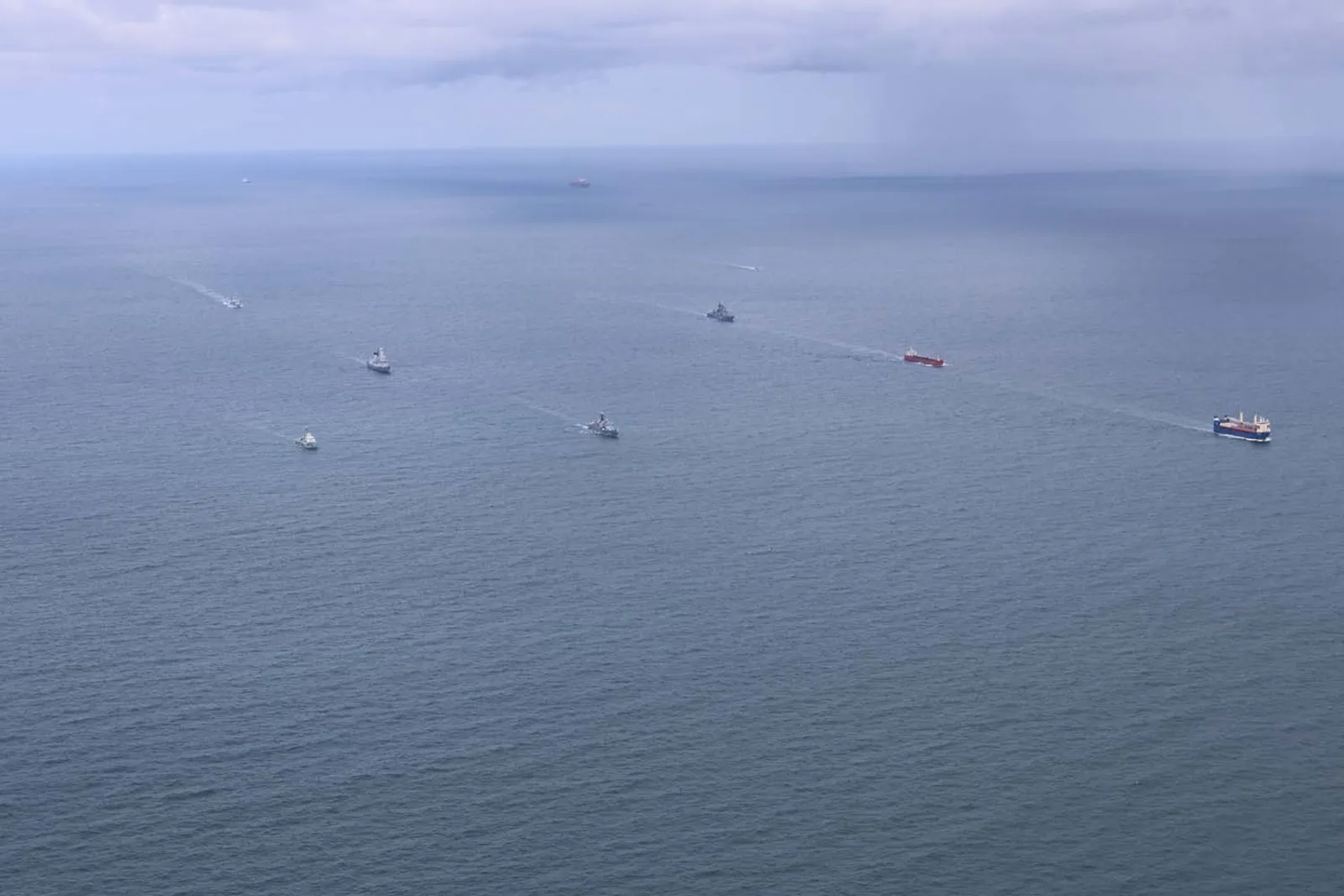
According to an RN report on 29 August 2026, the three RN ships – the Type 45 destroyer HMS Duncan, the Type 23 frigate HMS St Albans, and the River-class Batch 1 offshore patrol vessel (OPV) HMS Severn – shadowed the Russian Project 1155 Udaloy I-class frigate RFS Admiral Levchenko, the oil tanker MT General Skobelev, and the cargo vessel MV Sparta.
The report noted that St Albans’ embarked Merlin helicopter deployed to expand the surveillance area. It added that the Russian Navy 11540 frigate RFS Neustrashimiy was subsequently dispatched to escort the three Russian vessels. The RN ships maintained overwatch to waters off France’s northwest coast, before handing over to a NATO ally.
In a parallel deployment, Severn’s sister ship HMS Mersey shadowed a Russian support ship, Akademik Pashin.
The RN report referred to the commercial ships as “sanctioned” vessels. The UK and other countries have sanctioned ships believed to be part of Russia’s ‘shadow fleet’ – vessels used to export cargo like oil, in contravention of sanctions imposed on such exports following the Russo-Ukrainian War erupting in February 2022.
The navy’s report noted that RN activations to monitor Russian vessels have increased by 25% across the first eight months of 2026, compared to the same period in 2025. Previously, the navy reported that RN ships had spent 21 days in July monitoring Russian ships in UK waters and the wider North Atlantic region.
The UK government has also reported previously that Russian naval activity in and around UK waters has increased by 30% since the start of 2024.
So far, 2026 has included some notable incidents within this broad trend. First, back in April, the UK published details of a month-long operation in which UK and NATO forces had monitored and then moved against Russian submarines that, according to the UK government, were deploying to threaten critical undersea infrastructure (CUI).
Second, in June, the UK seized MV Smyrtos, another sanctioned Russian ‘shadow fleet’ tanker. This followed, in March, the UK announcing its forces were cleared to conduct vessel board, search, and seize (VBSS) taskings of ‘shadow fleet’ ships.
Third, in July, Neustrashimiy conducted a live-firing drill in the Channel, around 72 km (45 miles) off the Plymouth coast, on the same day the UK’s new prime minister Andy Burnham took office.
In the RN statement, First Sea Lord and Chief of Naval Staff General Sir Gwyn Jenkins said that, since the seizure of Smyrtos, Russian ‘shadow fleet’ ships have had to change routes, adding delay and cost to their journeys.
However, another consequence has been for Russia to sail such ships with a naval escort instead – as illustrated by Neustrashimiy’s arrival to accompany the three ships.
According to a BBC report in mid-June 2026, NATO officials noted that another Russian ship, the Project 11356 frigate Admiral Grigorovich, had previously been tasked with escorting ‘shadow fleet’ ships too.
Russia’s increased naval presence in the region could be attributable to a combination of different factors.
First, Russia lost access to the Syrian port of Tartus in late December 2024 when the Assad regime fell, and since 2022, cannot re-deploy Baltic and Northern fleet ships to the Black Sea following Türkiye invoking the 1935 Montreux Convention in response to the Russo-Ukraine War breaking out, closing the Bosporus/Dardanelles straits to non-resident Black Sea ships. Thus, Russia can only maintain an Eastern Mediterranean presence by sending more Baltic and Northern fleet ships, meaning a steadier stream of transits heading through the North Sea and Channel.
Second, access through the Baltic in particular has thus become more significant. However, NATO navies are increasing surveillance pressure here on Russian-linked commercial shipping suspected to be either ‘shadow fleet’ ships, or else a threat to NATO CUI – the latter risk emanating from several incidents in the Baltic between September 2022 and January 2026, some of which NATO officials believe rogue commercial ships may have been responsible for. Consequently, more Russian naval vessels are present to secure such shipping.
Third, Russian naval presence in and around UK waters may also be part of efforts to map UK CUI networks, and to measure RN response methods and times to CUI-related or other incursions. For example, in a recent incident reflecting both risks, in January 2026 the Russian-flagged cargo vessel MV Sinegorsk stopped near a CUI site in the Bristol Channel, off the UK’s west coast. The vessel claimed to be seeking shelter to address a hull defect. The UK’s response included an RN Merlin helicopter being present. In the end, Sinegorsk left having been formally directed by the UK government to do so.