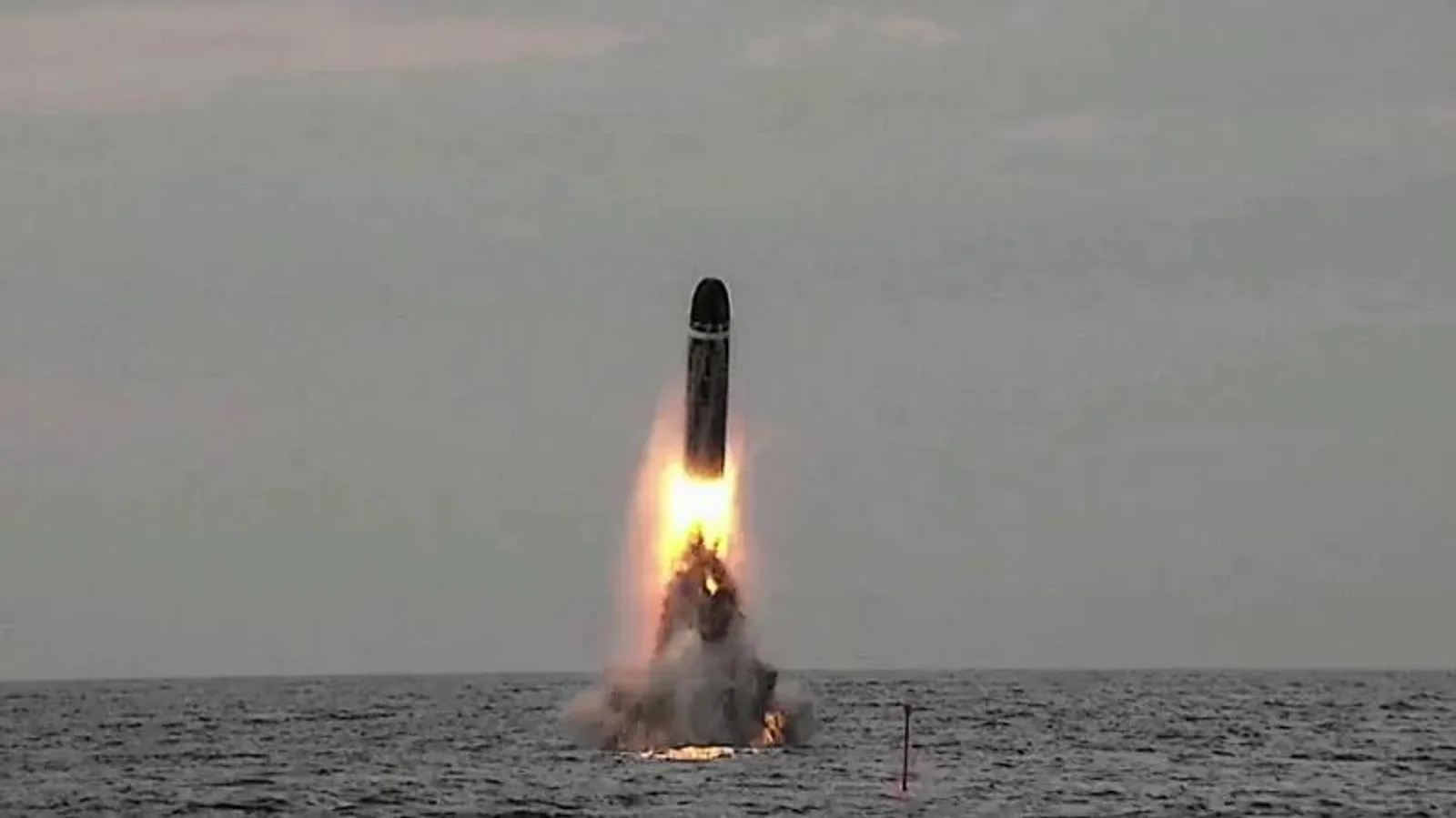
The UK has revealed details of a joint and combined operation undertaken to deter Russian submarine deployments in the North Atlantic. The operation underlined the need to continue building the UK’s underwater capability.


The UK has revealed details of a joint and combined operation undertaken to deter Russian submarine deployments in the North Atlantic. The operation underlined the need to continue building the UK’s underwater capability.

The UK and NATO allies have combined recently to deter Russian submarine deployments into UK and NATO areas of interest, the UK government has revealed.
Including through using overt tactics, a collection of UK and other assets halted linked Russian underwater incursions that, according to the UK Ministry of Defence (MoD), encompassed waters from the High North down to areas in and around the UK’s exclusive economic zone.
In a 9 April 2026 statement, the MoD said UK aircraft and warships detected and identified a Russian Navy Shchuka-B (NATO reporting name: Akula) -class nuclear-powered attack submarine (SSN) entering international waters in the High North, and began tracking its movements round-the-clock (for a period understood to be over a month). However, the UK and allies – including Norway – assessed that the SSN was “deployed as a distraction”, the statement said, for operations being conducted against critical undersea infrastructure (CUI) sites elsewhere by undersea assets from Russia’s Main Directorate of Deep-Sea Research (known as GUGI).
GUGI operates a collection of crewed and uncrewed platforms that can conduct deep submergence operations, providing reach to interfere with CUI nodes. In this instance, the CUI nodes were reported to be of interest to the UK and other NATO countries.
Responding to the Russian activity, and operating in challenging conditions, “the UK and its allies began a campaign of overt action to ensure the Russian units knew they were being monitored and were no longer covert,” the MoD statement said. The Russian units subsequently returned home, it added.
In a message directed at Russian president Vladimir Putin, UK Secretary of State for Defence John Healey said, in the MoD statement, “We see you, we see your activity over our underwater infrastructure. You should know that any attempt to damage it will not be tolerated and would have serious consequences.”
In a media briefing, Healey said: “Putin’s purpose is secret operations that remain undetected over our CUI. We’ve exposed those covert operations. We’ve made clear to him and his submarines that we’ve watched them every step of the way, and were there to be any damage to our cables or pipelines, we would hold him responsible.”
Healey added that, within what was a complex operation, the UK had demonstrated its armed forces to be capable of detecting, deterring, and responding if required.
Addressing the question of whether Russia may have been seeking to capitalise on a perception of NATO countries being distracted by the latest Gulf war, Healey told the briefing that releasing details of this operation was not just exposing Russia’s covert activities, but was reiterating that the UK would not be distracted from the Russian risk, as the primary threat to the UK and NATO.

The UK’s focus on Russian North Atlantic activities, including underwater, is evidence-based. The UK government said earlier in 2026 that Russian naval activity in and around UK waters has increased by 30% in two years. For over a decade, NATO naval officials have been highlighting the returning Russian submarine threat. NATO navies have traditionally not talked about underwater issues. Yet the level of detail revealed by the MoD – relating to the nature of the threat, and the operational response to it – underscored the threat’s continuing significance.
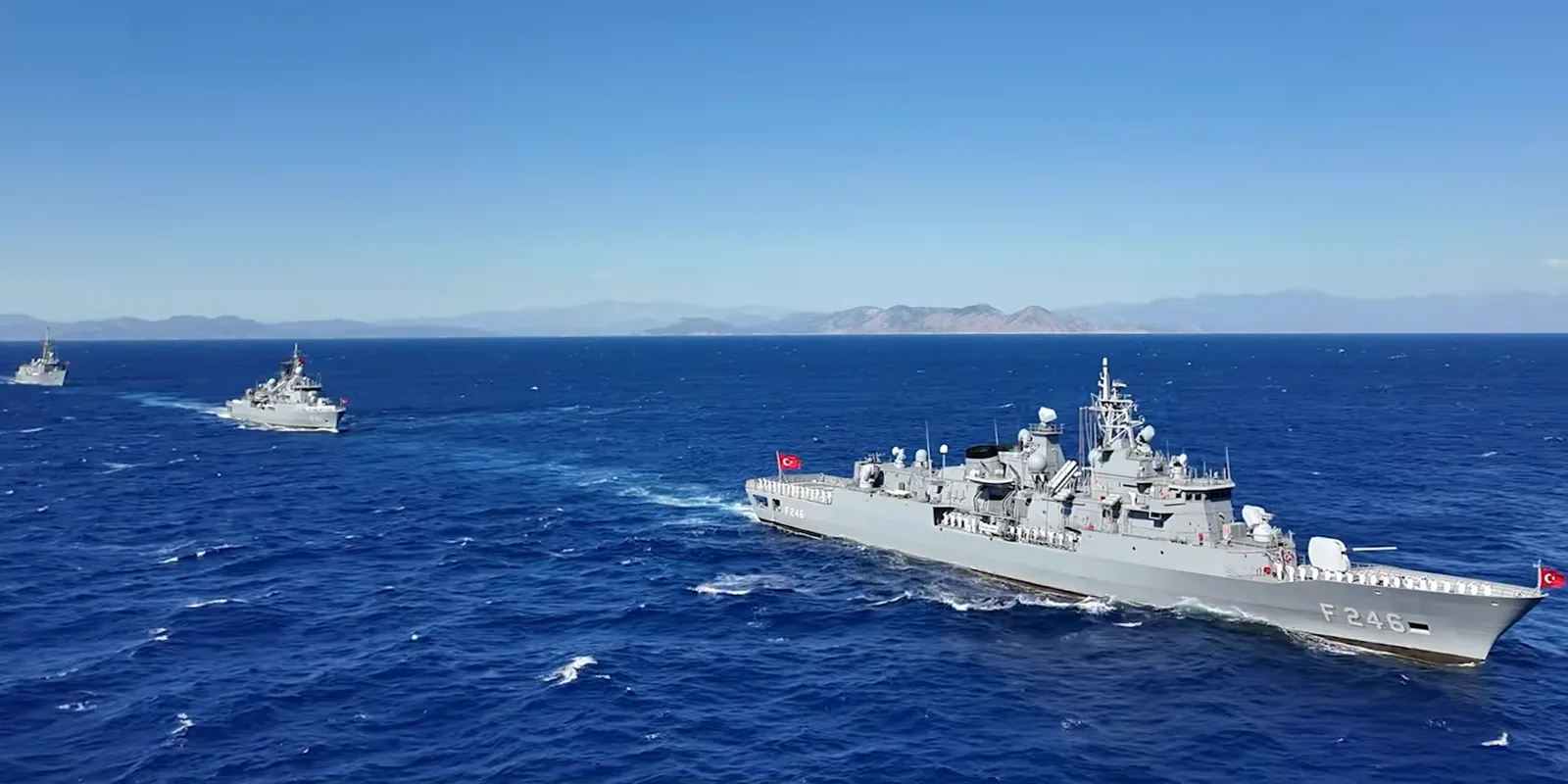
Present on-station was the UK Royal Navy (RN) Type 23 frigate HMS St Albans, optimised for anti-submarine warfare (ASW) including through its Thales Type 2087 active low-frequency towed body/passive low-frequency towed array sonar system fit. The Royal Fleet Auxiliary (RFA) fleet tanker RFA Tidespring and multiple Merlin ASW-capable helicopters were present, too. A UK Royal Air Force (RAF) P-8A Poseidon maritime patrol aircraft provided air surveillance.
According to the MoD’s statement, the UK assets (alongside allies) tracked the Akula as it travelled. The tracking activity included RN and RAF assets deploying sonobuoys – these drops being elements of the overt response.

The statement added that, in a separate operation over the last two weeks, the Type 23 frigate HMS Somerset – another ‘TAPS’ (towed-array patrol ship) platform – plus RFA Tideforce, the Batch 1 River-class offshore patrol vessel HMS Mersey, and Wildcat helicopters had spent around 10 days tracking a Russian destroyer, frigate, landing ship, and Kilo-class diesel-electric submarine (SSK) that had all been transiting the English Channel and North Sea.
Alongside generating operational outputs at sea, the UK is continuing to invest in new capabilities to build deterrence and defence in tasks like CUI protection and ASW. On the CUI front, the statement noted that the UK has allocated an additional GBP 100 million to support P-8 activities here. It added that the UK is investing in innovative technology to support the RN’s emerging ‘Atlantic Bastion’ North Atlantic ASW concept, which is integrating crewed and uncrewed capabilities and operations.
The operation pointed to the importance of some wider developments for the RN on underwater domain matters.
First, the prospective impact of ‘Atlantic Bastion’ is becoming increasingly clear. Launched in the UK’s Strategic Defence Review (SDR) in June 2025, the programme’s procurement element got underway formally in late 2025, including with a technology demonstrator process commencing. The SDR’s strategic vision is set to be enabled in capability terms by the much-anticipated Defence Investment Plan (DIP). The hope is that the DIP will enable acceleration of ‘Atlantic Bastion’: with the RN shifting to a ‘hybrid’ crewed/uncrewed force structure and with the underwater threat remaining, ‘Atlantic Bastion’ cannot come fast enough for the navy. For the concept’s first phase, ‘Atlantic Net’, the RN is aiming to deliver uncrewed underwater vehicle (UUV)-based minimum deployable sensing capability into the water by the end of 2026, with functionality enhanced and the full set-up ‘going live’ around key areas like the Greenland-Iceland-UK (GIUK) Gap by the end of 2027. Beyond that, the second phase – ‘Atlantic Bastion’ – will see more platforms involved across more areas.
Second, the twin Russian activities of deploying an ASW diversion while conducting a CUI mission reflects – and reinforces – NATO navies’ conceptual and operational rolling of the traditionally singular ASW, CUI, and mine-countermeasures underwater tasks into a broader, collective requirement to conduct ‘underwater warfare’ holistically.
Third, while the UK’s challenges with generating operational availability in its Astute-class SSNs have been widely reported, the response to the Russian deployment underlined the reality that the RN does not have a large-enough Astute-class flotilla to support UK commitments. Assuming the Russian activities occurred within the last few weeks, the RN’s one confirmed operational Astute boat had been in Australia, in preparation for the establishment of AUKUS collaborative Submarine Rotational Force – West deployments from Perth, Western Australia (commencing in 2027). Yet the boat seemed to get ‘short toured’ – perhaps by re-tasking to establish presence somewhere around the current Gulf conflict.
Having only one boat available theoretically across three national taskings underlines the strategic need, first, get more Astutes to sea; and second, to grow the UK’s submarine force level under its new SSN-AUKUS submarine building programme.