The US Army announced on 18 August 2026 that it has downselected Hanwha Defense USA (HDUSA), offering the K9 Mobile Howitzer (K9MH), to proceed with developing prototypes for its Mobile Tactical Cannon (MTC) programme.
Awarded competitively under an Other Transaction Authority (OTA) to expedite the process, the firm-fixed-price contract issued to HDUSA, a subsidiary of South Korea’s Hanwha Aerospace, will provide the army with up to 18 wheeled 155 mm self-propelled howitzers (SPHs) for rapid prototyping, testing and soldier experimentation over an estimated four-year period of performance.
The army stated the contract is valued at USD 100.3 million (EUR 86.05 million) but has a total cumulative face value of USD 262.9 million. It provides for the accelerated delivery of six prototype MTC systems, with an option for an additional 12.
The K9 Mobile Howitzer
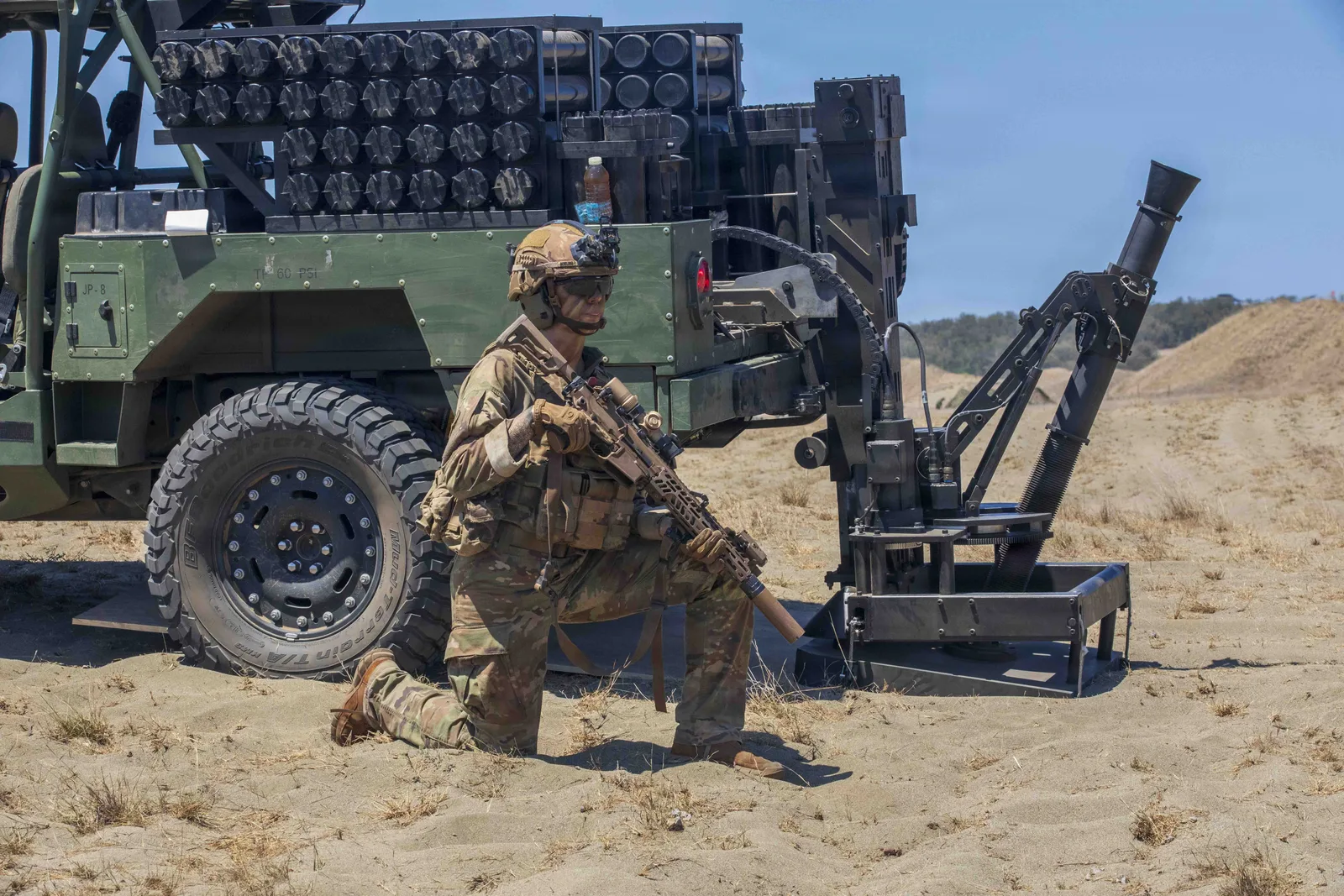
The K9MH takes the automated turret of Hanwha’s tracked K9A2 SPH, which is armed with a 155 mm/52-calibre CN98 cannon, and integrates this onto an 8×8 truck chassis. The initial prototype uses an 8×8 heavy-duty tactical chassis produced by Czech company Tatra, although the system is essentially chassis agnostic.
According to the HDUSA website, the K9MH’s CN98 cannon has a rate of fire of 8-9 rounds per minute and a range in excess of 60 km. The K9MH carries 40 rounds in an onboard magazine and is designed for rapid, automated resupply using Hanwha’s K10 ammunition resupply vehicle (this is a tracked vehicle). In terms of survivability, the K9MH features an armoured cab and has emplacement/displacement times of less than 30 seconds, meaning it can ‘shoot and scoot’ to avoid being targeted by hostile counter-battery fire.
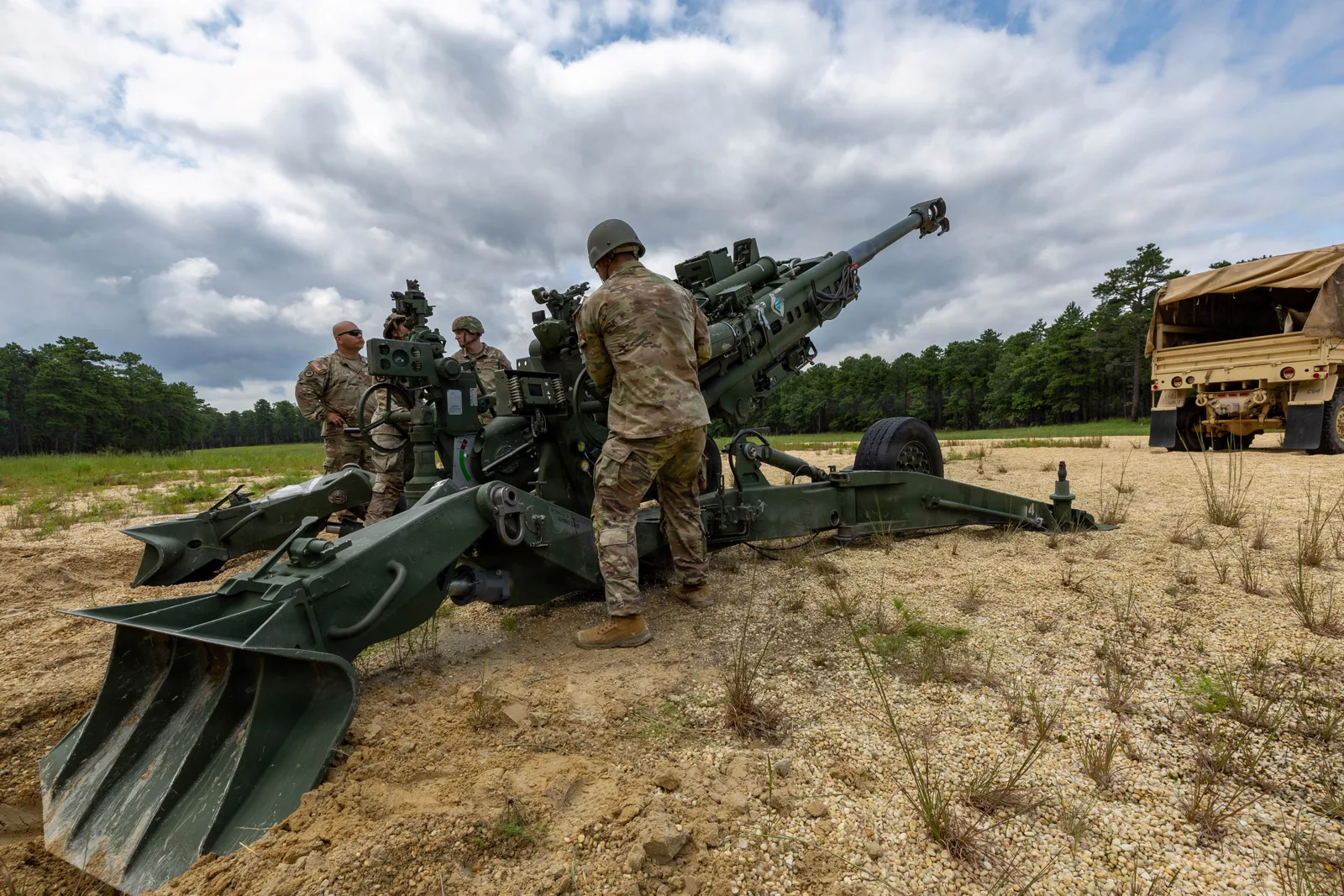
The MTC programme is focused on replacing the M777 towed 155 mm howitzers used by the US Army’s Stryker Brigade Combat Teams (SBCTs), although the contract award to HDUSA does not guarantee the K9MH will be fielded.
The US Army stated of the ordered K9MH prototypes, “Soldiers will use these platforms in a series of operational experiments to assess performance, reliability, and supportability in realistic combat conditions. … Data and insights gained from these experiments will directly inform senior leaders’ decisions on future fielding.
“If approved for fielding, MTC will replace M777 towed artillery systems in select formations, significantly increasing their lethality, mobility, reliability, and survivability on the modern, highly transparent battlefield,” the army stated. “By rapidly prototyping these systems, the army is advancing a more mobile and adaptable fires formation aligned with the rigorous demands of large-scale combat operations.”
Nevertheless, the MTC contract is HDUSA’s first major contract with the US Army. The company stated of its strategy moving forward, “Hanwha’s phased-in localisation strategy with domestic production and support means America’s defense-industrial base will benefit from advanced manufacturing techniques, demonstrated technology, and good jobs. HDUSA is establishing a Phase I site in Opelika, Alabama, that will serve as the US integration and test facility for Hanwha’s family of K9 Mobile Howitzers. HDUSA signed a three-year lease as part of the company’s strategic commitment to invest in the US artillery system supply chain, enhance America’s combat vehicle industrial base, and serve as a long-term artillery modernization partner to the US Army.”
Jason Pak, HD USA’s Head of Land Systems – Artillery, was quoted by the company as stating, “We’re focused on creating a US-anchored K9 Mobile Howitzer manufacturing network – with Opelika, Alabama, as the current Phase I launch point – that can deliver advanced Mobile Tactical Cannons at the speed and scale the US Army needs.”
Other MTC contenders included: American Rheinmetall teamed with KNDS, pitching Boxer-based Remote Controlled Howitzer 155 (RCH 155); BAE Systems, offering the Archer wheeled SPH; KNDS and Leonardo DRS, offering the CAESAR MK2 6×6 SPH; General Dynamics Land Systems, offering a version of the KNDS RCH155 gun module on a 10×10 chassis; and Elbit Systems of America, teamed with Anduril Industries and Oshkosh Defense, offering its Sigma system
The move away from towed howitzers
While the US Army’s SBCTs were always intended to be accompanied by mobile howitzers, the US military’s engagement in almost exclusively counter-insurgency operations over the last two decades contributed to that requirement never being fulfilled. This left the SBCTs to be accompanied by M198 and then M777 towed howitzers as organic artillery, even though this situation was clearly inadequate for the fast-moving SBCTs.
However, after Russia invaded Ukraine on 24 February 2022, a clear lesson driven home by that conflict was the vulnerability of towed artillery pieces in modern, high-intensity warfare. The nine-person crew of an M777A2, for example, has to operate the gun with no protection and it can take up to eight minutes to emplace or displace the weapon, leaving it dangerously exposed to modern counter-battery fire.