So-called cluster munitions date from the middle of the 20th century. Definitions vary, but broadly a cluster munition is a weapon system that scatters smaller weapon systems to cause some sort of effect on the battlefield.
The earliest widespread application was bundled incendiary munitions in the Second World War. Cluster munitions have historically included not just incendiaries, but have included high explosive (HE), landmine, chemical, biological, smoke, fuel air explosive (FAE), flares, and riot control agent submunition payloads over the past seven decades.
Cluster munitions and submunitions exist because many tactical objectives turned out to be more easily achieved in certain situations by scattering a quantity of smaller weapons rather than having one big explosion or effect. An anti-personnel cluster munition, for example, is basically a large barrel of grenades. Broadly, the current discourse mostly discusses conventional HE submunitions.
Cluster munitions are often, in public debate, combined or sometimes conflated with landmines. The same general motivation and many of the same NGOs that pursued restrictions on landmines were responsible for the international diplomatic effort to restrict cluster munitions.
The principal objection is that many generations of cluster munitions, particularly HE natures, had a very high rate of malfunction. What this meant was that areas where they were used became de facto minefields.
However, conventional landmine fields generally followed some tactical logic, insofar as there were places where they were practical to use and were generally employed in belts and fields. This made landmines somewhat more predictable than loose submunitions, which could turn up in any and all types of terrain, but still kill and maim decades after use. Many of the post-conflict victims have been children. The impact on livestock and agriculture has been serious in some places. It is for these reasons that cluster munitions have earned opprobrium in the public eye.
Although the diplomatic effort and NGO campaign derived from the same routes as the Ottawa Treaty to ban anti-personnel landmines, it took much longer for an agreement to be reached on cluster munitions. On 30 May 2008 in Dublin, the Convention on Cluster Munitions was agreed. This treaty bans use, manufacture, development, stockpiling, or transferring high explosive cluster munitions. The text defines cluster munition as follows:
“a conventional munition that is designed to disperse or release explosive submunitions each weighing less than 20 kilograms, and includes those explosive submunitions.”
This does not cover some other types of cluster munitions. Legally, chemical and biological cluster munitions are banned by other long-standing treaties. A somewhat under-adopted agreement on incendiary weapons restricts but does not ban incendiary cluster munitions outright. Moreover, there are exceptions that have the look of being painfully negotiated around some of the more modern precision weapon systems of the time:
“A munition that, in order to avoid indiscriminate area effects and the risks posed by unexploded submunitions, has all of the following characteristics:
- Each munition contains fewer than ten explosive submunitions;
- Each explosive submunition weighs more than four kilograms;
- Each explosive submunition is designed to detect and engage a single target object;
- Each explosive submunition is equipped with an electronic self-destruction mechanism;
- Each explosive submunition is equipped with an electronic self-deactivating feature”
As with the Ottawa landmine treaty, the biggest problem is uptake. According to the UN, there are only 112 parties to the treaty at the time of this article. The majority of these countries have never used cluster munitions. The most prolific users are not signatories. Russia and Ukraine are not signatories. Historically, the USA and Israel are big users of cluster munitions. Some NATO countries are not signatories, and Lithuania which was one withdrew on 6 March 2025, citing Russian use in the Ukraine war.
Cluster weapons continue to be used in warfare. The Sudan conflict has not seen cluster weapon usage in recent years, but cluster munitions were used in the past and the Sudanese government, such as it is, has not signed the treaty. Israel has been repeatedly seen using such systems. The Assad regime used cluster munitions in the Syrian civil war. The current conflict with Iran has seen the Iranians use missiles with submunitions in strikes against targets outside Iran. But Iran is not a party to the treaty.
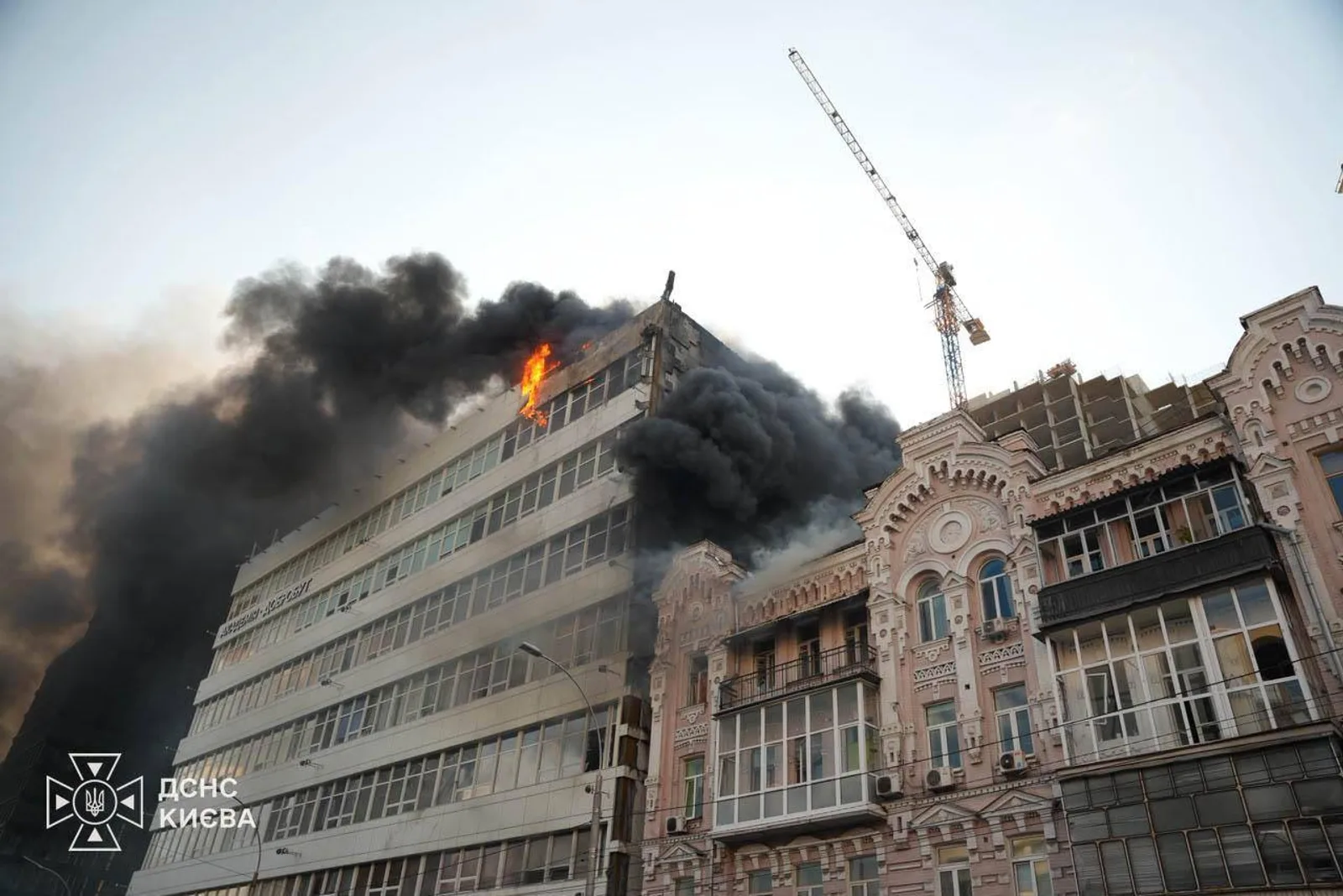
There has been widespread confirmed use of cluster munitions by both sides in the ongoing Russian invasion of Ukraine. For the record, Ukraine has acknowledged the humanitarian issues of cluster weapons usage, but has parked the discussion for a later date while defending its existence.
It is difficult to track the use of cluster munitions with granular detail as both sides have inventories of the same munitions, but it appears that Russia is a more prolific user than Ukraine and has its own manufacturing capability. Russia is widely alleged to use cluster munitions in attacks targeting Ukrainian civilians.
Ukraine has no indigenous cluster weapon manufacturing, but the Biden administration transferred 155 mm (M483A1) and HIMARS-launched 227 mm (M30) and 610 mm (M39, M39A1) cluster munitions in 2023-2024 to Ukraine.
Of all of the current arms control agreements, the attempted ban on cluster munitions is the one closest to dying. It is, perhaps, an idea ahead of its time.