The conflicts raging in Sudan and northern Ethiopia are entangled with the ambitions and fears of Egypt, Ethiopia, and the Gulf states. A vast dam on the Blue Nile sits as a symbolic geopolitical fault line running through the region.


The conflicts raging in Sudan and northern Ethiopia are entangled with the ambitions and fears of Egypt, Ethiopia, and the Gulf states. A vast dam on the Blue Nile sits as a symbolic geopolitical fault line running through the region.
Northeast Africa is wracked by conflict. Foremost is the civil war in Sudan. For most external observers, it is a confusing conflict (see Warsight overview here). By any measure of human misery, it is one of the biggest wars on the planet right now. It is also a proxy conflict, with numerous outside interests supporting either of the two main sides, the Sudanese Armed Forces (SAF – representing the pre-war government regime) and the Rapid Support Forces (RSF – descended from Janjaweed militias).
The Sudan war is happening alongside other conflicts, most notably a bitter internal conflict in northern Ethiopia, in and adjacent to the Tigray region. Ethiopia’s government, led by Prime Minister Abiy Ahmed is in conflict with the Tigray People’s Liberation Front (TPLF). Several bitter periods of conflict in this part of Ethiopia in the last decade have caused many deaths and much displacement of some of the poorest people in Africa. The most bitter recent period was the 2020-2022 Tigray War.
Further complicating the overall scene is the frozen conflict between Ethiopia and Eritrea, which erupted into yet another bitter war, with another humanitarian crisis, in 1998-2000. Border conflicts have simmered since. Eritrea was part of Ethiopia from 1950-1993, a period characterised by Eritrean separatist armed struggle. Ethiopia views sea access as vital to its economic future, and Eritrea views this concept as an existential threat.
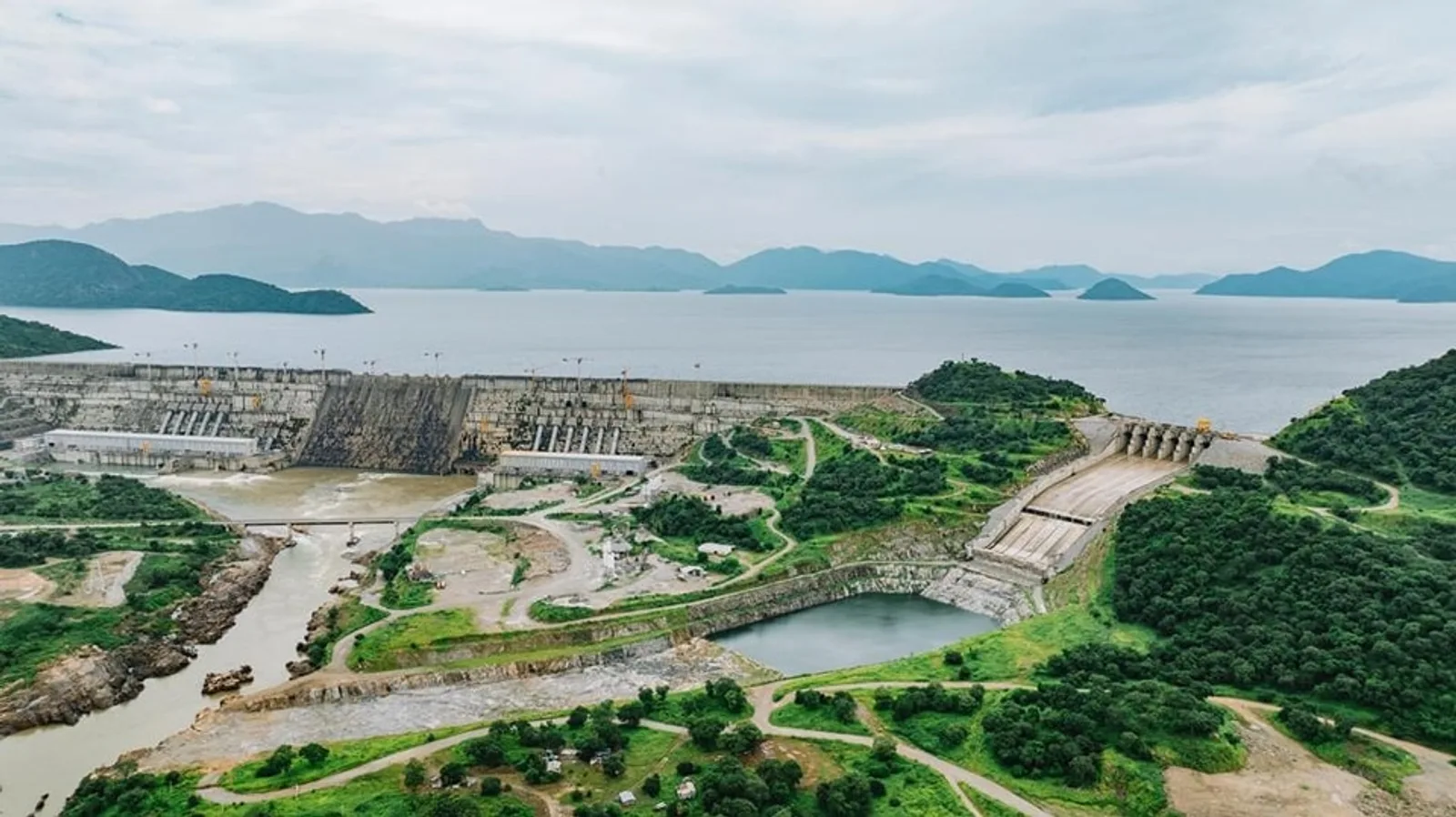
In the middle of this geopolitical morass is one of African’s largest infrastructure projects. The Grand Ethiopian Renaissance Dam (GERD) has a long history and was originally proposed in the late 1950s when Haile Selassie was Emperor of Ethiopia, with technical assistance from the USA in the original survey. As such, this project has outlived several different regimes, both in Ethiopia and in downstream Sudan and Egypt. A ribbon-cutting ceremony, celebrating its completion and start of electricity generation, was held in September 2025.
From the Ethiopian perspective, the dam is more about electricity than water. The dam produces over 5 gigawatts of electric power and has literally doubled Ethiopia’s electricity supply. It is therefore critical to the government’s industrial and economic development plans, and has placed Ethiopia in a position of exporting electricity to Sudan, Djibouti, Kenya, and Tanzania.
The dam also has some subsidiary benefits in creating a water reservoir (which will also be a local fishery), flood control, and national pride. Much of it was funded by individual contributions by Ethiopian citizens, so GERD has become a symbol of national pride for the Ethiopian state, a fragmented polity which desperately needs symbols of unity.
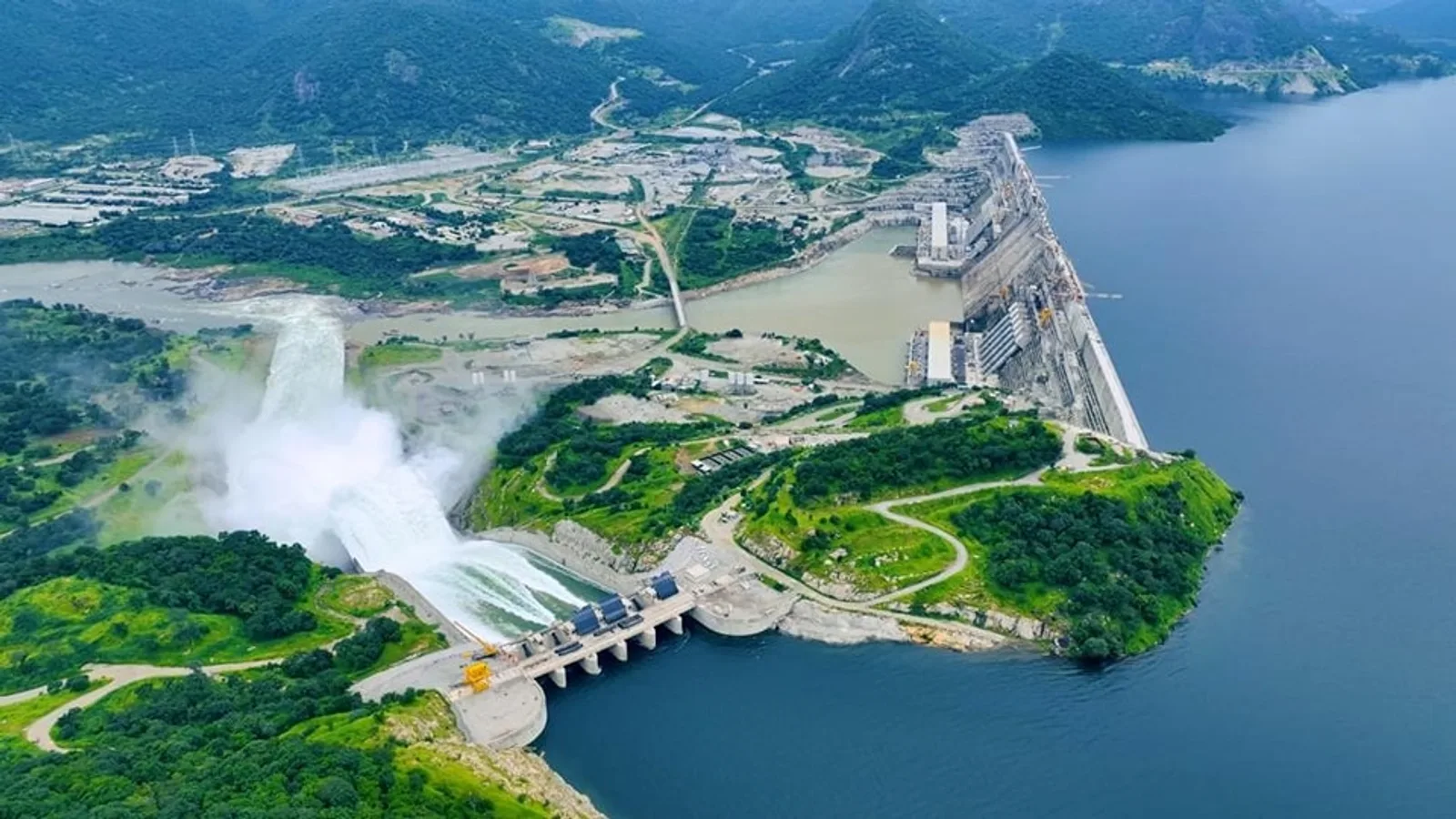
For the countries downstream, however, GERD is about water supply. GERD dams the Blue Nile. The Nile is a fundamental part of the identity of several countries. GERD a source of conflict in the region because it poses potential for restricting the flow of the Blue Nile. The Blue Nile arises in Ethiopia and flows into Sudan, where it joins the White Nile at Khartoum. Estimates vary, but the Blue Nile is viewed to supply between half and two-thirds of Sudan’s fresh water. By the time the Nile gets to Egypt, it provides upwards of 90% of Egypt’s fresh water, including nearly all its agricultural supply. More than half of that water will pass through the dam in Ethiopia.
The Nile has been inextricably intertwined with Egyptian identity for thousands of years and is a deeply emotional time. In less spiritual terms, Egypt views the dam as a possible existential threat to its water supply. As far back as medieval times, when Ethiopia was reliant upon the Coptic Church in Egypt to supply the leader of the Ethiopian Orthodox Church, threats to the Nile were used as leverage. Even in good years, Egypt’s population and agriculture strain the water supply.
Egypt has long sought to delay the construction of the dam and has sought diplomatic assurances that long-existing Nile treaties promising a specific flow of water will continue to be honoured. Egypt believes that completing the dam and filling the reservoir violates treaties and customary agreements. Diplomatically and geopolitically, Egypt has usually believed that other countries would value Egyptian relations more than ones with Sudan and Ethiopia, so there is a ‘we expect we should get our way’ factor at work.
For decades, Sudan united with Egypt in scepticism of GERD, despite Ethiopian claims that the dam will provide improved flood control in southeast Sudan. Indeed, Blue Nile floods in Sudan have been historically destructive, as seen in 2020. But Sudan cannot thrive without Blue Nile water.
However, the Sudanese civil war has meant that Sudan is not actually in much of a position to form a united diplomatic front with Egypt. Egypt supports the SAF faction, based largely around the Nile, while Ethiopia supports the RSF, which is more centred in Sudan’s hinterland. The threat that Ethiopia could either flood Khartoum on purpose or cut off water for a while is largely unspoken.
Agriculture plays a part here. Sudan has long felt that it could be a great exporter of crops, but such a view relies on water supply and irrigation schemes. One example is the Gezira scheme. Sudanese crops could outpace oil as Sudan’s biggest export. Tampering with the Blue Nile is thus a potential threat. This is occasionally noted by other countries that see Sudanese farmland as a useful future investment, such as various Gulf states.
Another concern is the condition of older dams in Sudan, critical to existing and future agricultural plans. Sudan’s Arbaat dam collapsed in August 2024, and if others are in a state of disrepair, could they be damaged by flooding from the Blue Nile?
One view is that Ethiopian support for the RSF has kept the Sudan war on the boil so that opposition to GERD was diffuse enough to allow completion of the dam. The RSF and Ethiopia both are backed by the UAE. A corollary view is that Egypt has got its own back against Ethiopia by fostering good ties with the despotic Afwerki regime in Eritrea.
So are the concerns downstream well-founded?
The dam is, perhaps, a fait accompli. GERD is finished and Ethiopia is not going to unbuild it. Lots of consumers are already using its electricity. A certain amount of water needs to flow through the dam for the valuable electricity exports to occur. The large reservoir above the dam has only so much capacity, so cutting off water supply is a time-limited option.
Egypt and Sudan will always have existential angst over water supply and GERD is simply the most recent manifestation. Perhaps a revised Nile treaty would be useful, but until the conflict in Sudan is resolved, that seems to be a distant prospect. But many of the countries supporting either side in the Sudan conflict would benefit from rational management of the Nile’s water. This may be useful in potential peace negotiations.