Romania’s Ministry of National Defence has submitted an updated list of SAFE defence procurement projects for parliamentary approval. The document confirmed numerous prior rumours, including Romania’s selection of Rheinmetall for its IFV and OPV requirements, and that Rheinmetall is set to be awarded over half of Romania’s available SAFE defence procurement funding.
Romania to award Rheinmetall EUR 5 billion in SAFE contracts
According to a new Romanian Ministry of National Defence (MoND) document seen by Warsight, Romania has officially selected Rheinmetall as prime contractor on several key programmes, including its infantry fighting vehicle (IFV) programme, with KF-41 Lynx selected, and for its two offshore patrol vessels (OPVs).
The news comes as the MoND submitted an updated list of its proposed purchases under the EU’s ‘Security Action for Europe’ (SAFE) programme for parliamentary approval. SAFE provides EU states with low-interest loans for defence and security-related purchases, backed against the EU budget.
The new document provides official confirmation for much of what I wrote back in March 2026, including rumoured cost increases. Rheinmetall even appears to have secured roughly EUR 5 billion in contracts (over half of the total SAFE funding for military procurement available), exactly as predicted. While there are some changes to costs and the size of purchase orders under the new document, fundamentally there were no shocking surprises. In many cases the MoND’s preferred contractor and equipment had already been announced, while others have been known to insiders for months, in some cases as far back as late 2025. Having said that, the document did provide some interesting new information about planned purchases outside of SAFE.
UPDATE 29/04/2026: An earlier version of this article based some conclusions based on interpreting information from a recent MoND document. However, a second document seen by Warsight since this article was published provided much greater clarity on the MoND’s plans, and as such, the relevant figures and conclusions have been updated where appropriate. The detail provided by the second document showed that the MoND was taking steps to decrease risk in several key domestic production programmes.
What’s different in the new document?
The new document does not detail all 21 SAFE programmes, but instead provides updates for 15 of them. Both the original and updated figures (where appropriate) are detailed together in Table 1:
| Table 1: Summary of confirmed changes to Romania’s planned SAFE procurements | ||||
| Programme code | Description | Equipment selection | Original/ New Quantity |
Original/ New Cost (EUR millions) |
| SAFE_RO_1_S_001 | 8×8 Armoured personnel carriers (APCs) | GDELS Piranha V APC Config | 139 vehicles | 761.2/ INCREASED TO: 831.2 |
| SAFE_RO_1_S_002 | Multifunctional wheeled transport and logistics platforms | Iveco – Various Trucks | 1,370 (minimum)/ DECREASED TO: 1,115 |
471.505 |
| SAFE_RO_2_C_003 | Integrated command post for air and missile defence | Airbus SBAMD-TC | 2 ‘systems’ | 160 |
| SAFE_RO_2_S_004 | Diving support vessels | Rheinmetall Diving Support Vessel | 2 vessels | 57/ INCREASED TO: 84 |
| SAFE_RO_2_S_005 | Offshore patrol vessels | Rheinmetall OPV 90 | 2 vessels | 700/ INCREASED TO: 836 |
| SAFE_RO_1_C_006 | Multi-mission helicopters | Airbus H225M | 12 | 852 |
| SAFE_RO_2_C_007 | Anti-ship/land attack cruise missiles | Kongsberg NSM | 7 ‘systems’ | 207 |
| SAFE_RO_1_S_008 | NATO-standard infantry weapons and ammunition | Unconfirmed | 240,000 (individual weapons) |
439.86 |
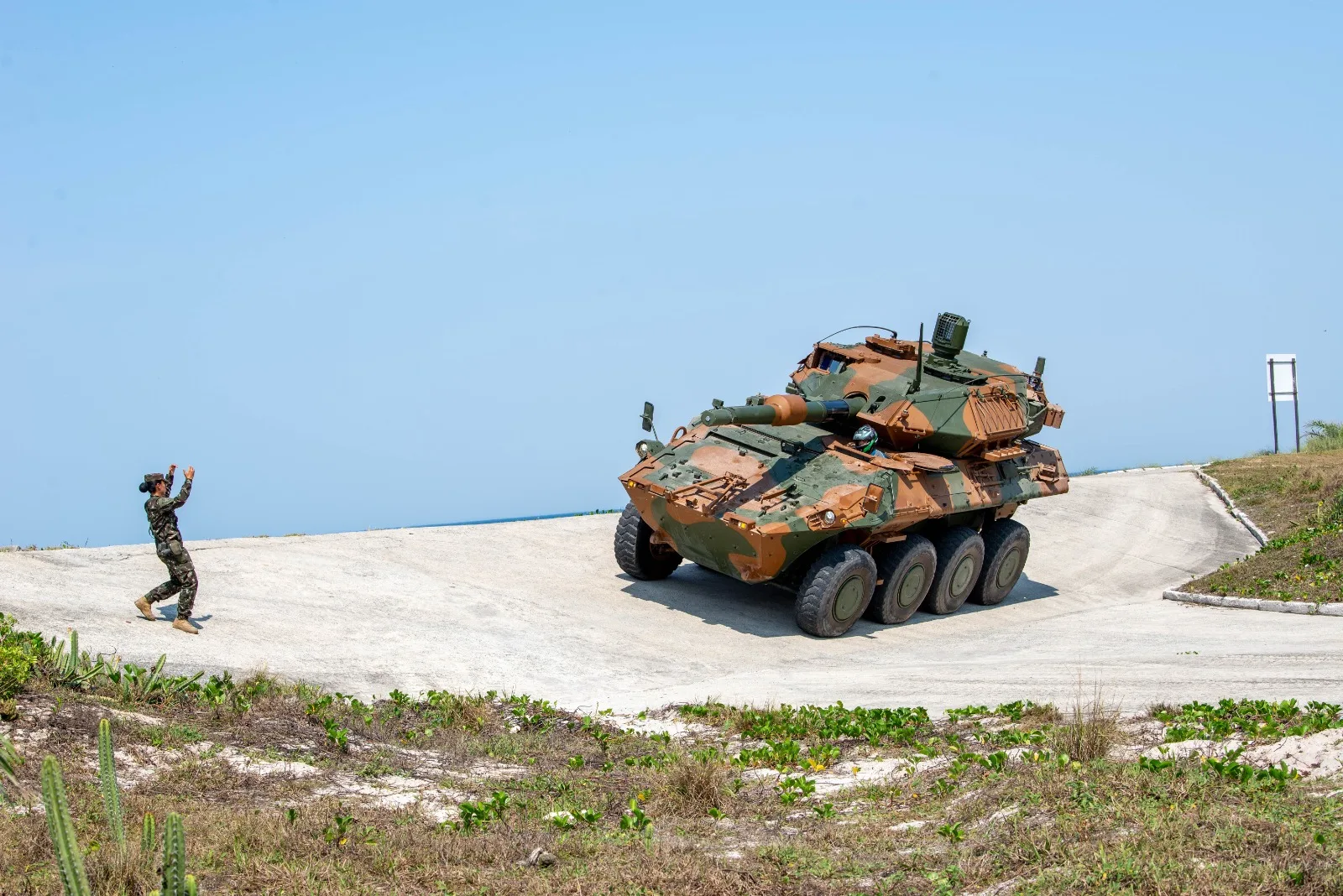
| SAFE_RO_1_S_009 | Tracked infantry fighting vehicle | Rheinmetall KF41 Lynx IFV | 298 vehicles/ DECREASED TO: 232 |
2983.566/ DECREASED TO: 2598.4 |
| SAFE_RO_1_C_010 | Integrated real training simulation system | Unconfirmed | 1 ‘system’ | 94.5 |
| SAFE_RO_2_C_011 | Software platform for C4ISR systems | Unconfirmed | 70 ‘instances’ | 19 |
| SAFE_RO_2_C_012 | Man-portable air defence system (MANPADS) | MBDA Mistral | 231 (launchers); 934 (missiles) |
625.56 |
| SAFE_RO_2_C_013 | VSHORAD/C-UAV/C-RAM systems, deployable | Rheinmetall Skynex (35 mm) | 7 ‘systems’ (likely fire units) |
476 |
| SAFE_RO_2_C_014 | VSHORAD/C-UAV/C-RAM systems, mobile | Rheinmetall Skyranger (35 mm) | 2 ‘systems’ | 330/ INCREASED TO: 470 |
| SAFE_RO_2_C_015 | Medium-range radar detection systems | Thales GM200 | 12 ‘systems’ | 258 |
| SAFE_RO_2_C_016 | MRAD systems | Diehl IRIS-T SLM | 3 ‘systems’ | 450/ INCREASED TO: 547.83 |
| SAFE_RO_1_C_017 | Loitering munitions | WB Group Warmate (Probably) | 70 ‘systems’ (individual munitions) |
147 |
| SAFE_RO_2_C_018 | VSHORAD/C-UAV/C-RAM systems, naval | Rheinmetall Millennium 35 mm naval turret |
2 ‘systems’ | 36 |
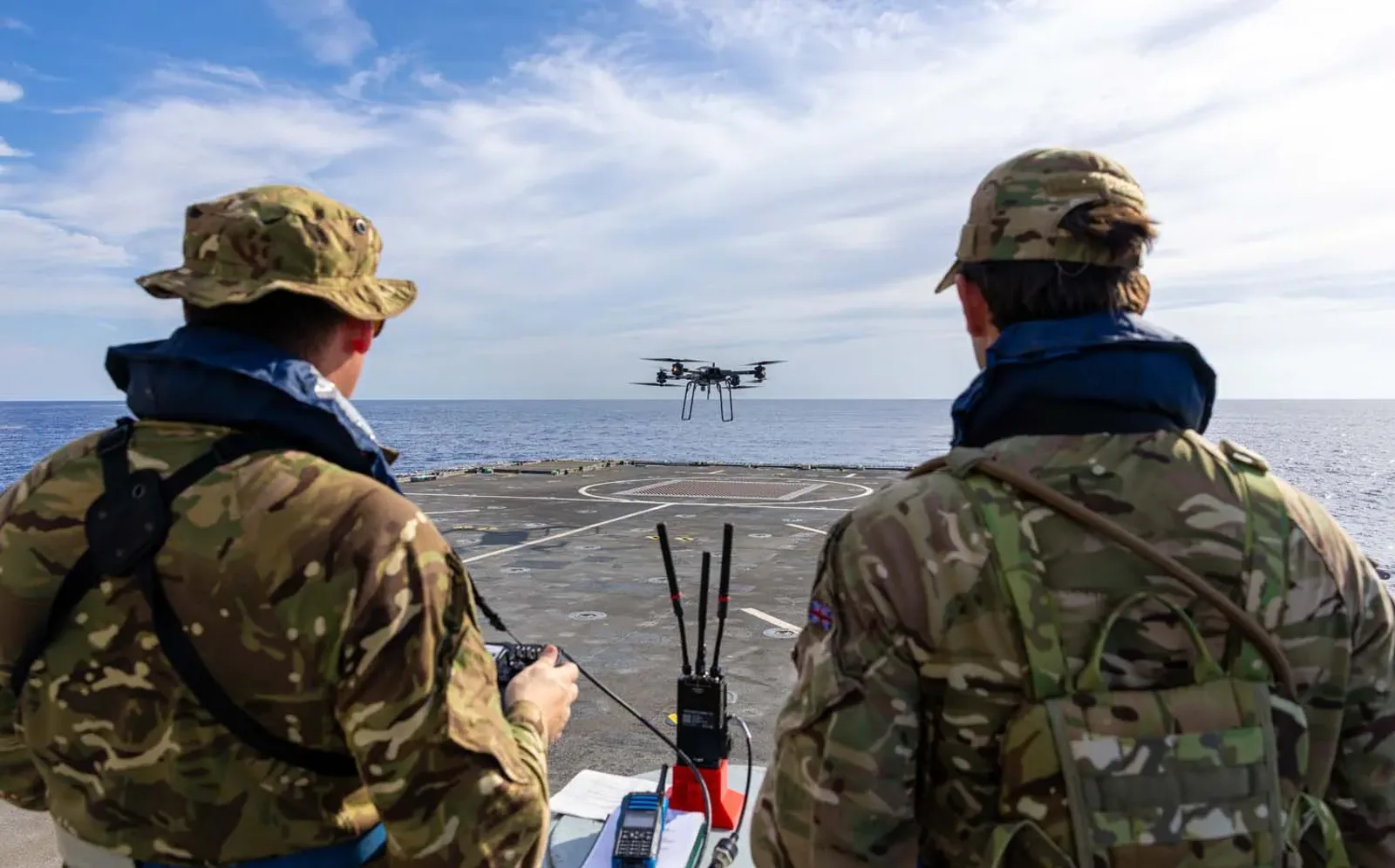
| SAFE_RO_1_S_019 | Class 1 Mini-UAVs | Quantum Systems Vector | 56 ‘systems’ (of which 22 already contracted) | 45.77 |
| SAFE_RO_1_C_020 | 35 mm ammunition (sourced through NSPA) | 35 mm ammunition | 87,000 rounds | 23.15 |
| SAFE_RO_1_C_021 | 35 mm ammunition | 35 mm AHEAD rounds | 400,000 rounds/ INCREASED TO: 401,760 rounds |
393.275/ INCREASED TO: 450 |
As the table shows, there are a number of noteworthy changes to either quantity or costs in Romania’s planned procurements. The MoND document also contained additional information which does not fit particularly well into tabular format, and so will be detailed below alongside the key changes seen to the table.
- KF41 Lynx: Beyond providing an official announcement to confirm Lynx’s long-predicted selection, the document details a change to the number of vehicles Romania intends to procure under SAFE, from an originally planned 298 vehicles for EUR 2.98 billion (EUR 10 million per unit), to 232 vehicles for EUR 2.59 billion (EUR 11.2 million per unit). Alongside this change, the MoND confirmed that the remaining 66 vehicles are due to be procured outside of SAFE in subsequent contracts for an estimated EUR 738.6 million (EUR 11.2 million per unit).
UPDATE: 29/04/2026: An earlier version of this piece misinterpreted the figure of 232 vehicles as equating to Romania’s local production figure. This was later clarified through a second, more detailed document seen by Warsight, which stated that the domestic work share is in fact intended to be 40% of the batch of 232, giving a total of around 93 vehicles to be built by Rheinmetall Automecanica, which is a significantly more realistic target, and is assessed as being fairly achievable. It is as yet unclear where the second phase batch of 66 vehicles will be built.
- Offshore Patrol Vessels: Although the MoND has yet to confirm the exact model selected, insiders have previously indicated it is likely to be the OPV-90 model previously selected by Bulgaria under a EUR 503 million contract in 2020. As was rumoured would happen, the cost of the two OPVs has risen, quite substantially in fact, from EUR 700 million under original plans, to EUR 836. As things stand, these two OPVs now cost 66% more than Bulgaria’s purchase.The figure lends credence to insiders’ claims that the government is planning to buy the vessels at an inflated price to incentivise Rheinmetall taking over the ailing Mangalia shipyard. However, nothing about the risks associated with production at Mangalia has fundamentally changed: the shipyard will still need to undergo a substantial process of hiring, training, and re-tooling before it is even ready to start construction of a design it has never built before, and then build two OPVs within four years.
UPDATE 29/04/2026: According to a second document seen by Warsight, the share of domestic production on the OPV contract will be around 55-60%, and the same level for the diver support vessels. This move may alleviate some of the difficulties of production at Magalia, though it will still be a major challenge given the difficulties the shipyard has faced in recent years.
- Piranha V 8×8: Costs for the tranche of 139 Piranha Vs under SAFE have increased from EUR 761 million (5.47 million per unit) to EUR 831.2 million (EUR 5.97 million per unit). Additionally, this tranche of 139 is now confirmed to be just Phase I of a larger total requirement. The MoND also plans to procure a further 220 APCs from 2031 under Phase II, at a cost of EUR 1.34 billion (EUR 6.09 million per unit). It appears that Phase II is being conducted outside SAFE.
- Air Defence Systems: According to the updated document, the cost of procuring three air defence ‘systems’ (probably referring to fire units rather than batteries) has increased from EUR 450 million (EUR 150 million per fire unit) to EUR 547.83 million (EUR 182 million per fire unit). Additionally, insider sources appear to have been correct that Romania has opted for the Diehl IRIS-T-SLM. While the system was not referred to specifically, the MoND noted this would be a joint procurement with Germany, which narrows things down somewhat, considering Germany isn’t procuring EMADS (CAMM/CAMM-ER) or VL MICA.
UPDATE 29/04/2026: The second document seen by Warsight confirmed that Romania’s choice of air defence system would indeed be from the IRIS-T series. Since the requirement is for a medium-range system, this would mean IRIS-T-SLM. - 35 mm ammunition: Under the new plans, ammunition figures have been adjusted slightly, from 400,000 for EUR 393.275 million, to 401,760 for EUR 450 million. While this does represent a rise in the unit cost for a modest increase in quantity, in this case there appears to be a logical reason. It is understood that under original plans, only a portion of this ammunition contract was intended to comprise Rheinmetall’s AHEAD air-burst munitions, while under the new contract, the MoND has stated that all will now be AHEAD.
- IDV trucks: Under revised plans, the purchase is being cut from a planned minimum of 1,370 trucks for EUR 471.5 million (EUR 344,164 per unit) down to 1,115 trucks for the same EUR 471.5 million (EUR 422,874 per unit).
- Diving support vessels: While the new document has not disclosed the selected platform, it reveals that the cost is 47% higher than originally planned, going from EUR 57 million to EUR 84 million for two vessels. Additionally, the document confirmed the vessels will be constructed by Rheinmetall Naval Systems (previously known as NVL), thereby lending credence to the rumoured plans to build these at Mangalia shipyard.
- Loitering munitions: The only rumour confirmed as incorrect so far appears to have been Romania’s purported plans to purchase Uvision Hero series loitering munitions. Based on the updated information seen in the MoND’s new document, Romania now looks set to acquire loitering munitions under a joint programme with Poland. As such, the likely choice is assessed as being WB Group’s Warmate family of loitering munitions (exact model unconfirmed), which have been procured by Poland, Ukraine, and unnamed customers in Asia.
UPDATE 29/04/2026: A second document seen by Warsight confirmed that Romania had indeed selected WB Group. As such, the choice of munition is considered very likely to be a variant in the Warmate family of loitering munitions.
In terms of why costs appear to be higher than expected for several manufacturers, there are a number of possible reasons depending on specific cases – for instance, a decrease in the number of units would diminish savings possible with economies of scale. However, a potential contributing factor today may also be timing.
As noted in a Calibre Defence article, defence manufacturers frequently rely on credit to tide over their finances between payments. The US-Israeli War with Iran has caused massive disruption to the oil and gas market, in turn increasing the cost of energy, along with many common goods and services. Defence manufacturers are not immune to systemic shocks and it is probable that many have likewise had to adjust prices to match a combination of risk/exposure, as well as currency volatility, increased costs, and other factors which can impact the cost of production throughout a complex supply chain.
What remains to be confirmed?
With the cost increases detailed, if all else remains the same, Romania’s SAFE spending is now EUR 56.72 million over budget. As such, there are two main possibilities: either other planned military purchases will see cuts, or Romania may possibly be able to rebalance the budget through reductions to planned spending under the civil portion of SAFE, such as the EUR 4.2 billion for planned highway extensions, or EUR 2.8 billion for Ministry of the Interior projects. However, due to the possibility of interdepartmental political friction, the latter is probably less likely than cuts within other parts of the defence procurement plan.
So where are cuts likely to fall? Well, there were several SAFE programmes the Romanian MoND was rather quiet about in this latest document, which make for potential candidates, summarised in Table 2:
| Table 2: Planned SAFE procurements not mentioned in the MoND’s April 2026 parliamentary approval request | ||||
| Programme Code | Description | Equipment selection | Planned quantity | Cost (EUR Millions) |
| SAFE_RO_1_S_008 | NATO-standard infantry weapons and ammunition | Unconfirmed | 240,000 (individual weapons) | 439.86 |
| SAFE_RO_1_C_010 | Integrated real training simulation system | Unconfirmed | 1 ‘system’ | 94.5 |
| SAFE_RO_2_C_011 | Software platform for C4ISR systems | Unconfirmed | 70 ‘instances’ | 19 |
| SAFE_RO_2_C_012 | Man-portable air defence system (MANPADS) | MBDA Mistral | 231 (launchers);
934 (missiles) |
625.56 |
| SAFE_RO_1_S_019 | Class 1 Mini-UAVs | Quantum Systems Vector | 56 ‘systems’ (vehicles;
of which 22 already contracted) |
45.77 |
| SAFE_RO_1_C_020 | 35 mm ammunition (sourced through NSPA) | 35 mm ammunition | 87,000 rounds | 23.15 |
While any of the programmes in Table 2 could see cuts, in terms of likely candidates, in numerous countries, infantry weapon programmes have historically been popular choice to sacrifice on the budgetary altar. As such, it will be interesting to see what choices the Romanian MoND ends up making.
UPDATE 29/04/2026: In a second, more detailed document seen by Warsight, the Romanian MoND does appear to have taken some steps toward a more grounded and realistic approach. The move to 40% domestic work share in the case of Lynx for example is broadly a good move. On the OPV side, the news that only 55-60% work share will be domestic is also a positive development which will diminish some of the risk. However, major questions still linger about the capability of Mangalia, and whether Rheinmetall will find it any easier to run than its previous owners. Broadly speaking, however, the moves made by the MoND do seem to show they are taking steps to decrease the risks associated with domestic production, making the overall picture now look much more realistic than it did a month ago.

Share post