SAFE cracking: Romania, Rheinmetall, and the race to modernise

Under the EU’s Security Action for Europe (SAFE) loan scheme, Romania is set to receive around EUR 9.6 billion for defence procurement. According to insiders, over half of this is likely to go directly to just one company – Rheinmetall. Amid the frenetic scramble to modernise Europe’s armed forces and revitalise Europe’s defence industry, are bad habits forming?

Hungarian Lynx at Night. This is probably Romania's next IFV.
A Hungarian KF41 Lynx during a night exercise. The vehicle represents the largest Romanian single procurement contract under SAFE, of the many secured by Rheinmetall. (Hungarian MoD)
Mark Cazalet

Understanding SAFE

The EU launched the ‘ReArm Europe Plan/Readiness 2030’ plan in March 2025. This aims to mobilise around EUR 800 billion in funding for European militaries to modernise and procure new equipment out to 2030. Part of this is a financial instrument called ‘Security Action for Europe’ (SAFE), which will provide EU states with some EUR 150 billion in low-interest (3%) loans, backed against the EU budget.

SAFE provides a critical source of funding toward European military modernisation and is particularly important for European middle powers with modest procurement budgets. Naturally, however, there are a certain key conditions under which SAFE funding operates:

  • A ‘European preference’ – in which at least 65% of the cost of the end product must go to EU/EEA/EFTA/Ukrainian suppliers.
  • To be eligible for SAFE funding, single procurement contracts have to be agreed and signed by 30 May 2026. Common procurement contracts may be signed beyond this date.
  • SAFE payments are not given as a single lump sum. The maximum amount of pre-financing payment a country can receive is 15%, with the remaining paid in tranches upon showing proof of progress toward contract fulfilment. According to insiders this proof equates to equipment being delivered.
  • The deadline for paying out SAFE funding is 31 December 2030. According to insiders involved with this process, in practice this means that, for a country to receive its full amount of SAFE funding available, the entirety of the contract would have to be demonstrated as being completed by this date.
  • The loan must be repaid within 45 years – so the final date for repayment would have to be by 2070.

Fundamentally, SAFE is designed to achieve two main goals. First, it is intended to rapidly improve European defence readiness and the modernisation of Europe’s armed as quickly as possible. Second, it aims to help revitalise Europe’s defence industry by making sure a majority of funding goes to European suppliers.

Under SAFE, Romania is set to receive EUR 16.68 billion, though not all of this is strictly for defence. At the 24-25 June 2025 NATO summit at The Hague, NATO allies agreed a 5% spending target, of which 3.5% would be reserved for “core defence requirements” such as procurement and training, while 1.5% would be permitted for defence-adjacent or ‘dual-use’ spending, such as to “protect critical infrastructure, defend networks, ensure civil preparedness and resilience, innovate, and strengthen the defence industrial base”, according to NATO.

SAFE makes similar allowances, with Romania’s SAFE funding slated to be split between the following main areas:

  • EUR 4.2 billion for extensions to two highways (the A7 and A8) to better connect Romania’s Transylvania and Muntenia regions to the Western Moldavia region and, by extension, facilitate improved access to Ukraine.
  • EUR 2.8 billion for spending on Romanian Ministry of Interior projects.
  • EUR 9.53 billion for defence procurement, split among 21 projects.

According to analysis by local defence news site Monitorul Apărării și Securității, the majority of Romania’s SAFE defence procurement spending, around EUR 6 billion (roughly 63%), could end up being allocated to German companies. Beyond this, a closer look suggests that around EUR 5 billion (roughly 52%) is likely to end up with just one company: Rheinmetall.

The firm
(Left to right) NATO Secretary General Mark Rutte, German Minister of Defence Boris Pistorius, Rheinmetall CEO Armin Papperger, and Vice Chancellor of Germany Lars Klingbeil, during a 27 August 2025 ribbon-cutting ceremony visit at Rheinmetall’s Werk Niedersachsen ammunition plant, Unterlüß. (NATO)

Breaking open Romania’s SAFE

Table 1 summarises all 21 of Romania’s planned defence procurements under SAFE. While not all selections have been fully confirmed yet, in many cases the contractor has already been officially confirmed by the Romanian Ministry of National Defence (MoND), while in other cases, sources have indicated the likely selection.

Table 1: Summary of Romania’s SAFE defence procurement projects
Programme code Description Equipment selection Quantity Cost
(EUR millions)
SAFE_RO_1_S_001 8×8 APCs GDELS Piranha V APC config 139 vehicles 761.2
SAFE_RO_1_S_002 Multifunctional wheeled transport and logistics platforms Iveco – various trucks 1,370 (minimum) 471.505
SAFE_RO_2_C_003 Integrated command post for air and missile defence Unconfirmed 2 ‘systems’ 160
SAFE_RO_2_S_004 Diving support vessels Unconfirmed 2 vessels 57
SAFE_RO_2_S_005 Offshore patrol vessels NVL (via Rheinmetall) OPV 90 2 vessels 700
SAFE_RO_1_C_006 Multi-mission helicopters Airbus H225M 12 (minimum) 852
SAFE_RO_2_C_007 Anti-ship/land attack cruise missiles Kongsberg NSM 7 ‘systems’ 207
SAFE_RO_1_S_008 NATO-standard infantry weapons and ammunition Unconfirmed 240,000
(individual weapons)
439.86
SAFE_RO_1_S_009 Tracked infantry fighting vehicles Rheinmetall KF41 Lynx IFV 298 vehicles 2983.566
SAFE_RO_1_C_010 Integrated real training simulation system Unconfirmed 1 ‘system’ 94.5
SAFE_RO_2_C_011 Software platform for C4ISR systems Unconfirmed 70 ‘instances’ 19
SAFE_RO_2_C_012 Man-portable air defence systems (MANPADS) MBDA Mistral 231 (launchers);
934 (missiles)
625.56
SAFE_RO_2_C_013 VSHORAD/C-UAV/C-RAM systems, deployable Rheinmetall Skynex (35 mm) 7 ‘systems’ 476
SAFE_RO_2_C_014 VSHORAD/C-UAV/C-RAM systems, mobile Rheinmetall Skyranger
(35 mm)
2 ‘systems’ 330
SAFE_RO_2_C_015 Medium-range radar detection systems Thales GM200 12 ‘systems’ 258
SAFE_RO_2_C_016 MRAD systems Diehl IRIS-T SLM 3 ‘systems’
(likely fire units)
450
SAFE_RO_1_C_017 Loitering munitions Uvision (via Rheinmetall)
Hero series LMs
70 ‘systems’
(individual munitions)
147
SAFE_RO_2_C_018 VSHORAD/C-UAV/C-RAM systems, naval Rheinmetall Millennium
35 mm naval turret
2 ‘systems’ 36
SAFE_RO_1_S_019 Class 1 Mini-UAVs Quantum Systems Vector 56 ‘systems’ (of which 22 already contracted) 45.77
SAFE_RO_1_C_020 35 mm ammunition (sourced through NSPA) 35 mm ammunition 87,000 rounds 23.15
SAFE_RO_1_C_021 35 mm ammunition 35 mm ammunition
(inc. AHEAD rounds)
400,000 rounds 393.275
Total 9530.386
Notes:
1) Project codes marked ‘S’ indicate the project is a single procurement for Romania only, while project codes marked ‘C’ indicate the project is a common procurement undertaken alongside other countries.
2) The ‘1’ or ‘2’ before the ‘S’ or ‘C’ in the project code indicates whether a project is SAFE Category 1 or SAFE Category 2; the latter of which must meet stricter eligibility conditions.


As Table 1 shows, according to current information Rheinmetall is slated to be selected as prime contractor on eight of the 21 projects, with these comprising over half of the available funding. In the case of some common projects, such as Skyranger/Skynex, the go-ahead was expected given that Romania is a member of the European Sky Shield Initiative (ESSI) common procurement programme, which includes Skyranger as its very short-range air defence (VSHORAD) component. Yet it is some of the single procurements that Rheinmetall has been selected on, which are worth examining further.

The Romanian government’s selections come in the wake of Rheinmetall announcing a flurry of investments in Romania over the course of 2024 and 2025. The flagship investments include at least three promised Rheinmetall facilities, summarised below:

  • Rheinmetall Automecanica SRL: Rheinmetall announced its purchase of a 72.5% stake in Romanian vehicle maker Automecanica Mediaș on 1 February 2024. Rheinmetall valued the This includes a facility based in Mediaș, for repair and servicing various special vehicles, trucks, and trailers, as well as a service hub in Satu Mare. Rheinmetall stated regarding the Mediaș facility: “chassis of antiaircraft systems belonging to the Romanian military are to be maintained and modernized here.”
  • Rheinmetall Excellence Centre Romania: Announced on 28 July 2025, this facility is due to “provide Romanian employees with practical experience and technical expertise in the operation, maintenance and development of advanced defence technologies, particularly in relation to the Lynx infantry fighting vehicle.”
  • Rheinmetall Victoria SA: This is a JV between Rheinmetall (51%) and the state-owned Pirochim Victoria (49%), formally announced on 3 November 2025, but alluded to in a 28 July 2025 press release. It aims to produce propellant powder and modular charges at a factory in Victoria. This investment is valued at EUR 535 million, with construction due to start in 2026 and be completed in 2029. According to Rheinmetall, the expected annual production capacity will be 300,000 modular propellent charges, along with 200 tonnes of propellant powder – the latter for local demand.

Rheinmetall has also made reference to a division which will “manufacture medium-calibre ammunition for infantry fighting vehicles and air defence”. So presumably the main focus would be producing 30/35 mm ammunition for Lynx, Skyranger, and Skynex. At the time of writing, sources were unsure whether this would be part of the Victoria facility or a separate plant.

Alongside these have been investments in local companies such as Uzina Automecanica Moreni, Interactive Software SRL and MarcTel-SIT, and according to Rheinmetall “The initiative focuses on local production of the Lynx infantry fighting vehicle at Rheinmetall Automecanica, with a robust supply chain and a reduced dependency on external suppliers.”

As things stand, Rheinmetall has spent many hundreds of millions of Euros on investment in Romania so far, much of which seems geared toward domestic production of Lynx in Romania. On the surface, these investments point to grand ambitions for domestic production, however a more in-depth look at both the infantry fighting vehicle (IFV) and offshore patrol vessel (OPV) contracts suggests cracks may be forming in the Romanian government’s plans.

Lynx seemingly selected, but SAFE rules dampen domestic prospects

Officially, Lynx has not yet been selected, and according to an industry source, officially Romania’s IFV programme is due to issue a ‘call for information’ by 31 March 2026, and then to make a selection and begin contract negotiations by 1 May 2026, with a contract signed before the 31 May 2026 SAFE deadline. However, various industry sources have indicated that Lynx has already been unofficially chosen. The selection of Lynx was first announced by Euronews on 13 November 2025, and later confirmed to Warsight by an insider, who added that the news was expected following a series of visits to Romania in 2025 by Rheinmetall CEO and President Armin Papperger.

Papperger and Bolojan in Romania
During a 3 November 2025 press conference, Rheinmetall CEO Armin Papperger (left) gave a statement alongside Romania’s Prime Minister Ilie Bolojan (right), a privilege typically reserved for official state visits by high-ranking foreign dignitaries. Papperger’s statement centred on the construction of Rheinmetall’s munitions plant at Victoria. (Guvernul României)

According to Monitorul Apărării și Securității, contender platforms for the Romanian IFV programme included GDELS’ ASCOD, BAE Systems’ CV90, Hanwha’s Redback, Otokar’s Tulpar and Rheinmetall’s Lynx.

However, several industry sources confirmed that while the Romanian MoND had issued a request for information (RFI) for the IFV programme back in 2024, it had not issued a request for proposals (RFP), due to the availability of SAFE funding leading to a change of plans. The industry sources further noted that the MoND had not conducted trials of competitor platforms prior to selecting Lynx. This would indicate that Lynx was selected on grounds other than vehicle performance, insofar as the vehicle was not evaluated against rival platforms under proper competitive vehicle trial conditions. Instead, Rheinmetall’s offer is understood to have won on the strength of the company’s offset agreements and investments into Romanian industry.

It’s fair to say this is becoming a bit of a trend for Lynx, whose track record in open competition has been less than stellar. Thus far, the vehicle is not known to have won a tender involving competitive vehicle trials against rival platforms, having lost to AS21 Redback in Australia, and to CV90 MkIV in the Czech and Slovak competitions. According to available information, Lynx’s selection by Hungary, Italy, Romania, and Ukraine did not involve competitive vehicle trials against other contender platforms.

Hungarian Lynx fording
A KF41 Lynx of the Hungarian Army’s 1st Battalion, 30th Mechanised Infantry Brigade, fording a wet gap during an exercise. (Hungarian MoD)

Furthermore, at least one major requirement looks to have shifted with Lynx’s selection. According to insiders, two of the Romanian MoND’s key requirements for its future IFV included:

  • The use of the Elbit UT30 Mk2 unmanned turret. This was intended to provide commonality with Romania’s Piranha V APCs, and for which a domestic production line already exists with Elmet: a Romanian subsidiary of Elbit.
  • A high share of domestic production. This was intended to help modernise and improve Romania’s defence industrial capability.

The latest information at the time of writing suggests the UT30 Mk2 turret requirement has been dropped, with Romania’s Lynx IFVs reportedly slated to use Rheinmetall’s Lance 2.0 turret, armed with the company’s MK30-2/ABM 30 mm automatic cannon, along with Spike LR2 anti-tank guided missiles (ATGMs), as used in the Hungarian configuration. Some sources have indicated that Romania’s Lynx configuration could end up going with the Rheinmetall WOTAN 35 automatic cannon. Yet this would be a somewhat strange choice, since it would mean Romania’s Piranha V APCs and its Lynx IFVs would end up using two distinct, non-interchangeable ammunition types, complicating logistics and decreasing their interoperability.

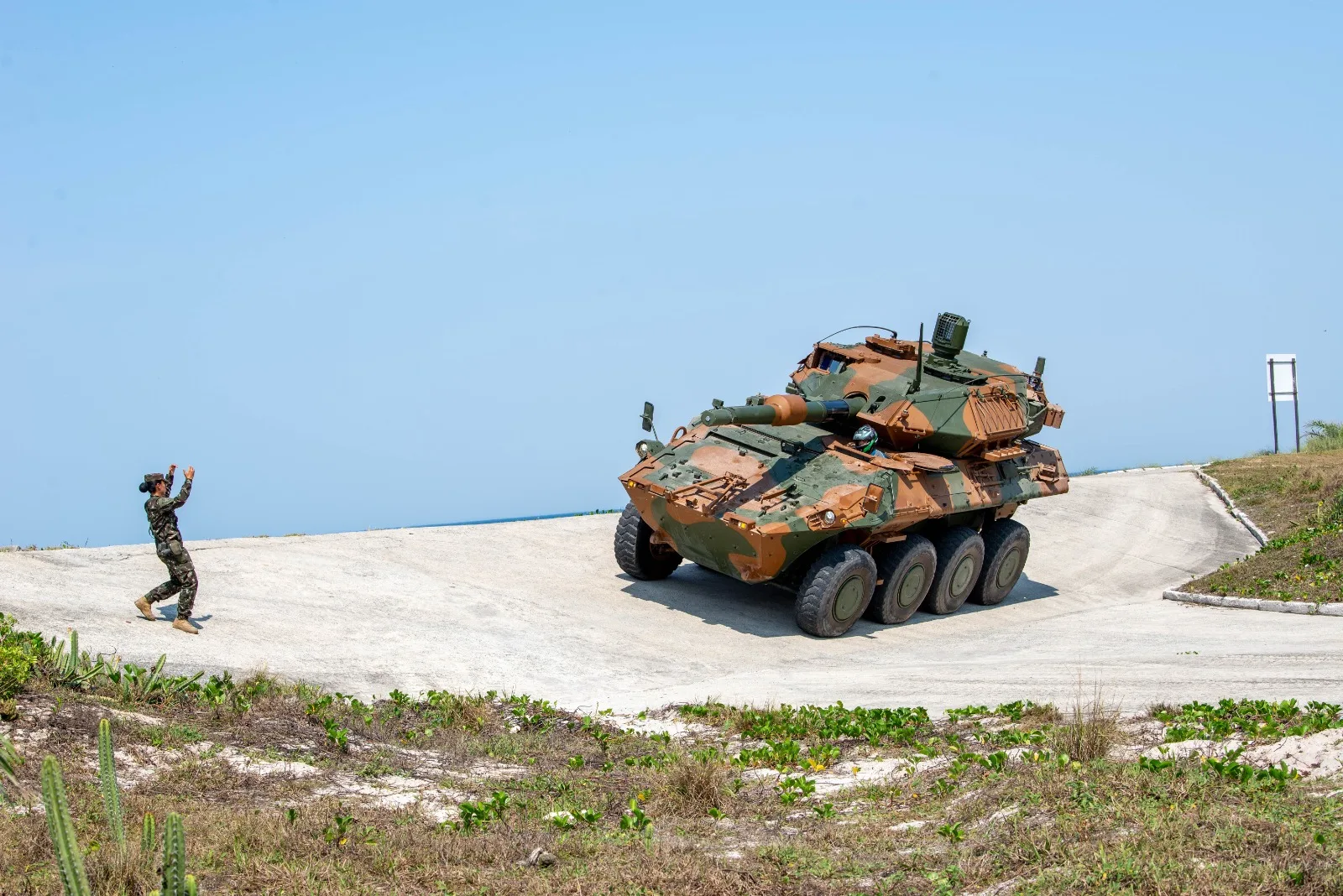
Piranha V APCs taking part in the DACIA 21 Exercise. The Romanian government had initially planned for its IFVs to share the Piranha V APC’s UT30 Mk2 turret, but this appears to have been dropped. (Romanian MoND)

In many ways, dropping the turret requirement is unsurprising, as integrating UT30 Mk2 in the case of Lynx, Tulpar, or CV90 would have entailed additional engineering and qualification work before production could begin, likely resulting in delays that would make meeting SAFE deadlines more difficult. However, the move negated a competitive advantage of both GDELS and Hanwha’s bids; in the former case because UT30 Mk2 had already been integrated for trials onto the ASCOD vehicle that won Latvia’s IFV tender, and in the latter case, because Redback’s EOS T2000 turret is based on the very similar MT30 Mk2 (manned variant). Interestingly, this requirement was understood to have been dropped after Lynx was selected.

The domestic production requirement, however, is more politically sensitive. Romania’s government has so far kept to its line that a high degree of domestic production is necessary. While the exact percentage agreed has not been publicly disclosed yet, the Romanian government is understood to have been aiming for a relatively high figure.

In this vein, Hanwha Aerospace Romania CEO Peter Bae previously offered 70% localisation for Redback, with this figure later raised to 80% by Hanwha Aerospace CEO Jae-Il Son. However, it is probably fair to say that Hanwha had little choice other than to offer such high domestic work share, since SAFE rules state that at least 65% of a contract’s value need to go to EU/EEA/EFTA suppliers, and at present there are no live production lines for Redback in Europe. As such, on 12 February 2026, Hanwha held a groundbreaking ceremony to mark the start of construction of the Hanwha Armoured Vehicle Centre of Excellence (H-ACE) Europe in Petrești, a 181,055 m2 tracked vehicle production facility. H-ACE Europe will produce K9 self-propelled howitzers (SPHs), K10 ammunition resupply vehicles, and according to an industry source, would also produce Redback if the platform were selected.

Rheinmetall by contrast has the option of producing in Germany and Hungary should the need arise, yet the company’s investments in Romania thus far strongly suggest preparations for a sizeable domestic production run for Lynx, and one insider noted that Rheinmetall was understood to be offering a localisation percentage similar to that offered by Hanwha.

On the face of it, maintaining the requirement for a high domestic work share would seem logical, since there is precious little point to establishing a domestic production line for the sake of building just 50 vehicles. The problem is there doesn’t seem to be any obvious way for Romania to reconcile its domestic production goals with the spending and delivery timescales enshrined in SAFE.

For comparison, Hungary, the launch customer for Lynx, had a total requirement for 218 Lynx IFVs, of which it planned to produce 172 (80%) domestically at the Rheinmetall Zalaegerszeg plant between 2023 and 2029. Hungary experienced a nearly four-year gap between contract award (September 2020) and the first domestically-produced vehicle rolling off the production line (July 2024). While this was objectively not a bad timescale for setting up a local production line for something as complex as a modern tracked IFV, the SAFE time constraints under which Romania is operating preclude waiting several years to set up local production. As such, expectations for a domestic work share comparable to that of Hungary will probably have to be tempered significantly – not least because Romania’s total requirement for 298 vehicles is significantly higher than Hungary’s 218, and the acquisition timescales are also much shorter for Romania (2026-2030) compared to Hungary (2020-2029).

To complicate matters further, Romania’s total Lynx requirement may even end up slightly higher than 298 vehicles. According to conversations with industry sources, some of the Skyranger systems being ordered under SAFE may be based on the Lynx platform, with the remainder likely based on the Piranha V 8×8.

Skyranger 35
A Skyranger 35 VSHORAD system based on the Lynx tracked platform. Romania may acquire a number of Lynx platforms in this configuration. (Mark Cazalet)

Facing such tight time constraints, does Romania’s government have room for manoeuvre? Their options seem limited. Theoretically, Romania could opt to use SAFE for the majority of the contract and pay the remainder out of its core budget. However, doing this would mean accepting that they won’t get all their vehicles by 2030, delaying the country’s military preparedness, while also saddling future governments with a sizeable bill. The bigger problem, according to one insider, is that funding on a programme of this scale outside SAFE is not really an option for Romania, due to limited funding available for procurement within the core defence budget. Generating the funding outside of SAFE, whether through budget reallocations or taxation could be an option, but would likely come at a political cost.

Are there other potential creative solutions for Romania’s government to get its IFVs on time under SAFE while maintaining a high degree of localisation? In theory yes, but such options don’t make much sense in the context of the Romanian government’s goals. For example, one solution would be for the IFVs to be largely built abroad and shipped as knock-down kits, with final assembly taking place in Romania. However, there are a couple of problems with doing this. First, it would probably still take longer than simply building them abroad. Second, this approach would miss three-quarters of the point of localisation, since it would involve relatively minimal skills transfer to Romania’s domestic industry. This doesn’t appear to be what Romania’s government wants.

As such, the Romanian government faces something of a dilemma between meeting local industrial objectives on the one hand, and rapid modernisation under EU funding on the other. Much the same theme looks to be at play in Romania’s OPV programme.

Keeping a shipyard SAFE: Can two OPVs save Mangalia?

Rheinmetall has recently entered the shipbuilding market through its acquisition of German shipyard Naval Vessels Lürssen (NVL), completed on 27 February 2026. Insiders told Warsight that Rheinmetall appears likely to secure the Romanian OPV contract, with signs currently pointing to Romania’s selection of the NVL MMPV 90 design (the same as recently acquired by Bulgaria), though this detail remains to be confirmed. A key reason behind Rheinmetall’s likely selection purportedly relates to the Romanian government’s goal of saving the Mangalia shipyard.

Mangalia Shipyard, Romania
Over the last few years, the sun appears to have set on Mangalia, however the Romanian government holds high hopes of reversing the shipyard’s decline. (Leontin l, via Wikimedia Commons; CC-BY-SA 4.0)

For context, since its privatisation in 1997, Mangalia was operated as the Daewoo Mangalia Heavy Industries (DHMI) JV, by South Korea’s Daewoo Shipbuilding & Marine Engineering (51% stake) and 2MMS (49% stake), which is a state company run by Romania’s Ministry of the Economy. However, Mangalia ran into financial difficulties by the mid-2010s, and so ended up being sold. In November 2017, Damen bought out Daewoo’s 51% share in the shipyard for a then-KRW 29 billion (USD 25.9 million), entering into a JV with 2MMS. However, as part of its takeover, Damen sold a 2% stake to 2MMS in exchange for receiving the right to manage the shipyard operationally. This arrangement, however, did not work out.

According to an industry source, the relationship between Damen and 2MMS was fraught with disagreement, with 2MMS said to have blocked numerous operational decisions by Damen. With ongoing disharmony at the top, the shipyard again ran into financial difficulties, so in June 2024, Damen pushed to declare insolvency proceedings for the jointly-owned shipyard, with debt obligations totalling around RON 1 billion (EUR 207 million). On 28 October 2024, 2MMS held a board meeting in which it decided to terminate the association agreement between 2MMS and Damen.

Since the dissolution of the agreement, the number of employees at Mangalia has reportedly fallen significantly. Of around 1,500 employees previously, many hundreds have left to pursue alternative prospects, and of those remaining, a majority are reportedly on a form of indefinite leave. According to an industry source, only around 200-300 employees are actively working, largely on ship repairs, along with maintenance and other small-scale tasks. Reportedly, salaries had not been paid in more than two months, leading to the Romanian government adopting an emergency measure on 19 February 2026 to pay the shipyard’s workers.

Moreover, Mangalia’s effective closure has wider ripple effects on Romania’s defence industry. Mangalia was the supplier for armour-grade steel and welding services in the construction of Romania’s Piranha V APCs, of which the MoND wants to buy an additional 139 under SAFE, possibly more if including the Skyranger contract. With the shipyard effectively non-functional at present, manufacturer GDELS-Romania would need to source its steel from elsewhere.

At this point, the Romanian OPV contract enters play. According to insiders, the Romanian government wants to use SAFE funding to build its two OPVs and two diving support vessels at Mangalia as part of its plan to revitalise the shipyard. However, following the dissolution of the agreement between 2MMS and Damen, the latter is effectively ruled out as a contender due to ongoing disagreements, according to insiders. This is despite the fact Damen still owns an active shipyard in Galați, which has since 2010 delivered two Holland-class ocean-going patrol vessels for the Royal Netherlands Navy and four OPV 1400 vessels for the Tunisian Navy. Ruling out Damen leaves the Romanian government with effectively one option: find a new operator for the Mangalia shipyard and get building quickly. Based on conversations with industry sources, this is the role envisioned for Rheinmetall.

For its part, Rheinmetall has expressed interest in taking over Damen’s share of Mangalia, according to local media reports. Yet, even assuming that Rheinmetall can take over management of Mangalia without a hitch, the timescales don’t look favourable. For Romania to receive the full sum of SAFE funding toward the contract, the OPVs would need to be delivered by December 2030. Delivering two OPVs within four years seems incredibly optimistic, considering Mangalia is a shipyard that will need to undergo a substantial process of hiring, training, and re-tooling before it is even ready to start construction of a design it has never built before.

By way of comparison, Bulgaria signed a BGN 984 million (EUR 503 million) contract with NVL for its two MMPV 90 vessels to be built at the MTG Dolphin shipyard in Varna, on 12 November 2020. The two ships Hrabri and Smeli were built in a staggered parallel manner. The steel cutting ceremony for the first MMPV 90, Hrabri, took place on 3 December 2021, with the vessel launched in August 2023. It commenced sea trials on 11 November 2025, and was finally commissioned on 8 December 2025. This represents a gap of just over five years from contract award to delivery, and occurred under more favourable conditions, due to MTG Dolphin not facing the same challenges as Mangalia.

The Hrabri, Bulgaria’s first MMPV 90 from NVL, during its 8 December 2025 commissioning ceremony. (Bulgarian MoD)

Complicating the task further is the fact Romania’s government also wants its two diving support vessels (also being purchased under SAFE), built at Mangalia, according to one source.

At this point it is reasonable to ask whether Romania’s naval vessels need to be built in Mangalia. If the government wants them built in Romania, then why not at Galați, for instance? According to industry sources, the reason is political. The Romanian government sees Mangalia as a strategic asset, one in which the state has a majority stake, and so wishes to revive. According to one source, the issue is so important to the government, that it has already factored in buying the OPVs at an inflated price to incentivise either purchase or lease of the Mangalia shipyard as part of the deal. Indeed, comparing the Romanian government’s planned spending figures to those of the Bulgarian OPV contract would seem to support this claim.

As shown in Table 1, the Romanian MoND has valued the OPV procurement at EUR 700 million – so roughly EUR 350 million per vessel. This can be contrasted with the Bulgarian contract for the same two OPVs, which cost only EUR 503 million – so EUR 251.5 million per vessel. This represents a nearly 40% increase on what Bulgaria paid, which is notably high even after accounting for inflation. Yet the most recent rumours at time of writing suggest the price demanded by the contractor might climb even higher. Looking ahead, unless the Romanian government changes course, there would seem to be two likely ways this story can end.

In the worst-case scenario, Mangalia doesn’t manage to produce the OPVs on time, meaning that Romania loses access to the requisite SAFE funding, and then has to either pay for remaining deliveries out of its core budget, or enter a dispute with the manufacturer. Neither would be good for the Romanian Navy, as they may entail funding reallocations, or delays to receiving its new capability.

This scenario would also represent a case of history repeating itself: on August 2023, Romania cancelled a deal for four Gowind 2500 corvettes from France’s Naval Group, in a dispute over rising costs. The decision left the Romanian navy without badly-needed new vessels to defend its maritime interests, most notably Neptun Deep – a major offshore gas platform in the Black Sea, which represents Romania’s largest natural gas project, with recoverable volumes estimated at 100 billion cubic metres. Neptun Deep is slated to come online in 2027, but the Romanian Navy currently lacks the assets to adequately defend it.

The Egyptian Navy’s ENS El Fateh, a Gowind 2500 design corvette, taking part in a sailing exercise. Romania’s Navy operates an ageing fleet, and would have greatly benefited from receiving modern vessels. (NATO MARCOM/PO3 Ezekiel Duran)

In the unlikely-seeming best-case scenario, Mangalia somehow produces two OPVs on time, but then still faces the question of where its future demand will come from. Mangalia currently doesn’t seem to be receiving much work at the moment, so it’s fair to ask what will be different after the OPVs are finished. If the shipyard is likely to return to its present state post-2030, then one can reasonably ask: what was the point of trying to save it?

Chasing two rabbits

Looking at Romania’s procurement allocations under SAFE, the question arises whether the scheme is working as intended. Well, yes and no. SAFE does seem to be working insofar as it has pushed the country to make procurement decisions very quickly, with European companies as the primary beneficiaries. However, problems seem to arise from the Romanian government’s attempts to make SAFE funding do more than it was intended to do. There’s an old proverb that fits Romania’s case rather neatly: ‘If you chase two rabbits, you will lose them both’.

To explain why the government seems so keen on pushing SAFE beyond its design limits, background conversations with Romanian defence insiders have indicated two relevant themes. First, that Romania’s MoND has historically found it difficult to define programme requirements, in large part due to institutional inexperience with running major procurement programmes within NATO/European frameworks. Second, that there simply was not enough funding to replace all of Romania’s Warsaw Pact equipment with NATO equipment, and wouldn’t be for many years. Romania’s MoND has long had to navigate these constraints while trying to gradually modernise its armed forces and industrial base – that is, until SAFE came along.

To Romania’s political leaders, using SAFE funds to not only procure new equipment, but also rapidly modernise Romania’s industrial base, represents a golden once-in-a-generation political and economic opportunity that looks too tempting to pass up. To fulfil their vision, they needed industrial partnerships, preferably with companies who share their optimism that it can be done. Looking at Rheinmetall’s announcements and investments in Romania since SAFE was announced, they appear to have found an enthusiastic partner. Beyond this, there’s a geopolitical dimension to consider when selecting industrial partners. By partnering with a German company like Rheinmetall for many key projects, Romania forges increased industrial, diplomatic, and security links with Germany, the largest economy in the EU.

What’s wrong with this picture? Overall, the Romanian government’s goal of modernising their country’s domestic defence industry is a worthy one, and if implemented successfully, would greatly benefit European security overall. However, building a domestic industry capable of producing complex modern equipment requires both time and control. SAFE conditions mean there’s little time, and this in turn has an impact on control, because it changes the typical customer-contractor power dynamic.

Hungarian Lynx Red
A Hungarian Lynx during a night exercise. Romania’s domestic production ambitions risk leaving future governments in the red. (Hungarian MoD)

Under typical procurement conditions, customer countries would normally have some degree of recourse in the event of contractual non-fulfilment, since they hold the budget. In the past, Romania has issued penalties to manufacturers for non-compliance with localisation. A case in point being two penalties in early 2026, worth around RON 192 million (EUR 37 million) and RON 230 million (EUR 45 million) respectively, levied against Otokar on the grounds of failing to meet localisation milestones in Romania’s Cobra II 4×4 procurement programme. An older example is the EUR 8.5 million penalty levied against GDELS in March 2019 for delays in delivering the first batch of Piranha V APCs.

Under SAFE, however, the EU effectively holds the budget. The overhanging sword of Damocles here is that if the EU doesn’t receive evidence of progress in contract fulfilment, it will not pay out the corresponding loan. This alters the post-contract power dynamic between customer and contractor, particularly in the case of countries dependent on SAFE. In Romania’s case this means that if a contractor fails to fulfil the conditions of its contract, the customer will not have a budget to withhold, and the contractor knows this. Additionally, the 2030 deadline means there’s no time to for the customer to turn to another contractor, meaning they’re effectively stuck with their choice once they’ve made it. This leaves the customer with less recourse than they would normally have.

Fundamentally, the problem with Romania’s approach to the IFV and OPV contracts is not that it wants to revitalise its industry. Rather, it’s that the government is trying to leverage SAFE funding to do so – something the financial instrument was not designed to do. This approach puts both the government and manufacturers into a difficult position, facing incredibly tight timescales and therefore little room for manoeuvre. Mistakes or overestimations here could potentially result in losing access to billions of Euros in SAFE funding, as well as non-delivery of vitally-needed equipment – neither of which benefit Romania. A more pragmatic approach to spending under SAFE would be to buy local in cases where doing so is low-risk, and simply buy from abroad for the rest. If the government wants to implement domestic IFV and OPV production, this is a worthy goal, but finding the funding to pursue this outside of SAFE would represent a lower-risk approach which would give the government more time and greater control.

By trying to chase the two rabbits of rapid procurement and ambitious domestic production goals under SAFE, Romania’s current government risks squandering its military’s best chance at rapid modernisation in a generation, while leaving future governments to face the consequences. With the May 2026 SAFE single contract deadline fast approaching, there’s little time left to alter course.

Share post

You may be interested in

Categories

All NewsLandPoliticsSea

Used tags

DamenGDELSHanwhaIFVOPVProcurementRheinmetallRomaniaRomanian ArmyRomanian Navy
Ad

Similar posts