The NATO Naval Armaments Group (NNAG) has short-listed maritime capability priorities for the alliance – including countering uncrewed system threats – and is establishing new procurement approaches to speed up capability development and delivery.


The NATO Naval Armaments Group (NNAG) has short-listed maritime capability priorities for the alliance – including countering uncrewed system threats – and is establishing new procurement approaches to speed up capability development and delivery.
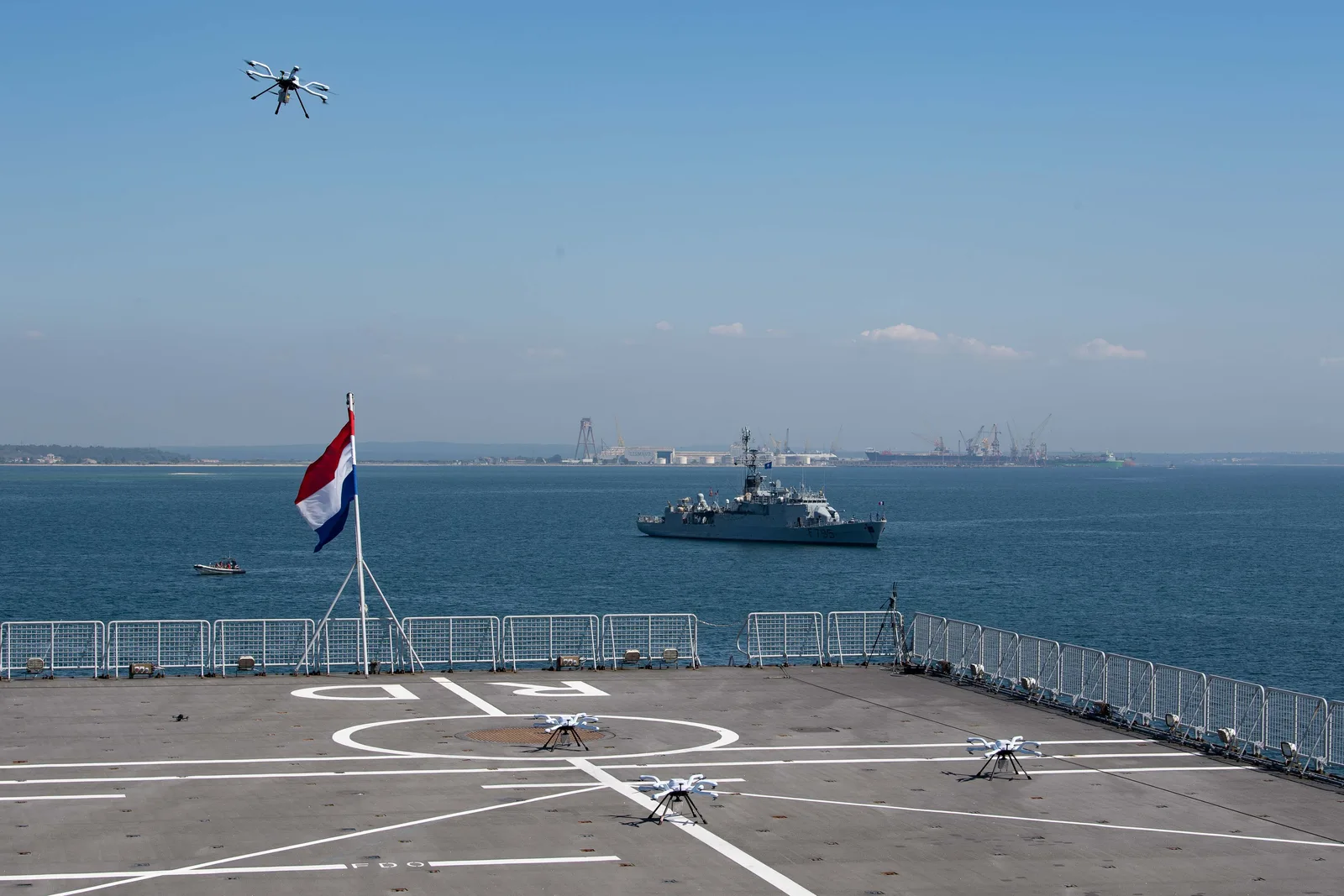
The NATO Naval Armaments Group (NNAG) has compiled a list of capabilities for alliance navies to prioritise and deliver rapidly at national and multinational levels. The priorities include systems for addressing increasing maritime uncrewed system (MUS) threats.
Indeed, the challenges NATO navies face in deterring and defending against MUS threats is underscored by the fact that accelerating procurement of capability for countering such threats tops the priority list.
According to NATO, the NNAG is the main body advising the alliance on research, development and production of maritime warfare capability.
Maritime warfare is back at the top of the NATO’s strategic and operational agenda. Moreover, current conflicts are illustrating the MUS threat in all domains and across the operational spectrum.
Underwater, in April 2026 NATO member states revealed alliance naval assets had deployed into the North Atlantic to deter a Russian operation targeting critical undersea infrastructure (CUI). According to official statements, two submarines from Russia’s Main Directorate for Deep-Sea Research (GUGI) were involved; GUGI’s specialist submarines are understood to carry uncrewed underwater vehicles (UUVs) designed for seabed operations.
On the surface, the early (2023-4) phases of the Yemen-based Houthi rebels’ ongoing campaign against commercial and naval shipping in the Red Sea region included launching uncrewed surface vessels (USVs). During the Russo-Ukraine war, underway since February 2022, Russia and Ukraine (in particular) have used USVs for strike and sea denial operations in the Black Sea.
In the air, uncrewed aerial vehicles (UAVs) have featured prominently for several years in Iranian efforts to harass ships transiting the Strait of Hormuz. Most recently, since the US/Israel versus Iran war erupted in February 2026, Iran has used UAVs within a wider combined arms campaign (encompassing ballistic and cruise missiles too, plus fast attack craft and sea mines) to close the Strait of Hormuz.
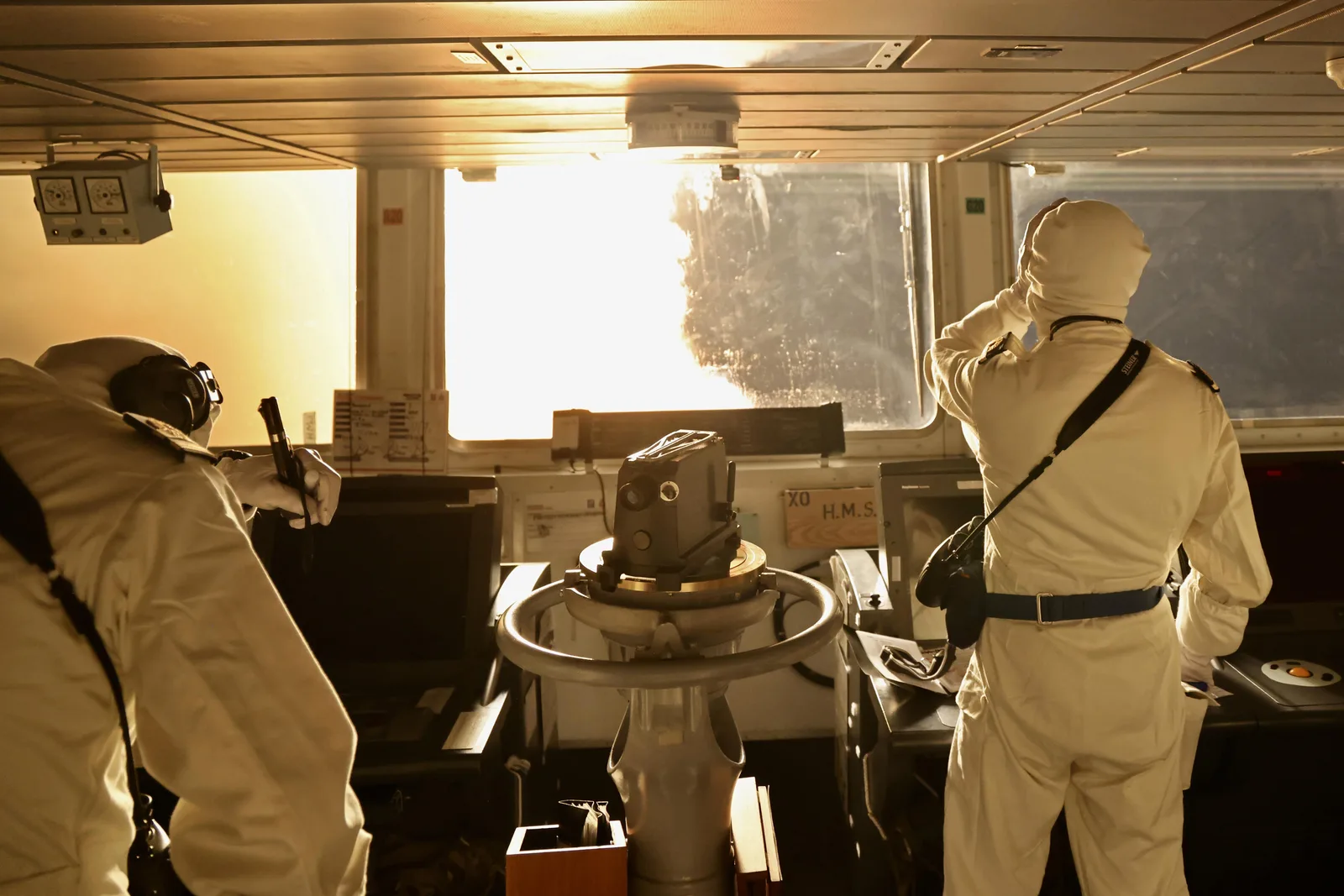
In the Russo-Ukraine war both protagonists are using UAVs en masse, along the front line for surveillance and strike operations and deep behind the front line again for strike effect. Moreover, in one of several ‘spillover’ incidents occurring around the conflict’s geostrategic margins, in September 2025 UAVs were spotted loitering over civil and military infrastructure sites ashore in various NATO Baltic countries.

The extensive MUS use in these campaigns, all of which are occurring in areas and in a manner directly challenging NATO member state interests, underlines the requirement for NATO – at both collective and individual member state levels – to counter this threat.
The NNAG’s primary task is to identify operational capability gaps common across the alliance’s collective naval capability, and to establish processes for procuring capability to quickly fill these gaps.
“The number one shortfall we have is maritime counter-uncrewed systems [C-UxS] …. That’s the capability we don’t have at the moment,” Rear Admiral Paul Flos, a Royal Netherlands Navy officer currently posted as NNAG Chair and double-hatted as the Netherlands’ Programme Director for International Naval Materiel Co-operation, told Warsight.
“For me, to get a counter-UxS programme running is the main priority. We have to show this works,” Rear Adm Flos said, adding that NNAG is working closely with industry to develop what it needs. Partnering with industry is crucial for NNAG in evolving its procurement approach to accelerate capability delivery.
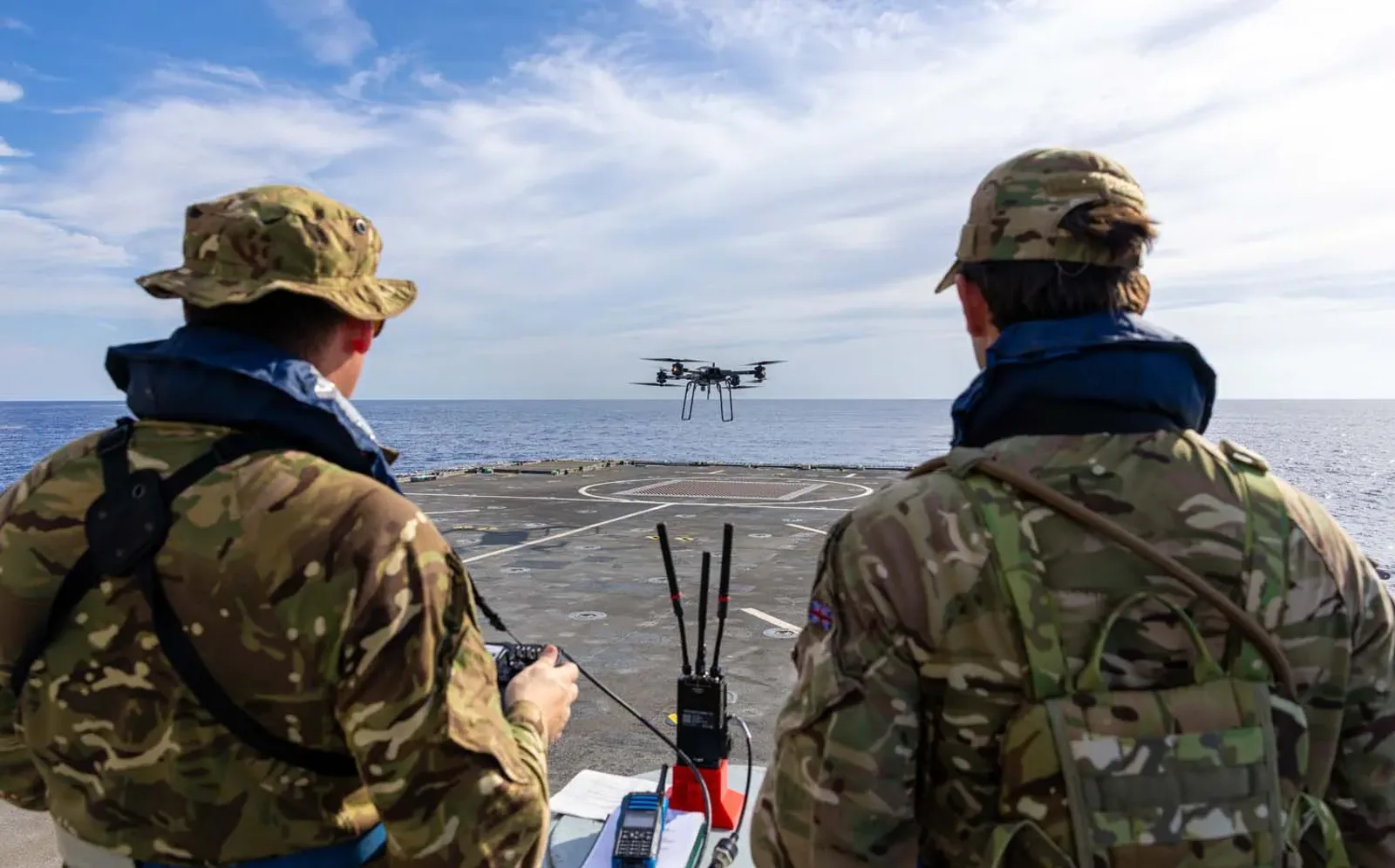
Although the UxS threat is three-dimensional, NNAG is currently focusing on the air and surface domains. Both bring the added risk of swarm attacks, which present complex sensing, targeting and engagement capability challenges.
NNAG is also prioritising two other capability areas: electronic warfare (EW); and integrated air and missile defence (IAMD). Again, both are areas of significant technology and capability development in contemporary combat.
EW, for example, in the form of jamming, is a major feature of UAV operations along the Ukraine front line, while in the Baltic Sea NATO forces encounter Russian jamming and other EW activities during routine, daily operations.
“EW is something NATO has emphasised for a long time … [but] now we’ve put it back on the agenda.” Rear Adm Flos said. “EW can be very potent in war. Look at what’s happening in Ukraine and elsewhere: that’s an EW war,” the admiral continued. “That’s why we put EW back on the agenda.”
EW presents a fast and affordable means for achieving the desired effect, he added.
IAMD represents almost the entirety of NATO’s air-defence problem, encompassing ballistic, cruise and hypersonic missiles; one-way attack (OWA) UAVs; and crewed air threats like low-flying, fixed-wing ‘fast jets’ popping up to launch both ‘smart’ and ‘dumb’ ordnance. Both the Gulf and Ukraine wars are featuring large-scale use of ballistic and cruise missiles plus UAVs, in integrated layers of strike operations.
To underpin its aim of prioritising and accelerating capability delivery, NNAG has also been adapting how it generates the requirements underpinning these priorities, Rear Adm Flos explained.
Alongside its sister service-equivalent groups, NNAG sits under the Committee of NATO Armament Directors (CNAD), which includes representation from all 32 member states. CNAD reports to the NATO Military Committee.
To deliver on its aims NNAG’s main activity is implementing the capability needs emerging from the NATO Defence Planning Process (NDPP), which provides the operational and capability context and detail under higher-level policy guidance like NATO’s Strategic Concept.
Below NNAG, several other organisational levels feed into naval capability development and delivery. These include specific warfare areas covering above-water warfare, underwater warfare, ship design capability and joint capability groups for MUS and uncrewed air systems (UAS); more focused working groups; and specialist teams. The latter two dive deep into the detail of particular capability areas.
To understand the alliance’s maritime domain capability needs, NNAG engages with the 22 alliance countries that are NNAG members and with industry. Supporting agencies are also involved, including NATO Allied Command Transformation (ACT), the NATO Communications and Information Agency (NCIA) and the NATO Support and Procurement Agency (NSPA).
Pulling this structure together, NNAG assigns capability development priorities not only to the warfare area groups, but to industry through the NATO Industry Advisory Group (NIAG). The NIAG has funding to undertake study work.
NNAG is also responsible for implementing NATO maritime operational capability standardisation agreements (STANAGs). Such STANAGs include established ones like for shipbuilding, but also emerging ones like STANAG 4817, which defines the architectural approach for building MUS command and control.
Under this overall structure a capability requirement – such as for C-UxS – is generated. This process starts with the warfare area and specialist groups engaging with NNAG countries to identify their operational needs.
Drawing up the current priority list, NNAG personnel (including the warfare area staffs) conducted two engagement sessions – in June and November 2025 – at which countries were asked to identify, explain and discuss with the staffs their three main capability shortfalls. The NNAG team then wrote these capability conversations up into the priorities list.
Speaking at the Combined Naval Event 2026 (CNE26) conference in the UK in May 2026, Rear Adm Flos said a key outcome of this part of the engagement process was NNAG’s decision to form a specialist C-UxS capability team.
Next, requirements are communicated to industry. This is a crucial step in accelerating procurement. Here, NNAG aims to give industry a ‘problem set’ to solve. “You don’t start with the requirement; you start with the operational ‘problem set’, and you let industry solve the ‘how’,” Rear Adm Flos told Warsight. “We just say ‘This is our requirement’ – not a requirements list, but a generic operational requirement.”
In parallel, NNAG will seek a navy with a programme and funding in place for the capability concerned to harness a national framework within which a NATO project can be developed.
“You have to start with a programme, a project, where money is allocated and you know exactly what you want to have,” Rear Adm Flos said. This is a next step NNAG wants to achieve for the C-UxS requirement.
Taking this step included NNAG hosting a ‘Maritime C-UxS Symposium’ in mid-September 2026. Highlighting the importance of partnering, by bringing together operators, procurement expertise and industrial innovation, the industry day involved discussing the nature and development direction of the technology and the threat; operational needs; how industry will solve the ‘problem set’ including showcasing capability options; and how to develop and prioritise capabilities.
“There will not be a selection yet, but that gives us knowledge and opportunities – and, along with industry, the way to speed up,” Rear Adm Flos said, adding, “We [will] know exactly who can solve our problem.”
The next step in identifying a prospective capability will be testing and demonstrating options in what is termed a ‘Challenge’ event, to be held in early 2027.
Once a capability solution has been identified, individual navies can follow national procurement processes to purchase that solution and NNAG can assess options for wider, multinational acquisition. In this latter context one option is the ‘lead nation approach’, Rear Adm Flos explained.
As an example, Rear Adm Flos pointed to the Netherlands’ procurement of Naval Strike Missiles (NSMs) from Norway, where the Dutch are buying missiles on behalf of another NATO country at the same time. “If you want to do that, you need to see which country already has a programme underway,” the admiral explained.
Regarding the air and surface C-UxS requirement, NNAG is already identifying countries conducting national programmes. Germany, Italy, the Netherlands and the UK are some examples. NNAG is also assessing requirements commonalities between countries.
“NATO doesn’t buy anything …. It’s a country buying the [systems],” Rear Adm Flos stressed. “NATO is the facilitator. What we try to do is to connect the joint capability requirements – in this case, counter-UxS – and see and facilitate which countries have programmes running.”
Multinational procurement still can be challenging, as national requirements, processes and budgeting can differ, while harmonising one or all of these components also is time consuming. However, Rear Adm Flos explained, there is still reason and opportunity to improve the collective process. “My aim is to help these countries get rid of procurement procedures based on the Cold War and reduce [cost],” he said, adding that NNAG also provides a forum for sharing procurement best practice.
For the EW and IAMD requirements, these are set to be placed under dedicated NNAG teams; this will support their prioritisation through providing the necessary resources more quickly to deliver results more quickly too, the admiral said.
Overlaying this capability procurement structure is the requirement to accelerate acquisition.
Again, the drive for such acceleration comes from the alliance’s highest levels. NATO Secretary General Mark Rutte has stressed the need for tangible results in accelerating capability delivery, Rear Adm Flos explained.
Broadly, he added, the emphasis is “time above quality” – delivering something good quickly, rather than something better later.
“If you conduct a regular procurement, you get exactly what you want,” Rear Adm Flos said. However, he added, “It takes time – and time is something we don’t have.”
“The moment you pose just an operational ‘problem set’ and tell industry ‘Solve that for me’, you may get something you don’t expect … and perhaps sub-optimal – but at least it’s solving your problem,” he continued.
“People have to accept that you get a sub-optimal version, but you get it in time,” the admiral emphasised. Providing more quickly new capability that still solves the ‘problem set’ meets both national and NATO leadership requirements, and – particularly in the latter context – demonstrates that NATO is delivering, he added.
NATO’s bottom line is it needs capability that will enable it to prevail in conflict.
“You have to win [the] war – but it doesn’t mean you always need the best of the best …. You just have to be better than your enemy,” the admiral explained.
Thus, delivering this new procurement approach is another core NNAG aim. “We have to show this way of procurement works in an international environment,” Rear Adm Flos said. “With this, we can speed up procurement. We don’t have the time to do it in a traditional way.”
Moving increasingly from transactional to partnering approaches with industry is crucial to accelerating capability development and delivery.
“Our relationship with industry is different,” Rear Adm Flos said. Regarding C-UAS, for example, NNAG’s aim is not to present industry with a requirement to shoot down UAVs, but to consider the wider ‘problem set’ that may include defending the ship plus the target the UAV is attacking, and maybe even preventing the threat from appearing in the first place. Here, he added, “You need to trust that industry comes up [with an appropriate solution].”
“Trust also means understanding each other; so, our connection to industry has to change,” Rear Adm Flos continued. “Partnerships are all about risks. We have to take risk because sometimes industry comes up with something we don’t need; but industry has to take risk [and] invest in things we hadn’t asked for yet.”
On this latter point Rear Adm Flos explained this is all central to showing industry NATO’s demand signal going forward, such as for a capability like C-UAS, to help give industry confidence to invest before the capability request comes. “We want to show industry this is our demand for the future; this is something we need. It’s not that we need it tomorrow, but we need it next week; and next year, and in five years, we will still need it,” he said. “This gives industry the opportunity to invest and do stuff – not because there’s a contract, but because they know our demand requirement is there for the longer term.”