Kelluu has just announced HALO, a passive radar-equipped version of its hydrogen-powered airship. The aim is to provide armed forces with an avenue to generating persistent, distributed over-the-horizon passive sensing at scale.
HALO: Kelluu’s airship gains a passive radar
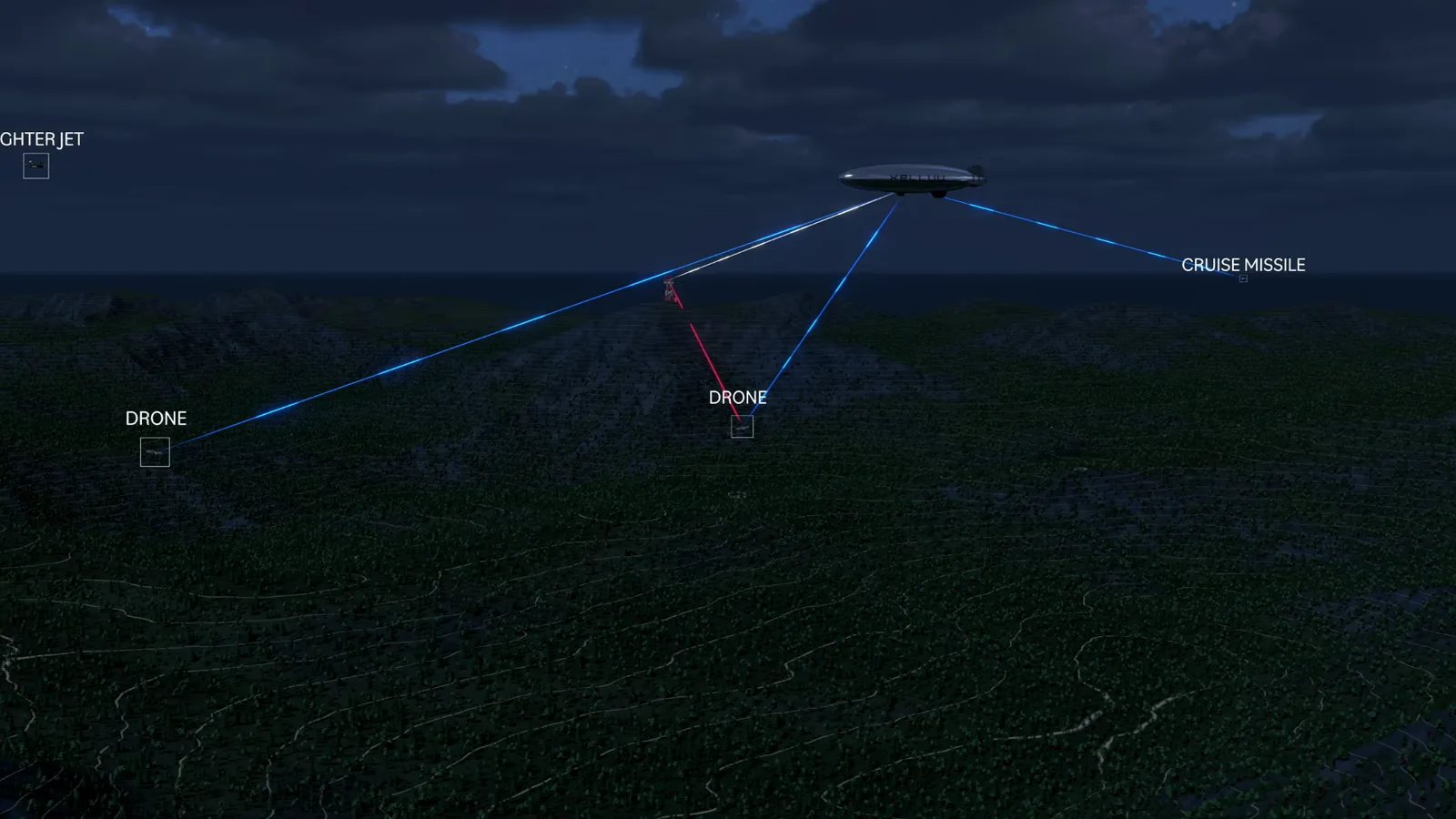
Finnish company Kelluu has evolved its airship capability for a passive radar sensing role – particularly to counter drone threats prevalent along NATO’s Eastern front and above regions like the Baltic. (Kelluu)
Finnish autonomous technology supplier Kelluu is launching a new version of its airship, designed in particular to provide passive radar-based sensing capability along NATO’s Eastern flank, the company announced on 16 November 2026.
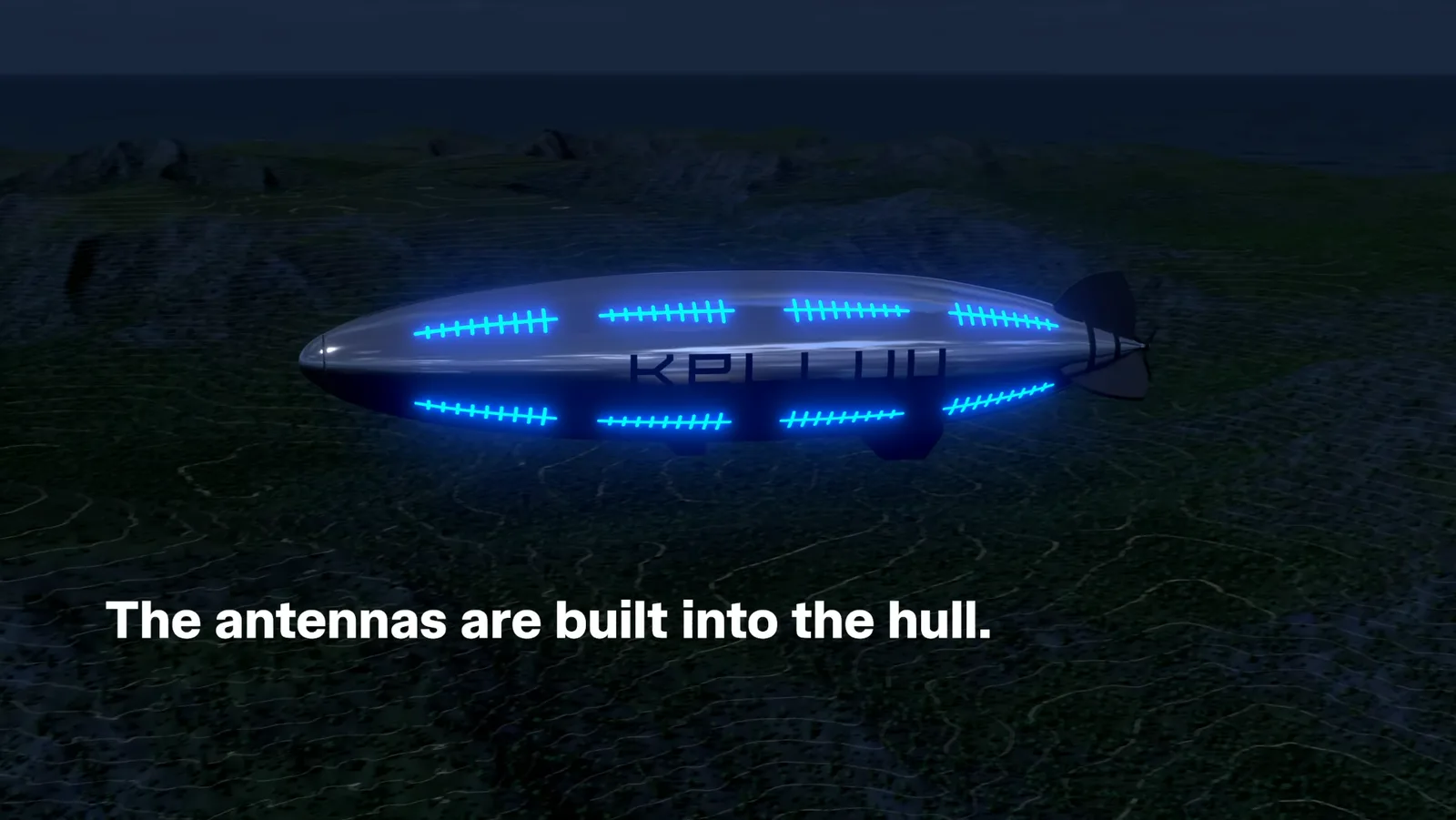
“[The] new HALO airships are airborne passive radars, with the antennas built into their hulls. They pick up radio, TV, and mobile network signals, and detect targets from the reflections,” the company said. “The airships only receive, so they transmit no signal that could give them away.”
“Ground-based radar systems, including passive radars, have become vulnerable to drone threats that use satellite imagery for targeting. Being on the move in the air provides increased resilience against this,” Kelluu continued.
This vulnerability is evident in the continuing Ukraine and Gulf conflicts. On 15 November 2026, according to media reports, Iran’s Islamic Revolutionary Guard Corps said it had launched six uncrewed aerial vehicles (UAVs) against a US air-defence radar facility at the al-Riffa airbase in Bahrain. Such attacks on fixed, high-value sensing facilities using massed, low-cost drones have been a feature of Iran’s strategy throughout its nine-month war with Israel and the US.
Technology response
Kelluu’s airship was developed for the defence market under NATO’s Defence Innovation Accelerator North Atlantic (DIANA) rapid technology adoption programme, and has been deployed on alliance operational experimentation (OPEX) activities in 2025 and 2026.
The company’s latest technology development with its airship programme is designed specifically to reduce drone threat vulnerability, by combining state-of-the-art autonomous platform and sensing technologies to deliver a capability that can be scaled en masse in a cost-effective manner, Kelluu’s chief executive officer Janne Hietala told Warsight, in an interview.
The two core components of this capability, which combine to create the ‘HALO’ system, are both Kelluu’s own: its ‘Generation 1’ and ‘Generation 2’ (‘Gens 1 and 2’) airships; and a newly developed radar.
As described previously by Warsight, the 12 m, 25 kg airship offers a 5 kg sensor payload capacity, with multiple sensors able to be carried simultaneously to provide a multi-mission capability. ‘Gen 1’ and ‘Gen 2’ use the same form factor: ‘Gen 1’, which is in service, can deploy at ranges up to 200 km and for missions lasting up to 12 hours; ‘Gen 2’, which is in development (and set for launch in 2026 and operational availability in 2027), will bring a range extension to over 1,000 km and a flight time tripled to over 36 hours (providing multi-day and day/night capability).
Regarding the radar, while unable to discuss precise details of its technology or fit onboard, Hietala said simply “The airship becomes the sensor.”
“The radar is more integrated into the airship’s structure,” Hietala added. This approach enables the airship to continue carrying other sensors, further enhancing its multi-role capacity, he explained.
At NATO’s FUSE OPEX activity, held in Latvia in late October 2026, Kelluu demonstrated this multi-role output. There, the airship provided intelligence, surveillance, and reconnaissance (ISR) support to OPEX requirements under NATO’s Next-Generation Targeting (NGT) and Layered Counter-UAS Initiative (LCI-X) programmes, while simultaneously giving communications connectivity to support alliance Digital Backbone Experimentation (DiBaX) requirements.
HALO adds another layer to this multi-mission impact. “It builds into that capability,” Hietala said.
HALO can be multi-role in geostrategic location terms, too. Alongside being designed to provide sensing coverage across NATO’s Eastern front, it can protect shore-based critical infrastructure sites as and where needed, Hietala said. In September 2025, UAVs appeared over civil and military infrastructure nodes in several Baltic/North sea region NATO member state countries.
Capability gap
Over the last 12 months, Kelluu has deployed its airships on 16 national and NATO exercises and other activities, and will be participating in others over the remainder of 2026 and into 2027.
Hietala explained that, across these events, an increasing task to which the airship has been applied is providing detection, identification, tracking, and fixing of ‘low and slow’ small target threats – namely, drones – in the counter-uncrewed air vehicle (C-UAV) role.
The UAV threat, particularly in regions along NATO’s Eastern flank, has been driving the alliance to build wide-area, sustainable, affordable sensing presence. The threat runs the risk of generating a capability gap, Hietala explained. “There’s just not the capability to see at low cost, very far away, with little power, [with a sensor] that doesn’t weigh anything,” he said.

Hietala offered a perspective on how airship-based passive radar sensing compares to other forms of detection capability.
Ground-based passive radars can provide the scale in capability, but do so from a fixed position and are thus vulnerable. Crewed aircraft can provide sensing scale and reach, but do so in a manner that is expensive to deploy, plus by definition is not passive. UAVs themselves can provide passive sensing, but sustaining that presence at scale over wide areas generates a degree of cost.
Small, low-cost active radars – ground or air-based – have relatively limited range, so may only provide point defence in the C-UAV context. They also emit a signal, presenting a vulnerability.
Acoustic sensors may have limited capacity to detect relatively quiet UAVs, especially those flying at high-altitude. Optoelectronic day or infra-red sensors have a relatively narrow field when detecting at range, and need radar for cueing to contacts.
Many current C-UAV capabilities are also based around using radio frequency (RF) detection; in the Russo-Ukraine war, however, many UAVs have been developed with very low signatures, and adopt ‘low probability of intercept’ operational concepts regarding emissions, using frequencies and directions that are difficult to detect, Hietala explained.
“Essentially, this all means there is a capability gap in how do we detect drones that don’t emit anything, and come in as ‘low and slow’ low-altitude targets we cannot detect at long range,” Hietala said. “[The answer] is putting that passive radar capability in the air, having a mobile platform, and creating a network of sensors to cover very large areas. That is what we’ve done.”
A network of slow-moving, autonomous airships carrying an integrated antenna can generate the required wide-area coverage – both collectively, and in terms of the individual airship bringing a large aperture. It also does it in a cost-effective manner, Hietala said.
“The airship platform is the key technology here,” Hietala continued. “Essentially, we exceed what the traditional state-of-the-art in passive radars has been, because we have a mobile platform that can move autonomously, and is mature in terms of the airship.” “We’re just integrating [capability] and using that completely different design perspective to our advantage,” he added.
The passive radar sensing is not so much the key effector because such technology already exists, Hietala argued. Instead, by integrating it with the airship, he continued, “We gain a mobile platform, an airborne advantage that hasn’t existed in the past.”
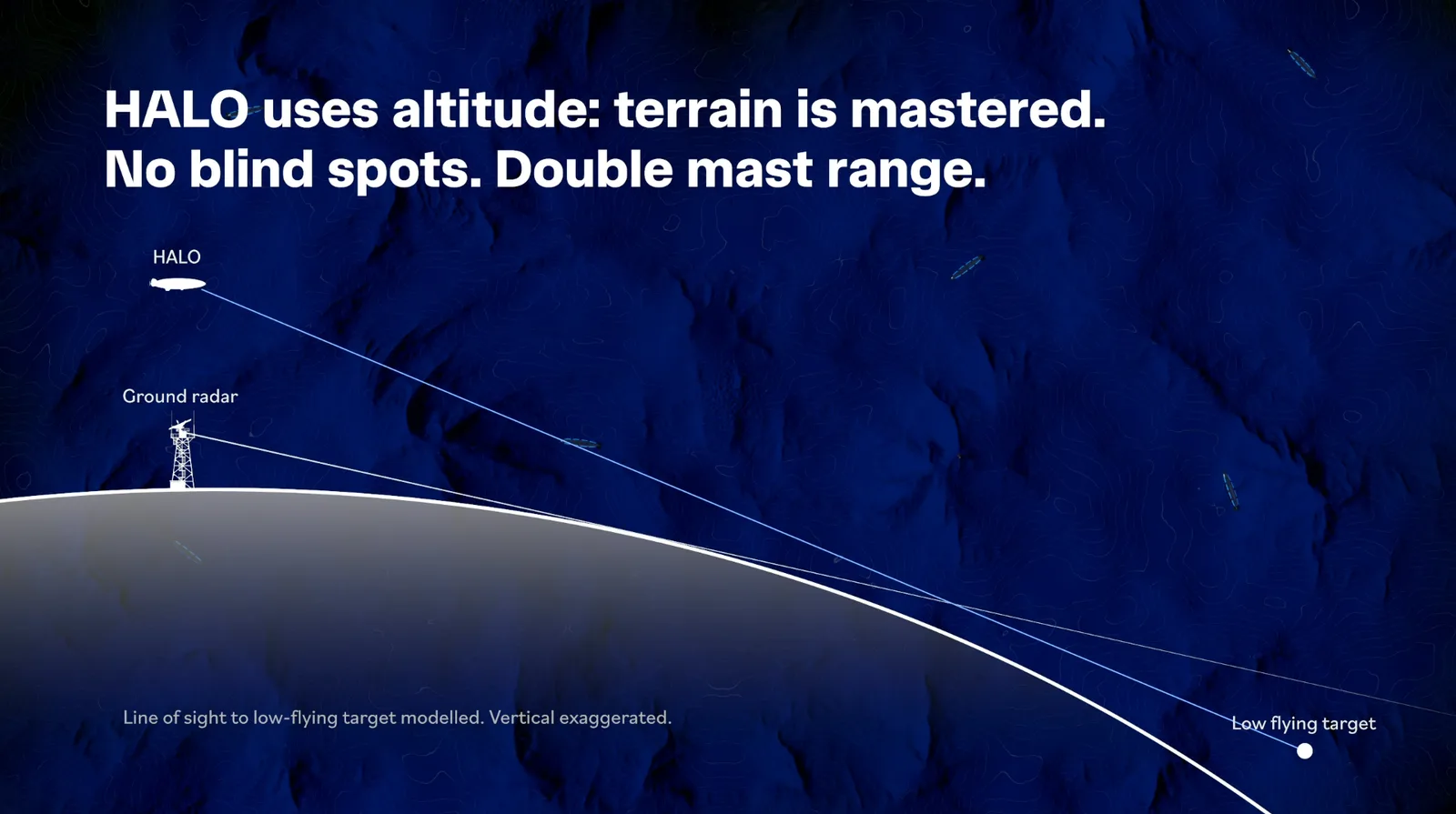
Compared to other sensing sources, fitting a passive radar to an airship also enhances capacity to see beyond the horizon. In its statement, the company said “On Kelluu’s modelled figures, HALO airships can more than double the range of traditional passive radars on the ground,” adding, “being higher up, you see further.”
Developing distribution
The starting point for developing the HALO capability was the Gulf war’s outbreak, Hietala explained. Iran’s strikes on high-value sensing sites that cannot be quickly reconstituted prompted Kelluu to start thinking about how its airship could provide an affordable, dispersible solution.
“A key insight from the war is that we need to rethink the whole sensing and surveillance architecture as being distributed and resilient,” Hietala said. Generating sensing mass at scale and with survivability in high-end warfighting underlines the need for sensor mobility: “[Platforms] need to be ‘on the go’ like airships are, persistently in the air, to able to sustain that,” Hietala added.
“[Dispersal] is not a new idea, but … we’re not just going to do it in the future; we’re going to do it now,” Hietala continued. “We’re going to put fast-paced investment into this and we’re going to rapidly field the capability, because we have a unique platform.”
“We always had a plan … that we needed to field this in under 12 months,” Hietala said. In early 2027, what he called a ‘pilot group’ of countries will field-test the capability and refine its requirements including for system interoperability. In its statement, Kelluu said it is seeking five partner countries for this ‘pilot group’ activity, with those countries having the opportunity to field the HALO capability.
Kelluu aims to deliver HALO at production capacity in 2027. The company will also present the new system at the NATO Edge 26 defence capability and cooperation conference in İzmir, Türkiye, taking place from 17-19 November 2026.

Share post






You may be interested in
Beyond AIS: Norway builds a sovereign satellite surveillance capability over the High North
Norway is poised to take…

Northern European defence industry drives new security collaboration
Northern European defence-industrial collaboration received…
A closer look at Lithuania’s Sky Fortress acoustic drone detector system
The Baltic states, as part…