Airship capability
Across these activities, Kelluu’s hydrogen-powered airship offered NATO a new capability.
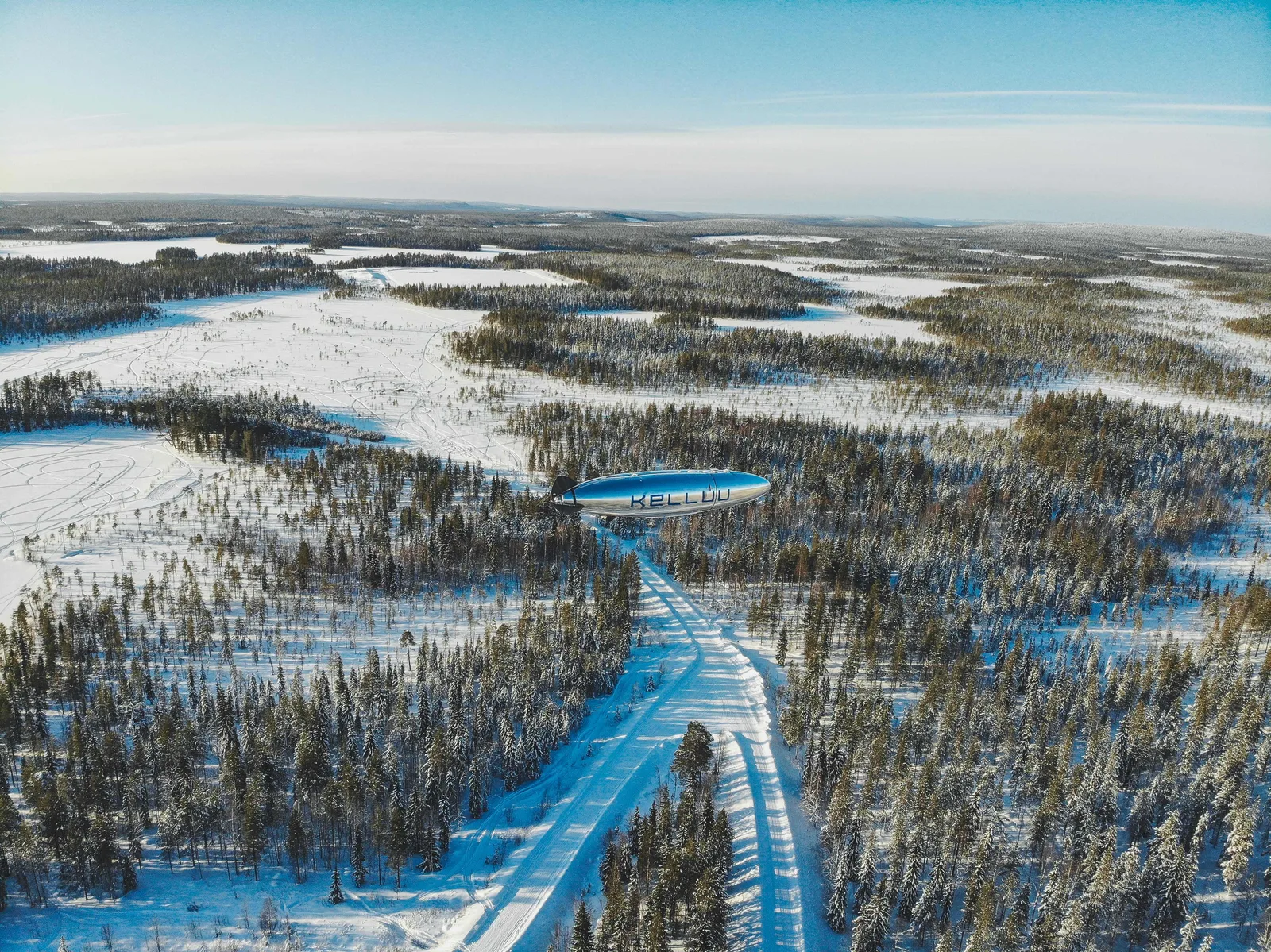
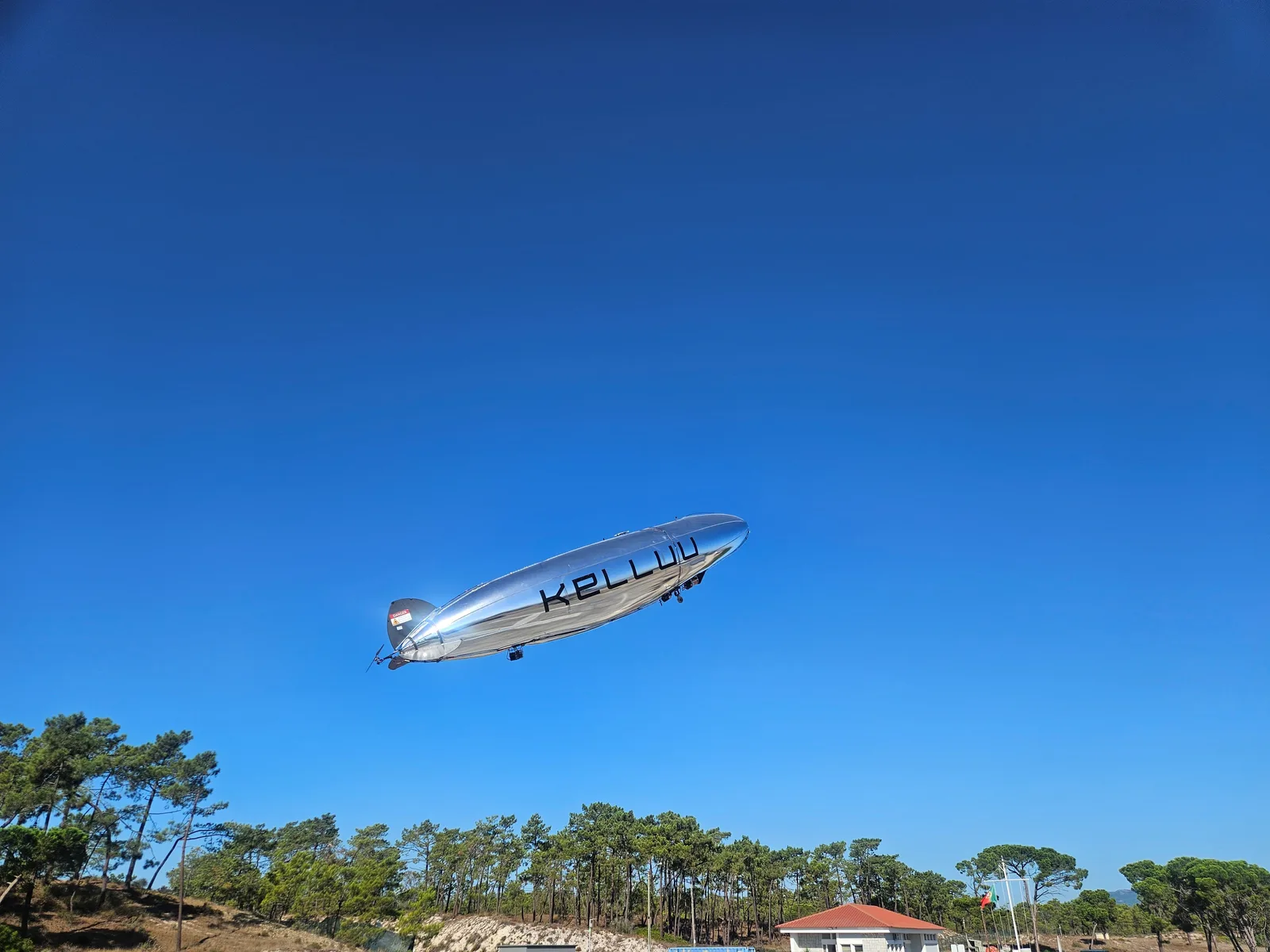
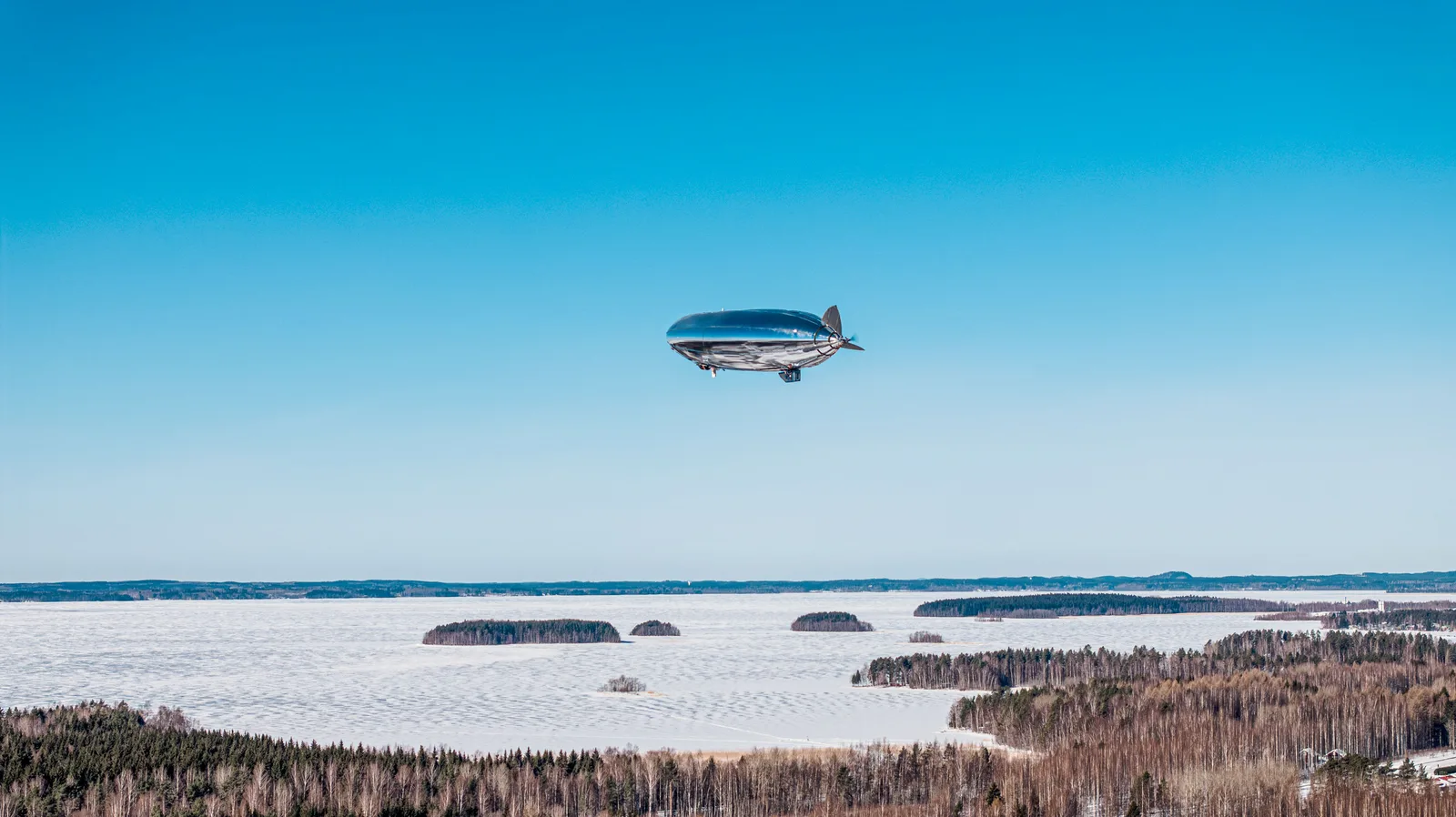
The 12 m, 25 kg vehicle has a 5 kg sensor payload capacity. While designed primarily for persistent intelligence, surveillance, and reconnaissance (ISR) operations, its payload flexibility enables various sensors to be embarked to support other missions. For example, at ‘REPMUS 26’ seven different sensors were available for use – as single sensors or in multi-sensor combinations – across the two Kelluu airships present.
The sensor types the airship can use include radars (active or passive), plus electronic support measures (ESM), optoelectronic day and infra-red (IR) systems and magnetic anomaly detection (MAD) systems.
The airship is connected to other MUS assets and NATO command-and-control (C2) nodes in communications terms using various tactical datalinks, satellite communications (satcom) systems and terrestrial 5G networks. Its ‘comms’ connectivity includes an over-the-horizon capability, as well as operating data gateway and communications relay set-ups.
This sensing capability collection, when integrated with capacity to pass on data, means the airship also supports anti-submarine warfare (ASW) missions: a core NATO operational requirement going north from the GIUK Gap. During Task Force X – Arctic activities off Iceland in June, as well as providing over-the-horizon ISR and communications (including relay), the airship supported ASW barrier concept trials, with data gathered used for dynamic detection. The airship capability was also used for ISR tasking regarding suspect vessels operating with their automatic identification systems (AIS) turned off.
Data gathered during such tasks is fed directly into allied common operational pictures.
Other tasks the airship can support include force protection and maritime overwatch.
The airship’s connectivity is enabled by compliance with NATO Standardization Agreement (STANAG) 4817: the STANAG that defines common C2 architecture standards to support multi-domain MUS use. With STANAG 4817 now an ‘entry-level’ requirement for MUS participation in ‘REPMUS’, Kelluu made the airship compliant for its first visit in 2025.
The airship’s capability and connectivity is also compliant with ACT’s LCI-X layered counter-unmanned systems initiative: a core alliance project supported in 2026 by four exercises, all of which took place around the North Sea and Baltic region.
Kelluu’s current operational airship is referred to as the ‘Generation 1’ (or ‘Gen 1’) variant. This vehicle can deploy at ranges up to 200 km and for missions lasting over 12 hours. The ‘Generation 2’ (‘Gen 2’) variant – in development and set for launch in 2026, with operational availability in 2027 – uses the same form factor but brings a range extension to over 1,000 km and a flight time tripled to over 36 hours (providing multi-day and day/night presence).
Such capability augmentations means the ‘Gen 2’ can offer an enhanced contribution to ISR and other operations in the Arctic.
Even more range and endurance may come. “We’re not even close to the physical limits,” Janne Hietala, Kelluu’s chief executive officer, told Warsight in an interview at ‘REPMUS’.
Capability capacity
Alongside its sensor capability, Hietala underlined how the airship’s potential numbers capacity (due to its affordability), when integrated with this enhanced range and endurance, offers NATO a unique means for generating sustainable surveillance across its AOR.
“Five hundred [systems] would hold the North, from the Baltic to Alaska,” Hietala said.
Even a cursory glance at an Arctic map reveals the significant distances between key points, particularly in the maritime domain. For example, the straight line distances from northern Norway and Iceland up to Svalbard are 950 km and 1,550 km respectively; the GIUK Gap itself stretches for more than 1,100 km.
Such distances mandate a ‘step change’ in platform endurance requirements, Hietala said. Such enhanced endurance also offers a different concept of operations (CONOPS) for the airship, he added: ‘Gen 1’ limits the CONOPS to littoral operations, whereas the ‘Gen 2’ range presents the opportunity to conduct ‘base-to-base’ deployments.
Airships can provide one of multiple sensing capability layers, alongside crewed and uncrewed platforms plus fixed sensors, to help NATO build sensing capacity across these vast distances.
“You need layered capability,” Hietala continued. “To be effective, you need a multitude of different sensors …. Putting all your eggs in one basket, one type of platform, no matter how good it is, [brings risk]. If you have diverse, complementary capabilities, that will always be better.”
An airship in particular brings sensing time on station. Crewed platforms like maritime patrol aircraft bring significant speed, range and time on station, but that can be restricted by fuel, for example. “In terms of flight time, you’re not actually looking for distance. You’re looking for persistence, you’re looking for endurance – such as ‘How long you can stay in the target area?’” Hietala said.
This points to an added value the airship offers within the various sensing layers. This value is, Hietala explained, the ability to deliver sustained over-the-horizon sensing, communications and other outputs in an austere operating environment, including in weather conditions that restrict other assets from flying. Kelluu’s airship demonstrated this during later phases of its Task Force X – Arctic deployment. For the company, this was a confidence booster in the capability, Hietala added.
Learning lessons
Surveillance coverage, including time on station, is also underpinned by platform availability. Lessons from current conflicts in the Gulf and Ukraine illustrate the need to regenerate capability rapidly as platforms and other assets are lost. For Kelluu, these lessons have shaped its thinking around both its operational capability and logistics capacity CONOPS for the airship.
In operational capability terms, the rapid attrition – especially in the Gulf – of fixed, high-end sensors and the absence of capacity to rebuild them quickly indicates the need for more affordable, distributable sensing.
“If we think about the future architecture for radars, for example, or any sensing surveillance, it needs to be distributed, it needs to be resilient against some parts of its [structure] being destroyed, and you need to have a supply chain where you can constantly refill that,” Hietala said.
In logistics capacity terms, Kelluu is underpinning its infrastructure by establishing a second factory, which will open in 2027. The new facility is around 60 km from Finland’s eastern border. Its development will enable Kelluu to produce, refit and resupply its capability from a location as close to the front line as possible, Hietala explained.
The new factory will also help Kelluu support capability scaling requirements. Around 30 units per year can be produced in the company’s current facility; the new one will be able to build around 100 per year. “We’re tripling the production capacity,” said Hietala.
The company is also aiming to make its production line as simple as possible so that numbers can be scaled up as quickly as possible.
Arctic force
The airship’s capability when combined with its support CONOPS is designed to enable operations in challenging, austere environments like the Arctic, providing sustainable capacity in operational and logistics terms. “Being able to operate in a cold, austere environment is not just a requirement for the platform; it’s a requirement for the logistics, for ground infrastructure; how do we support, how do we sustain operations there?” Hietala said. “Arctic experience is combined into the capability.”
The environmental and operational extremes in the region underline the impact MUS can bring. “Autonomy in the Arctic is hugely important,” Emma Burton, Kelluu’s OPEX lead, told Warsight.
Between its two ‘REPMUS’ visits, Kelluu deployed its capability extensively across the Arctic.
Hietala said this included 14 exercises or deployments with NATO, including in Canada, Finland, Iceland, Norway, Sweden and the United States (Alaska). One such exercise, in February 2026, was the Norway-led NATO activity ‘Heimdall’: the first event conducted under ‘Arctic Sentry’. Again, the airship brought its ISR capability.
At ‘Heimdall’, Kelluu began establishing a working relationship for the capability with, for example, the Norwegian armed forces. This foundation was built on at ‘REPMUS 26’. “We worked side by side with the Royal Norwegian Navy and rapidly integrated our platform with their C2 systems. Within the ‘REPMUS’ context, we quickly became their ISR asset of choice due to our persistent dwell ability,” Burton explained. “Likewise, our teams rapidly integrated into the Norwegian ‘ops room’ at pace.”
The Norwegian ‘ops room’ was Commander Task Unit (CTU) Bergen: one of an increasing number of integrated CTUs ‘REPMUS’ establishes each year, as shore-based virtual representations of at-sea national command nodes. At ‘REPMUS 26’ Norway led the Nordic countries and others as the opposing ‘red force’, under Commander Task Group (CTG) Valhalla.
Hietala added that Kelluu’s experience at ‘REPMUS 25’ had underlined the importance of CTU integration and operation. When joining for the first time, alongside its desire to integrate and deliver capability, the company recognised the need to understand what value it could deliver, and how, he explained. A central element was command integration: “We understood that working closely with the CTUs was a big part of that value delivery,” Hietala said.
‘REPMUS 26’ illustrated Kelluu’s development of its capability and contribution. “At ‘REPMUS 25’ we attended with one airship, one sensor and no Finnish national delegation – and aerial ISR at the exercise still increased by 9,000 percent. At ‘REPMUS 26’ we returned with two airships, seven payloads, and multiple collaborations with fellow industry and allied militaries – and we brought a Finnish delegation,” said Burton.
After ‘REPMUS 26’, the company had 10 more deployments planned for the rest of the year, Burton added. These will all take place in the Baltic and Nordic regions.
Operational feedback from such deployments and other activities is central to the airship’s ongoing capability development roadmap, Burton continued. “Our goal at these deployments is to increase our understanding of end-user problem sets, and to work to close [any] capability gaps as rapidly as possible,” Burton said.
Providing capability
In exercises and other deployments Kelluu supplies its capability to allies and industry partners as a contracted service. In so doing, the company works with its customers to identify their requirements for the capability and then integrates, deploys and maintains the capability within a contract, Hietala explained.
To deliver its capability, Kelluu also follows what is a routine planning and integration process.
First, said Hietala, “It depends if it’s an OPEX-type activity or a live exercise: you would have a different level of force integration as part of those.”
“The second piece is the software side – C2 integration, the required STANAGs, and the right combination of sensing capabilities for the particular problem set the exercise is looking to explore,” Hietala continued. “The shared understanding is that it doesn’t really matter if we’re working with air, navy or land forces, the problem sets are pretty much the same – including can the other side you’re flying over see [you].”
As regards integrating with other industry, across its Task Force X – Arctic and ‘REPMUS 26’ deployments Kelluu combined its airship capability with the Tekever AR5 uncrewed aerial vehicle, Stark uncrewed surface vessels, Hefring Marine’s artificial intelligence (AI)-enhanced MDA software and Beechat’s tactical ‘data-mesh’ communications. Working with partner industries enables even greater leveraging of the data the airship generates, Burton noted.
Integration is central in continuing to develop the capability. The next step, Hietala explained, is to have more than one country using the capability at the same time in an activity.
Such a multinational capability could encompass multiple countries contracting Kelluu to operate the capability together over a sustained time period, and even having the capacity to build airships in more than one country, said Burton.
Kelluu has already established a subsidiary company in Canada.
Having multiple operators using the airship would also be a step towards enhancing the operational availability and impact of such capabilities. As NATO identifies capabilities it needs, it also needs to start using them operationally, Hietala explained.
“There’s no way around that,” Hietala continued. “The Ukrainians, for example, don’t necessarily have the most exquisite autonomous systems, but they know how to use what they have really, really well.”
“Your environment will dictate what is the best combination of technology, and what are the tactics that need to be employed in that particular area of operation,” he added. “Specialisation needs to happen – and that only occurs through operational use of the technology.”
Kelluu’s progress through the DIANA programme and into operational capability illustrates how NATO is starting to accelerate the delivery of innovation into operations. This acceleration is also quickening the pace of how NATO is thinking about MUS impact on operational force structures. “One of the challenges that’s slowing down adaptation is we’re putting technology into existing force compositions and CONOPS,” Hietala said. “We need to step back a bit and look at how we build the force composition for autonomous systems, because that will be ultimately better, faster [and] more capable …. That’s what needs to happen next.”