Ambipar Robotics is expanding its TARS family of UGVs with a new wheeled platform, opening up further domestic procurement possibilities for the Brazilian armed forces.
APOLLO armed UGV unveiled by Brazil’s Ambipar Robotics
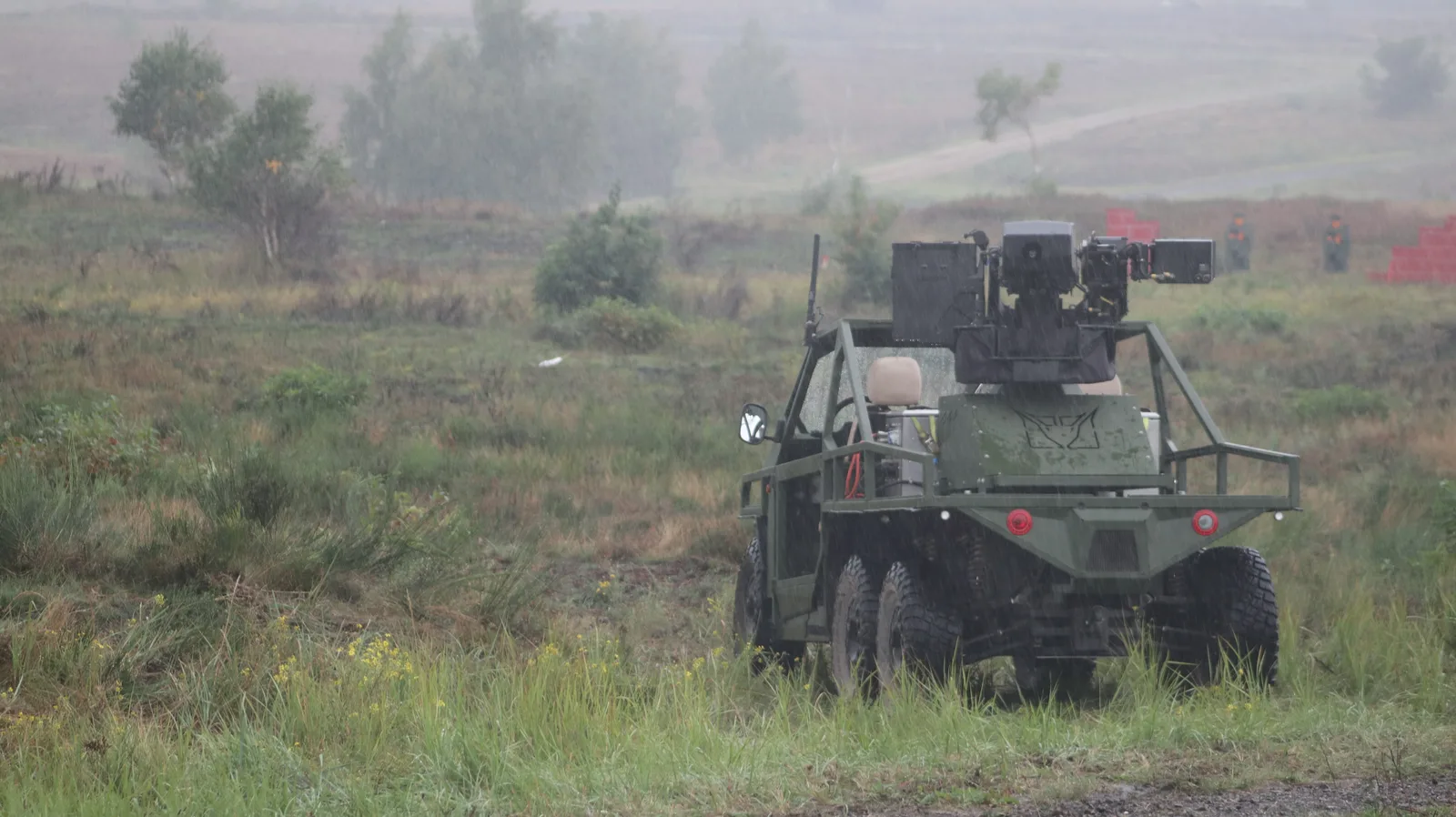
During live-fire and driving trials conducted on 28 and 29 October 2026 at the Brazilian Army Evaluation Centre in Rio de Janeiro, Ambipar Robotics unveiled APOLLO, its new electrically-powered heavy unmanned ground vehicle (UGV) prototype.
The company was established as a partnership between Brazilian firefighting robot manufacturer Unidroid and Brazilian multinational Ambipar, which specialises in environmental solutions, waste management and emergency response.
APOLLO is the result of a partnership between Ambipar Robotics and ARES, a Brazilian subsidiary of Israel’s Elbit Systems, to integrate the REMAX 4 remotely operated weapon station onto UGVs. During the trials, firing demonstrations were conducted using 7.62×51 mm and 12.7×99 mm (.50 BMG) machine guns.
The platform serving as the basis for APOLLO is the new Tático de Apoio de Resposta e Serviço (TARS; ENG: Tactical Response and Support Service) Heavy, a 4×4 UGV weighing 750 kg and offering an additional payload capacity of up to 750 kg. In its initial configuration, the platform has a maximum speed of 5 km/h, with an initial battery life of 5 hours.
The TARS Heavy is the third platform in the TARS family to be unveiled, although it is also the first wheeled platform in the series, and presently remains a prototype undergoing testing and further development.
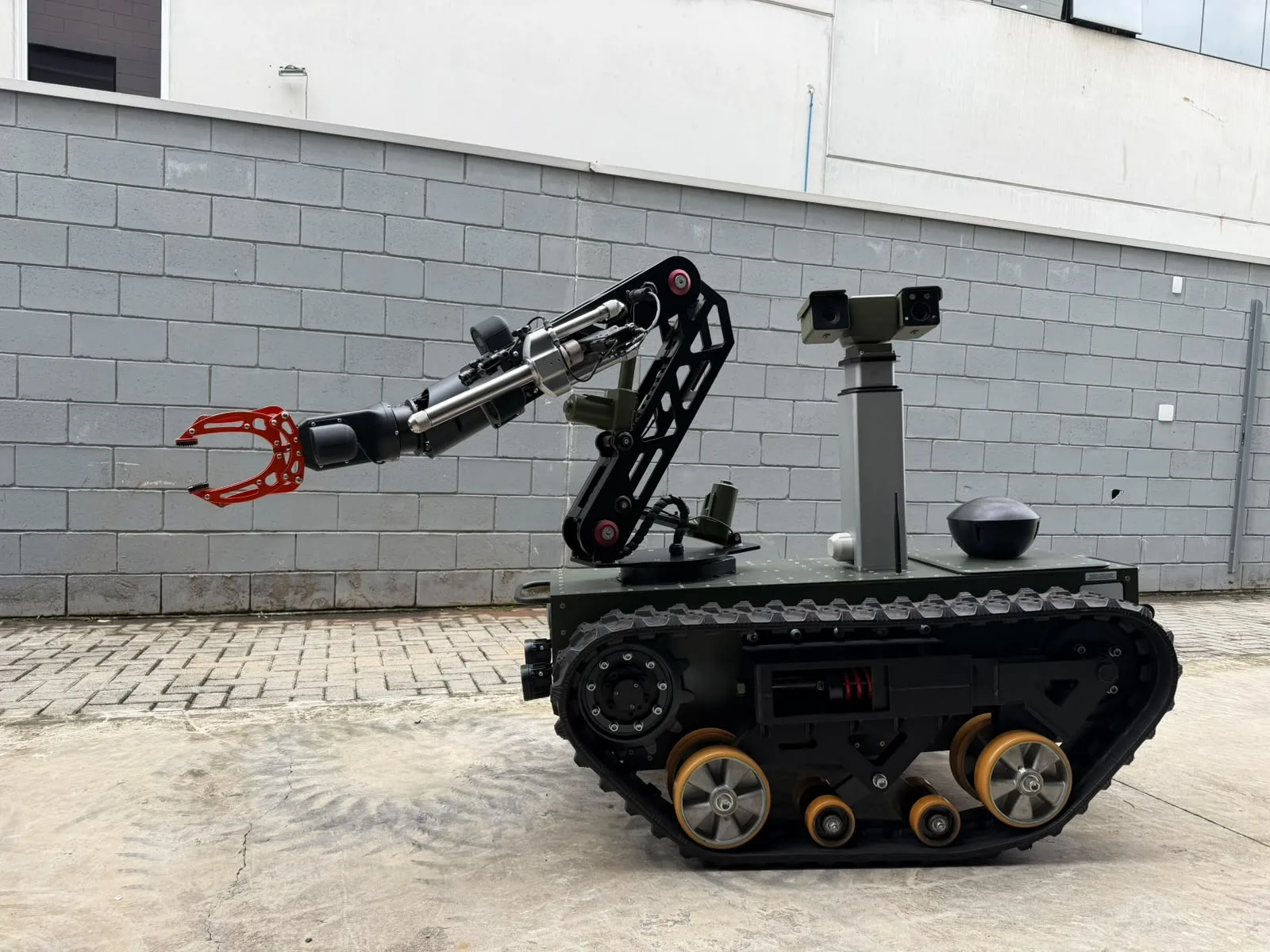
The TARS range also includes two tracked versions. The smaller TARS Light platform has been offered in light weapon carrier and explosive ordnance disposal (EOD) configurations, the latter developed for the Brazilian Army’s Military Institute of Engineering.

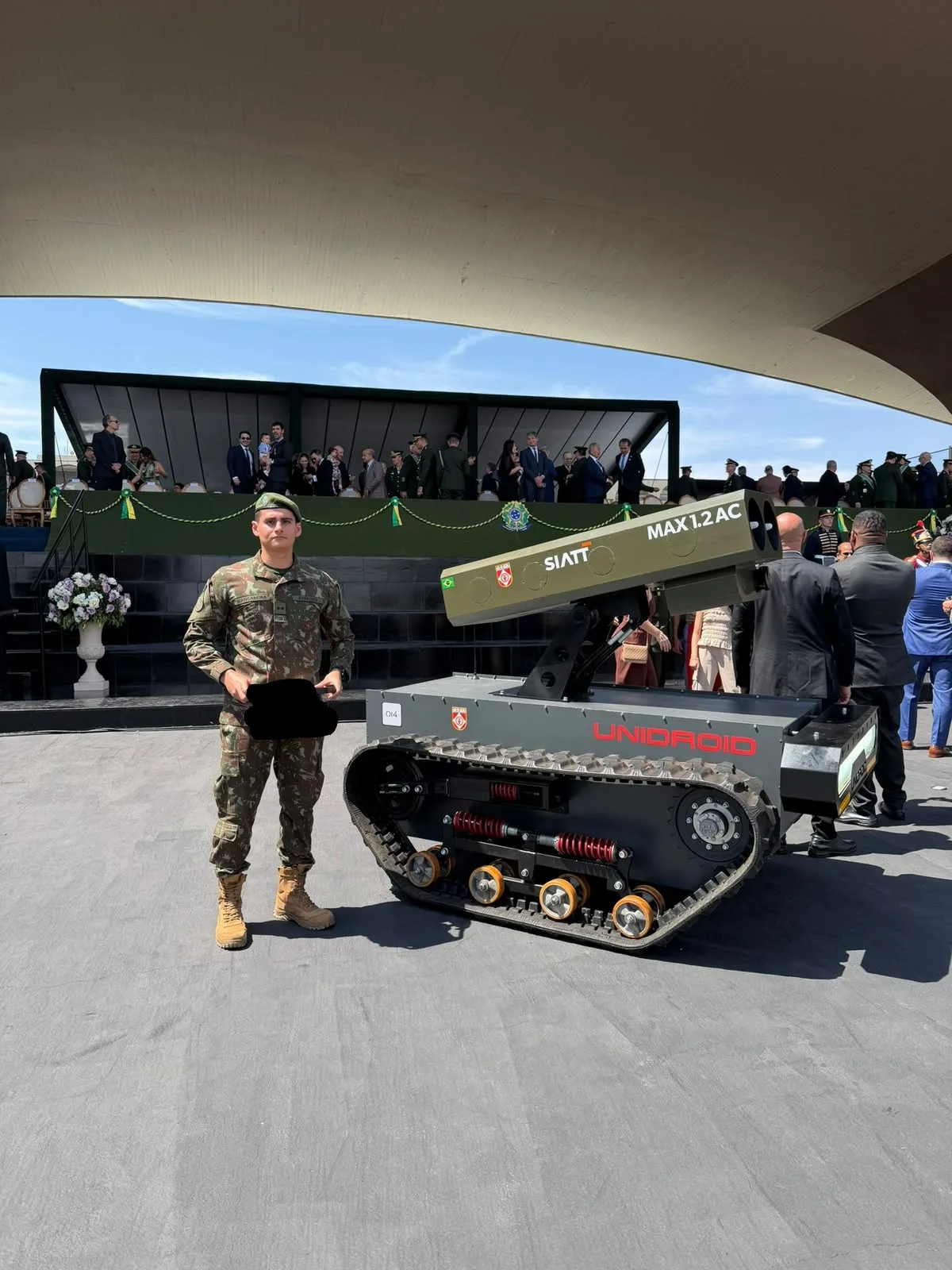
One size up is the TARS Medium, another tracked platform previously showcased in a weapons-carrier configuration featuring a mock-up of a twin launcher for SIATT’s MAX 1.2 SACLOS anti-tank missiles.

The Medium and Heavy variants are designed to fulfil a wide range of roles, including logistical transport, casualty evacuation, reconnaissance and other operational tasks.
In an interview with Warsight, Fernanda Morelli, Executive Director at Ambipar Robotics, explained that the TARS Heavy 4×4 platform is still expected to undergo further development, including an increase in its speed up to 20 km/h. She also confirmed that trials with a 1 tonne payload are still planned.
Another interesting aspect highlighted by Morelli is the platform’s high level of domestic content. According to the executive, the TARS Heavy was designed and developed from the ground up by the company’s engineering team. She explained that only a small number of components currently lack suitable domestic suppliers, with batteries being one example. However, Ambipar Robotics is working to develop these components in cooperation with Brazilian companies, with the aim of further increasing the platform’s national content.
When asked about the communications systems used to control the platform and their operating range, Warsight received a response from José Carlos, Engineering Director at Ambipar Robotics. He explained that the prototype initially uses UHF communications alongside a dedicated 5 GHz Ethernet link for C2 (command and control) and video transmission, employing RTSP (Real-Time Streaming Protocol), RTP (Real-time Transport Protocol) and H.265 (HEVC – High Efficiency Video Coding).
For military applications, the platform can naturally be equipped with different communications configurations to enhance security and extend its operational range. According to the company, this can reach up to 10 km and may be further extended through networking technologies such as MANET and MESH networks.
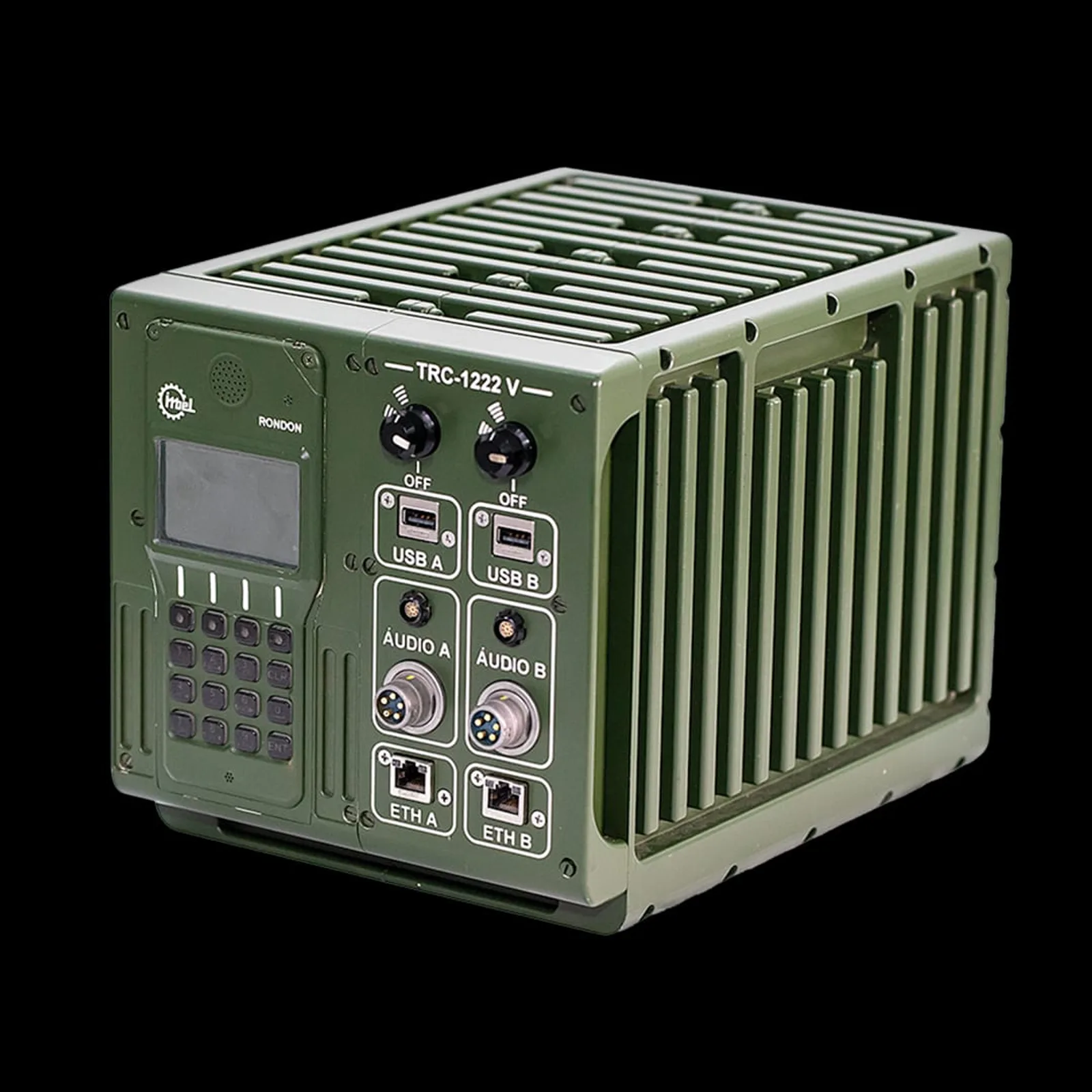
Communications are particularly significant in this context, as Brazil is currently developing three distinct families of advanced domestically-developed military radios.
These include the TRC-1193 VHF digital radio, developed by Brazil’s War Material Industry, through its Military Communications Factory; the TRC-1222 Rondon multiband software-defined radio (SDR), also developed by Brazil’s War Material Industry; and the RDS Defesa SDR, developed by the Army Technological Centre in partnership with AEL Sistemas. The latter two systems are part of the Brazilian Ministry of Defence’s Rondon-Defesa programme, which aims to develop indigenous military communications capabilities.

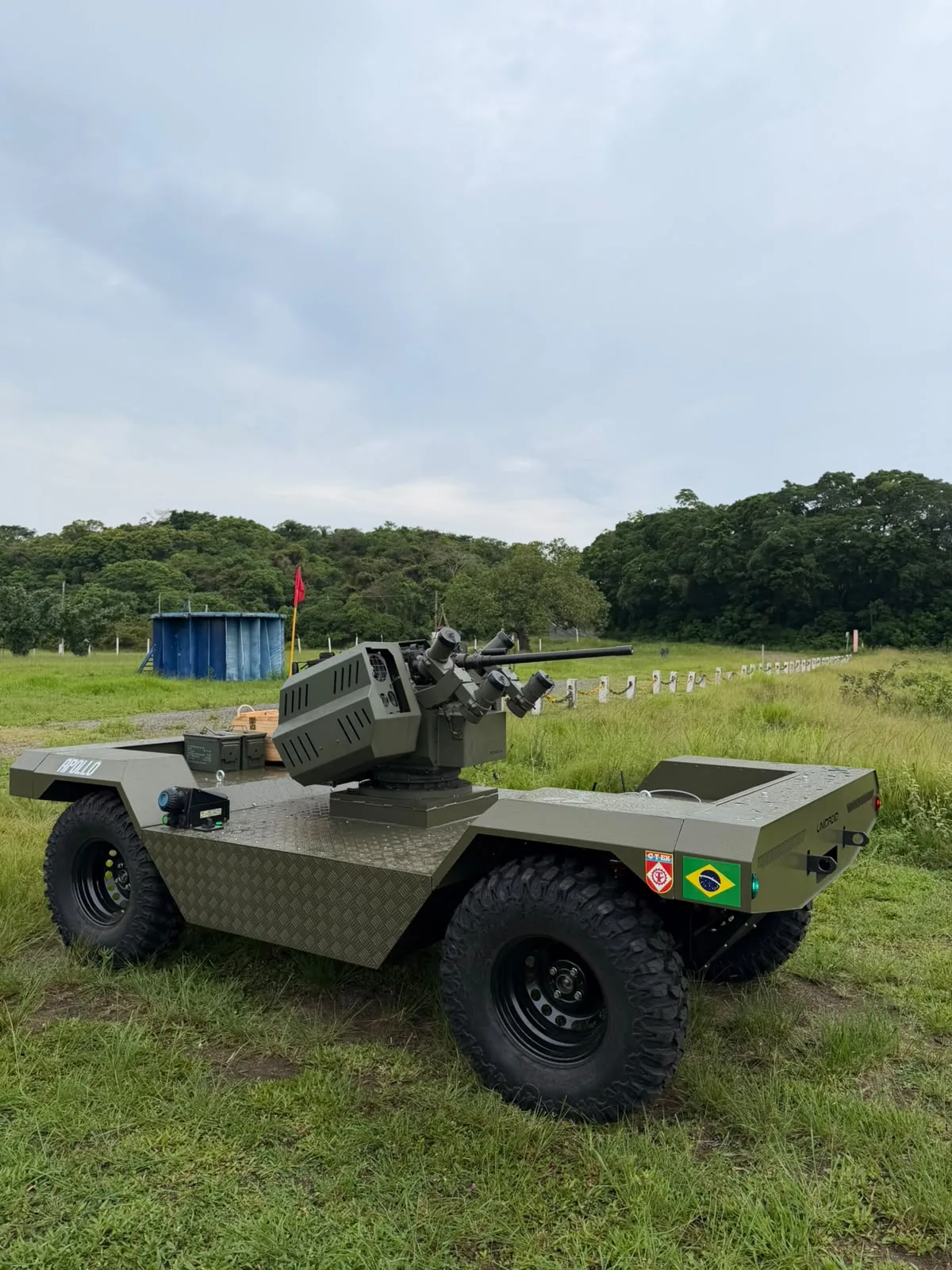
When asked about the number of operators required to control the platform, specifically whether a single operator could simultaneously manage both the UGV and its remotely operated weapon station or whether separate operators would be required for each, Morelli explained that this would depend on the Brazilian Army’s operational requirements, with the matter still under discussion. She nevertheless confirmed that the company has the technical capability to support both configurations.
A closer look at the REMAX 4
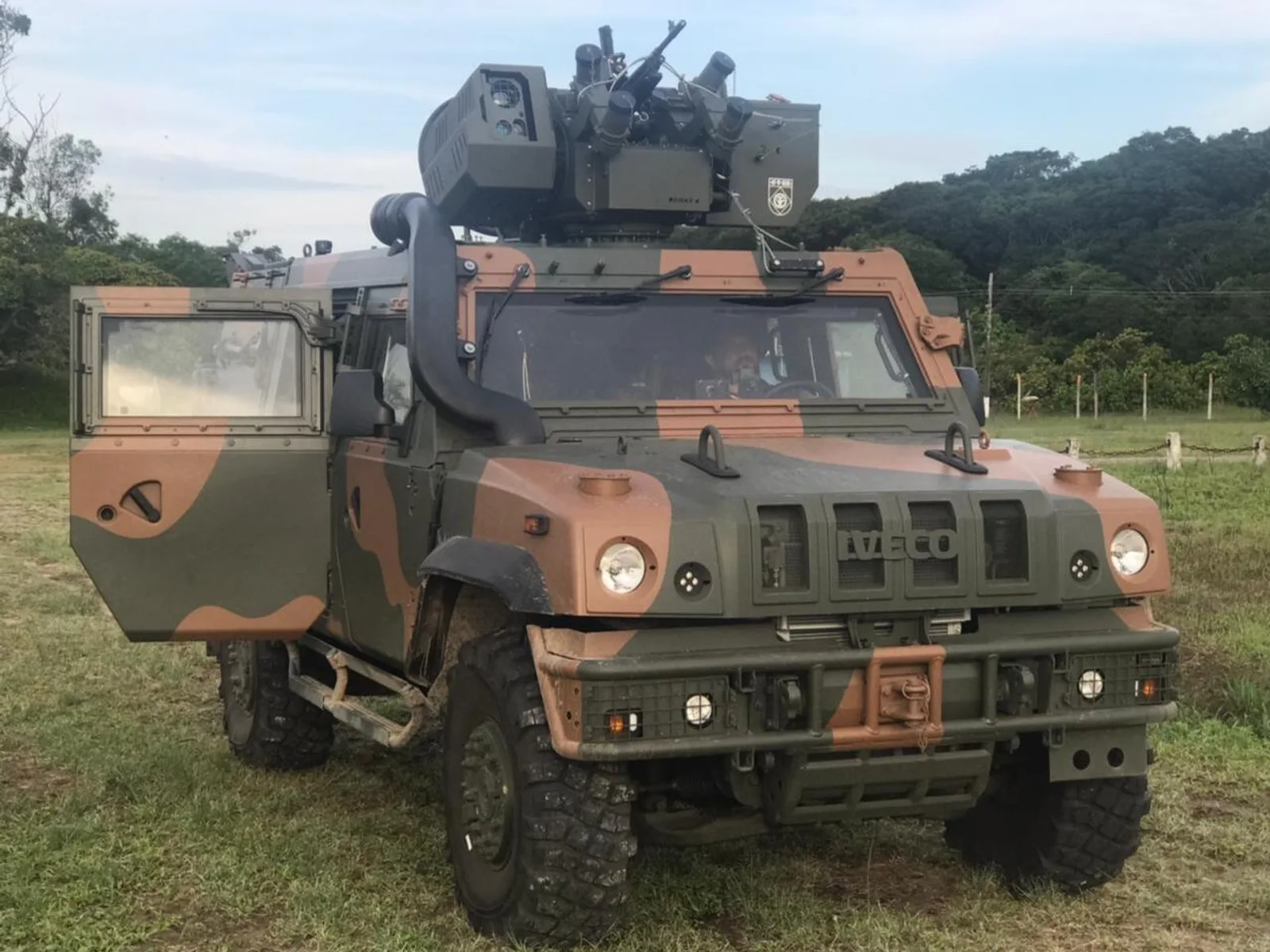
The REMAX 4 is an modern remote weapon station (RWS) developed by ARES to replace the REMAX 3 in Brazilian Army service. Its development began in 2021, and it was officially accepted into service in April 2026.
The RWS was selected to equip 105 of the Brazilian Army’s LMV-BR2 ‘Guaicurus’ fleet, with the remaining 315 expected to receive the ARES REMAN manned weapon station.
The system is stabilised in two axes, and is 20% lower in profile than its predecessor. It can also carry three times as much ammunition as the REMAX 3, with a capacity of up to 600 rounds of 7.62×51 mm, or 300 rounds of 12.7×99 mm ammunition. Another significant new feature is its ability to accommodate anti-tank missiles.
The REMAX 4 retains the EOPTRIS 2.0 sighting system developed by Belgian company OIP, also used on the REMAX 3. It comprises a day sight, an uncooled thermal imager and a laser rangefinder. One of the main differences, however, is that the sighting system’s housing is vertically independent of the weapon system itself.
Another new feature of the REMAX 4 is its automatic target tracking (ATT) capability. This system allows the weapon station to automatically track a target selected by the operator, continuously adjusting its orientation to keep the target within the sighting system’s field of view, even as it moves.

Brazil joins a growing UGV market
UGVs are by no means a new concept, but their importance on the modern battlefield continues to grow, with such platforms becoming increasingly valuable for a wide range of military operations. The development of the TARS family and the APOLLO represents a significant milestone for Brazil’s defence industry, demonstrating the country’s growing ability to develop indigenous robotic ground platforms for military applications.
With the presentation of the Light, Medium and Heavy UGV platforms, Ambipar Robotics has, at present, become the only Brazilian company to unveil a family of UGVs capable of supporting logistical operations, casualty evacuation, reconnaissance and fire support. The integration of the REMAX 4 onto the APOLLO further demonstrates the potential of these platforms to undertake combat roles, while highlighting the possibilities offered by the combination of domestic robotic and weapons technologies.
Share post