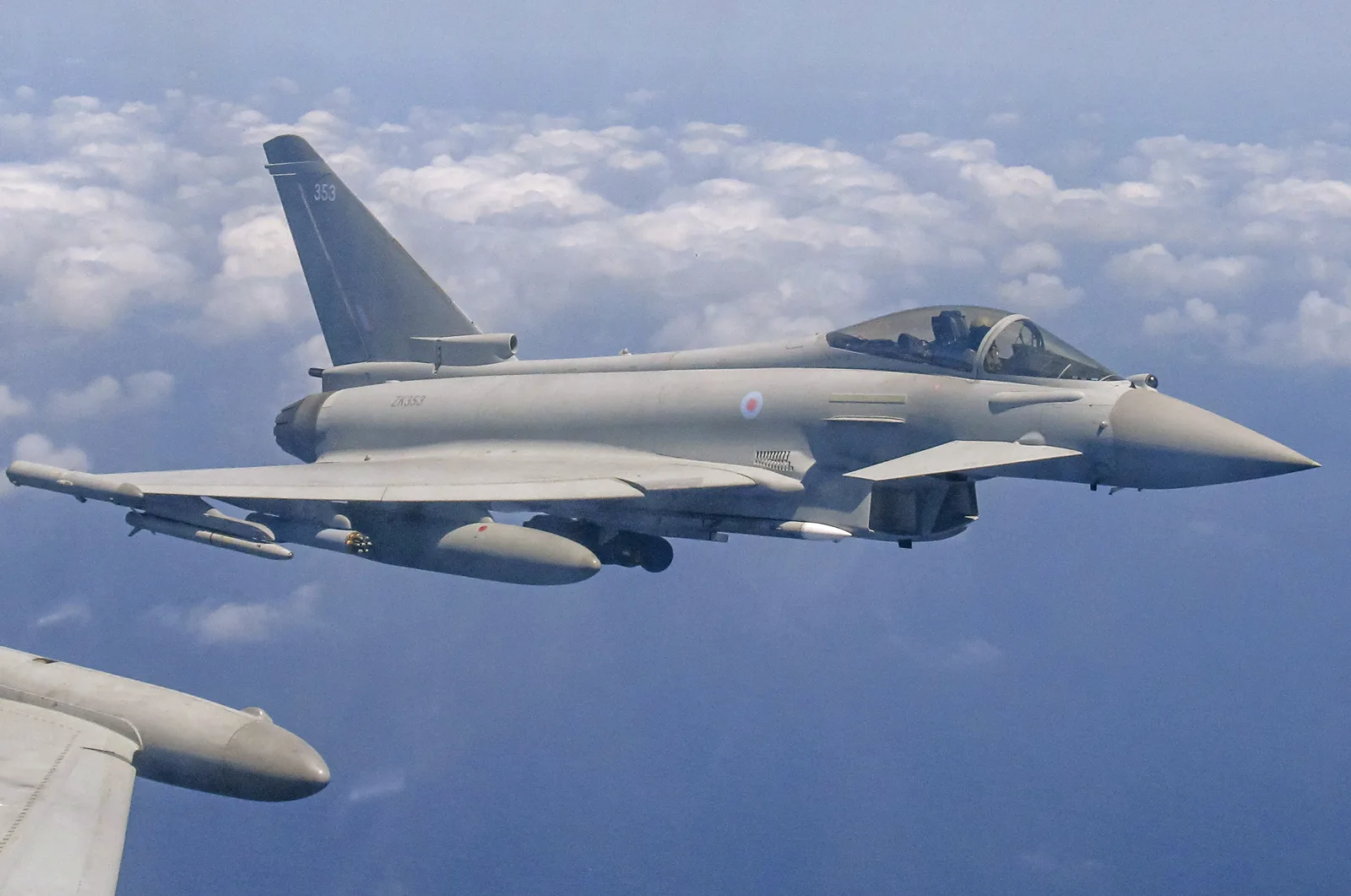
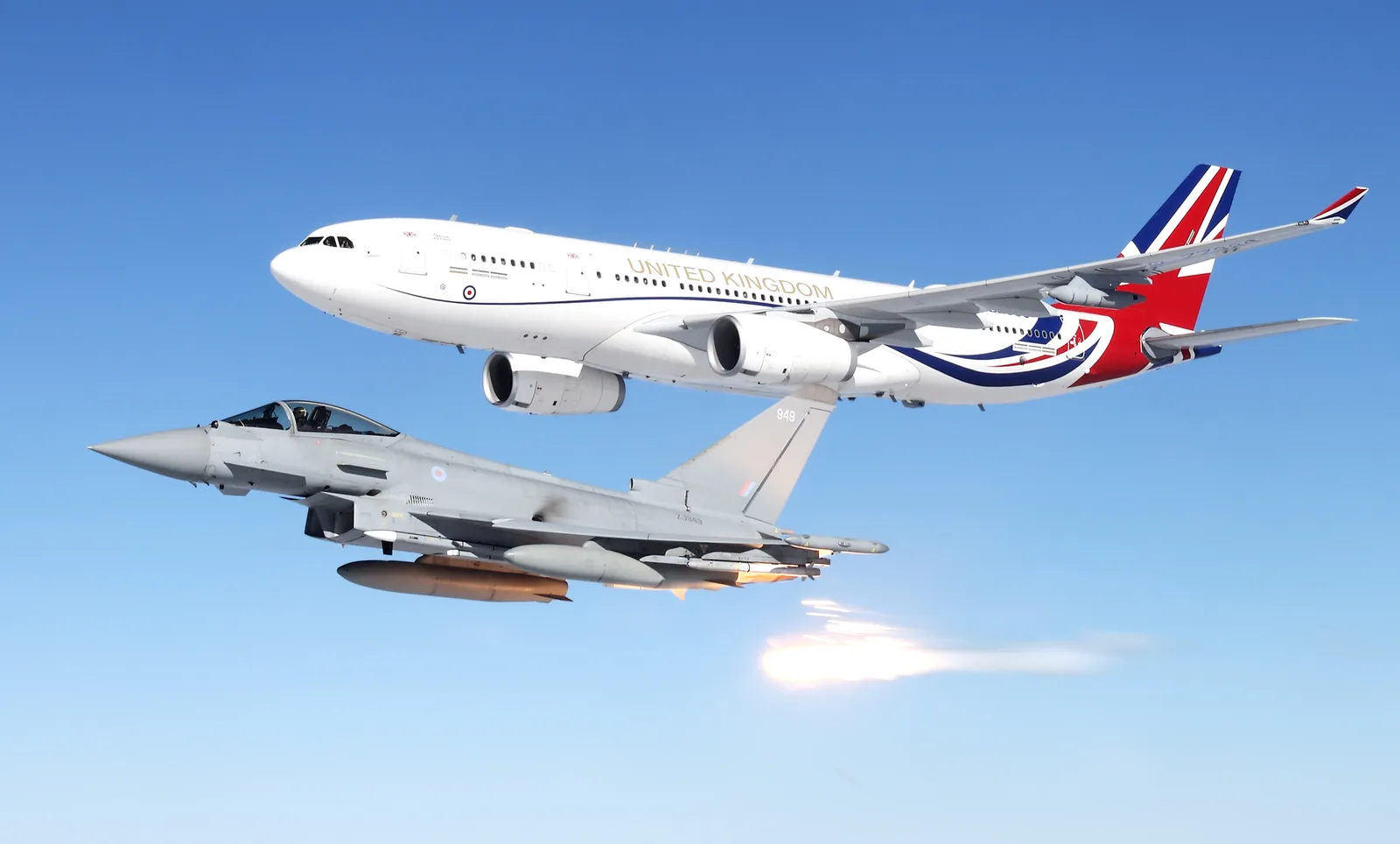
Royal Air Force (RAF) Eurofighter Typhoon FGR4 fighters are beginning to conduct air defence sorties over Saudi Arabia in defence of the kingdom’s cities and critical national infrastructure against one-way attack unmanned aerial vehicles (UAVs) launched by the Iran-aligned Houthi militia in Yemen.
The UK Ministry of Defence (MoD) announced that RAF Typhoon fighters would be deployed to Saudi Arabia on 20 October, stating that the Typhoons would “fly defensive counter air missions to support the protection of Saudi cities and critical national infrastructure against aerial attack”.
The MoD additional stated that the Typhoons would “operate in a defensive role and will not conduct offensive strikes against the Houthis”, adding that an RAF A400M Atlas C1 transport aircraft would also be deployed to the kingdom “to support the movement of defence materiel within Saudi Arabia, alongside UK military advisers to support Saudi staff officers”.
Warsight approached the UK MoD on 22 and 23 October for further details of the Typhoon deployment, but the ministry declined to answer any of those questions, citing operational security reasons.
The APKWS advantage
The commitment of RAF Typhoons to the air defence of Saudi Arabia builds on the provision of an RAF Voyager KC2/3 air-to-air refuelling aircraft to support Royal Saudi Air Force (RSAF) fighters in the air defence role, which was announced by the UK MoD on 22 September.
While the RSAF does, of course, operate its own fleet of 72 Typhoons, it is likely that the RAF Typhoon FGR4s have been called upon due to their ability to launch Advanced Precision Kill Weapon System (APKWS) guided rockets in the counter-UAV (C-UAV) role, on which Warsight has previously reported. This capability was first test-fired in March 2026 and the UK MoD announced on 17 May that it had been “deployed on operations in the Middle East with sorties flown by No IX Squadron RAF Typhoons”.
As well as providing a much lower-cost C-UAV than missile rounds such as the Advanced Short Range Air-to-Air Missile (ASRAAM), the APKWS integration allows the Typhoon to carry seven rounds per launch pod in whatever missile/rocket loadout is chosen: a volume of fire unmatched by the maximum number of air-to-air missiles that could be carried. Any single Typhoon could in theory carry a maximum of 84 APKWS rockets in four triple clusters of seven-round rocket pods.
The Houthi-Saudi conflict
The conflict between the Shia Islamist, Iran-backed Houthi militia in Yemen and the mostly Sunni Kingdom of Saudi Arabia began in March 2015, when Saudi Arabia led a collation of forces that intervened in the Yemeni Civil War on the side of the Yemeni government.
Given that Yemen shares its roughly 1,307 km-long northern border with Saudi Arabia, initial fighting between Houthi and Saudi/coalition forces involved clashes on the land either side of the western end of that border (Houthi forces currently control roughly the western third of Yemen, which includes the capital, Sanaa, and much of Yemen’s Red Sea coast north of the Bab al-Mandeb Strait). At the same time the Saudi-led coalition mounted airstrikes against Houthi locations and a Saudi-led naval blockade isolated Yemen.
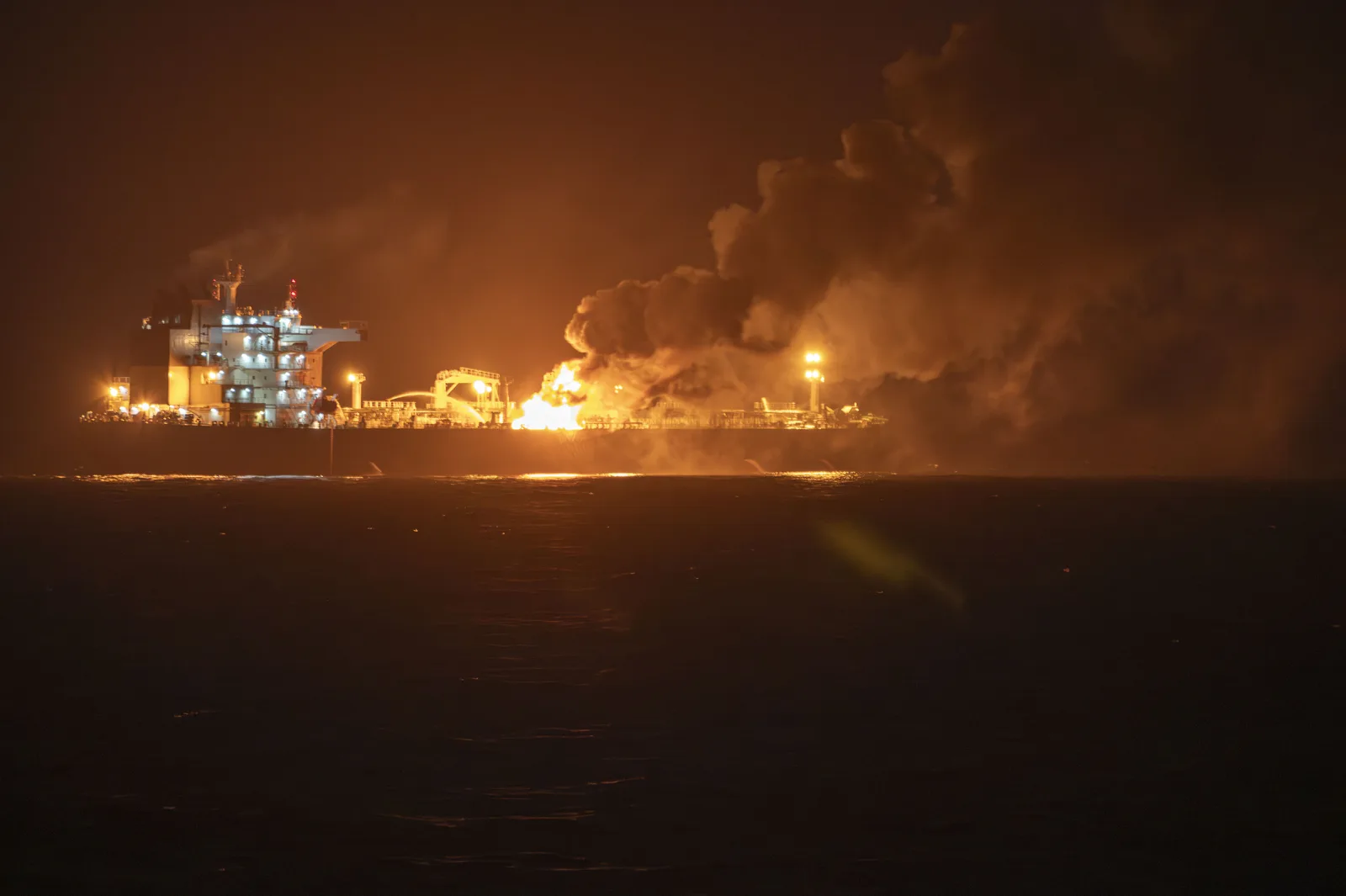
On 13 December 2018 a ceasefire took effect under the Stockholm Agreement between the Yemeni government and the Houthis. However, with the onset of the Gaza war in October 2023 the Houthis began launching missiles and one-way attack UAVs at Israel and attacking international shipping in the Red Sea.
While lulls in hostilities coincided with temporary ceasefires in Gaza, the US/Israeli offensive against Iran initiated on 28 February 2026 led to the Houthis renewing their attacks on Israel and Red Sea shipping.
While the Houthis had occasionally launched drone and missile attacks on Saudi Arabia since 2018, an airstrike on the Houthi-controlled Sanaa International Airport on 13 July 2026, for which the finger was pointed at Riyadh, led to an immediate response in the form of Houthi missile and drone strikes later that day.
Regular such attacks have continued. As well as energy facilities, the Houthis have frequently targeted Saudi airports with both one-way attack UAVs and ballistic missiles, significantly bringing the conflict to the doorstep of those living and working in the kingdom.
For example, a Houthi strike on Riyadh’s King Khalid International Airport on 10 October killed 13 people and injured 308 others, making it the deadliest attack in Saudi Arabia in more than a decade. Another Houthi strike on the same airport the following day killed one person and injured 11. On 21 October a Houthi attack on King Fahd International Airport in the eastern city of Dammam killed two people and wounded eight.