Lockheed Martin has added PAC-3 ACE, a lower-cost version of the PAC-3 MSE, to its missile portfolio.

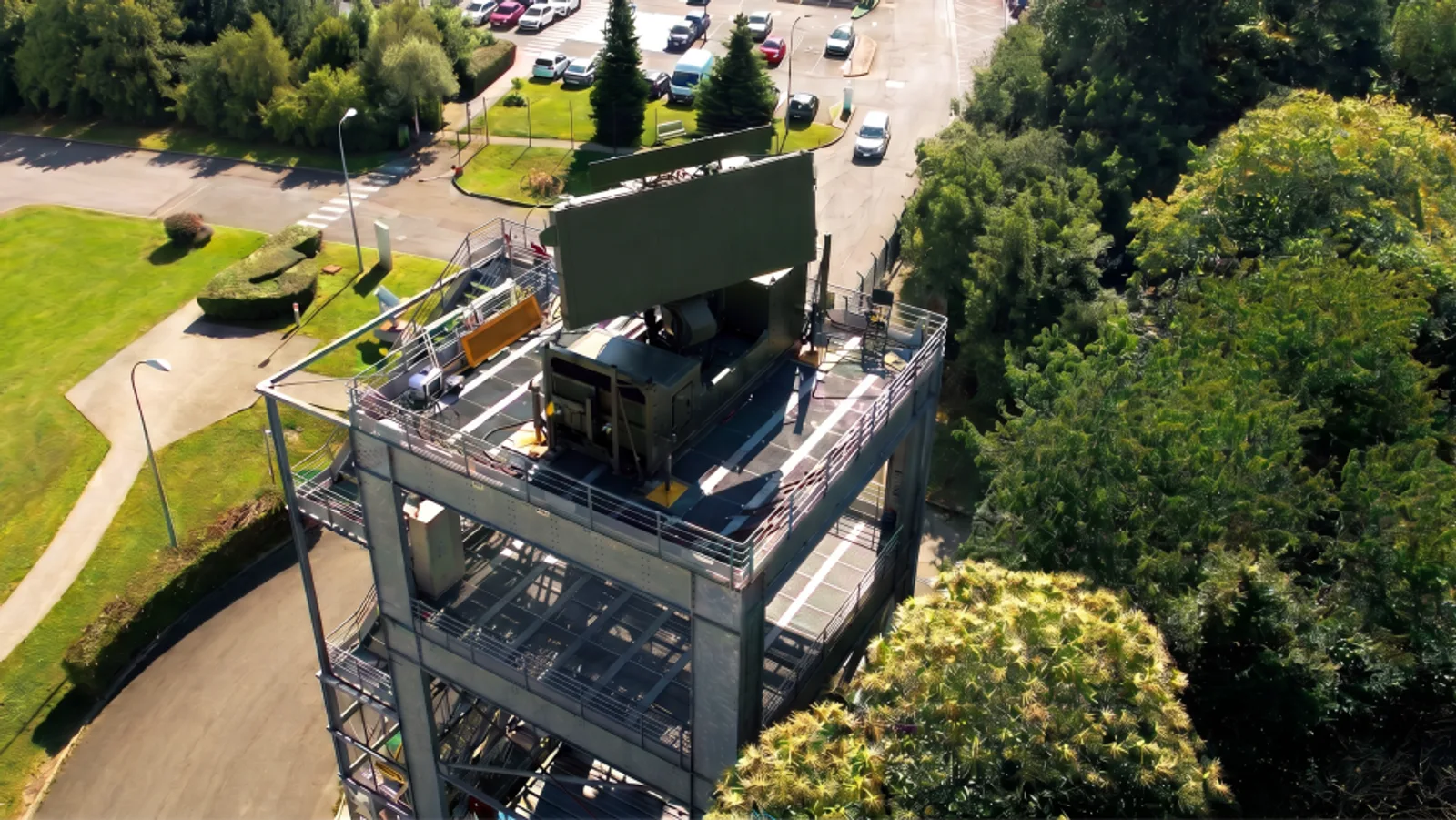
Thales GM400α and GM200 MM/A radars ordered to enhance Irish recognised air picture
The Irish Department of Defence…

Lockheed Martin has added PAC-3 ACE, a lower-cost version of the PAC-3 MSE, to its missile portfolio.

On 20 July 2026, on the first day of the Farnborough International Airshow, Lockheed Martin announced the introduction of the PAC-3 ACE (Adapted Capability Effector) to their ground-based air defence (GBAD) missile portfolio. According to the announcement, PAC-3 ACE is “less than half the cost of a PAC-3 MSE per unit”
What does this mean in practice? A PAC-3 MSE (Missile Segment Enhancement) is typically estimated to cost around USD 4.2 million, which is generally accurate, although the price fluctuates with order size and year. For instance, FY2027 spending by the Munitions Acceleration Council for PAC-3 MSE procurement, the Army’s contract resulted in a unit cost of around USD 4.27 million, and the Navy’s contract a unit cost of USD 4.22 million.
In practice then, PAC-3 ACE would be expected to cost somewhere in the region of USD 2 million per missile. Still not particularly cheap, but significantly more so than the PAC-3 MSE. This appears to be somewhat of a recurring theme in recent PATRIOT interceptors.
The original PAC-3, sometimes referred to as ‘PAC-3 Baseline’, began to enter service from 2001 onwards, developed under the ERINT (Extended Range Interceptor) programme. Several years into its service, the missile was regarded as too expensive for the role, particularly given that its underlying logic was for the missile to provide greater magazine depth against numerous threats, with 16 PAC-3s per launcher in place of four PAC-2s per launcher.
As such, Lockheed Martin was tasked with developing a cheaper PAC-3 with the same capability. These development efforts culminated in the PAC-3 Cost Reduction Initiative (CRI), with the first contract understood to have been awarded at on 31 December 2013. Cost savings were understood to have been achieved through a combination of some parts substitutions for lower-cost alternatives and adjusting manufacturing processes.

The PAC-3 MSE came along shortly afterwards, with the first production contract issued on 30 April 2014, and the first unit equipped declared in 2015. What can cause some confusion is that PAC-3 MSE and CRI share many features in common. Both use attitude control motors for terminal control, both rely on a hit-to-kill defeat mechanism, supplemented by a small warhead known as the ‘lethality enhancer’ (for use against air-breathing targets). The main visual differentiators are the PAC-3 MSE’s subtly ‘bottle shaped’ main body, and the placement of the strakes relative to the control fins.
PAC-3 MSE represented a major upgrade over the PAC-3/PAC-3 CRI. The missile was notably wider, at around 280 mm (up from 255 mm), and so consequently, only 12 PAC-3 MSEs fit per launcher. However, this additional space allowed for mounting a more powerful dual-pulse solid rocket motor, greatly increasing the PAC-3 MSE’s range to an estimated >100 km, compared to around 68 km for the PAC-3 CRI.

So is PAC-3 ACE looking like it will be the CRI equivalent for PAC-3 MSE? Sort of, but a halving in price suggests that ACE will likely be less capable than its predecessor in some ways. An early graphic depicting the missile notably did not show the attitude control section, suggesting that this section may have been part of the cost-cutting measure. However, it is plausible that the final design may use something else to compensate for the loss of these attitude motors, such as some form of thrust vectoring.
Yet even if it is not as capable as its predecessor, PAC-3 ACE looks to be addressing a need for a simpler missile that is operable from PATRIOT, and capable of being produced in large volumes, for a lower cost than the PAC-3 MSE.
This need became particularly apparent during the US/Israeli war with Iran, in which both the US and most of its Gulf State allies burned through large numbers of missile stocks. According to various reports, in many cases PAC-3 MSE missiles were expended against very low-cost targets, such as Shahed one-way attack (OWA) uncrewed aerial vehicles (UAVs). While the hypothetical use of PAC-3 ACE in such scenarios would not have balanced the cost asymmetry, it would have at least reduced it somewhat.
At present, PAC-3 MSE production figures sit at just over 600 missiles per year, and under a framework agreement with the US Department of War (DoW), are slated to rise to 2,000 per year by around 2035. It is presently unclear whether PAC-3 ACE will be used to help meet the targets under the framework, or whether ACE production will be counted entirely separately.
PAC-3 ACE will become the 11th missile to be used with the long-running PATRIOT system. See Table 1 for a summary of all missiles that have served as part of PATRIOT.
| Table 1: All PATRIOT missiles – present and historic | |||
| Common name | Series | Missile variant | Mission Design Series (MDS) |
| Patriot | Patriot | Standard (analogue fuze) | MIM-104 |
| Patriot | Patriot | Standard (digital fuze) | MIM-104A |
| Patriot PAC-1 | PAC 1 | Standoff Jammer Counter (SOJC) | MIM-104B |
| Patriot PAC-2 | PAC 2 | Anti-Tactical Missile (ATM) | MIM-104C |
| Patriot PAC-2 GEM | GEM | Anti-Tactical Missile 1 (ATM1) | MIM-104D |
| Patriot PAC-2 GEM-C | GEM | Anti-Tactical Missile 1 Cruise (ATM1C) | MIM-104D-1 |
| Patriot PAC-2 GEM-T | GEM | Anti-Tactical Missile 1 Tactical (ATM1T) | MIM-104E |
| PAC-3 | PAC 3 | Anti-Tactical Missile 2 (ATM2) (Baseline) | M91; M91A; M91A1; |
| PAC-3 CRI | PAC 3 | Anti-Tactical Missile 2 (ATM2) (CRI) | M91F1 |
| PAC-3 MSE | MSE | Anti-Tactical Missile 3 (ATM3) | MSE |
| PAC-3 ACE | n.k. | n.k. | n.k. |
Despite entering service with the US armed forces in 1982, PATRIOT has been repeatedly upgraded over the years, with especially notable upgrades in recent years comprising the Northrop Grumman IBCS (Integrated Battle Command System) command and control (C2) system, the Raytheon LTAMDS (Lower-Tier Air and Missile Defence System), and the PAC-3 MSE missile. PATRIOT is in service with at least 19 users, giving it a large user base, many of whom are likely to welcome the arrival of a lower-cost interceptor.