With global attention locked on Ukraine and the US-Iran confrontation, Sudan’s civil war has been allowed to fester. The conflict has now become a theatre for competing regional ambitions, with the two primary belligerents pulling in support from Egypt, Eritrea, Ethiopia, Libya, Qatar, Russia, Saudi Arabia, Somalia, Türkiye, the UAE, and Ukraine. The result has been one of the world’s worst humanitarian catastrophes.
Sudan: An overview of a brutal war
Global attention has been fixated on the Russia-Ukraine War and, latterly, the US-Iran conflict. This is to the detriment of other wars, especially conflicts that generate refugee crises and cause humanitarian disasters. The ongoing civil war in Sudan, raging since 2023, is one of these conflicts. Westerners often have lost track of who is fighting whom, and who is supporting which side. Brutality, including massacres of civilians and alleged acts of chemical warfare mean that the traditional tendency to try to find the ‘good’ side in the conflict, is yet again an optimistic Western fallacy.
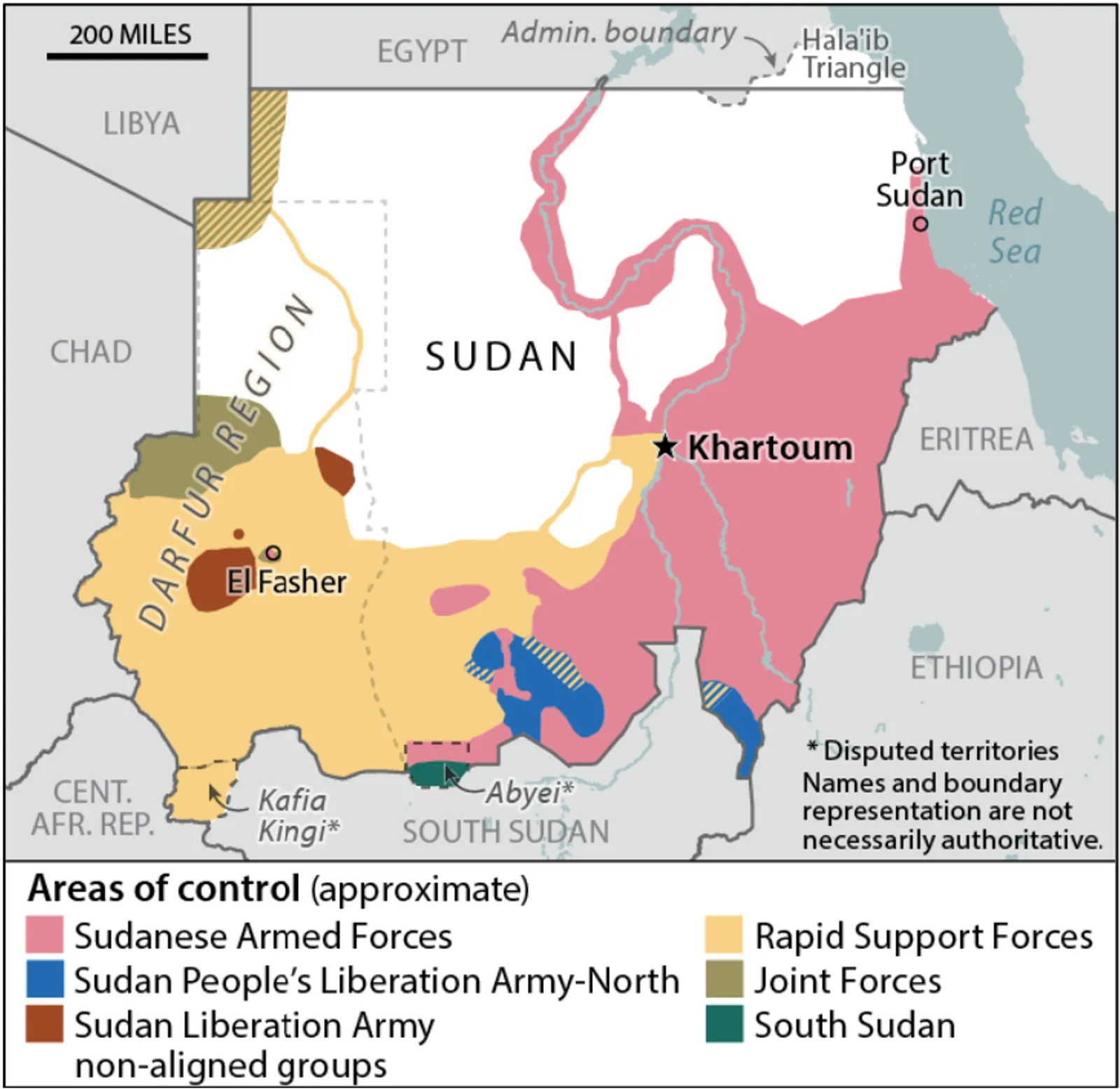
The political geography of this conflict is a mess to unpack. Some simplification for brevity necessary. The current war (Wikipedia provides a disambiguation of previous conflicts) has two main combatants, both claiming to be a legitimate national government. There are lesser factions and fragments as well, both ones that are allied to one of the two main factions, or operate as third parties. These include older anti-regime rebel groups who have largely splintered.

The Sudanese Armed Forces (SAF) represents what is left of the national infrastructure and government of the Republic of Sudan. The overall leader is Abdel Fattah al-Burhan, a career military office and hardened veteran of internal conflicts who was both military leader and head of state before the current conflict began. There are a number of irregular factions and forces directly or loosely allied with the SAF. Estimates vary widely, but this side of the conflict may have around 300,000 under arms. This side of the conflict remains the one that is broadly recognised around the world as the national government.
The other main warring faction is the Rapid Support Forces (RSF), who have their own unrecognised provisional government also claiming to be a national one, the ‘Government of Peace and Unity’. The RSF is directly descended from irregular Janjaweed militias that were allied to the central government in the previous Darfur conflict (2003-ca. 2020). They were notorious for atrocities against non-Arab populations in Darfur province. In 2013, these militias became the RSF as a formal paramilitary entity.
Their leader is Muhammad Hamdan Dagalo Musa, who uses the nom de guerre Hemedti. His background is as a regional warlord in the Darfur province, and he claims a special degree of legitimacy because he claims to have been the one who demanded Bashir, the former dictator, leave office in 2019.
Like the SAF, various irregular groups and splinter movements are associated with the RSF. Estimates of the size of the RSF vary even more widely than those of the SAF, but clearly their active strength is in the hundreds of thousands.
In 2019 there was an attempt to shift Sudan to democratic rule, with an ouster of the long-standing Omar al-Bashir regime. There was a move to transition the by then long-standing RSF into a more regular role in the Sudanese regime. A coup in 2021 ruptured the transition effort.
To simplify slightly, the current civil war broke out in 2023 when the RSF resisted efforts to be incorporated more fully into central regime structures and the leadership of the RSF viewed various developments in Khartoum as pandering to old elites who they felt were prejudiced against Darfuri Arabs, who comprised the bulk of RSF elements. There is an economic element as well, as the RSF and SAF control the majority of Sudan’s natural resources and both were reluctant to hand over control to central government. SAF controls the export terminal for oil, while RSF controls gold mines.

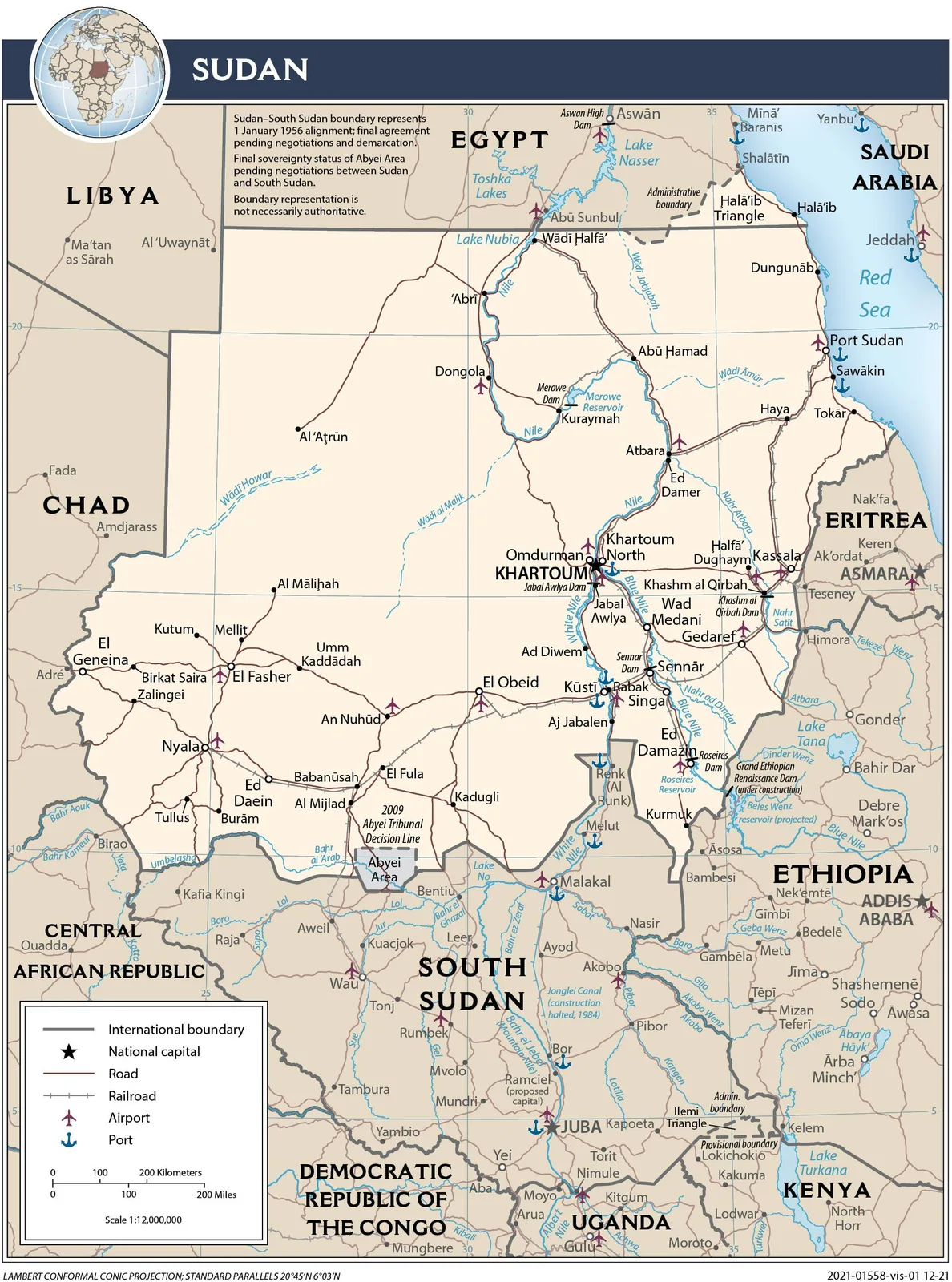
Since 2023, the SAF and RSF have been fighting aggressively against each other. The RSF roughly represents the traditionally more nomadic Darfuri Arabs from the west of the country, while the SAF represents the Sudanese Arabs of Khartoum, the Nile valley, and Port Sudan, the latter being Sudan’s only significant seaport. This is a war of Nile and urban core (SAF) versus hinterland (RSF), with smaller groups and interests complicating the overall picture with shifting alliances.
Some of the direst humanitarian catastrophes have been RSF sieges of SAF towns and cities. Food security is poor in a good year in Sudan and the breadth of the conflict has made agriculture difficult thus provoking a serious ongoing food crisis. The war has seen a death toll well into the hundreds of thousands. Over 3.5 million refugees have fled Sudan and at least 9 million have been internally displaced. Many of the refugees that are a hot topic political issue in Europe are from this conflict.
Foreign involvement is nearly as fractal and complex as the internal configuration of this conflict. Opportunism is rampant and some countries may be engaged in proxy conflict. Egypt is a long-time ally of the SAF, seeks stability on is southern border and wants to ensure no disruption to the Nile. Eritrea has supported the SAF, wanting to secure its own western border, which is the south-eastern Sudanese frontier. Saudi Arabia has been supplying military aid and financial support to the SAF regime, allegedly to counterbalance UAE involvement with the RSF. Despite sanctions, Türkiye has sold over USD 100 million in military goods to the SAF. Qatar has long-standing military ties to the SAF, and it is rumoured that some Chinese-made aircraft were supplied to the SAF.
On the other side of the ledger, the UAE have long been accused of being a major support of the RSF. Ethiopia originally supported the RSF as a counterweight to the SAF. In recent months, Ethiopia has been accused of training RSF fighters and the SAF formally accused Ethiopia of being behind drone attacks. Ethiopia’s affairs in the region are complex to say the least, with their Grand Ethiopian Renaissance Dam (GERD) project causing controversy downstream. Uganda appears to allow its airspace to be used for shipments to the RSF.
There is definitely a whiff of Russia-Ukraine proxy warfare. Wagner, the former Russian mercenary enterprise (now defunct, large portions of which were subsumed into the Russian state-controlled ‘Africa Corps’), is alleged to have supported the RSF, whereas Ukraine has been alleged to have either perpetrated attacks on Wagner/Africa Corps forces, or helped the SAF to do so. China and Serbia appear to be agnostic, supplying to both sides. Libya and Somalia, both essentially failed states, have factions the support either side in the war.
This has been merely a brief introduction to the conflict. More may follow on specific aspects of this brutal war.

Share post