Dutch GlobalEye deal leaves big questions unanswered

Beyond the proposed NATO acquisition of 10 Saab GlobalEye airborne early warning and control aircraft to replace the alliance’s AWACS fleet, a parallel Crewed Airborne Early Warning initiative is underway, also focused on the Saab GlobalEye platform.

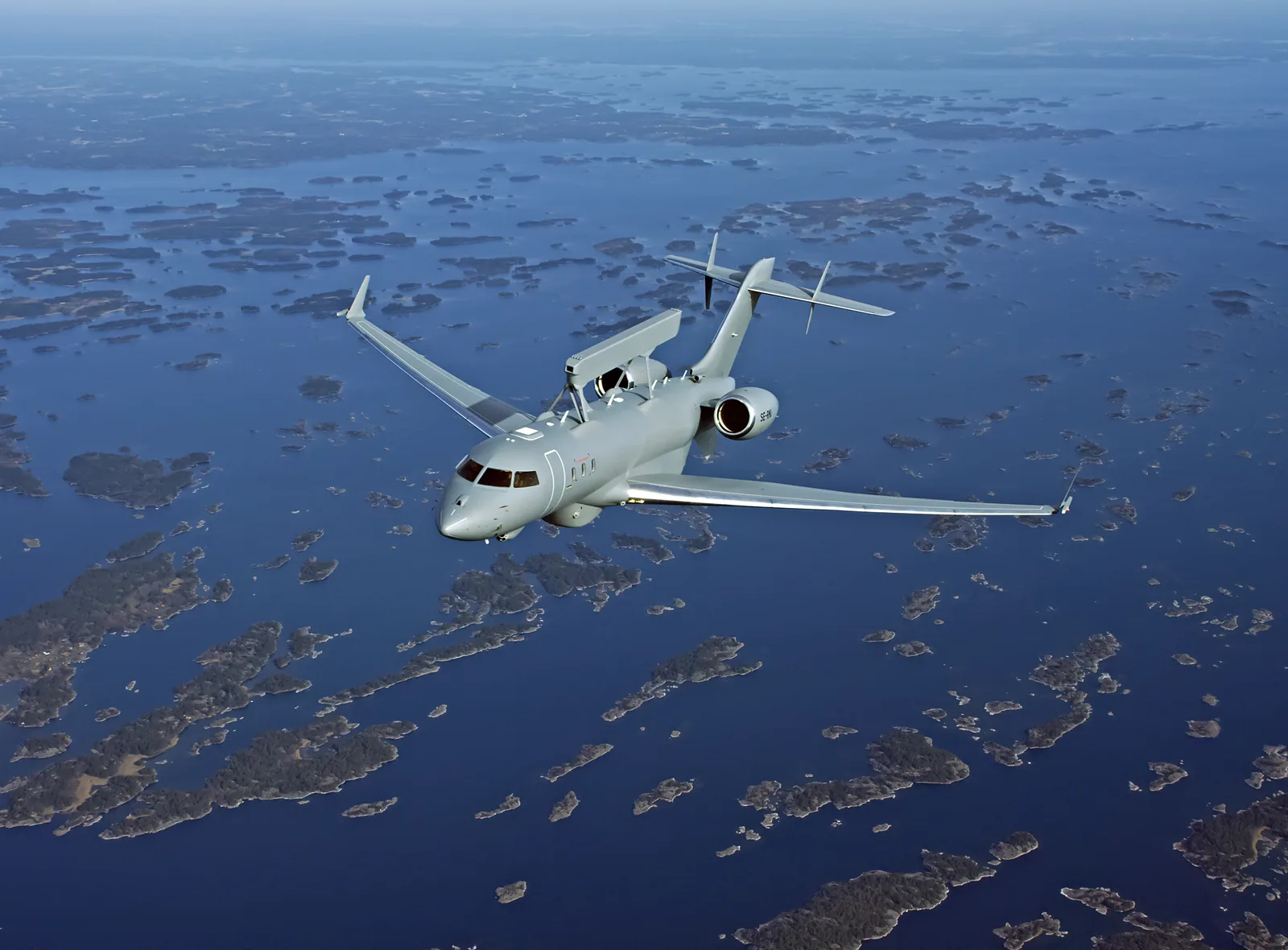
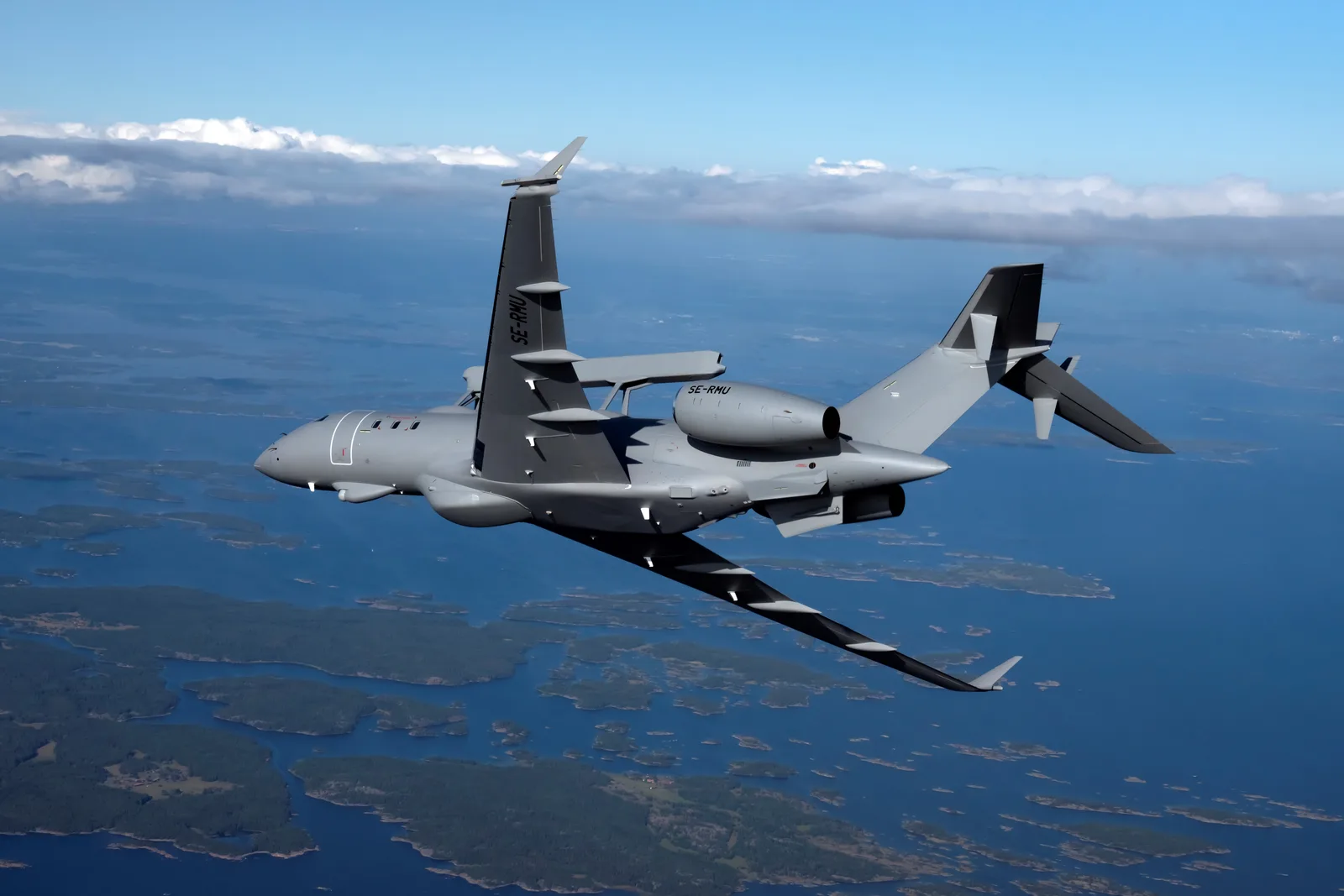
Under the parallel iAFSC and Crewed Airborne Early Warning initiatives NATO nations looks set to acquire up to 22 Saab GlobalEye AEW&C aircraft, including those for Sweden, France, Canada and the Netherlands.
Under the parallel iAFSC and Crewed Airborne Early Warning initiatives NATO nations looks set to acquire up to 22 Saab GlobalEye AEW&C aircraft, including those for Sweden, France, Canada and the Netherlands. (Saab)
Jon Lake

On 10 September 2026 the Netherlands signed a letter of intent with Sweden for the purchase of a single Saab GlobalEye airborne early warning and control (AEW&C) aircraft. This is intended as a national procurement, however, and does not form part of the proposed NATO acquisition of 10 Saab GlobalEye aircraft that was announced at the NATO summit in Ankara on 7 July 2026. Rather, it forms part of a little-known parallel NATO AEW programme launched at Ankara on the same day.

Replacing NATO’s AWACS fleet

NATO issued a request for information (RFI) in 2022 seeking a capability to replace that offered by its fleet of 14 surviving E-3A Airborne Warning and Control System (AWACS) aircraft (of an original 18). The E-3 replacement was expected to be based at Geilenkirchen and to operate from the same forward operating bases (FOBs) and locations at FOB Konya in Türkiye, FOB Aktion (Preveza) in Greece; FOB Trapani in Italy (Trapani-Birgi Air Base) and Forward Operating Location Ørland in Norway. The replacement was to be fully in service by 2035, after achieving an initial operational capability (IOC) by 2031.

Boeing, Northrop Grumman and Saab responded to the RFI, respectively offering solutions based on the E-7A Wedgetail, the E-2D Advanced Hawkeye, and the GlobalEye. In November 2023 NATO announced its intention to procure an initial six E-7As under the initial Alliance Future Surveillance and Control (iAFSC) requirement. This was not intended as a full replacement for the current fleet of 14 E-3A AWACS aircraft, but rather to mitigate the risk of airborne surveillance and control capability gaps with the retirement of the AWACS platforms.

Two years later, in November 2025, the Netherlands Ministry of Defence (acting on behalf of the NATO iAFSC Support Partnership Committee nations) announced the cancellation of the E-7 acquisition, suggesting that the USAF’s decision to abandon its planned procurement meant that the NATO E-7 project has lost its “strategic and financial basis”.

The 10 iAFSC nations by then largely represented a subset of the 16 NATO Airborne Early Warning & Control Programme Management Agency (NAPMA) members, consisting of Belgium, Denmark, Germany, Luxembourg, the Netherlands, Norway, and Romania with non-NAPMA nations Canada, Latvia, and Sweden. Some sources report that Lithuania became an iAFSC partner. Denmark had not originally been part of the ‘E-7 Group’, whereas the United States had been.

NAPMA members the Czech Republic, Greece, Hungary, Italy, Poland, Portugal, Spain, Turkey and the United States were not part of the iAFSC grouping.

Alternatives were to be sought to replace the ageing AWACS aircraft by 2035.

The 11 iAFSC nations (now including Lithuania) announced the joint procurement of up to 10 Saab GlobalEye aircraft as NATO’s new AEW&C capability during the NATO Summit Defence Industry Forum in Ankara on 7 July 2026.

A parallel programme

On the same day, at the same summit, the parallel Crewed Airborne Early Warning initiative was launched by a separate (but overlapping) coalition. This included iAFSC members Denmark, Germany and Sweden, but also included Finland, France, Poland, Spain and Türkiye.

The Crewed Airborne Early Warning initiative was a multi-national co-operative procurement project that was intended to streamline the acquisition of crewed AEW aircraft to meet the specific national or multinational fleet requirements of these eight NATO Allies. The initiative was intended to complement NATO’s broader AEW capability and was to be separate from the centralised NATO-owned fleet, providing a parallel framework that would allow individual nations to procure compatible capabilities for their own air forces.

It is not clear whether the new construct was intended to provide retrospective ‘cover’ for previous GlobalEye orders by NATO members.

On 30 June 2022 the Swedish Defence Materiel Administration (FMV) signed a SEK 7.3 billion (EUR 650 million) contract for two GlobalEye AEW&C aircraft with deliveries planned during 2027. The contract also included options that would enable the FMV to order up to two additional GlobalEye aircraft, one of which was exercised on 27 June 2024 for an additional SEK 2.6 billion.

The GlobalEye will be designated as the S.106 in Swedish service.

France’s General Directorate of Armaments (Direction Générale de l’Armement, or DGA) had also already placed a SEK 12.3 billion order for two GlobalEye aircraft on 30 December 2025, with an option to purchase two additional aircraft.

Canada selected the GlobalEye to meet its AEW requirement in May 2026 and opened negotiations for the procurement of six aircraft for the Royal Canadian Air Force.

The Netherlands was not part of the original Crewed Airborne Early Warning initiative but seems to have chosen that approach for its recently announced GlobalEye procurement.

On 10 September, 2026 Dutch Deputy Prime Minister and Minister of Defence Dilan Yeşilgöz-Zegerius and Swedish Defence Minister Pål Jonson signed a letter of intent regarding long-term co-operation in the field of airborne surveillance and command capabilities. This included a Dutch intention to acquire a single GlobalEye AEW&C aircraft for the Royal Netherlands Air Force (RNLAF). Micael Johansson, president and CEO of Saab, noted that the parties “have not yet entered into a contract and Saab has not yet received an order from The Netherlands”, adding that Saab “stands prepared and awaits the next steps of the procurement process”.

Dutch Deputy Prime Minister and Minister of Defence Dilan Yeşilgöz-Zegerius seen here formally signing a letter of intent on 10 September 2026 covering the Dutch acquisition of a GlobalEye AEW&C platform and long-term co-operation with Sweden in the field of airborne surveillance and command capabilities.
Dutch Deputy Prime Minister and Minister of Defence Dilan Yeşilgöz-Zegerius seen here formally signing a letter of intent on 10 September 2026 covering the Dutch acquisition of a GlobalEye AEW&C platform and long-term co-operation with Sweden in the field of airborne surveillance and command capabilities. (Netherlands MoD)
Swedish Defence Minister Pål Jonson ceremonially signing a letter of intent on 10 September 2026 under which the Netherlands will acquire a GlobalEye AEW&C aircraft. The deal also covers long-term co-operation between the two countries in the field of airborne surveillance and command capabilities.
Swedish Defence Minister Pål Jonson ceremonially signing a letter of intent on 10 September 2026 under which the Netherlands will acquire a GlobalEye AEW&C aircraft. The deal also covers long-term co-operation between the two countries in the field of airborne surveillance and command capabilities. (Swedish MoD)

The Netherlands does not currently have its own aircraft with surveillance and command capabilities, but has instead contributed aircrew and ground personnel to the NATO Airborne Early Warning Force, operating the increasingly outdated E-3A Sentry AWACS aircraft. The Netherlands is one of the 11 iAFSC nations investing in the joint procurement of up to 10 GlobalEyes to replace the existing NATO E-3A fleet. Under the new letter of intent, the Netherlands will additionally procure a GlobalEye ‘of its own’. This will enable it to determine more independently where and when the aircraft is deployed.

In light of this, Sweden, through the FMV, will support the Netherlands in the acquisition of a GlobalEye system from Saab. Delivery of the Dutch aircraft is planned for 2031, but from 2028 the Netherlands will gain access to the Swedish aircraft and Dutch crews will be trained on the Swedish systems.

GlobalEye co-operation

The Netherlands will co-operate closely with Sweden in the deployment and further development of the GlobalEye. When delivered, the Dutch aircraft will become part of a joint pool with the three Swedish GlobalEyes. This will ensure that Dutch and Swedish crews will both have access to the available aircraft and promises better joint utilisation of the capability where and when the need arises.

“Through the agreement, we deepen defence co-operation between our countries and can together take greater responsibility for Europe’s collective defence,” stated Jonson.

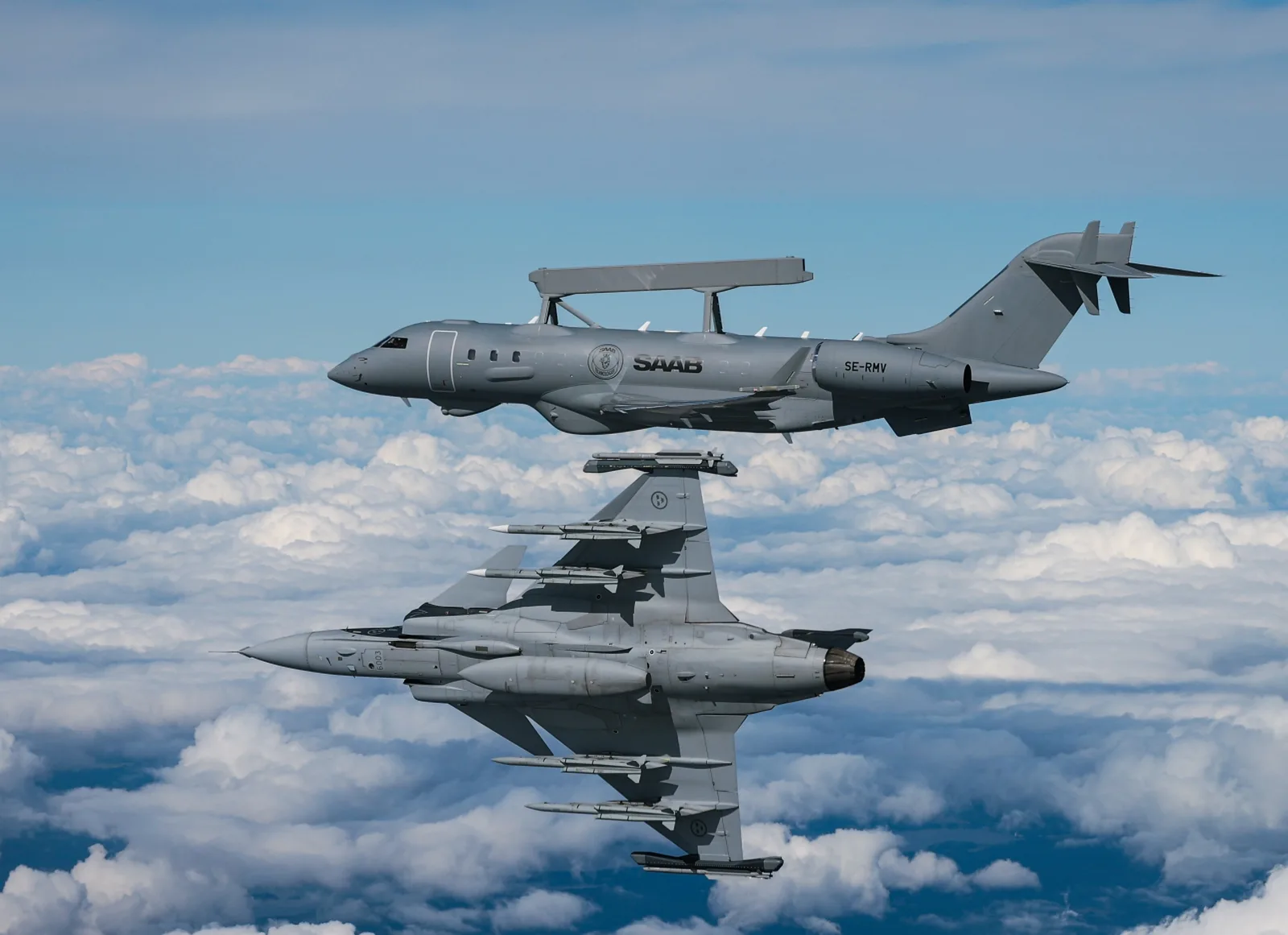
For Sweden, (and perhaps Canada?) compatibility with the Gripen E is a significant advantage. Many other NATO operators will be more interested in seamless integration with the F-35.
For Sweden, (and perhaps Canada?) compatibility with the Gripen E is a significant advantage. Many other NATO operators will be more interested in seamless integration with the F-35. (Saab)

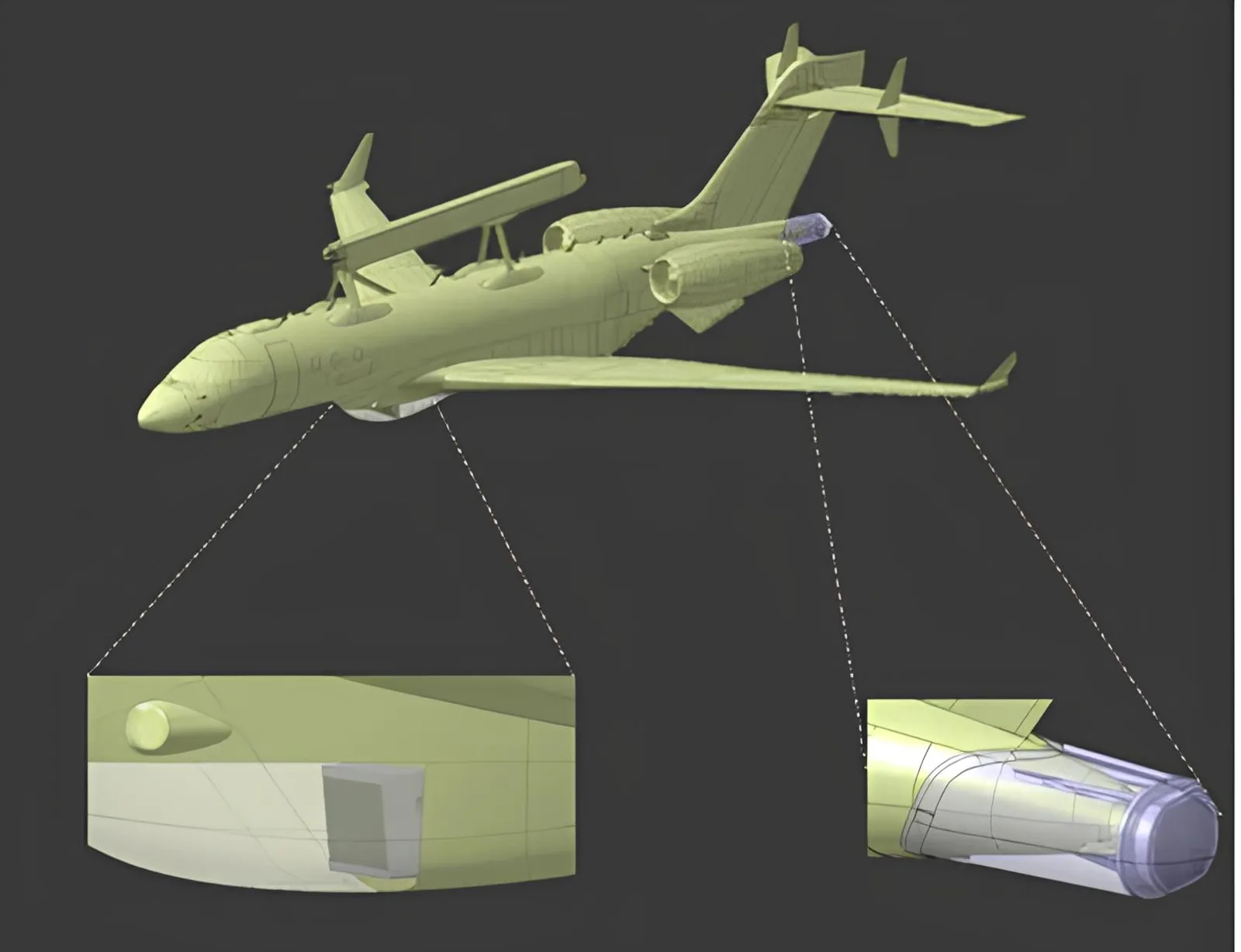
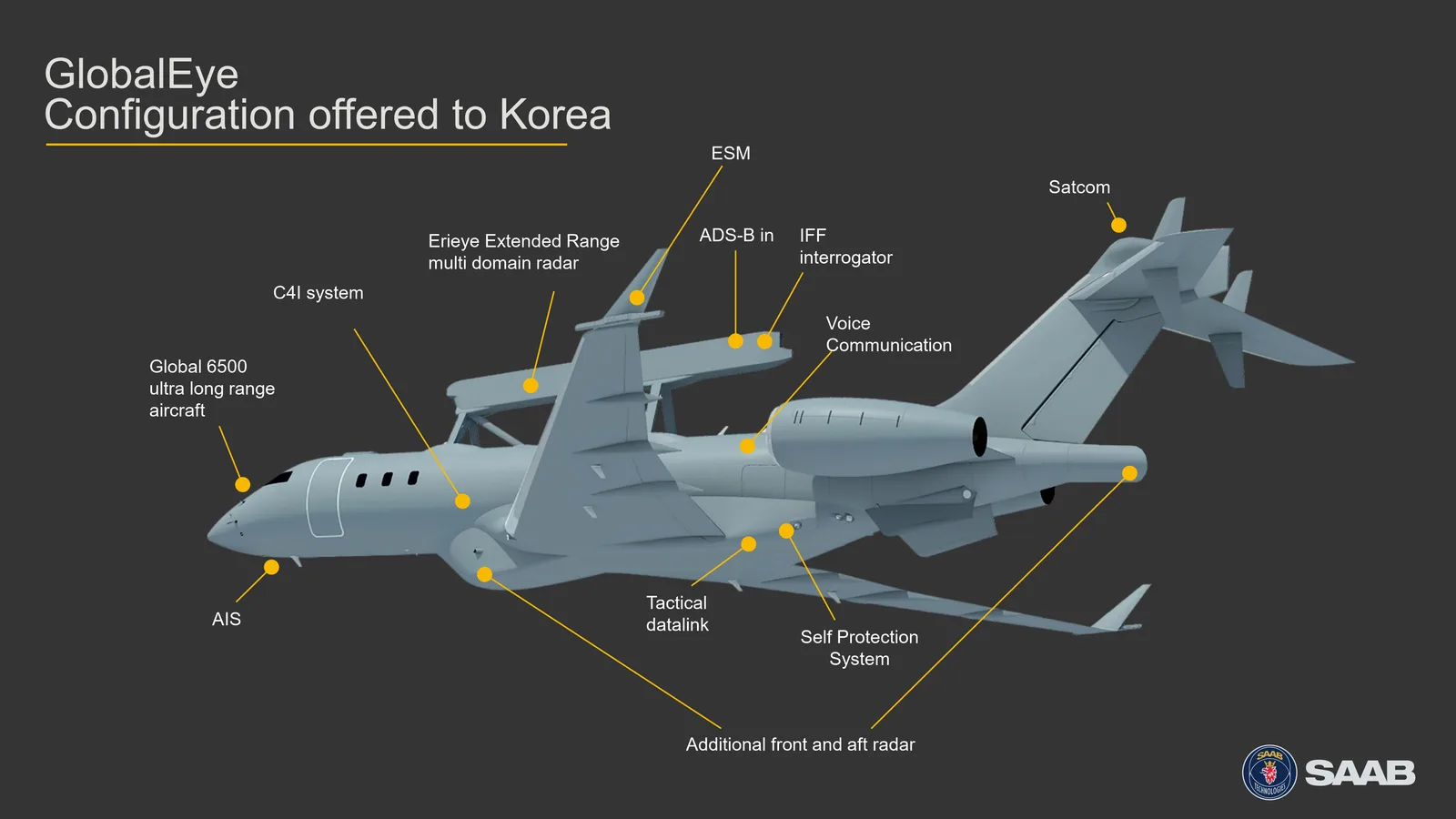
The proposed pooling agreement would imply that the Netherlands and Swedish GlobalEye aircraft will be delivered to the same standard, which is assumed to be closely analagous to the version delivered to the United Arab Emirates, with the Erieye ER AEW radar and a belly-mounted Leonardo Seaspray 7500 surface surveillance radar. This is perhaps surprising, as the ‘WatchEye’ configuration offered to South Korea, with additional fore-and-aft X-band radars to give a full 360° field of regard, might have been felt to be more closely aligned with Dutch and NATO requirements.

While the original SRSS GlobalEye configuration makes a great deal of sense for Sweden, many believe that the air-to-air optimised ‘WatchEye’ configuration may be more closely aligned with most NATO nations’ national requirements.
While the original SRSS GlobalEye configuration makes a great deal of sense for Sweden, many believe that the air-to-air optimised ‘WatchEye’ configuration may be more closely aligned with most NATO nations’ national requirements. (Saab)
The so-called ‘WatchEye’ configuration addresses one perceived GlobalEye weakness in that it addresses the original variant’s lack of a full 360° field of regard.
The so-called ‘WatchEye’ configuration addresses one perceived GlobalEye weakness in that it addresses the original variant’s lack of a full 360° field of regard. (Saab)

“The system will provide enhanced situational awareness and early warning capabilities across multiple domains, while also strengthening NATO’s ability to operate in an increasingly complex security environment,” Saab stated. “GlobalEye will enable the Netherlands to detect threats earlier, respond faster and strengthen both national and collective defence.”

The NATO and Crewed Airborne Early Warning initiative orders and expressions of interest could take GlobalEye production to almost 30 aircraft.
The NATO and Crewed Airborne Early Warning initiative orders and expressions of interest could take GlobalEye production to almost 30 aircraft. (Saab)

Share post

You may be interested in

Categories

All NewsAir

Used tags

airborne early warning and control (AEW&C)GlobalEyeNATOSaabsurviving E-3A Airborne Warning and Control System (AWACS)SwedenThe Netherlands

Similar posts