As the Trump Administration flails in trying to find an off-ramp for its war with Iran, its effects upon the US military’s strategic posture are coming home to roost.


As the Trump Administration flails in trying to find an off-ramp for its war with Iran, its effects upon the US military’s strategic posture are coming home to roost.

During an interview with Fox News on 13 August 2026 US Vice President J D Vance stated that the Trump Administration’s war aims regarding Iran were now twofold.
“Goal number one: keep oil and gasoline cheap for Americans all over our country. And then, obviously, goal number two is ensure that Iran never gets a nuclear weapon,” said Vance.
That ‘goal number one’ is effectively returning the situation in the Strait of Hormuz to how it was before US President Donald Trump launched Operation ‘Epic Fury’ against Iran in the first place is a major political embarrassment in Washington, DC. Beyond the US capital, however, Trump’s ill-advised war is having major consequences for US service personnel and is significantly compromising the US military’s strategic posture in other parts of the world, most notably the Asia-Pacific region.
From 7 July, as the result of a temporary truce in the Iran conflict, the US Defense Casualty Analysis System (DCAS) stopped attributing killed and wounded US service personnel to Operation ‘Epic Fury’, the total casualty count of which is thus now frozen at 14 deaths (seven of which were due to hostile action) and 417 wounded (all of which were due to hostile action).
Since 7 July, however, under the category ‘Overseas Operations’, the DCAS has listed another four US service personnel killed in action and 279 wounded in action as of 11 August, bringing the conflict’s total casualty count to 18 killed and 696 wounded.
Meanwhile, the strains on US personnel that ongoing operations in relation to Iran are causing are starting to become clear.
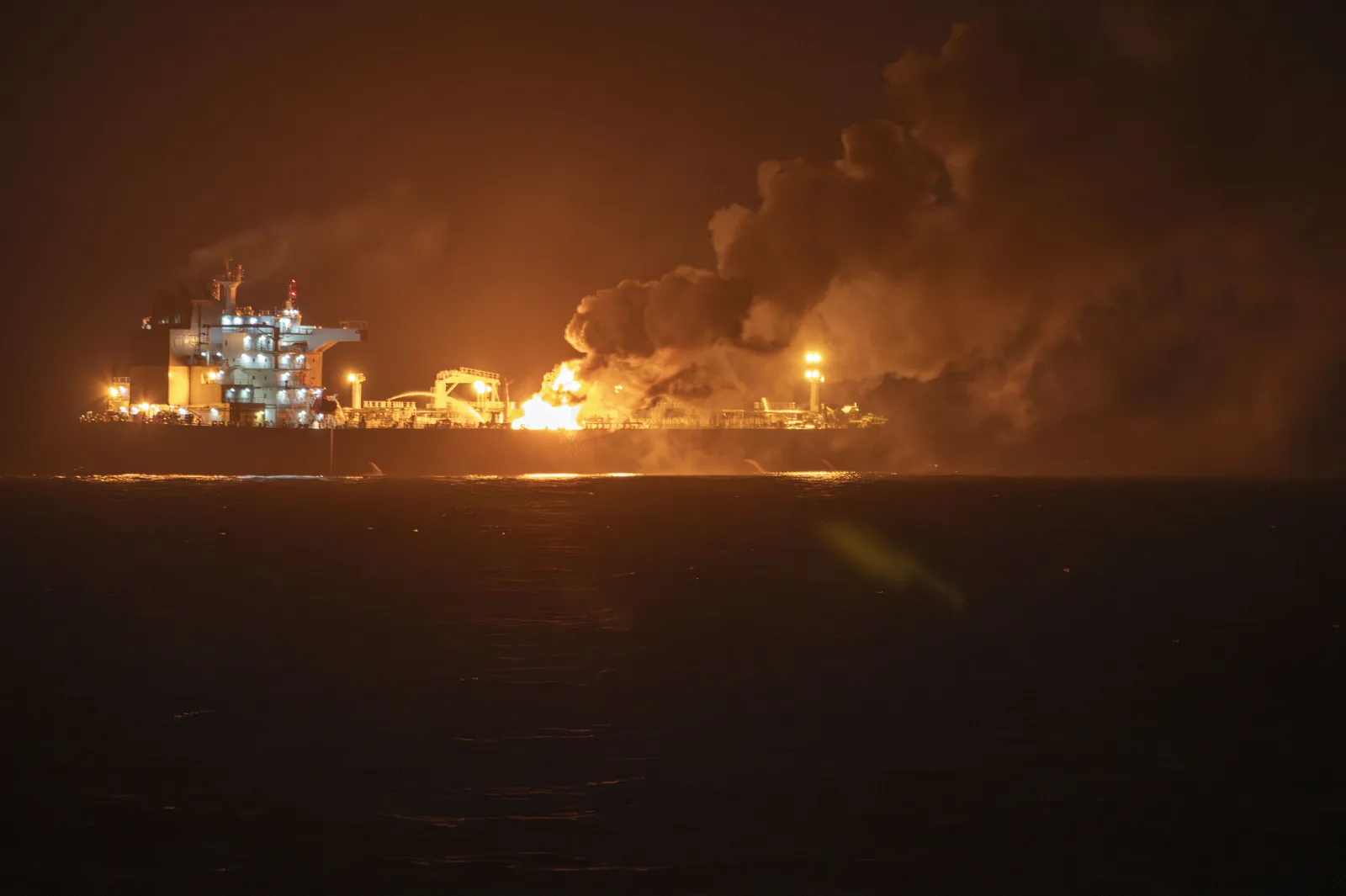
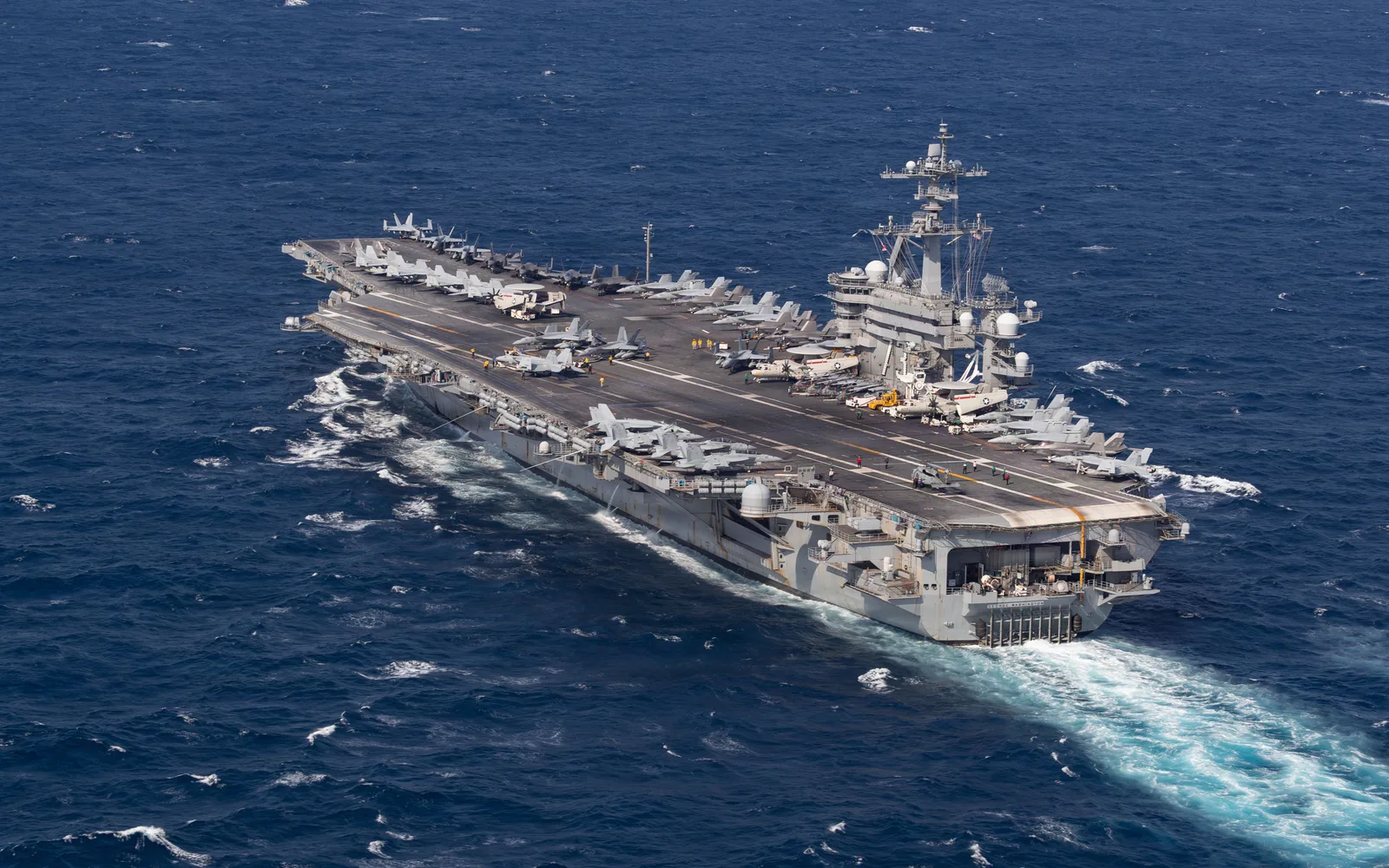
As first reported by The Wall Street Journal on 13 August, the US Navy (USN) has directed the forward-deployed Nimitz-class aircraft carrier USS George Washington to the Arabian Sea to replace another Nimitz-class carrier, USS Abraham Lincoln following increasing reports of hardship on board that carrier.
Deployed in November 2025 and sent to the Middle East in January ahead of the US/Israeli military operations against Iran, USS Abraham Lincoln has had its mission extended twice as the on again/off again conflict has dragged on and, as of 17 August, has been at sea for 269 days with only two brief port visits (US carriers normally deploy for six or seven months and can usually expect port visits every 30 to 45 days; while the deployment of USS Abraham Lincoln is not the longest for a US carrier, it broke a record by spending more than 200 consecutive days at sea).
While reports first emerged in April of food shortages on board USS Abraham Lincoln, from the beginning of August there was an increasing drumbeat of reports detailing a deterioration of morale and mental health on board the ship amid worsening living conditions. Citing reports from service families, Military Times on 12 August cited multiple instances of sailors from the carrier either jumping overboard or making an attempt to do so.
On 16 August CNN’s Pamela Brown, having embarked on USS Abraham Lincoln for three days from 7 July, filed a reality check on the conditions on board and the state of the crew. Allowed by the USN to walk relatively freely around the ship for the most part, Brown talked to both officers and enlisted rating among the ship’s roughly 5,000-strong crew. She confirmed there had been a dearth of fresh food for many months, with crew reporting they had lost weight, although that had eased once Brown had boarded thanks to a brief port visit to Oman. Brown also confirmed some of the other reported hardships, such as the presence of black mold and backed up toilets, yet she also confirmed a resilience among the crew to remain professional and do their job, while a number of them noted that, unlike their previous deployments, this time they had Wi-Fi (which probably amplified the messages of hardship reaching their families back home).
Most tellingly, however, Brown’s reporting revealing that a fundamental source of discontent among the crew was how the main mission their deployment had continually shifted and extended.
One sailor messaged Brown as follows: “The main reason this deployment is so worse is because we were not supposed to come out here and fight a war.… At first when we learned that we would be doing combat operations it was intended to be a two-week thing, but unfortunately that became a seven-month thing.… They told us it was to help Iranian protesters, then they told us we are out here to denuclearise Iran, now it’s to support a blockade. The purpose of even doing this is inconsistent…. This is a big let-down with consistent extensions that affect our loved ones, who have their lives on hold until we return.”
The reality is that, while the Trump Administration has flailed around to find a conclusion to its self-imposed war and struggled to put a positive spin on its conduct, US service personnel like the crew of USS Abraham Lincoln have been on the butt-end of that vacillation.
Furthermore, there has been nothing but dismissals of any problems from US Defense Secretary Pete Hegseth and callous disregard from President Trump.
Asked by reporters at Joint Base Andrew on 14 August whether the nine-month, record-setting deployment of USS Abraham Lincoln was excessive, Trump replied, “No, no, no. Not nearly long enough,” while denying that family members of the ship’s crew had expressed any concern over the conditions on board.
A major detrimental effect of the Iran war has been the diminution of US missile stocks, which by the beginning of August had become some of a crisis. According to a report by the Washington Post, US Deputy Secretary of Defense Steve Feinberg had written to US defence primes on 5 August urging them to “drive significantly faster, more aggressive delivery schedules and/or increased production for critical capabilities”, adding that “Years-long development cycles are not acceptable” and that “We must dramatically accelerate our program schedules and expand our production capacity now.”
Having already shown that weakness, the relieving of USS Abraham Lincoln by the USN’s only forward-deployed aircraft carrier has only exacerbated the situation.
USS George Washington is homeported in Yokosuka, Japan, and serves as potent symbol of US military power in the Asia-Pacific region. Prior to being redirected to relive USS Abraham Lincoln, USS George Washington had been operating in the South China Sea and had recently completed a port visit to Da Nang in Vietnam. The carrier re-assignment to the Arabian Sea now means there is no US aircraft carrier in the Asia-Pacific for the first time in decades.
In an interview with liberal US news channel MS NOW on 15 August, Democratic Congressman Seth Moulton of Massachusetts, a member of the House Armed Services Committee and a US Marine Corps combat veteran, was heavily critical both of the Iran war in general and the situation that has forced USS George Washington to replace USS Abraham Lincoln.
“The George Washington is coming from another station to relieve this ship. This administration clearly had no plan going into the war and no clue how to get out of it,” said Moulton, adding, “Our soldiers, sailors, airmen, and marines can do extraordinary things in horrific conditions, but it really helps if you believe in the mission. It really helps. When I was a platoon commander on the ground in Iraq, one of the toughest questions I ever got, in my life, was, ‘Sir, why are we risking our lives for this?’ And that’s got to be a question that a lot of sailors aboard the Abraham Lincoln are asking today.”
Moulton went on to address the danger of appearing off-guard and militarily weak in the Asia-Pacific to China.
“The single biggest risk to the entire world is that China starts a war over Taiwan, that they start a war because they think we’re distracted somewhere else and it literally turns into World War III,” Moulton warned.
“We don’t know how emboldened China might be, or how other adversaries around the world might be, but this is a dream come true for [Chinese President] Xi Jinping: that we’re tied down in another war in the Middle East, that we’ve expended all of our munitions, that troop morale is sagging.
“If the American public says ‘Enough is enough’, this is an invitation for conflict elsewhere. The number one job our troops ever do every single day is not fight wars, but prevent them, deter them from happening, and they’re being distracted from their mission by this stupid war in the Middle East.”
As if the US military posture in the Asia-Pacific has not been compromised enough, on 16 August Trump took to his Truth Social media channel to announce the US will “substantially reduce” its presence in joint military exercises with South Korea, which began on 17 August.
Apparently still smarting from South Korea’s refusal to be drawn into the Iran conflict – a war plan on which no US ally beyond co-belligerent Israel was consulted – Trump stated, “These exercises are not only costly, with much of these costs paid for by the United States of America (as usual!), but send a signal that is totally inappropriate and hostile.”
Asserting that North Korea “has been unthreatening and respectful” while he has been in the White House – ignoring the fact that North Korea resumed its ballistic missile testing activities on 6 August – Trump stated, “Therefore, and based on the fact that it is too late to cancel, I have instructed Secretary of War, Pete Hegseth, to substantially reduce the Joint Military Exercises!”
The irony of Trump appeasing one autocratic, nuclear-armed, internationally destabilising regime while simultaneously being at war with another regime because it aspires to be nuclear armed was presumably lost on the US president.
The US 2025 National Security Strategy, published on 4 December 2025, announced that the United States “will assert and enforce a ‘Trump Corollary’ to the Monroe Doctrine, referring to the US 19th Century foreign policy initiative that opposed European colonialism in the Western Hemisphere and effectively claimed US jurisdiction over the Americas. This strategy, which has since been dubbed the ‘Donroe Doctrine’, flies in the face of decades of US foreign policy – including the ‘Pivot to Asia policy announced by US President Barrack Obama on 17 November 2011 – that identified China as the most significant long-term threat to the US in particular and the Western-oriented democratic world in general.