At Eurosatory 2026, ST Engineering showcased their solution for allowing multiple different types of unmanned platforms communicate with one another and operate as part of a unified network.


At Eurosatory 2026, ST Engineering showcased their solution for allowing multiple different types of unmanned platforms communicate with one another and operate as part of a unified network.

At Eurosatory 2026, ST Engineering provided Warsight with an in-depth briefing into their new MUMTOS (Manned-Unmanned Operating System), a means of operating a network of unmanned platforms of different types.
Kam Yean Kong, Head of International Business, Training & Simulation Systems at ST Engineering, explained the core logic behind MUMTOS’ creation:
“What if you have many unmanned [platforms] and you have many men, and they’re all dispersed to do a mission, how do you then command this mission? Do you call every man and say, ‘Okay, I want you to bring the unmanned [platform] to do this.’ It’s very difficult, right? So…how can we solve this challenge of fragmented and siloed control? Because every system you buy from a different company, different vendors, don’t talk to one another, right? So, you have to control your UGV [unmanned ground vehicle], or control a UAV [unmanned aerial vehicle], and someone controls a USV [unmanned surface vehicle]. That’s a big problem to solve, right?”
Kong explained that MUMTOS aims to unify command and control (C2) over multiple different unmanned platform types – UGVs, UAVs, USVs – by integrating them into the same shared network. To achieve this, MUMTOS comprises three primary components:

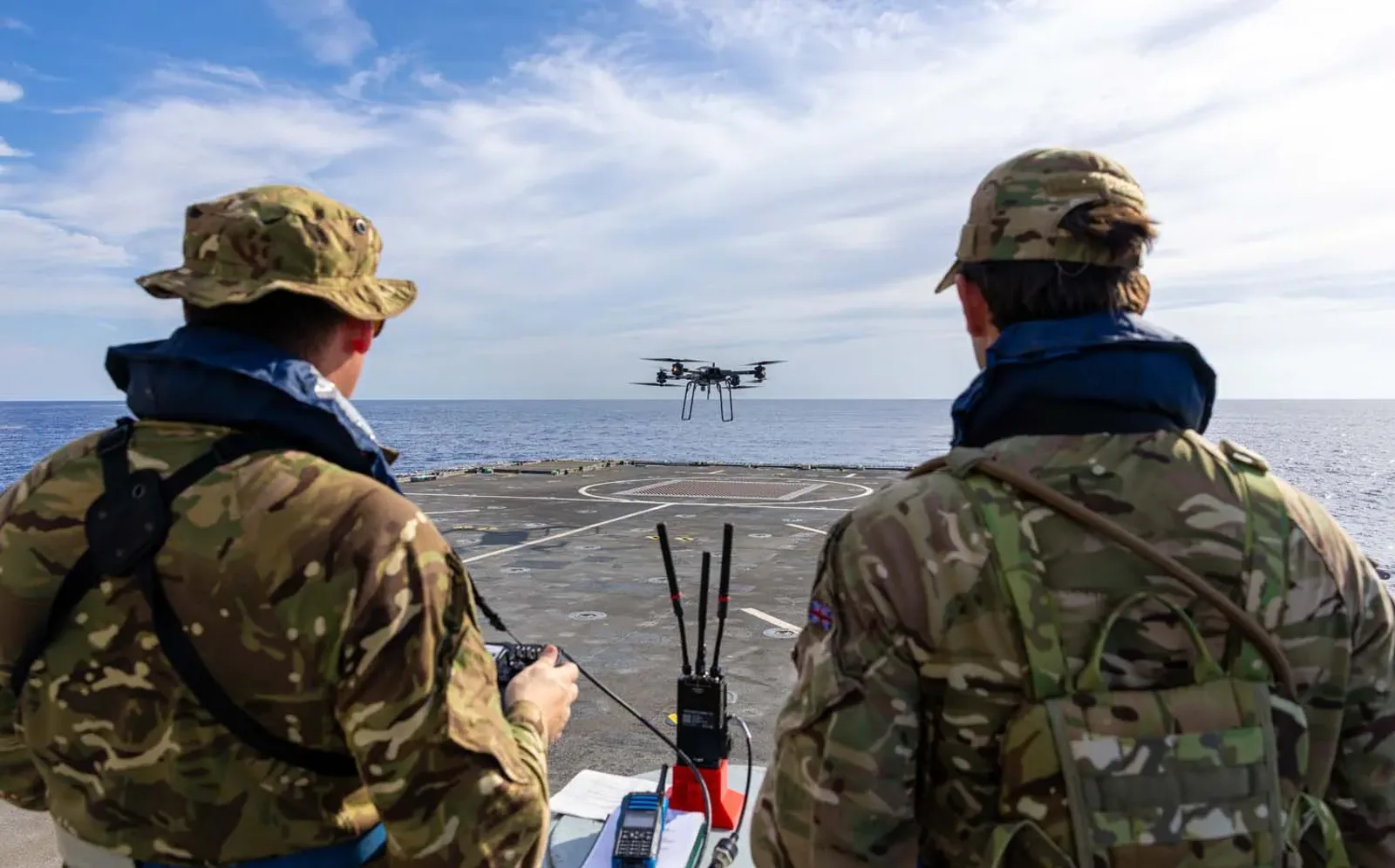
Kong explained how all of these components connect together, “The hardware actually connects to all the unmanned systems, and this could be a USV boat, a UAV in the sky, or UGV on the ground, [each] from [a] different company. Then how do I connect and talk and interface with each of these? We have an edge compute [solution], we add edge compute in each of the systems, and [it] therefore now controls the unmanned system.”
“How big is this edge compute? It can be a box that you add onto the [platform], very light payload, or in fact we can actually just use the card if we can actually open the system and put it in”, he added, “The box talks back to the communication layer here, and then the communication layer talks to the hub. The hub is where you sit on your command post, so you control the whole system. And this whole communication system is encrypted, cyber protected, and with this system, from the command post, you can then reach out to your front end edge or the unmanned system, and you can monitor even CCTV view, whatever sensor [is] out there.”
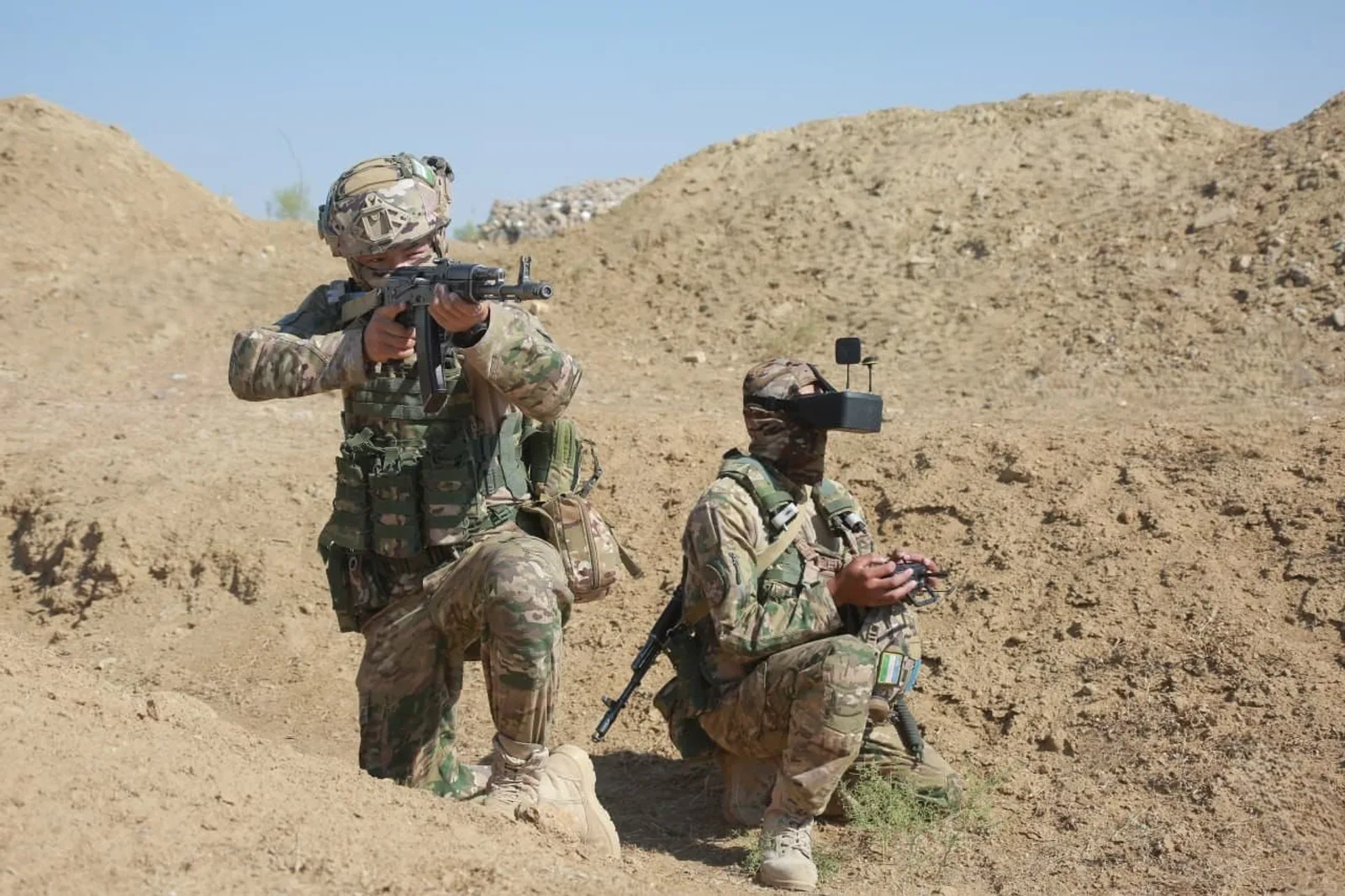
This setup allows a single operator to command multiple different unmanned assets via a graphical user interface complemented by an inbuilt artificial intelligence (AI) interface, with text and voice chat functionality and sensor fusion.
Explaining the integration process using their edge compute module, Kong said, “there are certain standards we work on, like for example, in our property today with ROS2, many unmanned systems use the same robotic operating system, and with that, we can integrate. Of course, there are some people who have their own proprietary system. Then we will create API, a bit of system innovation, and we say we will put this box [to] connect to you, still we use the box and go into the system, and we can control all the way.”
Kong also added that opting for an edge compute solution can provide additional resilience in case the connection to the vehicle is lost, noting, “Edge compute means when I download the mission to [the box], even though when the connection is gone, the unmanned [platform] can carry on with the mission that’s given.”
“In terms of comms, the comms layer can be a data link layer 5G, which we also provide, [a] private 5G network. Of course, software-defined radios are also another means of doing this,” Kong said.
Responding to a question on how far MUMTOS has been scaled, Kong replied , “we have tried maybe up to 50, we haven’t set the upper limit, but I think usually you have a limit of a command, you won’t command 1,000, right?”

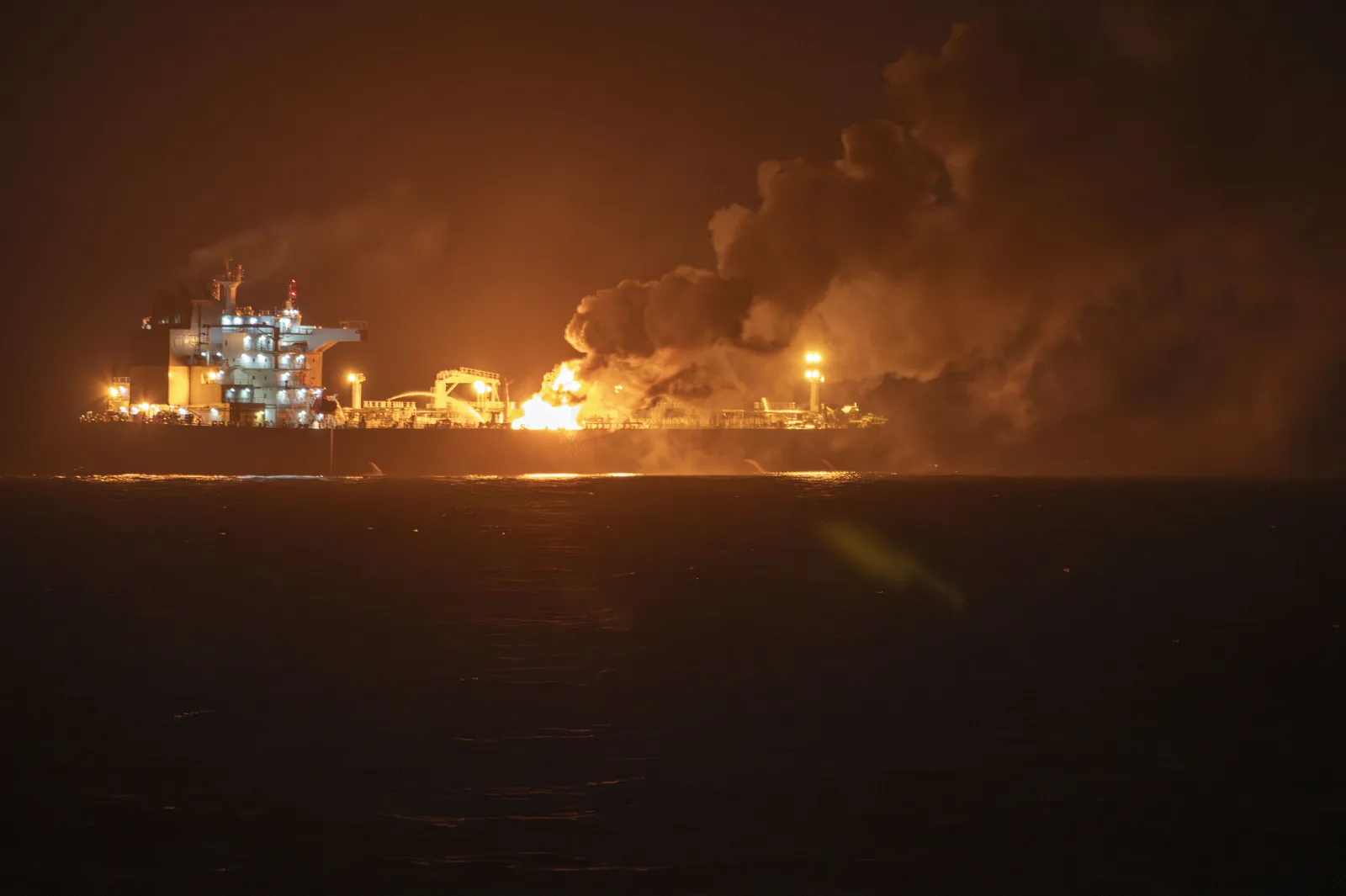
ST Engineering demonstrated a pre-planned scenario of safeguarding a petrochemical plant on an island. In the scenario, a USV was used to follow a suspicious vessel, with surveillance handed over to a UAV once the vessel reached shore and the passengers disembarked, and a suspicious drone was launched. The UAV followed and continued to surveil the intruders, while the commander launched another UAV to counter the suspicious UAV. A UGV was also present in the facility in case the intruders took steps to evade the surveillance UAV. All of these different unmanned assets were being controlled from the same user interface, with the operator able to switch between sensor feeds and issue commands to individual platforms.
With regards to users, Kong did not disclose the launch customer, but simply said “We have orders coming in, and we’ll deploy it quite soon.”