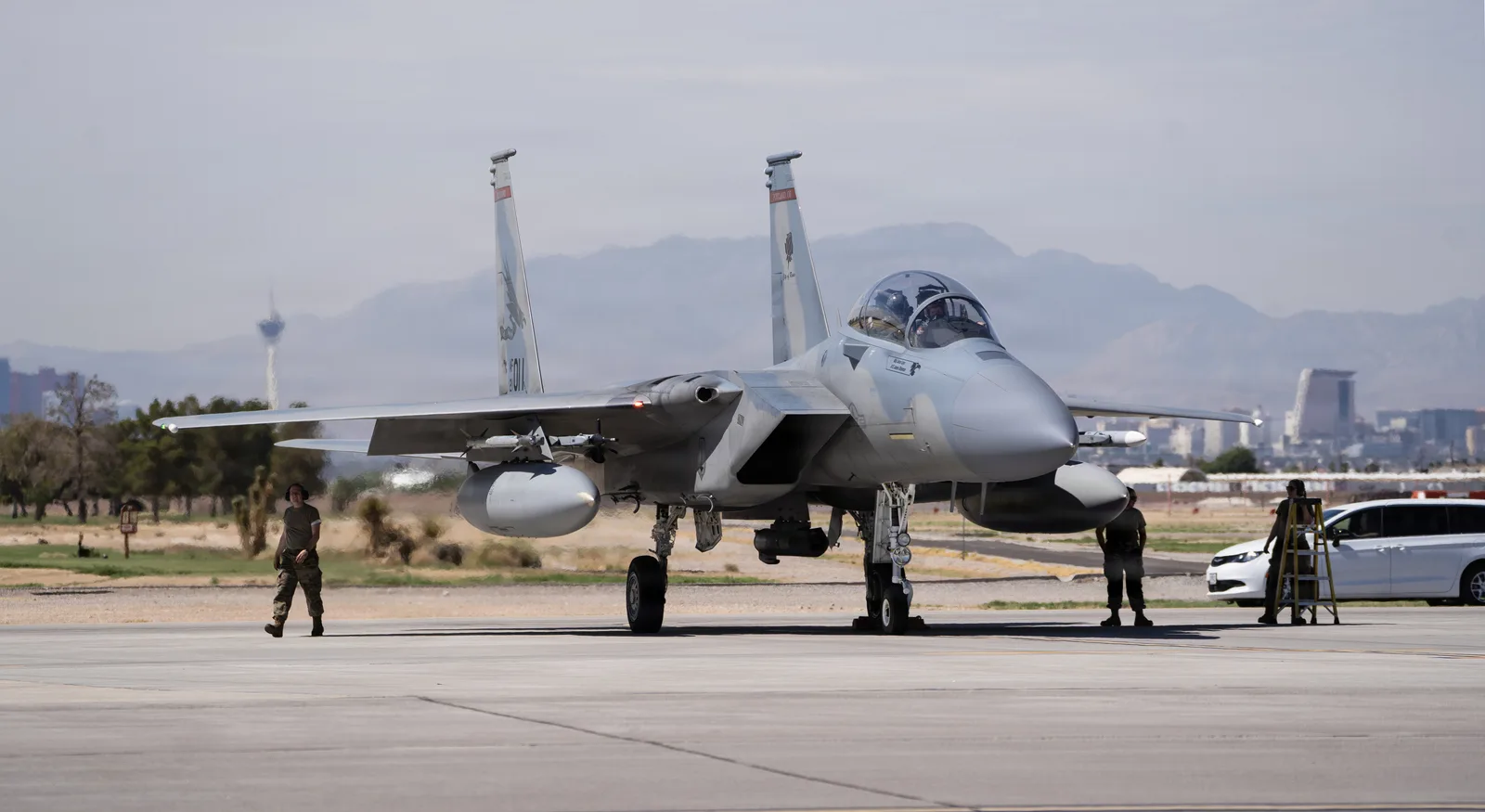
The US Government Accountability Office has found that a combination of delays, unplanned maintenance work and shortages of workers are keeping USAF aircraft in deep maintenance for longer. The result is that these aircraft are not deployed with their frontline squadrons and therefore unable to fulfil operational readiness requirements.
Combat readiness of USAF squadrons reduced by maintenance delays
Depot-level maintenance for the US Air Force’s (USAF’s) aircraft fleets is carried out at three sites: Ogden Air Logistics Complex (ALC) at Hill AFB, Utah; Oklahoma City ALC at Tinker AFB, Oklahoma; and Warner Robins ALC at Robins AFB, Georgia. This maintenance includes the inspection, repair, overhaul or modification to aircraft systems and subassemblies and requires specialist equipment and tools that are supported by highly trained technicians and engineers. These organisations are overseen by Air Force Material Command (AFMC) and its Air Force Sustainment Center (AFSC) subunit.
All three ALCs are fundamental in rebuilding the USAF’s readiness following two decades of conflict, but they are facing a number of challenges supporting an ageing aircraft fleet, such as the availability of spares for older platforms such as the KC-135 Stratotanker, C-5 Galaxy and B-52 Stratofortress.
In its recent report to the Congressional Armed Services Committee and the Defense Committee on Appropriations, Actions Needed to Address Depot Maintenance Delays and Staffing Challenges, the US Government Accountability Office (GAO) says that depot maintenance delays “have increased considerably since fiscal year 2019” for both planned and unplanned maintenance work. The GAO said that, in capturing data for its report, it found inconsistent reporting methods and different metric collation processes across the ALCs as well as other issues concerning staff shortages and training.
Fudged figures
Using data from 2014-19, the GAO said that 31% of aircraft were delayed with respect to their original target date completion. By 2024, this delay had risen to 73%. Although concerning, the major reasons behind the delays are caused when additional problems are found during the planned maintenance procedures that need to be rectified. This results in the creation of a ‘revised target’ and this figure is then used instead of the original target completion date. Another practice that was highlighted in the report was that “depots and program offices [would] often revise targets after the maintenance has been completed, which enables them to revise the target to match the actual number of days it took to complete maintenance”. Oklahoma City ALC was cited for its prevalence in using this tactic.
This Kafkaesque approach to reporting data does not hide the fact that unplanned maintenance work is becoming worse as aircraft continue to age. The worst offenders in terms of the number of days delayed include the C-5, where 83% of the fleet were delayed by a median of 376 days as opposed to 36% of C-130s being delayed by 148 days.
One example featured in the report concerned an F-15 at Warner Robins ALC that was programmed to be at the site for 152 days that “actually took more than three years to complete the maintenance”. The major issue here was the removal of a defective longeron and the time taken to obtain and fit a new one. Once completed, the ALC revised the target to match the actual number of days it took to complete the maintenance and therefore the aircraft was not officially delayed.
The GAO identified that there was also inconsistency in reporting data between the three ALCs as well as over time as new commanders had changing ‘leadership perspectives’. In other words, data was being shaped to match leadership expectations. Another shortcoming was identified in the delay tracking system and, in particular, the Root Cause options contained in the computer-based form that must be completed for each aircraft when it leaves the ALC. ALC staff have seven options to select in defining the cause of the delay: Personnel, Policy/Procedure, Material, Facilities, Supervisor/Management, Equipment, and Weather. The GAO said that these causes were ‘open ended’ and not specific and therefore did not help in providing any meaningful input into quantitative analysis.
Interestingly, the major cause of delays was identified as personnel, which was cited 19,514 times between 2021 and 2024. This was followed closely by Policy & Procedure, which was selected 14,990 times, and issues with material, cited 13,683 times.
Personnel issues
Between them, ALCs employ nearly 22,500 personnel and are staffed at 90% or higher, although there are shortages in some roles. These shortages have been exacerbated by the Federal hiring freeze of early 2025 as well as the Deferred Resignation Program (DRP) that has been designed to reduce civilian manning levels across the US Department of War (DoW). According to the Air Force Sustainment Center, 619 employees have left across the three ALCs under the terms of the DRP.
Personnel shortages involve aircraft engineers, machinists, electricians, sheet metal workers and IT personnel. The GAO said that another factor was “the private sector’s ability to offer higher pay [and] bonuses”. Oklahoma City and Warner Robins ALCs also reported that some private-sector companies were offering hiring bonuses “that range from USD25,000 to USD50,000 [EUR 21,500 to EUR 43,000] for experienced mechanics”.
In an effort to address shortages of airframe and powerplant ‘certified workers’ the USAF has instigated a number of initiatives with schools and colleges located near ALCs. These include educational partnerships, internships and targeted recruitment drives. The latter includes a focus on former military personnel.
Conclusion
There is no doubt that data has been misrepresented by the ALCs over the years and that these inaccuracies, particularly changing ‘target dates’, have generated false perceptions as to the efficiency of the USAF’s deep level maintenance.
In its recommendations to the DoW the GAO states that the ALC organisation “uses the original target completion date as a primary metric for reporting on depot maintenance timelines” and that AFMC lists separately issues such as “unplanned work”. Together this data should be used to conduct regular quantitative analysis processes “to address common issues across the depots”.
As far as staff shortages are concerned, the GAO recommends raising salary levels to match commercial contractors but, as the US shipbuilding industry has shown, this is not a problem that can be solely addressed by attracting specialist workers if those specialists are not being trained in the first place.

Share post