At MSPO 2026, WB Group unveiled two new loitering munition designs, the low-observable Warmate 30, and the X-wing Warmate 8X. Here’s what we know so far.


At MSPO 2026, WB Group unveiled two new loitering munition designs, the low-observable Warmate 30, and the X-wing Warmate 8X. Here’s what we know so far.
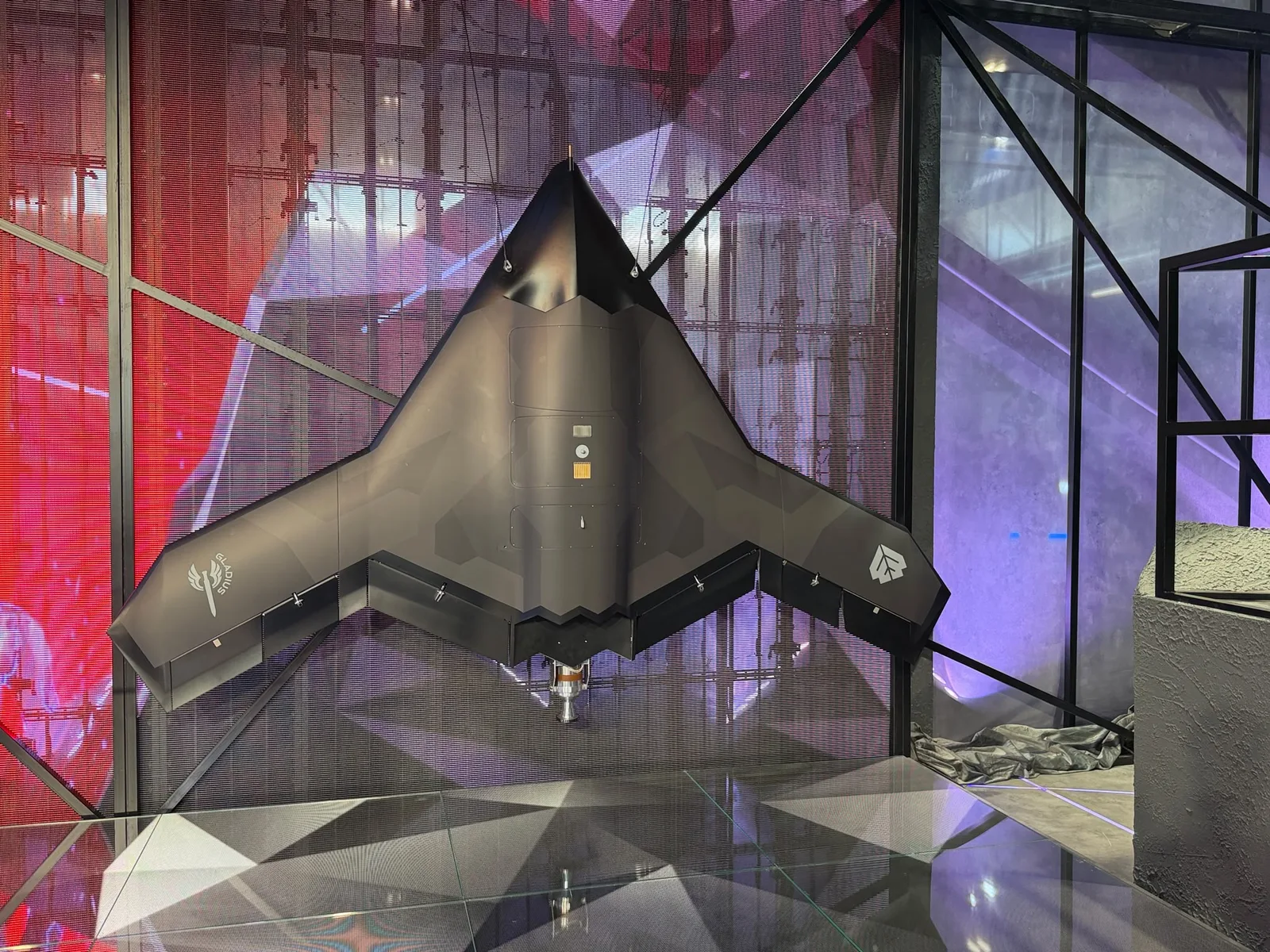
On 8 September 2026, at the MSPO 2026 exhibition in Kielce, Poland, WB Group unveiled two new loitering munitions, the Warmate 30 and the Warmate 8X. Both build upon WB Group’s existing unmanned reconnaissance-strike ecosystem in different ways.
Warmate 30 is a larger, heavier, and longer-range loitering munition intended to operate as part of WB Group’s Gladius 2 launch system. Unlike prior members of the Warmate family, which have used electric propellers, Warmate 30 is powered by a turbojet engine, with a rocket booster for launch assistance. According to the manufacturer can be readied for launch in under 5 minutes.
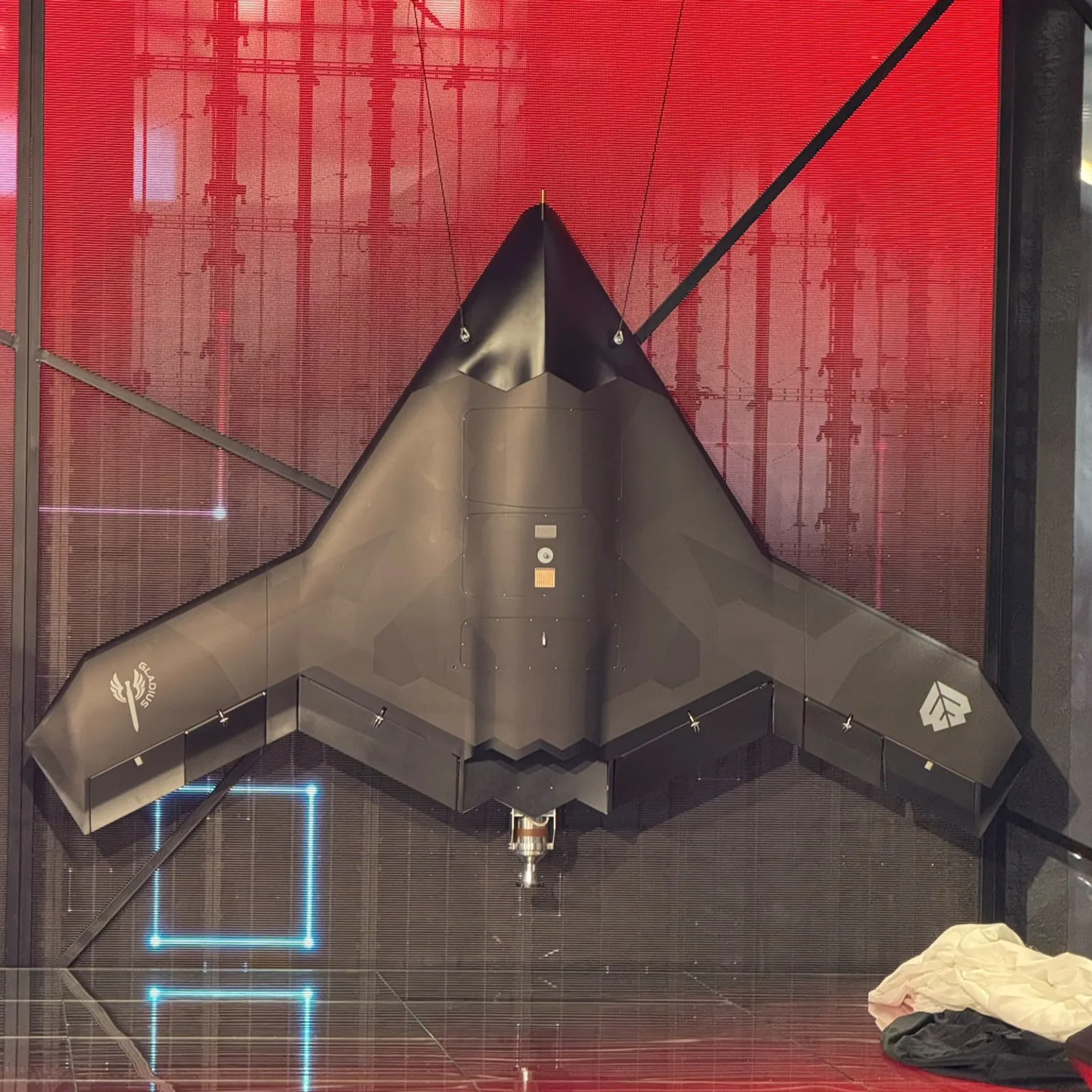
WB Group disclosed a vague max speed figure of >150 km/h for Warmate 30, but this is assessed as probably significantly under-reporting its capabilities by a factor of two or three. As the battlefields of Ukraine have shown, jet-powered munitions have often been capable of attaining significantly higher speeds in the range of 350-600 km/h. Added to which, some of the propeller-powered entries in the Warmate family are already capable of reaching around 150 km/h.
The manufacturer advertises a radio line of sight (RLOS) range of up to 250 km, putting targets at operational depths within its range. While the manufacturer did not disclose range extension, the possibility of signal relay via friendly drone, or an autonomous operating mode would not be entirely surprising in this case, considering both are in-house capabilities for its manufacturer.
Warmate 30 is already advertised as being fully integrated with WB Group’s Topaz battle management system (BMS), and its brochure lists compatibility with the FT-5 reconnaissance UAV, waypoint navigation and an autonomous attack mode among its capabilities. While the latter was not expounded upon in detail, WB Group offers its EyeQ Air machine vision software for automatic detection and classification of military objects from the air. Its inclusion here would thus make sense. Autonomous targeting seems to be the direction of travel for loitering munitions in general, notably becoming increasingly common in Ukraine.
As the name suggests, Warmate 30 carries a 30 kg warhead, with two interchangeable natures available: a high explosive dual purpose (HEDP) – effectively a high explosive anti-tank (HEAT) warhead with a fragmentation sleeve; and a thermobaric warhead. The size and types of warhead offered make the weapon suited to engaging targets such as buildings or fortified positions, or insufficiently-dispersed vehicles.
In terms of external appearance, Warmate 30 follows a tailless ‘cranked lambda’ flying wing planform, with an top-mounted engine and sawtooth patterns on intake and exhaust. These are well-known examples of low-observable design, marking the first time the company has pursued such a direction for a loitering munition.
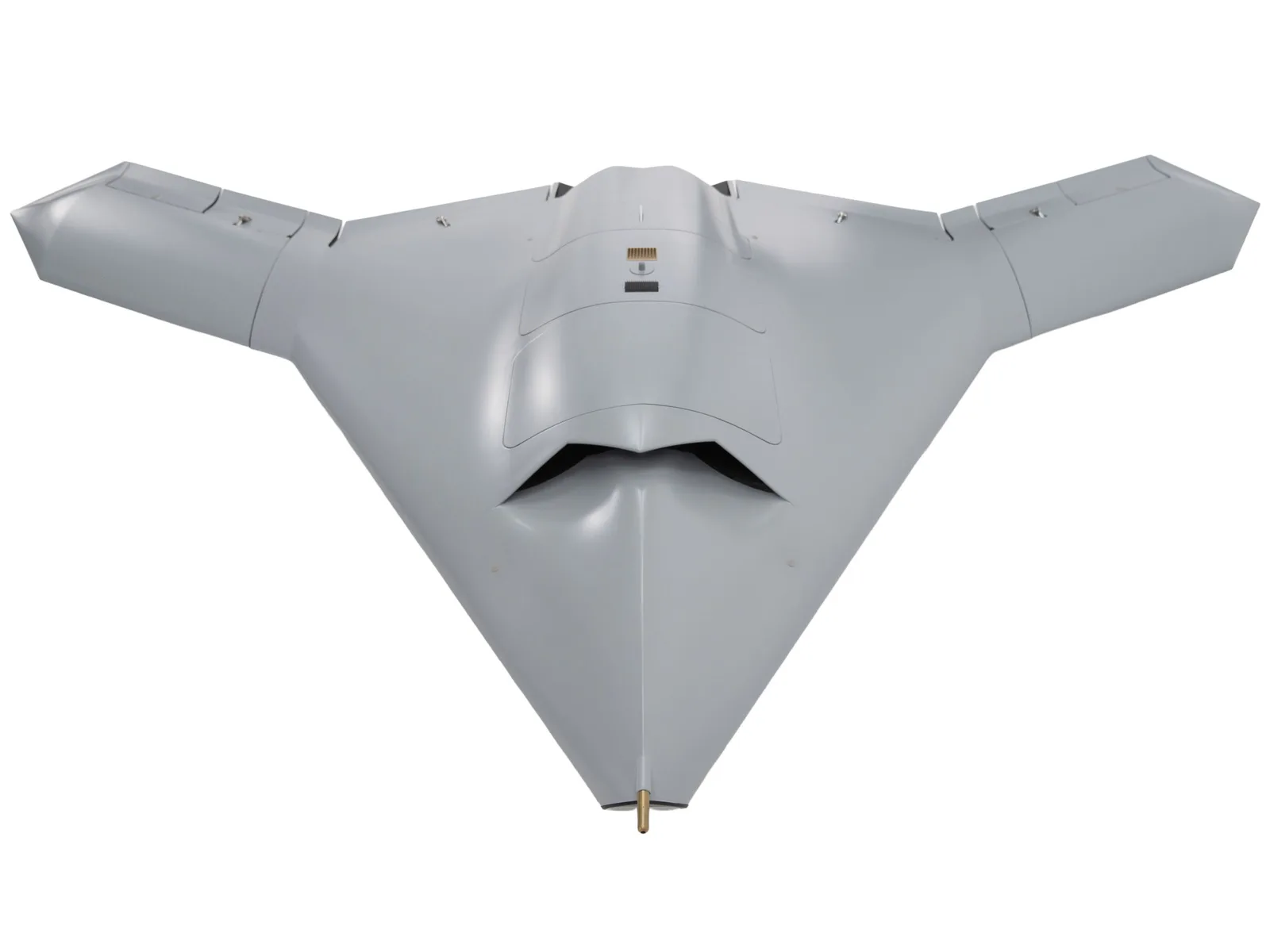
At the same time, there were examples of some less-stealthy features. Examples included a fairly flat surface inset into the nose, behind which an optoelectronic camera presumably sits, along with what appeared to be a pitot tube mounted directly above it. Additionally, on the top side of the craft, exposed actuators for the control surfaces were visible, along with a line where the wings are joined to the main body of the craft.
In a new fighter or bomber aircraft, those would be notable faults, but this thinking applies less to a circa 100 kg loitering munition. Making aircraft stealthy tends to be an expensive endeavour, and trying to eke out further gains can quickly run into diminishing returns, especially for a disposable asset. Put simply, a medium-sized loitering munition like Warmate 30 doesn’t need to be perfectly stealthy, it just needs to be stealthy enough to be fairly likely to reach its target while being cost-competitive enough to use at scale.
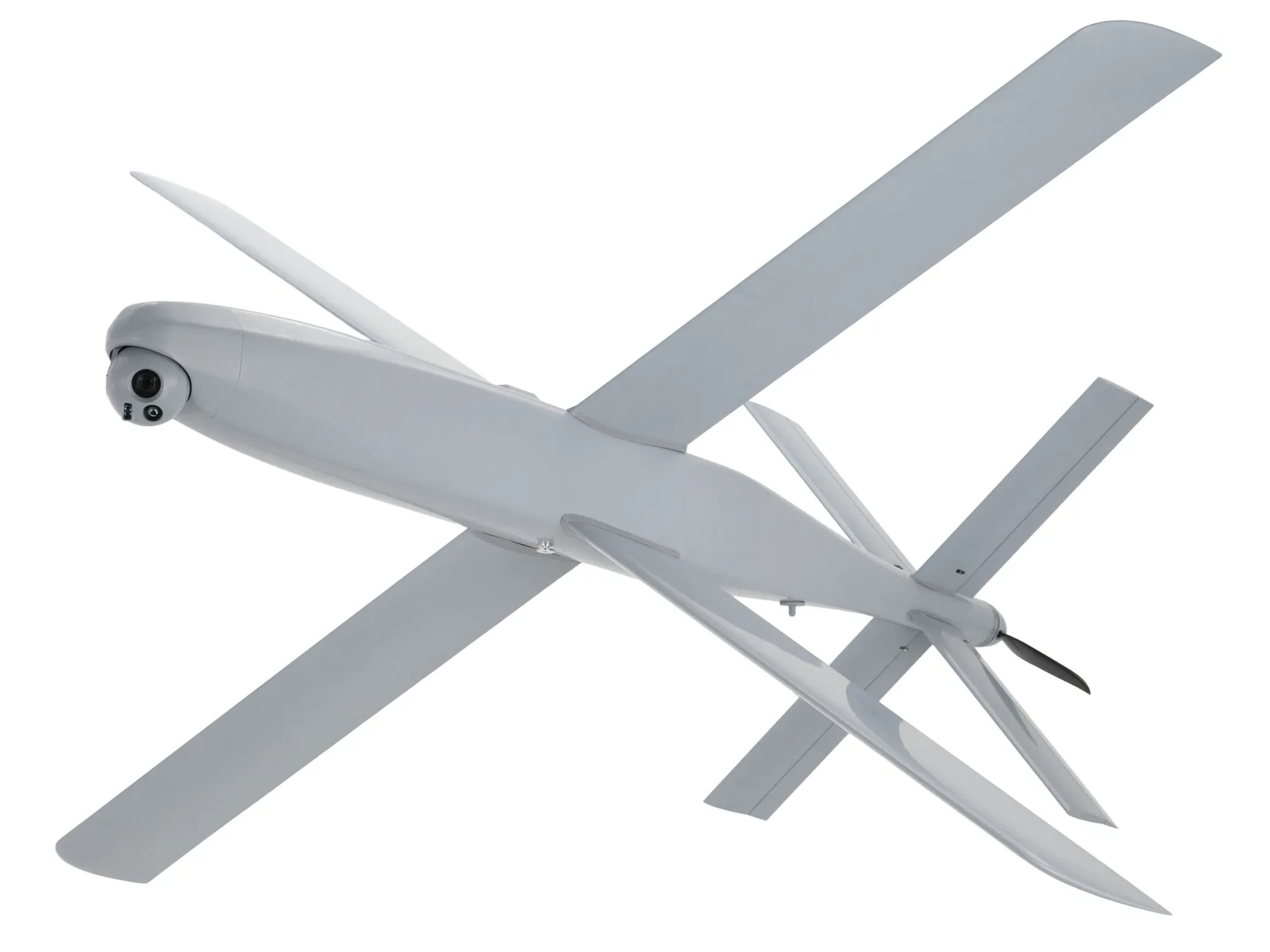
Alongside the heavier Warmate 30, WB group also introduced the lighter (circa 40 kg) Warmate 8X loitering munition for engaging targets at tactical-to-low operational depths, with its listed RLOS of 120 km. As in the case of the Warmate 30, a higher true range is considered plausible.
In terms of external appearance, the Warmate 8X follows a cruciform X-wing configuration for two sets of wings, with the rear set hosting the control surfaces. According to the manufacturer, it can operate at angles of attack (AOA) of >30°. As with the majority of the Warmate family, the Warmate 8X is propelled via an electrically powered pusher prop.
The X-wing design has been a fairly common design for loitering munitions, with examples from the past decade including Yugoimport’s ALAS and RALAS, the Aerovironment HERO family, and perhaps most well-known being Russia’s ZALA Lancet family.
The Warmate 8X is armed with an 8 kg warhead, with three natures available: HEAT, high explosive fragmentation (HE-Frag), and thermobaric. These provide sufficient flexibility to engage armoured and soft-skinned vehicles, infantry in the open, and smaller fortified positions.
Unlike all other members of the Warmate family (with one exception in the reconnaissance-oriented Warmate TL-R), the Warmate 8X is provided with a gimballed optoelectronic camera system instead of a forward-facing camera. This enables it to survey its surroundings more effectively, and maintain a view on target while circling.
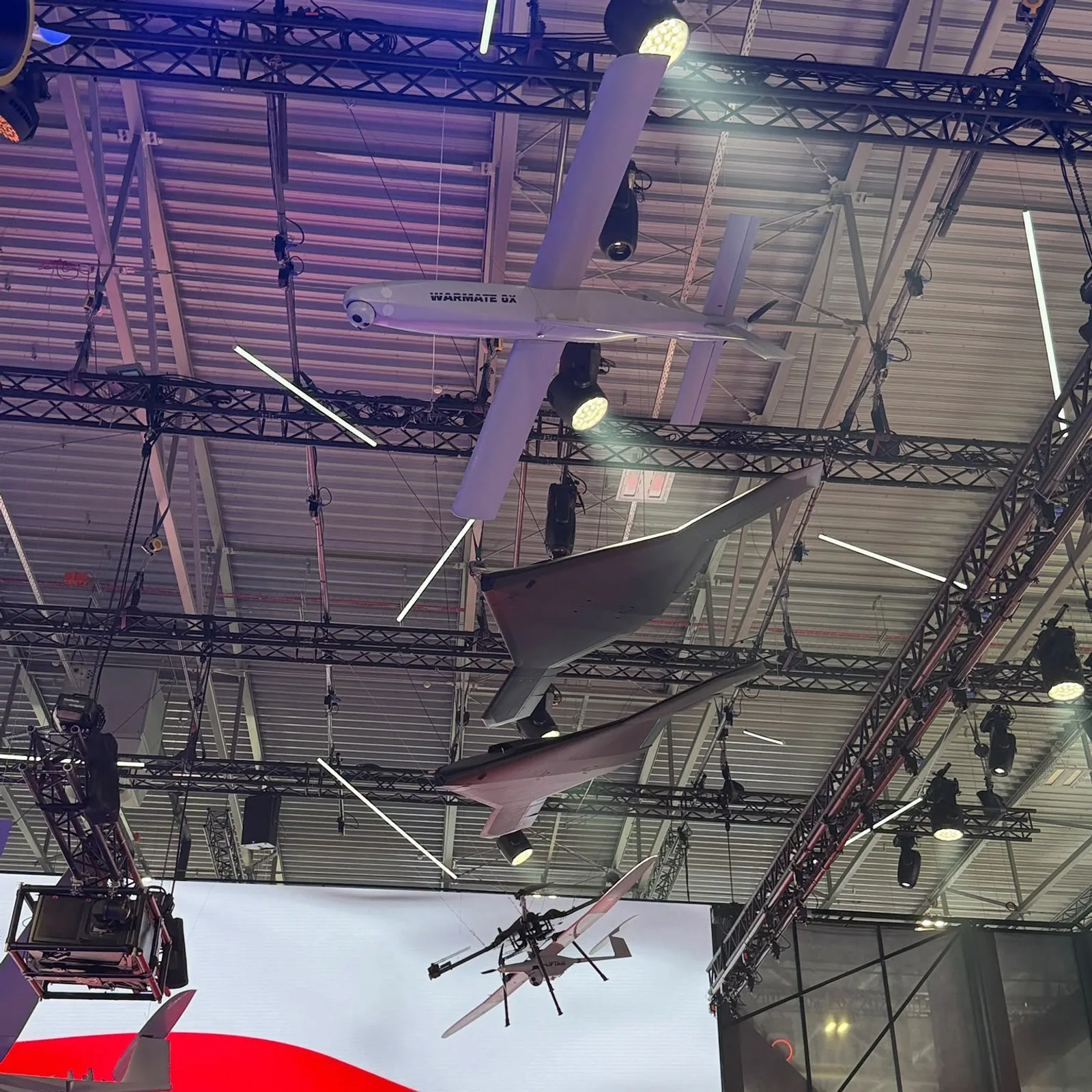
The Warmate 8X is integrated with the Topaz BMS, and is listed as being compatible with the Flyeye series of reconnaissance drones, as well as being capable of flying in a formation with other munitions. According to the manufacturer, the munition is also capable of waypoint navigation and autonomous attack modes.
Known specifications for Warmate 30 and Warmate 8X are summarised in Table 1.
| Table 1: Warmate 30 and 8X specifications | ||
| Model: | Warmate 30 | Warmate 8X |
| Warhead weight: | 30 kg | 8 kg |
| Warhead natures: | HEDP;
Thermobaric |
HEAT HE-Frag Thermobaric |
| Maximum take-off weight: | ~100 kg | ~40 kg |
| Flight endurance: | ≥1 hour | ≥1 hour |
| Radio line of sight: | ~250 km | ~120 km |
| Operational altitudes: | 500–1,500 m above ground level | 100–1,000 m above ground level |
| Max. Altitude: | 5,000 m above mean sea level | 3,500 m above mean sea level |
| Cruising speed: | >150 km/h | ~150 km/h |
| Propulsion method: | Turbojet, with rocket-assisted take-off | Pusher prop (electric) |