On the face of it the UK has a powerful, reasonably sized navy with some advanced capabilities, including two modern aircraft carriers, six nuclear-powered hunter-killer submarines (SSNs) with another in build and four nuclear-powered ballistic missile submarines (SSBNs), one of which is always at sea, ready to unleash armageddon if called upon. The reality, however, is less impressive than raw numbers might suggest.
Will Hazell, writing in the i Paper, quoted unnamed “military experts” as saying that the Royal Navy (RN) was in a “doom loop”, with a shrinking fleet in which too few ships were being worked too hard. This has led to a spiral of higher maintenance demands and declining serviceability, as well as a retention crisis among sailors.
Liberal Democrat MP and House of Commons Defence Committee member Mike Martin also used the ‘doom loop’ phrase. “If you have a tiny navy, and you’re fragging the ships the whole time, paradoxically the amount of time they have to spend in maintenance goes up,” he noted. “We’re in a doom loop now where we’re having to spend more time getting them sea ready because they’re spending so much time at sea.”
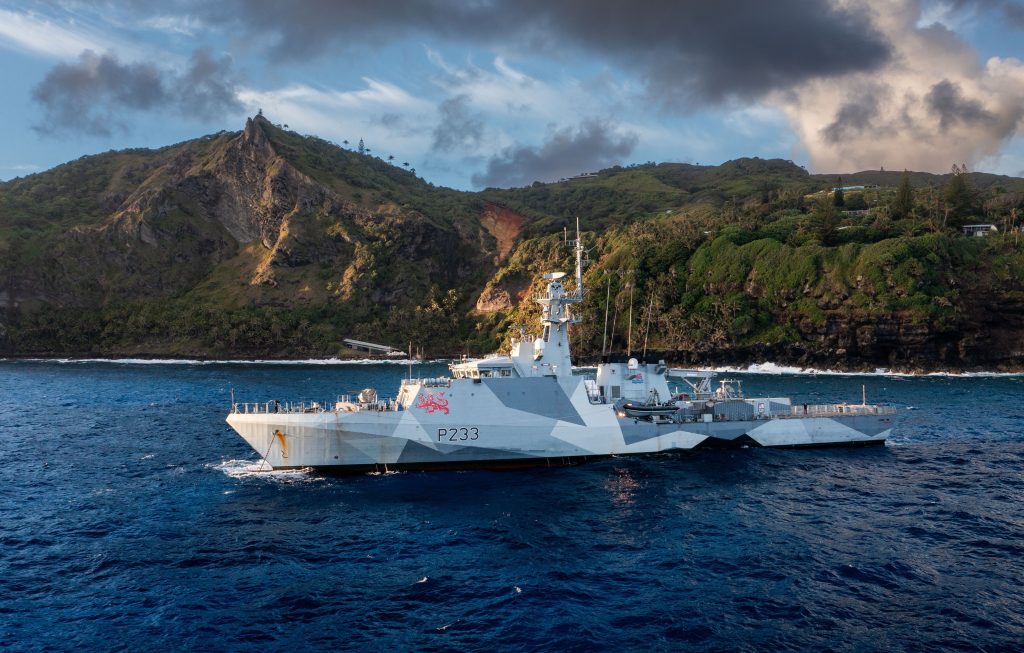
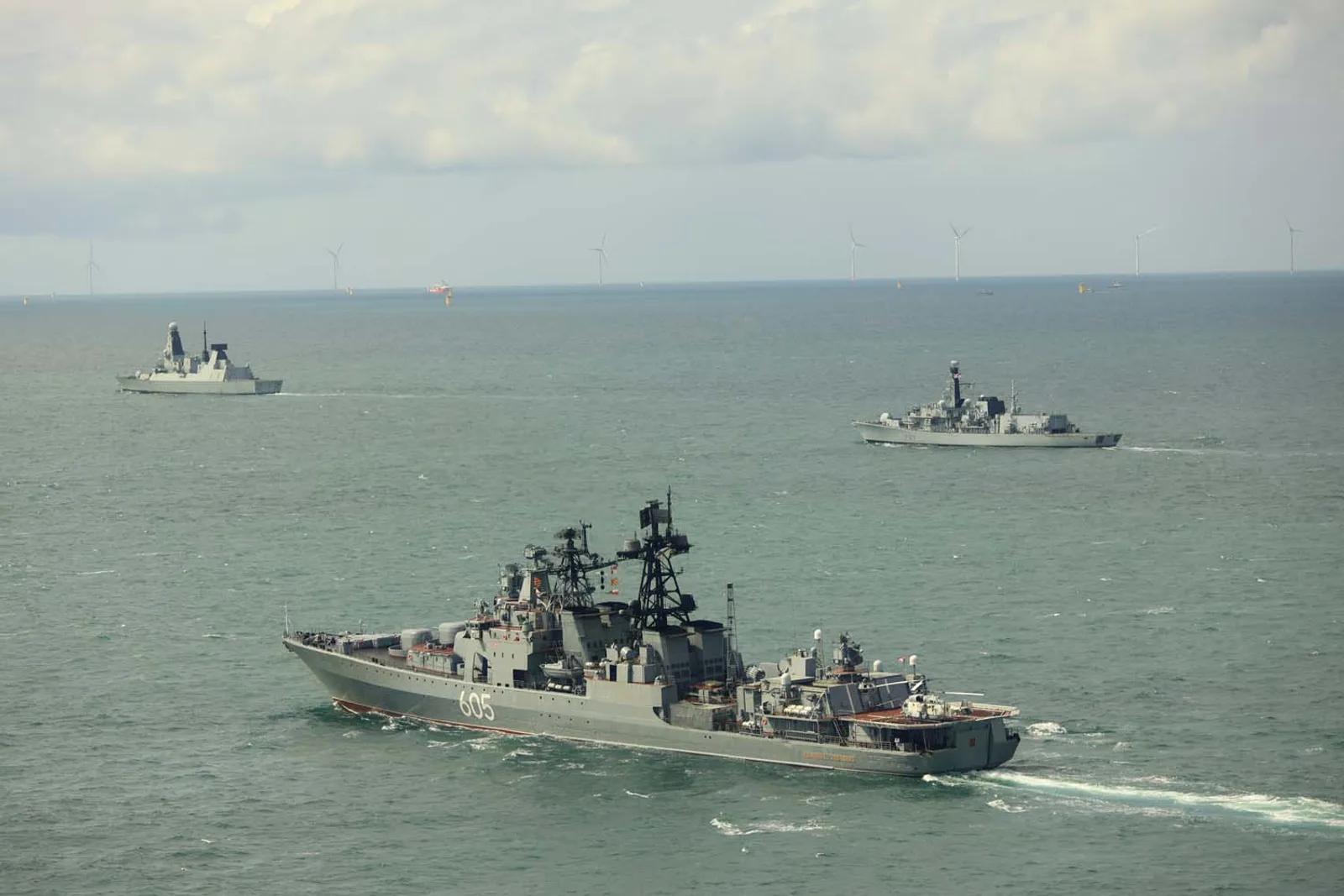
The result of this has been that, by March 2026, the RN had fewer than four escort vessels (frigates and destroyers) of 13 available for use and relied on its eight River-class offshore patrol vessels (OPVs), seven of which were operational, for routine taskings.
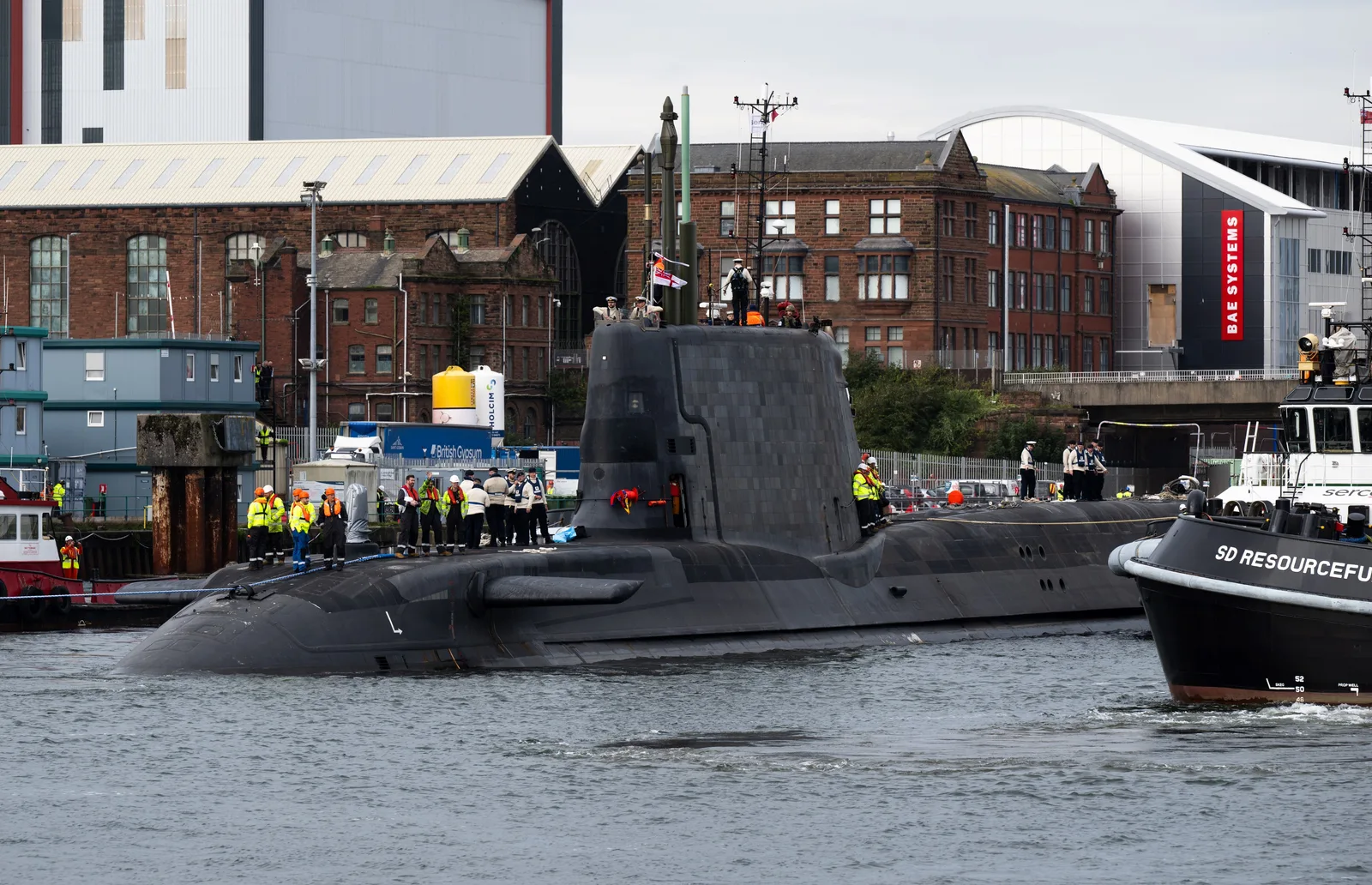
Things are just as bad for the submarine fleet. Only six of the seven Astute-class SSNs have been commissioned, with each new boat in the class taking longer to build and deliver than the first. HMS Agamemnon is still undergoing trials, but of the remainder, only HMS Anson is operational. Open-source intelligence force level tracking accounts generally avoid detailing the status of the Trident-missile-carrying Vanguard-class SSBNs, but serviceability has regularly forced the RN to extend patrols by the ‘duty SSBN’. The Vanguard-class boat that is currently maintaining the UK’s continuous at sea nuclear deterrent (CASD) has now been on patrol for more than six months. The normal duration is three!
Poor serviceability and manpower shortages have been exacerbated by the navy’s emphasis on regenerating its capability to meet NATO commitments in the North Atlantic by 2029. This, it is said, has necessitated cutting back the capacity for undertaking global operations. The current crisis in the Mediterranean and Gulf has exposed this capability gap.
A fleet under strain
When the decision was taken to deploy a Type 45 destroyer to the Eastern Mediterranean after the United States and Israel launched Operation ‘Epic Fury’ against Iran, the only vessel available was HMS Dragon, which had been due to serve as the flagship of Standing NATO Maritime Group 1 (SNMG1) and was replaced in this role by the German air-defence frigate FGS Sachsen. The French Navy, meanwhile, had already dispatched a flotilla of 11 ships, including a carrier, to the region.
On 3 March 2026 British Prime Minister Keir Starmer announced that HMS Dragon would be deployed to the Eastern Mediterranean to reinforce security around RAF Akrotiri on the island of Cyprus. HMS Dragon departed Portsmouth on 10 March 2026 and, after some days working up in the Channel, arrived at Gibraltar seven days later on 17 March. On 24 March the RN finally announced that HMS Dragon was “now in the Eastern Med to begin operational integration into Cyprus’s defences”.
The three-week delay in getting a ship into theatre was widely criticised, although it was reported that six weeks’ worth of work had been completed in six days to prepare for HMS Dragon’s deployment. This rapid preparation resulted in the Type 45 destroyer having to make for Souda Bay on Crete for repairs on 7 April after suffering a water system failure. The UK Ministry of Defence described this as a “routine logistics stop and a short maintenance period”.
Lord West, a former head of the RN and now a Labour peer, stated, “The Royal Navy has got to a really quite parlous state” and observed that “to have found ourselves as the war opened up in Iran with not a single Royal Navy warship between Gibraltar and Singapore was quite extraordinary”. West has accused “top civil servants across Whitehall and also senior government ministers” of no longer understanding “the key geostrategic importance of maritime power”.
Tan Dhesi, the Labour chairman of the House of Commons Defence Select Committee, noted that: “Many will have felt embarrassed at the beginning of the US-Iran war at the UK’s inability to deploy a single ship swiftly to the region.”
James Fennell MBE, a UK-based international peace and security expert, wrote a paper for the US-based Center for European Policy Analysis (CEPA), the title of which was ‘The Royal Navy: On Course for National Embarrassment.’
“The UK has accepted it no longer rules the waves,” Fennel wrote. “But the dismal condition of its fleet has caused national shock.”
On Monday 30 March 2026 the Swedish newspaper Svenska Dagbladet reported that General Sir Gwyn Jenkins, the First Sea Lord and commander of the RN, had told its reporter, “According to the defence investigation that was completed last year, I will be ready for war by the end of this decade.”
Gen Jenkins reportedly stated, “I would say that we can conduct advanced operations right now and if we were told to go to war, of course, we would. That is my military duty. But are we as ready as we should be? I don’t think we are. We have work to do, and I am completely dedicated to the mission.”
Another scolding from Trump
Svenska Dagbladet reported that Gen Jenkins had said that other NATO allies were also falling behind in the rush to be ready for war.
The RN’s difficulties did not go unnoticed across the Atlantic.
On 26 March 2026, during a televised speech before a cabinet meeting in the White House, US President Donald Trump said: “We had the UK say – this is three weeks ago – ‘We’ll send our aircraft carriers’, which aren’t the best aircraft carriers, by the way. They’re toys compared to what we have. But ‘We’ll send our aircraft carrier when the war is over’. I said, ‘Oh that’s wonderful, thank you very much. Don’t bother. We don’t need it.” Trump subsequently told The Daily Telegraph of the UK, “You don’t even have a navy. You’re too old and had aircraft carriers that didn’t work.”
A few days later US Secretary of War Pete Hegseth, told a press conference that Trump had said, “There are countries around the world who ought to be prepared to step up on this critical waterway as well. It’s not just the United States Navy. Last time I checked there was supposed to be a big, bad Royal Navy that could be prepared to do things like that as well.”
The RN’s future fleet
While many charge that the RN has been cut ‘beyond the bone’ since the end of the Cold War (when the UK had 51 destroyers and frigates), there are ambitious plans to rebuild the force. This will be, according to the UK’s 2025 Strategic Defence Review, a “more powerful but cheaper and simpler fleet” focused on building warfighting readiness against a growing threat from Russia and in particular on securing an ‘Atlantic Bastion’ in the North Atlantic to deny passage by enemy warships and submarines. The RN will also be tasked with protecting critical undersea infrastructure, including cables and pipelines.
In order to achieve this there will be a shift towards a ‘high/low’ mix of platforms and systems, including the introduction of autonomous uncrewed surface and subsurface vessels. At the high end of the mix, there are plans to upgrade the Queen Elizabeth-class carriers to enable them to operate with a mix of crewed and autonomous uncrewed platforms, forming so-called ‘hybrid’ air wings.
There are also plans to recapitalise the surface escort fleet with new ‘cutting-edge warships’. These include eight Type 26 frigates being built by BAE Systems in Glasgow and five Type 31 frigates from Babcock’s Rosyth yard. These are currently in production and due to join the Royal Navy fleet from 2027-28, providing a significant uplift in surface fleet capability.
A number of Type 26 frigate build slots currently allocated to the RN are being assessed for potential transfer to Norway, though Defence Minister Luke Pollard has said that the RN’s own programme total would not be reduced. “The Royal Navy will receive all eight Type 26 ships during the late 2020s and 2030s as planned,” he has promised.
There are plans for replacing the Type 45 class with the Type 83 Future Air Dominance System (FADS), but these are less well advanced.
The Strategic Defence Review committed to continuing the Dreadnought-class programme to build four new SSBNs to replace the Vanguard class and also to build up to 12 AUKUS SSNs.
The new force structure is unlikely to match earlier outline plans to increase the escort fleet to more than 20 frigates and destroyers, let alone to satisfy Lord West’s stated desire for “something like 30 destroyers and frigates and about 15 attack submarines”.
Probably the greatest threat to the future RN is posed by a maximalist ‘global vision’ shared by some senior officers, who may bridle at the RN being expected to limit its more global ambitions. This could easily lead to significant pressure on a constrained budget, as it has in the past.