Two core NATO programmes, AUWB-MN and Task Force X – Arctic, will combine in 2027 to demonstrate how an integrated C2 architecture will enable crewed/uncrewed platform collaboration in underwater operations.

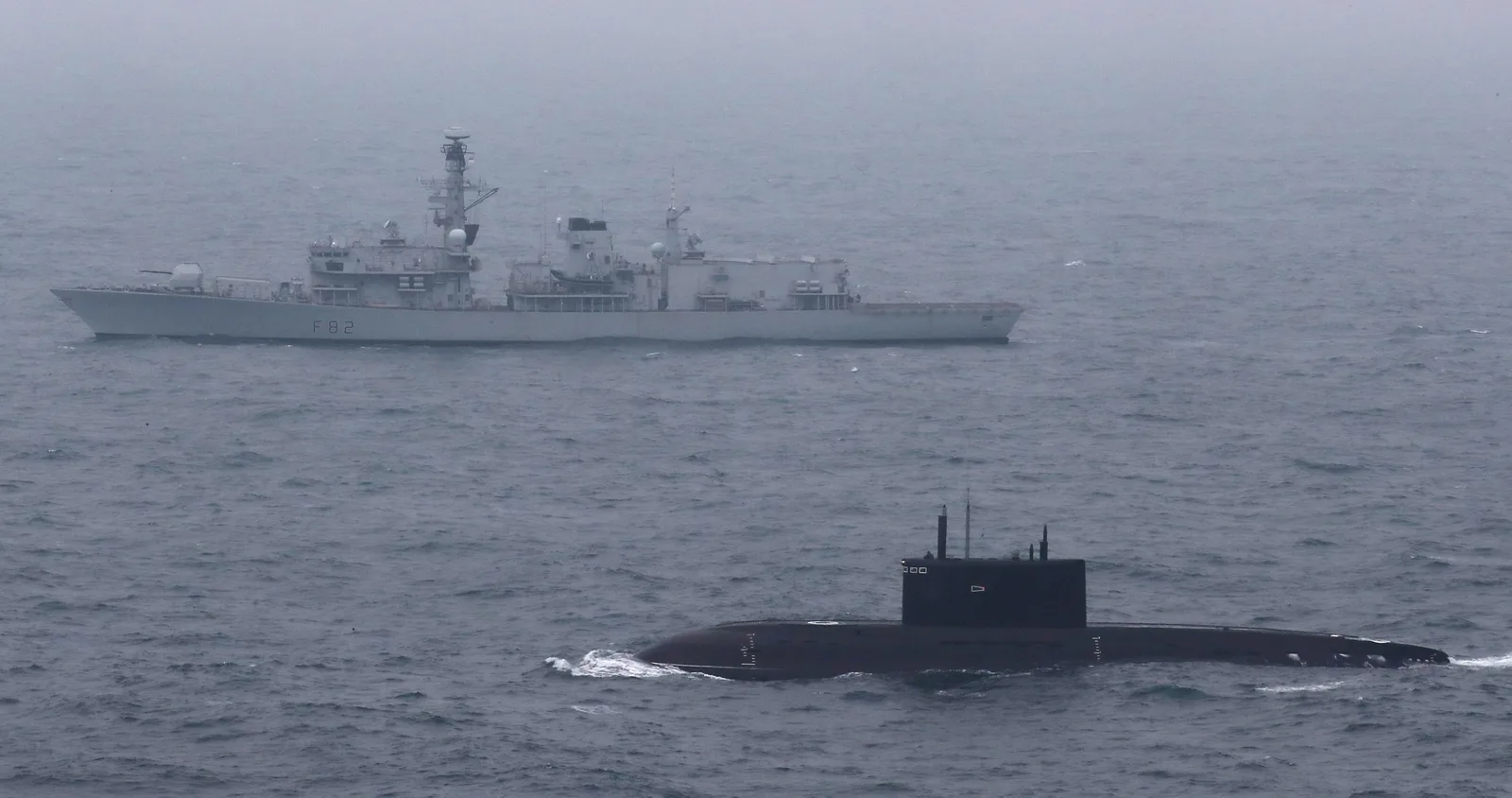

Two core NATO programmes, AUWB-MN and Task Force X – Arctic, will combine in 2027 to demonstrate how an integrated C2 architecture will enable crewed/uncrewed platform collaboration in underwater operations.
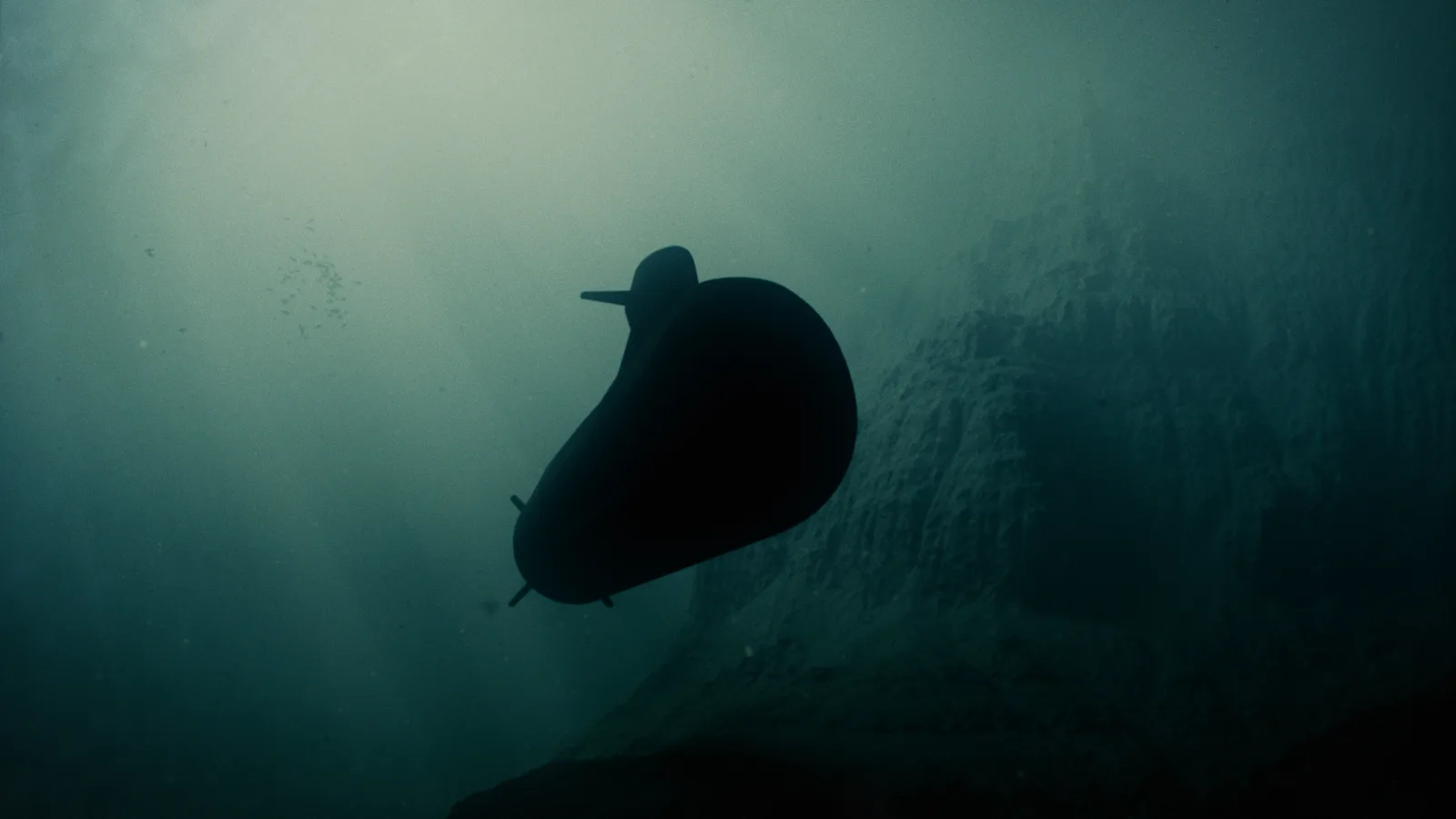
A collection of NATO member states and partners, underpinned by an industry consortium, is preparing to test, in a ‘real-world’ operational environment, a new digital command-and-control (C2) architecture designed to enhance sub-surface operations based around maritime uncrewed systems (MUS).
In mid-November 2026, the Allied Under Water Battlespace – Mission Network (AUWB-MN) programme completed its Phase 1 activity – establishing a Reference Architecture (RA).
As it readies Phase 2 – developing and employing a test and reference environment (TRE) – the multinational Mangrove industrial consortium, led by Swedish defence and security company Saab, is preparing a parallel ‘bridging’ process. This will link the two phases, but will also demonstrate to NATO operators and procurement decision-makers the continuing technical and operational development – and benefit – of the underwater C2 architecture it provides.
That demonstration will happen in the High North in July 2027, as part of NATO Allied Command Transformation’s (ACT’s) Task Force X – Arctic activity. The location is unconfirmed: however, it is likely to be a place of strategic significance within alliance naval operations.
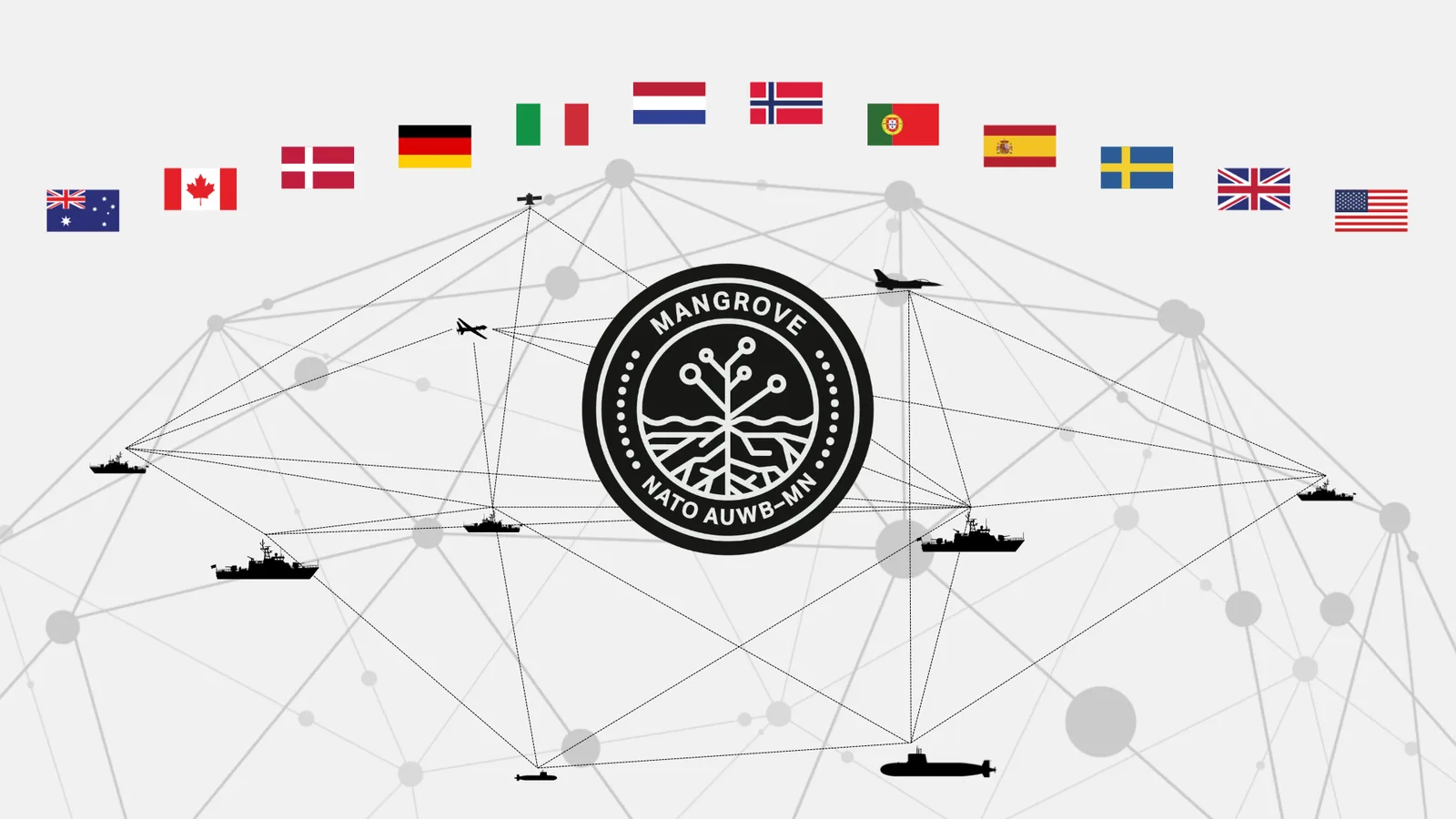
As Warsight reported previously, AUWB-MN is designed to provide the operational architecture infrastructure to connect crewed and uncrewed platforms through delivering C2, and exploiting data use, in underwater warfare (UWW) tasks. Such tasks include, amongst others, anti-submarine warfare (ASW) plus seabed and critical undersea infrastructure (CUI) security.
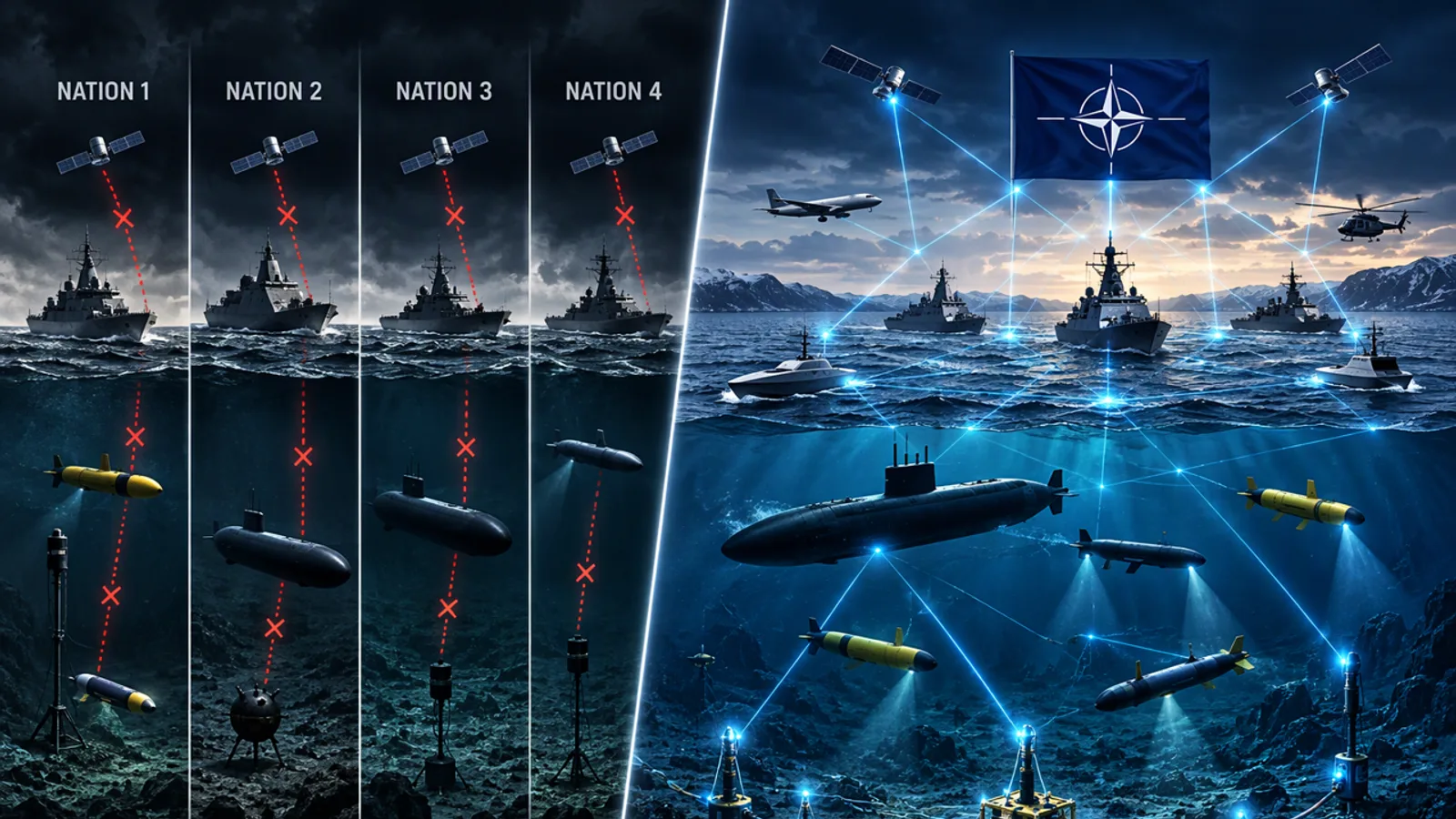
The Arctic region is NATO’s northern flank. Here, UWW capabilities are central to NATO and national operational efforts to counter Russia’s growing underwater challenge (manifested in ASW, CUI, and other risks).
Launched in June 2026, Task Force X – Arctic is one of several regional initiatives ACT has established under its Task Force X concept, which is designed to harness emerging technologies like MUS with crewed platforms to build deterrence and defence in specific regions across NATO’s area of responsibility.
Task Force X – Arctic will integrate national, operational MUS systems into alliance maritime operations to strengthen persistent surveillance, situational and domain awareness, and deterrence. It conducted a post-launch demonstration event, off Iceland in June 2026.
Building from there to the 2027 trial encompassing the AUWB-MN test, Task Force X – Arctic will conduct additional development activities: in late November 2026 and February 2027, both off Norway; and in May 2027, during NATO Allied Maritime Command’s (MARCOM’s) ‘Dynamic Mongoose’ North Atlantic ASW exercise.
Task Force X – Arctic also underpins NATO ‘real-world’ operational needs, supporting the alliance’s ‘Arctic Sentry’ enhanced vigilance activity, established in January 2026 to reinforce deterrence around the Greenland-Iceland-UK Gap and into the Arctic and High North.
To support NATO UWW requirements in the Arctic and elsewhere, AUWB-MN is delivering the architecture, standards, and protocols to help generate and sustain ‘an underwater internet of things’, according to David Burton – a retired UK Royal Navy (RN) commodore and former NATO official, who now leads the RN’s AUWB-MN input (the UK being the programme’s lead country).
Overall, Burton told a 16 November 2026 media briefing, AUWB-MN’s design principles are based around delivering a secure, scalable, and modular architecture that is system agnostic, will enable a ‘system of systems’ approach, and will enhance and exploit data use.
The architectures, standards, protocols, and principles will help NATO collectively, and its member state navies individually, to develop and deliver integrated underwater C2 connecting crewed and uncrewed platforms.
Some navies are already developing national constructs: the RN’s ‘Atlantic Bastion’ UWW network, for example, is designed to provide underwater surveillance and deterrence presence across key North Atlantic waters. Industry stakeholders are also developing concepts supporting national needs: Saab, for example, has designed ‘Ocean Barrier’, a layered sub-surface sensor network designed to protect critical seas.
The urgent requirement to secure the sub-surface domain is driving NATO and its navies to rapidly test capabilities at sea in operational circumstances. This is why the AUWB-MN C2 architecture will be tested under Task Force X – Arctic. The test will provide a maritime ‘dry run’ of how the architecture will work in practice, providing a first step in enabling the integrated interoperability required across the different national MUS present.
“Where are we focused right now?” asked Chris Lade – a retired RN officer now heading Saab UK’s naval business development team, and co-chairing Mangrove (with Saab’s Business Area Naval heading the consortium). “We’re focused on putting the work we’ve done – the RA – to sea. We’ll do that in Task Force X – Arctic in July 2027,” Lade told the media briefing. “What we’re going to deliver … is this architecture for at least part of that exercise.”
“We need to demonstrate the value [AUWB-MN] can bring: that’s what we hope to start doing at Task Force X – Arctic in a live environment,” Lade added.
Task Force X – Arctic “[is] demonstrating what can be done using current technologies. Without the interoperability piece, those technologies are going to be delivered in stovepipes,” Burton explained.
“We don’t want multiple architectures … because, in that context, we’re not able to exploit the assets in an allied sense,” Burton continued. Whether looking at national, NATO, or AUKUS contexts – AUKUS being the Australia/UK/US strategic partnership delivering advanced underwater capabilities – AUWB-MN is designed to generate a single, common C2 architecture. “The architecture is everything in terms of secure communications, common C2, and most importantly the ability to share data,” Burton added.
“We believe what we’re doing is seriously important: we believe what we’re doing will deliver war-winning capability,” Burton said.
As the Mangrove programme transitions from Phase 1 to Phase 2, conducting a ‘bridging’ activity like demonstrating how the RA can support a live NATO operation helps maintain momentum for what is a crucial technology and capability initiative for the alliance, given the underwater threat.
In July 2025, Phase 1 work commenced, establishing the system-agnostic RA software – an overarching information technology ‘dome’ covering modules, interface standards, and protocols designed to enable national system ‘plug-in’ commonality. The EUR 1 million funding was provided by the 12 countries already supporting the NATO Smart Defence Initiative (SDI) ASW Barrier Project, which got underway in 2020 and from which AUWB-MN evolved.
According to Mangrove, broadly 80% of Phase 1 work was dedicated to developing the RA, with the remaining 20% focused on commencing TRE development.
With Phase 1 now concluded, the defined software outputs and a 600-plus page report (detailing the architecture developments) are now being circulated amongst all NATO member states plus key partners. Later in 2026, the Mangrove team will engage bilaterally with the original 12 partner countries, to glean feedback.
Further engagement with participating countries and industry is planned for January 2027. The review process aims to pave the way for commencing Phase 2.
In Phase 2, delivering the TRE will use 80% of the effort, with the remaining 20% allocated continued work on the RA (which remains a ‘living’ construct, adaptable to future requirements as circumstances change).
Phase 2 funding requirements and levels have not yet been published. However, a work proposal has been issued to the countries, Burton said, adding that the TRE is a means for testing and validating interoperability before the architecture is deployed operationally.
Under the initial TRE requirement, Lade added, an asset like a platform, system, or sensor will be plugged into the TRE, which will then test and verify its compliance (or otherwise) based on the RA. This includes testing compatibility with various NATO architecture standards including Standardisation Agreement (STANAG) 4817, which builds MUS C2 architectural commonality.
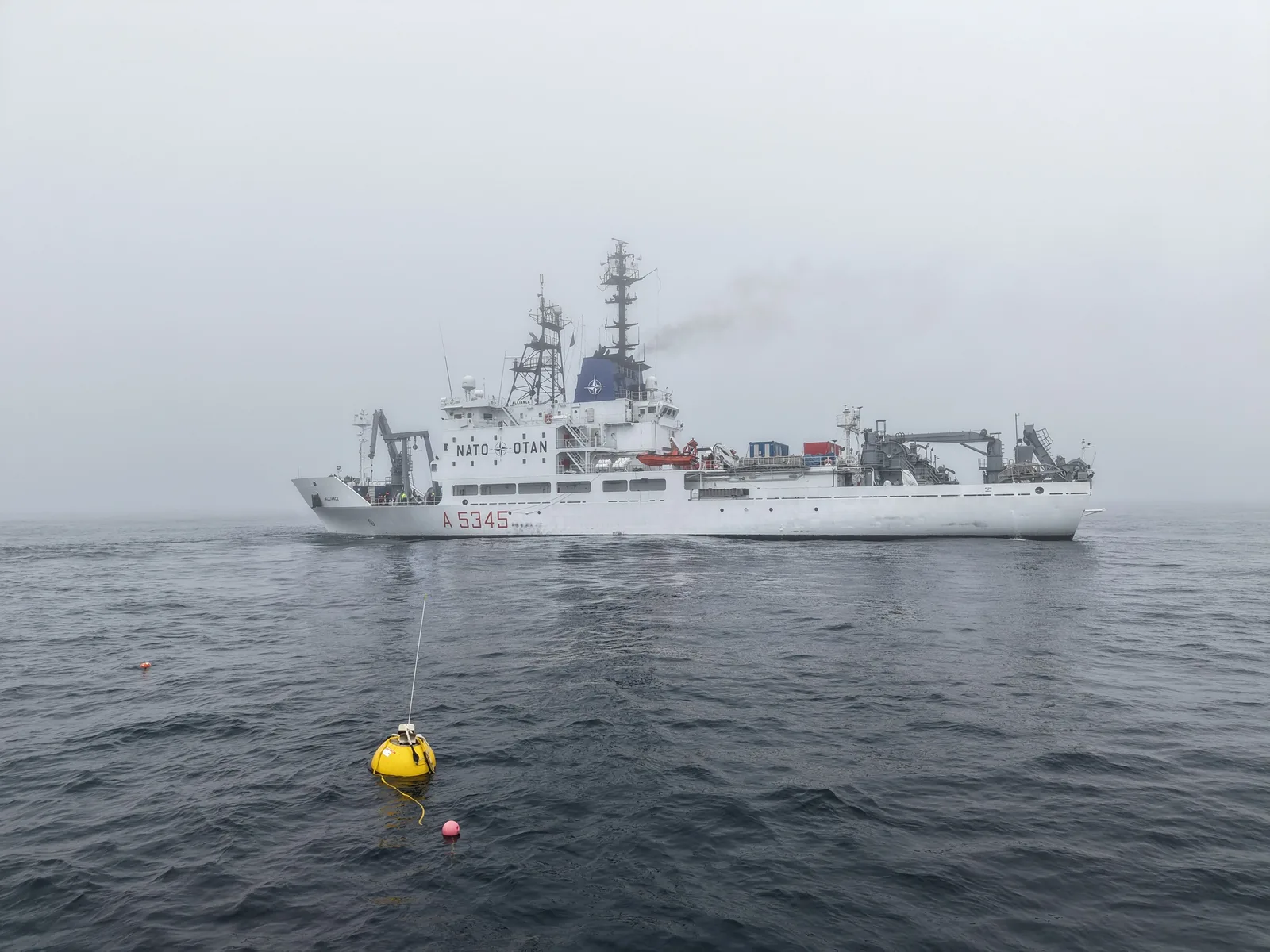
A key Phase 2 component will be the TRE’s capacity to manage data from multiple different assets from multiple different countries, Burton explained.
“Because there’s going to be more systems out there, there’s going to be more data, and the ability to share data is going to become significantly more important,” Lade said. “Uncrewed systems have been the driver, but [the architecture] is equally important for crewed systems …. We should think [about] the whole battlespace, everything that’s in it, and getting that data around [it].”
AUWB-MN provides the ‘digital backbone’ to do this, Lade added.
The ‘bridging phase’ – the process linking the two Phases – is set to last for up to 12 months, drawing additional funding against the Phase 1 contract as an extension of that contract. Alongside testing and demonstrating the RA in operational scenarios at Task Force X – Arctic, this phase includes the technology and documentation review process plus adjusting the RA construct if required due to feedback, and to shape the statement of work going forward.
The review element is also offering countries the opportunity to compare the RA against national MUS UWW C2 architectures. Canada and the UK, for example, are doing this. Lade said the UK has conducted an independent assessment of its ‘Atlantic Bastion’ and AUWB-MN architectures, concluding there is little ‘delta’ between them.
The ‘bridging phase’ will also be linked to Phase 2 by what is termed the ‘spiral zero’ element, a separately funded activity enabling the conduct of testing work outside of Task Force X – Arctic, including developing further NATO STANAG requirements.
In operational and technology development terms, the two parallel ‘bridging’ elements will help reiterate to consortium countries, and others across NATO, the significance of signing up to Phase 2. “We’ve got a little bit of work to do before the countries are willing to fully commit to the funding – but the signs at the moment are very positive,” Burton said.
Such signs may include the fact that two strategic-level NATO commands – ACT, and Allied Command Operations (ACO) – are supporting Task Force X – Arctic’s AUWB-MN RA testing. Here, ACO is represented by MARCOM’s standing naval forces’ supporting Task Force X – Arctic activities.
“Task Force X – Arctic is about ACT looking to accelerate real, live operational capability in the High North,” Burton said. “What’s really encouraging for us is they’ve mandated AUWB-MN as the architecture of choice.”
The aspiration is to commence Phase 2 fully in mid-2027; meanwhile, work on both Phase 2 and the ‘bridging’ activities will continue in parallel, Lade added.
Burton and Lade said four more countries (Finland – already an observer country – plus Belgium, France, and Greece) are prospectively interested in joining the programme.
Further downstream, a ‘Phase 3’ is anticipated, in which countries use the TRE to test national architecture instantiations.
The Task Force X – Arctic activity is the primary illustration of AUWB-MN’s application to NATO operational experimentation (OPEX). Another relevant OPEX activity is the Portuguese Navy/NATO co-hosted ‘REPMUS’ exercise, which occurs each September in southern Portugal, and which conducts MUS robotic experimentation and prototyping.
AUWB-MN was not tested at ‘REPMUS 2026’. However, Mangrove personnel attended, to observe and engage. Key issues reiterated included the importance of integrated interoperability across MUS systems – something ‘REPMUS’ drives through its STANAG 4817 focus – and that Mangrove’s architecture will need to accommodate a broad range of STANAGs alongside 4817.
The high-level profile of ‘REPMUS’ attendance – including many operators and industry personnel, plus large numbers of senior officers for the Distinguished Visitors’ Day – also enabled the Mangrove team to brief the AUWB-MN concept and capability to an expert audience. Going forward, ‘REPMUS’ may provide a demonstration opportunity for AUWB-MN.
One underwater architecture of relevance to AUWB-MN was demonstrated at ‘REPMUS’. Saab’s ‘Ocean Barrier’, developed again under its Business Area Naval, is a layered sub-surface sensing network designed for detecting the full spectrum of underwater threats (including submarines, uncrewed underwater vehicles, and divers) to maritime chokepoints, littoral waters, and coastal CUI nodes.
In a 28 October statement, Saab said “At ‘REPMUS 26’ … ‘Ocean Barrier’ successfully demonstrated the ability to integrate data from diverse sensor systems and autonomously hand off tracked objects, [using] a NATO-standard protocol [STANAG 4817], to the exercise’s central command system.”
Lade explained the link between ‘Ocean Barrier’ and AUWB-MN, including underscoring why data-sharing architectures are crucial. “The port being attacked doesn’t want to be the only thing that’s got that data. You need to get that data out across the entire battlespace. That’s what Mangrove will be able to do,” he said.
Naturally, in delivering both projects, Saab will understand the requirements and architecture commonality between the two, and will apply AUWB-MN standards to ‘Ocean Barrier’. More broadly, should AUWB-MN continue development as NATO’s MUS C2 architecture, it will be used to underpin concepts like ‘Ocean Barrier’ and others.