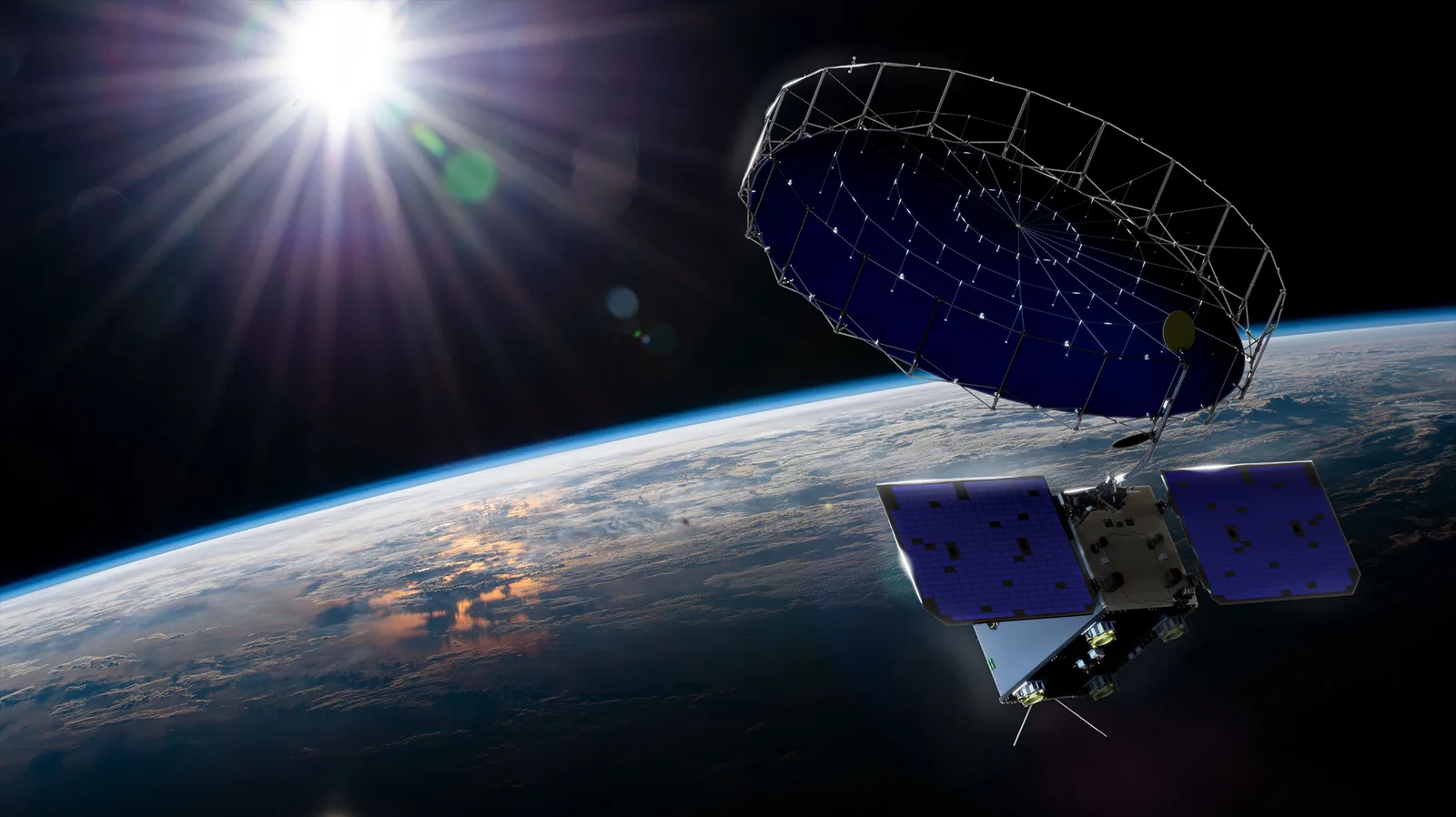
At its NATO Edge 2026 technology conference in İzmir, Türkiye, on 17 November the NATO Communications and Information Agency began to solidly roll out NATO’s commercial space strategy.

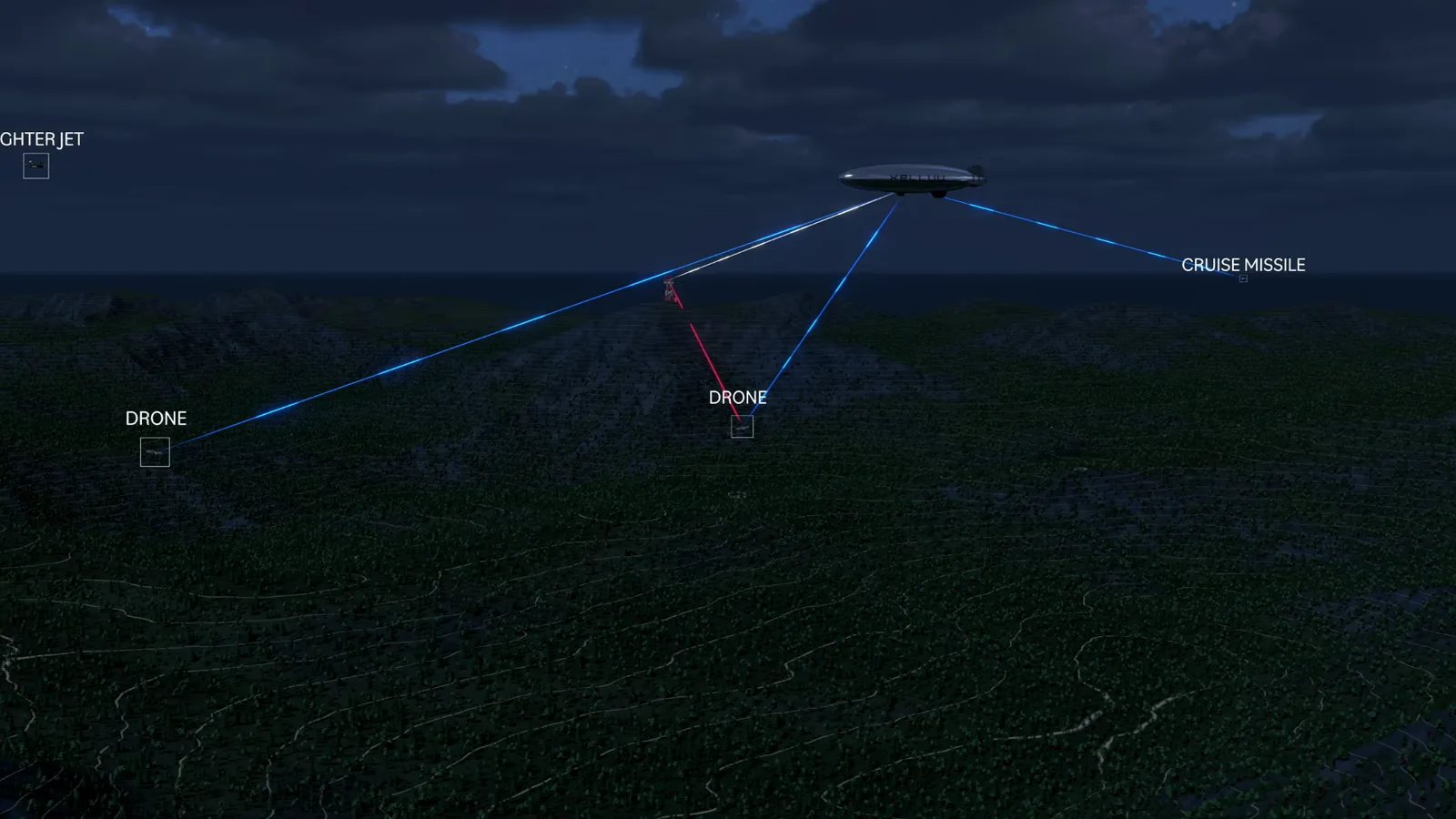

At its NATO Edge 2026 technology conference in İzmir, Türkiye, on 17 November the NATO Communications and Information Agency began to solidly roll out NATO’s commercial space strategy.

The NATO Communications and Information Agency (NCIA) announced two key space-based initiatives on the opening day of its flagship NATO Edge 2026 technology event, held in İzmir, Türkiye, from 17 to 19 November.
The first initiative, the Global Data Marketplace (GDM), is a procurement route for commercial space data and services primarily focused on space domain awareness, while the second is related to the implementation of the alliance’s Starlift project, which was first announced in October 2024. This is designed to broker space launch slots through the NATO Support and Procurement Agency (NSPA), bringing together NATO’s military requirements with commercial launch capabilities to address Europe’s critical bottleneck in satellite launch capabilities.
Launched in conjunction with the US Space Force, the GDM provides the alliance with a new way to access and procure commercial space data from providers across Allied nations and offers industry a single-entry point to offer commercial space data and services to NATO.
The GDM works alongside the NATO Unified Data Library (UDL), which provides the infrastructure where data is brought together, with NATO retaining data ownership and control. Together, the two capabilities will strengthen NATO’s ability to bring together and exploit commercial and national space data in support of a shared understanding of the space domain.
For NATO operators the GDM and UDL will provide a more integrated way to access and combine commercial and national observations of space objects. For industry, meanwhile, the marketplace offers a single route to engage with NATO, with dedicated support to onboard, navigate the process and access opportunities to provide their capabilities to the alliance.
A total of 222 companies from 17 allied nations are already participating in the marketplace, with NATO expecting to place its first orders through the GDM before the end of 2026.
“NCIA leads the work as contracting authority and technical integrator, working alongside Allied Command Transformation, the US Space Force and industry partner Bluestaq,” NATO stated in a press release. “NATO’s GDM and UDL build on technology already supporting the US Space Force and used by several Allied nations. This approach draws on existing capabilities and experience while providing NATO with an environment under its own control.”
Under development since 2024, Starlift aims to help participating countries work with commercial launch providers and spaceports to make access to space more resilient, responsive and cost-effective. Starlift will provide military users with a launch brokerage platform that will help secure slots on commercial rockets. It will build on a network of spaceports from across the Alliance and South Korea. Ten NATO Allies (Belgium, Canada, Finland, Germany, Italy, the Netherlands, Norway, Sweden, Türkiye and the United Kingdom), along with South Korea, committed to financing the initiative, through the NATO Support and Procurement Agency (NSPA), at a signing ceremony held on the margins of a meeting of NATO’s National Armaments Directors on 29 October 2026.
Starlift will also provide a forum to develop and test concepts for responsive space operations, including the urgent launch of satellites. Testing and experimentation will help improve allied launch infrastructure and logistics, while sharing best practices in space. Air and maritime traffic management will promote safe launches, both routine and when at short notice.
“Pooling demand and co-ordinating requirements will improve access to launch services and support industry investment,” NATO stated. “Through Starlift, European allies and Canada are taking greater responsibility for shared security in space, strengthening allied capabilities, transatlantic co-operation, and deterrence and defence.”
Space was officially designated as an operational domain for NATO in 2019.
Speaking to invited journalists in İzmir on 16 November, during an embargoed briefing on the eve of the NATO Edge 2026 conference, a NATO official stated, “Those two initiatives address two different challenges: the first challenge is how to acquire the commercial space data and services our forces need faster; and then the second challenge is how to get the satellites they depend on into orbit more reliably.
“The foundation of all these initiatives,” he explained, “is NATO’s commercial space strategy, which was approved by allies in 2025 and aims to help militaries make better use of commercial capabilities across peace, crisis and conflict, and make it easier for industry to work with the alliance, so our message today is pretty straightforward: it’s that we’re moving from strategy to practical mechanisms for buying and using commercial space services.”
“Space is clearly no longer a distant frontier,” the NATO official continued. “It is the invisible backbone of our modern economies, of our critical infrastructure, and of our collective defence. Our forces depend on it for the use of navigation, for satellite communication, for intelligence and missile warning, and space-based data is also increasingly supporting our command-and-control systems and decision making. NATO has recognised space as an operational domain already in 2019. Our objective is to ensure that the alliance is able to communicate, able to understand, and act in or from space faster than any potential adversary. This environment is becoming more contested. We’re seeing jamming, spoofing, and counter-space technologies that are threatening the capabilities on which the alliance depends; I think you’re familiar with recent reporting about Russian military satellites operating close to Finnish company ICEYE and its satellites, which really illustrates the concern about threats to commercial systems. At the same time, commercial industry is transforming what is possible from imagery and analytics to communications and launch; their offering capabilities as services allows militaries to adopt innovation without having to build and own every system themselves. Now, the challenge that we’re facing is ‘How do we turn that innovation into capabilities our forces can use at the speed and at the scale our operations demand?’
To make this possible NATO has realised that it needs to become a more informed and agile customer, able to assess what commercial industry can offer and to buy services under terms that preserve operational flexibility while avoiding unnecessary vendor dependence.
On the other hand industry, in order to deliver, needs clear requirements, more predictable demand, and fewer barriers to work with the alliance.
“All of us are aware that traditional defence acquisition is more geared towards large pieces of hardware, aircraft or tanks, equipment that we hang on for decades,” noted the NATO official. “But in the space sector technology and requirements are changing so much faster that we cannot let procurement become the bottleneck. So speed matters, but so does resilience, and commercial services need to be part of a mix of capabilities that can withstand disruption. That means combining commercial innovation and services with sovereign capabilities, not choosing between them, because we need both, and enough diversity to avoid depending on a single provider.”
The official noted that that this approach is already being applied through multiple NATO initiatives. These include the Alliance Persistent Surveillance for Space Programme (APSS), in which NATO allies are participating to bring together national and commercial satellite data focused on Earth observation in a virtual constellation called Aquila, and the Hybrid Alliance Layered Operations in Space (HALO) initiative, launched at the NATO Summit Defence Industry Forum in Ankara in July 2026. This focuses on improving connectivity and integration of sovereign, nationally owned and controlled military satellites into a networked mega constellation to improve alliance resilience and military advantage in space, enabling high-speed communications, intelligence and missile tracking.