Denizkurdu-I/2026: Testing Türkiye’s hybrid navy model

The Turkish Navy has spent several years testing unmanned aircraft and surface vessels at sea. During Exercise Denizkurdu-I/2026 it became clearer how the force is incorporating uncrewed platforms into its training, planning, and fleet architecture.

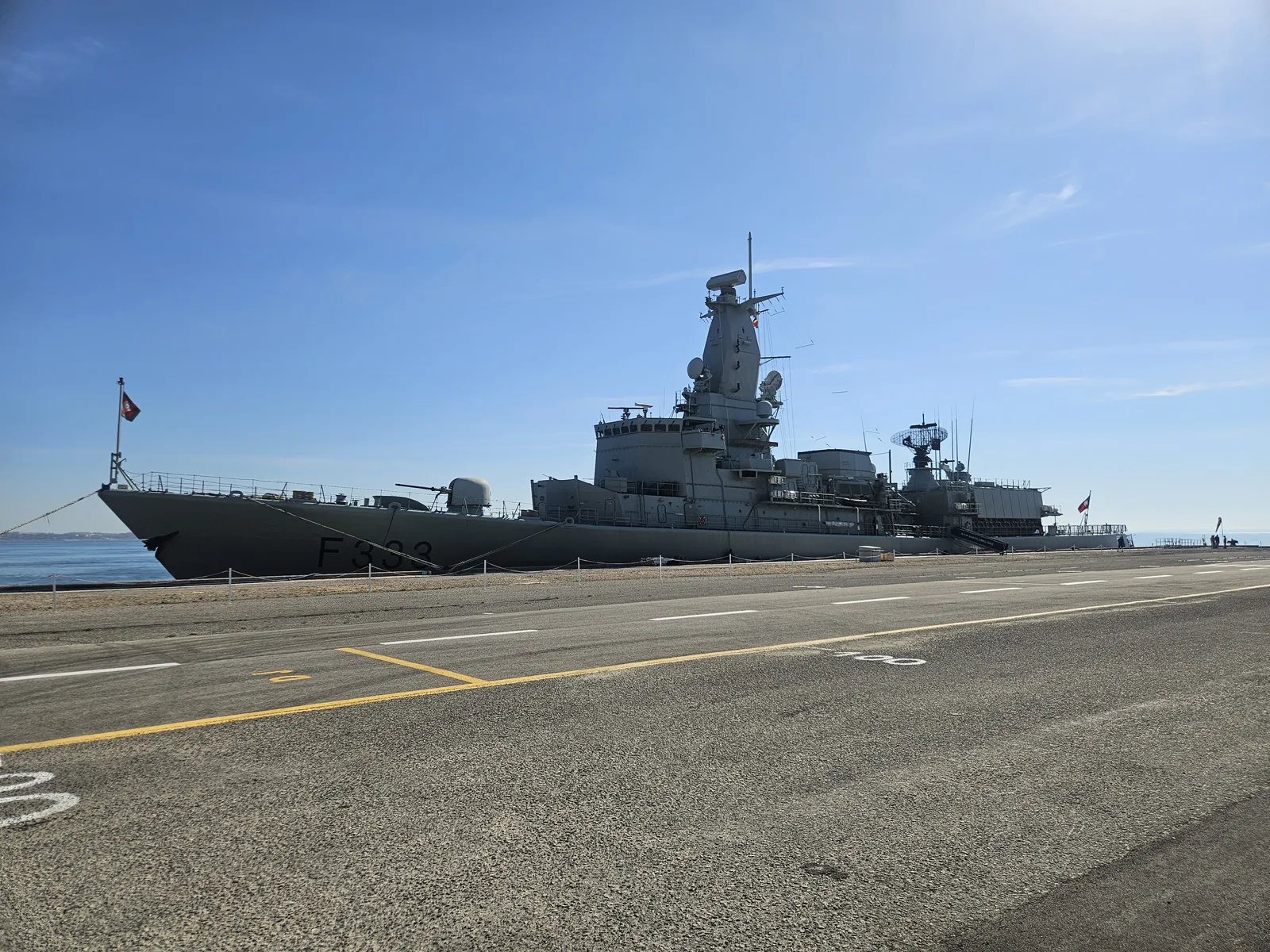
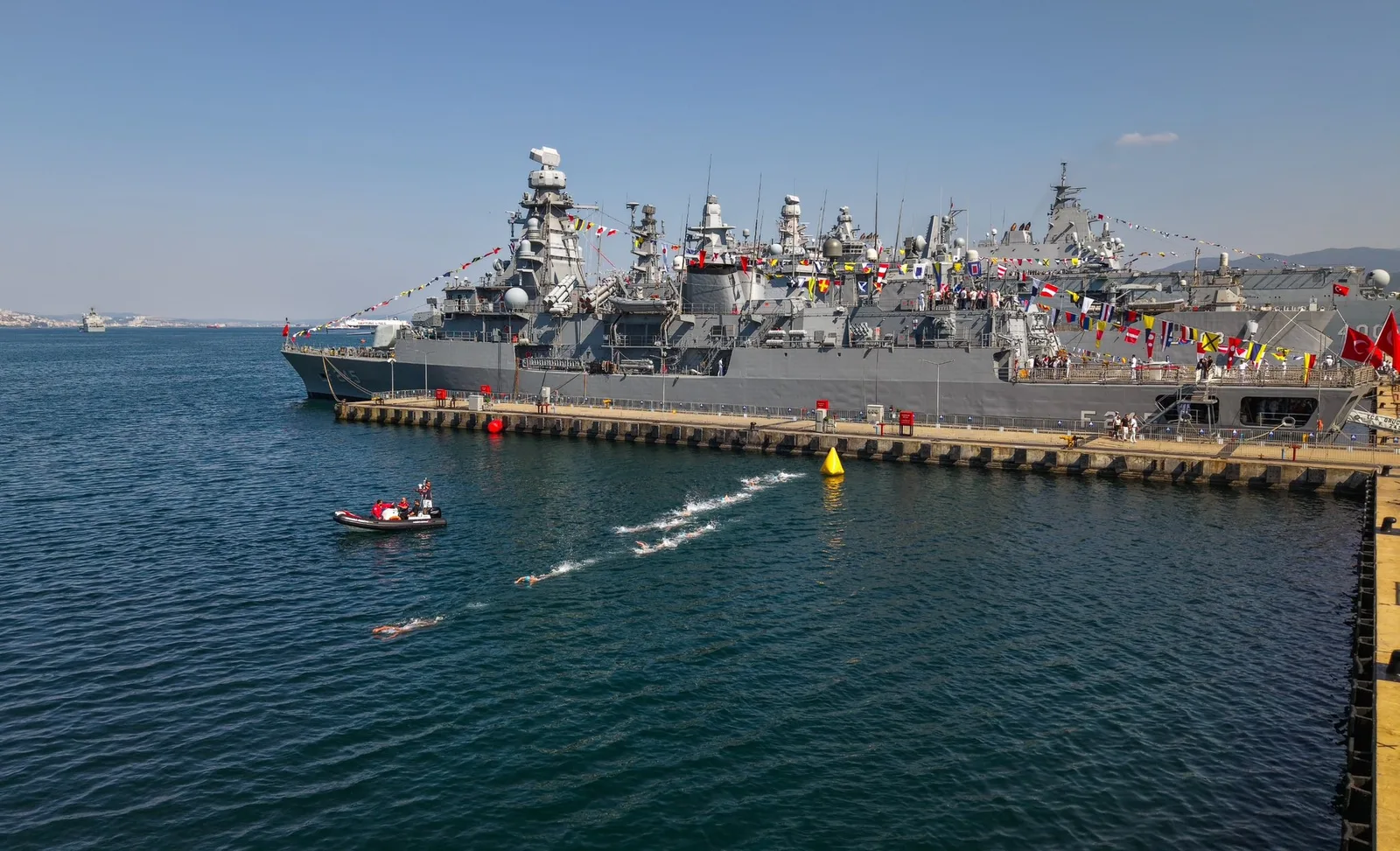
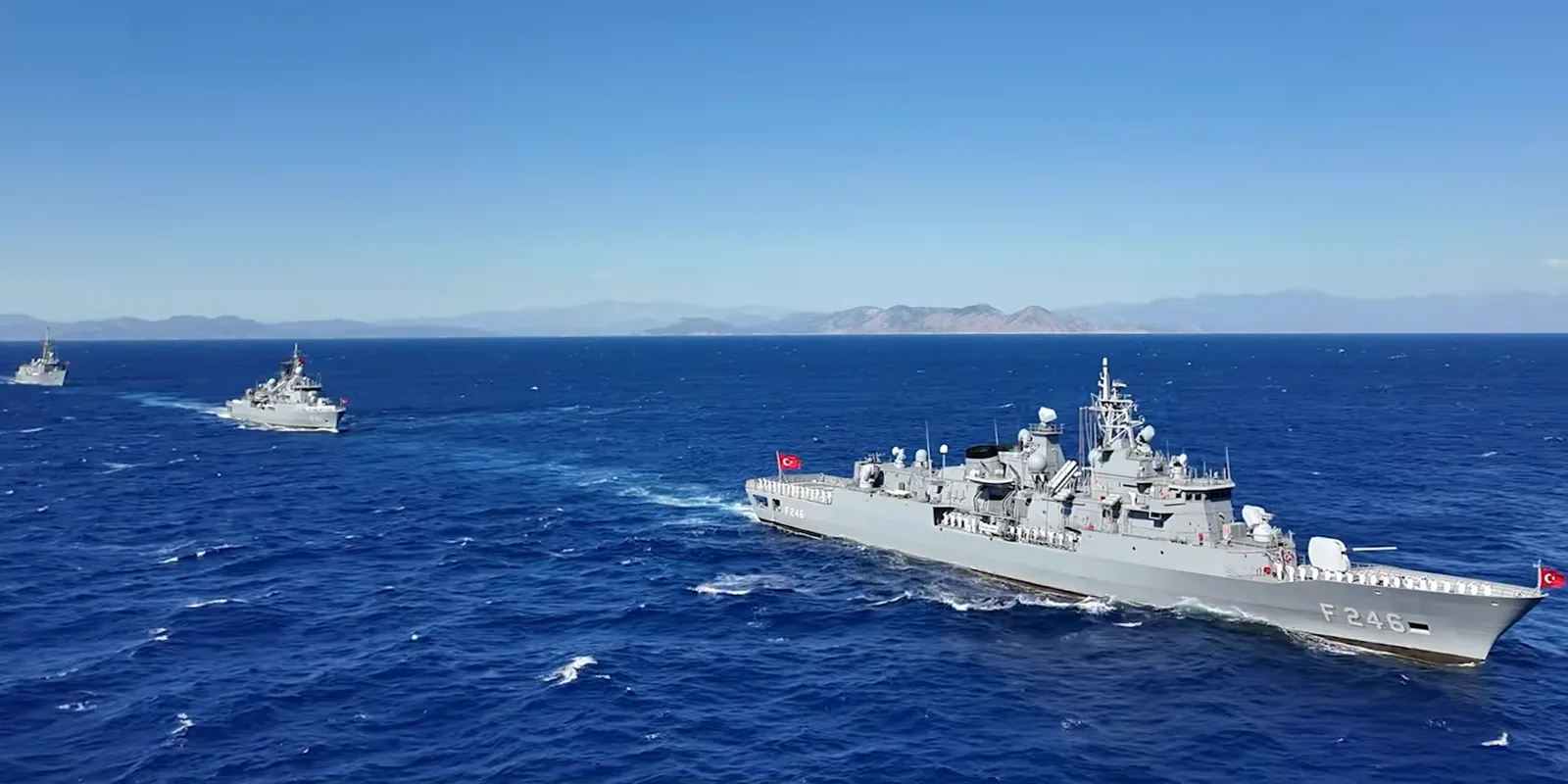
The Turkish Navy’s MEKO 200 Frigate TCG Salihreis leads two other vessels during Exercise Denizkurdu-I/2026.
The Turkish Navy’s MEKO 200 Frigate TCG Salihreis leads two other vessels during Exercise Denizkurdu-I/2026. (Turkish Armed Forces)
Tayfun Ozberk

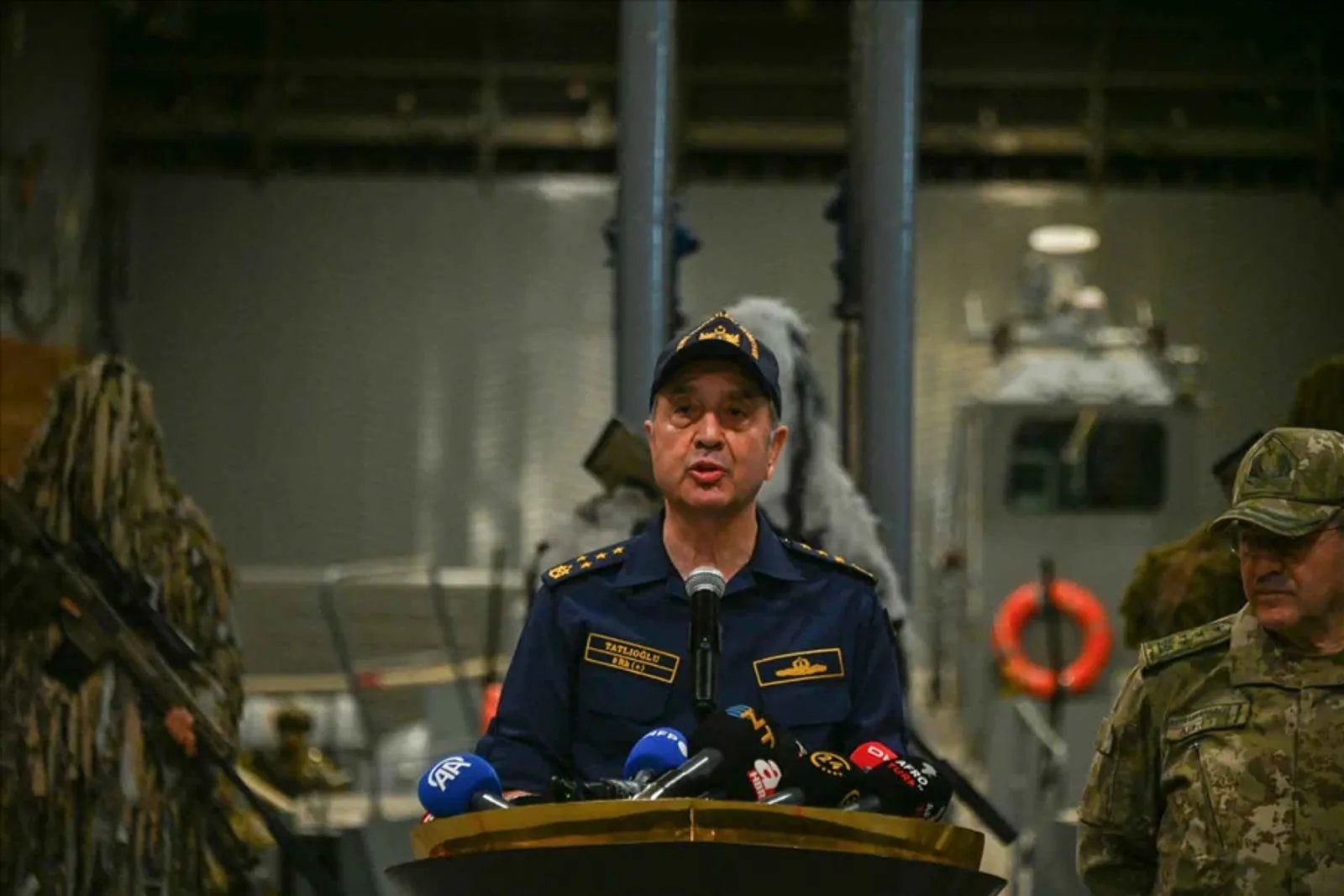
During the Turkish Navy’s Exercise Denizkurdu-I/2026, Turkish Naval Forces Commander Admiral Ercüment Tatlıoğlu said the exercise had tested a hybrid model in which crewed and uncrewed systems operated together through network-centric warfare capabilities. He also stated that the Navy’s future operational concept would be based on crewed and uncrewed systems complementing one another.

“First, operations were conducted to enable the joint and integrated use of unmanned and autonomous systems alongside crewed systems. Second, a hybrid model was tested in which crewed and uncrewed systems would operate together through network-centric warfare capabilities.” Adm Tatlıoğlu said to the journalists during the exercise.

Türkiye has developed and employed a range of unmanned systems, particularly in the air domain. Its maritime portfolio includes armed patrol craft, anti-submarine warfare (ASW) and electronic warfare (EW) platforms, surveillance systems and one-way attack (OWA) uncrewed surface vessels (USVs). Denizkurdu-I/2026 indicated an effort to connect these separate programmes within a broader operational structure.

The relevant question is no longer only whether an unmanned aerial vehicle (UAV) aircraft can operate from a ship, or whether a small USV can carry an explosive payload. Both have been demonstrated. The remaining issue is whether ships, aircraft and unmanned platforms can operate as an integrated force, with each platform assigned missions that reflect its capabilities and risk profile. Denizkurdu-I/2026 provided a public example of this direction.

A statement of intent

Denizkurdu-I/2026 was conducted simultaneously in the Black Sea, Sea of Marmara, Aegean Sea and Eastern Mediterranean. It involved approximately 100 naval vessels, 50 aircraft and 14,000 personnel. Exercises of this scale allow the Navy to test procedures, command arrangements and force packages under a common operational scenario.

Turkish Navy Chief Adm Ercüment Tatlıoğlu delivering his remarks to assembled journalists aboard the TCG Anadolu during Denizkurdu-I/2026.
Turkish Navy Chief Adm Ercüment Tatlıoğlu delivering his remarks to assembled journalists aboard the TCG Anadolu during Denizkurdu-I/2026. (Turkish Navy)

Adm Tatlıoğlu’s remarks placed Türkiye’s unmanned programmes in an institutional context. These programmes have often been examined through individual platforms, including UAVs, USVs and locally developed payloads. His description instead referred to the relationship between platforms and their role within a future naval concept.

“Our digital command-and-control, communications, and link capabilities – which facilitate high-speed data flow – were employed. We are inducting UAVs, USVs designed for all dimensions of naval warfare, and one-way attack USVs into our inventory, while testing the tactics developed for their joint employment during exercises.” Adm Tatlıoğlu said.

Emphasising that the Turkish Naval Forces will operate a hybrid fleet in the future, Adm Tatlıoğlu stated: “Our future operational concept will be based on the complementary use of crewed and uncrewed systems, with each reinforcing the other.”

A hybrid fleet does not necessarily mean that unmanned systems replace conventional ships. It refers to the integration of crewed and uncrewed assets into planning, targeting, surveillance, strike and command-and-control (C2) processes.

This could include a UAV searching ahead of a task group, a USV conducting reconnaissance in higher-risk waters, a crewed ship acting as a command node, and an OWA craft carrying out a strike. The operational effect would depend on how these elements share information and are directed during a mission.

An individual drone can provide imagery or sensor data. When linked to other assets, it can also contribute to a targeting chain. Two events during Denizkurdu-I/2026 illustrated aspects of this approach.

Two demonstrations, one concept

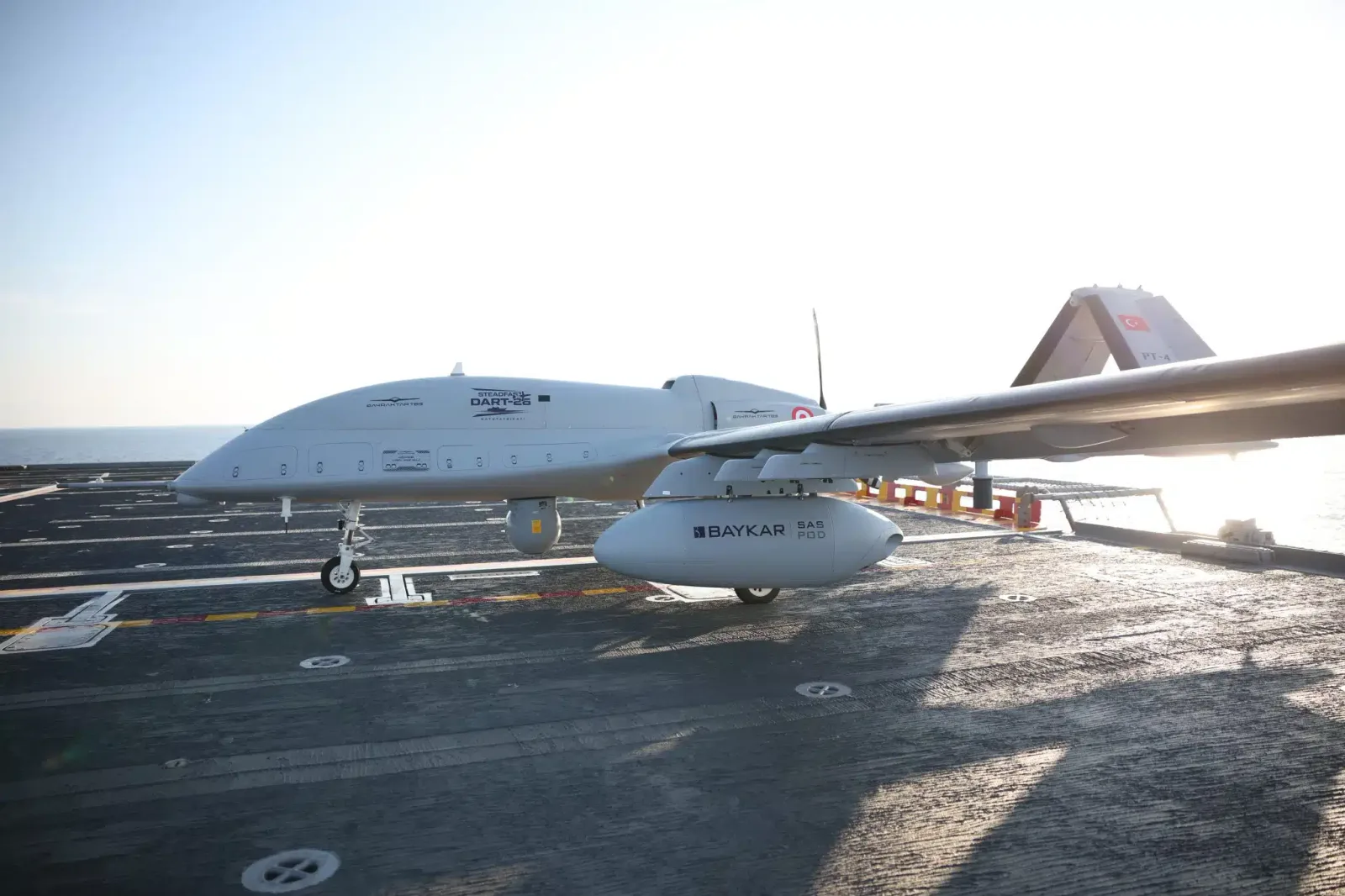
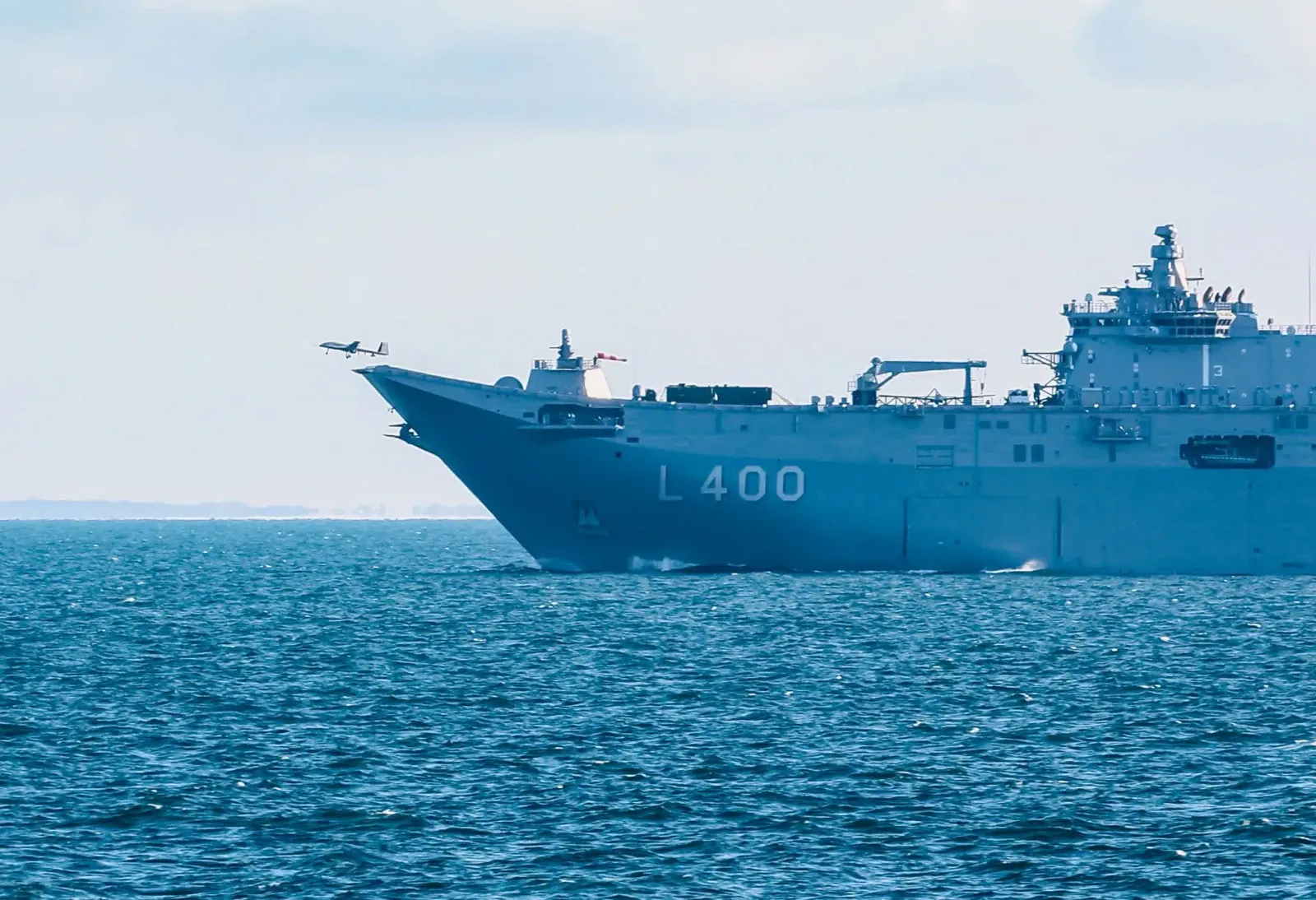
The first involved the Bayraktar TB3 operating from the flight deck of TCG Anadolu. During an ASW scenario, the aircraft deployed two sonobuoys using a wing-mounted dispenser pod. It then operated in coordination with a Turkish maritime patrol aircraft and processed acoustic data from both its own sonobuoys and those deployed by the crewed aircraft.

Bayraktar TB3 picture with sonobuoy pod.
Bayraktar TB3 picture with sonobuoy pod. (Baykar Technologies)

The activity showed TB3 operating as part of a wider acoustic picture rather than simply conducting an individual payload-release test.

ASW requires persistence, sensor coverage and coordination between multiple platforms. Maritime patrol aircraft and helicopters remain central to the mission, but their availability is shaped by crew endurance, airframe availability and operating distance from their bases. A shipborne unmanned aircraft with extended endurance could support surveillance over a search area for longer periods, including around choke points, convoy routes and task force approaches.

The Denizkurdu-I/2026 trial didn’t demonstrate a fully autonomous submarine-hunting system. Publicly available information doesn’t establish that a TB3 independently detected, classified and engaged a submarine. Rather, the demonstration showed that a carrier-capable unmanned aircraft could deploy acoustic sensors, process underwater data and operate alongside a crewed maritime patrol platform.

For TCG Anadolu, this could add an ASW support role to its existing functions. The ship may serve as a mobile node in a wider network, using fixed-wing unmanned aircraft to extend airborne sensor coverage ahead of a task group.

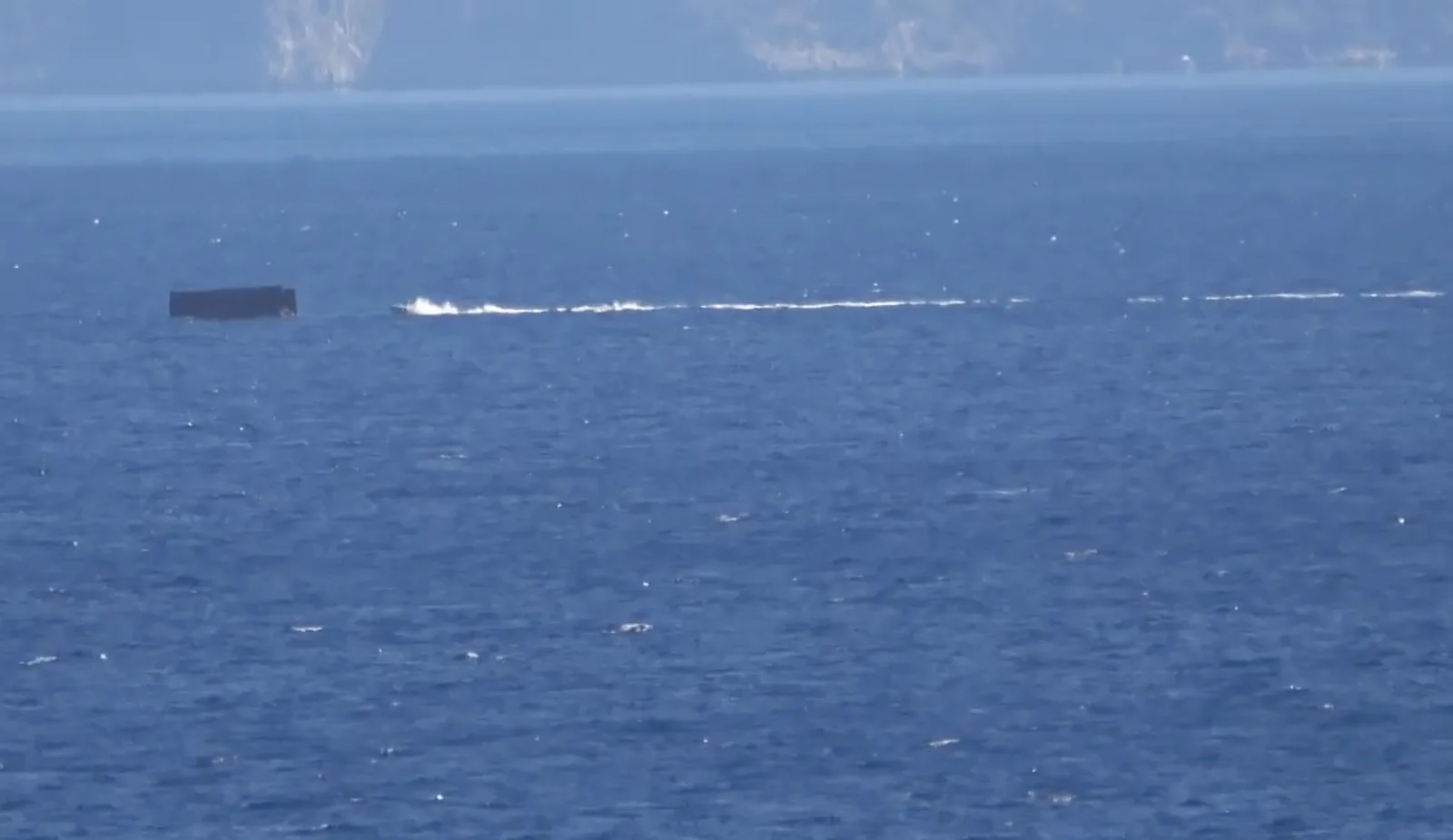
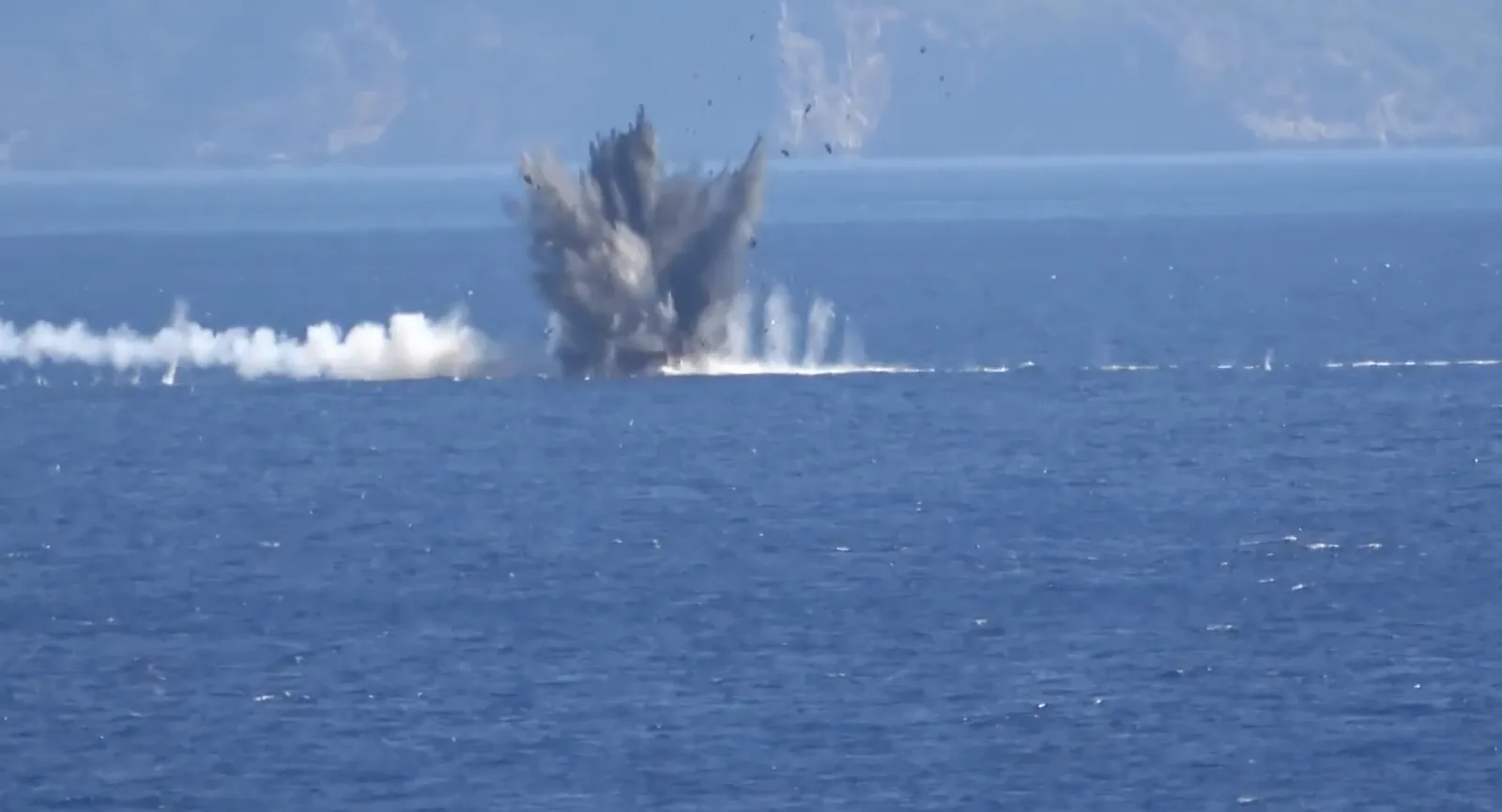
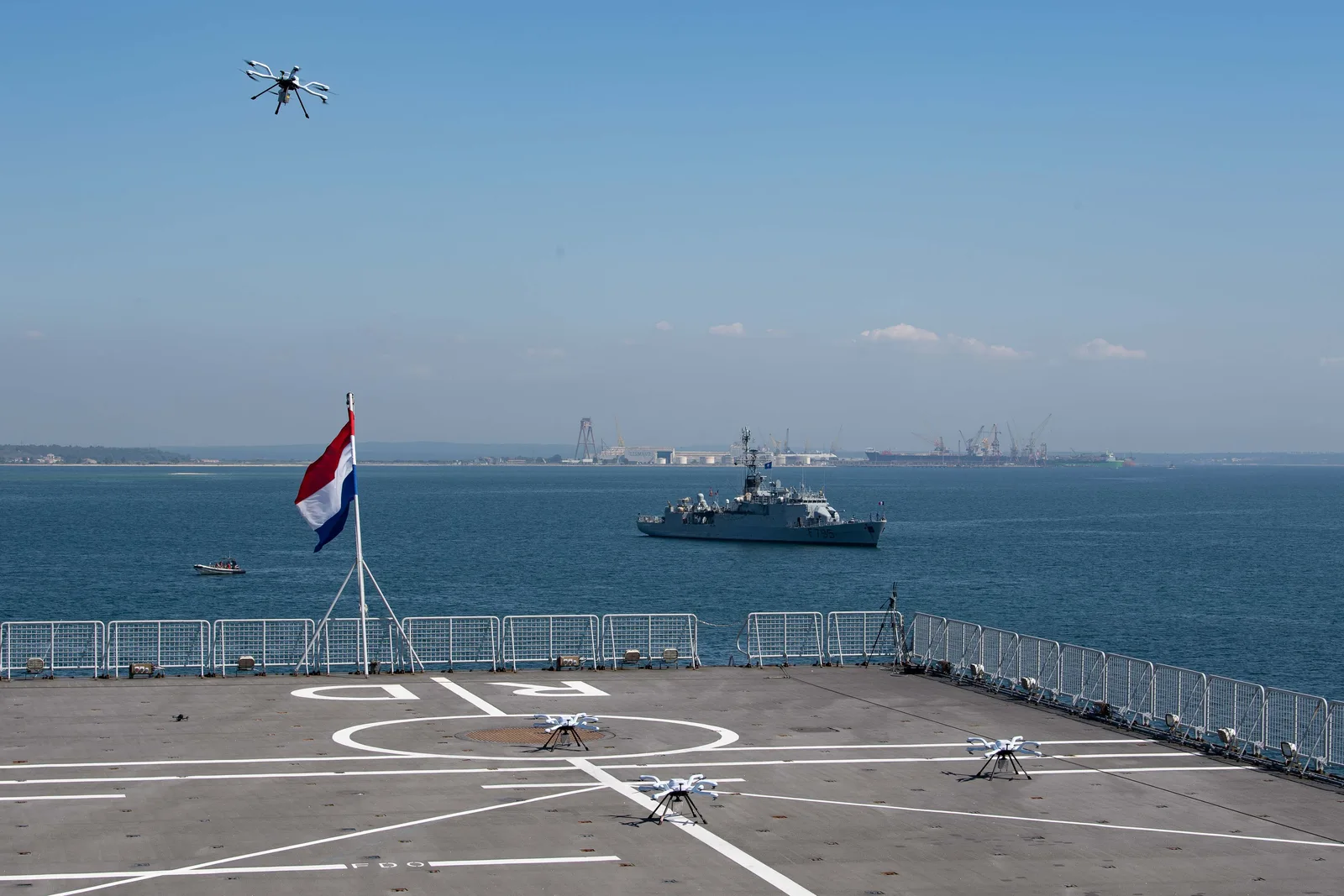
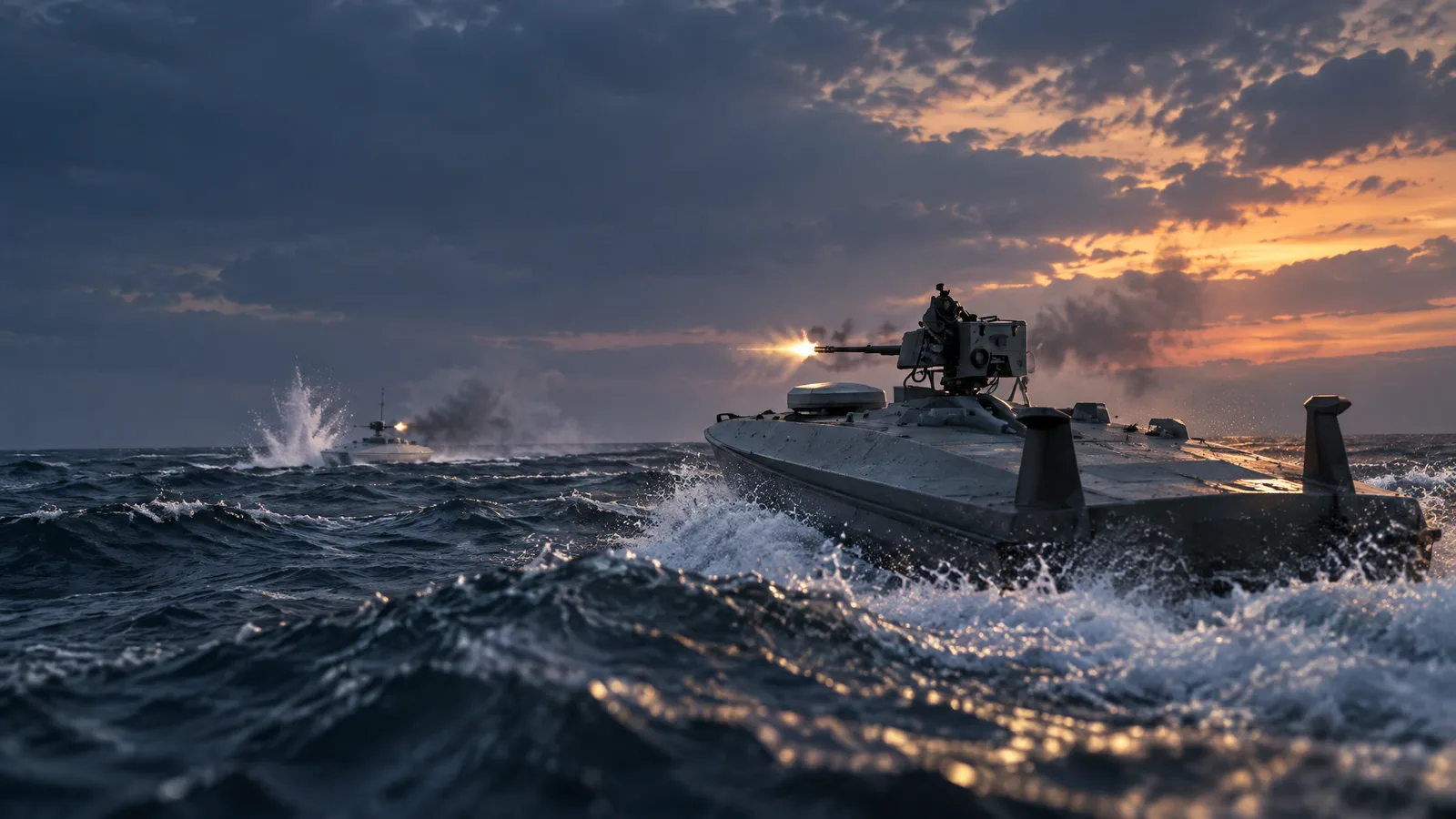
The second demonstration involved a kinetic sequence. A Bayraktar Kalkan vertical take-off and landing (VTOL) UAV, operating from a naval vessel, detected and designated a target. The target was then engaged by an MKE Pirana OWA USV equipped with a live warhead.

A Pirana OWA USV approaches its target at the Denizkurdu exercise.
A Pirana OWA USV approaches its target at the Denizkurdu exercise. (MKE)
The Pirana OWA USV detonates against its target.
The Pirana OWA USV detonates against its target. (MKE)
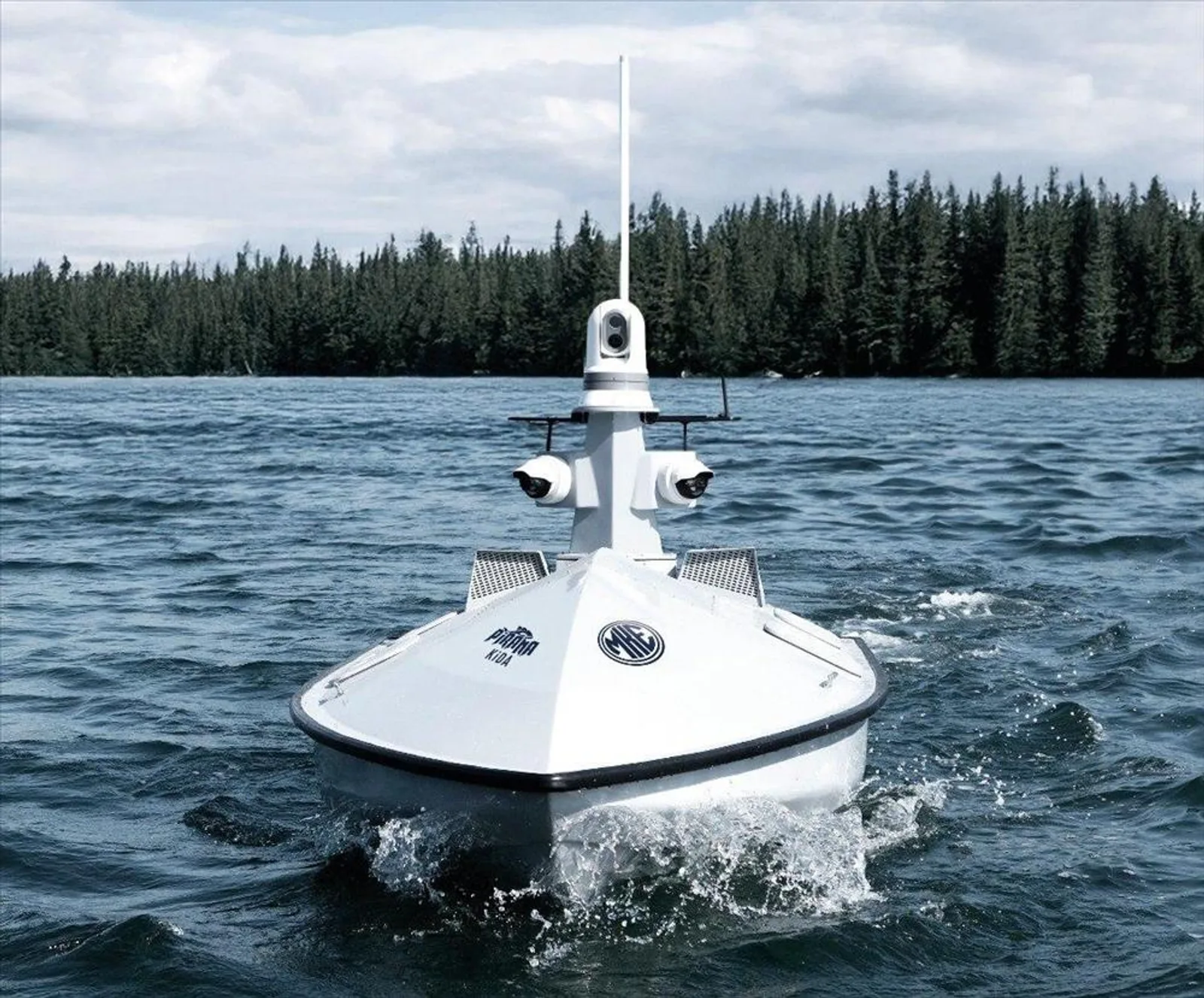
Front view of a Pirana OWA USV.
Front view of a Pirana OWA USV. (MKE)

The sequence connected an aerial sensor with an unmanned surface strike platform. The Kalkan provided an elevated surveillance and targeting function, while Pirana acted as the strike asset. A crewed ship could perform launch, control and command functions within this type of mission.

Such a model could allow a frigate or corvette to use unmanned assets for selected reconnaissance and strike tasks rather than positioning the crewed ship closer to the target area. The extent to which this approach is used would depend on the threat environment, communications conditions, rules of engagement and the availability of alternative weapons.

Unmanned systems do not obviate the need for warships. They can, however, extend the sensor and strike reach of crewed platforms, and offer additional options for commanders.

Lessons from the Black Sea

The war in Ukraine has affected how regional navies assess surface warfare in confined waters. The Black Sea has shown the exposure of large ships to persistent surveillance, shore-based missiles, long-range strike systems and explosive unmanned surface vessels.

It has also demonstrated the limitations of unmanned systems. These platforms remain vulnerable to electronic warfare, weather, defensive fire, physical barriers, navigational failure and disrupted control links. Small surface vessels can be affected by sea state, mechanical problems and communications loss before reaching their intended operating areas.

The conflict has nevertheless highlighted the resource imbalance that can arise when high-value warships must defend against lower-cost, numerous and difficult-to-detect threats, and the cost asymmetry.

For Türkiye, these issues have direct regional relevance. The Navy operates in the Black Sea, the Turkish Straits, the island-dense Aegean and the Eastern Mediterranean. These operating environments place emphasis on surveillance, rapid targeting and the ability to operate near coastlines, shipping lanes and contested maritime approaches.

Türkiye’s emerging approach appears to combine conventional ships with several categories of unmanned platforms. Unmanned aircraft can provide persistence and targeting; recoverable unmanned surface vessels can support surveillance, electronic warfare or patrol missions; and expendable systems can be used for missions where recovery is not expected.

From demonstrators to mass

The next issue is scale. Türkiye’s defence establishment has moved toward the procurement of around 100 expendable, OWA USVs through several domestic industrial teams. The final configuration, production allocation and operational distribution of these systems remain subject to the procurement process.

The programme suggests an intention to move beyond isolated demonstrations toward a force structure in which the loss of individual strike vessels is anticipated as part of an operation.

Pirana is one example of the OWA USV concept. Other Turkish industrial companies are developing compact, low-profile surface craft intended for attacks against maritime or coastal targets, such as STM’s Yaktu, Aselsan’s Tufan and Ares Shipyard’s ULAQ-6 Kama systems. Such systems are expected to operate through line-of-sight and beyond-line-of-sight communications while being connected to a wider operational network.

The term ‘swarm’ requires some qualification, since multiple vessels moving against a common target do not necessarily constitute advanced swarm warfare. A coordinated multi-vessel attack would require common mission planning, target-data sharing, deconfliction, navigation in degraded conditions and sufficient onboard autonomy to continue operating if communications are disrupted. It would also require reliable target identification and the ability to distinguish military targets from civilian traffic in congested waters.

The central issue is therefore whether Türkiye can generate numbers while maintaining command-and-control coherence. A force of around 100 expendable vessels could provide numerical depth and permit a degree of attrition. Its operational utility, however, would depend on whether systems from different manufacturers, with different hulls and payloads, can operate through compatible C2 arrangements.

The relevant measure is not only the total number procured, but also how many platforms can be launched, controlled, updated, supported and, where applicable, recovered during a sustained operation.

The Turkish Navy’s experience with networked command systems is relevant in this context. A hybrid-fleet model depends on a common tactical picture linking ships, aircraft, unmanned aerial vehicles and surface craft. Without effective integration, the result would be multiple individual platforms rather than a distributed force.

The wider unmanned force

Türkiye’s unmanned maritime ecosystem now includes a range of platforms that could support such a model.

In the air, TB3 is significant because it was designed for short-deck naval operations. Its folding wings and autonomous launch-and-recovery capability allow TCG Anadolu to operate fixed-wing unmanned aircraft without catapults or arresting wires. Kalkan VTOL UAVs offer a different capability, potentially providing individual ships with an organic airborne sensor where flight-deck space is limited.

The TAI Aksungur UCAV represents another part of the wider picture. Its payload capacity and endurance make it relevant to wide-area maritime surveillance and missions requiring persistence. It could complement crewed maritime patrol aircraft in selected roles. Different Anka variants are also used for surveillance and limited strike missions.

At sea, Turkish industry has developed several unmanned surface vessel designs. Ulaq has been presented in different mission configurations. Marlin has demonstrated electronic-warfare and intelligence functions and can be configured with ASW and anti-surface warfare (ASuW) payloads. Sancar and Salvo designs are associated with port protection, patrol and force-protection missions. Aselsan’s Albatros-S programme has explored cooperative operation by multiple surface vessels.

These platforms do not all perform the same tasks, nor is it certain that all will enter service in large numbers in different variants. The Navy will need to determine which systems should receive fleet-wide integration, which should be retained for specialised missions and which should be treated as expendable assets rather than conventional vessels.

Steadfast Dart and the NATO dimension

The Turkish Navy has also tested parts of its hybrid approach beyond its immediate region.

During NATO’s Steadfast Dart 2026 exercise, TCG Anadolu deployed to the Baltic Sea as part of a Turkish task group. The deployment took place at a considerable distance from Turkish waters, in challenging weather conditions and within a NATO command environment. TB3 aircraft conducted operations from the ship, including launch, target engagement and recovery.

A Bayraktar TB3 UCAV taking off from the runway of Turkish Navy's flagship TCG Anadolu during Exercise Steadfast Dart.
A Bayraktar TB3 UCAV taking off from the runway of Turkish Navy's flagship TCG Anadolu during Exercise Steadfast Dart. (Turkish Navy)

Denizkurdu-I/2026 demonstrated elements of the concept in a Turkish national exercise. Steadfast Dart indicated that at least some of these capabilities could be deployed in a NATO setting beyond Türkiye’s surrounding seas.

The wider NATO relevance concerns naval aviation. Several allied navies operate amphibious assault ships and large-deck vessels but do not field conventional carrier air wings. Short-deck-capable unmanned aircraft could offer persistent fixed-wing intelligence, surveillance, reconnaissance and limited strike capabilities from ships that otherwise rely primarily on helicopters.

TB3 is not a substitute for crewed fast jets – it cannot perform air-superiority missions and would face limitations in heavily defended airspace. It may nevertheless provide amphibious groups with additional surveillance capacity, longer time on station and a limited precision-strike capability without requiring a conventional carrier air wing.

In amphibious operations, UAVs could assist in observing beaches, monitoring approach routes, identifying small surface threats and maintaining coverage over an area. This could allow crewed helicopters to focus on transport, ASW or direct support missions.

Türkiye’s experience may, however, provide an operational example of how a large-deck amphibious ship can generate fixed-wing unmanned aviation at sea in NATO applications.

Toward a hybrid fleet architecture

In sum, Denizkurdu-I/2026 presented several elements of an emerging model.

The TB3 sonobuoy trial and the Kalkan-Pirana strike sequence were separate demonstrations, but each showed a different form of crewed-uncrewed integration. The former related to airborne acoustic surveillance, while the latter connected an unmanned sensor to an OWA USV strike platform. The planned acquisition of OWA vessels indicates an intention to add numbers to individual platform demonstrations.

The Turkish Navy’s stated objective is not limited to acquiring more unmanned systems. It is to incorporate them into how a naval force collects information, makes decisions and delivers effects.

Under this model, crewed ships would remain central to the force. However, they may not be required to carry every sensor into the forward area, accept every tactical risk or deliver every weapon directly.

Share post

You may be interested in

Categories

All NewsSea

Used tags

‘hybrid navy’ASWNATOOWA USVsTurkish NavyTürkiyeUAVsUSVs

Similar posts