The Telegram messaging app has become a highly visible feature of the war in Ukraine, widely used by military personnel, conflict bloggers, and civilian audiences. However, its utility is constrained by the inherent limitations of internet-based communications. This article examines the platform’s operational constraints, associated data vulnerabilities, and its role as a public relations tool.
Telegram in wartime
Telegram is a prominent online platform for the dissemination of both official and unofficial information relating to the war in Ukraine, particularly within the Russian-speaking world. Its widespread adoption by military personnel and civilian audiences has made it a valuable tool for observers and researchers seeking to track developments in the field.
It is still a challenge to accurately gauge the extent to which Telegram is used as a command-and-control (C2) tool within Russia’s war effort, aside from secondary utility as a public relations platform. Despite this, the 2024 arrest of Telegram founder Pavel Durov prompted concerns among pro-war Russian commentators that the platform could present an operational risk, given its perceived importance as a frontline communications tool.
This article examines two key questions: first, to what extent can applications like Telegram be realistically useful as a communication tool in combat environments; and second, how the broader risks associated with using civilian applications pose vulnerabilities to sensitive data.
On the frontline usage of internet-based communications
While current and historical attempts to limit or entirely ban Telegram have resulted in concern due to its reported battlefield utility, an important consideration is that the underlying vulnerability lies not solely in the application itself, but in the requirement for a reliable internet connection for it to function as a communications tool.
While Ukrainian forces have benefitted significantly from access to Starlink – a satellite internet service that uses a large constellation of low Earth orbit (LEO) satellites to link user terminals with ground stations – Russian access to this US-developed technology has been sporadic and largely dependent on grey market procurement. As a result, Russian use of Starlink remains unsanctioned. This has led to sustained efforts to restrict such access, including geofencing measures and cooperation between Ukrainian authorities and Starlink to register, verify and monitor authorised terminals, enabling the identification and potential disabling of devices operating in Russian-controlled areas.,
Within Russia, private initiatives such as Bureau 1440 are seeking to develop a domestic satellite communications architecture analogous to Starlink. However, these efforts remain nascent and are unlikely to provide comparable capability in the near term.
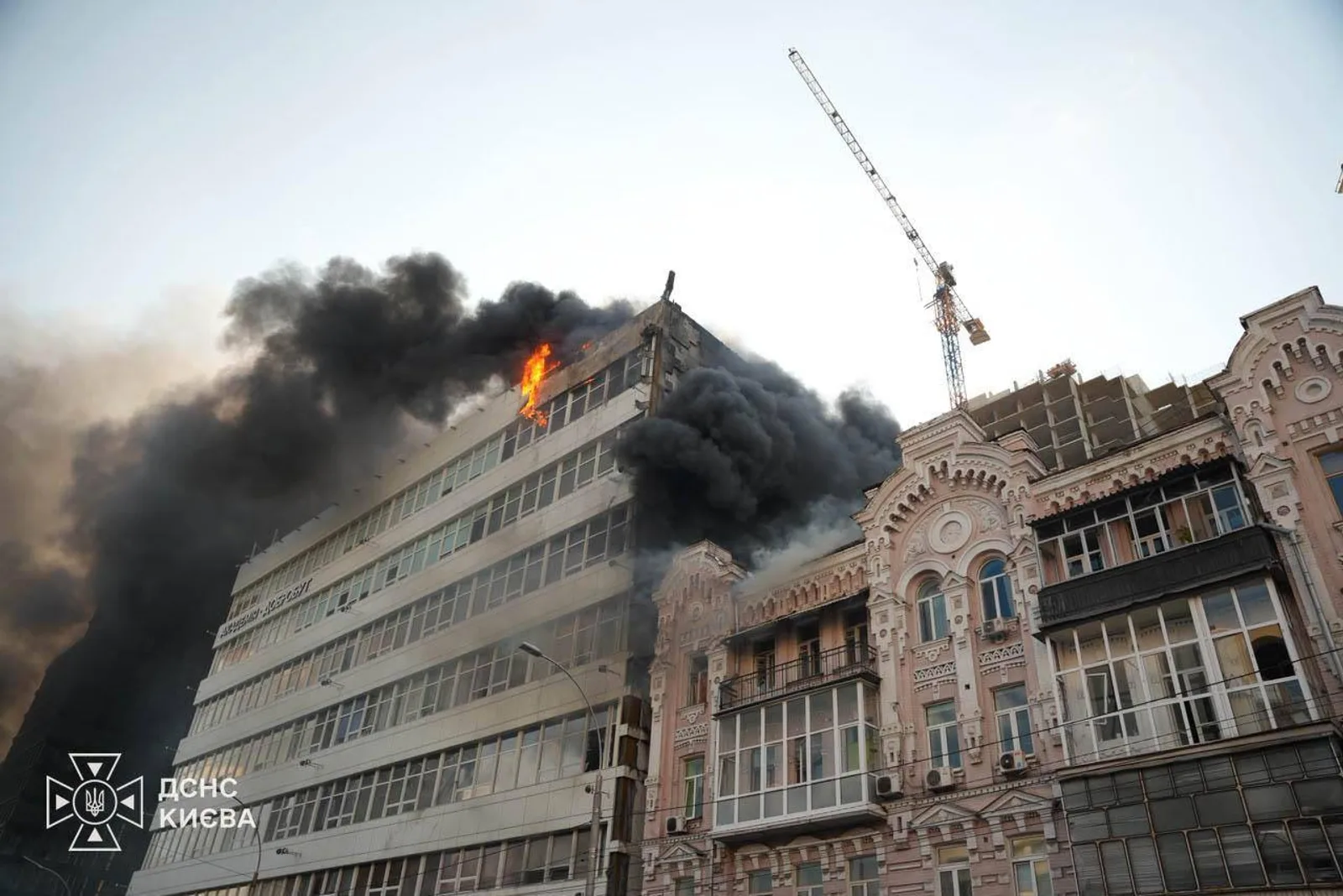
As for terrestrial communications infrastructure, the widespread targeting of civilian mobile telecommunication towers – whether deliberate or as a secondary effect of strikes on energy infrastructure – significantly degrades network availability in contested areas. Repair efforts are further constrained by the persistent threat of enemy fires, rendering such infrastructure both vulnerable and operationally unreliable. Mobile telecommunication towers constitute attractive targets for disrupting one means of networked communication.
However, even intermittent access to the internet could, in theory, enable the transmission of text-based data such as target coordinates, or more advantageously, visual data in the form of imagery and video captured by frontline unmanned platforms or personal devices.
Some evidence of this appeared in February 2026, when State Duma IT Committee Chairman Sergei Boyarsky stated that temporary restrictions on Telegram included exemptions for certain air defence zones, where continued use of Telegram was permitted. This suggests that the adoption of Telegram is likely driven by a combination of convenience, accessibility, and more tellingly, the absence of more secure or integrated military communication systems. Additionally, its usage is likely ad hoc, varying by unit type and access to communications infrastructure.
Vulnerability of civilian smartphone applications in the field
Telegram forms part of a wider smartphone-based vulnerability associated with the use of civilian social media platforms in a military context. The use of such applications reduces institutional oversight of data handling and transmission security, increasing exposure to potential interception or unintended disclosure – particularly when data centres are located outside of the user’s home country.
This concern has been reflected in Russian reporting. In February 2026, RIA Novosti cited a Russian commander who prohibited the use of Telegram within the combat zone, citing concerns that user data could be stored on servers located abroad. This concern was particularly prominent in 2024, when the arrest of Pavel Durov intensified fears among Russian commentators that foreign intelligence services could access user data. Such data may would prove lucrative for collection efforts, such as the aggregation of metadata that could be used to identify and track personnel operating in contested areas.

A comparable cybersecurity risk has been observed in the West. A recent report by Le Monde highlighted how the French Navy aircraft carrier Charles de Gaulle could be tracked through the public activity of a sailor using the Strava application, which recorded running routes on the vessel’s deck. A similar incident with Strava in January 2018 exposed the locations and layouts of various military facilities by revealing the exercise routes taken by personnel. Cases such as these illustrate how seemingly benign personal data can contribute to operational security risks when accessed and analysed.
Beyond individual applications, an open-source intelligence (OSINT) conference in London hosted in March 2026 by the OSMOSIS Association highlighted the growing role of commercial mobile data brokers in enabling large-scale tracking through the aggregation of advertising data collected via smartphone applications.
Many smartphone applications integrate advertising software development kits that capture snapshot GPS location data when opened, alongside device identifiers and timestamps. While such data is originally collected for marketing purposes (i.e., to target users with specific adverts based on their location), its aggregation at scale enables the reconstruction of patterns of life at both the individual and even group level. When correlated over time, this can reveal past and current locations, movement routes, and areas of activity. All these data points could prove useful for targeting.
Such examples support more restrictive views that smartphones are perhaps a greater risk to operational security that cannot be offset by the convenience and utility they offer in other areas like communications.
Where civilian social media platforms prove useful
Telegram plays a significant role in shaping public relations between individual units and wider society, reflecting a devolution of wartime reporting and the ability to bypass the chain of command. This has enabled a mutually reinforcing relationship between military personnel, conflict bloggers, and various anonymous accounts that disseminate combat footage and updates. In this dynamic, frontline troops provide access to exclusive material – including combat footage – which is used to build and sustain large online audiences focused on the war.
These audiences can then be leveraged to support crowdfunding efforts that contribute to the direct procurement of equipment and supplies for those same units, including drones, individual radios, and other materiel. This creates a feedback loop in which battlefield content is used to solicit public donations, which in turn fund additional equipment that can generate further content. Telegram channels are central to this process, providing both reach and immediacy, particularly to a domestic Russian audience.
For example, Russia’s 3rd Assault Company of the 57th Separate Motorised Rifle Brigade has made repeated appeals for civilian donations to procure combat equipment, with a particular emphasis on drone-related systems.
Building on this role in fundraising, Telegram also provides a direct interface between individual units and wider society, enabling a level of visibility and interaction that would be difficult to replicate through conventional military channels. It should also be made clear that these identified patterns are not limited to the Russian side.
Final thoughts
Telegram’s prominence in the war in Ukraine better reflects its visibility rather than its reliability as a military communications platform. While it plays a meaningful role in information dissemination, fundraising, and public relations, its operational utility remains constrained by dependence on vulnerable communications infrastructure and exposure to the security vulnerabilities inherent in civilian digital applications.
At the tactical level, degraded and uneven connectivity would limit its effectiveness for time-sensitive coordination, particularly for Russian forces lacking consistent access to reliable internet services. As a result, Telegram is better understood as an auxiliary and opportunistic tool, supporting resource mobilisation and informal coordination rather than functioning as a core component of frontline C2.
As the Russian government promotes a transition towards the state-backed ‘Max’ messenger platform, some problems have already started arising, with many Russians having reportedly offered their ‘Max’ accounts for sale or rent via the Darkweb. Over the longer term, some concerns around data security may be mitigated. However, this shift does not resolve the core limitation: the continued reliance on vulnerable internet infrastructure, which remains susceptible to disruption in wartime.
Share post