NATO has just launched an entirely new procurement mechanism designed to get counter-drone technologies into the hands of allied armed forces as quickly as possible. Yet this is just one piece of a much larger puzzle that aims to radically accelerate procurement within the Alliance.
Procurement in one day: NATO launches its counter-drone marketplace
NATO efforts to accelerate procurement of counter-unmanned aerial vehicle (C-UAV) systems among its member states have been given a notable boost, with the Alliance officially launching its counter-drone marketplace on 5 November 2026. The marketplace was developed to support NATO’s Drone Edge policy – under which allies are aiming to collectively spend USD 40 billion on C-UAV systems out to 2031.
Yet the brevity of the official announcement belies the significance of the launch. The vision behind the marketplace is no less than to radically transform the speed with which allies can procure counter-drone capabilities. So how does it work?
On the face of it, the counter-drone marketplace is a portal designed to facilitate rapid procurement of C-UAV solutions, by allowing member state armed forces to select from solutions which have been tested and verified as working for a specific reference use cases.
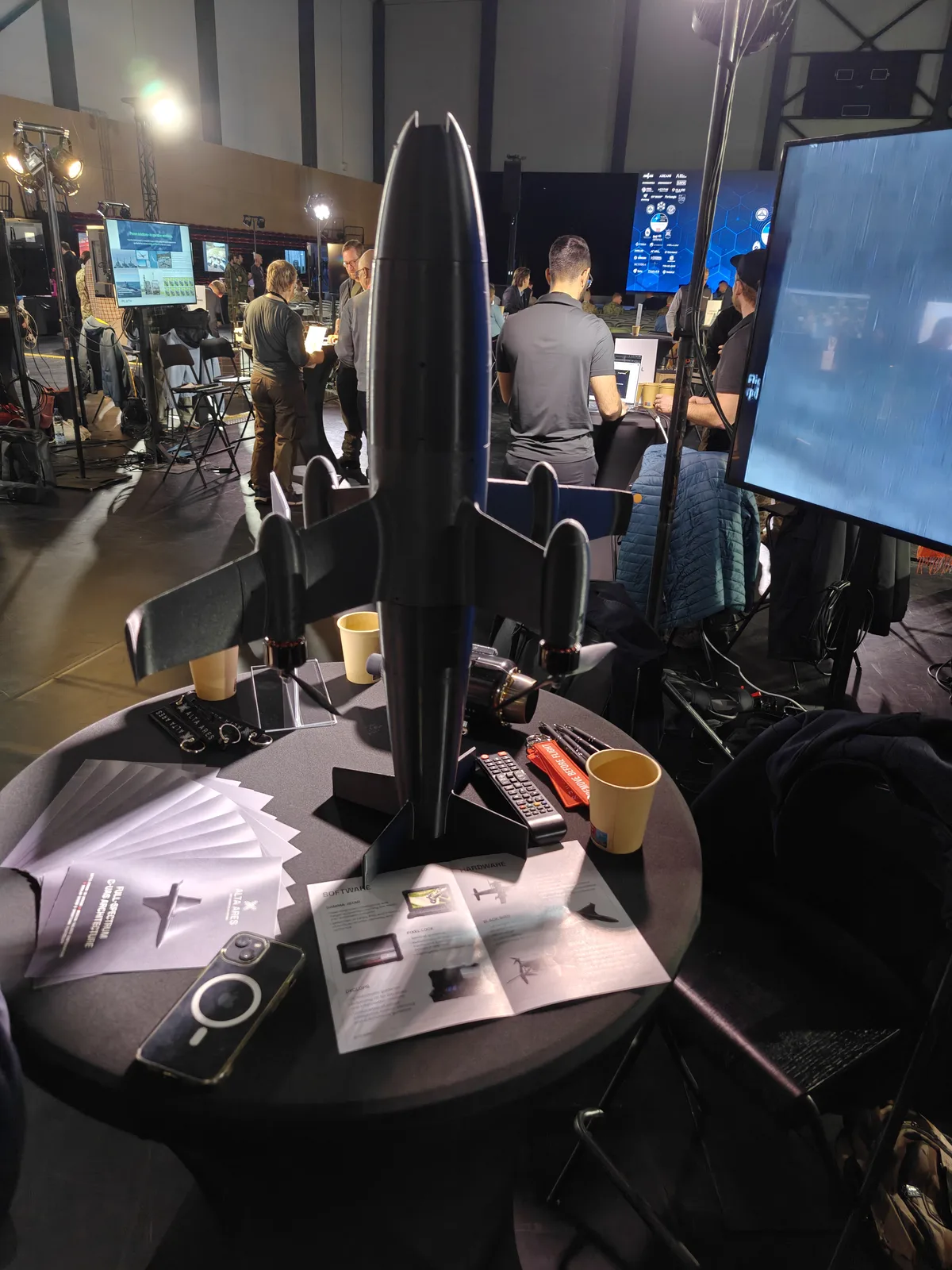
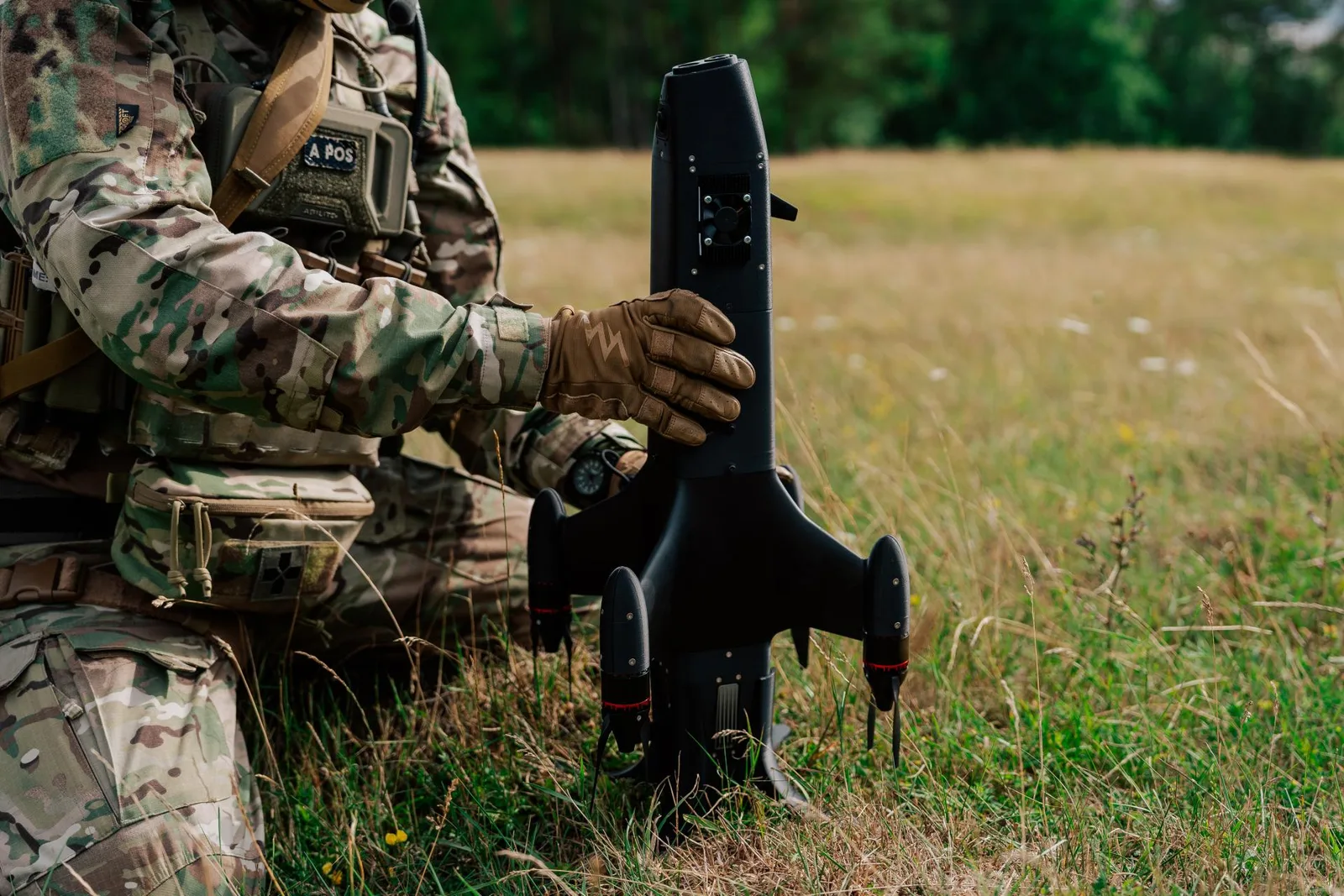
The marketplace is managed by the NATO Communications and Information Agency (NCIA) on behalf of NATO, and at launch, it contains 16 C-UAV solutions from five companies (Alta Ares, Axon Enterprise Inc., Northrop Grumman, OSL UK and Quantum Systems), all of which have already been deployed in allied countries and Ukraine. These 16 solutions are mapped onto four reference scenarios, which are as follows:
- Point Protection: The aim here is protection of smaller-size assets or locations, with stated examples including (smaller) military installations or pieces of critical national infrastructure, or command posts.
- Area Protection: This aims to defend a larger area, up to 3 km in diameter, with stated examples including airbases, logistics hubs, or (larger) military installations.
- Border Protection: This aims to provide monitoring and protection across a 20 km border segment.
- Convoy Protection: This aims to provide on-the-move protection for a military convoy up to 300 m in length, travelling at speeds of up to 50 km/h.
The releases from NATO and the NCIA did not specify which exact solutions from the aforementioned companies were listed on the marketplace, but some of the sensors, effectors, and software offered could be deduced from these companies’ C-UAV product portfolios.
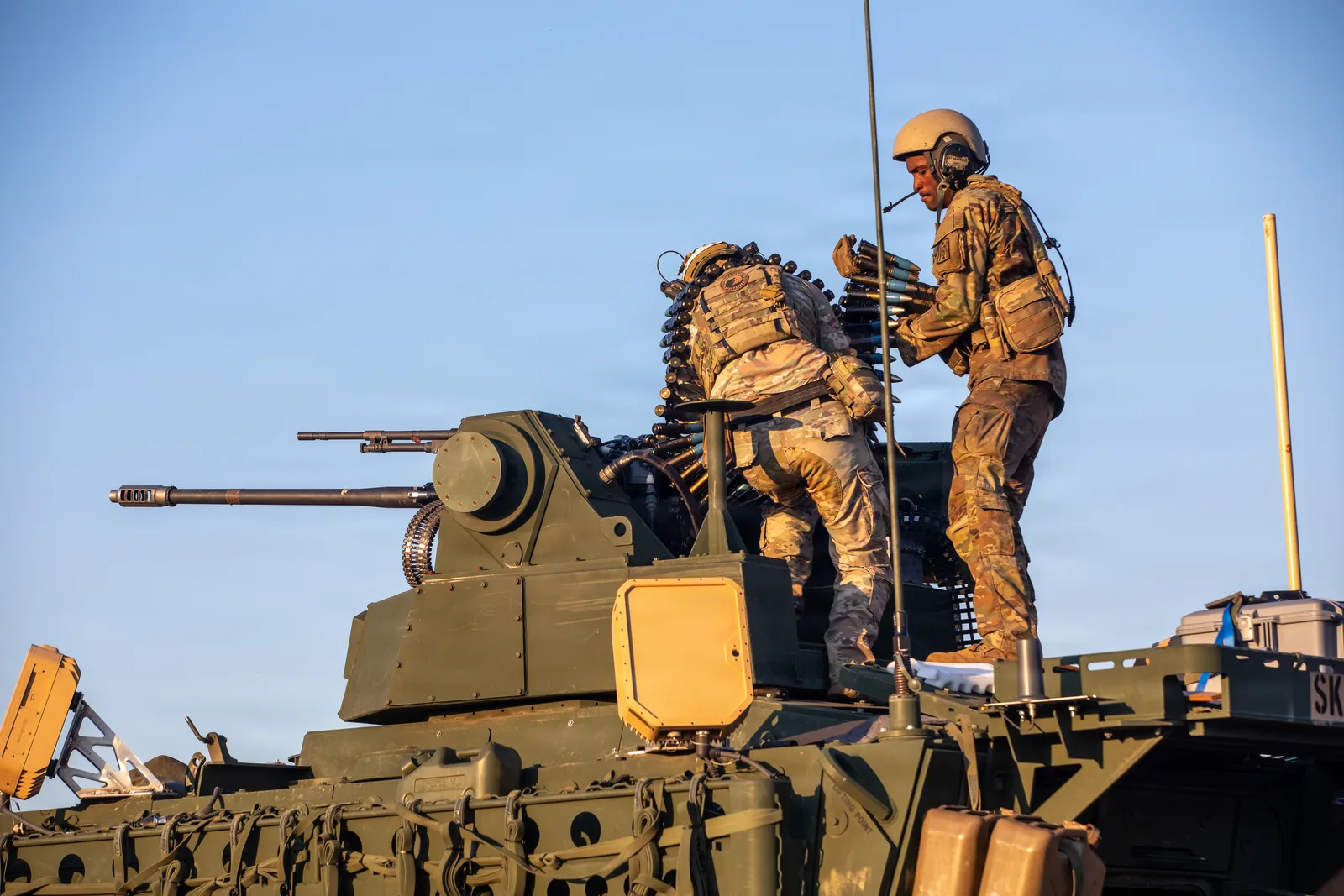
Realistically, the initial C-UAV solution packages would all be expected to contain some combination of: optoelectronic, radar, and direction-finding for sensing and cueing, tied together with command-and-control (C2) software with sensor fusion and automation functions, and then jamming, interceptor drones, or medium-calibre direct fire systems on the effector side of the equation.
Such solutions are fairly common and well-understood in the C-UAV space. Yet in many ways, more interesting than the technology is how the marketplace works, and how it proposes to transform C-UAV system procurement.

The counter-drone marketplace: ‘Procurement in one day’
The week before the marketplace was announced, Warsight was in Riga, among a small group of press briefed on the marketplace by Claudio Palestini, Head, Innovation and Technology Adoption, at the Defence Investment, Innovation and Armaments (D2IA) Division, NATO HQ.
Describing how the marketplace would work, Palestini outlined, “the concept is trying to sign contracts with indefinite quantity, indefinite duration [IDIQ], make it available with very stringent clauses in terms of deployment, duration – provision and delivery of the first kit – but also how to scale up, how to maintain production per month, with penalties for companies if they don’t comply.”
In order to make this kind of always-on production model feasible on the industrial side, the solutions need to be standardised to an extent. Doing so gives industry a predictable stream of demand, allowing companies to plan and scale their production around specific product groups they know there will be demand for.
On the other side of the equation, militaries also need a guarantee that the solutions they are choosing will work. This why military procurement can often take many months or years, as militaries have traditionally needed to spend long periods of time defining their requirements, then more time testing various equipment, before finally settling on a specific solution, which in turn may require further work for maturation, platform integration, or localisation.
Spread across a 32-member alliance, such work could take many years, especially for militaries less experienced in defining requirements within a NATO framework.
As such, basing the marketplace around solutions that have already been tested and proven to work around pre-defined ‘reference scenarios’ is a clever way to solve both the industrial and military requirement problems. Militaries receive a kind of guarantee: ‘here’s a solution you can have quickly, which has already been proven to work for X or Y use cases’; while industry receives a clear, predictable demand signal to plan and scale around: ‘we need you to continuously produce such and such equipment’.
Palestini explained, “what are we’re doing in the marketplace…is to define as much as possible use cases – instead of going into a very long list of requirements – use cases that we are certain they can serve as much as possible, as many allies as possible. And when we receive national requirements, we will map these national requirements to one of the use cases that we identified and offer them a possibility to do basically procurement in one day.”
“So, if you are a nation and you want to go for your national process, you can do it. It will take the full time to do a competition and so on. But if you go to NATO, to the marketplace, it will be one day, and the systems will be there in 90 days.” Palestini added.
The marketplace also goes beyond simply facilitating rapid procurement, as Palestini noted, “maybe you don’t want to buy. You can still lease these solutions, test for six months. You get also your internal operational experience, and then there will be a national decision, always a national decision, to follow either national procurement or NATO procurement. But this is an option that basically offers you a better possibility to get experience with systems.”
To facilitate potential users gaining experience with these systems, NATO has allocated EUR 3.1 million to fund further testing required by member states or NATO commands.
So how does the marketplace work at the user end? Palestini explained, “if you click on the system, it opens a form basically where you fill your requirements, and it will give you the system that, according to the procurement rules, has been selected to fulfil your requirements. This is a procurement process, that has been already done – best value for money or lowest technically compliant, across more than 80 offers that we received. So this is pre-competed.”
Palestini further confirmed that the marketplace procurement mechanism would be open to both nationally-funded programmes, or those financed under European SAFE (Security Action for Europe) loans. Responding to a Warsight question on whether the solutions would be International Traffic in Arms Regulations (ITAR)-free, he confirmed, “this was one of the requirements, so all the systems are ITAR-free.”
At launch, the marketplace offers just 16 solutions covering four scenarios. However, looking ahead, other solutions are planned to be made available over time, with the NCIA release noting, “given the rapid evolution of the UAS threat and the C-UAS technologies, NATO intends to run regular competition to ensure that the newest technologies are made available to Allies.”
Yet the alliance’s ambitions to speed up procurement go beyond the counter drone marketplace, which represents just one piece of a much larger NATO procurement puzzle.

NATO’s Innovative Solutions Catalogue: ‘The Tripadvisor of defence procurement’
As part of its broader efforts to accelerate modernisation, the Alliance launched its ‘Innovative Solutions Catalogue’ at the NATO Summit in July 2026. While not as pre-packaged as the counter-drone marketplace, the catalogue nonetheless aims to achieve fairly similar goals – by providing armed forces a way to rapidly find available solutions that match their requirements.
Palestini explained that there were essentially two streams, the first consists of higher-level exercises (such as LCI-X and Tast Force X), for companies with solutions that are nearly ready to be fielded. The second stream is aimed at companies with solutions that need more time to mature, and involves opening up NATO’s ‘innovation ranges’ every two months to conduct three days of self-testing and two days of guided testing.
Following on from this, Palestini said, “the next step that we will do is to basically create common testing and evaluation procedures, so that we can test all the systems against the same scenarios, against the same conditions, and having a sort of benchmark. This is to create an ecosystem where you are able to demonstrate your capabilities and your performance in a very rigorous environment and compare all the systems that you want.”
He explained that all of this performance data would be collected in the NATO Innovative Solutions Catalogue.
Expounding further on the catalogue’s, Palestini said, “today in NATO, there is a catalogue of solutions. We have hundreds of systems there, and 200 users in all armed forces acquisition agencies. That is exactly to do this: you have your own requirements, you filter for the requirements, and these are all the solutions from big players, but also small players, that will fulfil your requirements. So, this is for all operational experimentation.”
“So if you are a nation that you want to buy, you have to fulfil specific capability requirements. You look for these requirements, and it will give you all the systems that, according to the catalogue and the manual review done by experts, you have the highest confidence that these systems will fulfil these requirements. The more results will be there, the more you have data to support your evaluation, your market research,” he added.
In response to a Warsight question on how different solutions would be compared within the catalogue, Palestini said: “In each of the solutions, there is a field that we call the ‘evidence-based evaluation’, where we foresee that nations will put results of the tests there.”
Warsight asked if these evaluations would function like a score, to which Palestini responded: “So it’s not a score…It’s basically reports against a specific operational scenario. And what we are doing with the user communities is to define this common testing and evaluation procedure so that they will test against different scenarios, and there will be reports on how the system performed.”
“What we want, looking at the component level, is not that one radar will be better than another. The cost will be different, the performance will be different. So one radar perhaps is more used in a use case than another. So again, [there’s] competition, yes, but when we are talking against the same requirement,” he added.

Boosting smaller industry players: Funding and industrial capacity
Both the counter-drone marketplace and the innovative solutions catalogue are but two components of a wider shift by NATO aimed at accelerating procurement and empowering its defence-industrial base.
Two other important pieces were also expounded upon during Palestini’s briefing, both also announced at the 2026 NATO summit under the ‘NATO Scale-up Package’, which aim to help small and medium enterprises (SMEs) in the defence-industrial space to secure access to financing and spare industrial capacity, thereby allowing them to scale up their operations more easily.
The first is the financing call to action, and here Palestini explained, “we did a call for action for private capital providers and investors to see how much they will be planning to spend in defence products, invest in defence companies in the near future. And the role for NATO there is a convening power to understand the barriers and to basically solve some of the problems for private capital in investing in defence.”
The second is the ‘NATO engine’, which as Palestini elaborated, “is a platform where we put on one side the manufacturing capacity that is available in NATO nations – so mainly civilian companies from the automotive, metalwork, electronics, or aerospace manufacturing companies – and on the other side the demand, so small SMEs, startups.”
“We did the first RFI [request for information] for the manufacturing capacity, and we had 1,200 companies responding. So this doesn’t give us the full complete picture of what is manufacturing capacity in NATO or in Europe, but it gives us confidence that there is enough spare capacity and interest from the civilian world to work with defence companies. Now we are planning a second RFI for the demand side, and this is planned for mid-November [2026] to try to understand what is the demand, and then there will be a platform to do matchmaking” he added.

Can NATO’s plan survive contact with politics?
As the aforementioned mechanisms indicate, NATO is investing considerable effort into accelerating modernisation and readiness among its member states, as well as cultivating its defence-industrial ecosystem.
In particular, the counter-drone marketplace would seem to be well thought-out mechanism that solves several problems at once. If it manages to deliver as promised, it would provide allied armed forces with greatly-needed equipment within impressively short timescales.
However, it remains to be seen if such procurement accelerants can withstand the pressures of procurement politics, which tend to skew heavily toward national self-interest. Even at the best of times, procurement decision-makers are incentivised to buy local. Doing so keeps as much of their spending as possible in-country, and maintains sovereign control, high-skill jobs, domestic industrial capability, and often votes.
Yet in the case of Europe, procurement prioritising national economic self-interest tends to reinforce a fragmented defence-industrial ecosystem and allies fielding bespoke solutions with limited interoperability, while factors such as technology transfer and localisation requirements often add yet significant delays between orders being placed and delivery.
On the other hand, always-on production lines prioritising speed, efficiency, and lower unit costs tend to favour a greater degree of centralisation. In practice, for many users, this would mean making peace with buying from abroad.
Sovereign industrial capability tends to be a high priority among most countries, especially so today. As such, the counter-drone marketplace may prove a difficult sell to politicians wary of increasing their dependency on foreign partners or unwilling to trade efficiency for control.
Yet in some cases, realism may be enough to overcome national pride, and may be given added impetus by Russia’s frequent drone incursions over NATO territory. Faced with the question of how to square efficient production lines with most countries’ general preference to buy domestic, Palestini recalled NATO Secretary General Mark Rutte’s outlook: “as the Secretary General sometimes says, we are in a period where we don’t have the privilege to say we want to buy nationally, European or American. Now we need to buy whatever is available.”
Share post