A new approach from the NAD
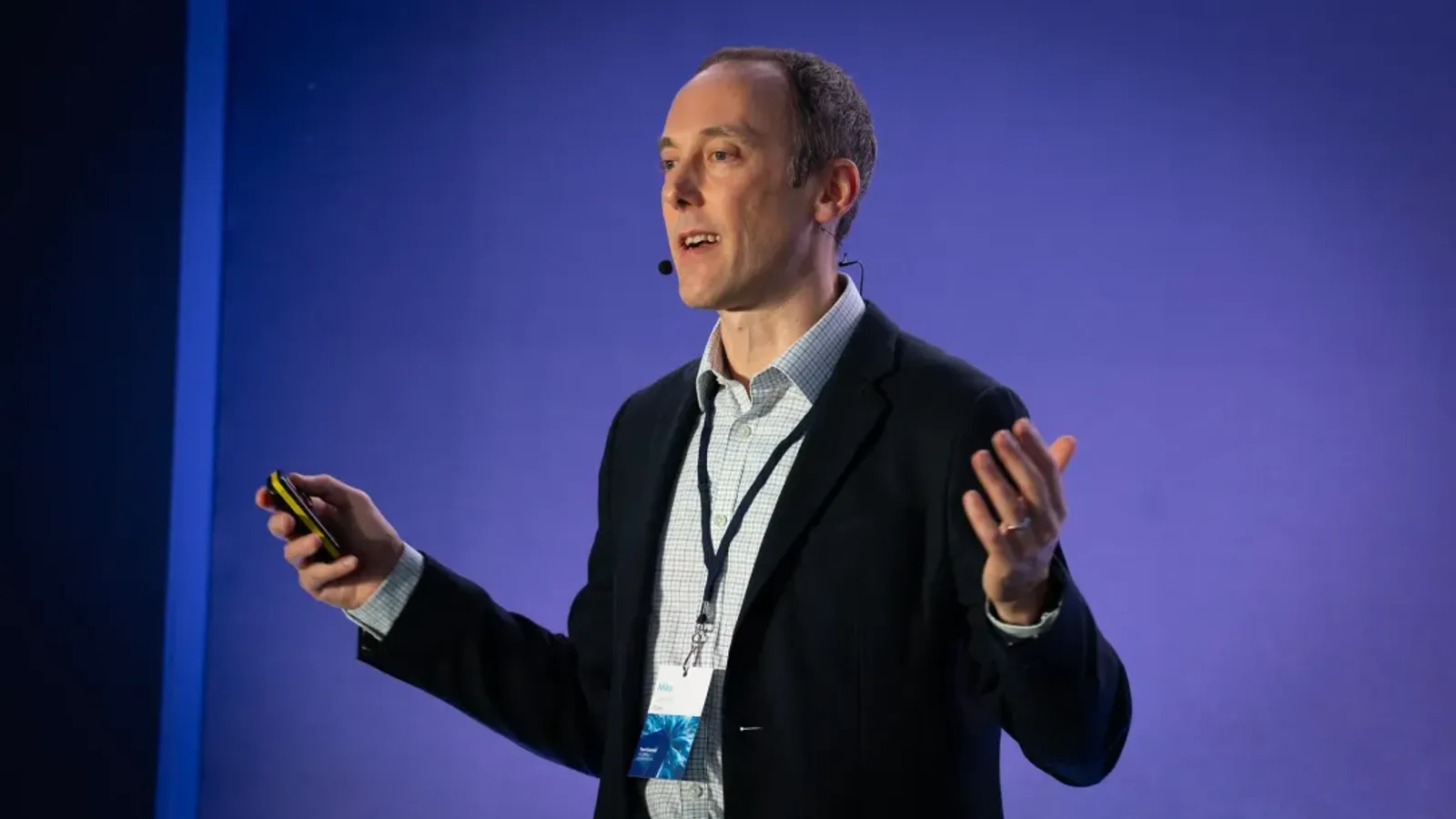
During the Thales Tech Summit’s afternoon session the podium was taken up by a guest speaker: UK National Armaments Director (NAD) Rupert Pearce.
While stating in his introductory remarks that “We live in unbelievably dangerous times” and that, “when we look ahead, it’s very hard to see that getting any better anytime soon,” Pearce noted that the “flip side of that” is “a time of incredible opportunity for the UK defence industry, both in the UK and globally.
“In the next five years it’s predicted that the European defence market will grow by EUR 400 billion just to meet the needs of NATO and its constituent governments,” said Pearce, “And of course, in our recently published Defence Investment Plan, the UK Ministry of Defence plans to spend nearly GBP 300 billion (EUR 350 billion) in the next four years alone.
“I spend a lot of my time out there talking to investors about defence, helping them understand defence, helping us understand investors,” said Pearce, “and it’s very clear that they can see a pathway to sustain long-term attractive returns by investing in defence. And in doing so they also help us keep the peace, so suddenly defence has become more relevant than ever before.
“So we’re investable and we’re purposeful; that’s a very exciting way to begin,” Pearce continued. “When we look at the new era of warfare, however, we see that legacy defence capabilities are no longer as relevant as they once were. The lessons of the Ukraine conflict need to be adopted wholesale, but we also need to understand that any future conflict, for example with Russia, will not look identical. And we have to think around corners about the ways in which we would like to fight and win, and how we adopt those lessons from Ukraine and integrate them in a wider set of capabilities for a wider set of domains and challenges. And I think the Middle East is a very good example of that for us as well.”
Identifying the ‘big themes’ the UK defence industry must consider, Pearce acknowledged that he could have pulled out dozens, but he concentrated on a few of these, starting with the role of autonomous systems.
“Something like 90% of casualty rates on the battlefield in Ukraine are from drones,” he noted. “It’s a complete transformation in the way warfare is being fought. The battlefield is transparent and drones dominate. How do we respond to that? Well, it’s not just by flying drones ourselves, but it’s also about learning what the right mix is between crewed and uncrewed. And you’ll hear us talking about the 20-40-40 mix, which means 20% crewed, 40% attritable, 40% consumable: a wholly different approach to the use of crewed and uncrewed, working together for increased lethality, longer survivability.”
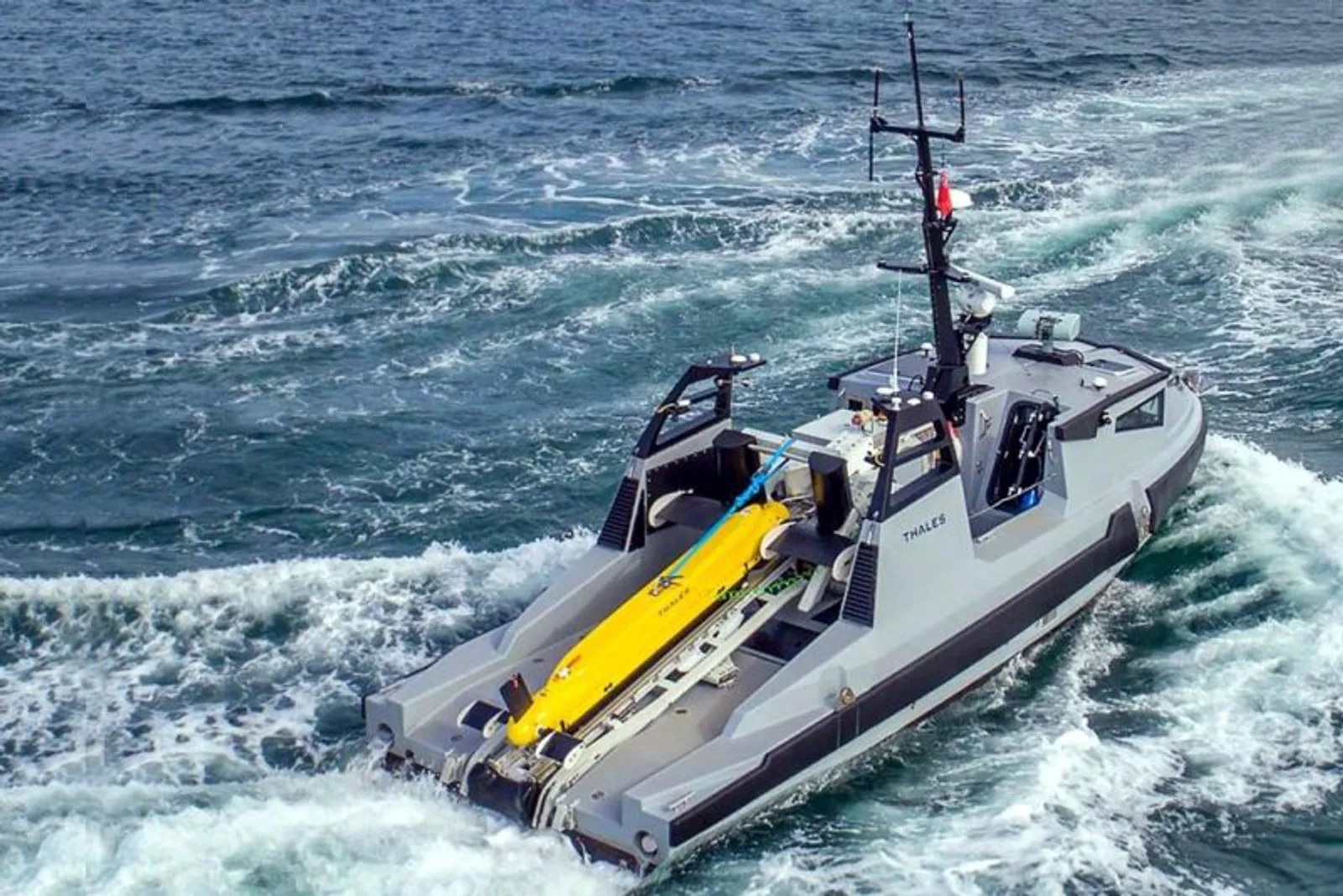
Pearce noted that the UK’s ‘hybrid navy’ concept is a good example of this, but acknowledged that “We’re just beginning to understand how hybridisation of our capabilities on the ground, in the air and at sea not only transforms our capabilities and our lethality; it projects hard power over the horizon.”
Looking at the impact of asymmetric warfare, Pearce noted that while UK forces have been dealing with this for many years, with cheap improvised explosive devices being a major factor in the wars in Afghanistan and Iraq, “we are seeing real time the effect that low-cost mass munitions can have both in attack and defence, but particularly in terms of overwhelming air defences”.
“We’ve got to find new economics, new ways of dealing with that,” he said, “both offensively and defensively, so we’re looking very hard at how we deal with that in areas like counter-UAS, counter-ballistic missiles, and the sheer economics: the mismatch of economics in warfare.”
Looking at data-centric decision making, Pearce said, “There is no question that data is going to be the ‘new oil’, if you like, in the business of warfare and is already getting there when you look at the battlefield advantage that Ukraine is delivering for itself through the power of data.”
“If we get that right, and we truly liberate the power of data and AI through our digital targeting web and through being able to fight ‘at top secret’, then I think we transform our deterrence,” he said.
Moving on to the space domain, Pearce noted that “Space has always been, for at least the last decade, both congested and contested, but I think we’re beginning to realise now the power of the ultimate higher ground and the way in which that is fundamental to empowering our ability to project PNT [position, navigation and timing capabilities] over the horizon and to be able to make a digital trageting web have real resilience and capability in any environment, even a degraded environment.
“It’s an incredibly costly place to put assets, and so it’s tailor-made for collaboration,” he added. “We’ve also got to deal with the next generation of space kinetic activity, which is our adversaries going to look to degrade our capabilities in space before they enter the battlefield, and we’ve got to figure out what we do in terms of defending our capabilities and degrading theirs.”
Pearce then noted that electronic and cyber warfare are “obviously another area of huge change”.
“There is absolutely no doubt that in the lead up to war, electronic warfare against us, that cyber disruption of our economy, of our critical national infrastructure, will be there,” he said. “We have to be societally resilient and ready to deter that.
“It’s not just a battlefield issue,” he added. “One of the best ways to demoralise Britain will be to go after our critical national infrastructure and degrade it and see whether that causes society to back away from supporting our response. We have got to be up to task, let alone a battlefield that now is a soup of electronic warfare and cyberattack and counter-attack. Whatever we do defensively, we have to be better offensively as well.”
Next, Pearce referred to “the softwarisation of everything and systematisation of everything”.
“What do I mean? I mean that a lot more of our capabilities are now in software and going towards software than ever before,” he explained. “Software is tough. While on the one hand you can move at pace and agility, and, in theory, you can create platforms that are more upgradable, on the other hand, as we all know if we’ve ever had to implement complex software programmes, it seems sometimes more like an art than a science. It’s very, very difficult to manage. And the capabilities we’ve developed about bending metal over the years are much less relevant when it comes to bending software.”
Pearce also noted that this is a skills issue, asking, “Do our troops, do our forces, do the people supporting them have the skills in depth and breadth to support that softwarisation of our programmes? Everything now is part of a system – a bullet, a rifle, a tank, an aircraft – they’re nodes on a network; they’re all connected; they’re all listening; they’re all a sensor; they’re all part of a soup of intelligence that needs to be marshalled and brought together in a single capability. So we’ve got to get much, much better at thinking systematically.”
“We’ve also got to think about wars of production and wars of society,” said Pearce. “There is no doubt that, in all but the briefest of wars, the next war will be a war of one production system versus another, so our production systems have to be up to task. Wars of society means that we will be fighting on the electronic battlefield at home as much as on the actual battlefield away from home, and we have to build resilience in society; we have to explain what we do to society so that people can support us and understand why we do what we do to protect them. We also have to reinfuse NATO and our allies with relevance and differentiation through interoperability, interchangeability.”
Pearce conceded that “The default setting for the Ministry of Defence through the last 40, 50 years of peace has been slow. … We’re built to move slowly, we’re built to not spend money, We’re built to wrap everything in labrynthine processes to make sure we operate in a truly riskless environment. That is not a recipe for moving quickly. The biggest challenge we face is to be able to up the pace. We thought we had 10 years last summer. By the autumn we thought we had five years. The intelligence [now] suggests there’s a great risk of us being at war by 2030 unless we project the right kind of deterrence. And to do that, we need to move at pace. That is hard.”
Pearce then focused on two particular issues: the transformation of supply chain relationships and defence innovation.
“A supply chain as a strategic warfighting capability requires a complete change of approach from both parties: the customer and the supplier,” he said. “We can’t go on with win-lose. We have to build, we have to move towards relationships, transparency and much improved dialogue. We have to focus on our supply chain strength, resilience and agility, especially the ability to move at warfighting pace, which in some areas is going to involve 10-timing your productive capacity in only a few weeks of notice. So we’re going to need new business models, new contracts to allow that to work, shared risk and reward; not a game of hide the risk and pretend you’ve shifted it somewhere when often you haven’t.”
Speaking as the NAD, Pearce added, “We have to stay the course with you as a result, we have to create win-win outcomes, and we have to be open to new ideas. We have to focus on what government can bring to you and to help our supply chains reach your and their full potential. We need to be easier and cheaper to do business with. We need to be faster as well.”
“Finally, we need to move at pace together,” said Pearce. “How do we do that? How do we up our game? How do we move with more agility? Innovation. What do I mean by innovation at the pace of relevance? Well, it means we have to do two things. The first thing, which is often missed, is we actually have to build our core platforms so they can be agile and so they can accept innovation rapidly onto the battlefield. There’s no point innovating but not being able to get it to the battlefield for years; it has to be instantaneous. That means designing MOSA [Modular Open Systems Approach] standards, open architectures, designing for agility, scale and security, and then constantly learning and iterating and infusing our capabilities all the time with the power of innovation.
“Into that platform we need to develop a UK defence innovation engine,” said Pearce. “That means fostering new ideas and facilitating problem solving at pace. It means co-developing new capabilities and solutions, getting to minimum viable product and product market fit quickly. It means ensuring funding is available to you at scale, especially the scale-up phase when you might need to take a check of GBP 100 million or more. And it means, of course, MoD [the UK Ministry of Defence] being a reference customer and making a material contribution to your return on investment through long-term deals that are profitable.”
As part of this approach, Pearce recognised the value of exports to make programmes and capabilities more viable. “We don’t want the MoD to be your only customer, partly because we want to build interoperability and interchangeability and infuse NATO with relevance, but also because we want you to be as successful as we can help you be for Britain and for yourself as a global winner, not just a UK winner,” he said.
Addressing what the UK MoD is doing to drive that change, Pearce said, “Number one, we’re publishing our long-term demand signals. The DIP [the UK MoD’s Defence Investment Plan, published in June 2026] was the first time in over 20 years that we published a 10-year plan with price tags attached. And we’re inviting you now, as our supply chain, to engage with us with ideas, creativity, energy and pace, new service models, moving the border between us and you to be able to really deliver the dip at pace. And within the next few weeks, we will bring out a DIP delivery plan that starts to articulate ‘the when and the where and the how’ and invites industry to come in and partner with us to accelerate away and to leverage the power of your ideas and your interest in new structures and, yes, your balance sheet if possible to move more quickly to deliver deterrence by 2030.
“Secondly,” said Pearce, “we are now directly fostering ideas and problem solving all the way from science and technology and R&D through the power of Dstl [the Defence Science and Technology Laboratory] to later-stage opportunities. UKDI [the MoD’s UK Defence Innovation organisation] has GBP 400 million a year to spend on mid-stage [technology readiness level] innovation. We want to spend that money to generate new ideas and new capabilities.”
“It’s not enough for us to provide development funding and grant funding and to be your customer,” said Pearce. “We know you want growth capital as well. And so through the Defense Investment Advisors Group, through the newly established Defense Investment Unit, through the Defense Finance and Investment Strategy, and the summit coming up in December this year, we’re looking essentially to say defence is open for [business]. We want to know more about the investment community to tailor our needs to them; they need to know more about us. And then we need to start to leverage that into crowding in capital into our programmes and, above all, into our supply chains.”
Summarising his arguments, Pearce said, “I think, above all, I’d say one message about the change in the relationship: it’s about cultural renewal. We need to learn how to move at pace. That means agility, planning, trust, consistent behaviours. We have to learn how to take more risk. That means learning to fail fast, to learn from that and to go again. We need to invest in relationships, think less about transactions, which means more openness, more orchestration of outcomes together, and staying the course, so we are a consistent partner for you. But it takes two to do that; it takes customer and supplier to get to a better place.”