Hunter breaks cover: Detailing the latest evolution of ASCOD

The ASCOD Hunter configuration ordered by Latvia represents a step change in capability for the ASCOD family. In an exclusive interview with GDELS, Warsight gleaned in-depth insights into many of the key technical developments going into this latest evolution of the ASCOD family.

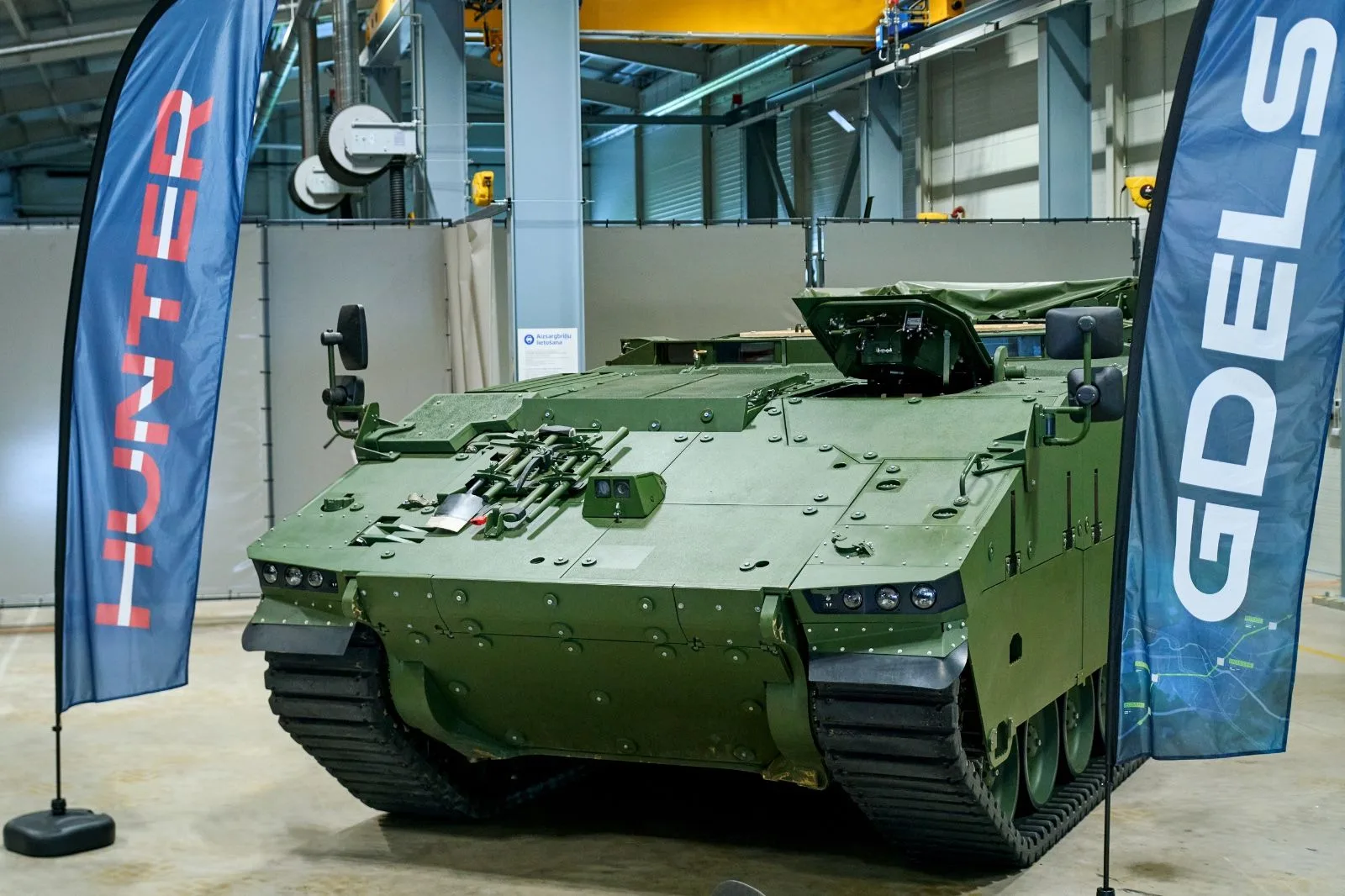
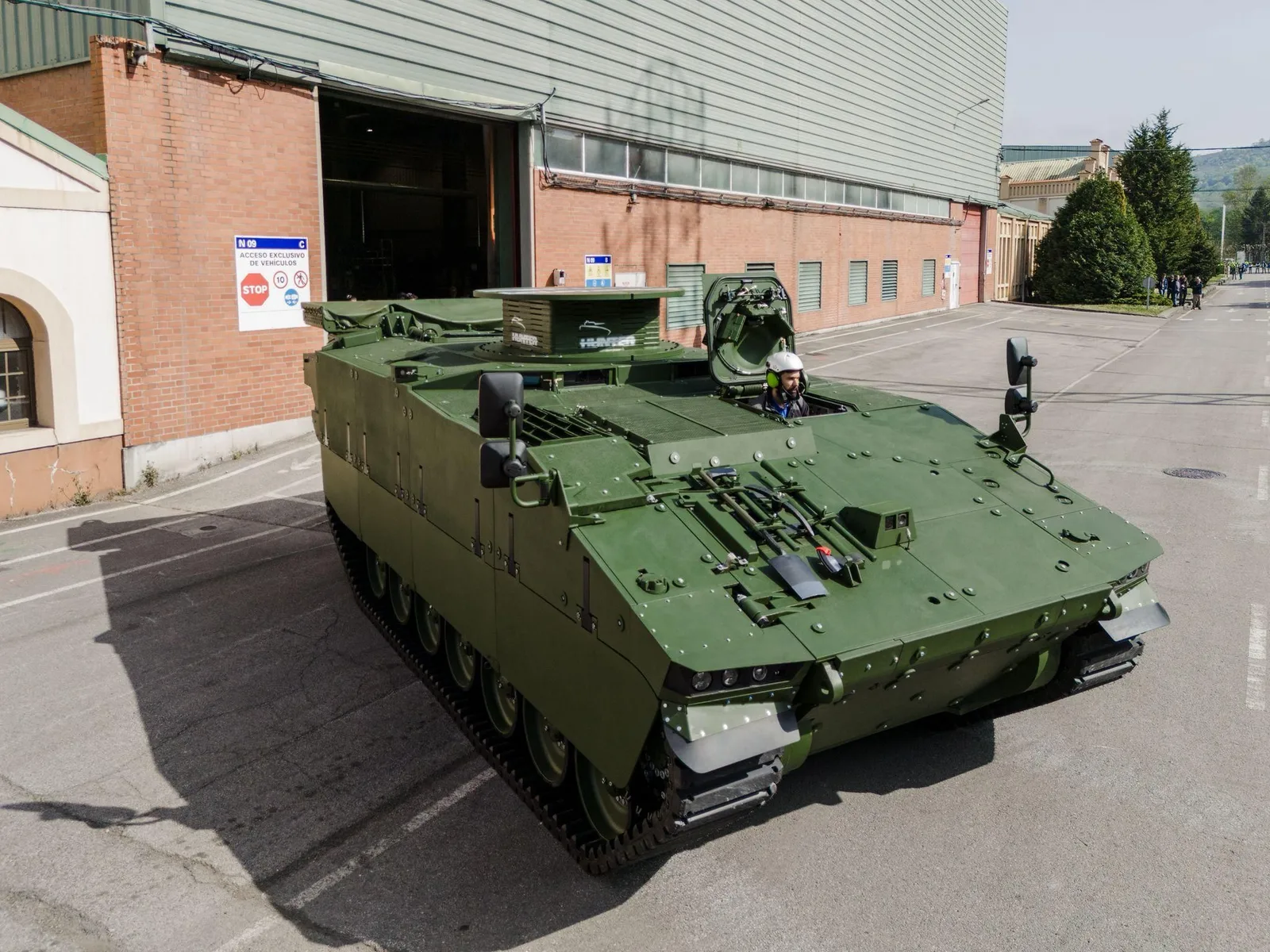
The first GDELS ASCOD Hunter to roll off the production line at SBS.
A three-quarter view of Latvia’s Hunter, the latest model in the ASCOD family. (GDELS)
Mark Cazalet

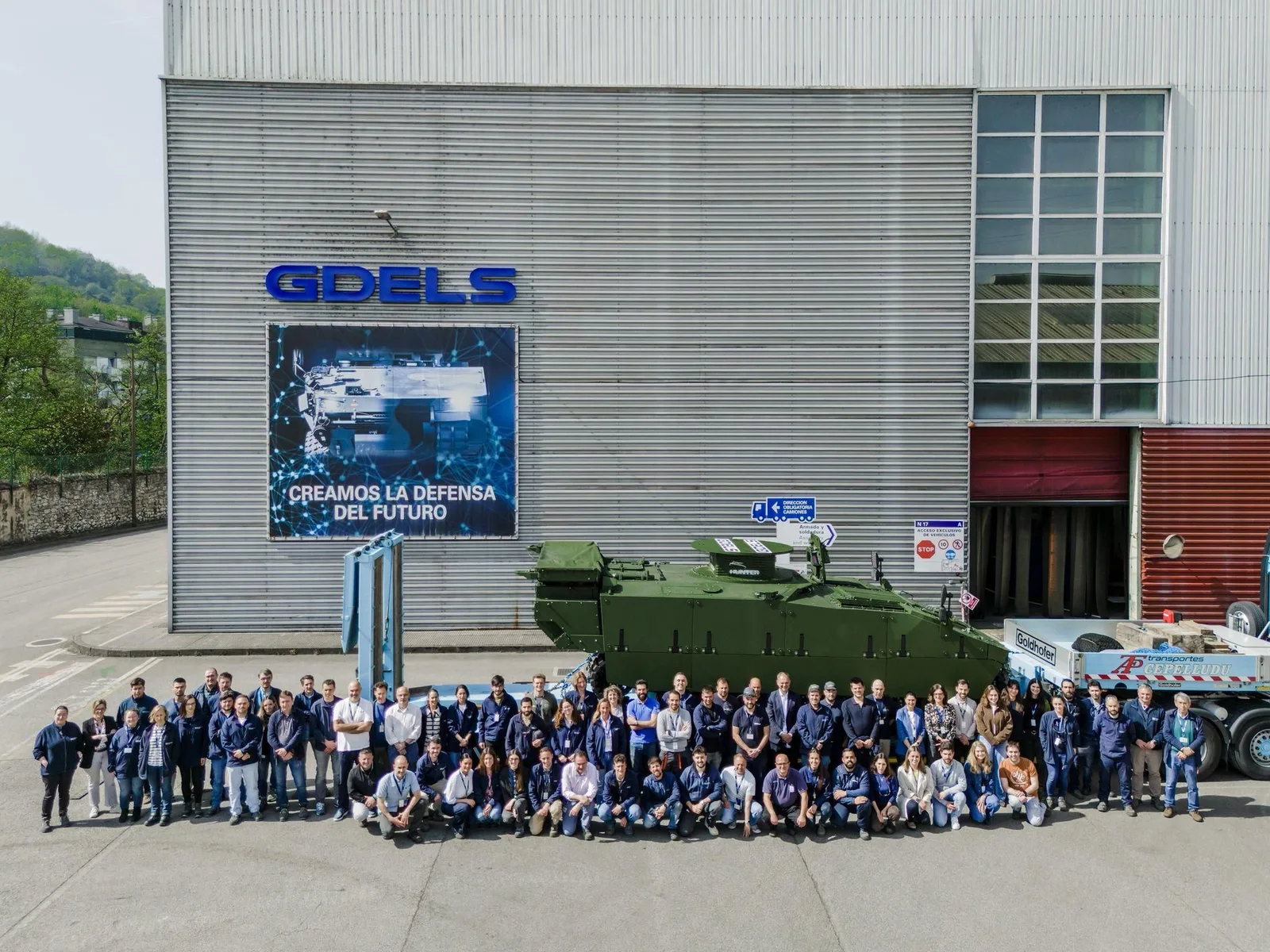
Back on 13 April 2026, the first ASCOD Hunter platform was shown being rolled out of the General Dynamics Land Systems (GDELS) – Santa Barbara Sistemas (SBS) Trubia facility.

To keen-eyed observers, there were a number of interesting engineering changes evident in the design of Hunter when compared to prior versions of ASCOD. Naturally, some of the most interesting changes were not visible in the photographs. Over the course of an in-depth interview with five GDELS representatives, along with discussions on the sidelines of Eurosatory 2026, Warsight discussed these developments, what they mean, and a peek at the future direction of the ASCOD family.

Too many ASCODs

To begin with, it is necessary to first establish a baseline for comparison to showcase ASCOD’s evolution. This is in many ways problematic, since there is no real ‘standard’ ASCOD family vehicle. Indeed, the name ‘ASCOD’ does not really refer to any one exact platform. When used by GDELS today, ‘ASCOD’ is more like a brand name for three main base platform ‘archetypes’ in two different weight classes.

However, in truth, the ASCOD family has a long history and its range of designs goes beyond the main platform archetypes offered today. Yet all these various different designs within the family, both current and legacy, are all still referred to under the ‘ASCOD’ umbrella term. This is a knotty problem which requires some untangling to avoid confusion.

The first generation of ASCOD

To give a very brief history of how we got here – The ASCOD family can be split into generations, with the Spanish Pizarro (Fase 1 and Fase 2 variants) and the Austrian Ulan all comprising what can be thought of as ‘first generation ASCOD’ or sometimes referred to as ‘ASCOD 1’.

This generation was born out of a collaborative development between Spain’s Santa Barbara Sistemas and Austria’s Steyr-Daimler-Puch, and is where the name ASCOD (Austrian Spanish Cooperation Development) comes from.

Pizarro Fase 1 commenced production in 1996, while Ulan began production in 2001. Spain’s follow-on Pizarro Fase 2 was originally contracted in 2004, with deliveries planned to begin in 2005. However, the programme faced delays, owing to a combination of the decision to change transmission from the Renk HSWL 106 as used on Fase 1 vehicles to the Spanish SAPA SG-850 (which had not yet completed development) on the Fase 2, along with Spain’s 2008-2014 economic crisis. Consequently, deliveries of Fase 2 only commenced in 2015.

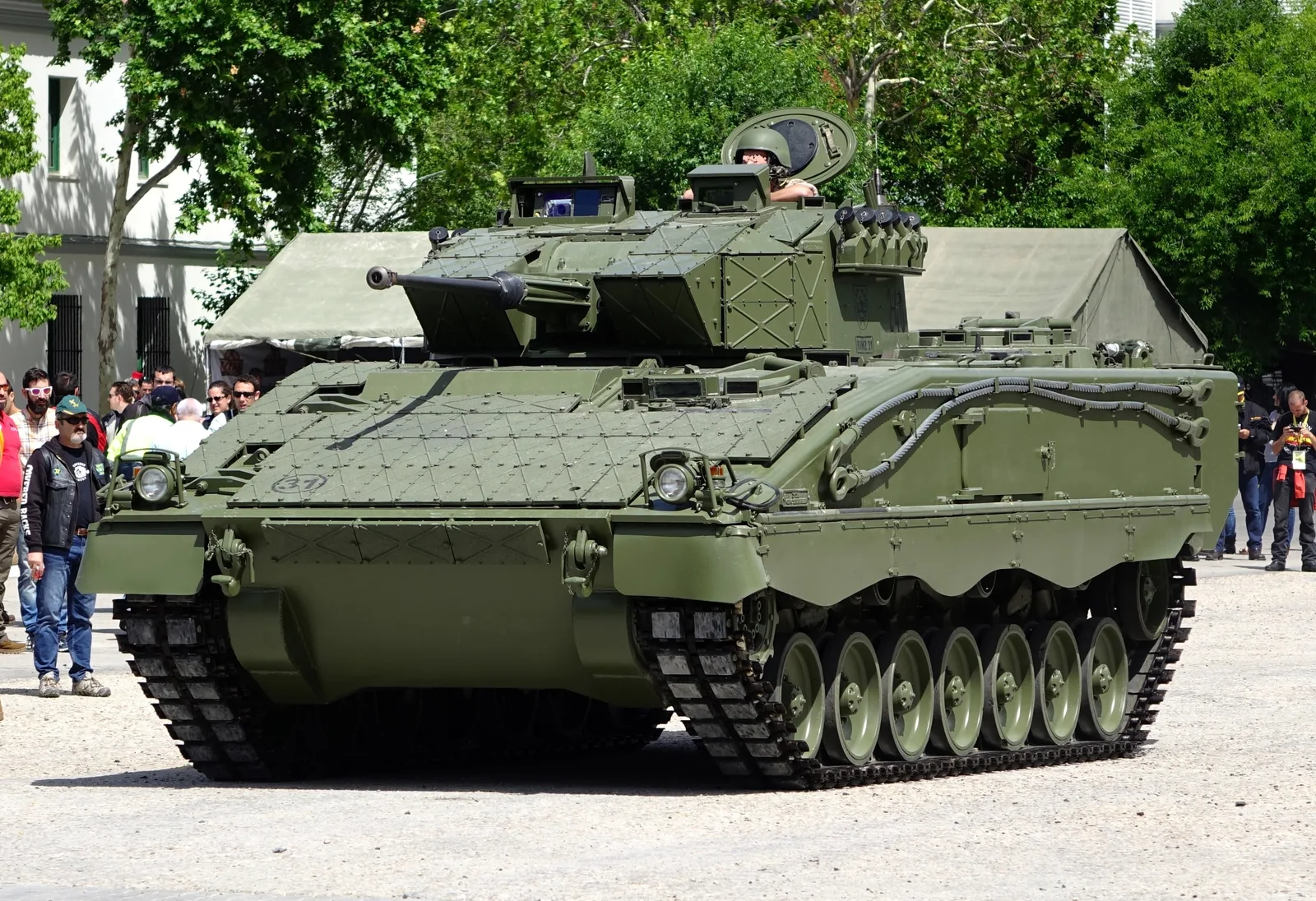
A VCI/C Pizarro Fase 1 of the Spanish army, displayed on 14 June 2015. This was the first member of the ASCOD family to enter service. Note the distinctive ‘X’ pattern on the appliqué armour panels of this variant, and wavy shape of the side skirts.
A VCI/C Pizarro Fase 1 of the Spanish army, displayed on 14 June 2015. This was the first member of the ASCOD family to enter service. Note the distinctive ‘X’ pattern on the appliqué armour panels of this variant, and wavy shape of the side skirts. (Attribution only license / CC0)
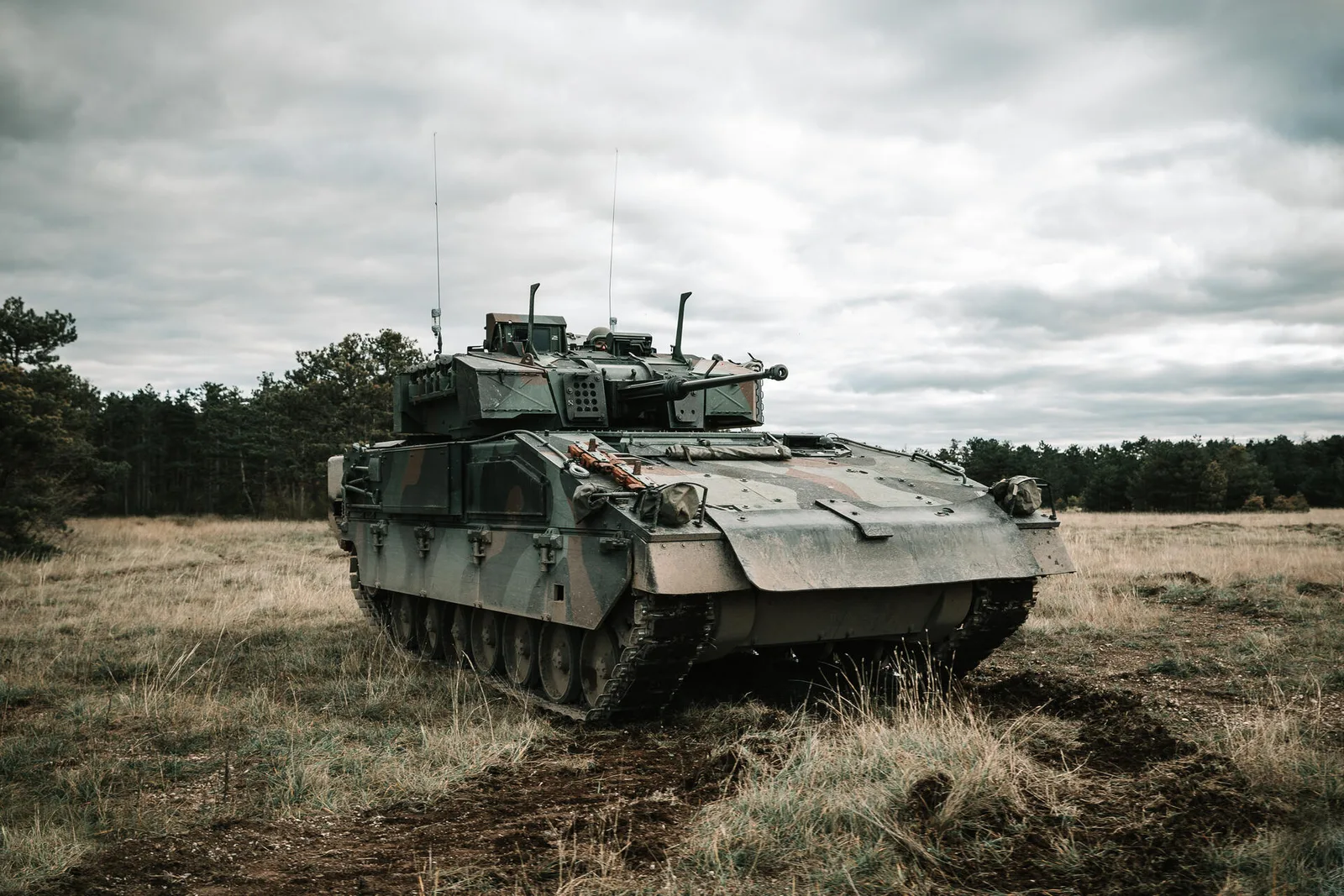
An SPz Ulan of the Austrian army. This was the second member of the ASCOD family to enter service. Note the different appliqué armour arrangement on the glacis, and much blockier appearance of the turret compared to Pizarro, owing to the lack of wedge-shaped appliqué armour on the turret cheeks.
An SPz Ulan of the Austrian army. This was the second member of the ASCOD family to enter service. Note the different appliqué armour arrangement on the glacis, and much blockier appearance of the turret compared to Pizarro, owing to the lack of wedge-shaped appliqué armour on the turret cheeks. (Austrian Bundesheer)
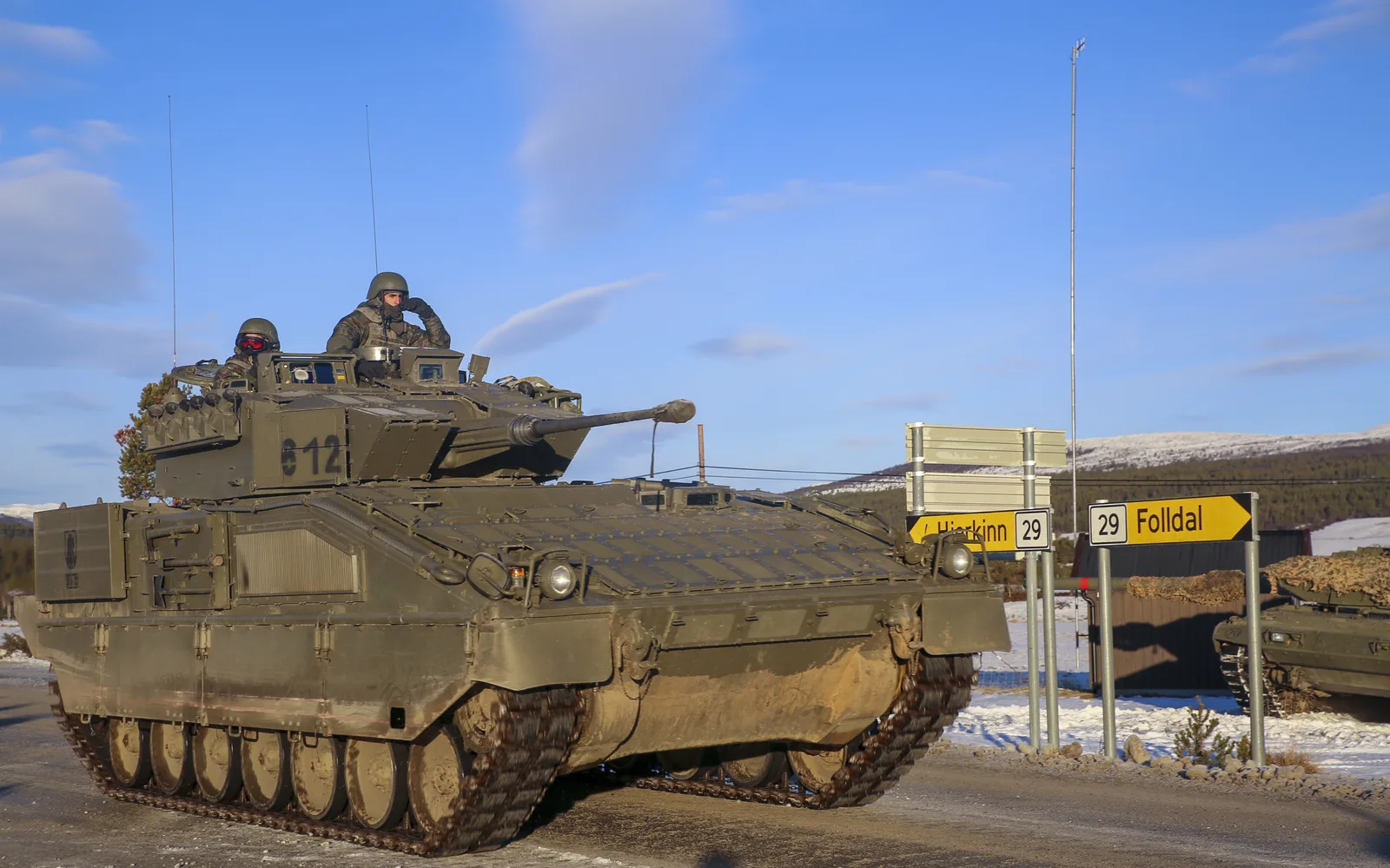
A VCI/C Pizarro Fase 2 of the Spanish army, participating in Exercise Trident Juncture 18 in Norway, on 3 November 2018. This was the third member of the ASCOD family to enter service, and the last of the first generation. Note the distinctive rectangular pattern seen on the appliqué armour panels of this variant, along with the straight shape of the side skirts.
A VCI/C Pizarro Fase 2 of the Spanish army, participating in Exercise Trident Juncture 18 in Norway, on 3 November 2018. This was the third member of the ASCOD family to enter service, and the last of the first generation. Note the distinctive rectangular pattern seen on the appliqué armour panels of this variant, along with the straight shape of the side skirts. (USMC/Sgt Averi Coppa)

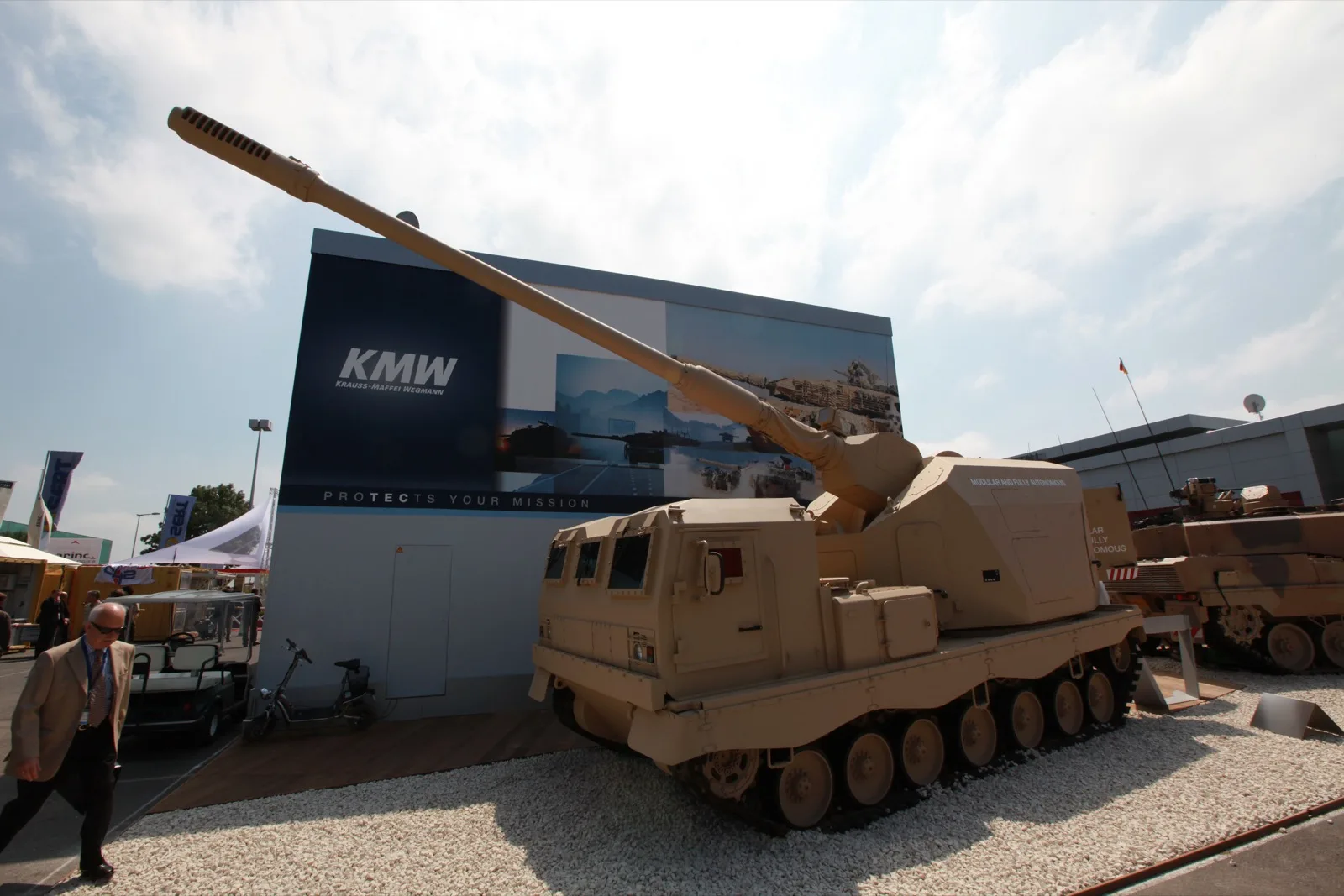
Alongside the conventional infantry fighting vehicle (IFV) variants, a cab-and-flatbed variant of Pizarro known as ‘Pizarro Cargo’ was developed back in the early 2000s, and offered as part of the GDELS/KNDS Donar self-propelled howitzer (SPH), but was not adopted into service, and has since been supplanted by the heavier ASCOD HMC in GDELS’ portfolio.

The Donar SPH on display at Eurosatory 2010. This used a cab-and-flatbed configuration of the first-generation ASCOD series, known as ‘Pizarro Cargo’.
The Donar SPH on display at Eurosatory 2010. This used a cab-and-flatbed configuration of the first-generation ASCOD series, known as ‘Pizarro Cargo’. (AMB Brescia, via Wikimedia Commons; CC-BY 2.0 / CC BY 2.0)

The second generation of ASCOD

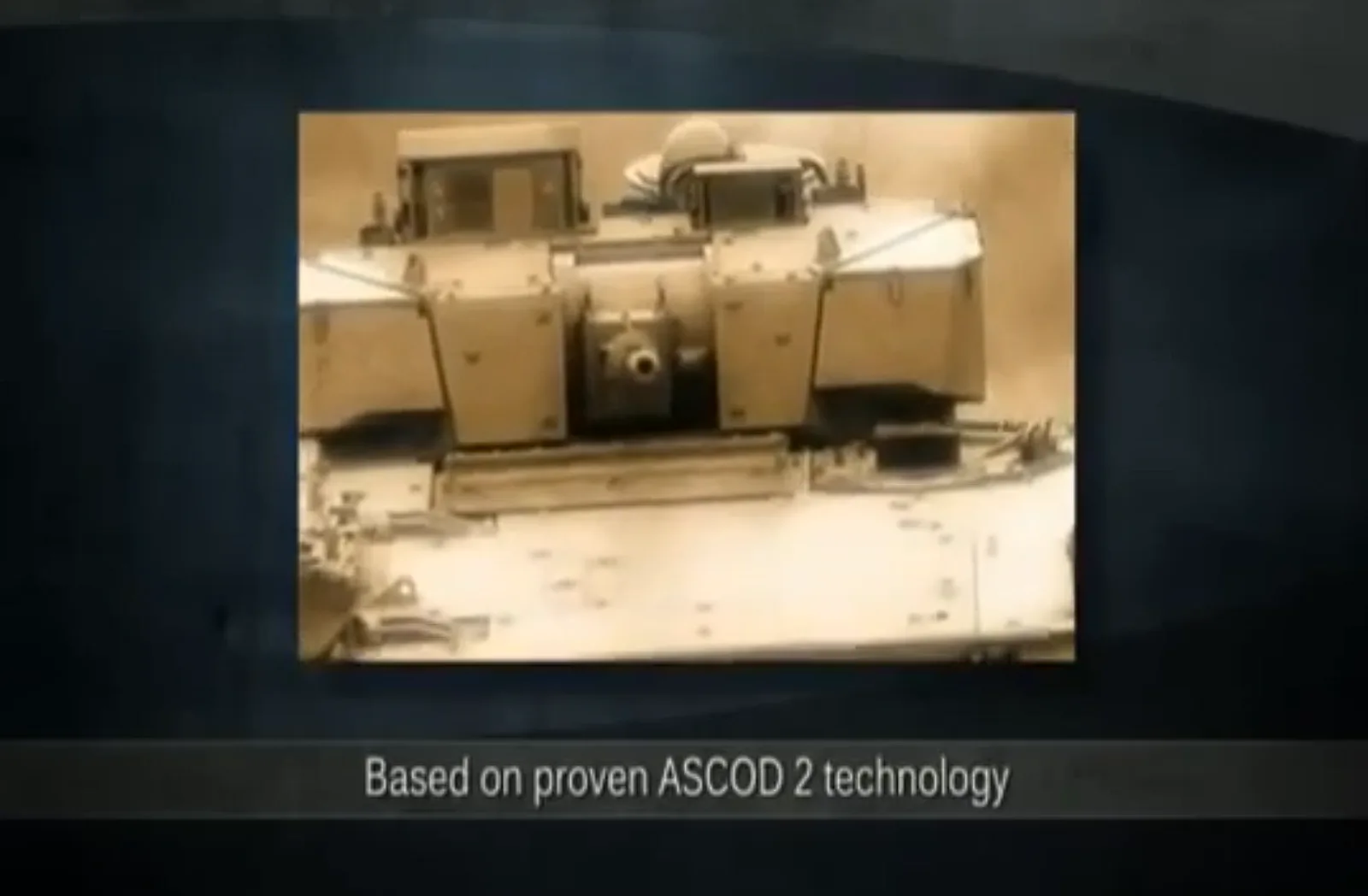
Following on from Pizarro Fase 1 and Ulan, these designs were further iterated upon to develop the next generation of the ASCOD family, which was frequently referred to as ‘ASCOD 2’ when it emerged back in the early-2010s. While GDUK occasionally used ‘ASCOD 2’ to refer to the then ‘Scout SV’, GDELS as a whole later rebranded ‘ASCOD 2’ to simply ‘ASCOD’, which can cause confusion.

As this footage from a GDUK promotional video for Scout SV from 2010 shows, the second generation was once referred to as ASCOD 2.
As this footage from a GDUK promotional video for Scout SV from 2010 shows, the second generation was once referred to as ASCOD 2. (GDUK)

Muddying the waters further is the fact that even the ‘ASCOD 2’ series was not really one platform. By the time of ‘ASCOD 2’, development had forked into two platform weight classes. These were sometimes referred to as the lighter ‘ASCOD 35’, with a gross vehicle weight (GVW) of up to 35 tonnes, and the heavier ‘ASCOD 42’, with a GVW of up to 42 tonnes.

Asking why this simple ‘35’ and ‘42’ numbering convention was not formally adopted by GDELS to avoid confusion, a GDELS representative told Warsight that the reason for this was because in practice, weights could fluctuate above or below the boilerplate figures depending on exact user requirements, and so these wouldn’t necessarily match the ‘35’ and ‘42’ descriptors. For this reason, Warsight was told that internally, the two lines are thought of as the ‘light’ and ‘heavy’ versions of what GDELS calls the ‘rolling chassis’ of ASCOD. As such, the same convention will be used to distinguish the second-generation ASCOD weight classes here.

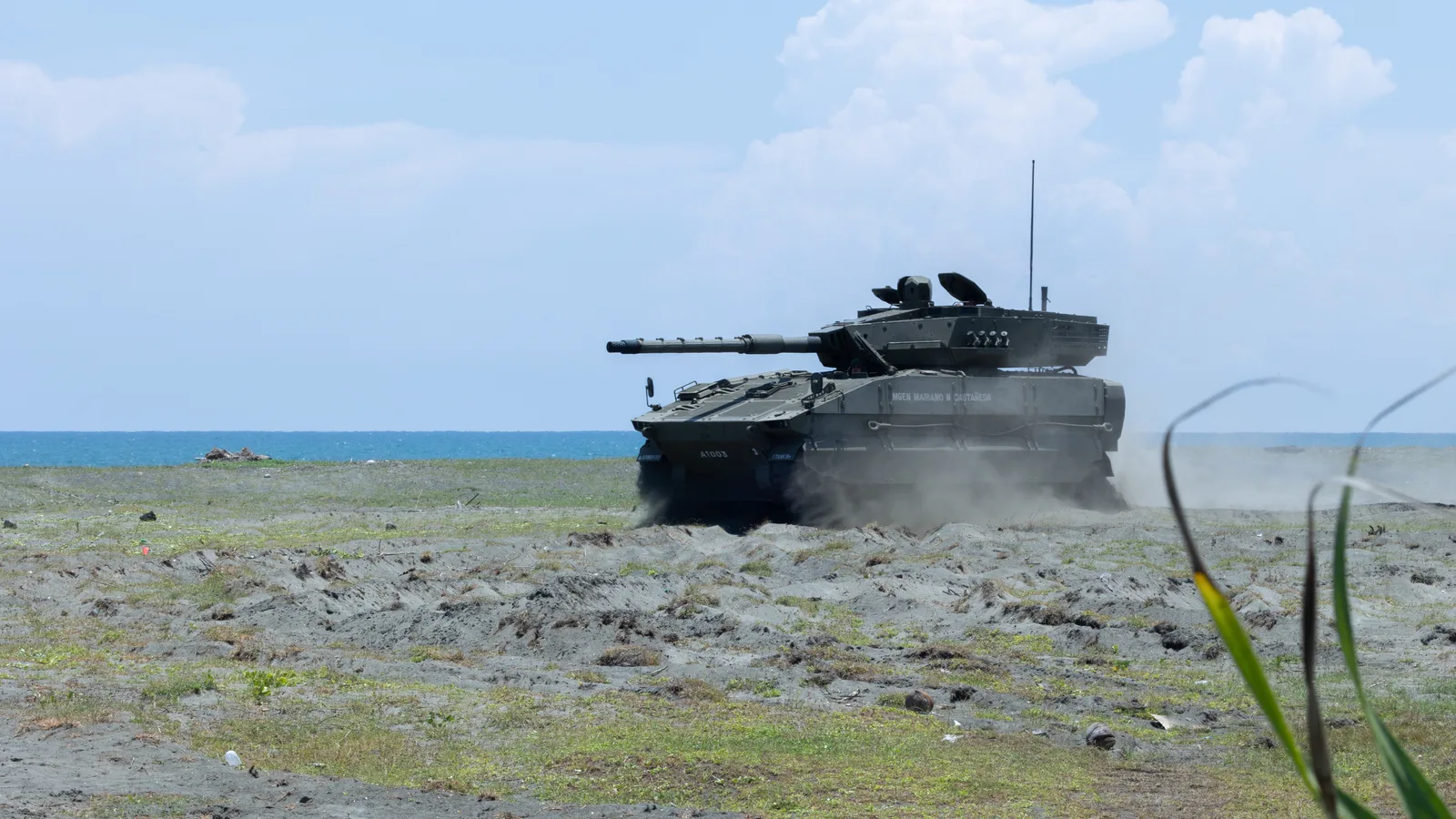
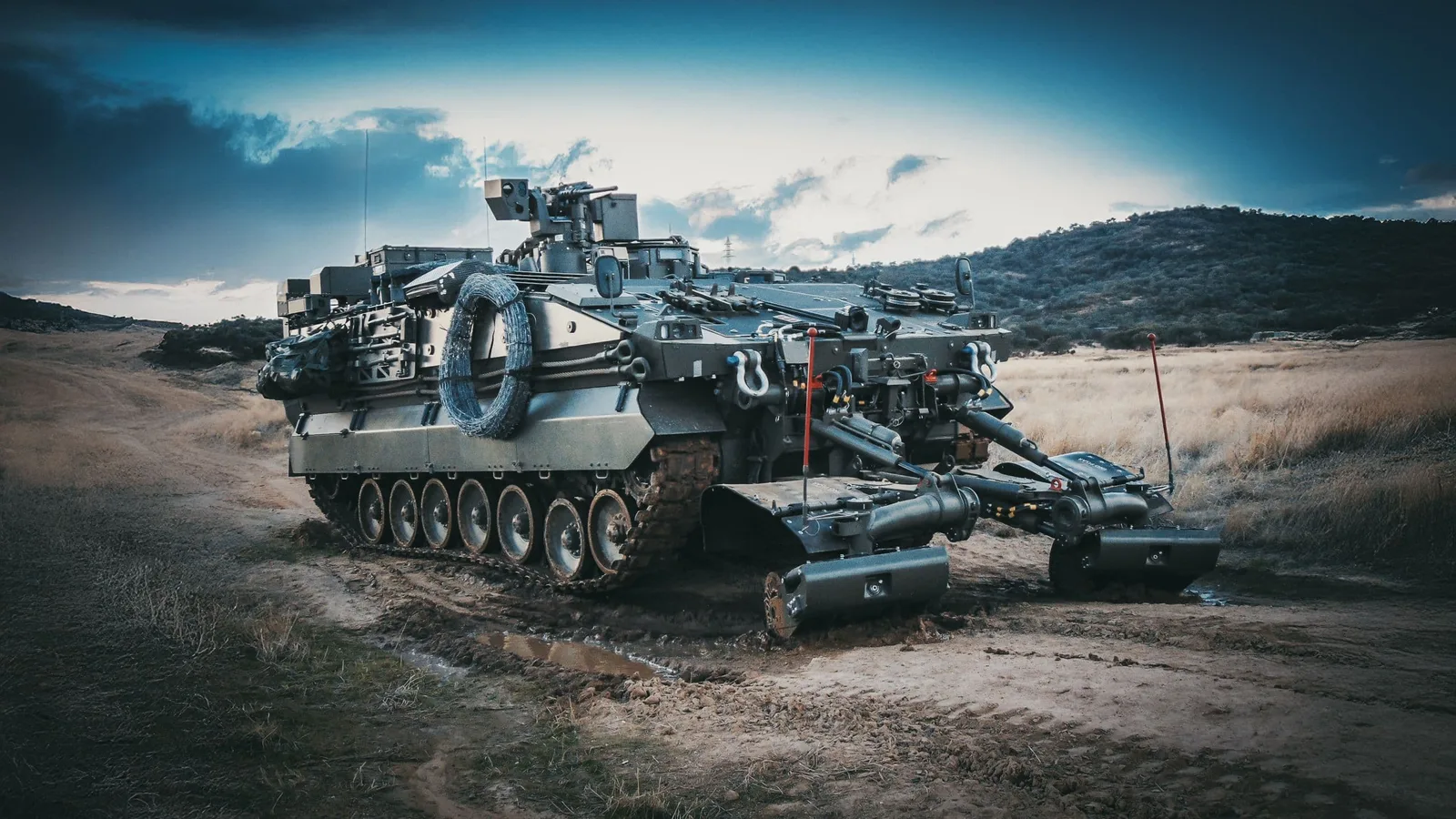
The ‘ASCOD-Light’ (’ASCOD 35’) was the basic design upon which a number of in-service configurations were based upon, including the Spanish Army’s VZCAP Castor armoured engineering vehicle (AEV), and VAC fire support vehicle (FSV), as well as the Philippine Army’s Sabrah FSV as well as their command, and armoured recovery vehicle (ARV) variants.

A Sabrah FSV of the Philippine Army, conducting a live fire exercise on 2 May 2025. This is a configuration of the ‘ASCOD-Light’ series of the second generation of ASCOD.
A Sabrah FSV of the Philippine Army, conducting a live fire exercise on 2 May 2025. This is a configuration of the ‘ASCOD-Light’ series of the second generation of ASCOD. (USMC/LCpl Maksim Masloboev)
A VCZAP Castor of the Spanish Army. Following the completion of Castor deliveries in 2025, the Spanish Army has commissioned upgrading the transmissions of the Pizarro Fase 2 vehicles from the SAPA SG850 to the newer SAPA SG35T, the latter in use on Castor.
A VCZAP Castor of the Spanish Army. Following the completion of Castor deliveries in 2025, the Spanish Army has commissioned upgrading the transmissions of the Pizarro Fase 2 vehicles from the SAPA SG850 to the newer SAPA SG35T, the latter in use on Castor. (GDELS)

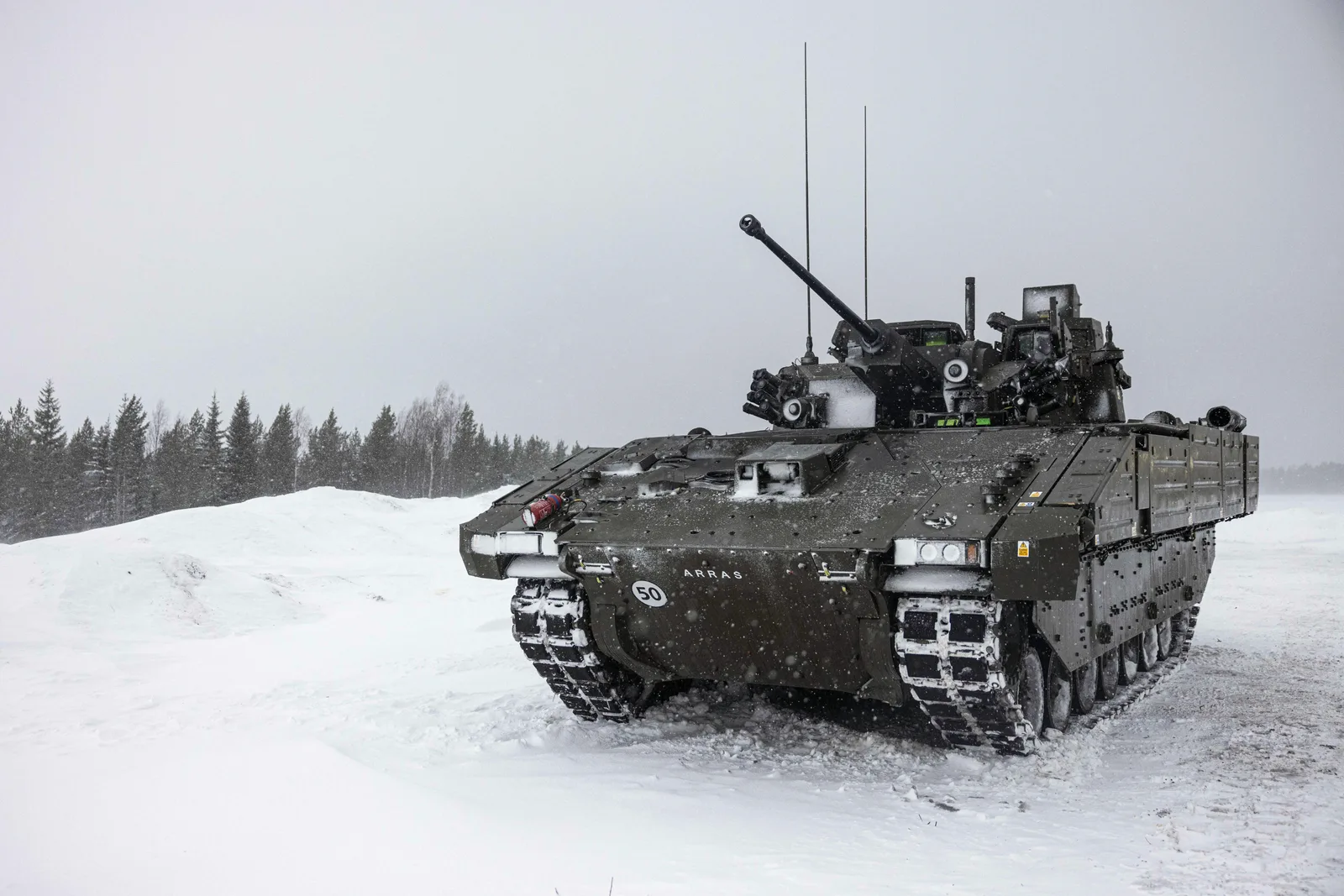
‘ASCOD-Heavy’ (’ASCOD 42’) has a somewhat more complex history. It was the design basis for the UK’s Ajax family, however Ajax was extensively modified for UK requirements, and subsequent offerings in the ASCOD-Heavy design series differed in a number of ways. Nonetheless, Ajax can be thought of as the first ‘relative’ in the ASCOD-Heavy family tree to have been selected for service – though may not be the first version to enter active service, as will be expanded upon below.

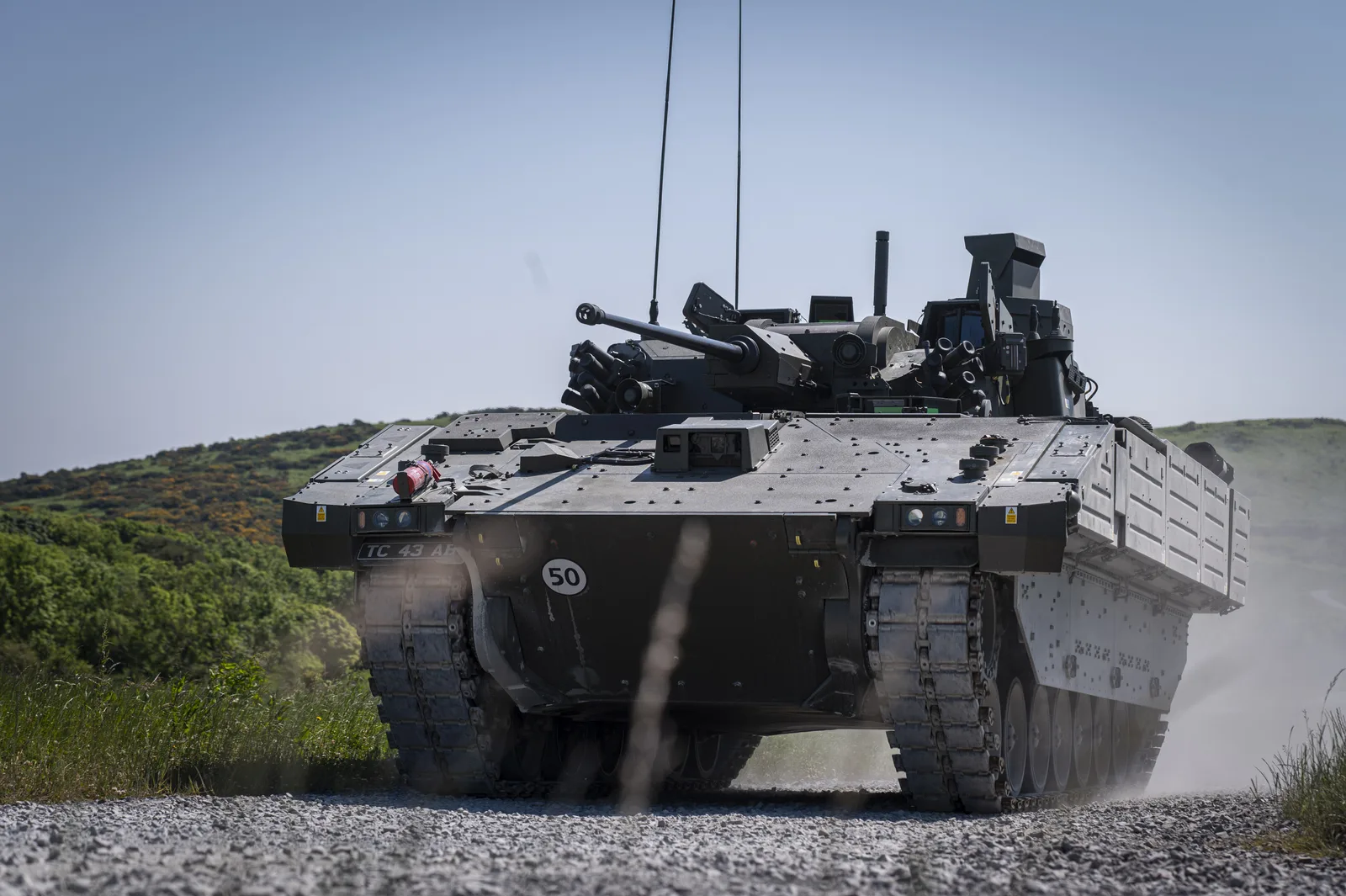
Ajax during cold weather trials in Sweden in 2024.
Ajax during cold weather trials in Sweden in 2024. (Crown Copyright)

GDELS has continued to develop and refine the ASCOD-Heavy series over the years, using their ‘ASCOD EVO’ in-house developmental platform to test various upgrades and configurations, as well as sending the platform for competitive trials. This can be thought of as a kind of ‘live testbed’ or continuously-changing prototype. Different configurations of the ASCOD EVO were used for the Slovakian and Latvian vehicle trials.

In the Slovakian trials, ASCOD EVO secured the second-most points of all contenders, just behind BAE Systems’ CV90 (which was ultimately selected), and ahead of Rheinmetall’s KF41 Lynx (3rd) and HSW’s Borsuk (4th). A slightly different configuration of ASCOD EVO then went on to win the Latvian trials in November 2024, beating out the Hanwha K21, which was serving as a trials stand-in for Redback, and the Otokar Tulpar. GDELS were subsequently awarded a contract for 42 vehicles by the Latvian MoD in January 2025, followed up by an order for a further 42 vehicles in June 2025. The vehicles ordered by Latvia were in a further-developed configuration of ASCOD that would later come to be known as ASCOD Hunter.

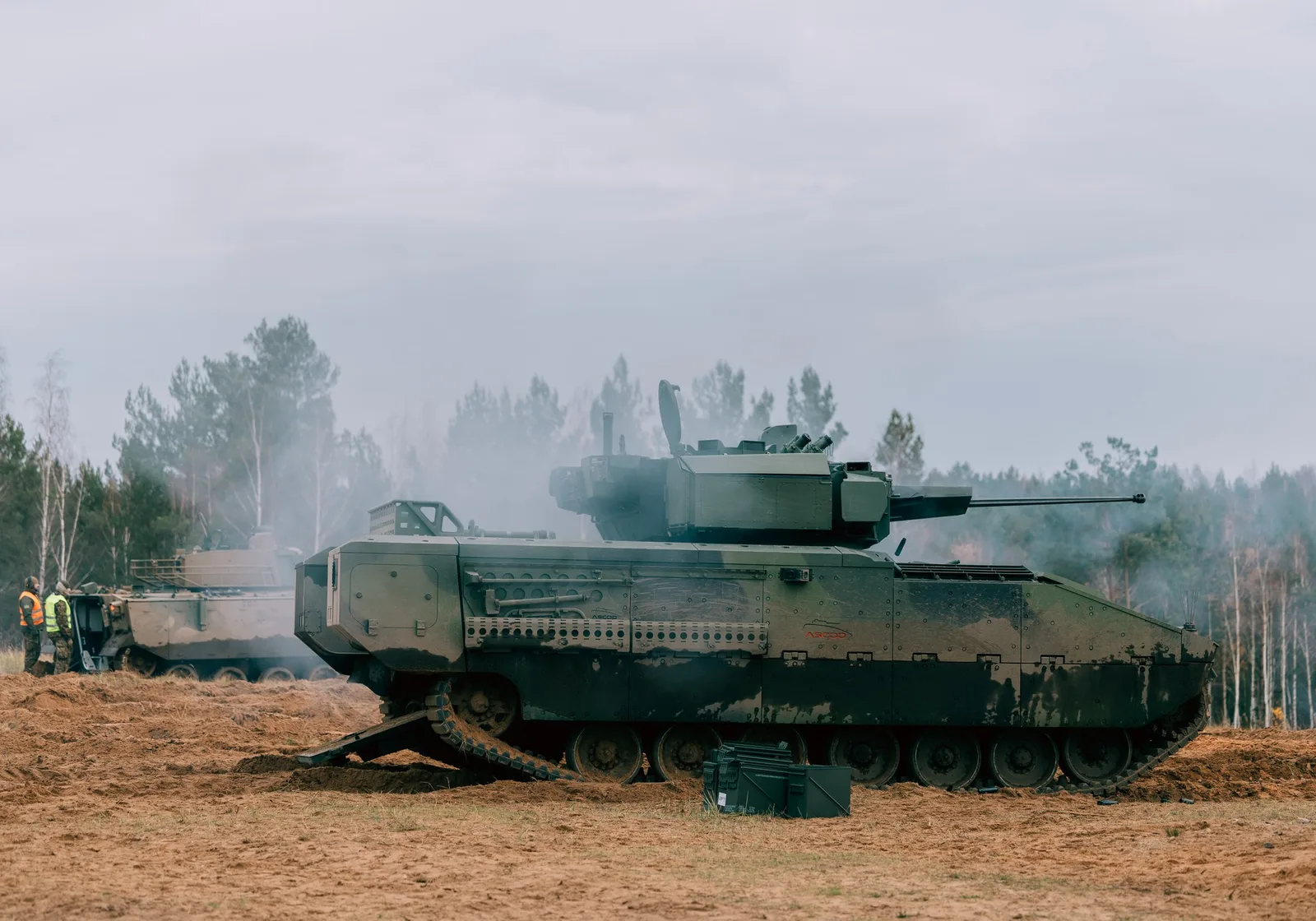
ASCOD EVO in the Latvian trials configuration (foreground), undergoing testing along side the K21 (background, left). Ultimately, ASCOD was selected.
ASCOD EVO in the Latvian trials configuration (foreground), undergoing testing along side the K21 (background, left). Ultimately, ASCOD was selected. (Latvian National Armed Forces)

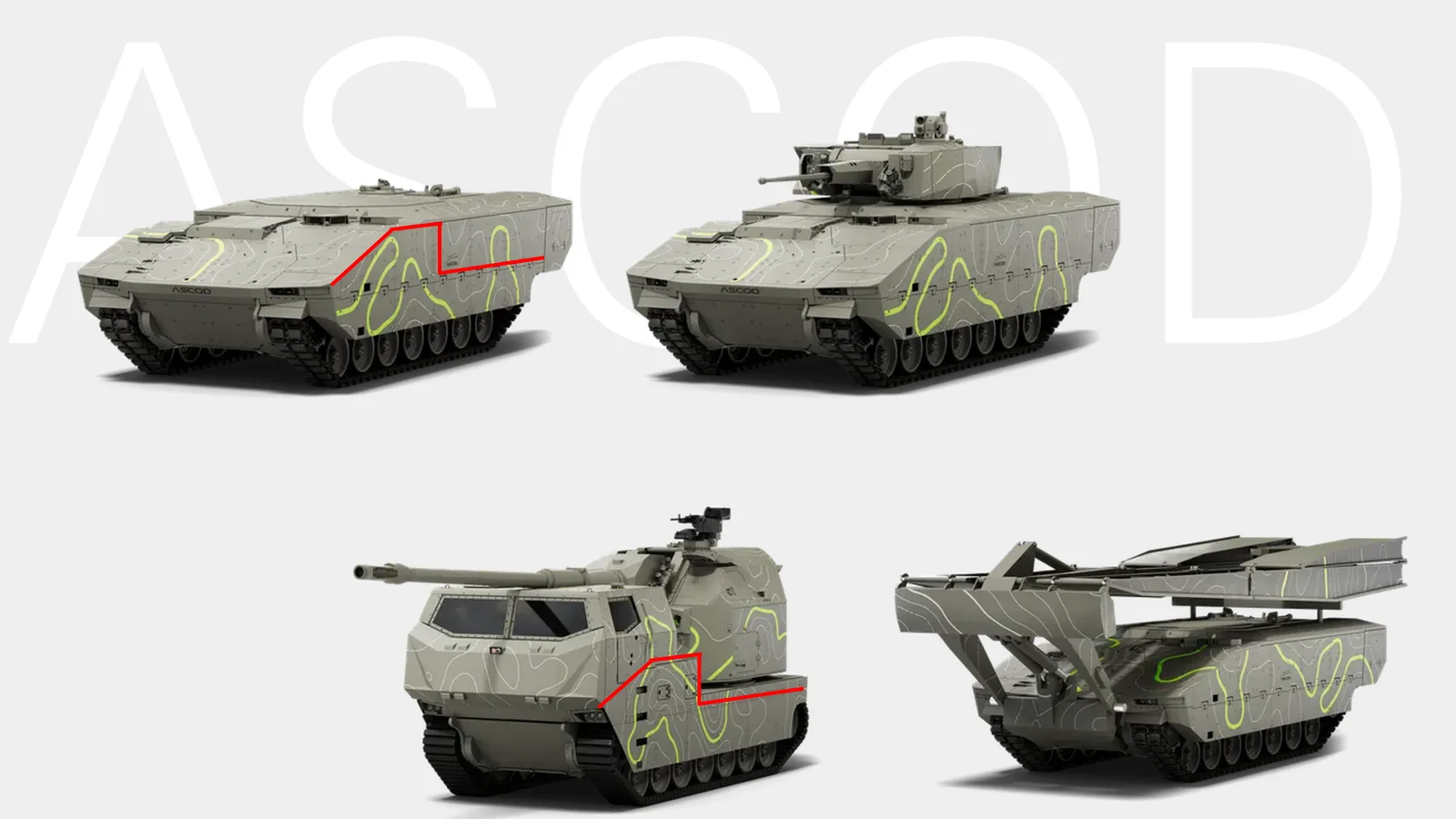
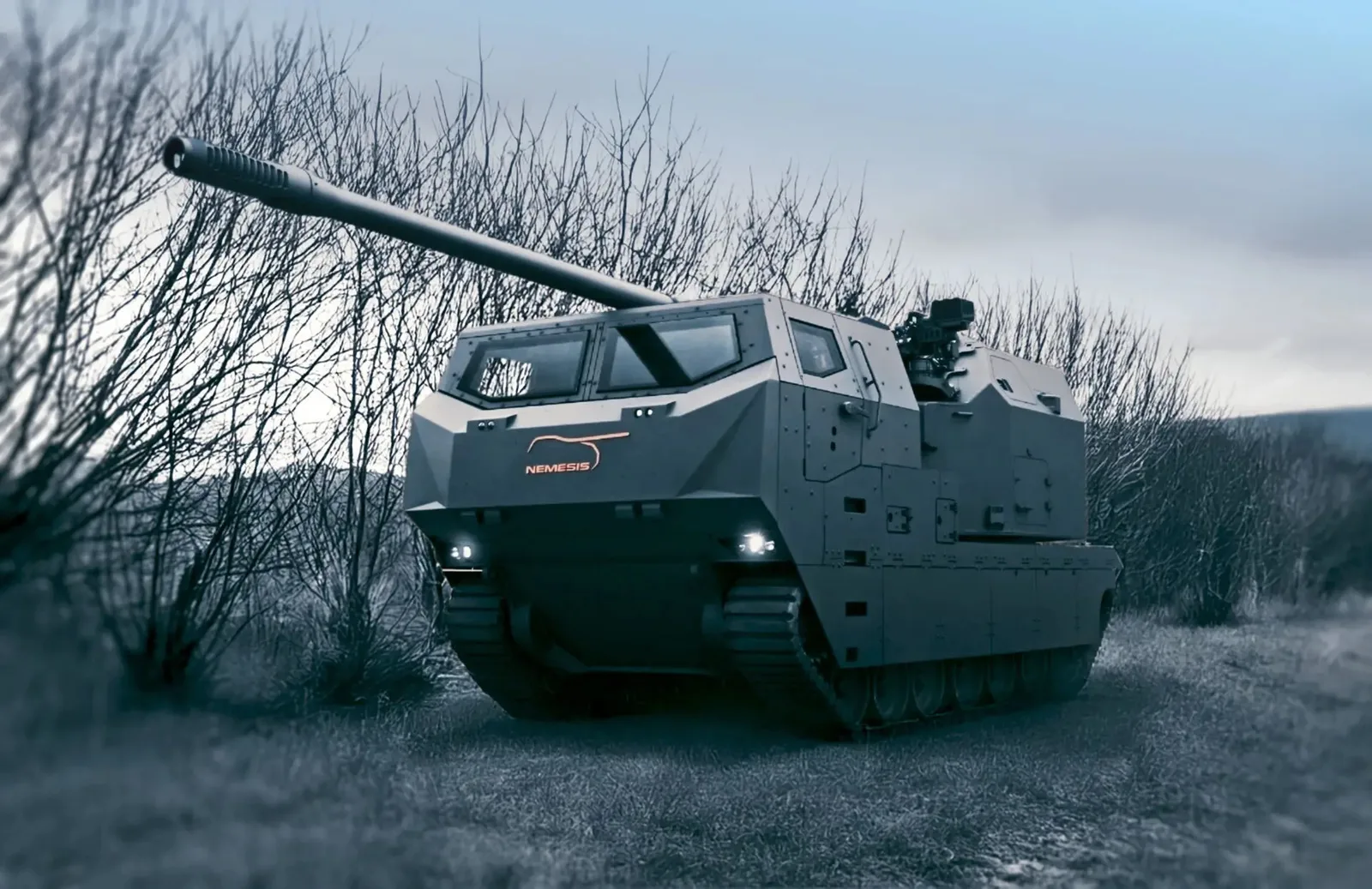
May 2025 marked a major milestone for the ASCOD-Heavy series, with GDELS unveiling the Nemesis self-propelled howitzer (SPH). This used a cab and flatbed variant of the ASCOD-Heavy design, referred to by GDELS as the ‘ASCOD Heavy Mission Carrier’ (HMC). According to GDELS, the base platform, what the company refers to as the ‘rolling chassis’, is the same for both the conventional AFV version of ASCOD-Heavy and ASCOD HMC. To unpack this slightly, the ‘rolling chassis’ comprises the lower hull, running gear, power pack, electronic architecture, and electrical equipment.

GDELS explained that the conventional and flatbed ASCOD are built upon a common ‘rolling chassis’ – comprising lower hull, running gear, power pack, electronic architecture, and electrical equipment. Warsight has added red lines to this graphic to illustrate the approximate common portion for the two vehicles on the left.
GDELS explained that the conventional and flatbed ASCOD are built upon a common ‘rolling chassis’ – comprising lower hull, running gear, power pack, electronic architecture, and electrical equipment. Warsight has added red lines to this graphic to illustrate the approximate common portion for the two vehicles on the left. (GDELS)

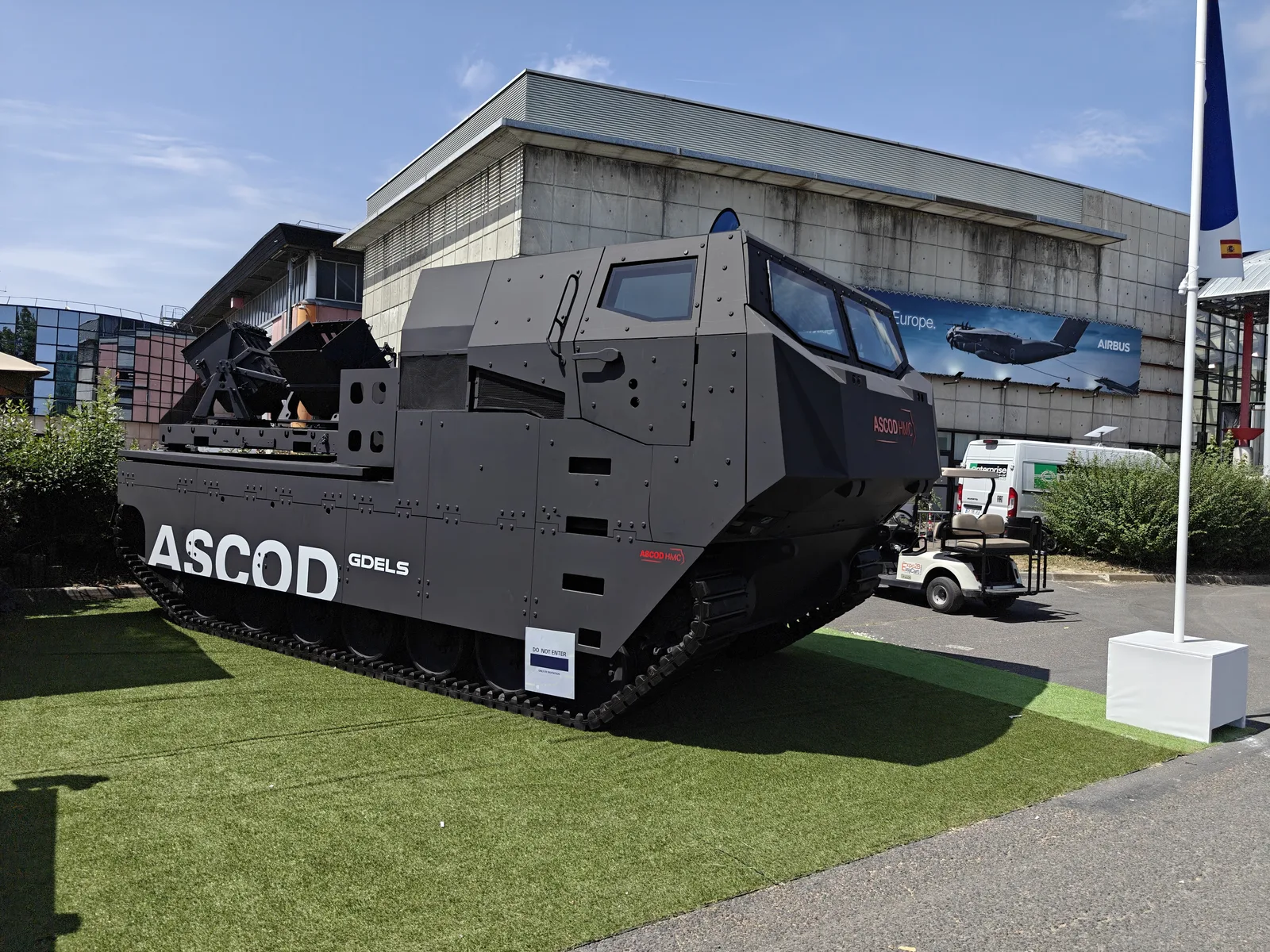
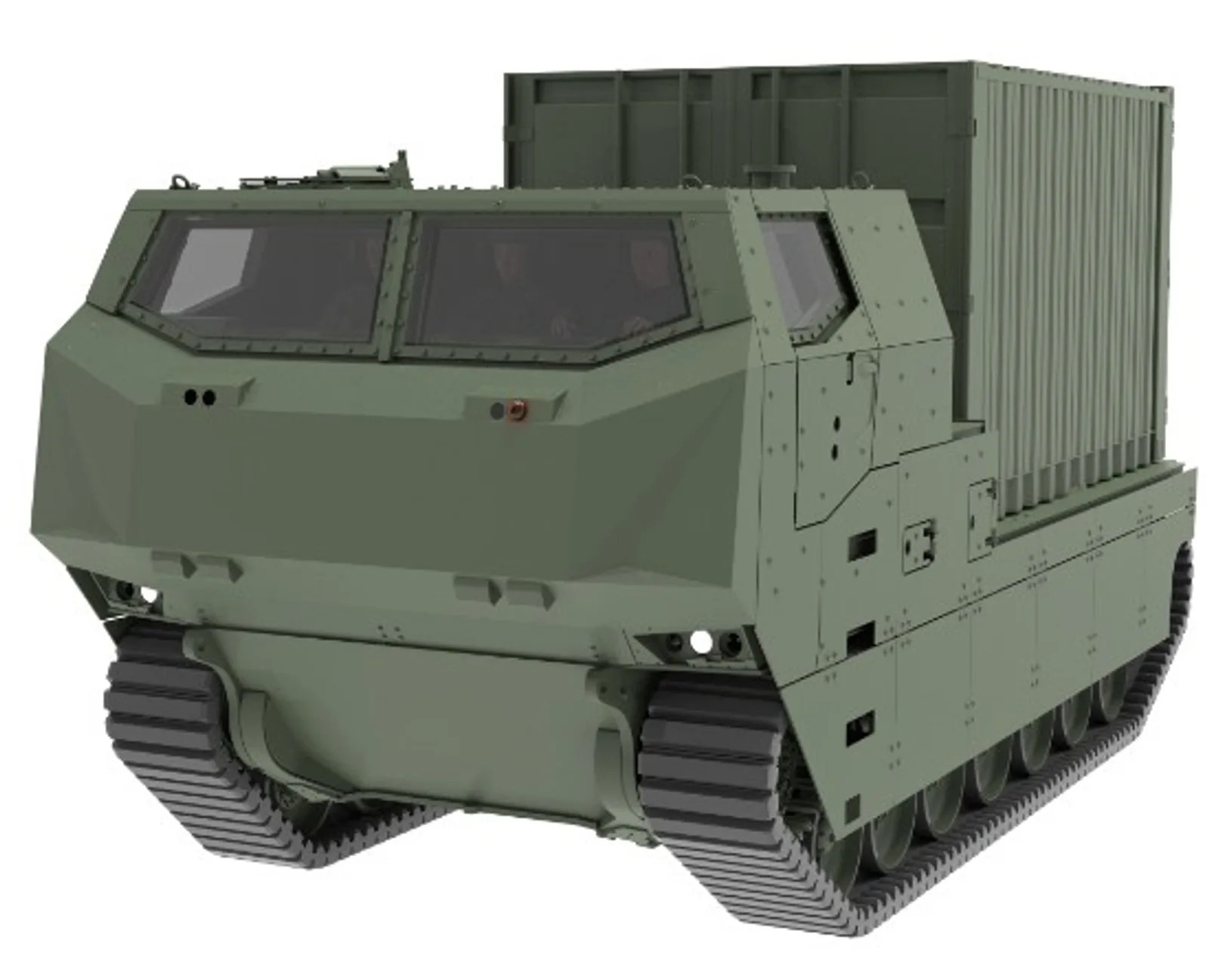
This marks a shift into the ‘modularisation’ of ASCOD, with the ability to accept swappable rear payload modules, akin to the Boxer family. Though a difference is that while the Boxer family’s implementation generally relies on swapping out proprietary modules, GDELS’ flat payload area allows for ready compatibility with palletised loads or 3 m (10 ft) ISO containers. This capability was demonstrated at Eurosatory 2026, where GDELS showcased the palletised Skorpion 2 mine-laying module from DND fitted to ASCOD HMC.

An ASCOD HMC was displayed at Eurosatory 2026, mounting a palletised DND Skorpion 2 mine laying system on the rear load area.
An ASCOD HMC was displayed at Eurosatory 2026, mounting a palletised DND Skorpion 2 mine laying system on the rear load area. (Mark Cazalet)
A CG render of an ASCOD HMC carrying a 3 m (10 ft) ISO container.
A CG render of an ASCOD HMC carrying a 3 m (10 ft) ISO container. (GDELS)

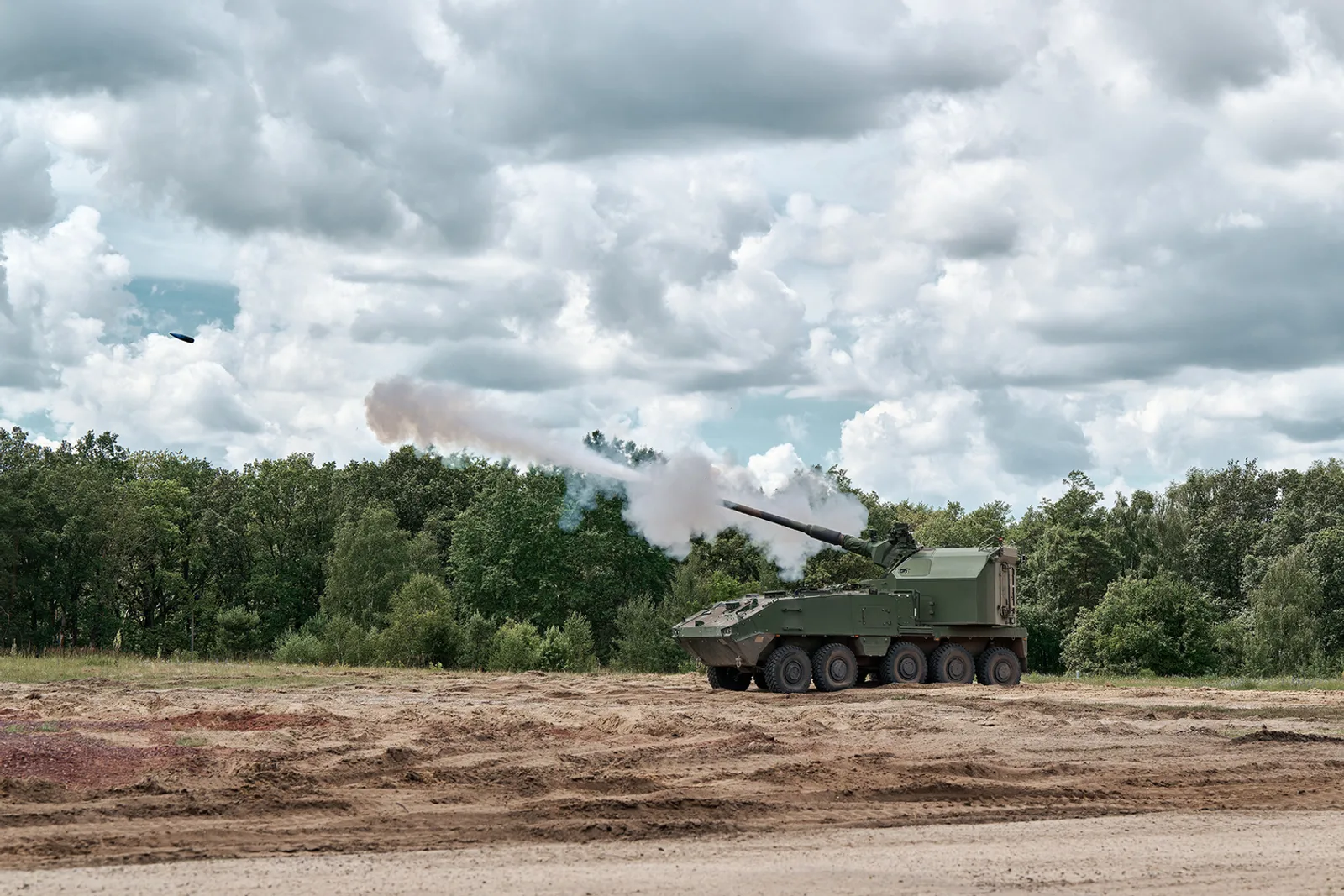
GDELS have further added that these modules are interchangeable across both the ASCOD HMC and the Piranha HMC 10×10. This has been demonstrated with Nemesis SPH configuration, which is armed with the same KNDS Artillery Gun Module (AGM) as that used by the Piranha IV 10×10. According to GDELS, various other swappable modules are in the works, including drone launcher and air defence modules.

ASCOD HMC in SPH configuration, referred to as ‘Nemesis’.
ASCOD HMC in SPH configuration, referred to as ‘Nemesis’. (GDELS)
The KNDS artillery gun module is also compatible with the Piranha 10×10 HMC, as selected by Switzerland.
The KNDS artillery gun module is also compatible with the Piranha 10×10 HMC, as selected by Switzerland. (Swiss DDPS)

So we come to the unveiling of Latvia’s ASCOD Hunter in April 2026. This can be thought of as a further-developed version of the ASCOD-Heavy series, and indeed looks set to become the first in-service vehicle within the ASCOD-Heavy lineage, with initial deliveries to the Latvian army due later in 2026. Though the actual in-service date for Hunter will also depend on the timings around turret integration, since final assembly is taking place in Latvia.

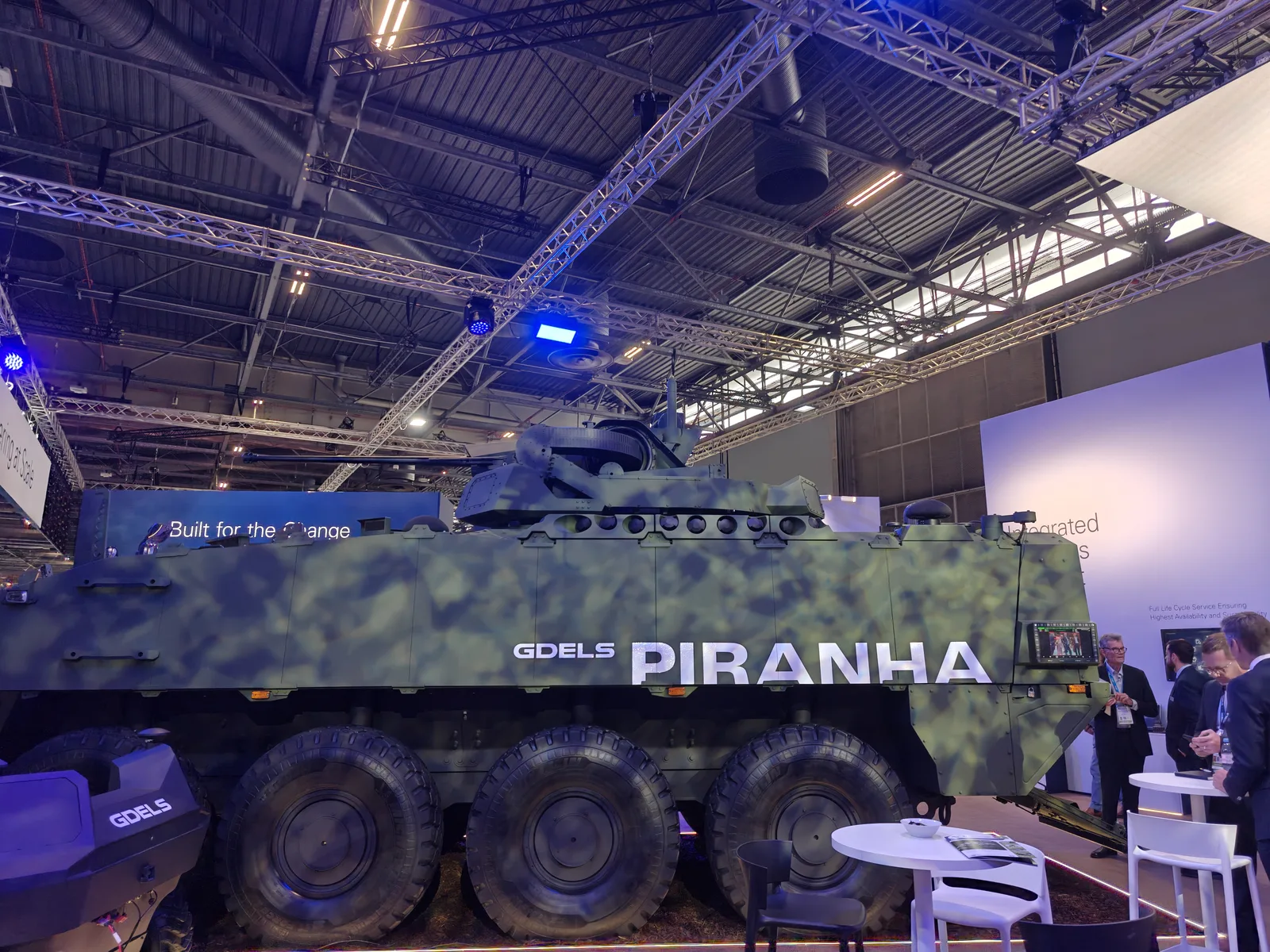
Looking ahead, in the near-term in Latvia, GDELS expects to demonstrate how Hunter can be further enhanced through the integration of counter-unmanned aerial vehicle (C-UAV) technologies. While GDELS did not provide specific details, Warsight expects that the technologies in question are likely to include some of the those the company displayed on its C-UAV configured Piranha V 8×8 at Eurosatory 2026.

At Eurosatory 2026, GDELS displayed a C-UAV configured variant of Piranha V 8×8, equipped with a new turret, additional sensors including radars and acoustic detectors, as well as net-launcher type anti-drone active protection system (APS), seen here as a row of launch tubes under the turret.
At Eurosatory 2026, GDELS displayed a C-UAV configured variant of Piranha V 8×8, equipped with a new turret, additional sensors including radars and acoustic detectors, as well as net-launcher type anti-drone active protection system (APS), seen here as a row of launch tubes under the turret. (Mark Cazalet)

Hunter breaks cover

Hunter is the most recent configuration of the ASCOD-Heavy line, and features a number of modifications over earlier models in the series. Specifically, due to there being no in-service ASCOD-Heavy derived platform to compare it to, the ASCOD EVO configuration used for trials in Latvia will be used as the baseline for comparison. The key specifications are shown in Table 1.

Three-quarter view of the first ASCOD Hunter to roll off the factory floor. This is fitted with plates to imitate the turret weight, since the turret will be integrated in Latvia.
Three-quarter view of the first ASCOD Hunter to roll off the factory floor. This is fitted with plates to imitate the turret weight, since the turret will be integrated in Latvia. (GDELS)
Table 1: ASCOD Hunter key specifications
Crew: 3+6
Dimensions without turret (LWH): 7.42 m × 3.35 m × 2.17 m (to hull roof)
Dimensions with turret (LWH): 7.42 m × 3.35 m × 3.4 m (to turret roof)
Kerb weight (with turret): 33 tonnes
Gross vehicle weight: Up to 42 tonnes
Tracks: Soucy CRTs (Steel optional)
Suspension: Torsion bar, with rotary dampers at 1st, 2nd, and 6th roadwheel stations, and bump stops.
Engine: MTU 8V 199 TE21
Engine power: 600 kW (800 hp)
Transmission: Renk HSWL-256B
Maximum speed: >70 km/h
Reverse speed: 46 km/h
Maximum gradient: 60%
Side slope: 40%
Trench crossing: 2.5 m


Improved running gear

Perhaps the most noteworthy new feature is the addition of a new automatic track tensioning system, referred to by GDELS as the Self Adjusting Track Tensioner (SATT), able to work with both conventional steel tracks as well as composite rubber tracks (CRTs). In another first for the ASCOD family, Latvia’s Hunter configuration has opted for Soucy CRTs, providing a weight saving over steel tracks of around 800-900 kg, according to GDELS.

During an interview with multiple GDELS representatives, Warsight asked whether or not the SATT would be necessary given the Latvian MoD had opted for CRTs. This question arises because steel tracks can bend and expand slightly over time, requiring different tension adjustments depending on various conditions, while CRTs tend to be stiffer than steel tracks, because they are in fact a complex layered construction of various steel cords and meshes, fabrics, and carbon fibre stiffeners encased in rubber.

To this, Carlos Gil, the Chief Engineer at GDELS-SBS explained that the two different track types – CRTs and steel – had different tensioning requirements, with CRTs typically run at higher tension than steel tracks. He noted that the purpose of SATT is to reduce the track wear, extend track life, reduce fuel consumption, and simplify daily crew track check tasks by ensuring the vehicle is operating with the lowest suitable tension.

Alejandro Page, Managing Director at GDELS-SBS added that the system also improves mobility by ensuring that the track is always operating at the appropriate tension for the terrain and driving conditions.

“The [SATT] system analyses multiple parameters and adjusts track tension at every moment, in milliseconds,” Page explained, adding, “this ensures the vehicle is always running at the optimal tension, without applying unnecessary extra tension to the track, which would increase wear and fuel consumption. Another key point is that SATT can be implemented both for rubber band and steel tracks. We have tested it extensively and confirmed that it improves performance for both.”

While the system would normally be expected to operate in dynamic mode, adjusting track tension automatically, both Page and Gil explained that the SATT system allowed the driver to set the track tension manually if specific operating conditions required it.

“Track tension is always one of the main influencers in vehicle driving because in the end, if the track is not in the right tension, there are always issues. This prevents that basically,” Page summarised.

To showcase their SATT in action, GDELS showed Warsight video footage from their SATT tests, in which an ASCOD demonstrated braking at speed with SATT on or off. When the SATT was off, the track jumped about significantly during braking, while when SATT was switched on, the track remained under tension. Page explained that the system analyses in real time various vehicle signals, parameters, operating conditions and concludes that ‘I need to apply more tension now because they are braking’ and it automatically applies it to guarantee the vehicle brakes in the optimum condition.

Modifications to the armour package

The Latvian MoD has previously stated that the country’s Hunter IFVs would feature STANAG 4569 Level 4 protection. As with most modern armoured vehicles, the bulk of this protection is provided by an appliqué armour package rather than the base vehicle armour, and Hunter’s has seen a slight improvement.

Specifically, Hunter features a new armour mounting system, using fewer bolts (around 4-6 bolts per plate compared to the 5+ on some versions, or the circa 14-18 on the Latvian trials vehicle). This makes it quicker to mount and dismount the appliqué armour plates than the previous arrangement, marking a step up in serviceability.

Alongside this, the new arrangement makes use of ballistic washers around each mounting bolt. These serve two purposes – first, in the typical role of a washer in providing a larger bearing surface to distribute clamping pressure, and second, by virtue of being cut from armour-grade steel, these function as ballistic protection over the mounting point, which represents a fairly small but nonetheless common weak spot on many armoured vehicles.

Alongside the new mounting system, the hinge point for the side skirt armour has been moved upwards by a few centimetres to provide greater horizontal clearance for tracks, in particular CRTs, which tend to be slightly bulkier than steel tracks. Gil explained, the skirts are a little bit higher to facilitate maintenance tasks both with CRTs and steel tracks.

A side view of the first ASCOD Hunter to roll off the factory floor.
A side view of the first ASCOD Hunter to roll off the factory floor. (GDELS)

Quality of life improvements

Aside from the more notable changes to running gear and armour, Hunter also featured a number of quality of life changes for crews.

Perhaps the most obvious of the minor changes was the addition of wide field of view (WFOV) periscopes around the turret ring at the commander and gunner stations. Page explained that although the vehicle had cameras to provide 360° situational awareness, adding periscopes as a redundancy measure was a customer requirement. Gil added that the periscopes were not standard sized periscopes, but rather large periscopes designed to fulfil user requirements for a wide field of view.

Next, the housings for the 360° camera system were moved to new positions. The side view camera system was moved upwards slightly, onto the hull roof, making it easier to mount and dismount the appliqué side armour, while also protruding less from the vehicle. The driver’s camera meanwhile was moved to the centre of the glacis; Gil explained, “on the prototype, the camera had been positioned beside the head of the driver, whereas on Hunter it has been placed more centrally because this provides a better driving view.”

Additionally, Hunter also includes a flexible stowage space at the rear of the hull roof, which can be adapted to the user’s needs. Gil said this space could be used for items such as backpacks, sleeping equipment, food, ammunition or even a drone deployment box.

Page added that this flexibility reflects a broader “fit for but not with” design approach. “We have the space, the mechanical interfaces and the electronic and electrical systems prepared,” he said. He added that the vehicle also retains significant growth potential in terms of both weight and space: if a customer wanted to integrate additional systems, such as a drone launcher, the vehicle had the available space and payload capacity to accommodate them.

Additionally, a flexible stowage space was added at the rear of the hull roof, which Gil explained could be used to fit, “whatever you need. From a backpack, a sleep element, food, munitions, or a box with drone deployment, whatever is needed, we can fit it there.”

Another minor design change involved moving the towing eyes on the front slightly further up. Warsight asked about this decision, because if the eyes are mounted higher up, it can cause the nose of the vehicle to dig into the soil during recovery. Gil explained that while this was the case, mounting the towing eyes higher came with two advantages. Firstly, providing better clearance away from the tracks when mounting vertical obstacles, and secondly, making it easier for personnel to attach recovery lines if the vehicle finds itself in deep mud.

As an aside, even small decisions such as these serve as a reminder that armoured vehicle design and engineering is always a game of trade-offs. For instance, the CV90 design mounts the towing eyes fairly low down on the toe plate to prevent digging in during recovery, while also maintaining good clearance from the tracks. However, to make this possible, the design needed to incorporate final drive housings that protrude quite far beyond the toe plate. In another case, the Russian BMP-3 mounts its towing bollards on the sides of the vehicle, where the toe plate and glacis meet. This arrangement was necessary so as to not interfere with the trim vane. There are often multiple solutions to a given problem, but they all tend to involve some level of compromise.

In June 2026, Latvia received its first ASCOD Hunter platform, minus the turret.
In June 2026, Latvia received its first ASCOD Hunter platform, minus the turret. (GDELS)

A note on the turret

Thus far the final turret configuration has not been shown. GDELS is shipping the vehicles to Latvia without turrets, as final assembly is being undertaken by Defence Partnership Latvia (which was fully acquired by Patria Latvia in August 2026). Warsight reached out to Patria Latvia for comment on the planned turret integration and delivery timescales, but the company did not respond by the time of publication.

However, based on previous conversations with GDELS, the turret is slated to be the Elbit UT30 Mk2 turret, armed with the Northrop Grumman Mk44 Bushmaster II 30 mm automatic cannon and a coaxial 7.62 mm machine gun.

GDELS have also previously confirmed that anti-tank guided missiles (ATGMs) would also be part of the turret, but declined to mention the exact model. However, Warsight assesses that the most likely candidate is Spike LR2, since it has been previously offered with this turret, Latvia already operates it, and further supported by the fact Latvia signed a EUR 81 million contract with Eurospike on 3 June 2025 for additional Spike missiles.

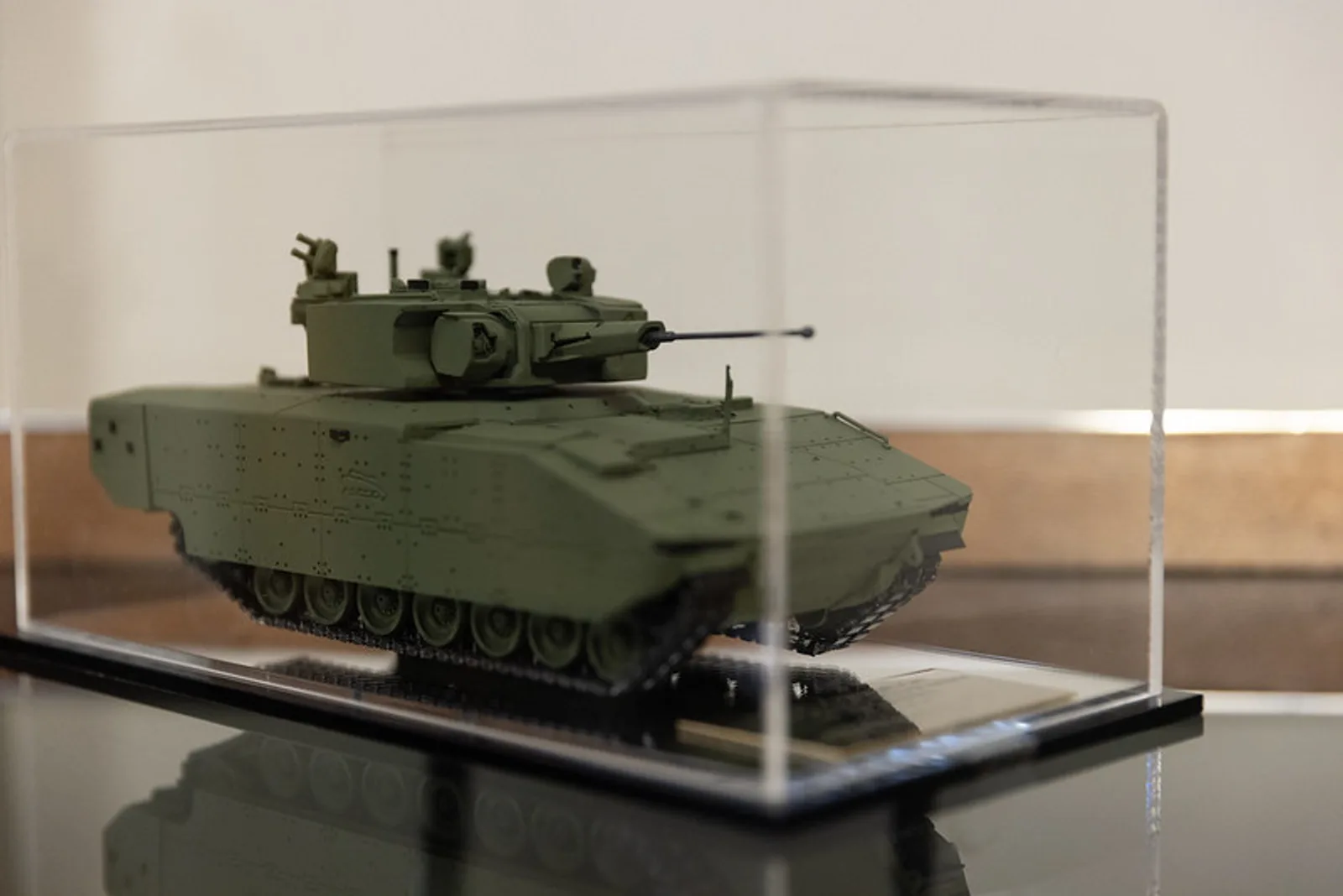
There has been some speculation as to whether or not Latvia’s Hunter would include an active protection system (APS). This was due to Andris Spruds, then Latvian Minister of Defence, sharing a photo of a scale model of ASCOD fitted with the Elbit Iron Fist APS in his X post announcing the January 2025 Hunter contract signing. When Warsight asked GDELS if Iron Fist had made it onto the final configuration Latvia would be using, Page confirmed that the vehicle was fitted “for but not with” an APS.

This image of an ASCOD model was shared by Andris Spruds, then Latvian Minister of Defence, prompting speculation that the Iron Fist APS was being procured as part of the protection package. However, GDELS have since confirmed the vehicle is fitted “for but not with” an APS.
This image of an ASCOD model was shared by Andris Spruds, then Latvian Minister of Defence, prompting speculation that the Iron Fist APS was being procured as part of the protection package. However, GDELS have since confirmed the vehicle is fitted “for but not with” an APS. (Latvian MoD/Andris Spruds)

New spares and logistics package

Beyond changes to the vehicle itself, GDELS has invested in strengthening its spares and after-sales support package. Notably, Page revealed that GDELS now offers “the capability for advanced manufacturing and 3D printing of some spare parts.”

Page explained that this capability is intended to improve the operational availability of deployed fleets by reducing lead times for certain components. “We are actively developing this capability for our customers, and it is real – it is not just on PowerPoint” he said, “we already have tested 3D-printed metal parts, including high-load components, that can be used as spares to support quick turnaround when required in specific locations.”

When Warsight asked if these would mainly be high-wear components such as portions of the running gear, Page confirmed “Running gear parts are being used.” He continued,  “It doesn’t substitute the normal manufacturing possibilities…but it’s a compliment that customers are valuing a lot, because sometimes, you need the forged part, you need months. With this, in one day you have the part on-site, ready to be deployed.”

“We do the whole validation, the whole certification of the parts, all of that. And then we can provide the customers the capability of even printing them themselves” Page explained.

Hunter lends its strengths to Ajax

GDELS representatives did not comment on forthcoming changes to the British Army’s Ajax during the interview on Hunter and subsequent discussions with Warsight. However, recent statements by high-ranking UK MoD officials have made it clear that some of the technologies being implemented on Hunter will have implications for Ajax.

Ajax in trials at Kirkcudbright Ranges in Scotland, in 2023. The vehicle family looks set to benefit from some of the technologies implemented on Hunter.
Ajax in trials at Kirkcudbright Ranges in Scotland, in 2023. The vehicle family looks set to benefit from some of the technologies implemented on Hunter. (Crown Copyright)

Ajax was originally supposed to have been the first vehicle in the ASCOD-Heavy lineage to enter service, with its procurement process spanning well over a decade already. Indeed, Ajax did briefly attain initial operating capability (IOC) on 6 November 2025, but this status was subsequently withdrawn on 28 January 2026, following the army’s review of Ajax’s troubles during Exercises Iron Fist and Titan Storm.

During a Public Accounts Committee evidence session on 23 March 2026, Lieutenant General Anna-Lee Reilly, Director General Core Delivery for Defence Equipment & Support, blamed the vehicle crews for not operating their vehicles correctly, claiming “Clearly, the platform was not operated and maintained within the specification it should have been, and that led to the incident.” This explanation from Lt Gen Reilly was widely panned by serving personnel.

However, during the same session, Lt Gen Reilly also singled out improper track tension as a leading cause for the nausea experienced by soldiers on Titan Storm, and said “One thing we looked at mentioned composite rubber track, and at the end of the year, we will start to do trials on that to look at whether it is value for money and makes a sustained difference to the platform. As we mentioned, things like automatic track tensioners would take the edge off.”

CRTs had previously been openly discussed as a potential solution to excessive noise and vibration on Ajax, but SATT was a noteworthy inclusion to the range of technical solutions being examined by the MoD. On paper, the adoption of either should be able to make a noticeable positive difference to the crews’ experience, and both together could make a fairly substantial difference.

In Warsight’s conversations with MoD insiders, the problem over the last few years has not been a lack of technical solutions, but rather a lack of available funding. This seems to have changed with the 30 June 2026 publication of the MoD’s Defence Investment Plan (DIP), which allocated GBP 1.1 billion in funding for Ajax out to April 2030. While Warsight understands the majority of this figure was not ‘new money’, it nonetheless appears to have provided the MoD with headroom to implement Ajax upgrades.

In this vein, on 16 July 2026, the MoD provided an update on the way forward. Rupert Pearce, National Armaments Director at the MoD stated that under current plans, the UK would have six fully-operable Ajax family variants within 12-18 months – giving a new in-service target date range of around July 2027 to January 2028.

Pearce confirmed that an automatic track tensioning system (which could only be SATT) is due to be incorporated into the Ajax family as part of the Capability Drop 4 modification package, and that CRTs would also be trialled.

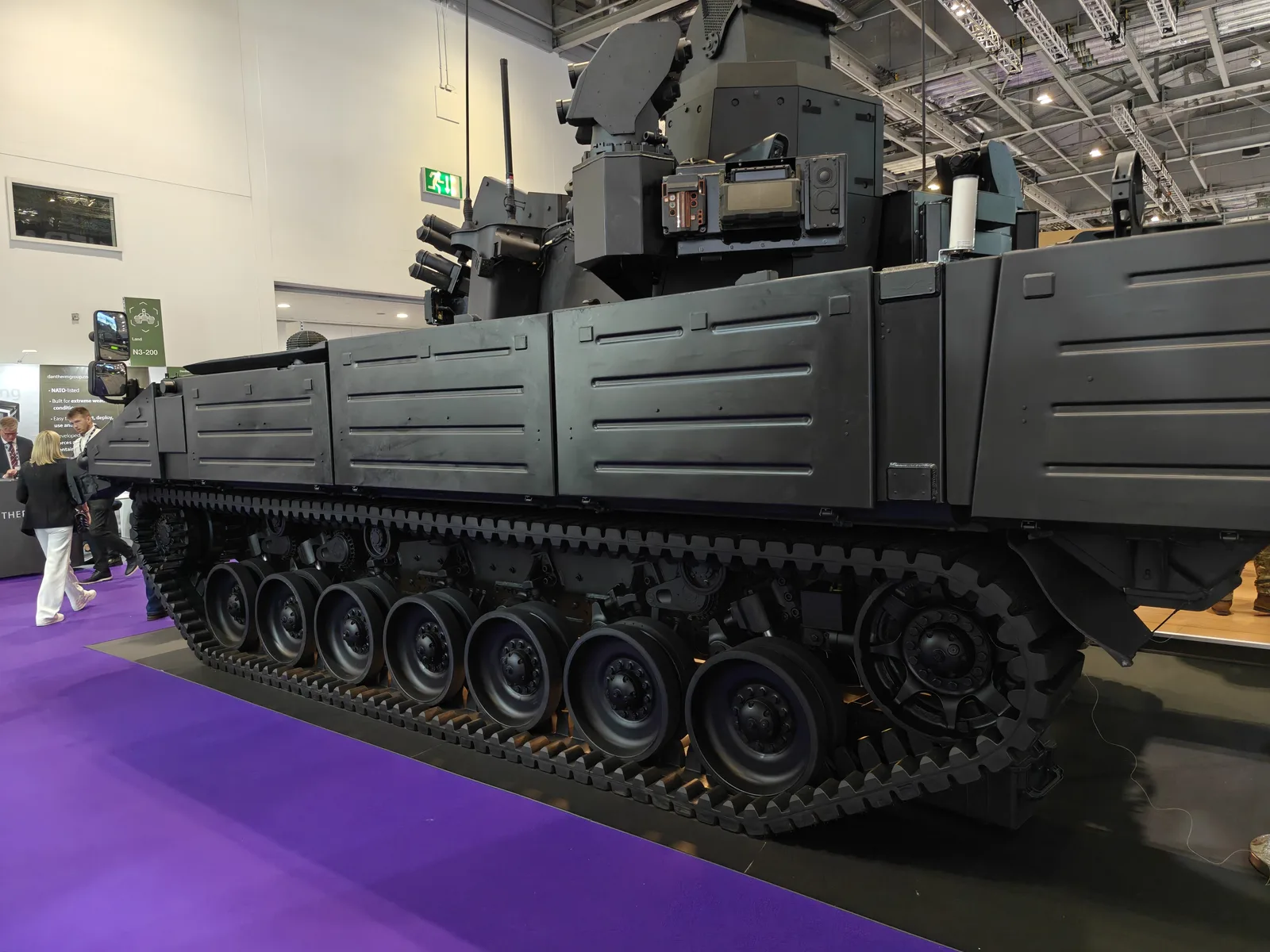
There has been some speculation as to whether CRTs would require further modification of Ajax to provide greater clearance for the new tracks. While that may depend on the exact model of CRT selected, it should be possible, given that GDELS previously showcased CRTs fitted to their Ajax Blackjax prototype at DSEI 2025. The space required for the Soucy CRTs appeared to be fairly similar to that for the William Cook TR40 double-pin steel tracks already used on Ajax, and the vehicle already has a few centimetres of leeway between track and side skirts. Though having said that, Blackjax was shown with the side skirts removed, so the picture may be more complicated than it first appears.
GDUK showcased the proposed Blackjax upgrade to Ajax, featuring a number of improvements including the adoption of Soucy CRTs. Curiously, although there would appear to be space to accommodate the side skirts with CRTs, this vehicle was shown with the side skirts removed.
GDUK showcased the proposed Blackjax upgrade to Ajax, featuring a number of improvements including the adoption of Soucy CRTs. Curiously, although there would appear to be space to accommodate the side skirts with CRTs, this vehicle was shown with the side skirts removed. (Mark Cazalet)

As such, although arriving many years after its relative, the developments that went into Hunter may end up being the missing piece for Ajax. If SATT and CRTs are able to prevent a repeat of the troubles experienced on Exercises Iron Fist and Titan Storm, the army should finally be able to complete its long-troubled programme and acquire a critical component of Project Asgard, the army’s digital targeting web.

There is a note of irony to all this. In discussions this author has had with UK MoD insiders, the army had previously examined the option of selling Ajax to Eastern European countries such as Poland, Romania, and the Baltic states. How curious then, that a different ASCOD, developed for a Baltic state, now looks like the Ajax family’s best hope of entering service.

Share post

You may be interested in

Categories

All NewsLand

Used tags

ASCODAustriaIFVLatviaSpainVehicle design

Similar posts