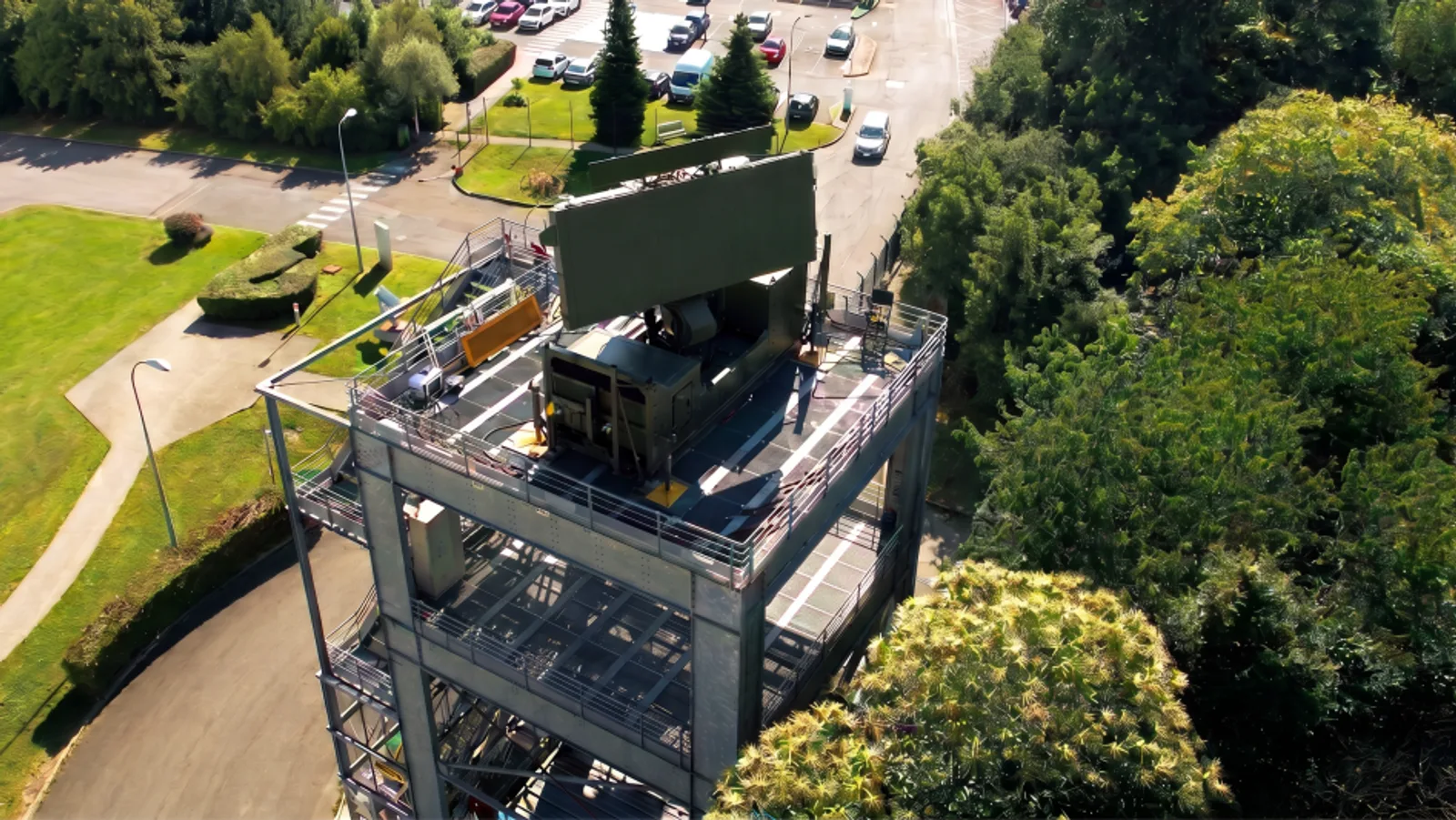
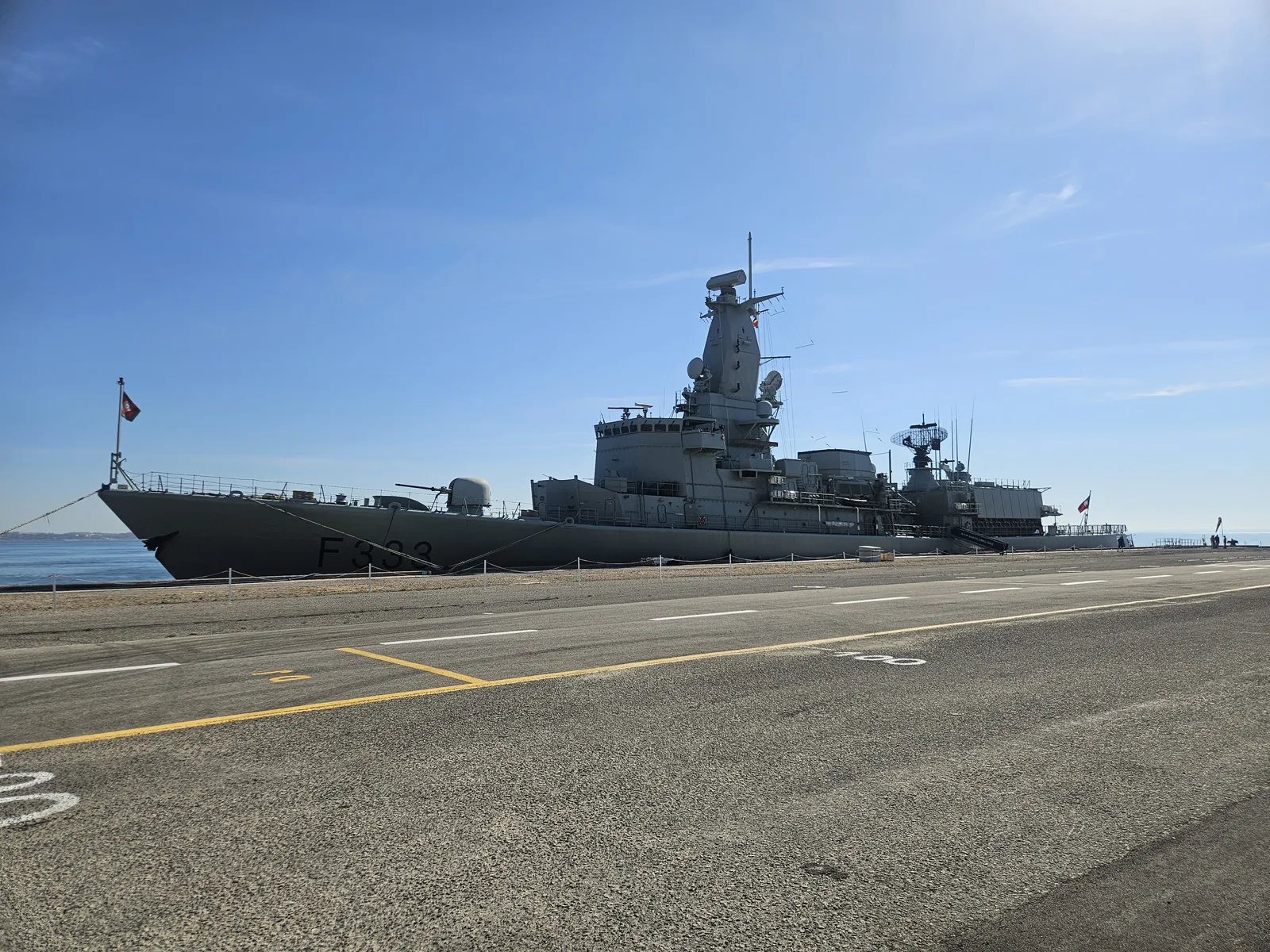
Belgium and the Netherlands signed a cooperation agreement to jointly develop a multi-layer GBAD capability. This involves Belgium purchasing short- and medium-range air defence capabilities interoperable with those of the Netherlands.


Belgium and the Netherlands signed a cooperation agreement to jointly develop a multi-layer GBAD capability. This involves Belgium purchasing short- and medium-range air defence capabilities interoperable with those of the Netherlands.

On 8 July 2026, at the NATO summit in Ankara, Belgium and the Netherlands signed a cooperation agreement to jointly develop a multi-layer air defence system. As part of the agreement, Belgium pledged to spend EUR 3.1 billion on procuring new short- and medium-range air defence systems that would be interoperable with those of the Netherlands.
The agreement was signed in Ankara by Prime Minister Bart De Wever, Minister of Defense Theo Francken, and Dutch Minister of Defense Dilan Yeşilgöz. The project is slated to be funded via the EUR 8.34 billion Belgium was allotted under the EU’s Security Action for Europe (SAFE) financial instrument.
As outlined in a statement on Francken’s page on the Belgian state’s website, the EUR 3.1 billion package includes:
While a delivery date was not specified, the statement noted that as part of the agreement, Belgium would begin temporarily leasing “a minimum NASAMS capacity starting in 2027”. This suggest the least of at least one NASAMS fire unit.
For reference, a NASAMS fire unit typically comprises three launchers, a radar, and a command post. A NASAMS battery typically comprises three fire units. NASAMS is intended to fill the short-range air defence (SHORAD) and medium-range air defence (MRAD) roles, while Skyranger 30 will fill the very short-range air defence (VSHORAD) role.
The Thales MM/C radars are thought to be mainly intended for the air surveillance role, since they operate in the S-Band, and have an instrumented range of around 400 km, which is very far in excess of the ranges NASAMS or Skyranger 30 operate at. As such, it is thought that the NASAMS batteries will use their own, shorter-range radars for fire control, such as the Raytheon AN/MPQ-64F1 Sentinel commonly offered with the system.

Franken’s statement added that the NASAMS systems will be produced by Kongsberg, in collaboration with Belgian industry, including Feronyl, Tecnolon, ScioTeq, Grimonprez, Advionics, Sonaca, DPM, Sioen, Sabena, and others.
While Francken’s statement did not specify the exact GM200 variant, two variants of the GM200 series are currently offered – the GM200 MM/A (all-in one) and the MM/C (compact). The latter is already operated by the Netherlands, and so it stands to reason this variant was likely chosen for interoperability. These radars will be manufactured by Thales Netherlands, with involvement from Belgian industry including ACB, Rogers, Materialise, Layerwise, and Thales Belgium.
By a similar token, the Skyranger 30 is being manufactured by Rheinmetall Air Defence in Switzerland, with involvement from Belgian companies ScioTeq, Intersoft, Advionics, John Cockerill, MOL, and OIP.
Francken’s statement also noted that “the vehicles” will be produced by Iveco in Italy. While it was not clear which vehicles were being referred to, conceivably this may include the command vehicles, transport and truck platforms fielded with NASAMS and the GM200 MM/C radars.
The same probably does not apply to Skyranger. While Rheinmetall have offered their 30 mm cannons in palletised truck-based/dismountable configurations, these have tended to be offered under the ‘Skynex’ brand name. By contrast, ‘Skyranger’ has tended to be reserved for such turrets mounted on heavier dedicated vehicles such as the Boxer 8×8 or KF41 Lynx, neither of which Belgium operates.
Belgium does however, operate the Piranha IIIC 8×8 and the Pandur 6×6. Potentially, newer versions of either could work as Skyranger platforms, with the precedent for Pandur set after Austria selected the Pandur Evolution to serve as their Skyranger platform. However, if interoperability with the Netherlands is being prioritised, then it is plausible that Belgium’s Skyranger platform may end up being the FFG ACSV G5 tracked platform, which has already been selected by the Netherlands for this purpose.

The NASAMS and Skyranger 30 purchase does not so much represent Belgium modernising its GBAD capabilities as it does acquiring them.
According to several sources, including the International Institute for Strategic Studies’ (IISS’) The Military Balance 2026, Belgium does not have any GBAD to speak of, aside from a purchase of at least 200 Piorun man-portable air defence systems (MANPADS) in 2025, which began to be delivered in late 2025.
As such, the acquisition of Skyranger 30 for the VSHORAD role and NASAMS for the SHORAD/MRAD role represents the closing of a gaping capability gap the country has faced.