The UK Ministry of Defence’s Defence Investment Plan, published on 30 June 2026, has revealed a range of uncrewed system programmes to enhance UK Royal Navy sensing and lethality against growing threats, but there is still-limited capacity to prosecute those threats with high-end platforms.
DIP’s naval ‘hybrid’ force plans will bolster national and NATO deterrence, but UK shipbuilding challenges endure
The UK Ministry of Defence’s (MoD’s) Defence Investment Plan (DIP) has, for the Royal Navy (RN), provided significant detail on how the UK will fill out the framework of its future naval force structure that was set out in the June 2025 Strategic Defence Review (SDR).
The SDR heralded a strategic transition for the navy to a ‘hybrid’ force structure, based around integrating maritime uncrewed systems (MUS) from all maritime domains (air, surface, and subsurface) into the navy’s recapitalised crewed platforms fleet. The purpose of this shift is to enhance the navy’s presence and mass in surveillance and lethality across the North Atlantic and elsewhere in NATO’s area of responsibility (AOR).
For NATO, the RN remains a potent force in delivering deterrence and defence in the North Atlantic and elsewhere across the AOR. For example, Russia’s anti-submarine warfare (ASW) and critical undersea infrastructure (CUI) threats illustrate both the growing symmetric and asymmetric challenges presented at sea to NATO and its member states. Yet the RN – with nuclear-powered submarines, carrier-based air power, amphibious forces, and ASW- and air defence-focused surface ships – continues to deliver a core contribution for the alliance in deterring and defending against these threats.
Across these four capability areas (plus others, like naval mine warfare) the RN’s ‘hybrid’ force aims to enhance maritime operational output and strategic effect.
The DIP reinforced the SDR’s position that maritime defence and security is “a strategic imperative” for the UK. It cited technology developments, weapon proliferation and increasing operational outputs by adversaries – notably Russia – as increasing the threat to UK and NATO ‘strategic-level’ sea lines of communication (SLOCs), including seabed CUI. Overall, the DIP said, “The RN must be ready to deter incidents such as pipeline or undersea cable sabotage [and] adapt to new geographical realities and rising demands on defence, including a more accessible High North.”
Responding to this requirement within a ‘hybrid navy’ construct, the DIP states, “We will fully integrate autonomous underwater, surface and airborne capabilities with RN crewed platforms and those of our NATO allies. Collectively, they will deliver the mass and persistence required to protect our CUI, defend our nuclear deterrent, protect the homeland, and help NATO secure the Atlantic.”
DIP details
To meet the SDR’s vision, the DIP listed investment in the maritime domain as GBP 15.74 billion (EUR 18.35 billion) between FY 2026 and FY 2030 (although this number does not include nuclear-powered submarine programmes, or some other costs not aligned to specific programmes, the DIP noted); it added that “at least GBP 32 billion” will be spent on “new maritime capabilities” between 2030 and 2035.
The DIP’s planned investment framework for the RN’s ‘hybrid’ force structure is largely building on a platform of capability and operational transformation the navy already has underway.
| DIP maritime spending: FY26/27 – FY29/30 | |||
| Hybrid navy | GBP 1.5 billion | ||
| Mine-hunting capability | GBP 1.3 billion | ||
| Type 31 frigates | GBP 1.6 billion | ||
| Type 26 frigates | GBP 4.1 billion | ||
| Wider underwater warfare | GBP 1.2 billion | ||
| Amphibious shipping | GBP 240 million | ||
| FSS support ships | GBP 1.5 billion | ||
| Future Commando Force | GBP 450 million | ||
| Merlin helicopters | GBP 1.6 billion | ||
| Offshore patrol vessels | GBP 200 million | ||
| Aircraft carriers | GBP 510 million | ||
| Type 23 frigates | GBP 190 million | ||
| Type 45 destroyers | GBP 600 million | ||
| Wildcat helicopters | GBP 460 million | ||
| Strategic sealift (Ro/Ro) | GBP 290 million | ||
| Total | GBP 15.74 billion | ||
In September 2025, at the DSEI defence exhibition in London, General Sir Gwyn Jenkins, the RN’s First Sea Lord and Chief of Naval Staff, set out the service’s ‘Atlantic Fleet’ concept. This multi-layered, multi-domain construct encompasses: ‘Atlantic Bastion’, designed to harness nuclear-powered attack submarines (SSNs) and the incoming multi-role but ASW focused Type 26 frigates with uncrewed underwater vehicles (UUVs) to enhance ASW and CUI sensing and response around the Greenland-Iceland-UK (GIUK) gap and elsewhere across the North Atlantic; ‘Atlantic Shield’, in which large uncrewed surface vessels (LUSVs) work with crewed platforms like the Type 45 air-defence destroyers and their successors to provide integrated air and missile defence (IAMD) against ballistic and cruise missile and uncrewed aerial vehicle (UAV) threats; and ‘Atlantic Strike’, in which a range of RN assets including SSNs, surface ships, aircraft carriers and uncrewed systems will bring capacity to strike with precision and range against adversary targets, building deterrence.
On operations, the RN’s North Atlantic footprint remains prominent. For example, the HMS Prince of Wales carrier strike group (CSG) is currently deployed on Operation ‘Firecrest’, supporting various activities. These include: NATO’s new ‘Arctic Sentry’ mission, to expand presence around the GIUK Gap and elsewhere across the High North; the development of the UK-led ‘Joint Expeditionary Force’ (JEF) and ‘Northern Navies Initiative’ (NNI) constructs, which are designed to harness Northern European NATO member states’ naval operational and capability outputs in a non-NATO context; and deploying alongside Standing NATO Maritime Group 1 (SNMG1) on NATO’s major North Atlantic ASW operational exercise, ‘Dynamic Mongoose’.
The ‘Firecrest’ deployment is already illustrating the ‘hybrid navy’ concept. For example, HMS Prince of Wales and other CSG assets are embarking Malloy T150B UAVs to generate faster and more sustainable logistics and other support across the CSG.

In transition
The DIP reflects RN ‘hybrid’ transformation requirements, underlining as spending priorities several key programmes that will underpin the ‘Atlantic Fleet’ series.
First, in a four-year spend totalling at least GBP 1.3 billion, Type 92 UUV-based sensing platforms and Type 93 extra-large UUVs (XLUUVs) will be procured to meet the ‘Atlantic Bastion’ requirements; and Type 94 and Type 91 USVs, for sensing and strike respectively, will be procured to deliver on the ‘Atlantic Shield’ and ‘Atlantic Strike’ needs. The DIP noted that, by 2030, the UK aims to deliver into service the navy’s first “large autonomous vessels”, including XLUUVs and a prototype Type 91.
For ‘Atlantic Bastion’ itself, the DIP noted that the UK will spend an additional GBP 1.5 billion over the next four years to help underpin the “advanced hybrid naval force” that will deter threats to UK and NATO interests in this context.
Part of the ‘Atlantic Shield’ requirement will be met by delivering a new ‘Hybrid Navy Maritime Air Defence’ system, the DIP said. Alongside the Type 91 and Type 94 uncrewed platforms will be a “future class of common combat vessels (CCVs)” consisting of at least six crewed platforms. The CCVs will replace the six in-service Type 45s, succeeding the Type 83 IAMD platform concept as the planned successor solution. The DIP referred to the CCVs as sitting “at the centre of the ‘hybrid’ navy”.
For ‘Atlantic Strike’ again, up to GBP 240 million will be invested to develop autonomous collaborative platforms (ACPs) under Project Pantheon, with Project Vanquish then seeing the demonstration of a jet-powered fixed-wing ACP launched from an RN aircraft carrier within the next 18 months. These projects will be two initial steps toward the RN delivering a ‘hybrid’ carrier air wing, in which jet-powered ACPs will work in tandem with the carrier’s F-35B Lightning II Joint Strike Fighters.
The future ‘hybrid’ carrier air wing’s capability will be further enhanced, this time in the ASW role, by the Proteus large UAV. The DIP said the aircraft has demonstrated the potential of large uncrewed air systems to work with crewed aircraft in this role. Proteus can also support other roles, including surveillance and logistics.
Alongside the ‘hybrid’ carrier air wing, the CSG’s escort vessels will be equipped with “increasingly autonomous” rotorcraft. The DIP noted plans to deliver, in the 2030-35 timeframe, autonomous platforms to replace the RN’s Wildcat maritime helicopters, which provide the navy’s escort ships’ current embarked organic air assets.
The ‘Atlantic Bastion’ and wider underwater warfare requirements will be supported by several other investment layers the DIP announced for the subsurface domain. These include a GBP 540 million investment in ASW capabilities including artificial intelligence (AI), communications, sensors and torpedoes. The AI element, the DIP noted, encompasses spending GBP 20 million over the next four years to build greater capacity to manage the large volumes of data gathered in underwater surveillance as a key step in generating sub-surface dominance. With the Type 26 frigate being a core component of the UK’s ASW and CUI deterrence effort, the DIP noted that the vessels’ acoustic detection systems will also be AI enhanced.
CUI security will be further enhanced with an additional GBP 330 million spend on capabilities that will include “upgrades and enhancements” to RFA Proteus: the RN’s specialist seabed warfare vessel. The DIP underlined here the importance of working with the commercial sector to develop CUI resilience and protection solutions. It also noted the use of “additional military shipping” to boost CUI security without providing further details; previously, the MoD planned to procure another ship of similar capability to Proteus under the multi-role ocean surveillance ship (MROSS) programme.
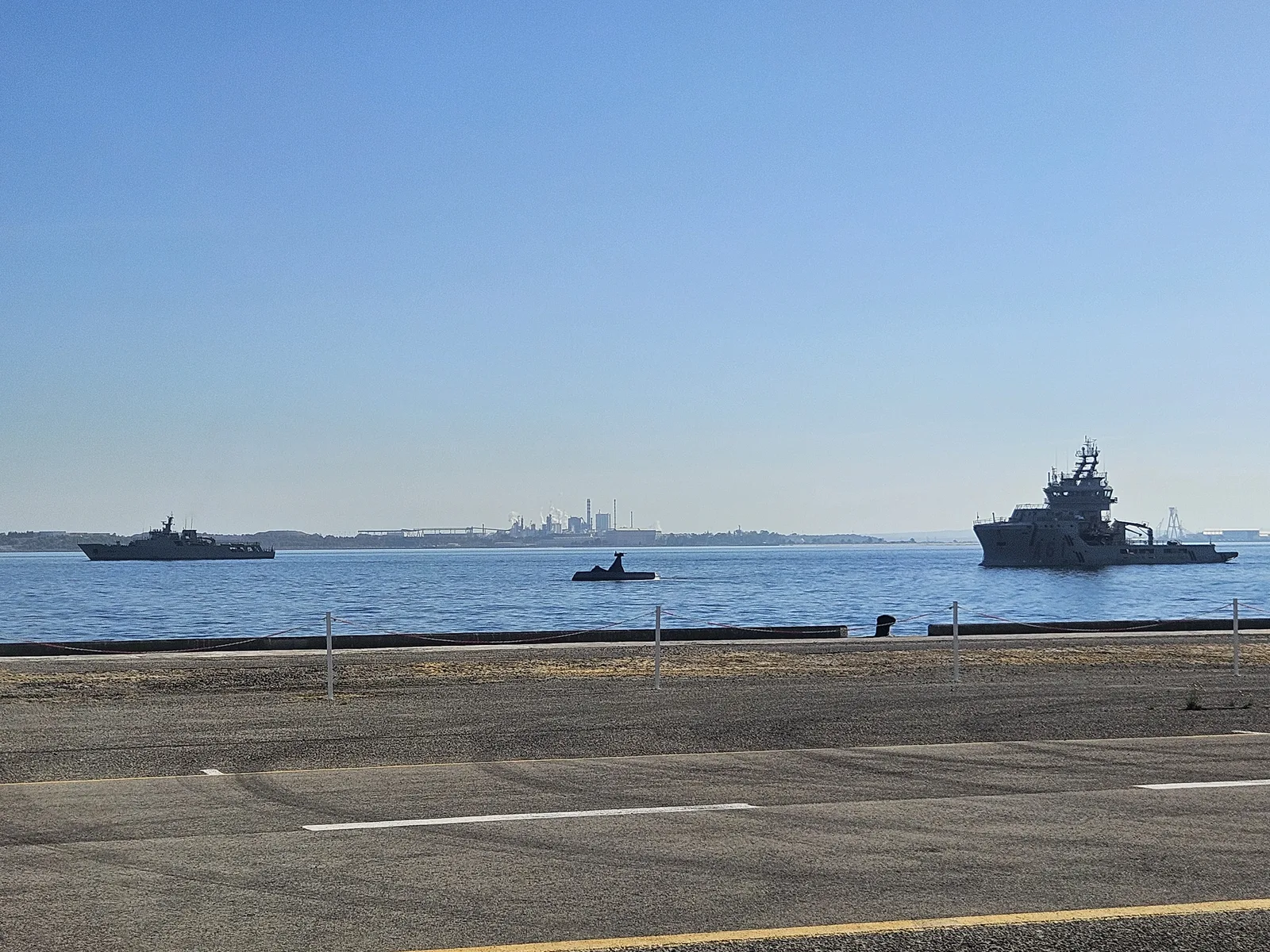
Another step in growing the UK’s MUS-based mine-countermeasures capability is an extra GBP 90 million allocated to procure offshore support vessels (OSVs) through a partnering effort with Norway.
Working with Norway – whether in operational terms through the CSG, JEF, and NNI activities, or in procurement – remains a robust priority for the RN.
Across the ‘Atlantic Fleet’ series, capabilities and operations will be underpinned by the Type 26. The DIP underlined the UK’s continued commitment to and investment in building a combined, 13-ship Type 26 fleet (eight for the UK, five for Norway).
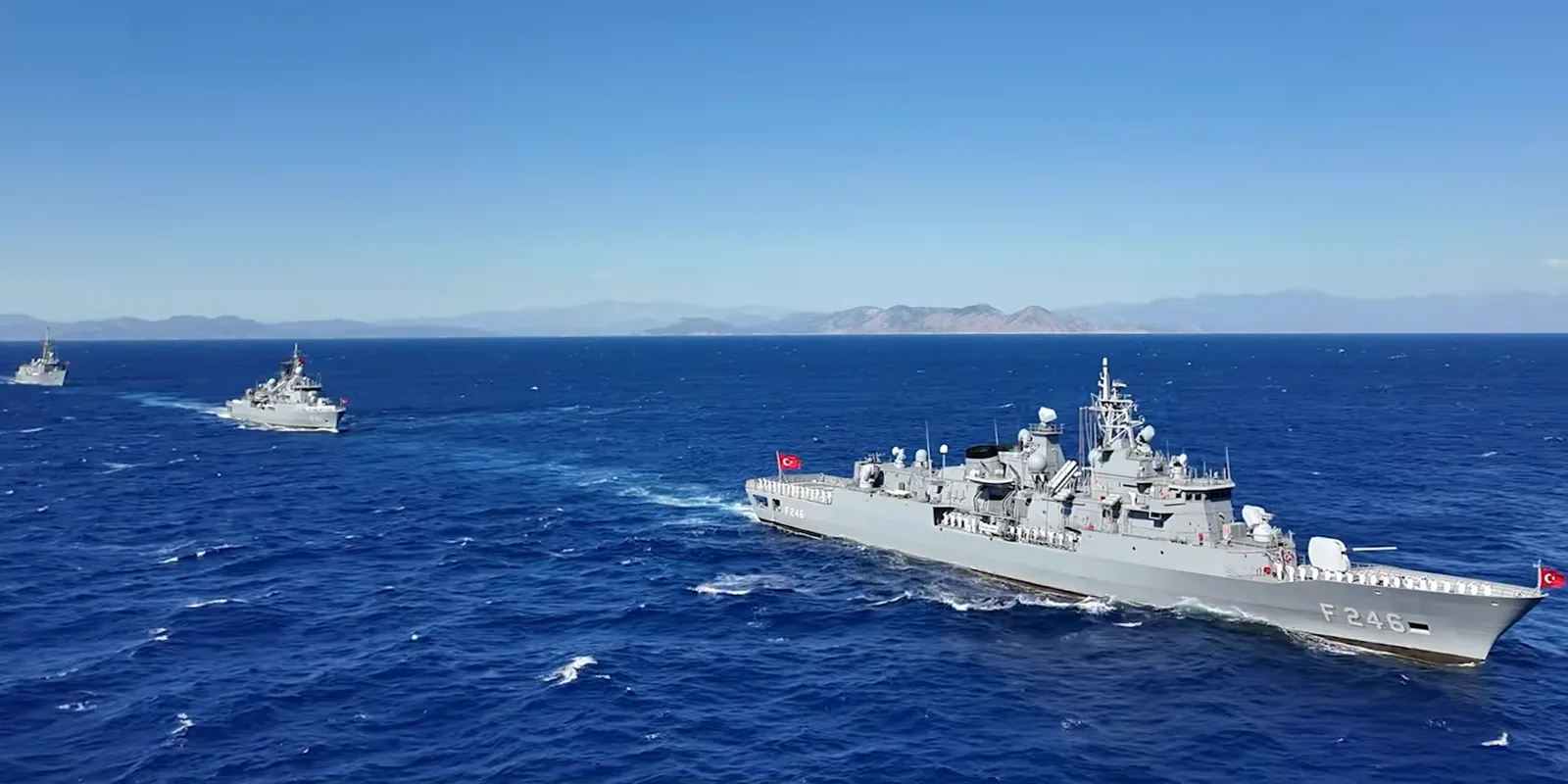
The in-build Type 31 Inspiration-class general-purpose frigates will bring more mass. The DIP detailed that GBP 1.6 billion will be spent across the next four years to start bringing the five ships into service. Plans to enhance their lethality with Norwegian Naval Strike Missiles (NSMs) and US Mk 41 strike-length vertical launching systems had already been announced. The MoD aims to further enhance Type 31 lethality through investing in munitions to exploit the ships’ self-defence capacity against surface and various uncrewed threats, the DIP said.
One unanswered question in the Type 31 development plan is whether consideration is still being given to building more than five. When the ships were first conceived, there was a conversation about procuring more over the longer term, augmenting the mass the navy needs, especially if export orders were generated. To date, Indonesia and Poland are buying Type 31 derivatives.
Fighting force
As noted, much of the core of the navy’s crewed fighting force is already operational. The DIP investments to be made over the next four years will enhance these capabilities, alongside reflecting the ‘hybrid’ shift.
The UK’s Royal Marines Commando force is one of the navy’s – and the UK’s – most potent frontline military capabilities. Under an ongoing process that included the Future Commando Force (FCF) concept and the SDR’s re-focusing of FCF on the High North, the ‘Royals’ – and the UK’s overall approach to amphibious warfare – have been in transition for some time. The DIP announced an additional GBP 100 million of funding to enhance the High North focus, including, it said, “aiming to increase the number of Royal Marines regularly deployed in the region”. The marines’ land-based transport is already being upgraded, with 60 new Arctic-capable, all-terrain vehicles set to arrive by 2028, replacing the in-service Viking vehicles.
What is less clear-cut currently is the future direction of the marines’ sea-based transport. The DIP announced aims to collaborate with the Netherlands (one of the UK’s closest amphibious warfare partners) on the potential procurement of new amphibious vessels under the Amphibious Transport Ship Programme. This approach is replacing existing plans to procure six multi-role strike ships (MRSSs) from the early 2030s; here, the DIP said, the MRSS programme was “too complex and did not reflect the UK Commando Force we are now pursuing”.
Underscoring the Norway link, the DIP announced plans to collaborate with Norway on joint commando craft.
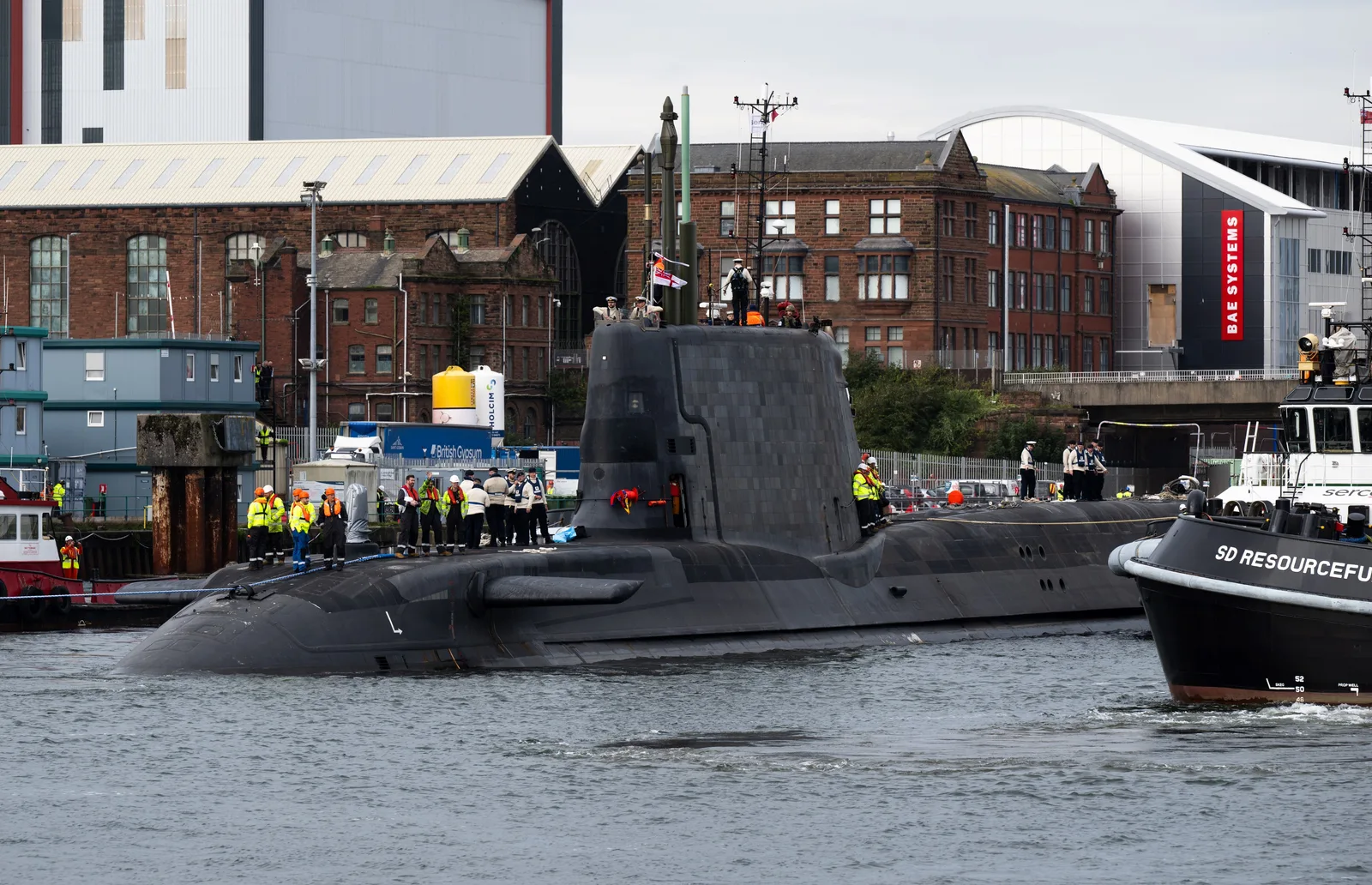
Also at the forefront of the UK’s North Atlantic deterrence and defence contribution are the in-service Astute-class SSNs. Six of the planned seven have been delivered; the DIP reiterated intent to complete the build of the seventh boat, Achilles (a process that was adversely impacted by a fire at the Barrow shipyard in 2024). Under plans again already in place, the Astute boats will be followed by up to 12 new SSNs, known as the SSN-AUKUS submarines and being delivered under Pillar 1 of the Australia/UK/US (AUKUS) strategic partnership.
Yet perhaps the most important issue with the Astute class remains improving the operational availability of the in-service fleet. Since the boats began arriving in 2010, this availability has been relatively limited. Part of the challenge here has been insufficient infrastructure to maintain the boats. The DIP is defining measures to address this, including: upgrading submarine maintenance docks at HM Naval Base Devonport, Plymouth, within a wider process of enhancing support capacity there for RN operations; and improving infrastructure at HM Naval Base Clyde, Faslane, to boost support for in-service and future submarines. Notably, the DIP specified acquisition of three floating docks and other infrastructure at Faslane to enable “resilient out-of-water engineering for all submarine classes”.
Connecting up … enough
The DIP details a lot of activity within the RN’s ‘hybrid’ development.
This includes the navy’s connection to the ‘Maritime Fighting Web’, which is the maritime element of the defence-wide ‘Digital Targeting Web’: a command-and-control (C2) construct designed to not only enhance communications but accelerate decision-making and targeting processes. The simple essence of a ‘hybrid navy’ construct is connecting up increasingly numerous, diverse and dispersed assets across all three maritime domains. The net effect of such connectivity is to make the connected assets more capable at a holistic level.
Yet a question still for the navy – and for the MoD and UK government – to address is whether the navy has enough crewed platforms to connect up and provide the ‘launch pads’ from which the large number of MUS can be deployed and to provide sufficient capacity to respond when/where needed to the greater number of targets the larger MUS-based sensing web is designed to find.
The DIP has a stated requirement to procure ‘at least’ six CCVs. There also remain lines therein to build amphibious transport and strategic sealift capabilities – although international build options will be strong contenders in both cases. Desires detailed by previous governments to extend the Type 31 programme do not yet seem to be developing further. Submarine building seems to be moving into a steady state, with Astute concluding, the Dreadnought ballistic missile submarine programme continuing, SSN-AUKUS getting underway, and the DIP reiterating government intent to start thinking about a Dreadnought successor. Yet the sense of a longer, more in-depth surface ship-building programme would give more confidence in UK capacity to establish an affordable, sustainable drumbeat.
The simple essence of a ‘hybrid navy’ is, again, just that: a balanced mix of crewed and uncrewed platforms.
Share post