More than seven weeks since the United States and Israel initiated their attacks on Iran, the conflict remains at an impasse.
While US President Donald Trump and his ‘secretary of war’, Pete Hegseth, have declared victory several times, they still appear to be some way from achieving it, while the truce with Iran declared by Trump on 7 April 2026 – apparently in the mistaken belief that those in power in Tehran would comply with all US demands – has failed to yield a more permanent conclusion to the conflict.
Moreover, claims by both Trump and Hegseth that ‘regime change’ has been effected in Iran with the assassination of its supreme leader, Ayatollah Ali Khamenei, in the opening US/Israeli air strikes and the killing of other Iranian military leaders are entirely redundant; Mojtaba Khamenei, the ayatollah’s son who was appointed by Iran’s Assembly of Experts to replace him on 8 March, is as equally hardline as his father (though he may have been gravely injured in an airstrike). Similarly, such is the extent to which the Islamic Revolutionary Guard Corps pervades the Iranian political system that other new Iranian leaders might also be as hardcore as those they have had to replace.
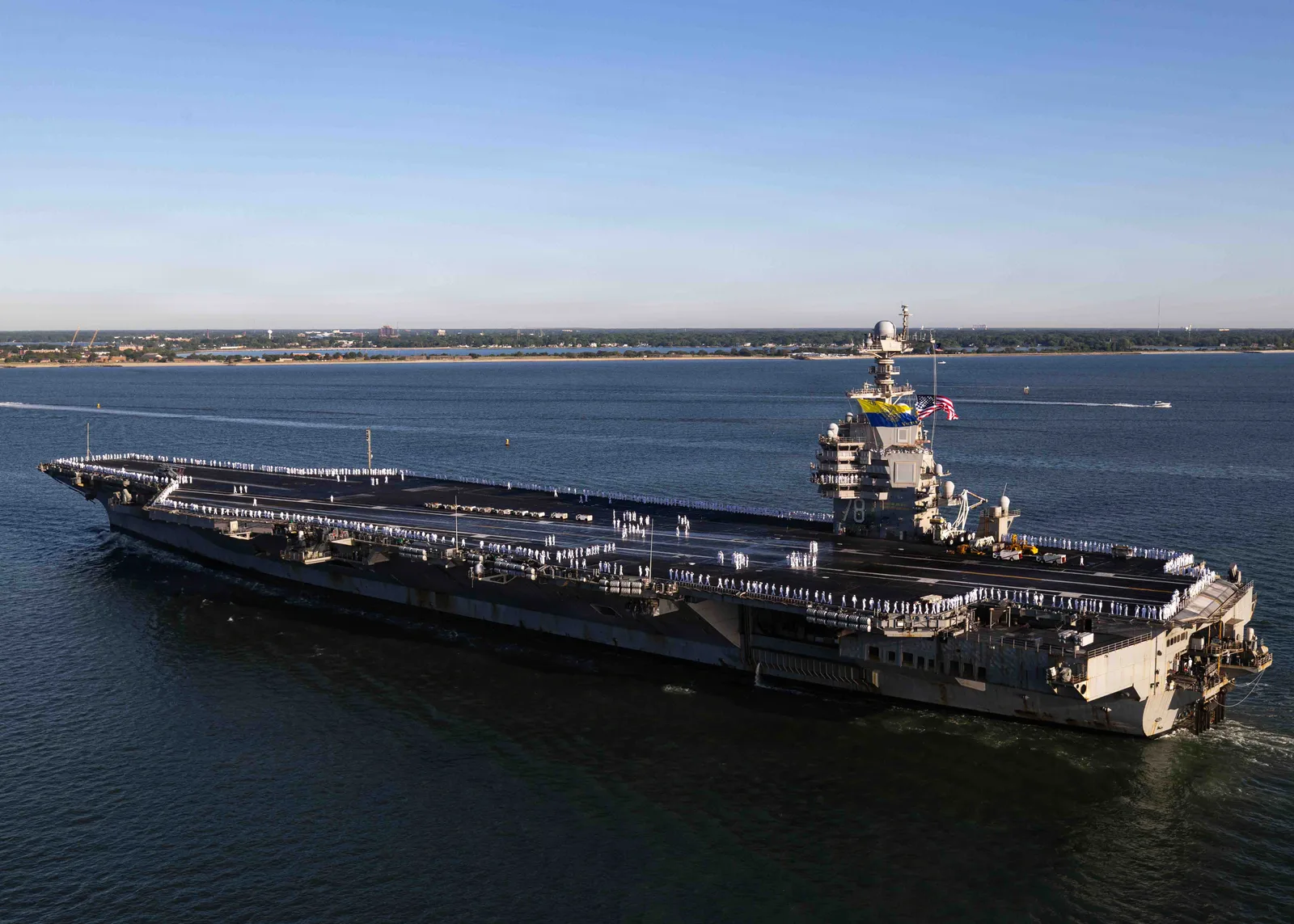
While Iran had declared on 17 April that the Strait of Hormuz would be re-opened to shipping in response to a truce being declared between Israeli and Hezbollah in Lebanon, Trump’s insistence that the US naval blockade of Iran, which was imposed from 10.00 ET on 13 April, would remain in effect led the Iranians to reclose the strait on 18 April.
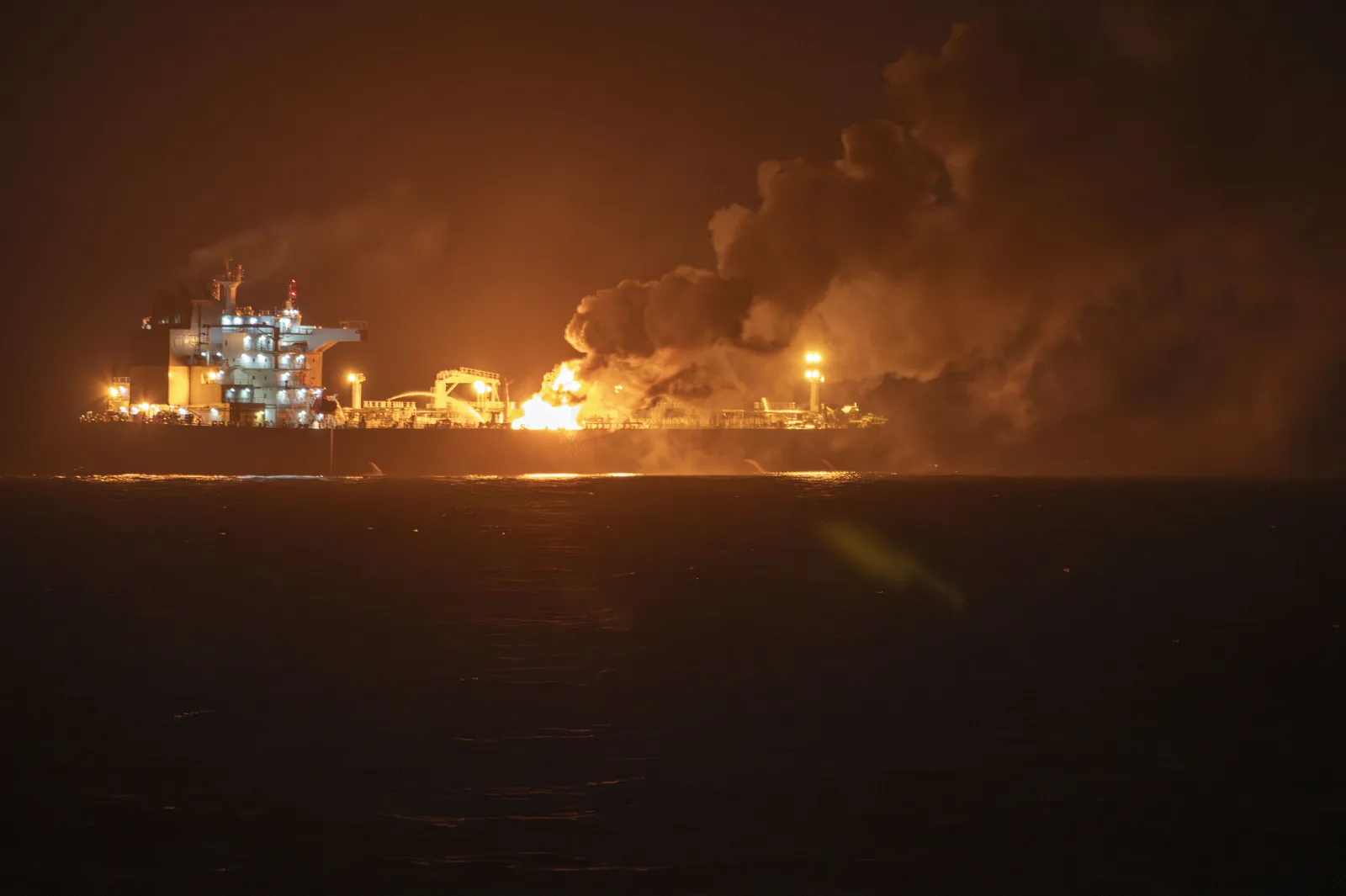
Thus, both sides are now choking off shipping in the strategic waterway – and taking measures to enforce this. According to the United Kingdom Maritime Trade Operations (UKMTO) authority, on 18 April two Iranian gunboats opened fire on a tanker in the strait, while a container ship was also hit by what it described as an unknown projectile off the northeastern coast of Oman, causing damage to some containers on board. Reuters also reported two merchant ships separately being hit by gunfire as they tried to cross the strait.
Then, on 19 April 2026, the US Navy intercepted and took control of an Iranian-flagged cargo ship as it attempted to get past the US naval blockade.
In a press release US Central Command (CENTCOM) stated that the “guided-missile destroyer USS Spruance (DDG 111) intercepted M/V Touska as it transited the north Arabian Sea at 17 knots en route to Bandar Abbas, Iran. American forces issued multiple warnings and informed the Iranian-flagged vessel it was in violation of the US blockade.
“After Touska’s crew failed to comply with repeated warnings over a six-hour period,” CENCOM added, “Spruance directed the vessel to evacuate its engine room. Spruance disabled Touska’s propulsion by firing several rounds from the destroyer’s five-inch (127 mm) MK 45 gun into Touska’s engine room. US Marines from the 31st Marine Expeditionary Unit later boarded the non-compliant vessel, which remains in US custody.”
Tehran has vowed to “take the necessary action” to retaliate in response to the seizure of M/V Touska.
Meanwhile, there continues to be a disconnect between Trump Administration reports of peace talk initiatives and progress compared to what is being declared from the Iranian side. On 20 April Trump said Vice President JD Vance, special envoy Steve Witkoff and adviser Jared Kushner would travel to Islamabad for another round of piece negotiations. According to a translation from the AFP news agency, however, Iranian Foreign Ministry spokesman Esmail Baghaei said on 20 April, “As of now … we have no plans for the next round of negotiation, and no decision has been made in this regard.”
The two-week ceasefire announced by Trump on 7 April is set to end on the evening of 21 April US time (which would be the morning of 22 April Iranian time).