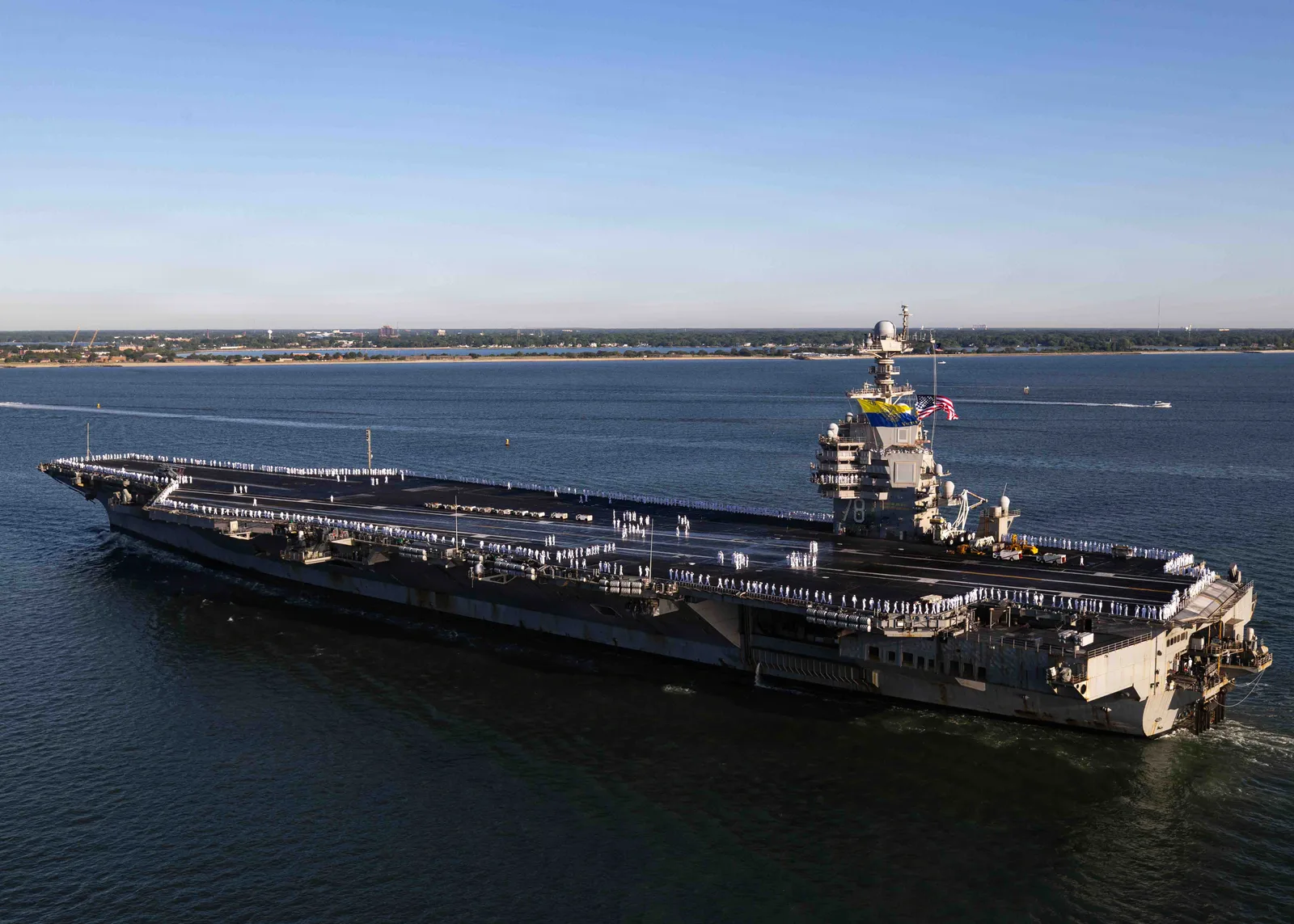
The US Navy has revealed a new very-long-range air-to-air missile now under development for the Super Hornet, F-35C and the coming sixth-generation F/A-XX.
A bigger stick for US Navy fighters: examining the AIM-424 Malice
On 22 August 2026, during its annual Tailhook convention, the US Navy (USN) announced that a new long-range air-to-air missile was under development and under test. The Raytheon (RTX) AIM-424 Long Range Air-to-Air Missile (LRAAM, also known as the Malice), was described as being “a next-generation missile intended to strengthen fleet defense and maintain a decisive air-domain overmatch against advanced threats”.
The navy said the LRAAM directly supported “the Department’s contribution to integrated deterrence by increasing range, lethality and combat effectiveness for Marine and Naval Aviation forces that are defending our fleets, our interests, and our homeland”, adding that, “LRAAM sustains the Department’s first-look, first-shot, first-kill advantage by providing our aviators greater reach, greater survivability and greater tactical flexibility in the air-to-air fight.”
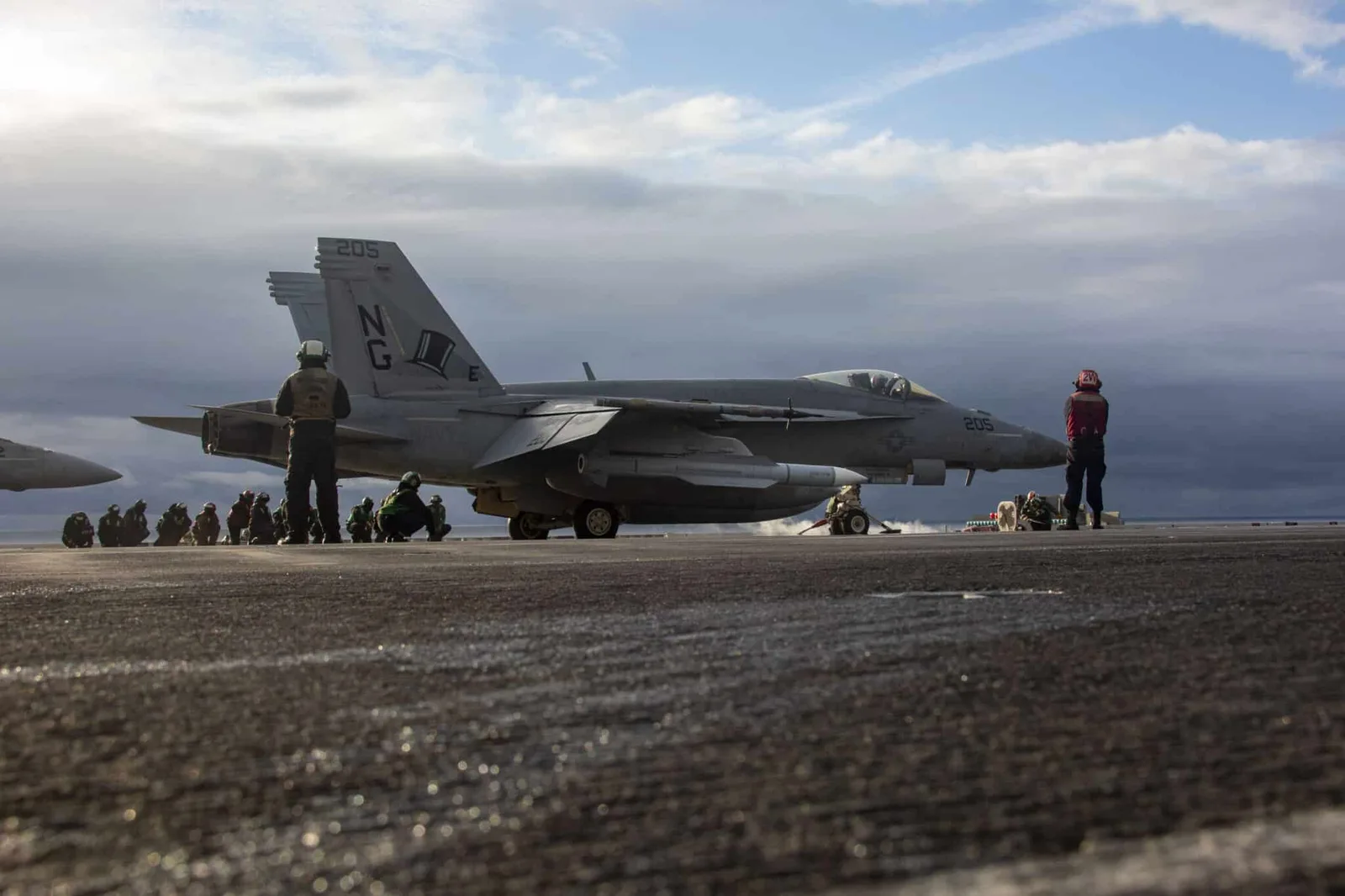
The AIM-424 Malice LRAAM is intended to arm the US Navy’s fourth-, fifth- and sixth-generation combat air platforms (specifically the F/A-18E/F Super Hornet, the F-35C Joint Strike Fighter and the forthcoming F/A-XX next-generation fighter) and is said to be “designed for the air wing of today and the future”.

Phil Jasper, the president of Raytheon, confirmed that the company’s Advanced Technology division had been developing Malice in order to strengthen fleet air defence, and maintain superiority in order to address rapidly emerging air-to-air threats. “Our Advanced Technology’s team approach is at the core of doing just that with the development of the AIM-424,” said Jasper. “With increased range, lethality, and combat effectiveness for naval forces, the AIM-424 delivers a generational leap in long range air-to-air combat capability that can out range any threat.”
The original US Navy announcement noted that “further details regarding specific capabilities and deployment timelines remain classified to protect operational security”. Despite this, an outline specification was issued:
| AIM-424 specifications | |
| Primary function | Air-to-air missile |
| Contractor | Raytheon |
| Propulsion | Solid-propellant rocket motor |
| Length | 13.5 ft (4.11 m) |
| Diameter | 13.5 inches (0.34 m) |
| Wingspan | 26.2 inches (0.67 m) |
| Weight | 1,500 lb (680 kg) |
| Range | >250 nautical miles (463 km) |
| Warhead | Blast fragmentation |
This means that the AIM-424 is heavier and longer than the AIM-54 Phoenix that armed the F-14 Tomcat (retired on 30 September 2004) and only marginally slimmer, while it enjoys more than double the range!
With a range of more than 250 nautical miles (463 km), the AIM-424 will out-range most – and perhaps all – known Chinese air-to-air missile types.
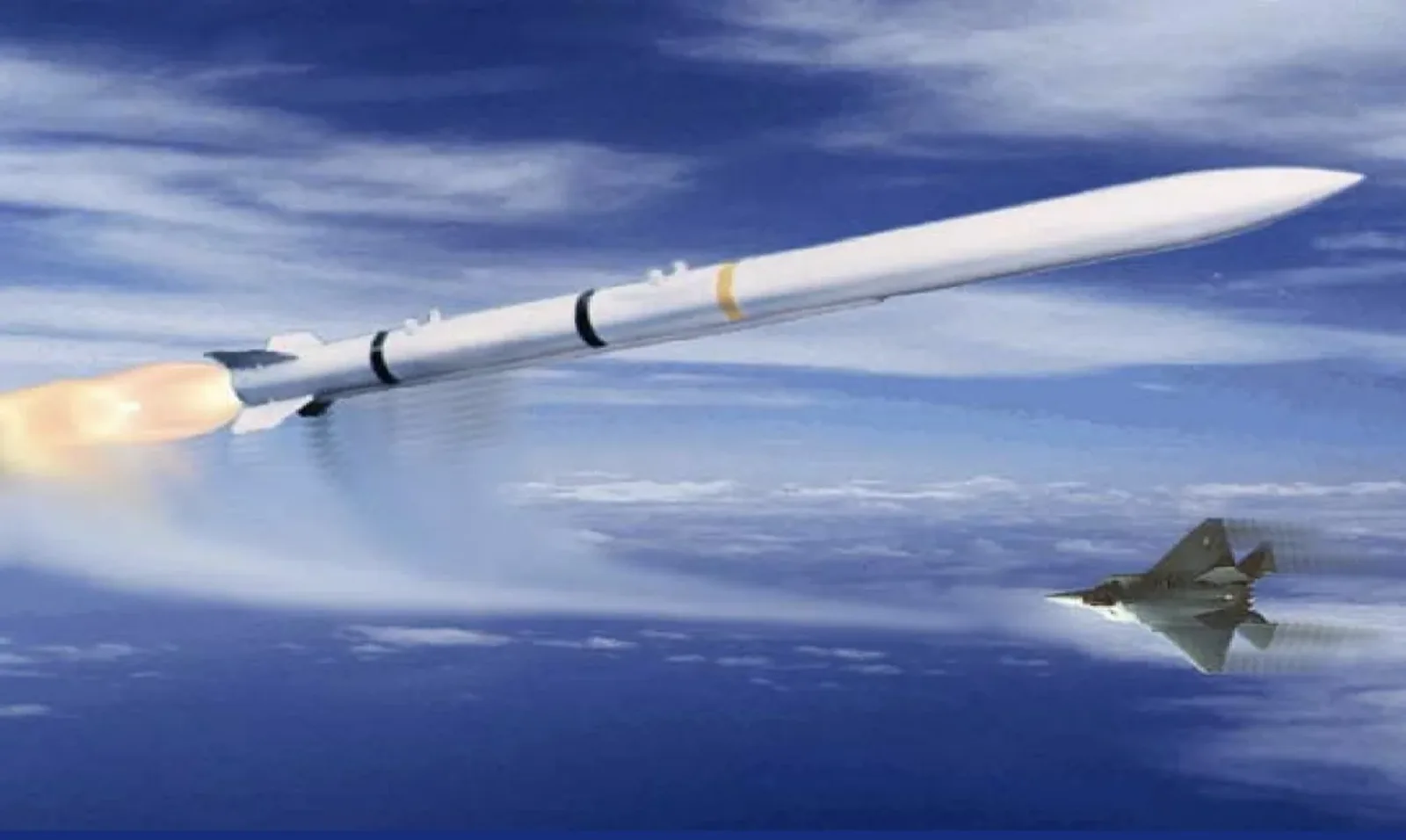
There have been claims that the aerodynamic fins and strakes fitted to the AIM-424 will enable it to achieve significant manoeuvrability and thereby be effective against fighter-sized targets. Others have speculated that the weapon may be intended as an ‘AWACS killer’, engaging larger, less agile targets such as airborne early warning (AEW) aircraft that operate further back from the immediate combat area. Details of the AIM-424’s seeker, warhead and fusing have not been revealed, nor have speed and altitude performance been hinted at.
It has been reported that specialised cyber development teams have been building the infrastructure required by the missile in order for it to be used on a wide range of USN and US Air Force (USAF) aircraft, including a specialised datalink optimised to exploit the Malice’s longer range.
The origins of Malice
Development of a new generation of US air-to-air missiles began about 20 years ago in response to the rapidly increasing range of threat systems and the developing Chinese anti-access/area denial (A2/AD) envelope, which threatened to put enemy high-value assets beyond reach and to ‘push back’ USN aircraft carriers further and further.
It was felt that new weapons would be needed to restore the engagement range advantage hitherto enjoyed by USN, USAF and US Marine Corps (USMC) fighters –especially against adversaries such as China.
With US intelligence agencies predicting a future carrier stand-off between the USA and China, and with Beijing potentially deploying up to nine carrier strike groups by 2035, the USN’s carrier air wings will face significantly increased competition as time goes by and will need to tackle threats at ever greater range.
The Long Range Engagement Weapon (LREW) concept was revealed during a defence industry conference in 2017, when it became clear that a two-stage air-to-air missile was being developed for launch from the internal weapon bays of stealth aircraft. Fiscal Year 2017 budget documents revealed that the LREW concept had completed a successful, two-year demonstration and that the technology would be transitioned to operational service.
The LREW was being developed in parallel with the shorter-range Lockheed Martin Joint Advanced Tactical Missile (JATM, subsequently designated the AIM-260), which has a reported range of about 120 nautical miles. JATM was a more direct replacement for the AIM-120 Advanced Medium-Range Air-to-Air Missile (AMRAAM), which can reach 86 nautical miles (159 km) in its final form, using a similar airframe. The two-stage LREW promised much longer range, reaching out to 250 nautical miles (463 km).

JATM was developed for all US air arms, under USAF auspices, while the LREW was similarly intended for the USAF, USN and USMC, but has been ‘led’ by the navy. The two services have often partnered on air-to-air missile programmes, including the AIM-9X Sidewinder, AIM-120 AMRAAM and AIM-260 JATM. The AIM-424 seems to be more of a navy programme than a joint one, reflecting the fact that the two services have slightly different operational requirements, although it is recognised that the USAF can and will benefit from the navy’s technological advances while development testing on Malice and that the AIM-424 may accelerate the introduction of new capabilities (and thereby leverage benefits) across the Joint Force.
Emergence of the AIM-424
Although the LREW programme was broadly known about, the sudden appearance of the AIM-424 still came as something of a surprise, not least after the fielding of the AIM-174B during Exercise ‘Rim of the Pacific’ 2024. The AIM-174B Gunslinger is an air-launched derivative of the RIM-174 Standard Extended Range Active Missile (ERAM), also known as the Standard Missile 6 (SM-6). This has a range of 150-200 nautical miles (278-370 km) and is being fielded by forward-deployed carrier air wings, but it can’t fit inside the internal weapon bays of the F-35 (or the F-22), effectively making it relevant only to the Super Hornet and effectively a stopgap, pending the arrival of the AIM-424 Malice LRAAM.


Although the AIM-174B is claimed to offer “unprecedented area defense capabilities”, the fact that it can’t be carried internally by the F-35 or the F-22 limits its usefulness to the navy and the air force. The AIM-424 is slightly shorter and lighter than the Gunslinger, but enjoys a longer reach – and crucially is short enough to fit in the weapons bay of an F-35C.
The USN’s new AIM-424 missile, moreover, could help to fill a longstanding USAF requirement for long-range air-to-air capabilities for its fourth-, fifth- and sixth-generation fighters, including the Boeing F-47 Next-Generation Air Dominance (NGAD) platform.
USAF spokesmen told a number of US-based outlets that the service is “closely following the progress of the navy on the AIM-424 Long Range Air-to-Air Missile Program”.
However, while it brings a significant increase in range over current US missile programmes, the AIM-424 does not meet the USAF’s long-term Air Force Long Range Weapon (AFLRW) requirement, unveiled in June 2026. This has outlined a need for an air-to-air missile for the USAF with a range of more than 1,000 nautical miles (1,850 km).
The appearance of Malice
Two official photos of the AIM-424 Malice were released on 22 August. These showed a missile of similar configuration to the much smaller Raytheon Peregrine being developed under the USAF’s Small Advanced Capabilities Missile (SACM) programme.
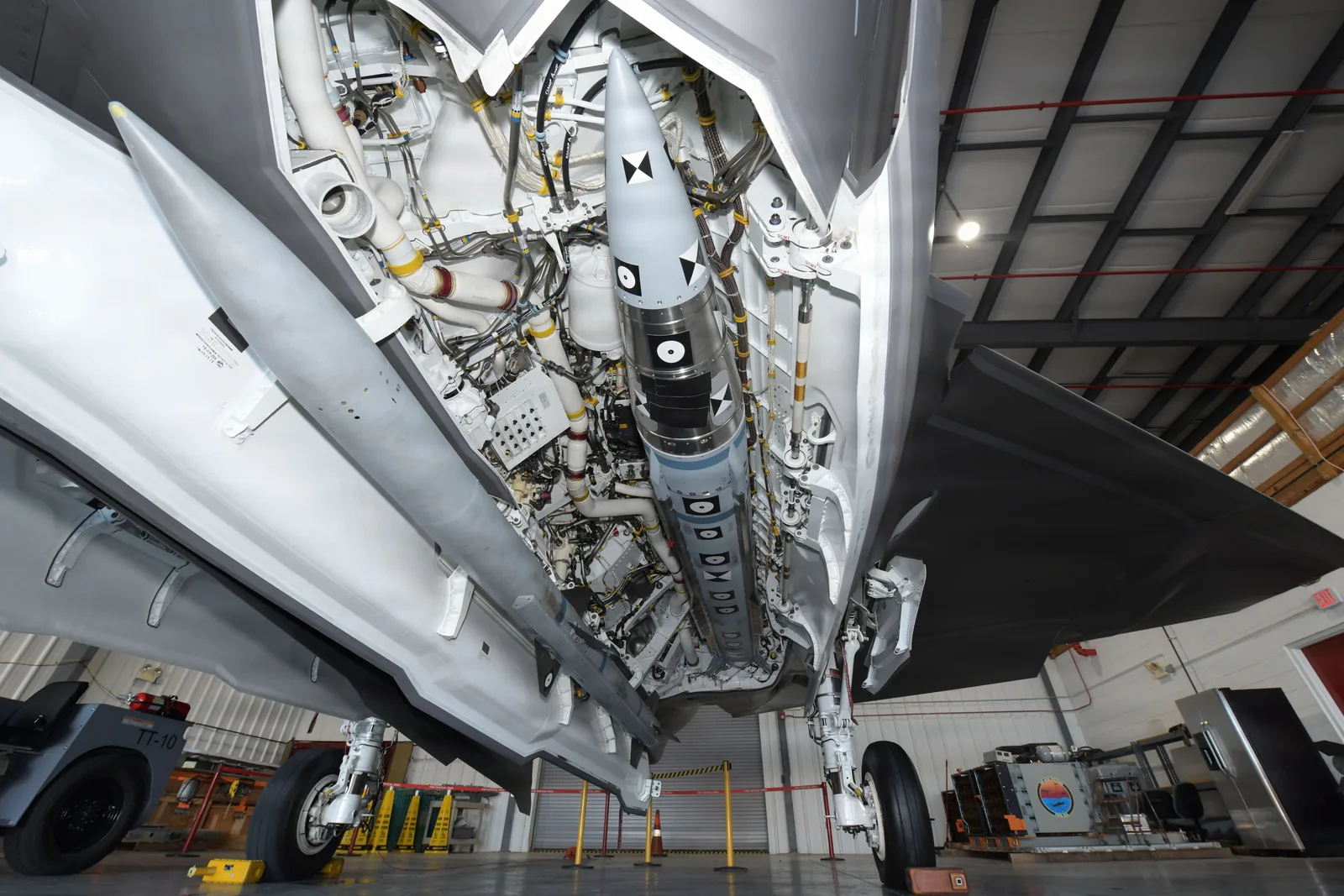
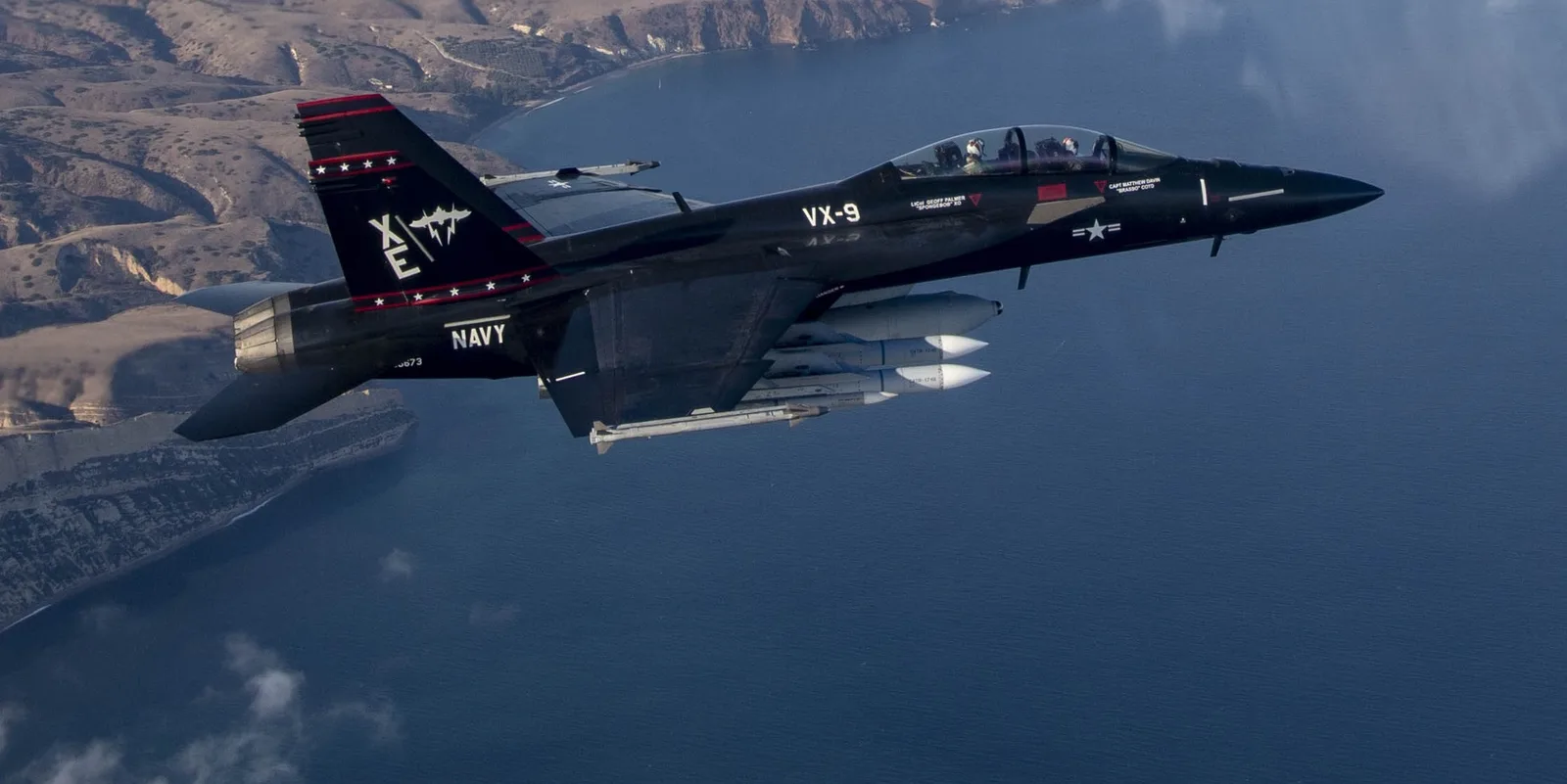
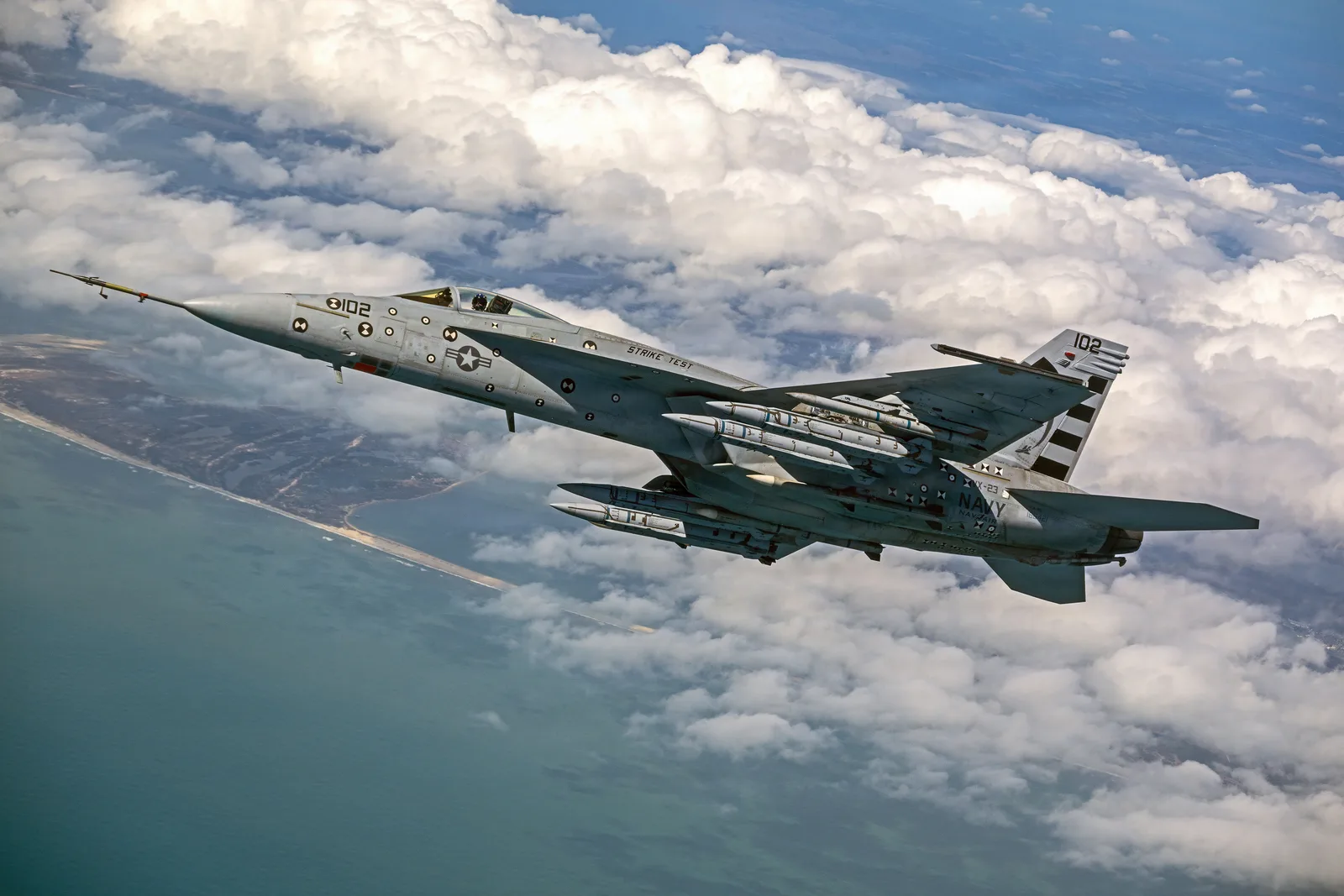
The first of the Malice photos appears to have been taken on 3 April 2026 and showed four AIM-424 LRAAMs being carried by an F/A-18E Super Hornet of Navy Air Test And Evaluation Squadron 23 (VX-23) for an unspecified test event. The other photo was apparently taken on 1 August and showed a single AIM-424 mounted in the port internal weapon bay of an F-35C with an AIM-120 AMRAAM mounted on the weapon bay door.
Brian Everstine and Steve Trimble of Aviation Week asserted that the AIM-424 would “far exceed the capabilities of the current AIM-120 and likely the recently disclosed AIM-174B as well”, noting that the concept for the AIM-424 may have been in development for more than a decade.
The Aviation Week analysts said that the new missile was a two-stage design, suggesting that this “should result in extreme range and very high speed”. This probably refers to a ‘dual-pulse’ powerplant rather than separate physical stages, judging by available photos. As a ‘multi-stage’ missile, the AIM-424 may not ‘run out of energy’ in the way that today’s single-pulse-rocket-engined weapons can do in the endgame, although it will not have the same ability to retain potential energy as weapons with throttleable ramjets, such as the MBDA Meteor.
No timelines have been revealed, but it would seem unlikely that the AIM-424 will be ready for service any time soon. There has been no suggestion that the weapon has undertaken any live firings yet, for example.
Nor is there much clarity as to how the weapon will ‘fit in’ alongside existing in-service air-to-air missiles, while little has been revealed about the AIM-424’s capabilities against different target categories, including ballistic missiles, cruise missiles and hypersonic weapons (the weapons developed by China for use against US carriers and their carrier strike groups).
It is not known whether the AIM-424 is primarily optimised for use against large, relatively unmanoeuvrable high-value assets like tankers, ISR aircraft and AEW platforms or whether it can also be used effectively against manoeuvring fighters.
Share post