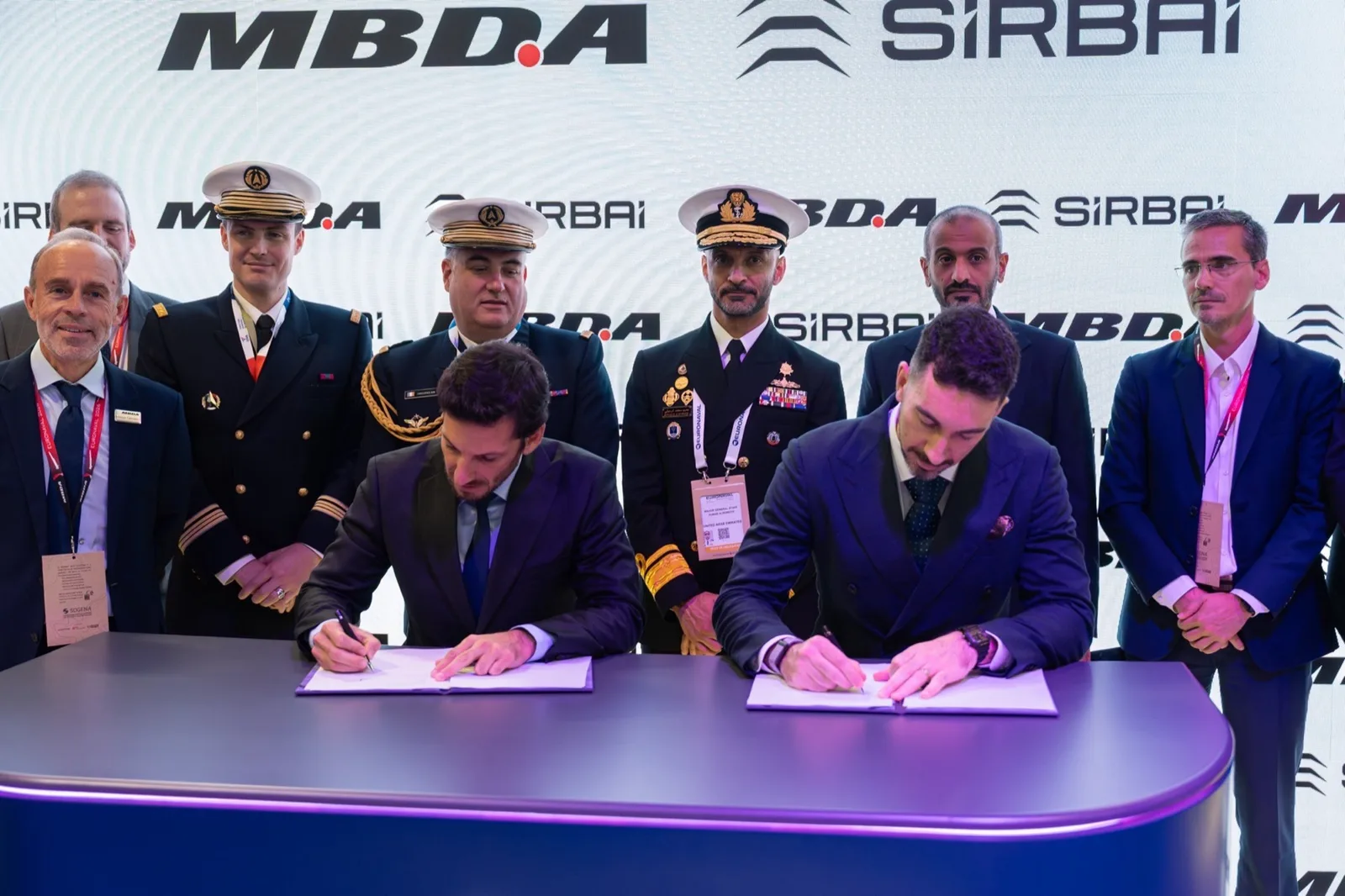
At Euronaval 2026, two UAE-based entities signed cooperation agreements with major European industrial players.
First off, the UAE’s Technology Innovation Institute (TII) signed an agreement with France’s Naval Group, centred around cooperation in developing autonomous underwater technologies. A key area highlighted was the cooperation on an unnamed extra-large unmanned underwater vehicle (XLUUV), with TII providing the XLUUV, and with Naval Group contributing in the domain of underwater combat systems.
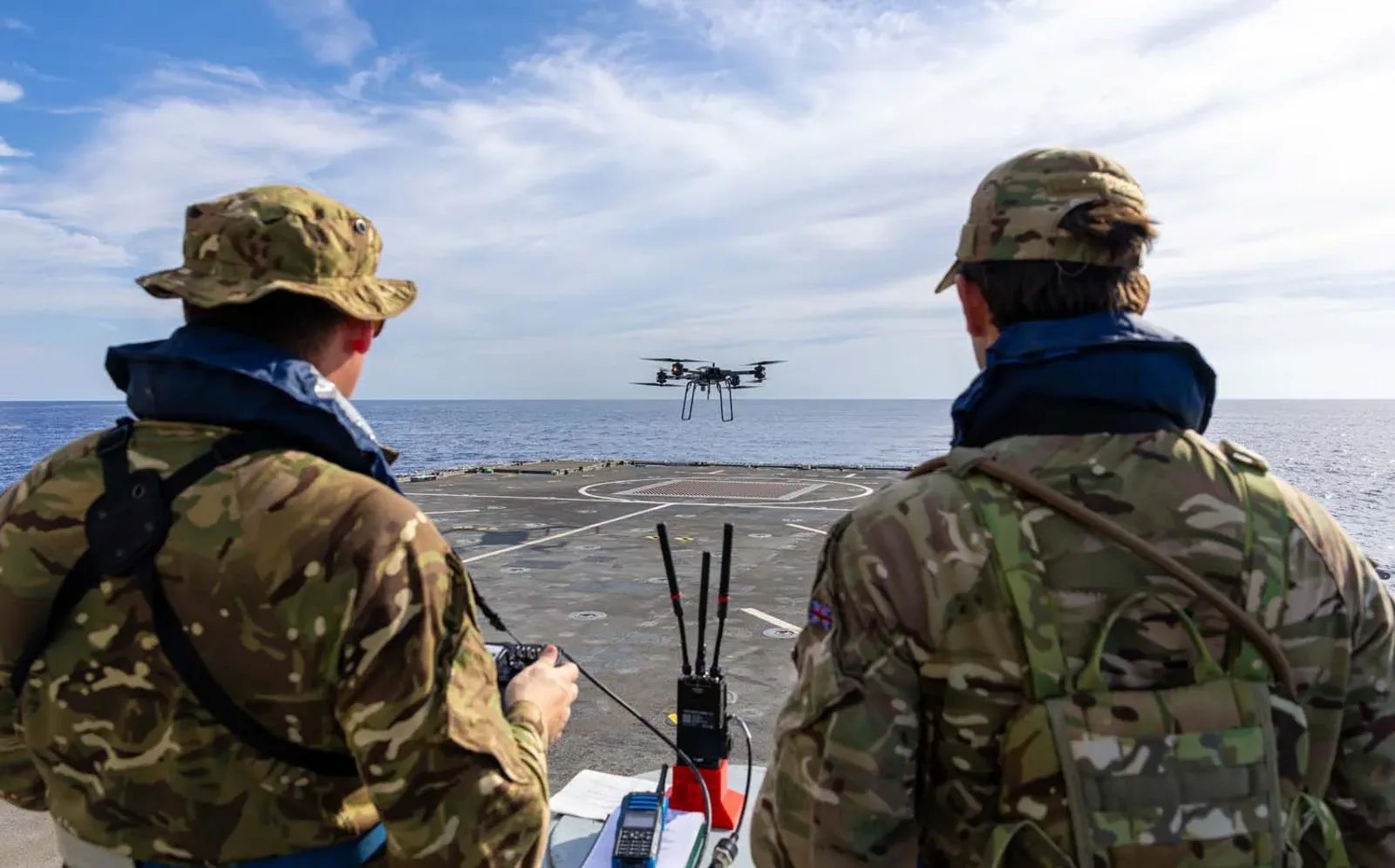
Following on from this, SERBAI, an Abu Dhabi-based swarm autonomy startup, signed an agreement with MBDA, to conduct feasibility studies into integrating SERBAI’s AI functions, including automatic target recognition, and swarm flight capability into the MBDA France/FLY-R R2-120 Raijin rhomboidal wing loitering munition. Supported by the Tawazun Council, the work is set to be completed within two years, taking place in Abu Dhabi under the MBDA Emarat structure, under a joint MBDA France, FLY-R, and SIRBAI Team.
While memoranda of understanding and cooperation agreements are fairly commonplace, what was notable in this instance was both announcements represented milestones for the UAE’s recent state-backed efforts to develop its high-tech sector. How does their model work?
Building a new ecosystem
In 2020, the UAE established the Advanced Technology Research Council (ATRC), and under it, a small ecosystem comprising:
- Technology Innovation Institute (TII): The ATRC’s applied research arm.
- Aspire: The ATRC’s programme management and business development arm.
- Venture One: The ATRC’s commercialisation arm.
Within this structure, the TII maintains nine research centres spanning various fields, comprising: the Advanced Materials Research Center (AMRC); the Artificial Intelligence and Digital Science Research Center (AIDRC); the Autonomous Robotics Research Center (ARRC); the Cryptography Research Center (CRC); the Directed Energy Research Center (DERC); the Propulsion and Space Research Center (PSRC); the Quantum Research Center (QRC); Renewable and Sustainable Energy Research Center (RSERC); and the Secure Systems Research Center (SSRC).
This ecosystem is geared toward commercialising state-backed research from TII into private companies. In essence, TII’s research centres provide the technical foundation, while Aspire handles business development and directs clients to the companies, and Venture One handles the commercialisation, with promising projects becoming spun out as private companies.
At this point a number of companies have already graduated from this pipeline, including SIRBAI, TACTICA AI, and Quantum Gate. These new companies continue to benefit from their ties to the ATRC’s research ecosystem, and can benefit from each other’s areas of specialisation.
An example of this wider state-private ecosystem in action was provided by Dario Albani, Chief Technology Officer (CTO) at SERBAI. He explained to Warsight that SERBAI was developing an AI edge computing module for autonomous platforms, to enable users of various platforms to avoid vendor lock-in and work within the same command and control (C2) system (If this approach sounds familiar, Warsight has previously covered a similar approach elsewhere).
As part of this effort, Albani explained that SERBAI was collaborating with TII’s SSRC to provide the hardware and cyber hardening, along with Quantum Gate providing the post-quantum cryptography – making the system robust against future decryption attempts by quantum computers once they enter service.
Albani summarised, “by collaborating with the entire ecosystem, we are bringing into SERBAI a lot of technologies and a lot of capabilities that will make your mission not only easy to deploy, as you can see here, but also secure from external threats.”
The Emirati model to build up their defence-industrial ecosystem is an interesting one. While some of the initial agreements with foreign players signed so far represent modest steps, the pipeline behind them bears watching.