New EU funding for energetics production aims at ramping up munitions delivery, as other plans in electronic components and platforms gather momentum.


New EU funding for energetics production aims at ramping up munitions delivery, as other plans in electronic components and platforms gather momentum.
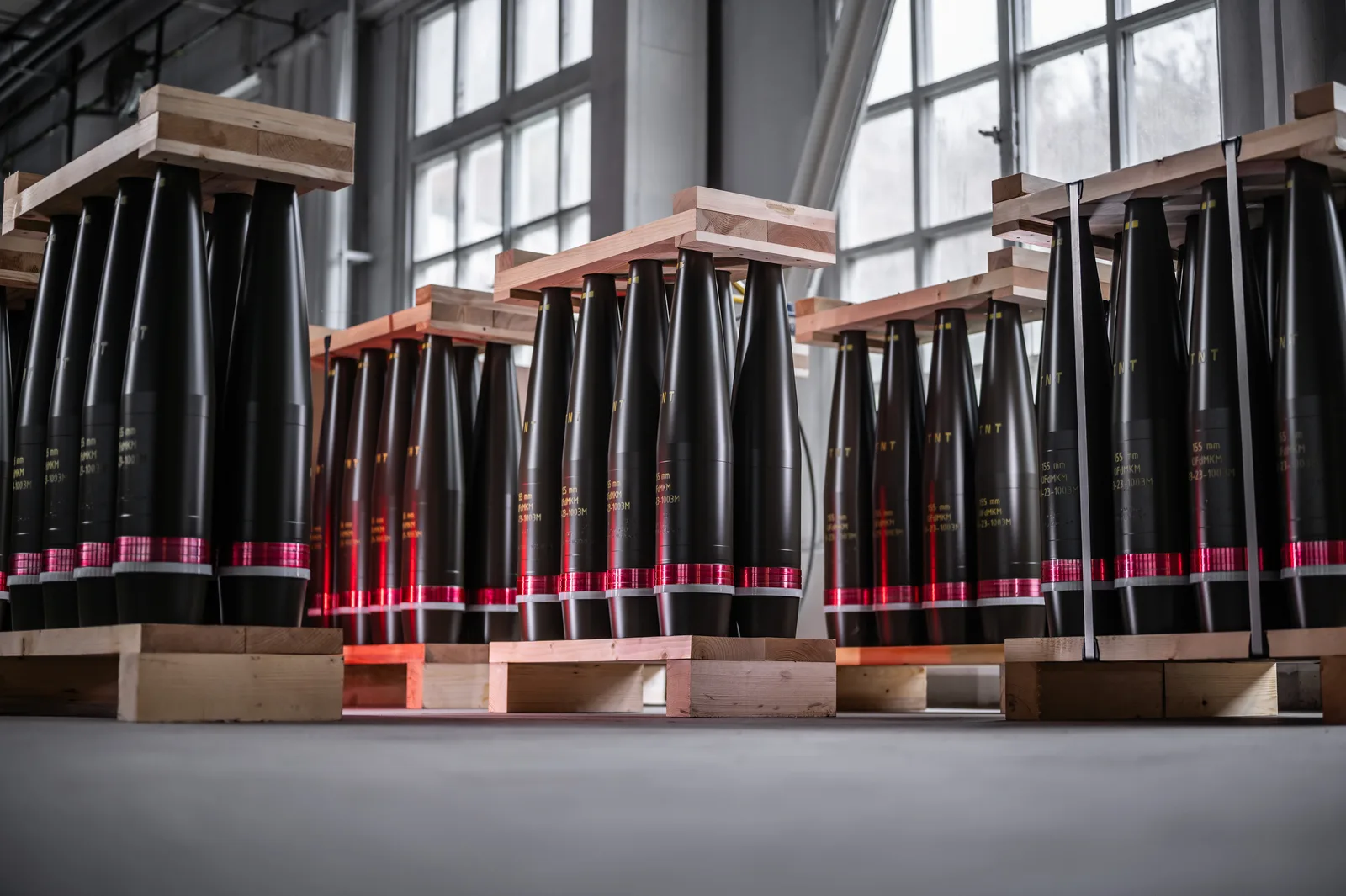
The European Commission announced on 14 October 2026 that it had awarded EUR 168.2 million to industry as part of its Industrial Reinforcement Actions (IRA) plan under the European Defence Industry Programme. The IRA programme has a total of EUR 440 million allocated to projects across the EU and Norway, alongside EUR 260 million for Ukrainian and EU industrial cooperation.
The first tranche of funding is being allocated to accelerate and expand production for energetic components used in missiles, drones and ammunition. Under the IRA’s Project Rocman, EUR 30 million is being allocated to support the manufacturing of solid fuel rocket motors for missiles through companies in Norway, Germany, Ireland, Italy, the Netherlands, Italy, and Belgium.
Other projects covering TNT, nitrocellulose production, and loitering munitions and their explosive warheads also receiving EUR 25-30 million each. The aim of the funding injection is to reduce production times by 90 % from 2027 and expand stockpiles of energetics and propellants, warheads, missiles, and drone systems.
The next round of funding to be devoted to key electronic components as well as platforms and end-to-end products. The latter programme, to be awarded in 2027, will focus on forging/machining, key subsystems, composite materials, and the assembly/integration of end products.
Industrial partnerships for energetics production are growing across Europe, as reported by Warsight in July 2026. Cross-border collaboration is increasing, with funds, grants, and loans from the EU helping to unlock the necessary capital support needed to acquire the necessary plant equipment and activate supply chains.
For some manufacturers though, the funding lifeline may be too late. France’s production of casings for 155 mm artillery shells for use with its CAESAR self-propelled howitzers (SPH) and other tube artillery is facing an uncertain future, following the closure and liquidation of the Fonderie de Bretagne on 15 October 2026, and Forges de Tarbes being placed into judicial administration just days later on 22 October. Europlasma, which owns both organisations, announced on 16 October, that it was in the process of divesting Forges de Tarbes and its defence division, but had yet to reach a definitive agreement with a buyer.
In addition to the IRA funding, other European-funded projects have entered into a formal process, with the EU approving five European Defence Projects of Common Interest (EDPCI) in late September 2026. These include:
Total support for the five programmes will amount to EUR 325 million in the initial phases, as part of the broader EUR 1.5 billion European Defence Industry Programme for 2026-27.

Overall, the five EDPCI initiatives will receive significant investments over the next decade from the EU:
Other initiatives recently formalised include the formal approval of the Programme for Agile and Rapid Defence Innovation (AGILE) fund, valued at EUR 115 million, to support small- and medium-sized enterprises working on “emerging and disruptive defence products.” Grants are to be fast-tracked for delivery within a four-month time-to-grant, with support given for access to testing and experimentation facilities, as well as connecting developers with industrial primes and simplified procurement.
Similarly, research and development funding applications through the EU-run European Defence Fund (EDF) reached a record 612 funding applications for a pool valued at EUR 1 billion when applications closed in September 2026. Focus areas for funding were extremely broad, covering counter-hypersonic glide vehicles, modelling and simulation, autonomous surface vessels, quantum secured tactical networks, and cognitive electronic warfare systems.
Launched in 2021 with an initial budget of EUR 7.3 billion for disbursement between 2021 and 2027, the fund’s budget has been increased by a further EUR 1.5 billion for projects under the Strategic Technologies for Europe Platform (STEP) initiative.
Like so many projects funded by the EU and other bodies such as the EDA, ensuring that the funds are correctly used and meet delivery timetables will be essential to supporting Europe’s defence needs.
The explosion of new companies – or those seeking to diversify – in areas such as counter-unmanned aerial vehicle (C-UAV), loitering munitions, and unmanned systems does mean that there is a rush for funding and market access. Government funding, as well as support from commercial and private funding, risks creating over-valued companies that then lack the route to a scaled market that they need to be sustainably profitable.
The ability to undertake combat test and evaluation in Ukraine certainly assists with developing a product that is fit for combat operations and validates use cases. However, with in-demand traditional systems facing challenges over supply, evaluating the need for new technology and pushing its manufacture may risk leaving behind core weapons capabilities.
The European Commission’s European Defence Fund (EDF) does stand out in this regard, however. A condition of funding the development phase of a technology – as distinct from the research phase – requires a proof of intent to acquire a technology in order to unlock backing.