Updating and relaxing export controls on US-made unmanned aerial vehicles (UAVs) seeks to improve competitiveness, but barriers remain.

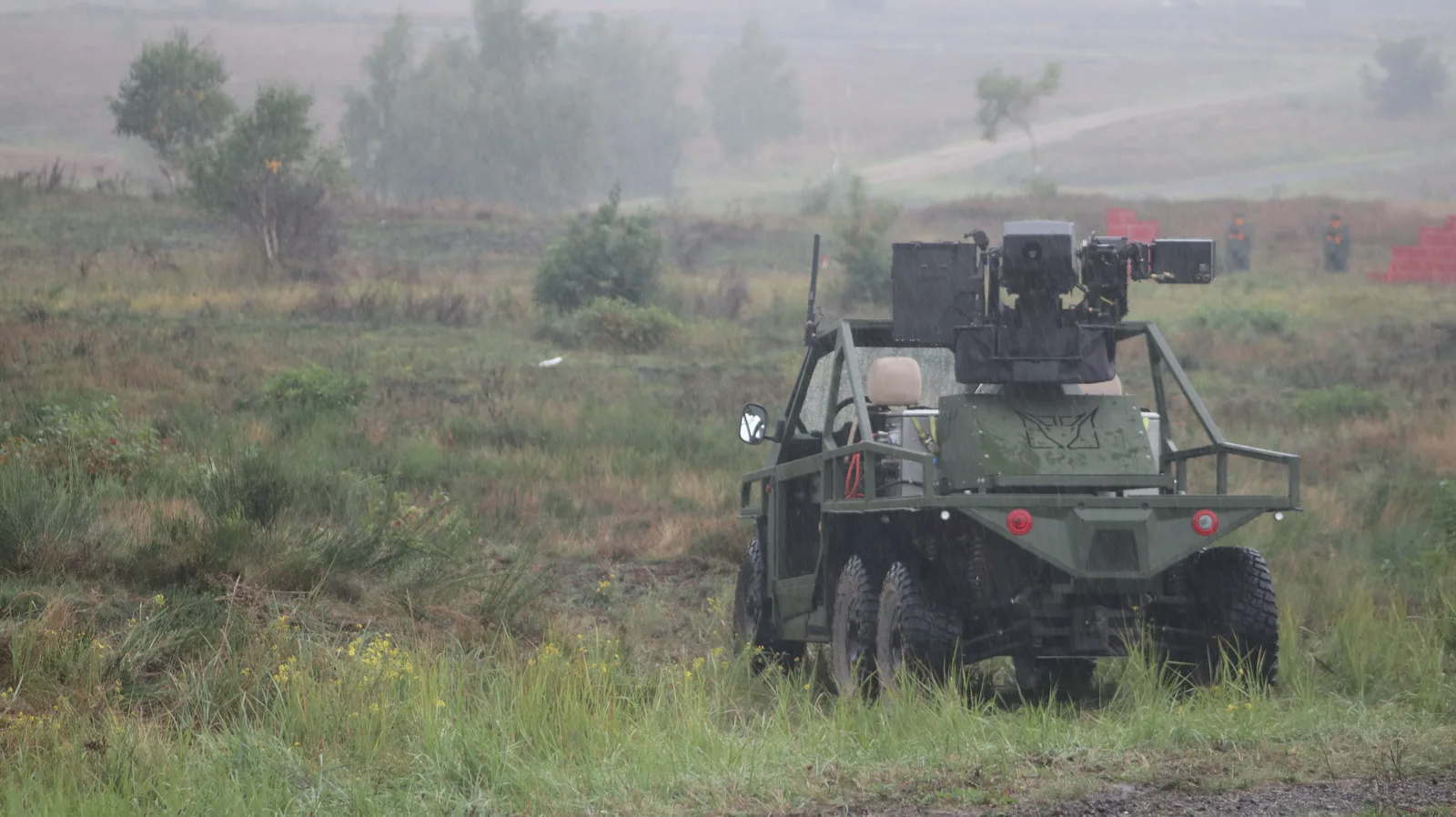
Experimental series ‘Land’: The German Army’s unmanned technology field lab
Very slowly, like sycamore seeds,…

Updating and relaxing export controls on US-made unmanned aerial vehicles (UAVs) seeks to improve competitiveness, but barriers remain.

The US government has issued a new rule for unmanned aerial vehicles (UAVs) being exported, modernising the entries on the Commerce Control List (CCL) to reduce the barriers around national security limitations that can lead to stricter export controls.
The regulatory update, issued on 14 August 2026, removes limitations on wind-gust tolerance, increases the national security restriction on flight endurance from 30 minutes to three hours, and modernises software restrictions for platforms with an endurance under three hours. Controls on exports to some countries, primarily those with sanctions and embargoes, have been strengthened.
The changes in controls recognise the growing blurring between civil use platforms, those designed for military use, and dual-use systems that can be used in defence and security operations. The growth of UAV technical knowledge, from the platforms through to their operating software, has increased to a point where it is no longer the domain of specialist manufacturers and technology companies. This has meant that controlling technologies that can now be accessed by hobbyists is a regulatory challenge, and does not properly reflect the technological landscape.
The move comes as the Trump administration is pursuing its Drone Dominance policy, launched in June 2025, to reduce the reliance on foreign manufacturers of UAVs. The perceived security threat over the use of Chinese made drones, such as DJI, has continued to shape approaches to UAV acquisition, and driven demand for sovereign US systems at a variety of levels.
The 13 August announcement by the White House also came as further regulations were being brought into force. Namely, tariffs were brought into effect on a variety of UAVs, with platforms weighing 25 kg or more subject to a 100% tariff, and a 25% tariff on smaller systems and components. Platforms and components from the EU, Japan, Liechtenstein, Republic of Korea, Switzerland, and Taiwan were also subjected to a 15% tariff. UK-manufactured systems are subject to a 10% tariff.
The US Secretary of Commerce was also authorised under the 13 August proclamation to begin an onshoring programme to incentivise investments in the US manufacturing base for platforms and componentry.
The loosening of the export controls for UAVs will enable the easier export of systems from the US, while aiming for a corresponding boost for domestic industry.
Expanding the Department of Commerce’s powers over UAVs exports will improve the marketability for US UAV manufacturers, as dual-use and more powerful systems can fall within the remit of the stricter International Trafficking in Arms Regulations (ITAR) process that is managed by the US Department of State. As a result, the ability for US manufacturers of UAVs to go to market with their platforms will be simplified, and the administrative burden reduced.
For equipment that is required to go through the ITAR process, licence applications can be delayed through administrative backlogs at the Department of State, as well as the need for some sales that require a congressional notification.
The concerns raised over potential data interception or interference with Chinese-made systems are also being placed on US-made equipment by European buyers. Efforts to remove both US and Chinese-made equipment from inventories are increasing, as European governments seek to enhance their self-sustainability and sovereign control of supply chains.
Subjecting foreign-made systems to tariffs is designed to help domestic markets through incentivising companies and customers to ‘buy local’. The drive to bolster the supply chain to buy components in the US will also improve security-of-supply, but will ultimately lead to higher priced systems for domestic and export customers as some critical components will still be manufactured abroad.
For European manufacturers, the regulatory combination of tariffs and supply chain security requirements will mean that onshoring manufacturing and supply chains in the US will be the most economical way for US market entry. The increased competition for US-made equipment may mean that there will be cost efficiencies that need to be worked on, with overheads such as manufacturing costs likely to be a key area for price reductions.