Modern military operations are highly dependent on communications systems and high-capacity data networks to process and deliver data. The intertwining of civil and military communications systems has meant that there is a co-dependence for military operations, an aspect which has been increasingly targeted in hybrid warfare attacks.
Readying for the communications blackout
The protection of critical national infrastructure (CNI) has been a longstanding security dilemma for countries, particularly in the face of the threat of terrorism after 9/11. However, the 2014 Russian invasion of Crimea brought the concept of state-based hybrid warfare to the fore of strategic thinking, as deniable state-based actions could have major impacts on the civil and military workings of a country.
Unlike terrorist activity, state-based hybrid warfare could severely impact CNI through non-kinetic means, while retaining plausible deniability of responsibility. Expanding the definitions of CNI helped to enhance the protections that could be provided to a wider variety of assets that were essential for civil operations.
The need to protect communications systems has grown in recent years, and recognising it as a vulnerability for nations has helped to build its profile in the national security studies dialogue. As such, the interdiction of subsea cables and satellite communication jamming has led to a greater focus on asset protection, as these systems support significant amounts of commerce, social support, and government services.
The war in Ukraine showed the vulnerability of national digital infrastructure, and the need to adapt military and civilian communications processes to support the functioning of the state and its citizens. Preparing to support civil society through developing communications redundancies, as well as the social upheaval that a loss of data services, is something that governments need to be wargaming and testing, as a hybrid attack can take place at any time.

Subsea communications – A growing target in hybrid warfare
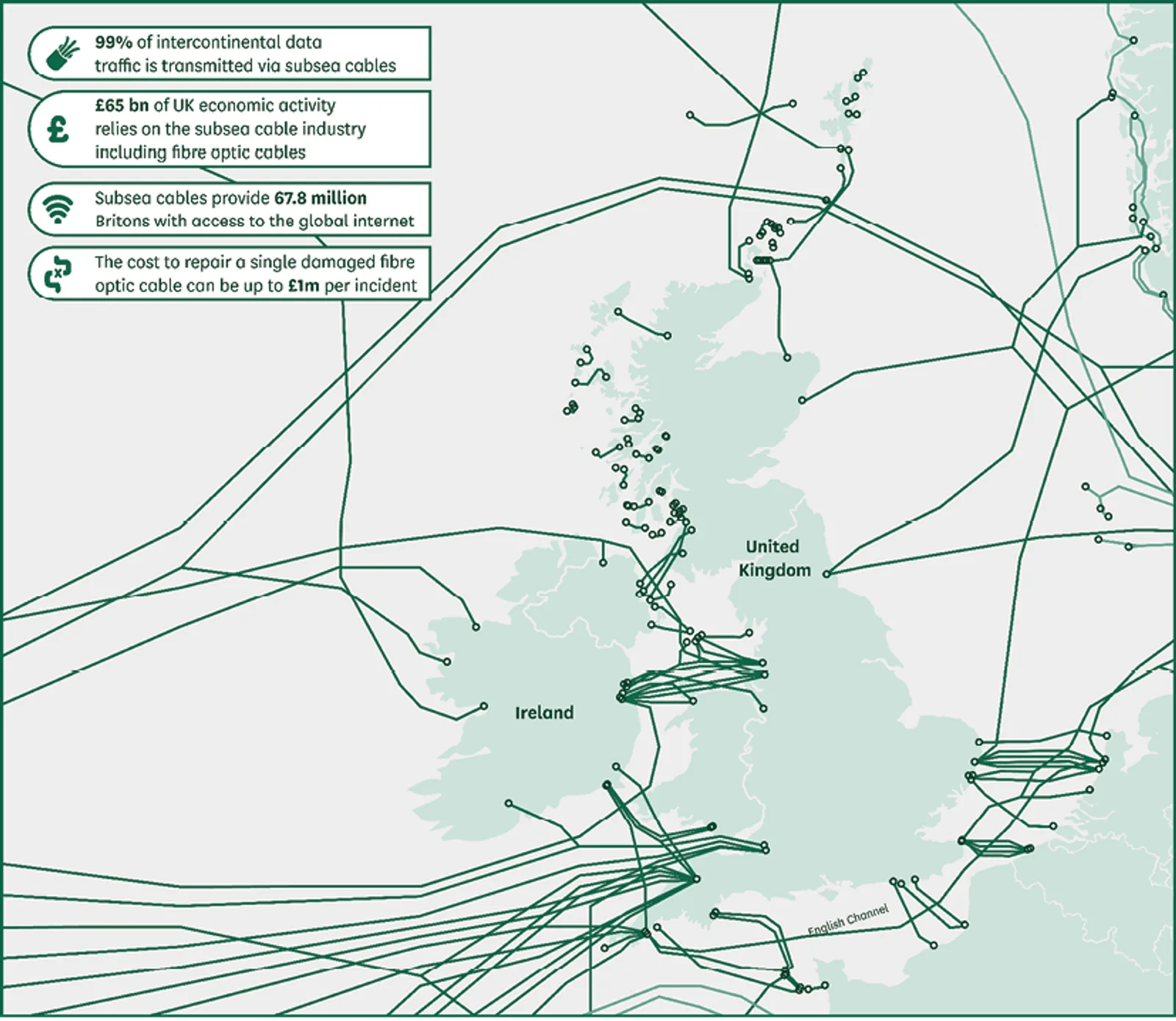
Subsea communications are the main enabler of international communications, with almost all internet traffic being routed through high-speed cables that connect countries and continents. For the UK, the Department for Science Innovation and Technology (DSIT) noted in 2025 that 99% of the UK’s data traffic is transmitted via subsea cables. As a landing point for transatlantic communications cables, DSIT estimated that communications through the cables landing in the UK supported USD 1.5 trillion in cross-border transactions for the banking and finance industry every day.
The reliance on subsea communications cables to deliver low-latency communications has not gone unnoticed by those who seek to obtain an advantage. Targeting these cables represents a potential to cause significant damage to global connectivity. Within Europe, governments have become increasingly aware of the activities of Russian vessels – both officially flagged ships and those operating as ‘ghost fleet’ ships – and incidents of hostile reconnaissance of subsea cables. The Russian research vessel Yantar, for example, has been observed around subsea communications cables in the Atlantic Ocean, Mediterranean Sea, and North Sea. The ship has been shadowed by military forces including the Royal Navy, and has also been escorted out of territorial waters.
Incidents of communications cables being cut in Europe have been increasing, with civilian vessels being accused of deliberately dragging anchors to cut cables. Notably, Finnish cables to Estonia and Germany were cut in December 2024 and 2025, with electricity cables also being cut during these accidents. An incident in Swedish waters in 2024 involved the cutting of the C-Lion1 communications cable between Finland and Germany, as well as the BCS East-West Interlink communications cable between Sweden and Lithuania after a cargo ship claimed to have accidentally dragged its anchor along the seabed.
The threat is not unique to Europe. Faults and cuts in cables to Taiwan have raised the risk of hybrid warfare taking place during a sustained period of crisis with China. Cables to the outer Matsu islands were cut in 2023 and 2026, although the latter incident was due to bad weather. With 10 domestic cables and 15 international cables, Taiwan is reliant on subsea cables to maintain domestic and international links. In early 2026, Taiwan’s Ministry of Digital Affairs noted that there had been an average of 7-8 submarine cable cuts per year between 2021 and 2025, with anchor dragging accounting for 38% of cutting incidents.
Similarly, Australia remains dependent on submarine communication cables for international communications, with 16 cables accounting for 99% of the country’s traffic. Two of the cables off the Westen Australian coast, Indigo-West and Indigo-Central, were damaged in August 2026. A vessel was observed to be acting suspiciously in the area at the time, with the matter escalated to the Australian Federal Police for further investigation and potential prosecution. A cut in 2021 led to the prosecution – the first in the nation’s history – for negligence over the damaging of the Australian Singapore Cable by a cargo ship dragging its anchor.
Repairing broken cables is not simple. There are a limited number of cable repair ships available globally – many of which are owned by cable companies and tied to specific lines. According to DSIT, cables in UK waters usually take five to seven days to repair, but high-capacity cables in deep water can take seven to nine days to repair. As there are only three dedicated cable repair ships for trans-Atlantic cables in the North Atlantic at any time, multiple cable breaks could take an extensive period of time to repair. If combined with a cyber attack to compromise a network, then the wider repair and service restoration efforts could be highly complex, and the corresponding economic loss would be significant.

Satellite communications – a viable go-to?
While not supporting the same bandwidth as the subsea cables, satellite communications have become more capable and more affordable. The ability to deploy satellite terminals in austere locations has become easier, most notably as the number of satellites has increased, helping to reduce connection latency and improve upload and download speeds.
The expansion of the commercial Starlink constellation has supported a wide range of civil and military communications capabilities in austere environments. There are now just under 11,000 Starlink satellites in orbit, with weekly launches of new satellites adding 5 Tbps (terabytes per second) of throughput to the constellation. As of June 2026, the service had over 12 million subscribers, with users able to achieve download speeds of up to 250 Gbps (gigabytes per second). Alternatives to Starlink, such as the Eutelsat OneWeb constellation, are being created to support non-US customers. The need for an alternative was brought into stark relief during operations in Ukraine, when owner Elon Musk cut access for Ukrainian terminals that were being used in military operations.
Engaging with commercial communications providers can come with greater risk. Prior to the development of Starlink, leasing bandwidth from satellite providers was a needs-driven operational requirement. Military communications satellites could not deliver guaranteed bandwidth, which was also subject to operational prioritisation, and were sometimes not available as an option. In 2012, for example, a lack of satellite communication coverage in Africa led the US Africa Command (USAFRICOM) to solicit proposals via its satellite communications provider for service providers that could support operations in Africa. The only system available was owned by a Chinese firm, with lawmakers subsequently raising security concerns over communications being potentially intercepted. As Europe is looking at alternatives to Starlink, finding the right level of capacity and availability can be a challenge when balancing military and civilian needs and uses.
Despite the improved scale and capacity of satellite communications networks, maintaining data expectations from civilian users when subsea communication cables are interdicted will prove to be challenging. The increased risk of jamming also serves to reduce the efficacy of the satellite option, which can lead to denied or degraded communications. Prioritising data traffic to essential messaging for civilians over military operations is necessary, but can come at a cost to supporting coordination of civil society.

Tactical communications bottlenecks
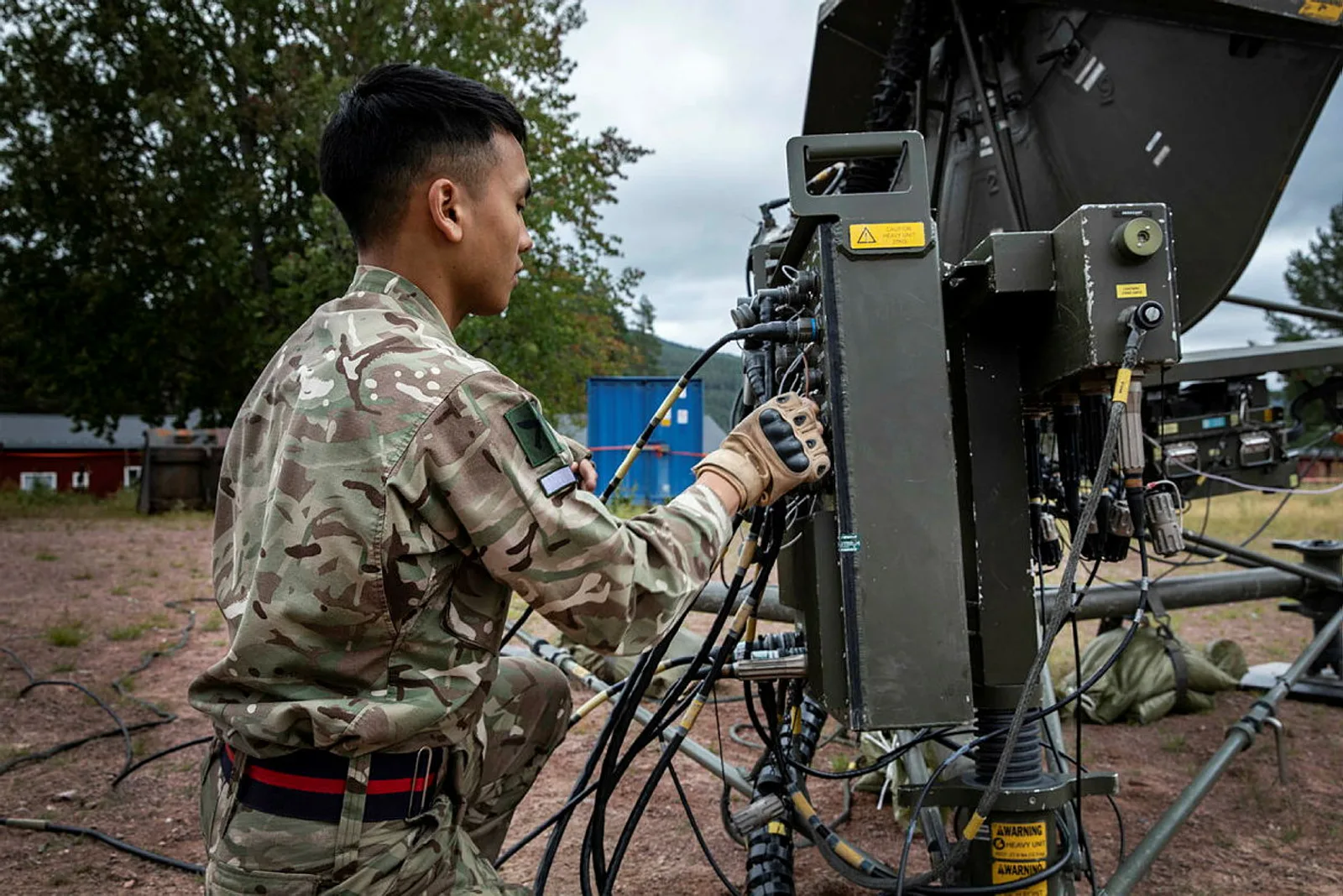
When operating in a conflict within a civilian environment, military communications links can be strained as they work to both facilitate civilian and military communications. Undertaking military operations comes with a corresponding systems toolkit for deployed operations, such as high-capacity line-of-sight systems, high frequency (HF) and very high frequency (VHF) radios, and satellite communications.
Operating under PACE (primary, alternate, contingency, emergency) concepts, main communications channels are established and augmented through the infrastructure that is brought with an operational deployment. Fallbacks are put into place to ensure the continuity of communications, particularly as hostile electronic warfare (EW) or general electronic interference may degrade or deny communications channels.
Where there is existing communications infrastructure, such as mobile telephone systems, signals can be passed alongside civilian systems to maximise available operational bandwidth. Communications that connect to local data infrastructure through submarine cables can help deliver assured communications for operations, but are reliant on that infrastructure being in place and operational.
Humanitarian aid and disaster relief (HADR) operations may mean that there are no local communications in place, and there is a corresponding need to provide communications for civilians who have been displaced as well as supporting civil agencies and non-governmental organisations (NGOs). Overreliance on submarine cables creates expectations on the availability of bandwidth, what can be achieved with a normalised high-capacity data pipeline, and how operations – both civilian and military – can be delivered under challenging environments.

Preparing for a societal loss of communications
The increasing ubiquity of mobile data communications for personal use – from social media to interacting with government agencies – has created a dependency on resilient high-speed connections and infrastructure. However, readying a population for a loss of this data connectivity is becoming a key requirement for government emergency planning, social resilience, and daily living.
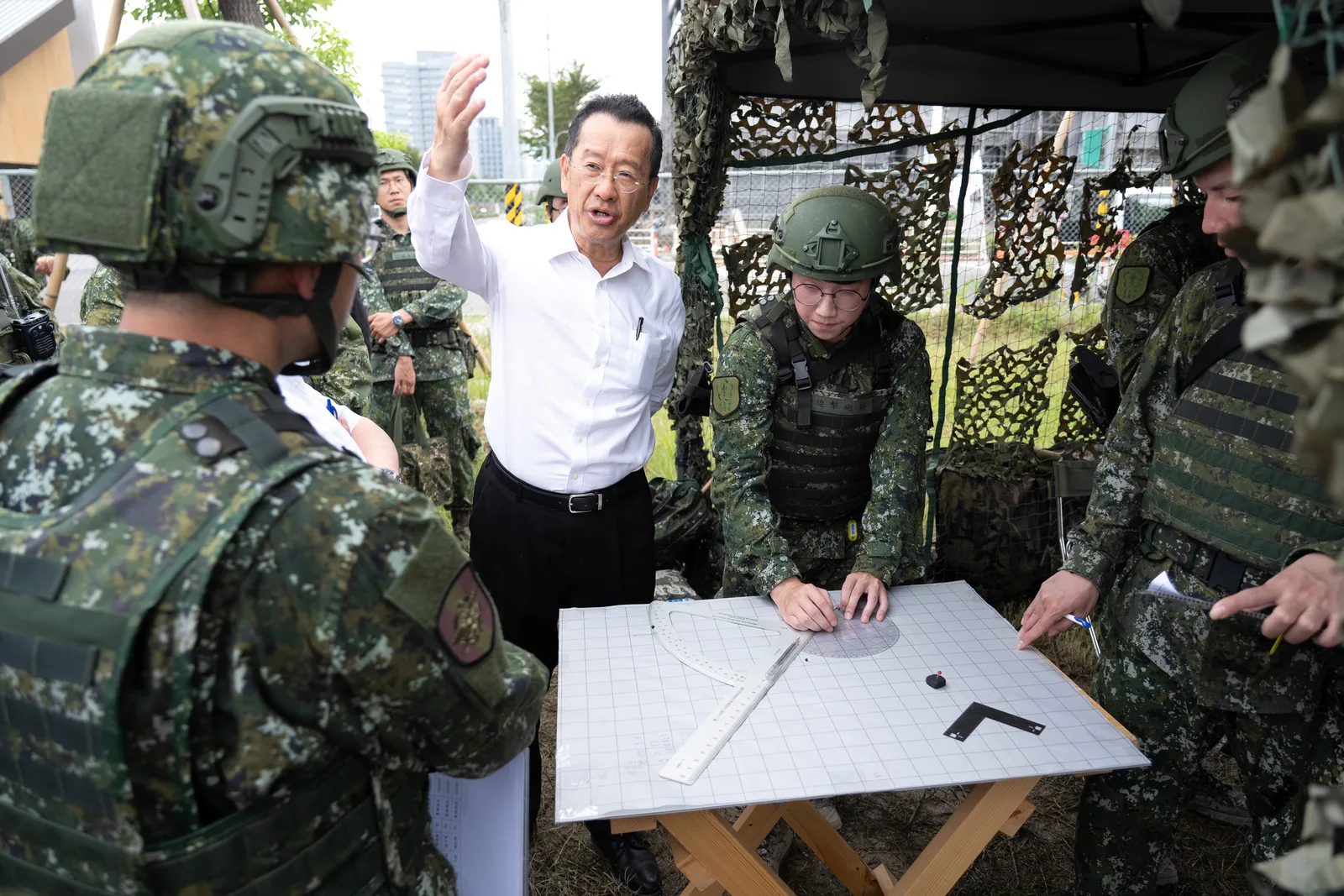
Taiwan’s recent Han Kuang 42 exercise involved a societal element, with local internet connections throttled to simulate the wider loss of communications for the country. Centred on the country’s central city of Taichung, mobile internet connectivity was degraded, with only basic mobile phone connections allowed. The exercise was to demonstrate the potential impact of an air or electronic attack on the country’s telecommunications infrastructure, and helped to prepare the population for the implications of a military attack. Some internet services, such as fixed lines, ATMs, and traffic signals were allowed to operate to ensure safety and continuity of essential services.
While the exercise helped mainland Taiwanese understand the likely challenges to local connectivity in the event of an attack, the country already has experience of communications blackouts in its outer islands. The 2026 cut to the Maru Islands necessitated the activation of a microwave communication backup system, which was able to carry internet, voice, and mobile transmissions and avoid greater social impact for the community on the island. Other alternative communications options, such as a dedicated low-earth orbit (LEO) satellites, are being explored by the Taiwanese government to support communications resilience and support redundancy when communications may be disrupted or interfered with.
Russia’s Kamchatka Peninsula, one of the early targets of subsea cable warfare, has also had to deal with two internet outages in the span of a year. Coastal erosion near a cable landing point in Cape Levashova necessitated a five-day communications cut in September 2025 while Rostelecom repaired the damaged cable, with bank transactions being limited. A further planned outage in August 2026 resulted in a loss of mobile and fixed internet as divers repaired damage in the same location.
Outlook
The war in Ukraine has shown that learning to operate communications in a contested environment is a major factor for military operations on home soil. It is not just, however, a challenge to be dealt with when an invading force comes. The threat of communications cables being cut as part of a hybrid warfare operation mean that there is an increased risk of major communications loss during peacetime. As high-speed voice and data communications are more critical for civilian life, operations in an expeditionary capacity also need to be able to support civilian infrastructure, as well as ensure it does not interfere or compromise military operations. Giving a dislocated society its access back to social media is not merely about enabling the free distribution of cat videos, but helps facilitate civil-military cooperation, generate goodwill, and restore social cohesion.
Frontline states, such as Taiwan, are advancing their preparedness for a failure of civilian communications – something which will be made significantly more complex if there is a hostile military action against them. For countries in Europe that are now having to face a harsh reality of a potential invasion, readying both government infrastructure and civilian populations for a loss of data communications will become a fundamental requirement for ensuring social resilience and continuity of normal life. For military operators, shifting away from a purely expeditionary concept of operations to one where they have to support both the domestic population and military operators will expand the complexity of their operations and doctrine.
The use of AI technologies to support CNI, in roles such as cyber defence and cloud computing, means that there is continued need for wide bandwidth communications infrastructure that is best delivered through cable-based technology. The interdiction of these cables will impede a national response to a threat, and the need for countries to anticipate an operational environment without AI will also require contingency planning and exercises.

Share post