The Pentagon is planning cuts to US assets declared to NATO in Europe. Details remain sparse, but early reports show the likely direction of travel. Added context can help guide what will soon become critical discussions.


The Pentagon is planning cuts to US assets declared to NATO in Europe. Details remain sparse, but early reports show the likely direction of travel. Added context can help guide what will soon become critical discussions.

On 12 June 2026, the New York Times revealed details of planned cuts to US military assets supporting NATO in Europe, following 18 months of escalating strain between the US and its European allies. These reports follow a series of statements from the Pentagon, which declared that it is seeking to “rightsize its contributions to the NATO force model” as it pursues what it calls “NATO 3.0.” Put bluntly, the US envisages NATO 3.0 as a version of the Alliance with a greatly reduced American share of the transatlantic security burden.
Among the proposed changes are reductions to the tanker, fighter and maritime patrol/anti-submarine warfare aircraft. To quote the NYT’s reporting:
At the time of writing, the NYT stressed it had only seen part of the document outlining the proposed changes. As such, the outcome could be larger or smaller than the reported proposals. We should also acknowledge that the Secretary of War, Pete Hegseth, during his 18 June 2026 address at a NATO meeting in Brussels, did not indicate that any hard decisions had yet been made; rather, suggesting that such plans were under review, stating that “it’s a review that some countries will fail, and others will pass with flying colours.”
Air and naval capabilities are clearly at the forefront of this topic, with assurances from NATO Secretary General Mark Rutte that efforts were underway to offset these losses. In the interim, it is worth delving into the headline capabilities mentioned by the NYT to assess the potential implications of any such changes.
According to the NYT, the US could withdraw “all eight tankers” available to NATO. This represents perhaps the most interesting aspect of the alleged proposal, given its relative ambiguity when set against the realities of US and European tanker assets.
For context, the US maintains one permanent tanker unit in Europe, the 100th Air Refuelling Wing (ARW), based at RAF Mildenhall, United Kingdom. This unit comprises up to 17 KC-135 Stratotanker aircraft. Besides the 100th ARW, there are several non-permanent, rotational deployments of US tankers across the continent supporting NATO operations. These include Air National Guard KC-135s deployed to Geilenkirchen Air Base in Germany, which solely provide AAR support to the NATO Airborne Early Warning Force’s E-3A Sentry fleet.

First, it is worth noting that the reporting so far refers to cutting eight aircraft that are “available to NATO,” which, when offset against the US capability existing in Europe, is unclear in its scope. For instance, it is unclear whether this includes aircraft assigned directly to NATO taskings, such as day-to-day training, exercises, and interoperability training, or assets allocated to crisis response. We should also acknowledge that having a permanent fleet of tankers on the eastern side of the Atlantic is vital to the US’s global power projection, enabling it to fly nonstop around the world or rapidly deploy assets in support of its own interests.
It is plausible that the 100th ARW’s permanent fleet would remain in place to support US interests, simply without regular allocation to NATO taskings. The proposal could, in theory, still facilitate US surge support to NATO during crisis response operations and, upon invitation or request on a case-by-case basis, extend to supporting large-scale exercises, without regular support for routine, day-to-day operations.
There is no doubt that a large-scale, high-intensity conflict that triggers Article 5 would require more than eight tankers. It is therefore sensible to believe that parties would negotiate and commit the necessary assets outside of standard operational procedures. This would depend far more on any US Administration’s willingness to support Article 5 than on a simple commitment of assets.
The non-permanent rotational tanker forces, however, are more likely to be targeted as part of the proposed force posture changes, with the expectation that NATO should be able to draw from its growing, independent centralised tanker capabilities, such as the Multinational Multi-Role Tanker Transport Unit (MMU).
Importantly, AAR is one of the key capability growth areas that NATO and the EU have worked hard to improve over the past few years. This is particularly evident through the MMU, which has a growing fleet of nine aircraft (with a further three ordered) and eight participating states. The unit accompanies sovereign tanker fleets across European NATO to provide a relatively robust AAR architecture that can also be tasked to support other states’ requirements through the European Air Transport Command (EATC).
One area where the US does contribute significantly is in providing AAR continuity training to European operators, including those in the MMU. Europe therefore faces a shortfall in its ability to respond to surges in demand for AAR support.
Recent European moves have aimed to rectify this, with Poland announcing it would purchase A300 MRTT tankers under the Security Action for Europe (SAFE) financial instrument, planning at least four aircraft in a joint purchase with Spain. Likewise, Italy has recently signed a deal to acquire six A330 MRTTs. Overall, these purchases indicate that the US expects European allies to absorb more of the day-to-day AAR burden.
This aligns with comments made by the Supreme Allied Commander Europe, General. Alexus Grynkewich, who stated that “SHAPE continues to work with Allies to offset the reduced American capabilities,” and alongside Hegseth, has acknowledged that some “allies have been stepping up,” expecting allies to pledge further contributions at the 7-8 July 2026 NATO summit in Ankara.
The UK is one of the most prolific users of US tanker aircraft stationed in Europe, in part since neither of the Royal Air Force’s A330 MRTT Voyager tanker aircraft variants are equipped with a flying boom. As a result, the Royal Air Force routinely relies on American tankers to refuel its RC-135W Rivet Joint signals intelligence (SIGINT) aircraft. In addition, the RAF’s receiver-capable fleets are increasingly boom-dependent, with incompatible receivers including the C-17A, P-8A, and E-7A.
Given the close integration of the UK and US Rivet Joint programs, which includes an extensive bilateral agreement that covers dual-crewing and maintenance, it is conceivable that tanker support would continue bilaterally, even if assets are not officially declared to NATO. This, however, does not detract from the perceived American excess in European capability sharing.
Hints of deeper AAR burden-sharing are visible in recent UK cooperation with the French Air Force, including the recent certification of the RC-135 to refuel from the French A330 MRTT Phénix. This will certainly provide additional AAR options to the Royal Air Force, but it still underscores a degree of US dependence in some respects.

Simply being able to ‘use’ an Ally’s tankers differs from ‘requiring’ them to operate, reflecting a persistent sovereign capability gap within a European force structure. Reliance on foreign tankers for critical assets continues to limit the UK’s operational autonomy, as it depends on a third party’s readiness, availability, and overall willingness to assist.
Given the increasing volume and critical nature of the UK’s boom-receiver aircraft, the UK would certainly still benefit from pursuing more resilient alternatives, whether that be a sovereign boom-refuelling capability or participation in the NATO MMU.
The reductions to combat air capabilities also require some context, as the reductions outlined in the original NYT article are not entirely ‘new’ developments.
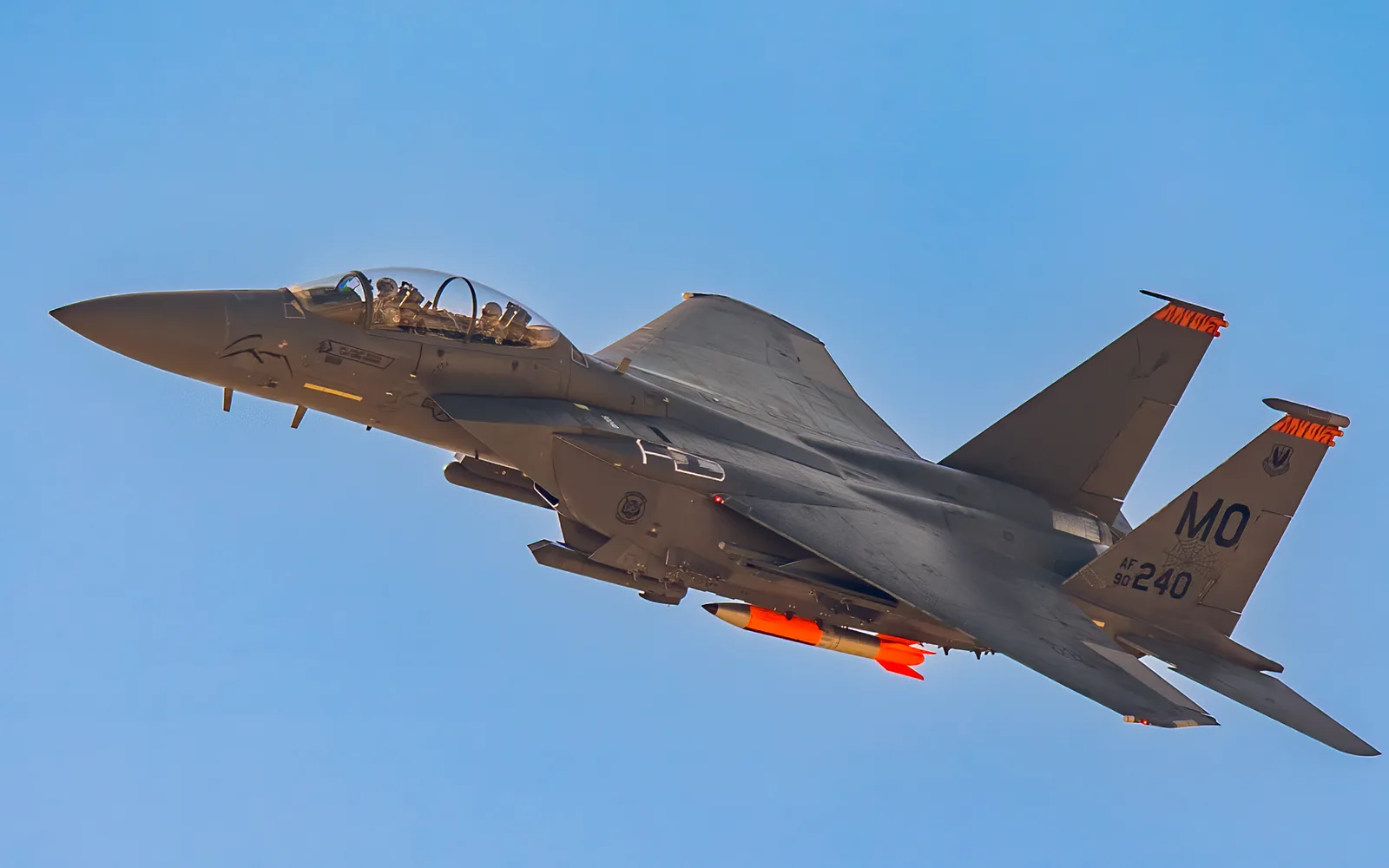
In October 2025, the Pentagon’s Long-term USAF Fighter Force Structure paper outlined plans to remove both European-based F-15E Strike Eagle squadrons from Europe as part of wider fleet recapitalisation efforts.
Typically, a USAF fighter squadron is equipped with around 25 aircraft. Therefore, the withdrawal of the two F-15E squadrons would alone account for the reduction of 150 to 100 fighters in Europe, as outlined by the NYT report, without the NYT’s suggested F-16 reduction. With the two F-15E squadrons already slated for removal, the additional removal of an F-16 squadron would push the number even further below 100 to 75.
To account for the discrepancy, the Pentagon’s October 2025 document further indicated that, while one of the F-15E squadrons would fully disband, the other would instead reequip with the F-35A. As such, if the NYT’s reported reduction of just 50 aircraft is correct, this would indicate that one F-15E squadron is still planned to reequip with and operate the F-35A, giving a total reduction of 50 aircraft.

The US’s current European-based F-16 squadrons include the 480th Fighter Squadron ‘Warhawks’, a Suppression of Enemy Air Defences (SEAD) specialised unit at Spangdahlem Air Base, Germany, and two conventional units at Aviano Air Base, Italy. Currently, nothing suggests which unit is the prime candidate to leave Europe this time, though the Spangdahlem-based unit was previously slated for relocation to Aviano during the first Trump administration, a move that ultimately did not happen. Given this administration’s obstinate attitude toward Germany, this possibility might be most plausible.
If the ‘Warhawks’ were completely withdrawn, this would represent a significant reduction in European NATO’s wider SEAD capabilities. SEAD is often highlighted as a capability area in which European NATO is lacking, with extensive historical reliance on the US, most notably during the 2011 Libya campaign. However, the two F-35A squadrons already operational at RAF Lakenheath have now absorbed some of this role, and, at the time of writing, neither has been reported as earmarked for withdrawal.

Generally, European combat air capabilities have seen relative growth and modernisation in recent years, not least with the shift towards the F-35A, Poland’s extensive acquisition programmes, and Germany and Spain’s recent commitment to the Tranche 4 Eurofighter Typhoon. Realistically, matching the capabilities of one F-16 squadron is achievable for European NATO using commercially-available solutions. However, despite Germany and Italy’s efforts to replace their ageing Tornado ECR fleets, persistent delays and obstacles persist, as seen with the UK’s long-lead procurement of SPEAR Cap 3. As such, any immediate capability losses in this area will impose a substantial gap for NATO.
We must not forget that the role of the extensive American air power based in extends far beyond simply the defence of NATO. Combat aircraft, intelligence, surveillance and reconnaissance (ISR) assets, tankers and other critical enablers based across the continent are central to the US’ own global force posture, deterrence and power projection capabilities. Not least, these enable rapid response to the Africa Command (AFRICOM) and Central Command (CENTCOM) areas of responsibility (AOR), alongside European Command (EUCOM). For instance, F-15s, F-16s and F-35s based in Europe were among the first assets to deploy in support of Operation ‘Epic Fury’, the US-Israeli joint operation against Iran.
It is reasonable that, rather than simply disappearing from Europe, some may remain in place but be downgraded from their current ‘NATO tasked’ status. This would keep them in Europe, allowing them to support US interests exclusively in the surrounding AORs without routine, day-to-day NATO taskings. Their continued presence on the continent, though, would preserve some of the US deterrent umbrella and leave assets available to support larger-scale exercises and work towards wider interoperability goals by invitation. Assets could also still be deployed to the European theatre in support of both US and NATO operations on an ad hoc basis.
The points made in this article should not sugarcoat the realities of any force reductions. While President Trump’s rhetoric is harsh, the disproportionate dependence of NATO on the US is not untrue. Hegseth ratified this in Brussels, stating that whatever the outcomes of the Pentagon’s review, they are designed to “ensure that NATO is moving fast and irreversibly toward Europe leading, stepping up to take primary responsibility for the defence of Europe.”
Whatever the outcome, therefore, it is certainly not enough for NATO in Europe to wait and see what happens. It also cannot be taken for granted that a US administration will seek to pivot back towards a pre-Trump relationship with NATO. While a sudden, indiscriminate surge in spending is not the answer, NATO in Europe should certainly be asking difficult questions about the capabilities it needs and how it can field them at the necessary scale.
While others will be able to comment more on the naval developments, one thing is abundantly clear. Should Europe take heed and boost capabilities where they are lacking, it will only serve to provide a more resilient defence architecture moving forward.