At the Farnborough 2026, Baykar Technologies and Leonardo unveiled the Astore Levante, a UAV combining the two companies’ respective strengths.


At the Farnborough 2026, Baykar Technologies and Leonardo unveiled the Astore Levante, a UAV combining the two companies’ respective strengths.

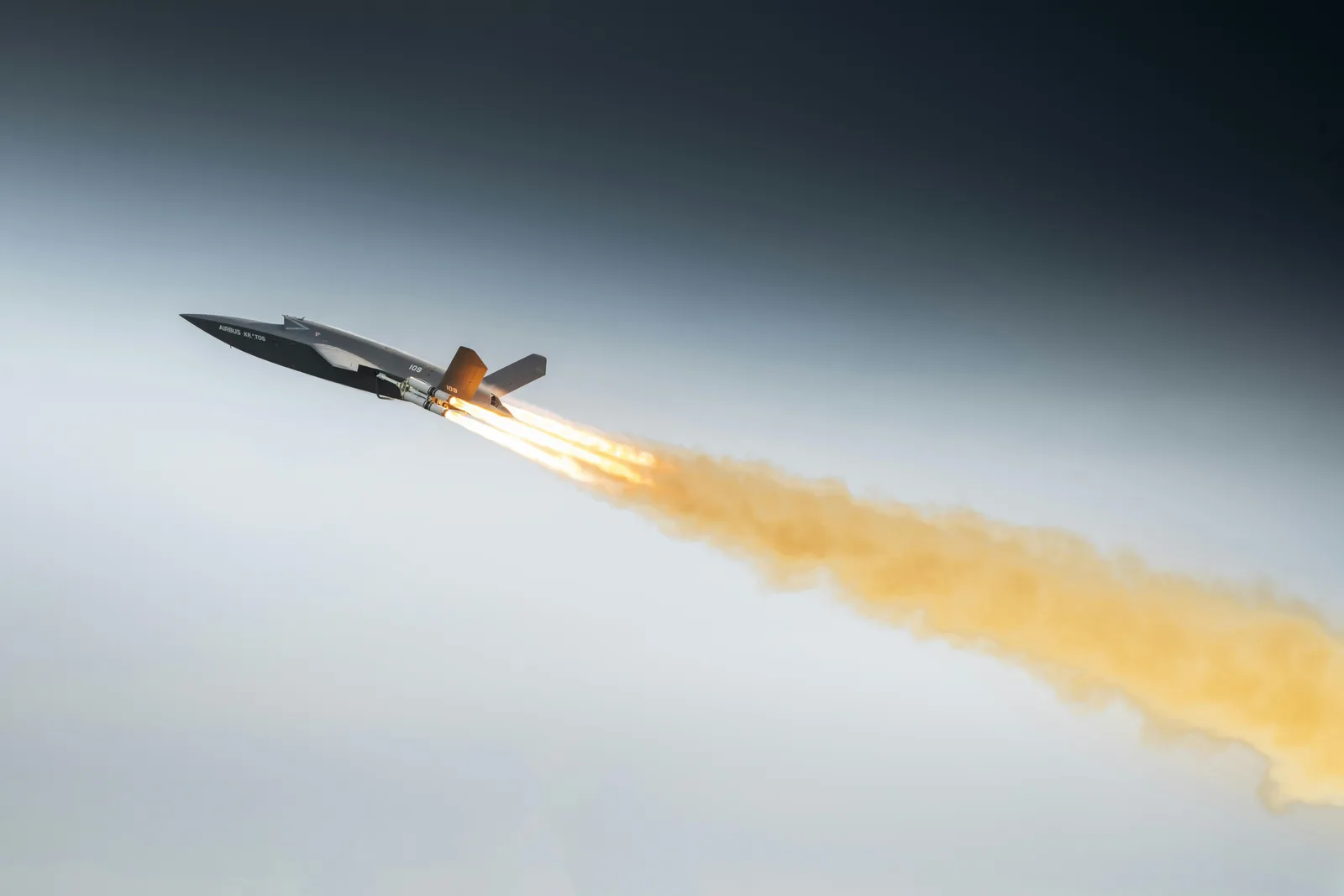
Baykar and Leonardo used the 2026 Farnborough International Airshow to publicly display the first visible product of their new joint venture, LBA Systems: the Astore Levante (ENG: Eastern Goshawk), an unmanned aerial vehicle (UAV) based on Baykar Technologies’ Bayraktar TB3 design, configured with Leonardo mission systems and payload options.
The unveiling came alongside the announcement that LBA Systems – a 50:50 Leonardo-Baykar Technologies joint venture with legal and operational headquarters in Italy – has reached full operational readiness. The partnership combines Baykar’s design, development, manufacturing capacity and operational experience in unmanned systems with Leonardo’s electronics, payload and effector integration, certification capabilities and European industrial presence.

The Astore Levante display outside Leonardo’s Farnborough stand provided the clearest indication yet of the system’s intended role. The aircraft retains the TB3’s distinctive design, including its folding wings, rear-mounted turbodiesel engine pusher prop, and retractable landing gear. However, the presentation placed particular emphasis on the Leonardo equipment that can be integrated onto the airframe, positioning the platform as a European-configured solution for naval and expeditionary missions.
A display board accompanying the aircraft listed the LEOSS-T optoelectronic day and infrared gimballed sight, with four-axis stabilisation and laser designator. It also identified the IFF 428 compact military identification transponder, supporting Modes 4 and 5, and the SDR SRT-800 software-defined airborne radio.
The payload options outlined at Farnborough suggest a mission set extending well beyond routine surveillance. These include Leonardo’s Gabbiano T-80UL, a 360° field of regard radar for intelligence, surveillance and reconnaissance (ISR); the Osprey 20/30, a multi-mode second-generation active electronically scanned array (AESA) surveillance radar; and the SAGE digital electronic support measures (ESM) and electronic intelligence (ELINT) system.
The selection also includes the Brite Storm low-size, weight and power (SWaP) stand-in jammer, as well as the ULISSES sonobuoy/dipping sonar processor for anti-submarine warfare (ASW) operations. Notionally, sonobuoys could be taken as a payload to complement this.

Importantly, these systems were displayed as payload options, not as confirmation that every sensor and electronic warfare (EW) system is carried simultaneously by a single aircraft. Nevertheless, the range of systems presented shows that LBA Systems is marketing Astore Levante as a modular multi-mission UAV, potentially capable of maritime ISR, targeting, electronic warfare (EW), strike support and anti-submarine warfare-related missions.
The platform’s naval credentials are central to the proposition. The TB3 is the naval variant of Baykar’s combat-proven Bayraktar TB2 family, adapted for short-deck operations through folding wings, reinforced landing gear and a low stall speed. It has been designed to take off and land autonomously from vessels without catapults or arresting wires, an ability that could significantly expand the airborne reach of carriers and amphibious assault ships in a cost-effective way.
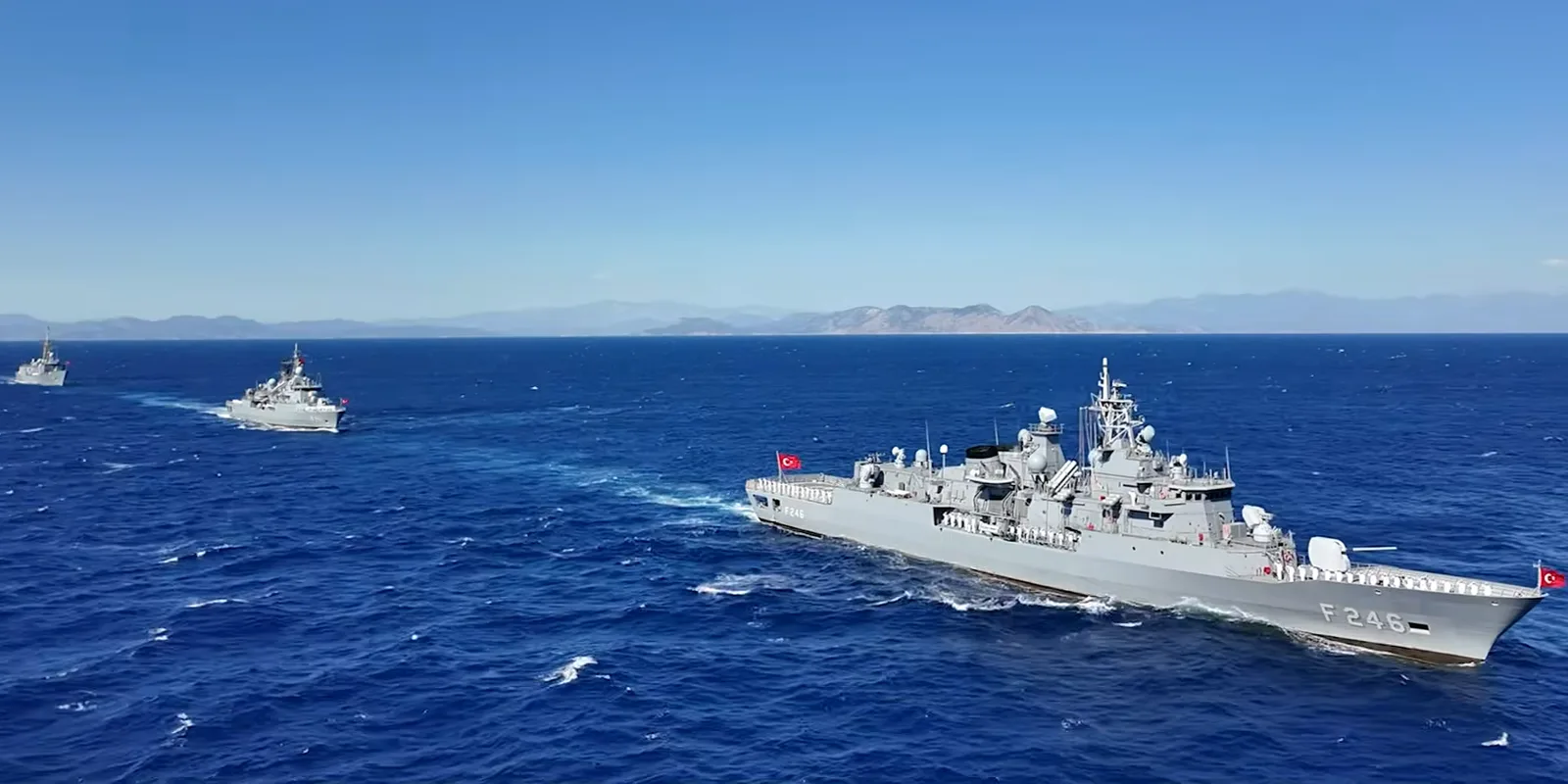
That capability was operationally demonstrated earlier in 2026 during NATO’s Steadfast Dart 2026 exercise. TB3s embarked on the Turkish Navy’s TCG Anadolu drone carrier/amphibious assault ship conducted autonomous launches and recoveries, ISR sorties and live MAM-L precision-guided munition launches. The exercise demonstrated a full ship-to-target operational cycle from a NATO flat-deck vessel, showing how an armed, fixed-wing drone can support naval and amphibious operations without relying on conventional carrier aviation infrastructure. In that sense, the TB3 concept is a credible candidate to reshape elements of NATO’s naval aviation playbook.
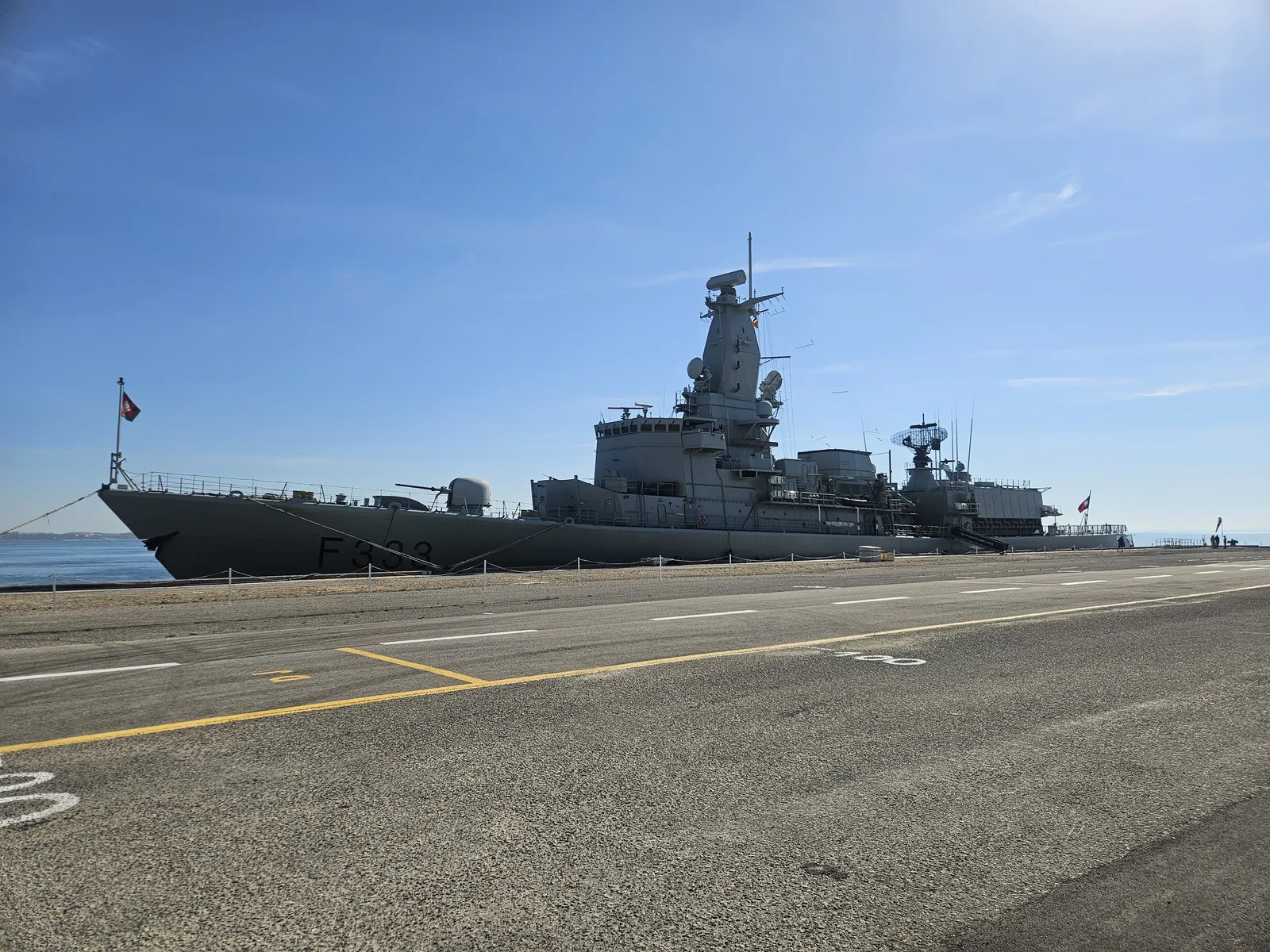
The Italian Navy is already moving toward this model. In March 2026, Chief of the Italian Navy VAdm Enrico Credendino Berutti Bergotto stated that the service intended to acquire the TB3 through Leonardo and integrate it aboard the aircraft carrier Cavour. Such an integration would give the Italian Navy an organic fixed-wing unmanned ISR and strike capability alongside its F-35B force.
Leonardo stated in a press release that production of a first Astore Levante batch is already under way at its Italian facilities, with delivery to an Italian end user expected later in 2026. At Farnborough, therefore, Astore Levante was not simply a new display name for a familiar airframe. It was a tangible illustration of LBA Systems’ strategy: pairing a mature, ship-capable Turkish platform with Italian systems integration and European industrial access for a rapidly growing market in carrier-based uncrewed aviation.