Thales has revealed a new MCM mission package construct – Expeditionary PathMaster – designed to accelerate both naval transitions to ‘hybrid’ force structures and delivery of enhanced MCM operational output.


Thales has revealed a new MCM mission package construct – Expeditionary PathMaster – designed to accelerate both naval transitions to ‘hybrid’ force structures and delivery of enhanced MCM operational output.

Thales has integrated core elements of its existing mine countermeasures (MCM) mission products into a new construct designed to assist navies in accelerating their transitions to crewed/uncrewed ‘hybrid’ naval mine warfare (NMW) capabilities. It is also designed to enhance delivery of MCM outputs at the operational level.
The construct – called Expeditionary PathMaster, which was formally unveiled on 26 March 2026 – combines the company’s M-Cube mission management and Mi-Map sonar analysis software products with its expeditionary portable operations centre (e-POC) hardware. The result is a package designed to provide an affordable, scalable MCM capability that can, firstly, be assembled in ‘building blocks’ according to navies’ need and, secondly, be delivered quickly.
Emphasising the latter point, Thales said Expeditionary PathMaster is ready now, can be integrated into a navy’s operational capability in six months and has been trialled already, including with the Lithuanian Navy and on exercise with NATO’s Allied Maritime Command (MARCOM).
The core components of the system have also been tried, tested and deployed with other navies as well, including the French Navy (Marine Nationale [MN]), Japan Maritime Self-Defense Force, Republic of Singapore Navy, and UK Royal Navy (RN).
As regards the MN and RN, the two countries’ combined Maritime Mine Counter Measures (MMCM) programme – which has already delivered operational capability into service with both navies – includes e-POC, M-Cube, and Mi-Maps as primary components of their mission management capability.
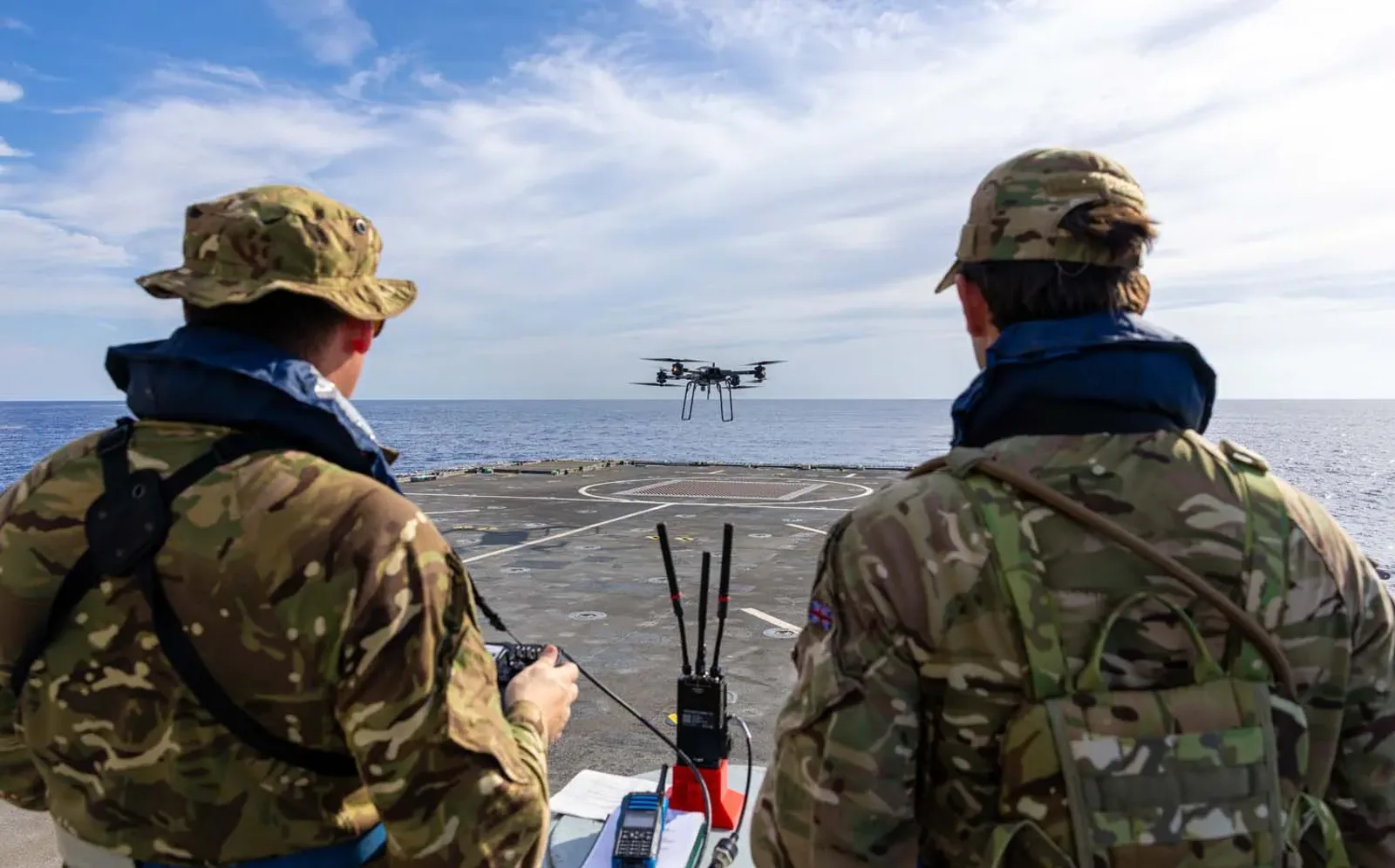
The work already done with such navies highlights a key point of the capability package: capacity to integrate crewed and uncrewed platforms, including those from third parties. Trials have seen uncrewed underwater vehicles (UUVs) and legacy minehunting vessels integrated both with each other and into Expeditionary PathMaster.
One core impact of uncrewed systems in naval operations is the generation of significantly larger data volumes. The data analysis component of the new package will be enhanced by the harnessing of Thales’ cortAIx artificial intelligence (AI) accelerator. This product helps bring particular focus in the package on improving accuracy and speed in mine target classification. In a statement Thales said testing had demonstrated capacity to process sonar data up to four times faster with 99% accuracy.
The purpose of Expeditionary PathMaster is to provide a full MCM operational capability, in a scalable and interoperable manner that is deployable via a modular construct on a global basis. It is an MCM mission management ‘toolbox’ that can be scaled up from operation via a single, three-screen laptop to use across an entire command centre. In its statement Thales said Expeditionary PathMaster is “ready to go from harbour to open sea – and can be operated from the shore, from a RHIB, a minehunting ship, or any platform”,
Underlining the increasingly broad relevance of MCM capability in contemporary naval operations – as well as navies’ increasingly seeing MCM, anti-submarine warfare (ASW) and critical undersea infrastructure (CUI) protection as a collective ‘underwater warfare’ task – the statement noted that, alongside supporting traditional MCM elements like enabling expeditionary and amphibious operations, the capability package can help support ASW and secure CUI.
Naval mine warfare is, of course, currently a topic of considerable international political focus. In theoretical terms NATO is considering capabilities and operational constructs needed to ensure it can deliver access for military shipping along sea lines of communication and through maritime choke points into key littoral regions like the Baltic Sea. In practical terms, in the current US/Israeli conflict with Iran there has been discussion across the international community of an international maritime coalition being deployed to the Gulf, once hostilities have subsided, to open and keep open the Strait of Hormuz to commercial shipping.
These case studies illustrate where and how a product like Expeditionary PathMaster has relevance, being an MCM mission management tool that can integrate various crewed and uncrewed platforms.
“Most [mine warfare] operations are multinational, which means they come with a required level of interoperability, and very often the combination of assets, equipment and solutions from different generations,” Eric Chaperon, Thales’ marine defence advisor and a retired MN vice admiral, told a media briefing.
“Most of the time you have to operate with a kind of urgency because the international community is requesting the reopening of the navigation path very quickly,” he added.
An adaptable construct using AI-enhanced autonomous capabilities that can rapidly deliver output and effect in different operational environments against different operational requirements, plus bringing particular focus on accelerated classification, appears relevant to NMW tasks like securing strategic straits and other choke points.