Long-considered plans to furnish the Ukrainian Air Force with Saab Gripens are coming closer to fruition.

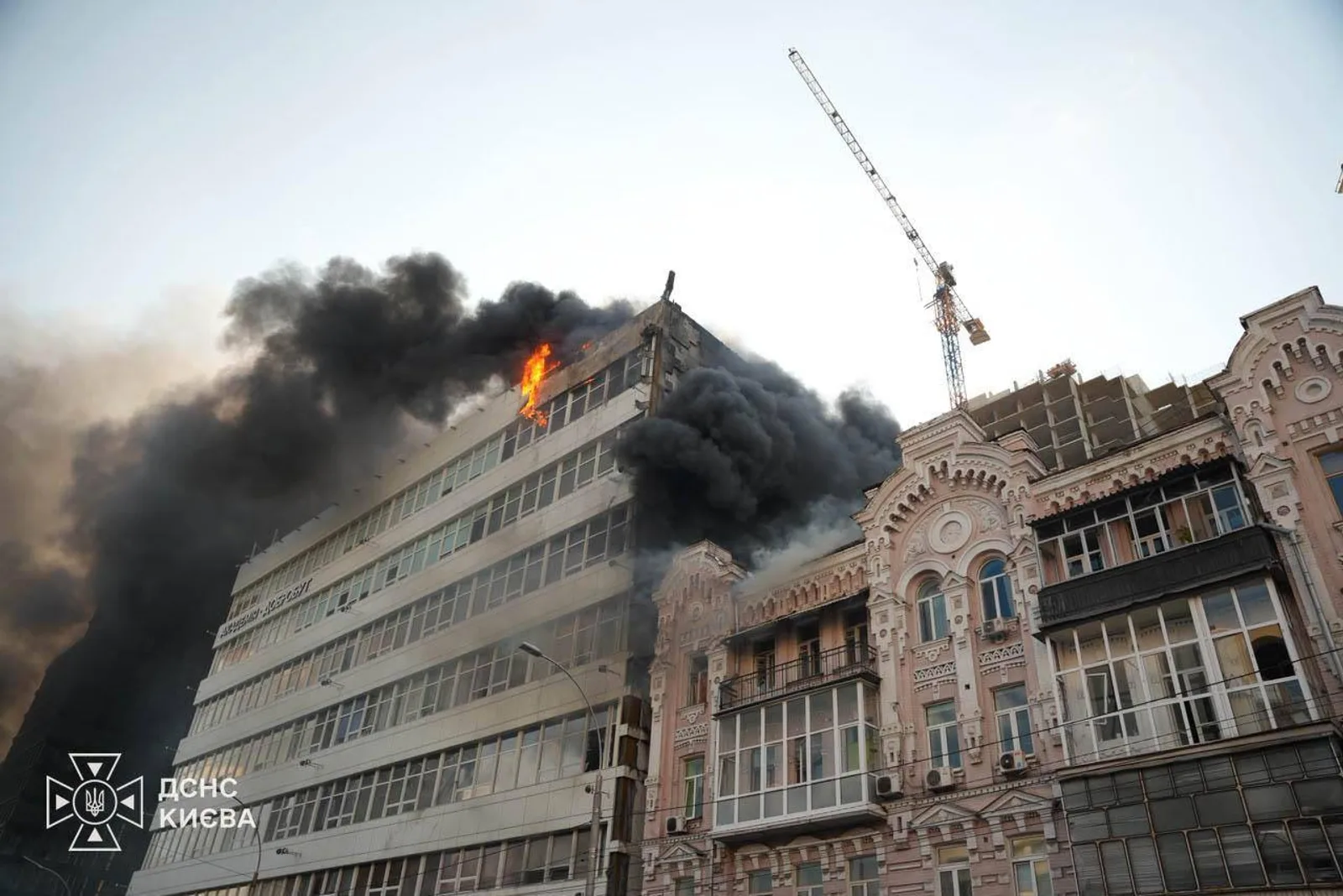
Russia’s bombardment of Kyiv turns it into a ‘frontline city’
Russia’s strategic bombardment of the…

Long-considered plans to furnish the Ukrainian Air Force with Saab Gripens are coming closer to fruition.

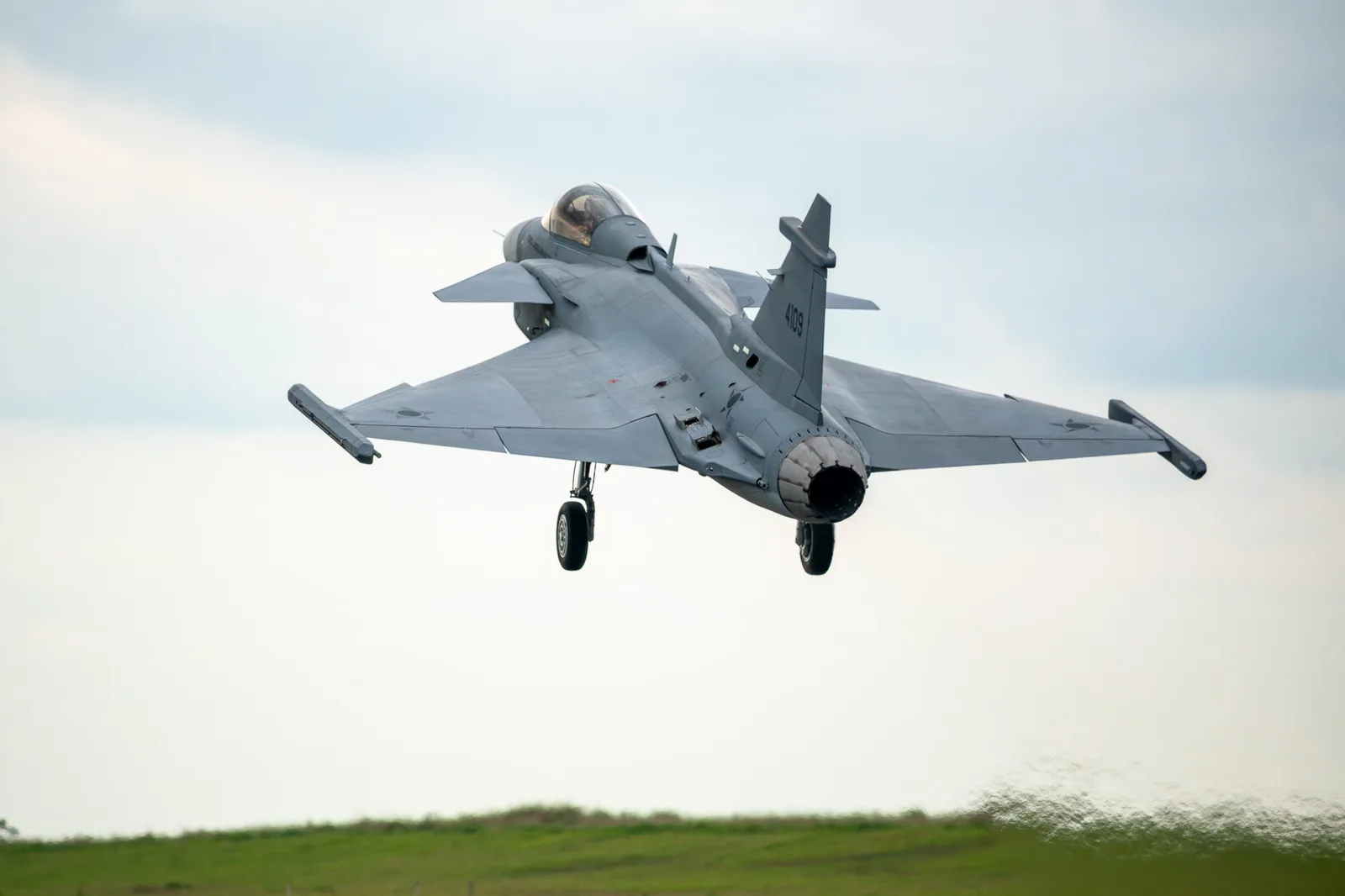
The Ukrainian Air Force could finally be receiving Saab Gripen fighters, with plans announced for Ukraine to acquire an initial batch of up to 20 Gripen E/Fs while Sweden donates up to 16 Gripen C/Ds to Ukraine from the Swedish Air Force’s (SwAF’s) inventory.
The plans were announced by Swedish Prime Minister Ulf Kristersson and Ukrainian President Volodymyr Zelenskyy at a press conference in Uppsala, Sweden, on 28 May 2026. The next steps for the Ukrainian and Swedish governments will be to complete the negotiations regarding Ukraine’s acquisition of Gripen E/Fs, which is expected to take place in batches.
The foundation for the announcement was a letter of intent on co-operation related to air defence signed in October 2025 during a visit by Zelenskyy to Linkoping, Sweden, where Saab has a major facility.
The Swedish government originally ordered 60 Gripen Es for the SwAF in February 2013, the first of which was accepted into operational service on 20 October 2025. In April 2022 the Swedish Defence Materiel Administration (FMV) announced that all of the SwAF’s Gripen C/Ds would be upgraded to keep them operationally relevant until 2035. At this point the plan was to retain 40 Gripen C/Ds in SwAF service alongside the 60 Gripen Es for a total fleet of 100 Gripen C/D/Es. However, in light of the Russian invasion of Ukraine it was subsequently decided that 60 Gripen C/Ds would be retained. Having now announced the donation of up to 16 Gripen C/Ds to Ukraine, the Swedish government has announced it has allocated funds to replace these aircraft with Gripen Es, with Saab stating in a press release, “Dialogue regarding Sweden’s replacement of the donated capability will be initiated soon.”
“I am very proud of today’s announcement that Sweden and Ukraine, together with Saab, are taking further steps towards giving Ukraine access to Gripen, which is the world’s most advanced fighter,” Saab CEO and President Micael Johansson was quoted as saying in a company press release. “We look forward to supporting Ukraine’s acquisition of Gripen and the Swedish authorities in replacing the donated aircraft.”
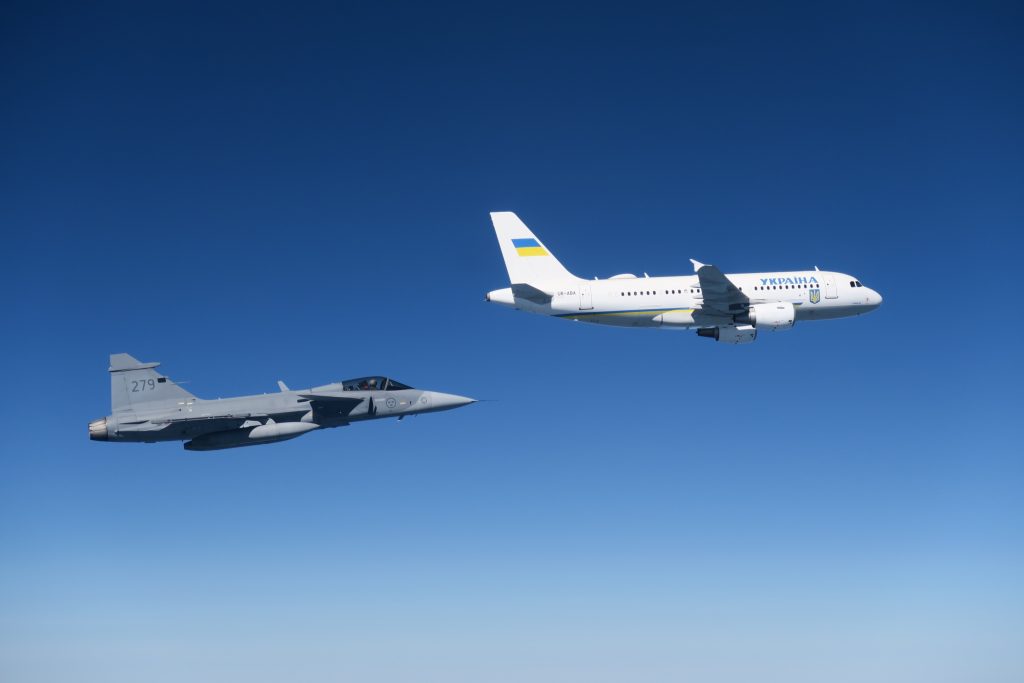
While five European F-16 fighter operators – Belgium, Denmark, Greece, the Netherlands and Norway – have donated Lockheed Martin F-16s to the Ukrainian Air Force as their air forces converted to the Lockheed Martin F-35 Joint Strike Fighter, the Saab Gripen has long been considered a good fit for the Ukrainian Air Force and the Swedish government has been working on such plans for well over a year.
Presenting its 17th military support package for Ukraine on 9 September 2024, the Swedish government stated, “At the moment, transferring [the] JAS 39 Gripen to Ukraine is not a viable option, as it would interfere with the prioritised introduction of F-16 fighters. However, in parallel the Swedish government is continuing its efforts to establish conditions for a possible future support of JAS 39 Gripen fighters to Ukraine. Support package 17 does so by acquiring materiel parts for the JAS 39 Gripen worth approximately SEK 2.3 billion (EUR 0.2 billion).”
These “material parts” related to components from JAS 39C/Ds that were originally to have been used in the construction of Gripen Es. By acquiring new materiel parts, Gripen C/Ds were saved from being dismantled and thus became available for a possible future donation to Ukraine.
The Gripen is a single-engined fighter just like the F-16, but is considered to be an easier aircraft to fly.
One source familiar with both Gripen C/Ds and older-model F-16s told this author in October 2024, “Early versions of the F-16 – in fact, the majority of variants prior to Block 70 – do not incorporate autothrottle or the means to set and maintain a constant airspeed without pilot monitoring. Gripen, just as other fourth- and fifth-generation fighters, incorporates both autothrottle and specific excess power (SEP) indications, which significantly reduce the workload of the pilot by providing automatic control of airspeed or a computer-assisted indication of the desired throttle setting to maintain. This is particularly useful when conducting operations such as close air support (CAS) and battlefield air interdiction, which frequently require the pilot to look into the cockpit at the electro-optical targeting system display or other sensors to locate, track and target accordingly.”
“Similarly,” the source added, “the Gripen auto-pilot system reduces workload by allowing the pilot to select attitude hold (maintaining the aircraft at the desired level and angle of bank/heading) and then being able to increase or decrease angle of bank (and therefore turn rate) via inputs to the rudder pedals. In doing so the pilot can fly a very effective CAS ‘wheel’ around a target with only the use of his feet (and without fear of loss of control or stalling), freeing up their hands to programme weapon data or take notes from airborne or ground controllers.”
Thirdly, the source noted that the Gripen “features a full ‘care-free’ flight control system (FCS) that limits pilot control inputs to maximise turn and roll performance without exceeding the structural limits of the aircraft. The more basic F-16 FCS modes require manual pilot monitoring of aircraft limits across the flight envelope (particularly when carrying external stores and weapons). The F-16, unlike the Gripen, can be departed from controlled flight – particularly when engaging in SAM [surface-to-air missile] defence manoeuvres or aerial combat. The requirement to observe aircraft limits places a huge additional workload on the pilots.”
However, Warsight aerospace contributor Jon Lake points out that the Gripen C/D’s PS-05/A radar cannot provide a weapons-quality track at the range that Russia’s passive electronically scanned-array (PESA) radar-equipped MiG-31s, Su-30SMs and Su-35s can. This limits the Gripen C/D’s ability to fully exploit the capabilities of the MBDA Meteor beyond-visual-range ait-to-air missile and puts the aircraft at a disadvantage in BVR air combat against such Russian aircraft.
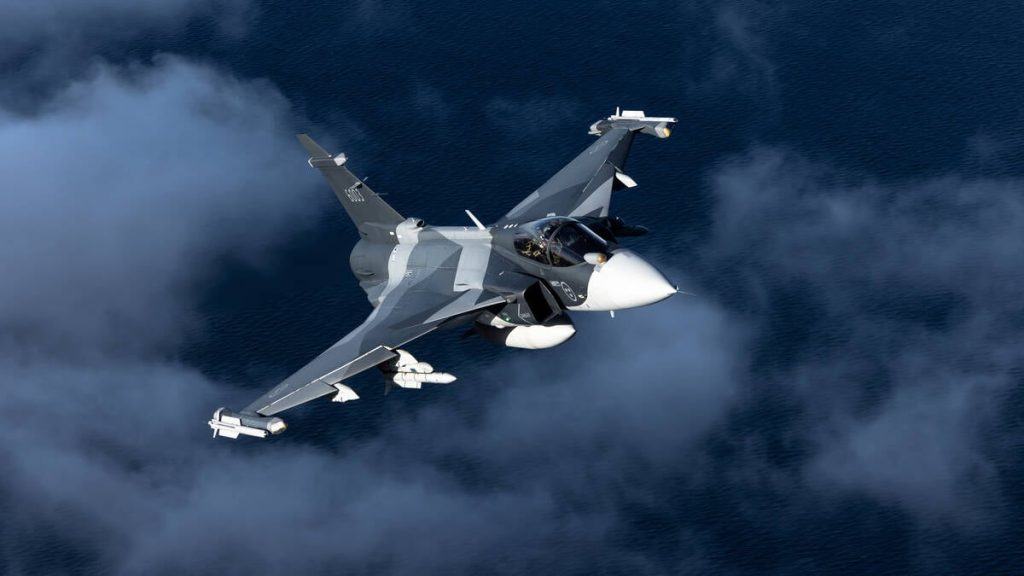
The Gripen E/F, meanwhile, brings a whole new level of capability compared to its predecessor, including:
The Gripen E/F also features a split avionics architecture in which the core flight-critical software is strictly separated from the tactical/weapons software, facilitating same-day mission software updates that could otherwise take months.
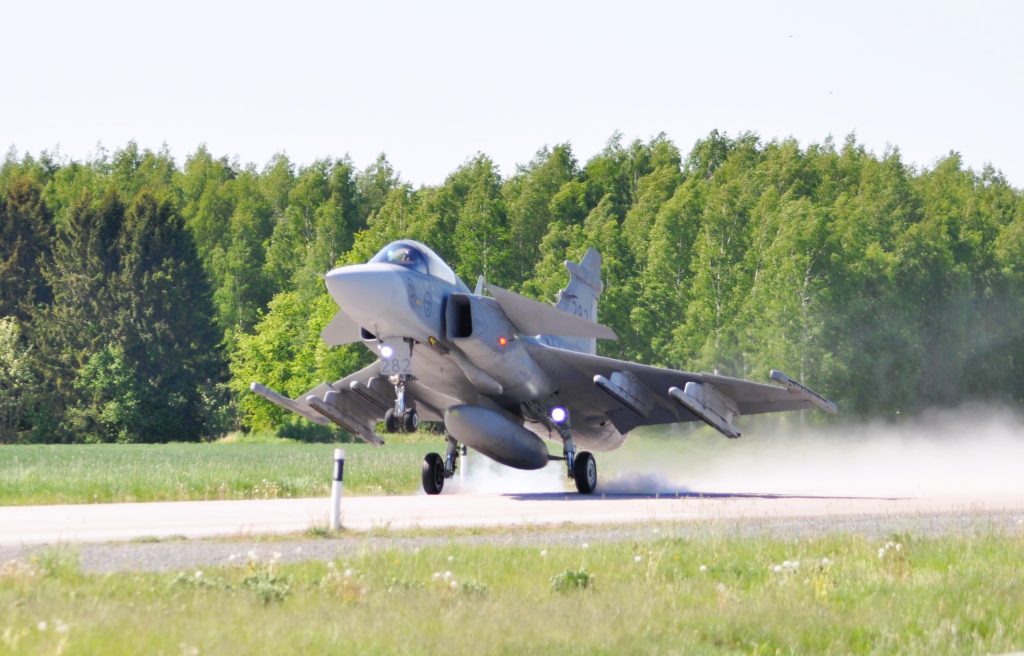
One key attribute of all Gripens – especially regarding their use by an Ukrainian Air Force targeted by Russian missiles – is their ability to conduct dispersed operations: what NATO terms Agile Combat Employment (ACE). Gripens need just 700 m of highway to land and take off during ACE operations.