The continuing US/Israel war with Iran around the Gulf has prompted UK public debate about the Royal Navy’s (RN’s) contribution.
The maritime domain’s open nature, and thus naval forces’ inherent ability to affect events ashore, sees navies often list one of their core strategic tenets as providing choice for political leaders.
While the UK is not a protagonist in the war, its government has chosen to use the RN to defend national interests in and around the region. This role can exploit the flexibility naval assets offer.
The role is to be met at this time by the Type 45 Daring-class air-defence destroyer HMS Dragon. The ship emerged only recently from refit and was beginning work-up for an extended NATO North Atlantic deployment across 2026. However, following an uncrewed aerial vehicle (UAV) attack on the UK Royal Air Force base at Akrotiri, Cyprus, HMS Dragon was redirected to Eastern Mediterranean waters.
Air-defence threat response
The UK government stated, “The Type 45 destroyer is one of the most capable air-defence warships in the world and will strengthen the UK’s ability to detect, track, and destroy aerial threats, including drones.”
Dragon’s sister ship, HMS Diamond, proved very capable in defending ships transiting the Red Sea region against missile and uncrewed system attacks during the Yemen-based Houthi rebel campaign against shipping in 2023-24.
The Type 45s’ organic aircraft include Wildcat HMA2 helicopters. These helicopters carry the Martlet lightweight multimode missile, which provides a counter-uncrewed air system (C-UAS) capability. Dragon will bring this option. Building wider defensive layers around Cyprus, three Wildcats will also be deployed ashore there.
HMS Dragon’s Sea Viper surface-to-air missile system also brings capacity to counter ballistic missiles. NATO ballistic missile defence capabilities have already shot down two missiles fired from Iran towards Turkey; this indicates Iranian missiles may have sufficient range to reach Cyprus.
The UK has also placed the auxiliary ship RFA Lime Bay at heightened readiness to deploy to the Eastern Mediterranean. The ship recently visited Gibraltar, in the western Mediterranean, before sailing to conduct routine training and drills as a preparedness measure. “As part of prudent planning the ship is at heightened readiness as a precaution, should it be needed to assist in maritime tasks in the Eastern Mediterranean,” a UK Ministry of Defence (MoD) spokesperson told Warsight. Such assistance could encompass transporting British nationals from the region: RFA Lime Bay has significant space and facilities for this role, including medical support capacity.
There has also been media discussion of whether RN mine countermeasures (MCM) capabilities, including uncrewed systems, could help open the Strait of Hormuz.
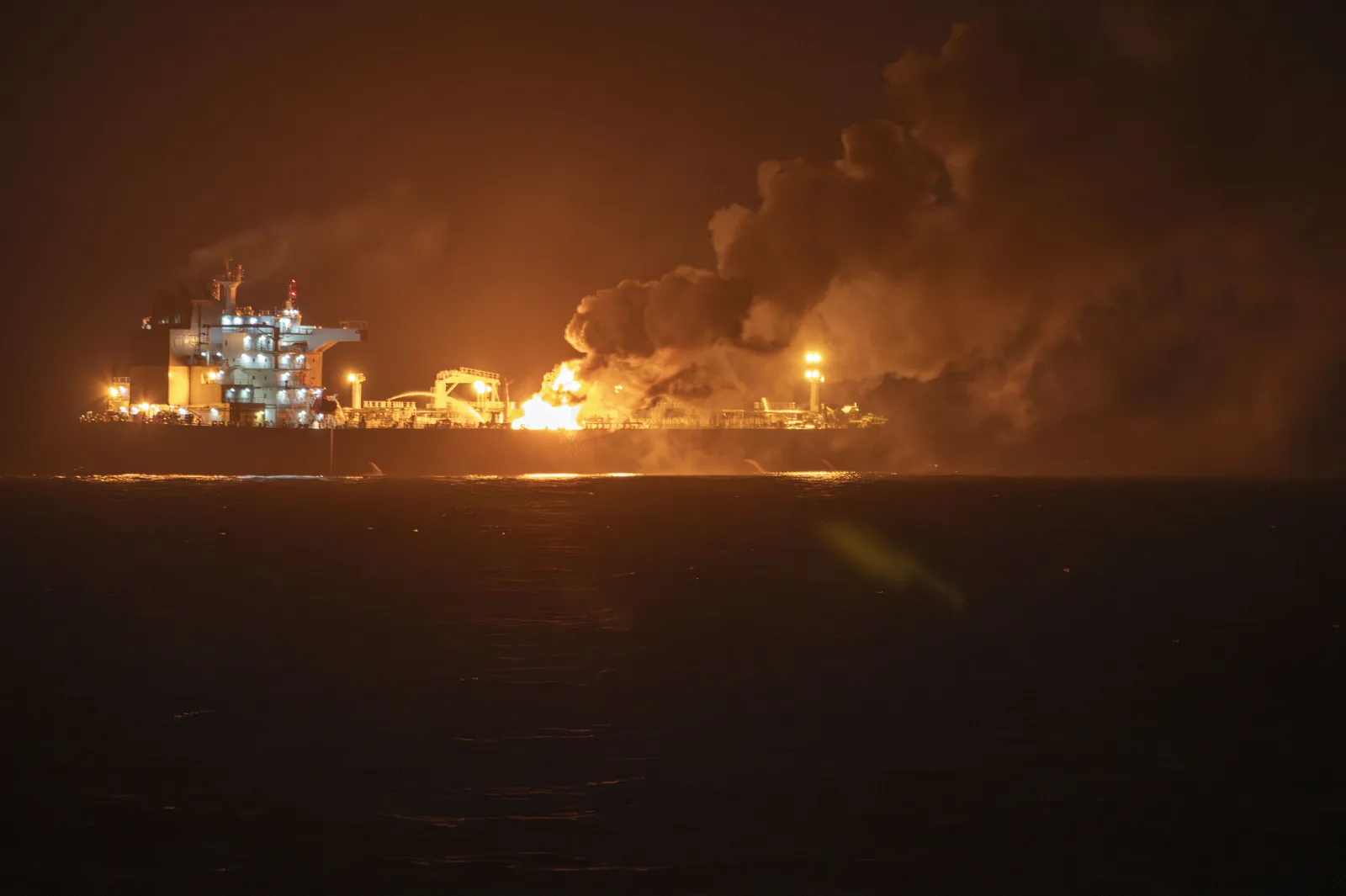
Since the war broke out on 28 February 2026, several commercial ships transiting the strait have been attacked. On 15 March the UK Joint Maritime Information Centre said the shipping situation remained critical due to recent attack patterns, noting the occurrence of at least 20 attacks on ships or offshore infrastructure across the Gulf, Strait of Hormuz, and Gulf of Oman.
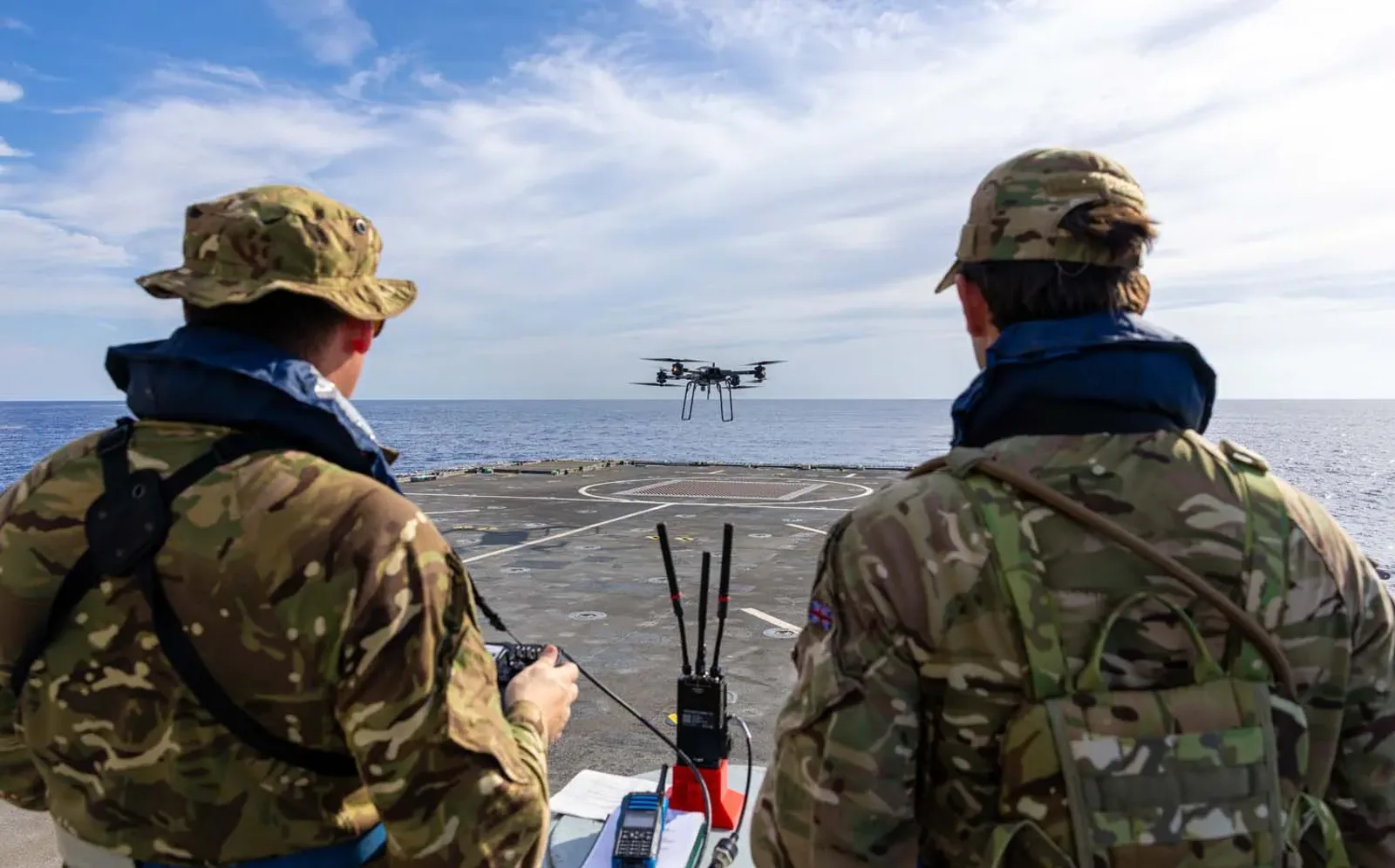
The RN has a deployable MCM capacity with its Mine Threat Exploitation Group (MTXG) mine warfare squadrons, which provide expert personnel plus uncrewed systems including remotely operated and autonomous uncrewed underwater vehicles (ROVs and AUVs). The MoD spokesperson said: “Following the [June 2025] Strategic Defence Review, we’re investing in autonomous capabilities as part of the move to a ‘hybrid navy’; the situation in the Middle East shows the importance of this technology, some of which is already deployed in the region.”
The shipping risk and the consequences for global energy supply have prompted the United States to request international naval deployments to help open the Strait of Hormuz. A Type 45 destroyer would provide ideal capability for such a mission. Balancing the need to support national requirements around Cyprus against the national and wider international need to ensure safe shipping transit and energy supply, the UK government may face a choice of whether to tell HMS Dragon to stay on station or sail east to the Gulf.
In a 16 March media briefing UK Prime Minister Kier Starmer said the UK is focused on three core issues in the crisis: providing self-defence capability in areas of national interest; seeking a solution to the Strait of Hormuz shipping risk; and supporting de-escalation of the wider conflict.
On the shipping crisis he underscored the difficulty in securing maritime traffic through the strait, but added that the UK is discussing with European, Gulf and US partners options for developing a viable, credible, collective plan to open the strait, with an aim being to build an alliance encompassing as many partners as possible.
Balancing choice
The political choice question has also arisen in relation to the RN’s aircraft carrier capability. Three US Navy (USN) carrier strike groups (CSGs) are now deployed around the Middle East/Eastern Mediterranean region. France is sending its CSG to the Eastern Mediterranean. UK media discussions have asked whether the RN’s own CSG should be deployed as well.
The UK CSG, led by the carrier HMS Prince of Wales, is currently working up for a planned North Atlantic deployment later in 2026 to demonstrate NATO deterrence and defence including around the Greenland-Iceland-UK Gap and to conduct combined operations with the USN. The deployment was announced in mid-February.
By early March, as the crisis in the Gulf escalated, reports indicated that the carrier’s readiness profile had been advanced to require the ship to be ready to sail within five days if ordered. Given navies’ strategic tenet for political choice, this was an obvious move: get the ship ready, in case the decision was taken to send it.
According to subsequent reports, the carrier’s programme remains to sail north on the NATO commitment. This itself reiterates political choice. As a major European North Atlantic navy, one of only two with carriers, the RN’s impact in deterring and defending against threats there is significant. Continuing with a deployment designed to strengthen deterrence and defence, enhance Europe’s NATO contributions and reinforce relations with US forces sends a message of political choice regarding the need to balance naval outputs across the concurrent tasks of supporting NATO North Atlantic interests and other international interests further afield.