Embracing his inner ‘naval architect’, US President Donald J Trump has asked the US Navy to relocate the entire ‘island’ superstructure of future Ford-class carriers further forward. The Hill and the Washington Post have reported that the change, which would place the island amidships like pre-nuclear carriers, is intended to make the ships “more aesthetically pleasing” for the president.
Island obsession: another Trump intervention on future US Navy shipbuilding
Six US presidents had previously served in the US Navy or US Navy Reserve. The first of these was John F Kennedy, followed by Lyndon B Johnson, Gerald Ford, George H W Bush, Richard Nixon and Jimmy Carter. None of them sought to drive requirements for new ships, nor to interfere with granular design decisions, preferring to leave such decisions to the experts.
President Donald J Trump shows no signs of such restraint. First he (and his then secretary of the navy, John C Phelan) drove the requirement for the so-called Trump-class battleship (BBG(X)/BBGN). Then he commissioned “a plan on the required measures to replace the Electromagnetic Aircraft Launch System and Advanced Weapons Elevators with steam and hydraulic systems for the construction of CVN 81 [USS Doris Miller, the fourth Gerald F Ford-class aircraft carrier], including timelines and resourcing requirements” (the changes would then apply to all subsequent carriers in the class).
And now Trump wants the US Navy’s new aircraft carriers to more closely resemble their Second World War-era predecessors by having their island superstructures moved amidships.
Island location
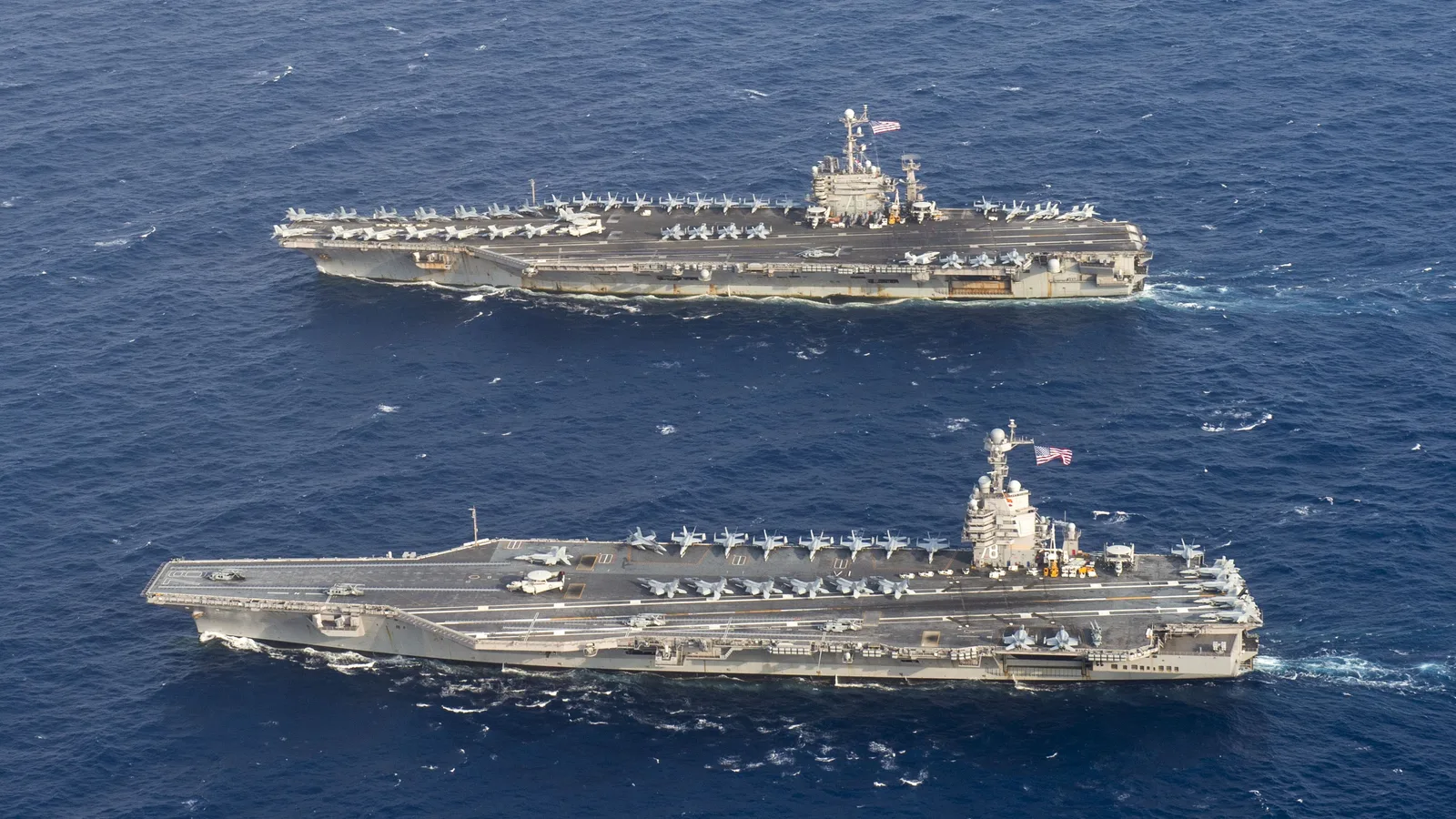
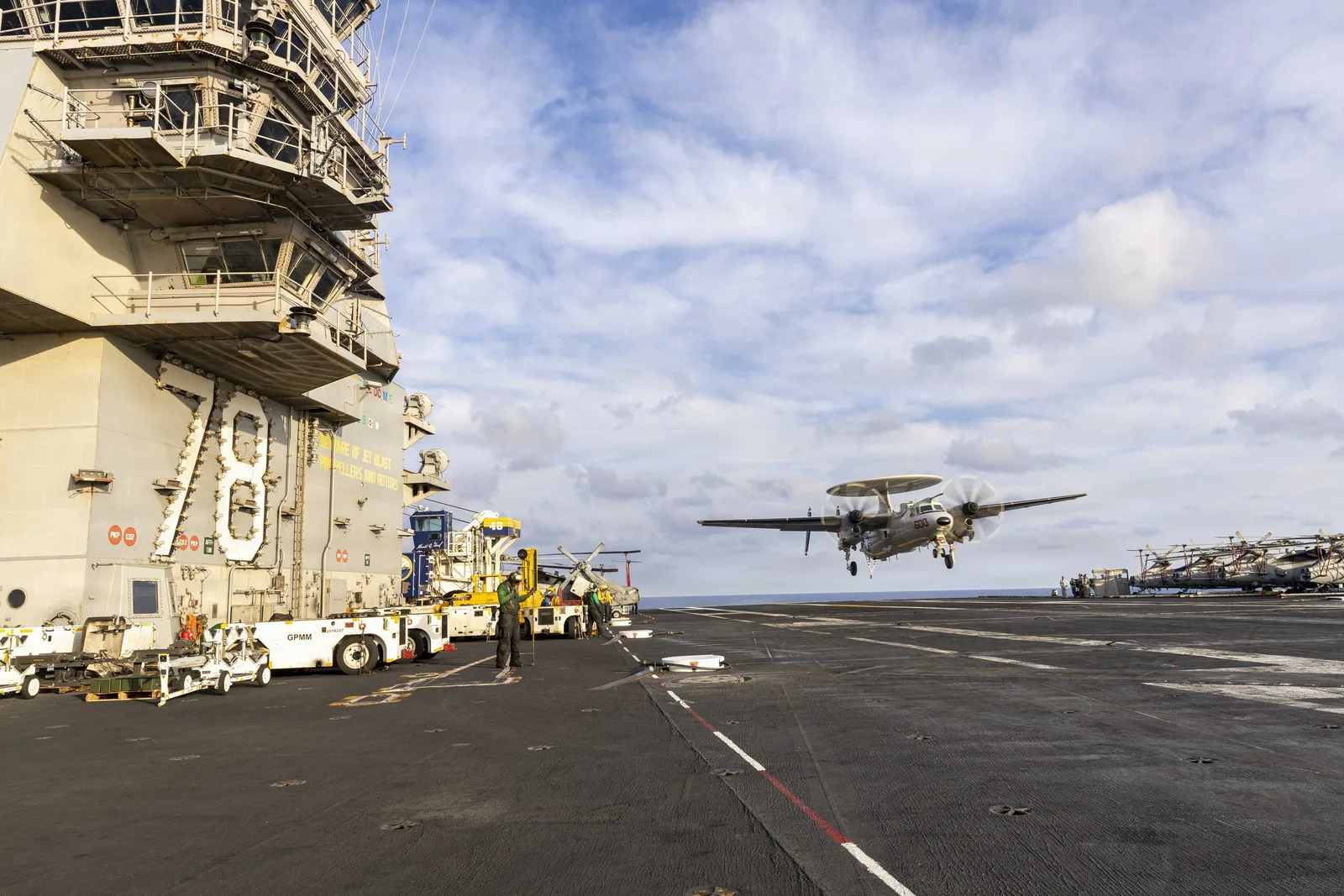
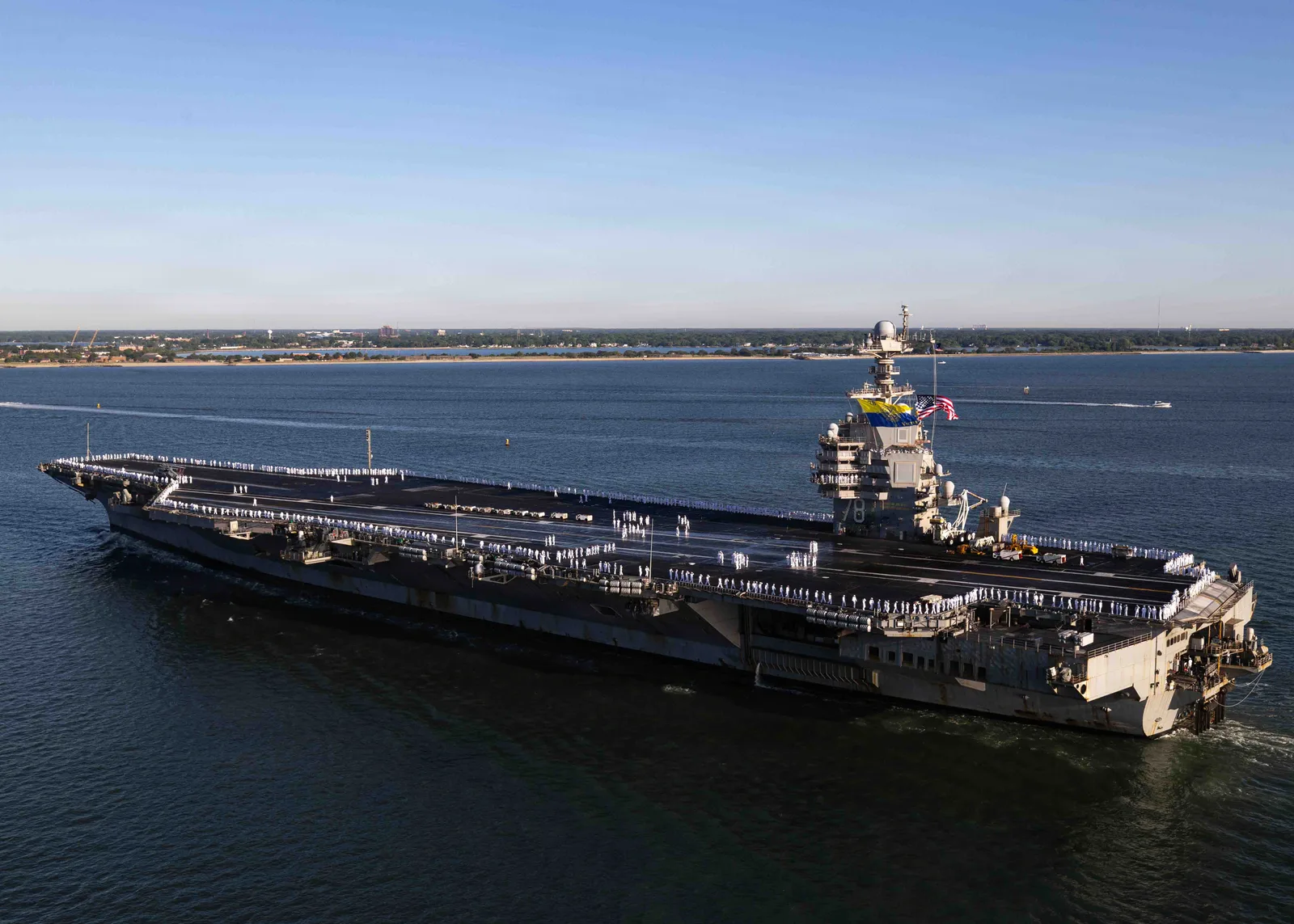
A carrier island houses the ship’s bridge and is used for tactical command, ship navigation and control of the flight deck. It serves as the platform for the ship’s radars – the Dual Band Radar (DBR) on first-in-class USS Gerald R Ford and the AN/SPY-6(V)3 (a version of Raytheon’s Enterprise Air Surveillance Radar) on USS John F Kennedy and subsequent Ford-class carriers.
Ford-class carriers have a smaller island located about 140 ft (43 m) aft of the location of its equivalent on the older Nimitz-class carriers. This positioning was not made on aesthetic grounds, but rather followed an extensive analysis of carrier design alternatives – examining some 75 different conceptual configurations with different island positions, flight deck layouts and hull forms – for what eventually became the Gerald R Ford-class aircraft carrier.

The in-service Nimitz-class carriers feature four aircraft elevators: three to starboard, one to port. The aft-most starboard elevator is located behind the island, where it (and an adjacent parking area) cannot be used during landings. On the Ford class the aft elevator and parking area is removed and the island moved aft, creating a larger unobstructed area forward of the island, providing an estimated half acre of extra deck space.
More importantly, the revised deck layout enabled by the Ford class’s rear-located island was specifically optimised to give an increased aircraft-launch tempo compared to Nimitz-class carriers, allowing greater flexibility in the launch/recovery cycle, an improved sortie generation rate and more efficient rearming and refuelling.
A ‘stress test’ of the launch and recovery systems of USS Gerald R Ford (CVN 78) in February 2026 showed that it outperformed legacy Nimitz-class aircraft carriers by 20-30%, according to Chief of Naval Operations Admiral Daryl Caudle.
Meanwhile, the rear-positioned island has been copied on China’s newest carriers and on France’s future ‘porte-avions de nouvelle génération’ (PA-NG), with both nations seeing the benefits of the Ford-class layout.
A US Navy study has indicated that moving the island would cost billions of dollars, requiring much more than a local redesign and having an impact on basic balance, structural stability and seakeeping. Significant additional testing would be required to ensure that radar and sensors worked in their new locations, that camera coverage was uninterrupted and that airflow on approach was not negatively impacted. All of this would significantly delay the programme. Nor is it clear where in the programme design changes could be incorporated.
USS Gerald R Ford is in service, while USS John F Kennedy (CVN 79) has successfully completed builder’s sea trials. These two will be followed by USS Enterprise (CVN 80) and USS Doris Miller (CVN 81), and later by USS William J Clinton (CVN 82) and USS George W Bush (CVN 83). Names for the final four ships have not been assigned. CVN 81 would seem likely to be the first ship in a sub-class that could, notionally, have a repositioned island.
The US Navy has reportedly already “begun moving out on options to meet the President’s intent”, following Trump’s order to “implement design changes to our future aircraft carriers”.

Share post