Turkey: good place for a hit?
While any Air Force One flight is unlikely to be routed through areas likely to contain any kind of SAM threat, the fact that the NATO summit was in Ankara, during a period in which the United States is still embroiled in a conflict with Iran initiated by Trump, will have produced additional security challenges. Security around the NATO summit in Ankara was reportedly extremely tight, yet Turkey shares a 534 km-long border with Iran, meaning that it would not be inconceivable that a manportable SAM could be directly smuggled into Turkey by land, let alone by other possible means. The Israeli intelligence had also asserted that Iranian operatives had pinpointed Trump’s exact hotel location, even down to the correct floor on which he was staying.
Decoys
At this point multiple questions remain. For example, if credible intelligence truly did point to the possibility of a SAM attack on Air Force One as it left Ankara, why did it still take off?
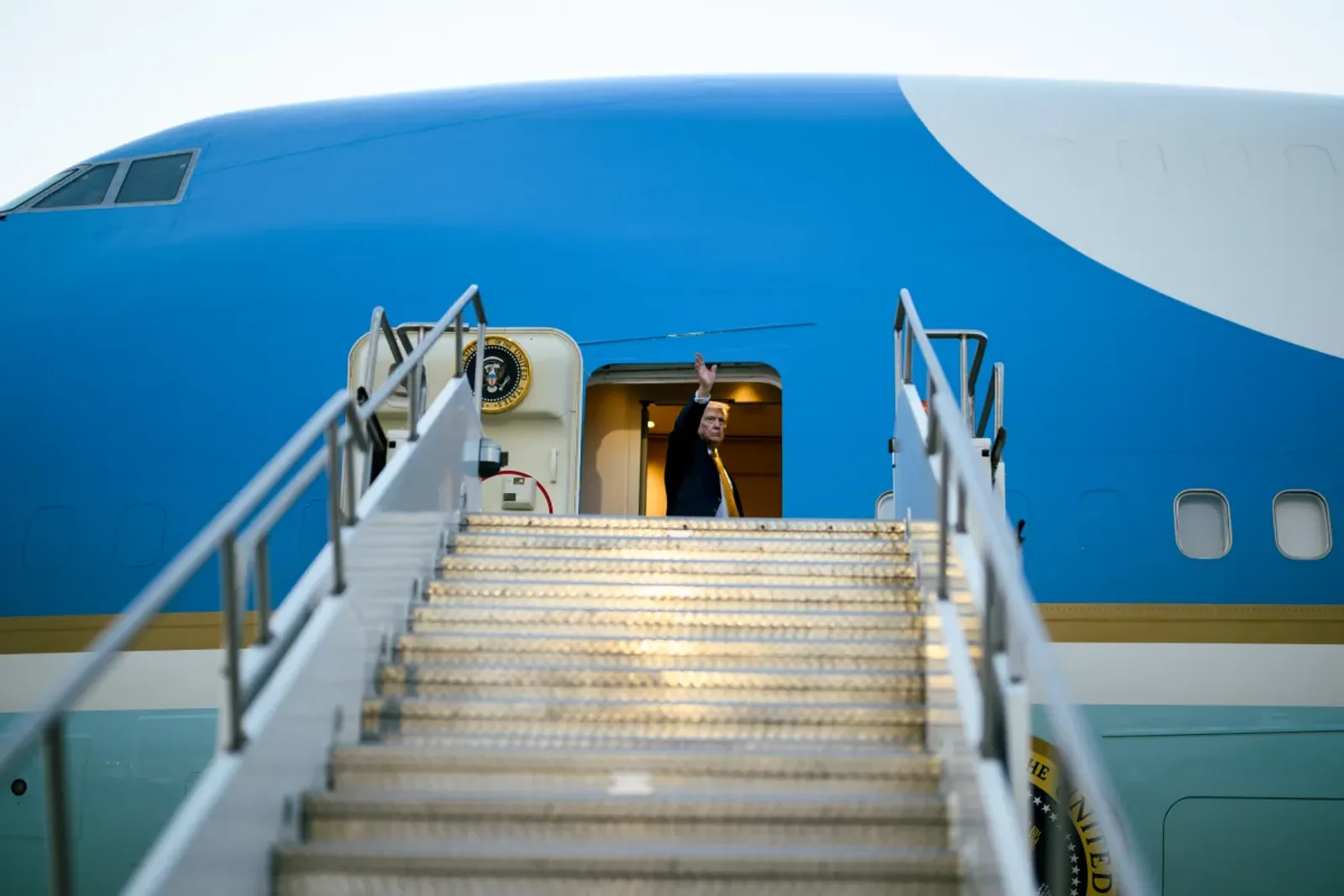
As well as carrying Trump, the USAF C-32A also transported Defense Secretary Pete Hegseth along with prominent White House aides Natalie Harp, Walt Nauta and Dan Scavino. Left on Air Force One, therefore, were Secretary of State Marco Rubio, Treasury Secretary Scott Bessent, Deputy Chief of Staff Stephen Miller, Communications Director Steven Cheung, other White House staffers, about a dozen reporters and, of course, the aircraft’s crew.
According to reporting by the Associated Press, Rubio was aware of the threat and Bessent might have been. However, no other passengers on board that Air Force One flight were aware that the US president was not with them on the flight.
VC-25A missile defences
While no aircraft is immune from being shot down, the two VC-25As that alternately act as Air Force One, which are highly customised Boeing 747-200Bs that first entered service in 1990, unsurprisingly have an extensive array of self-protection capabilities and are likely the most protected transport aircraft in the world.
The VC-25As are fitted with both active electronic countermeasures that are able to jam hostile radar frequencies and multiple systems to counter heat-seeking IR-guided missiles. These include a variant of the AN/AAQ-24 Nemesis directional infra-red countermeasures (DIRCM) system, also known as the Large Aircraft Infrared Countermeasures (LAIRCM) system, made by Northrop Grumman, as well as the AN/ALQ-204 Matador IRCM system made by BAE Systems. The AN/AAQ-24, which Northrop Grumman says offers “fast, accurate threat detection and simultaneous jamming in all current IR threat bands (I, II and IV)”, uses lasers housed in turrets around the aircraft to blind and confuse the seekers on IR-guided missiles. The older ALQ-204 system has a more basic mode of operation, sending out large fixed pulses of IR energy rather than a steerable laser beam.
The VC-25As also feature the AN/AAR-54(V) fourth-generation missile approach warning system, which passively detects ultra-violet (UV) energy from a missile’s exhaust plume, tracks and classifies multiple sources and cues the onboard countermeasures systems, which could be the DIRCM but also includes chaff and flare dispensers to decoy radar- and IR-guided missiles respectively.
The threat from manportable SAMs
With regard to truly manportable, shoulder-launched SAMs – the kind of systems that are relatively small surface-to-air weapons and could be realistically carried and fired by a lone operator – the options are almost all IR guided.
Iran’s main manportable SAMs are the indigenously produced Misagh-1, -2 and -3 IR-guided weapons, which are successive reverse-engineered iterations of the Chinese QW-1 system. While Reuters reported on 29 July 2026 that Iran had ordered 300 to 400 QW-12 and FN-16 manportable SAMs from China, which are more sophisticated systems compared to those that are produced in Iran, these are, of course, yet to be delivered and again are IR-guided systems.
Given the VC-25As’ extensive self-protection against IR-guided missiles, it is unlikely they could be successfully attacked by such a threat system. Moreover, the warheads on manportable SAMs are relatively small, so even if one were to break through an aircraft’s defences and strike home, the resulting blast would be unlikely to actually shoot down an aircraft the size of a 747 unless fate dealt a particularly rare blow.
While some SAM systems are laser-beam-riding systems that cannot be jammed, such as the Saab RBS 70, Thales Starstreak and Thales LMM/Martlet systems, these would be extremely difficult for Iran to source (and the RBS 70 cannot really be considered manportable by one operator).
The Qatari jet
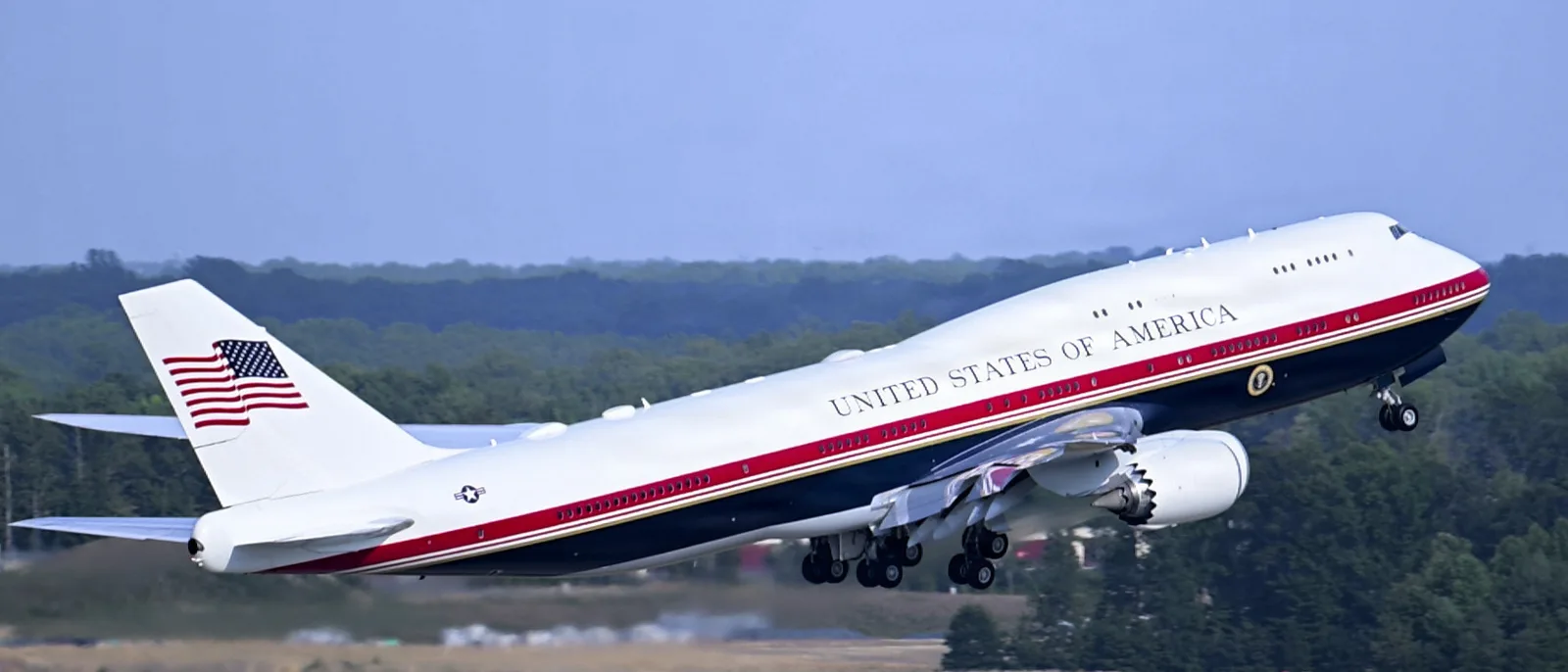
The whole ‘Ankara switcheroo saga’ has also resurfaced questions over the use of the Qatari-gifted Air Force One, developed using a luxury Boeing 747-8 on which the US Air Force has stated an amount approaching USD 400 million (EUR 346 million) was spent on security, communications and other operational upgrades. L3Harris Technologies upgraded the aircraft in 10 months to meet a 4 July deadline, allowing it to make a flyover of Washington, DC, as part of the US celebrating 250 years of independence this year. That upgrade work, however, did not bring the Qatari aircraft to the ptotection levels of the USAF’s two VC-25As.
While Trump flew into Ankara on the Qatari jet, he then said he would leave the NATO summit using one of the old Air Force Ones “for old time’s sake” and to afford US military personnel based at RAF Mildenhall the opportunity to look over the Qatari Air Force One. In reality, even before any credible SAM threat in Ankara emerged and Trump left Turkey on the secret C-32A flight, it is highly unlikely those in charge of the US president’s safety would have ever countenanced him making the more locally visible departure from Ankara on the Qatari jet.
Reporting by CNN has highlighted that the Trump Administration took the extraordinary step of subpoenaing the NYT journalists who had reported that the Qatari-gifted Air Force One was swapped out for the return flight from Ankara over security concerns. The subpoena had claimed the NYT report constituted “threatening national security by leaking classified information”, but it was withdrawn on 23 July, two weeks after it was issued, after a judge made clear he was sceptical about its argument.
Meanwhile, on 19 July – just over three weeks before the story broke of Trump’s secret flight out of Ankara – Trump told journalists at Joint Base Andrews in Maryland that the Qatari Air Force One would soon be sent away for upgrades.
“It has a lot of capability,” he said of the Qatari 747-8, “but as I understand it, in about a month or so, they’re gonna send it to have it be maxed out. … It’ll take about a month.”
These upgrades are most likely to include counter-missile capabilities commensurate with those on the VC-25As.
The two current VC-25As were originally meant to be replaced by two new Boeing 747-8-derived VC-25B successor aircraft back in 2024. A USD 3.9 billion firm, fixed-price contract for the aircraft was announced by the White House during Trump’s first presidential term on 27 February 2018. However, issues with obsolescent systems, defective components, airframe issues, supplier and labour issues (including the impact of the Covid-19 pandemic) have all conspired to delay the VC-25B programme. Delivery of the first aircraft has been pushed to mid-2028, while the second one is now due to be delivered in mid-2029. Boeing’s firm, fixed-price contract for the two VC-25Bs means that the company has suffered total losses on the programme that, as of the end of July 2026, went beyond USD 3 billion for the first time.
The Qatari-supplied 747-8 is thus serving as the ‘VC-25B Bridge’ until Boeing delivers the actual VC-25Bs contracted for in 2018.