As technology miniaturises chemical and radiological detection equipment and unmanned platforms come to the fore, it appears the sun is setting on traditional CBRN recce vehicles, but biological detection remains an issue.
Is the CBRN reconnaissance vehicle a dying concept?

The M1135 is currently the US Army’s main CBRN recce vehicle. (US Army)
The concept of a chemical, biological, radiological and nuclear (CBRN) reconnaissance vehicle has been around for decades. However, many commentators, this correspondent included, have been predicting the gradual demise of the CBRN recce vehicle. While this category of vehicle has existed since the 1970s, relatively few new systems are being developed or procured in recent years. Recently, the Turkish military took delivery of the 8×8 PARS Scout CBRN recce vehicle, made by FNSS, but this marks a rare development in an otherwise glacial segment of the global market. What are these vehicles and why might they go away?
The basic mission and concept of operations for CBRN recce vehicles remain unchanged since the early days of the Cold War. Doctrine in both East and West called for small detachments of CBRN troops to conduct reconnaissance to detect areas that were contaminated by CBRN material along the lines of traditional military route and zone reconnaissance, often with or even ahead of other types of recce troops. Mechanised warfare meant that such teams needed mobility, so that CBRN recce teams could keep up with or even leapfrog the main body of forces. The CBRN recce vehicle evolved to support this role.
CBRN recce vehicles have changed over time; one can plot their history in three overlapping eras. The first era we can refer to as the ‘detection dark ages’ and roughly covers the 1950s through to the 1970s. During this era there was only limited detection equipment available to even the most modern armies. CBRN troops were left with detector paper, handheld Geiger counters and some wet-chemistry detector kits. There was no need to have equipment mounted or operating in a vehicle as everything available was handheld. Therefore, the ‘recce vehicle’ was anything that carried the team. The US Army, for example, used jeeps or the venerable M113 armoured personnel carrier (APC). Your correspondent is old enough to have served with comrades who did CBRN route reconnaissance with bits of detection paper on a long stick reaching out the rear door of a M113. Even when the US developed a useful automated nerve agent detector, it was the size of several shoeboxes and was just strapped wherever it was needed.
The true ‘Golden Age’ of the CBRN recce vehicle started from the late 1970s and is gradually fading out in the 2020s. This has been a period where enough sophisticated chemical and radiological detection equipment started to migrate from the laboratory to the field. There were enough different useful detection instruments becoming available, although some of them were too heavy or power-intensive to be portable. Technologies like the MM-1 mass spectrometer went from a benchtop into the back of a German Fuchs wheeled APC (first made by Daimler, then Rheinmetall). The CBRN recce variant of the Fuchs became the ‘Gold Standard’ of such vehicles in NATO militaries from the late 1980s, seeing service with the forces of Germany, the United States, the Netherlands and the UK. The US and UK picked up the Fuchs in a hurry during the First Gulf War in 1990-91: a conflict that prompted a major CBRN buying and borrowing spree, so much so that this correspondent’s first experience with the M93 Fox (‘Fuchs’ was considered too salty a word for delicate US soldiers) was a multiplicity of taped translations over German labels.

On the other side of the Iron Curtain, the Soviet BRDM-1rkh and BRDM-2rkh APCs and close copies made by Warsaw Pact allies carried somewhat less sophisticated equipment. Broadly speaking, the Soviet bloc chemical and radiation detection equipment was bulkier and heavier than Western equipment, so there was arguably a greater need for specialist vehicles to carry it. BRDM variants continue to soldier on in some places, while China fields the under-documented Norinco Type 14: a variant of the Type 08 wheeled APC.
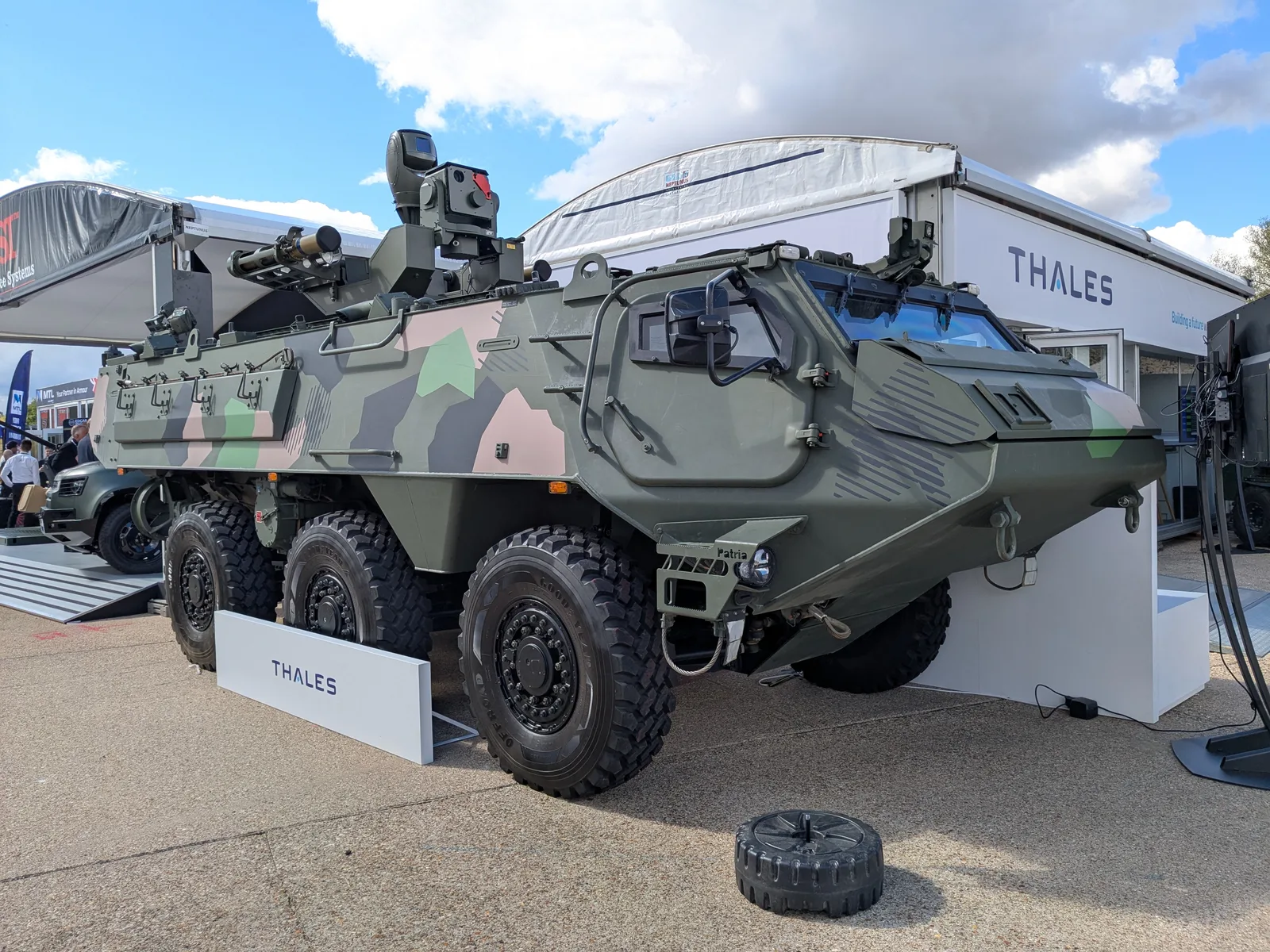
Gradually, other recce vehicles emerged, with Otokar, Patria, Rheinmetall, Iveco, Saab and others getting in on the action. Occasionally, companies like Smiths Detection or Cristanini have fitted out vehicles made by another vendor. Perhaps the most significant of these was the US Army’s M1135 NBCRV programme, with General Dynamics Land Systems as the prime contractor and FLIR Systems having integrated the detection instrumentation. At least 300 of these have been fielded, although the original intent was to procure over 400 systems. No clear replacement is in sight and the doctrine behind the vehicle’s use is very much pre-Ukraine War.
The Sunset Age and the future
It is my belief that we are now gradually transitioning into what I can term as the ‘Sunset Age’ of the CBRN recce vehicle. The technology for CBRN detection has improved significantly and has, in fact, out-paced other aspects of the recce vehicle and its concept of operations. Having highly specialist personnel and expensive equipment out ahead or upwind of the main force makes them vulnerable – extremely so in this era of precision warfare and drones. A medium-sized army using 2000s-era doctrine and CBRN vehicles would lose much of its detection capability in 48 hours of Ukraine-style warfare.
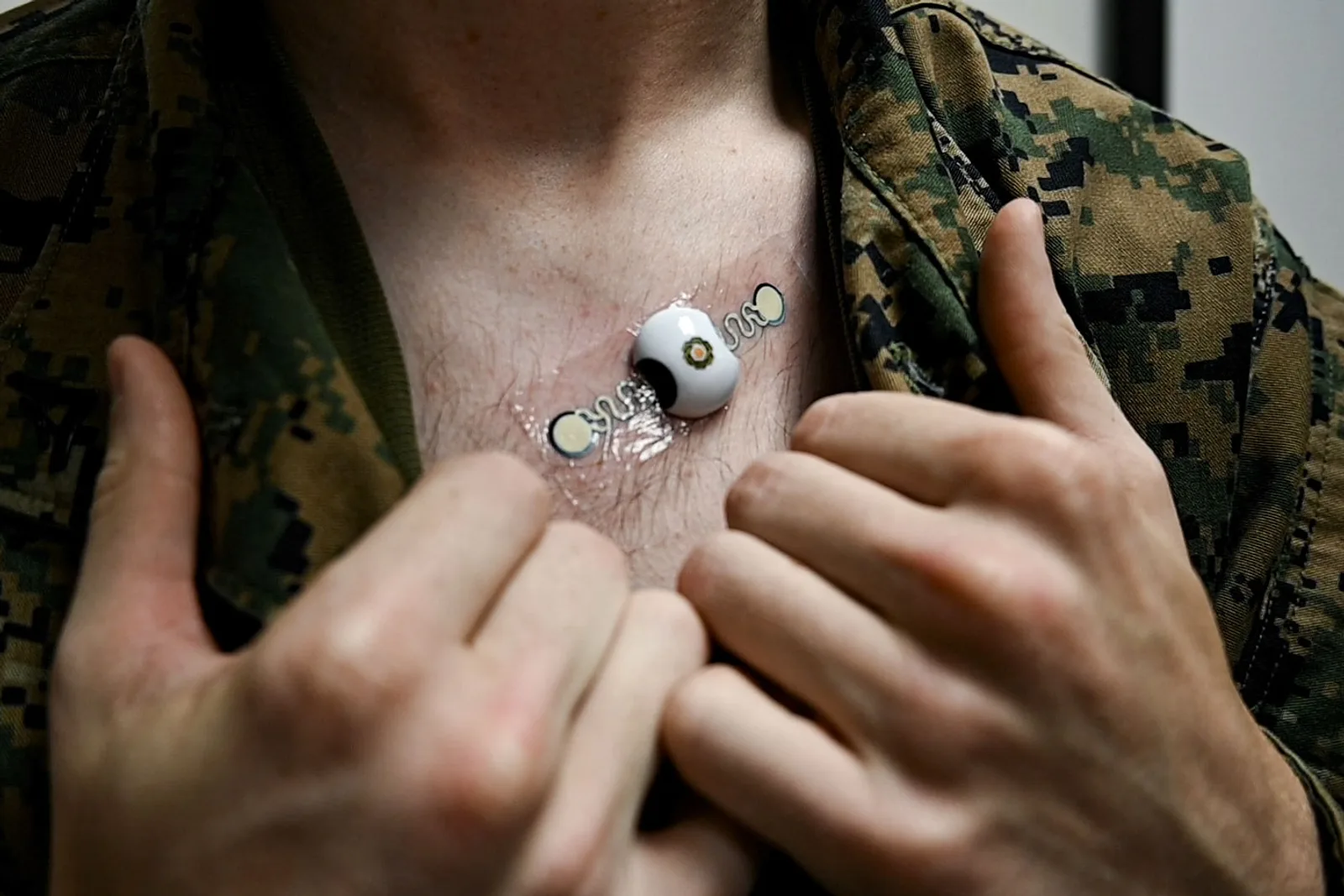
Detection equipment is now much better; not only does it provide more capability, but detectors now tend to be smaller, lighter and easier to use. A modern soldier can, with handheld equipment, have more chemical and radiological detection capability than a CBRN recce vehicle of 20 years ago. That mass spectrometer? Several companies will sell you a cheaper, smaller and easier-to-use one that fits in a suitcase, designed for the rigours of the modern battlefield. Chemical detectors that were expensive, the size of several shoeboxes and contained a radioactive source? A device the size of two packets of cigarettes, powered by AA batteries, is simple enough to be used by a soldier with an hour of training for a small fraction of the price. There has been a concomitant revolution in military communications and data connectivity, so there’s every possibility of networking the data from these instruments.
If every squad or combat vehicle has better CBRN sensing, and these systems are proliferated across the battlefield, isn’t every combat unit a CBRN recce unit by default? And if CBRN detection equipment is back to being easily portable again, are we back to the issue of ‘Why do we need a specialist vehicle that’s a distinct target to carry our CBRN team?’ and any vehicle will do. In fact, the more anonymous the better on a Ukraine-style battlefield.
There is some denial about the futility of current CBRN recce vehicles, as one can see with the Turkish FNSS programme, while the US military will probably try to keep the M1135 going as long as possible. Various users continue to replace the technology in their vehicles, although this has not always worked out well with system integration. The UK’s Light Role Team recce assets were retired a decade ago, while the British Army finished an expensive upgrade to its small fleet of Fuchs vehicles, only to admit that the Fuchs will be going out of service in 2029. Rumours of Patria CBRN vehicles to replace various Fuchs systems are circulating. Perhaps that will be the last sigh of the CBRN recce vehicle before it goes the way of the Zeppelin.
A serious effort to exploit the existing CBRN detection assets proliferated around the battlefield, combined with small lightweight two- to three-person recce teams possibly embedded with existing recce units, seems a logical progression, but so does the use of unmanned systems. There is now far more scope for use of small chemical and radiological sensors on unmanned aerial vehicles (UAVs), as well as some scope for the use of unmanned ground vehicles (UGVs). One can build an agile CBRN recce capability without being tied to expensive specialist vehicles. Gradually, that is where everything is heading, but armies and defence ministries will move only glacially until something pushes them.

The biological problem
Where does biological detection fit in all of this? Badly. Biological detection equipment, which may be a subject for a future article, mostly does not really work quickly or easily enough to justify installing in a mobile CBRN recce vehicle, although some have tried. Some biological detection systems have seen limited service on CBRN recce vehicles. A US integrated system on the back of a Humvee, the M31 Biological Identification and Detection System (BIDS), went into and then back out of service. One of its numerous flaws was that it could not operate while moving. It was, in fact, more of mobile laboratory than a recce vehicle.
There is definitely a place for mobile CBRN laboratories – and these do exist – but such vehicles are conceptually different both in role and survivability. Mobile laboratory vehicles operate while stationary, well away from the fighting. Recce assets such as specialist sampling teams bring samples to the lab. They bring laboratory capability forward into the battlefield to save time, but they do not do real-time reconnaissance. Another article in the future may look at this part of the market.
Opinions will vary, but there is a strong argument to be made that the sun is setting on traditional CBRN recce vehicles. They have had their day.

Share post